• Skip to main content
  • Skip to primary sidebar
  • About
    • About Art Class Curator
    • Contact
    • Speaking
    • Media & Press
    • Programs for Schools
  • Blog
  • Podcast
  • Shop
  • Join
  • Member Login

Art Class Curator

Hands-on and Minds-curious Art Learning

  • Art & Artists
  • Art Connection Activities
  • Art Teacher Tips
  • Elements & Principles
  • Downloads & Resources
Home
  • About
    • About Art Class Curator
    • Contact
    • Speaking
    • Media & Press
    • Programs for Schools
  • Blog
    • Art & Artists
    • Elements & Principles
    • Art Connection Activities
    • Art Teacher Tips
    • Downloads & Resources
  • Book
  • Podcast
  • Shop
  • Join
  • Member Login

All Posts from Art Curator for Kids

August 26, 2015 Leave a Comment

Artwork of the Week: Mask from Solomon Islands

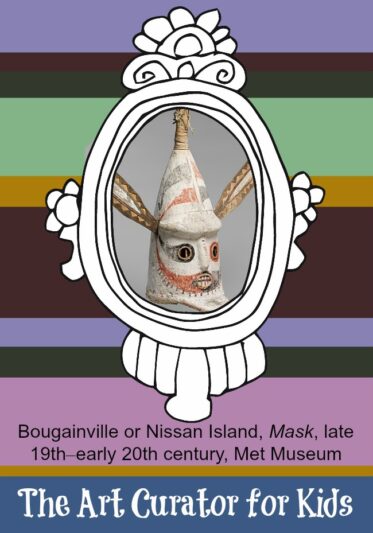
The Art Curator for Kids - Artwork of the Week - Bougainville or Nissan Island, Mask, late 19th–early 20th century, Met Museum

Our Artwork of the Week is a mask from the Solomon Islands which is a large group of islands in Oceania, east of Papua New Guinea, and northwest of Vanuatu. It’s really different than other masks I have seen, so I was curious to learn more.
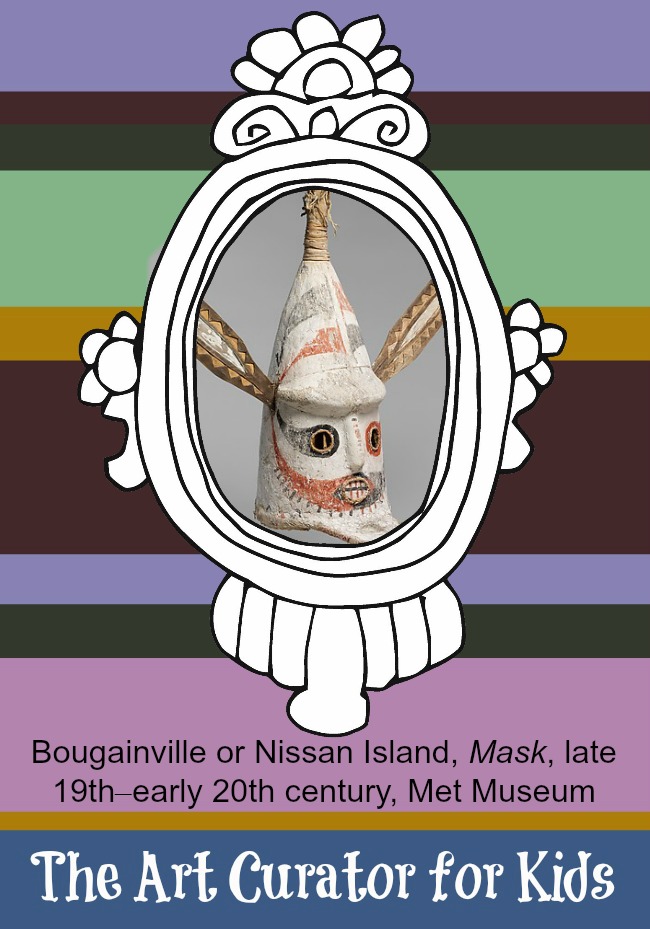
The Art Curator for Kids - Artwork of the Week - Bougainville or Nissan Island, Mask, late 19th–early 20th century, Met Museum

The mask is worn like a helmet and is made from barkcloth stretched over a cane frame (Source: Met Museum).

Take a closer look and imagine what sort of person this mask is representing. What features do you notice, and what message do you think its maker was trying to send?
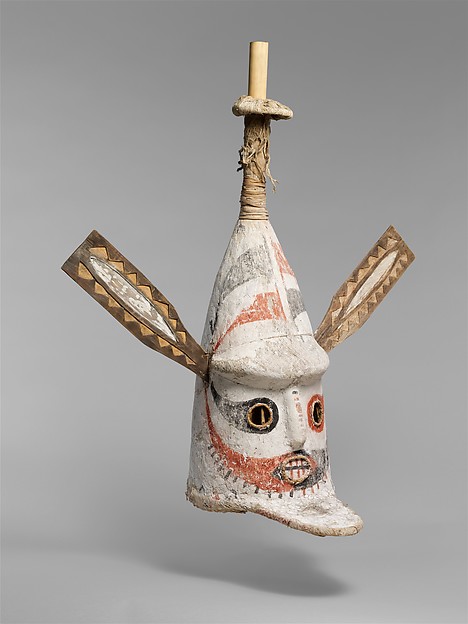
Bougainville or Nissan Island, Mask, late 19th–early 20th century, Met Museum

The Met Museum‘s website says they don’t know if this is from the islands of Nissan or Bougainville, so they don’t know exactly what this mask is representing. They do think that because of “the upraised ears, prominent brow ridge, wide staring eyes, and bared teeth” it could be representing the frightening spirit of Kokorra common on the island on Nissan.

Mask Lesson and Supplies

Masks are a perfect art lesson to explore other cultures. Compare this mask with masks from other cultures, and have students make there own. You can find more mask-making resources on this post about a mask from Papua New Guinea from my Art Around the World series last year.
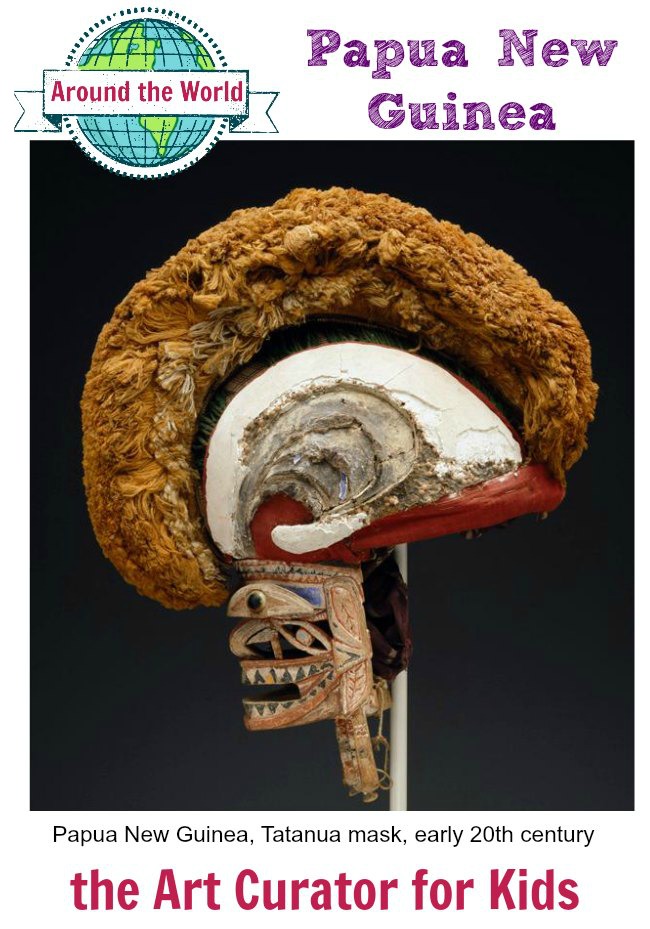
The Art Curator for Kids - Art Around the World - Papua New Guinea - Papua New Guinea, Tatanua mask, early 20th century

Get the Full Lesson!

This Lesson is in The Curated Connections Library!

Find the full lesson from this post along with hundreds of other art teaching resources and trainings in the Curated Connections Library. Click here for more information about how to join or enter your email below for a free SPARKworks lesson from the membership!
Join the List

Get the Full Lesson!

This Lesson is in The Curated Connections Library!

Find the full lesson from this post along with hundreds of other art teaching resources and trainings in the Curated Connections Library. Click here for more information about how to join or enter your email below for a free SPARKworks lesson from the membership!
Filed Under: Art and Artists


August 24, 2015 2 Comments

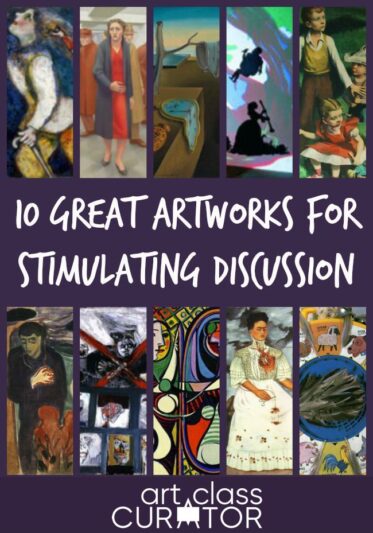
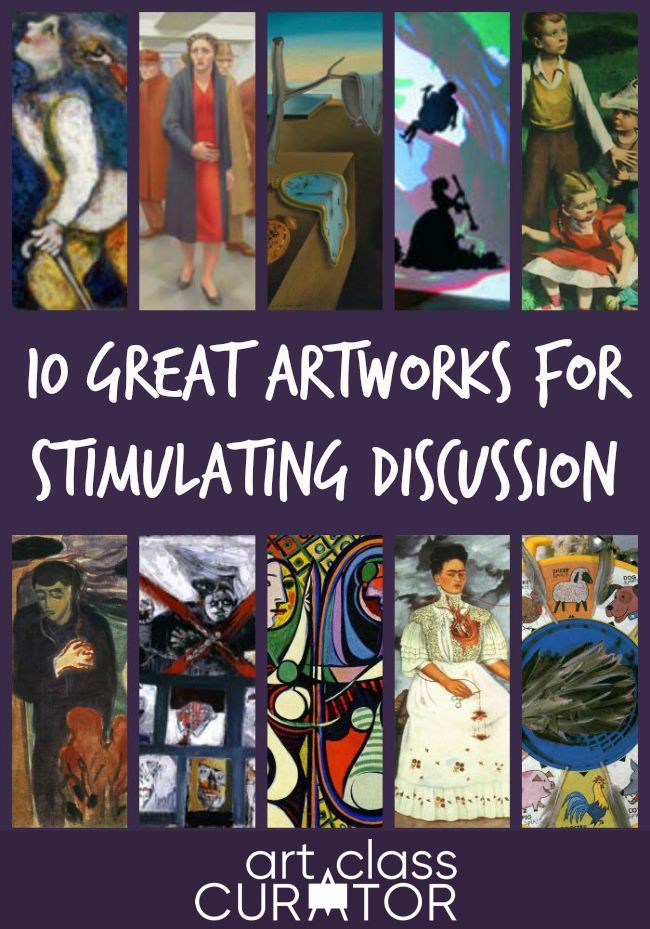
10 Artworks Perfect for an Art Criticism Lesson

Artworks for Stimulating Discussion

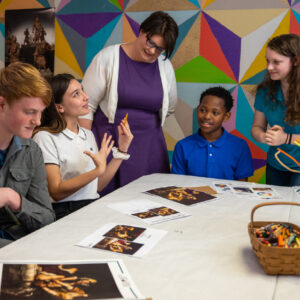
Through my many years of teaching, I’ve accumulated a nice list of artworks that are perfect to discuss with students and teach them how to analyze art. These artworks spark lots of interesting ideas, have easy to notice design choices that contribute to the meaning and always lead to a great art criticism discussion (or a great student-written essay) with the students.

Artworks for Stimulating Discussion

These artworks are great for high school and college students, but many work for elementary and middle as well. You can use your judgment to decide what works best for your students.

The Four Steps of Art Criticism Lesson Plan

I created this list for my lesson on the art criticism steps available for sale. The Four Steps of Art Criticism lesson teaches students how to analyze art through the art criticism steps of description, analysis, interpretation, and evaluation. This resource includes a lesson outline (pdf), a PowerPoint, a written assignment instructions handout (pdf and editable .doc), a quiz (pdf and editable .doc), and a list of artworks including (but not limited to) the ones below. Buy it now for $14, and use it in your classroom tomorrow!

The Four Steps of Art Criticism Lesson Plan

This lesson covers the four steps of art criticism using artworks. Explore description, analysis, interpretation, and evaluation with your students using engaging activities and examples.

Buy Now

Ten Artworks Perfect for Art Criticism with Students

Most of these are not in the public domain. I have included small thumbnails for your reference. Click the picture to view a larger image.

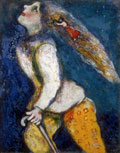
Marc Chagall, Young Girl in Pursuit, ca. 1927-28

Marc Chagall, Young Girl in Pursuit, ca. 1927-28

This one is so simple and straight-forward, but it always sparks the imagination of the students.

Questions to Ask: How does this artwork make you feel? What choices does the artist make to make you feel that? Who is this woman? Why is there a woman in her hair? What is the meaning of this artwork?

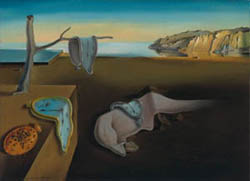
Salvador Dalí, Persistence of Memory, 1931

Salvador Dalí, Persistence of Memory, 1931

Everyone knows this one. I read some study one time that said Salvador Dalí was the most recognized artist name among people interviewed on the street. I found that to be fascinating. From the melting clocks to the sleeping head, to the ants crawling all over the pocket watch, to is that a snake coming out of his nose?, this one has a lot for students to unpack.

Get the Full Lesson!

This Lesson is in The Curated Connections Library!

Find the full lesson from this post along with hundreds of other art teaching resources and trainings in the Curated Connections Library. Click here for more information about how to join or enter your email below for a free SPARKworks lesson from the membership!
Join the List

Get the Full Lesson!

This Lesson is in The Curated Connections Library!

Find the full lesson from this post along with hundreds of other art teaching resources and trainings in the Curated Connections Library. Click here for more information about how to join or enter your email below for a free SPARKworks lesson from the membership!
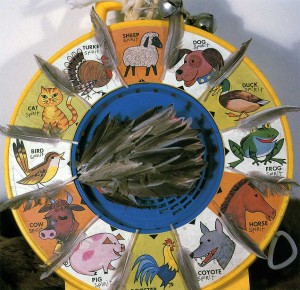
John Feodorov, Animal Spirit Channeling Device for the Contemporary Shaman, 1963

John Feodorov, Animal Spirit Channeling Device for the Contemporary Shaman, 1997

I wrote more about this one on the post: 5 Artworks to Intrigue your High Schooler.

Frida Kahlo, The Two Fridas, 1939

Frida Kahlo, The Two Fridas, 1939

This one is also on 5 Artworks to Intrigue your High Schooler. Read more there. 🙂

Edvard Munch, Separation, 1896

Edvard Munch, Separation, 1896

Students love coming up with stories about this one. He is having a heart attack, and the woman is an angel taking him away. The woman is the ghost of his wife who has passed. And more, lots of great stories. The artist’s use of line, color, and contrast adds meaning to the student’s interpretations.

Luis Felipe Noé, Cerrado por brujería [Closed by Sorcery], 1963

Luis Felipe Noé, Cerrado por brujería [Closed by Sorcery], 1963


This is one of my all time top artworks to discuss with students. I usually show it on the first day of class in my community college art appreciation class. I wrote a whole post about it here.

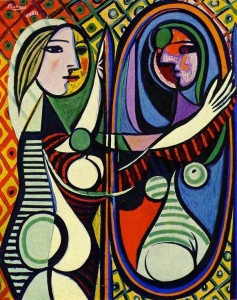
Pablo Picasso, Girl before a Mirror, 1932

Pablo Picasso, Girl Before a Mirror, 1932

This painting made me weep when I saw it the first time. It’s stunning in person. Read more about it on 5 Artworks that Promote Introspection. This is a great one to have students write about at the beginning of class.

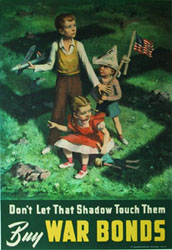
Lawrence Beall Smith, Don’t Let That Shadow Touch Them, 1942

Lawrence Beall Smith, Don’t Let That Shadow Touch Them, 1942

I love connecting history and art. I include this piece of propaganda art on one of my tests for students to write about. You would be surprised how many students don’t recognize the swastika. In addition to discussing the power images have on our feelings and decision, the historical significance of the image is an important discussion to have with the students.

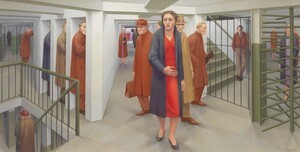
George Tooker, The Subway, 1950

George Tooker, The Subway, 1950

Creepy, suspicious men and multiple perspectives make this one a fun one to talk about with students. The lone, solitary woman with the concerned expression makes us think, and why is she holding her stomach? Lots to talk about.

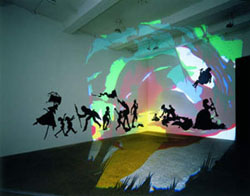
Kara Walker, Darkytown Rebellion, 2001

Kara Walker, Darkytown Rebellion, 2001

This one has some sensitive subject matter. I wouldn’t hesitate to use this for a college class, but only you can decide if it works for your students. I actually got in an argument with one of my friends in front of one of Kara Walker’s artworks like this one. I love art that sparks opinion and discussion. I don’t shy away from big topics in my classroom. Art opens up important dialogues, so I think it is important to let those happen in the classroom. After students look and figure out what is going on through art criticism, we discuss the element of the projection and how the viewer can become a part of the art by standing in between the light and the wall. It leads to some interesting thoughts.

Filed Under: Art and Artists
Tagged With: best of art class curator, edvard munch, frida kahlo, george tooker, john feodorov, kara walker, lawrence beall smith, luis felipe noe, marc chagall, pablo picasso, salvador dali


August 21, 2015 Leave a Comment

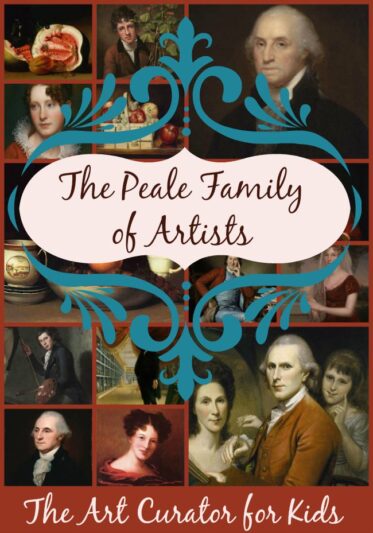
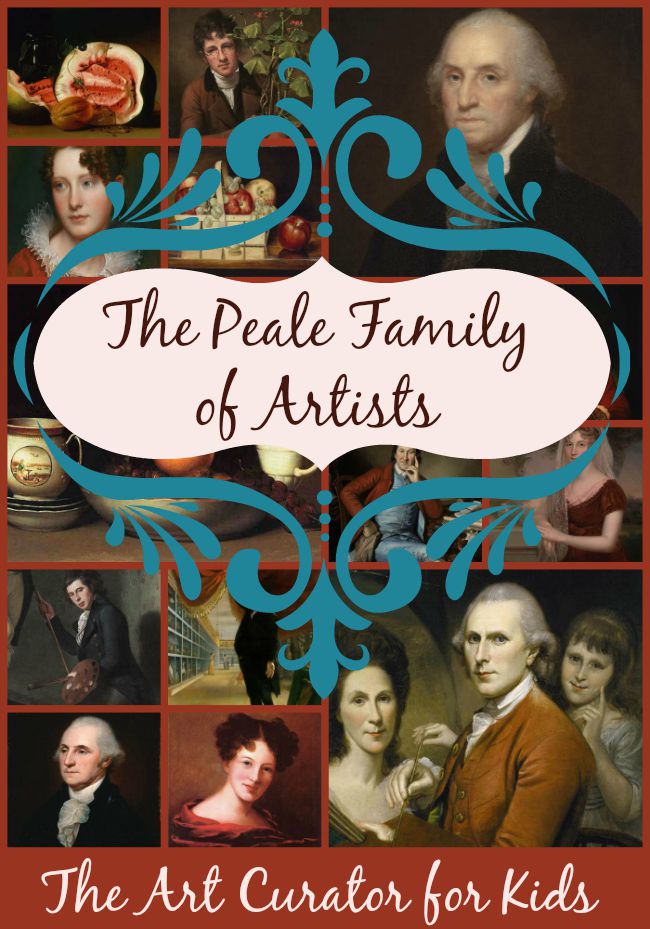
The Peale Family of Artists

The Art Curator for Kids - Artwork of the Week - The Peale Family of Artists

Inside: Learn more about Charles Willson Peale and his many artist children who were named after artists! The Peale family artists from the Revolutionary time period in America are talented and fascinating.

The Art Curator for Kids - Artwork of the Week - The Peale Family Artists

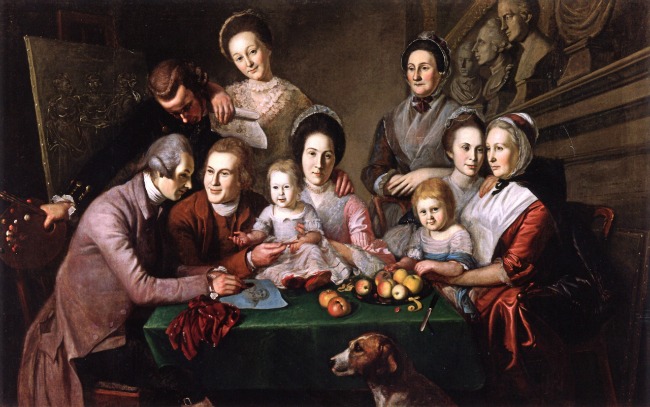
Today’s Artwork of the Week is The Peale Family by Charles Willson Peale, an American portrait painter from the revolutionary time period.

The Peale Family Artists Charles Willson Peale, The Peale Family, 1773
Charles Willson Peale, The Peale Family, 1773

Charles Peale is famous for his portraits and his influence in the world of museums. He founded a natural history museum which eventually became the Philadelphia Museum.

Charles Willson Peale Family, The Artist in His Museum (Self-Portrait), 1822
Charles Willson Peale, The Artist in His Museum (Self-Portrait), 1822

He had was a lover of art and named 12 of his 17 children after artists and great thinkers. The Peale family includes Raphaelle Peale, Angelica Kauffmann Peale, Rembrandt Peale, Titian Ramsay Peale (x2), Rubens Peale, Sophonisba Augusciola Peale, Rosalba Carriera Peale, Vandyke Peale, Charles Linnaeus Peale, Benjamin Franklin Peale, and Sybilla Miriam Peale.

Charles Willson Peale, The Staircase Group, 1795
Charles Willson Peale, The Staircase Group (Portrait of Raphaelle and Titian Peale), 1795

Not only were his kids named after artists, but many of the Peale family ended up becoming artists themselves. There’s a story of father Charles Peale and son Rembrandt Peale painting a portrait of George Washington with many of the other children watching on and sketching and painting alongside their dad and brother. Gilbert Stuart (the painter who painted the Washington portrait that is on the dollar bill) said to Washington that he was being “Pealed all around!” (Source: MFA Boston).

These are the two portraits of Washington from the same sitting. You can tell Charles Peale and Rembrandt Peale were sitting in slightly different places!

George Washington by Charles Willson Peale and Rembrandt Peale
George Washington by Charles Willson Peale (left) and Rembrandt Peale (right)

If you want to see more of their work, check out this slideshow of works by the Peale family: Charles Peale, Anna Peale, James Peale, Rembrandt Peale, Rubens Peale, Raphaelle Peale, and Sarah Peale.

[slideshow_deploy id=’5146′]

Filed Under: Art and Artists
Tagged With: peale


August 17, 2015 2 Comments

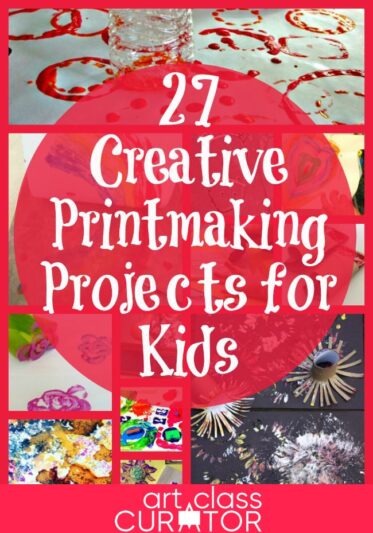
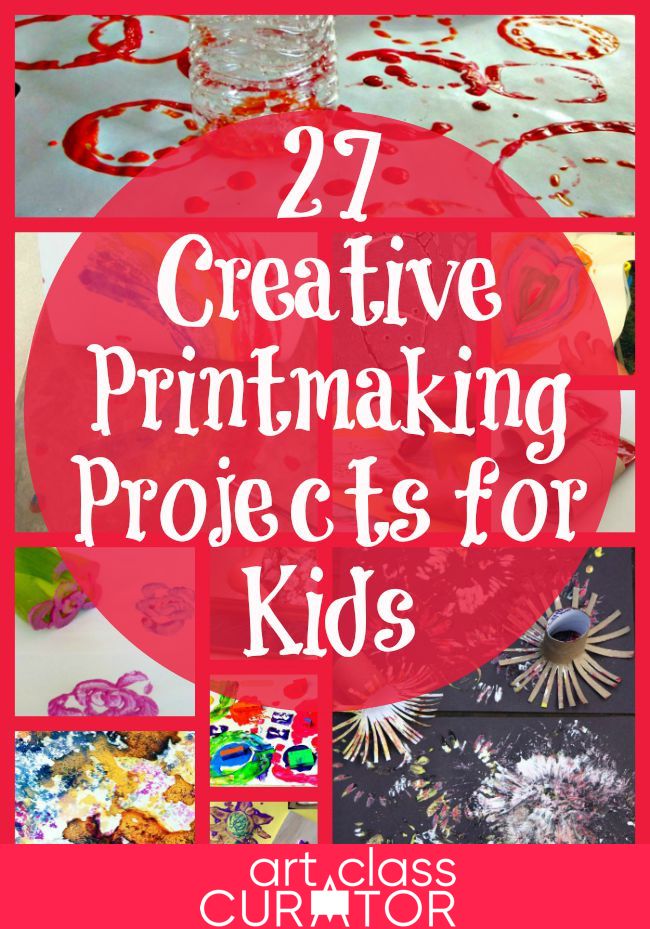
27 Creative Printmaking Projects for Kids

My most popular post on Art Class Curator is my tutorial on all things block printing. I’m constantly finding other super creative ways to do printmaking with kids, so I compiled a massive list for you of some other ideas!

Check out these awesome printmaking ideas for kids, and try one out!

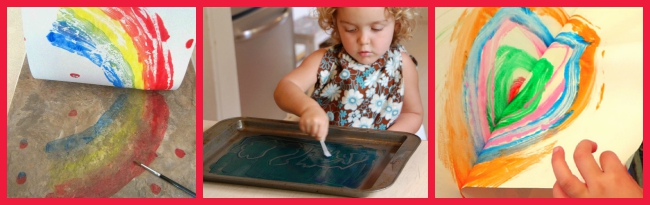
The Art Curator for Kids - Printmaking with Monoprints

I love these three ways of doing monoprint printmaking with kids.

  • Preschool Powol Packets had her students make monoprints on pieces of tile.
  • Tinkerlab used a Cookie Sheet to make monoprints with her kids.
  • You Clever Monkey had her kiddos do monoprints on an Easel.

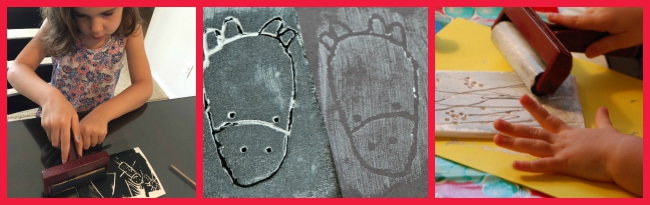
The Art Curator for Kids - Printmaking with Foam SheetsFoam plates make printmaking projects for kids cheap and easy.

  • I cover many ways to make prints with kids on Art Class Curator 
  • Still Playing School uses golf tees to focus on fine motor skills.
  • Tinkerlab used recycled trays to make these abstract prints.

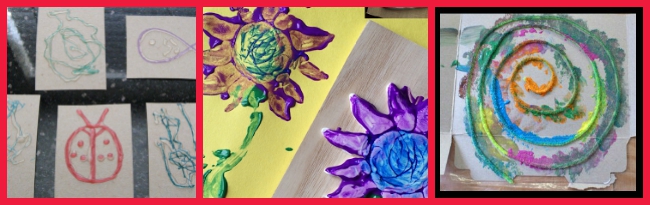
The Art Curator for Kids - Printmaking with Raised ThingsThese bloggers used art supplies in clever ways to make prints.

  • Toddler Approved used a hot glue gun to make printing plates.
  • Mini Monets and Mommies made stamps from wood and model magic.
  • Here’s another clever way to do printmaking with kids using string and paint from Kids Activities Blog

The Art Curator for Kids - Printmaking with Food

Making prints from nature is always a good idea.

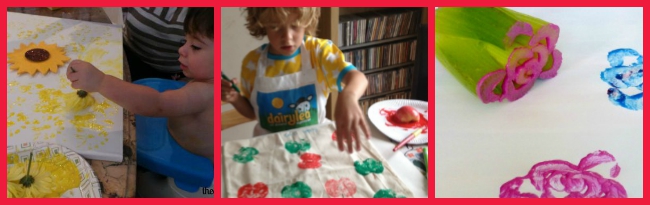
  • The boys of The Eyes of a Boy made prints with sunflowers.
  • The kids at Mum in the Madhouse printed with apples.
  • Craftulate made prints using vegetables.

The Art Curator for Kids - Printmaking with Household StuffThese printmaking activity ideas are super smart and fun.

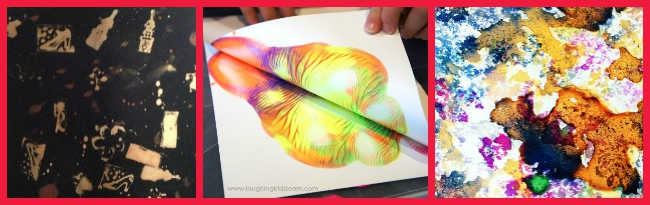
  • The Chaos and the Clutter used stamps with bleach to make t-shirts. Awesome!
  • Laughing Kids Learn made squishy paintings for kids that teach symmetry.
  • Fireflies and Mudpies printed with soap foam.

The Art Curator for Kids - Printmaking with ToysPrinting from toys would probably be my daughter’s favorite way to print!

  • Blocks were used by My Bright Firefly to combine art and architecture.
  • Childhood 101 printed with an assortment of toys.
  • Hand Made Kids Art made spooky prints from halloween toys.

The Art Curator for Kids - Printmaking with Packing MaterialsThe options are unlimited when printing from recycled materials.

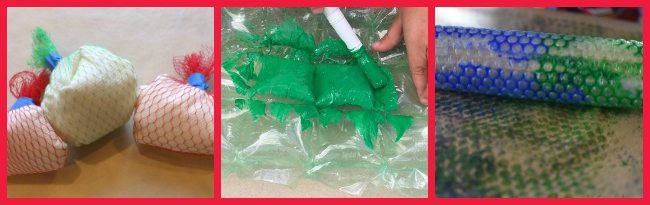
  • Artful Parents‘ styrofoam printmaking is simple, bold, and customizable.
  • Craftulate’s prints with a mesh fruit bag would be a great way to teach texture.
  • I love how Hand Made Kids Art made bubble wrap prints with a rolling pin.

The Art Curator for Kids - Printmaking with Recycled Materials Here’s some more fun with recycled materials.

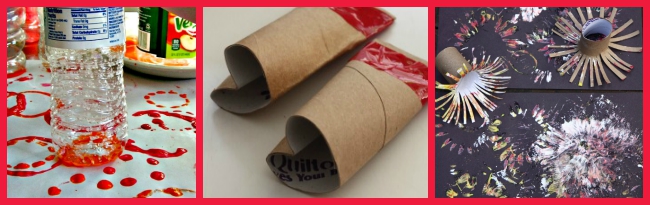
  • B-Inspired Mama‘s kiddos made paintings with plastic bottles.
  • Danya Banya used cardboard tubes to make both fireworks prints and heart stamps.

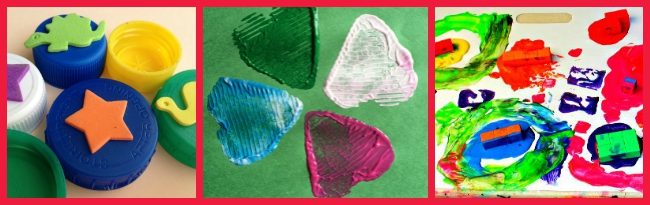
The Art Curator for Kids - Printmaking with Foam Blocks, Shoes, and StickersThese bloggers cleverly made prints with the random foam pieces that seem to accumulate in your house when you have kids.

  • Crafts on Sea made stamps from bottle caps and stickers.
  • Mini Monets and Mommies cut up some flip-slops, because why not?
  • Rhythms of Play made gorgeous, colorful prints from foam blocks.

Filed Under: Art and Artists, Downloads and Resources


August 14, 2015 2 Comments

Art Education Resources by Artist

The Art Curator for Kids - Art Education Resources - Index by Artist

Find art education resources by artist! This is an index of all of the artists mentioned on Art Class Curator–almost 300 artists in total.

The Art Curator for Kids - Art Education Resources - Index by Artist

This page will be updated as new art content is added to Art Class Curator.

A * B * C * D * E * F * G * H * I * J * K * L * M * N * O * P * Q * R * S * T * U * V * W * Y * Z

A

  • Robert Adam
  • Okun Akpan Abuje
  • Pierre Adolphe Valette
  • Hilma Af Klint
  • Terese Agnew
  • Josef Albers
  • Abraham Angel
  • Emmas Amos
  • Richard Anuszkiewicz
  • Michael Arad
  • Carmelo Arden Quin
  • Keith Arnatt
  • Jean Arp
  • Dr. Atl
  • George Ault
  • Alice Aycock

B

  • Francis Bacon
  • Hugo Ball
  • Giacomo Balla
  • Banksy
  • William Barbosa
  • Bruce Barnbaum
  • Basquiat
  • John Bauer
  • Federico Barocci
  • Fra Bartolommeo
  • Jean-Michel Basquiat
  • Cbabi Bayoc
  • Romare Bearden
  • Aubrey Beardsley
  • Thomas Hart Benton
  • Gian Lorenzo Bernini
  • Albert Bierstadt
  • William Blake
  • Abraham Bloemaert
  • Blu
  • Arnold Böcklin
  • Tim Bogatz
  • Richard Parkes Bonington
  • Jonathan Borofsky
  • Fernando Botero
  • Sandro Botticelli
  • William-Adolphe Bouguereau
  • Louise Bourgeois
  • Dieric Bouts
  • Bouveret
  • Victor Brauner
  • Yulia Brodskaya
  • Pieter Bruegel
  • Filippo Brunelleschi
  • Barthel Bruyn the Elder
  • John Buckley
  • Fritz Bultman
  • Charles Burchfield

C

  • Gustave Caillebotte
  • Alexander Calder
  • Alonso Cano
  • Ramón alva de la canal
  • Canaletto
  • Suzanne Caporael
  • Michelangelo Merisi da Caravaggio
  • Caravaggio
  • Vittore Carpaccio
  • Mary Cassatt
  • Paul Cézanne
  • Marc Chagall
  • Candy Chang
  • Hashimoto Chikanobu
  • Shunjobo Chogen
  • Saloua Raouda Choucair
  • Frederic Church
  • Christo and Jeanne Claude
  • Chuck Close
  • Cimabue
  • Thomas Cole
  • Cassius Marcellus Coolidge
  • John Singleton Copley
  • Corneille
  • Le Corbusier
  • Juan Sánchez Cotán
  • Gustave Courbet
  • Molly Crabapple
  • Germán Cueto

D

  • Bhawani Das
  • Gabrielle d’Estrées
  • Leonardo da Vinci
  • Salvador Dalí
  • Honoré Daumier
  • Jacques-Louis David
  • Stuart Davis
  • Alonso de Alba
  • Giorgio de Chirico
  • Williem de Kooning
  • Georges de la Tour
  • Robert Delaunay
  • Sonia Delaunay
  • Edgar Degas
  • Eugene Delacroix
  • Piero della Francesca
  • Andr Derain
  • Meneghello di Giovanni de’ Canali
  • Jusepe de Ribera
  • Julie Mehretu
  • Mark di Suvero
  • Jim Dine
  • Otto Dix
  • Dos Gemeos
  • Marcel Duchamp
  • Albrecht Dürer

E

  • Seth Eastman
  • Richard Ellis
  • M.C. Escher
  • Walker Evans
  • Yi Eungnok
  • Alexandra Exter

F

  • Carel Fabritius
  • Paolo di Giovanni Fei
  • John Feodorov
  • James Montgomery Flagg
  • Jean Fouquet
  • Piero Della francesca
  • Jean-Honoré Fragonard
  • Helen Frankenthaler
  • Caspar David Friedrich
  • Lucian Freud
  • Henri Fuseli

G

  • Naum Gabo
  • Carmen Lomas Garza
  • John Gast
  • Paul Gauguin
  • Frank Gehry
  • Dos Gemeos
  • Arnold Genthe
  • Artemisia Gentileschi
  • Théodore Géricault
  • Domenico Ghirlandaio
  • Alberto Giacometti
  • Sanford Gifford
  • Sam Gilliam
  • Giotto
  • Fritz Glarner
  • Vincent Van Gogh
  • Andy Goldsworthy
  • Francisco Goitia
  • Natalia Goncharova
  • Francisco Goya
  • Guerilla Girls
  • Juan Gris

H

  • Frans Hals
  • Heather Hansen
  • Ann Hamilton
  • David Hammons
  • Keith Haring
  • Marsen Hartley
  • Salima Hashmi
  • Edith Hayllar
  • Raoul Hausmann
  • Edward Hicks
  • Hans Hinterreiter
  • Damien Hirst
  • Adolf Hitler
  • Ando Hiroshige
  • Utagawa Hiroshige
  • David Hockney
  • Meindert Hobbema
  • Ferdinand Hodler
  • Hans Hoffman
  • William Hogarth
  • Winslow Homer
  • Edward Hopper
  • Bernard Hoyes

I

  • Jean Auguste Dominique Ingres

J

  • William Henry Jackson
  • Geertgen Tot SintJans
  • Hernan Jara
  • Jae Jarrell
  • Lana Jelenjev
  • Donald Judd

K

  • Frida Kahlo
  • Wassily Kandinsky
  • Gertrude Käsebier
  • Anselm Keifer
  • Mike Kelly
  • Andr Kertész
  • Woonbo Kim Ki-Chang
  • Ernst Ludwig Kirchner
  • Theodor Severin Kittelsen
  • Paul Klee
  • Gustav Klimt
  • Oskar Kokoscka
  • Käthe Kollwitz
  • Gyula Kosice
  • Carl Krull
  • Walt Kuhn
  • Utagawa Kunisada
  • Kay Kurt
  • Yayoi Kusama

L

  • Diyi Laañ
  • Edwin Henry Landseer
  • Dorothea Lange
  • Jacob Lawrence
  • Sherrie Levine
  • J.C. Leyendecker
  • Judith Leyster
  • Sol Lewitt
  • Roy Lichtenstein
  • Clara Lieu
  • Filippo Lippi
  • Peggy Lipschutz
  • El Lissitzky
  • Richard Long
  • Claude Lorrain
  • F. Lowenheim
  • Monica Lozano

M

  • Daniel Maclise
  • René Magritte
  • Hanaa Mallalah
  • Andrea Mantegna
  • Edouard Manet
  • Franz Marc
  • Francisco Arturo Marín
  • Marino Marini
  • Simone Martini
  • Masaccio
  • Mademoiselle Maurice
  • Don Masse
  • Henri Matisse
  • Julie Mehretu
  • Yerbossyn Meldibekov
  • Michelangelo
  • Beatriz Milhazes
  • Melissa Miller
  • Ruth Miller
  • Jean-François Millet
  • Yue Minjun
  • Joan Miró
  • Amedeo Modigliani
  • Tracey Moffatt
  • Piet Mondrian
  • Claude Monet
  • Henry Moore
  • Thomas Moran
  • Yasumasa Morimura
  • Henry Mosler
  • Edvard Munch
  • Bartolom Esteban Murillo
  • Eadward Muybridge

N

  • Alice Neel
  • Anna Nichols
  • Oscar Niemeyer
  • Luis Felipe Noé
  • Emile Nolde

O

  • Georgia O’Keeffe
  • Maruyama Okyo
  • Claes Oldenburg

P

  • Parmigianino
  • Ed Paschke
  • Albert Renger-Patzsch
  • Peale Family
  • Agnes Lawrence Pelton
  • Pietro Perugino
  • Gloria Petyarre
  • Pablo Picasso
  • Horace Pippin
  • Camille Pissarro
  • Trigo Piula
  • Jackson Pollock
  • Jacopo Pontormo
  • Paulus Potter
  • Nicholas Poussin
  • Martin Puryear

Q

  • Marc Quinn

R

  • Raphael
  • Robert Rauschenberg
  • Man Ray
  • Odilon Redon
  • Rembrandt
  • Frederic Remington
  • Jusepe de Ribera
  • Anne Estelle Rice
  • Gerhard Richter
  • Bridget Riley
  • Faith Ringgold
  • Diego Rivera
  • Norman Rockwell
  • Alexander Rodchenko
  • Auguste Rodin
  • Rosa Rolanda
  • Dante Gabriel Rossetti
  • Rhod Rothfuss
  • Mark Rothko
  • Henri Rousseau
  • Ursula Von Rydingsvard

S

  • Betye Saar
  • Augusta Savage
  • Paul Signac
  • John Singer Sargent
  • Miriam Schapiro
  • Egon Schiele
  • Fritz Scholder
  • Gerard Sekoto
  • Maurice Sendak
  • Richard Serra
  • Georges Seurat
  • Prince Twins Seven-Seven
  • Gino Severini
  • Ben Shahn
  • Charles Sheeler
  • Amy Sherald
  • Cindy Sherman
  • Yinka Shonibare
  • Lorna Simpson
  • David Alfaro Siqueiros
  • Sandy Skoglund
  • Moneta Sleet, Jr.
  • John Sloan
  • Michael Sowa
  • Raphael Soyer
  • David Smith
  • Keri Smith
  • Lawrence Beall Smith
  • Robert Smithson
  • Kenneth Snelson
  • Ray Spillenger
  • Harmen Steenwyck
  • Edward Steichen
  • Frank Stella
  • Henry Louis Stephens
  • Paul Strand
  • Do-Ho Suh
  • George Szekely

T

  • Ruffino Tamayo
  • Henry Ossawa Tanner
  • Mark Tansey
  • Vladimir Tatlin
  • Wayne Thiebaud
  • Alex Thorniley
  • Jacopo Tintoretto
  • Rirkrit Tiravanija
  • Titian
  • George Tooker
  • Henri de Toulouse-Lautrec
  • Felice Torelli
  • Felix Gonzalez-Torres
  • Sesshū Tōyō
  • Georges de la Tour
  • William Turner
  • Cy Twombly

V

  • Pierre Adolphe Valette
  • Jan van Eyck
  • Vincent van Gogh
  • Gregorio Vardanega
  • Victor Vasarely
  • Giorgio Vasari
  • Diego Velazquez
  • Johannes Vermeer
  • Lina Iris Viktor
  • Marie-Denis Villers
  • Jan Vredeman de Vries

W

  • Kara Walker
  • Andy Warhol
  • William Wegman
  • Ai Weiwei
  • Tom Wesselman
  • James Whistler
  • Charles White
  • Kristen Wilcox
  • Kehinde Wiley
  • Grant Wood
  • Frank Lloyd Wright
  • Andrew Wyeth

Z

  • Angel Zarraga
  • Shen Zhou
  • William Zorach

Filed Under: Art and Artists, Downloads and Resources


August 12, 2015 8 Comments

Artwork of the Week: Jonah and the Whale Folio

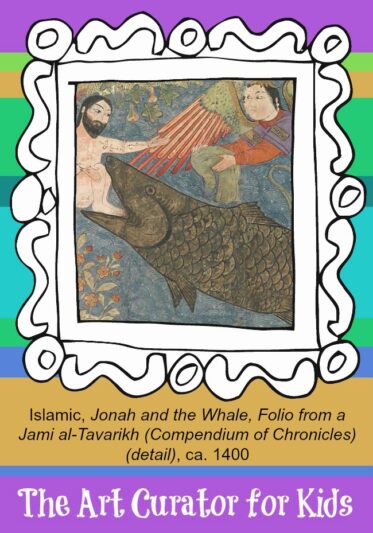
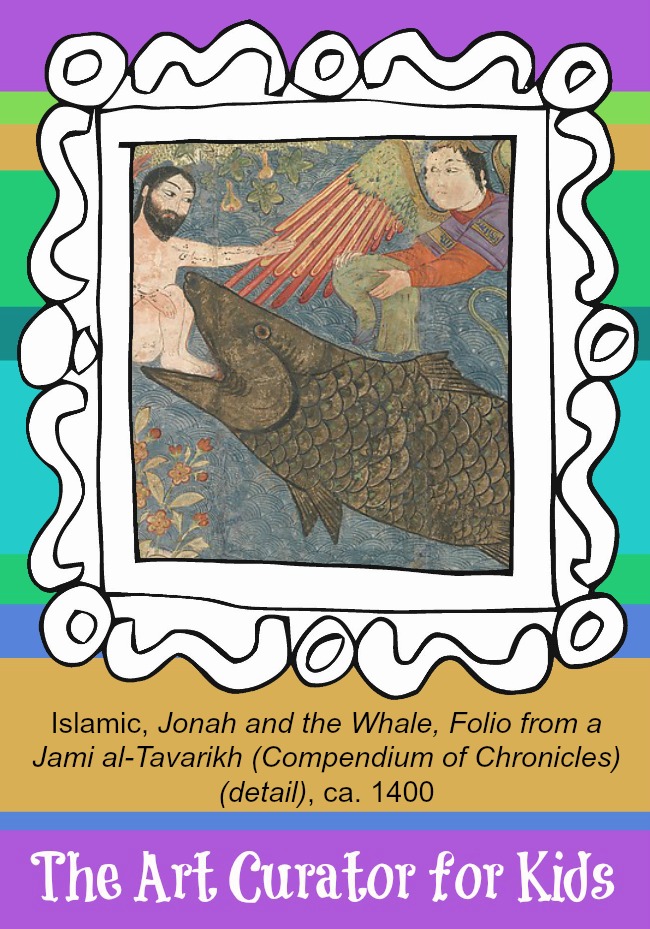
The Art Curator for Kids - Artwork of the Week - Islamic, Jonah and the Whale, Folio from a Jami al-Tavarikh, ca. 1400

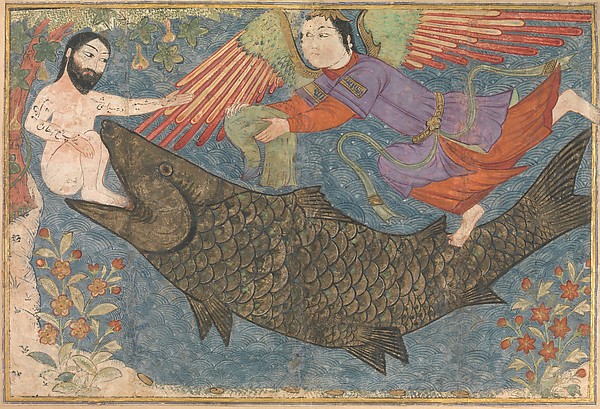
The Art Curator for Kids - Artwork of the Week - Islamic, Jonah and the Whale, Folio from a Jami al-Tavarikh, ca. 1400

I love the bold patterns and colors in this Islamic painting from ca. 1400.

Islamic, Jonah and the Whale, Folio from a Jami al-Tavarikh (Compendium of Chronicles), ca. 1400

This painting documents the story of Jonah and the Whale as told in the Qur’an (37:139). The story is very similar to the telling of Jonah and the Whale from the Bible. You can read more about it here.

To sum it up, Jonah shirked his responsibility of an important mission, and then he got on a ship. There was a major storm, and the men on the ship believed it was a punishment from God. Jonah was thrown from the ship because he was the one who was believed to be responsible. The storm died down, and then a big fish/whale swallowed Jonah where he spent time praying and repenting. God forgave Jonah and sent him a plant to the shore to help shade him and restore his health. Jonah then fulfilled his mission.

What part of the story do you think the artist is representing here?

This is the end of the story when the whale returns Jonah to the shore. You can see the plant sent from God sprouting up above him, and an angel hands Jonah some clothes. Jonah reaches out for the clothes tired, modest, and humbled.

Middle Eastern and North African Heritage Month | Multicultural Kid Blogs
This post is part of the Middle Eastern and North African Heritage Blog Series and Giveaway. Please visit our landing page for the full schedule and to link up any of your posts on sharing Middle Eastern and North African heritage with kids.

Filed Under: Art and Artists


August 10, 2015 2 Comments

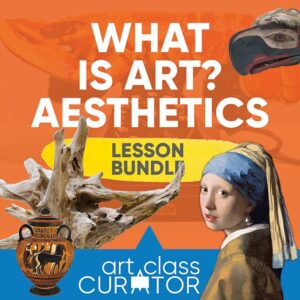
Art and Aesthetics Lesson Bundle

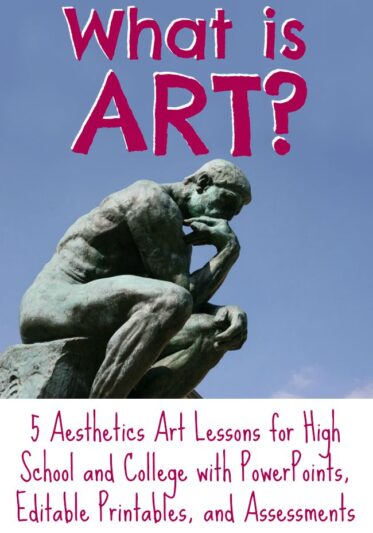
The Art Curator for Kids and Museum Art School - What is art - Aesthetics Lesson Plan Bundle with PowerPoints, Printable Worksheets, and Assessments

I always start out my art appreciation classes with some discussions on art and aesthetics: questions about the philosophy of art. It gets the students in the mindset that they have to THINK in this art class, and all of the art and aesthetics discussions are usually a lot of fun!

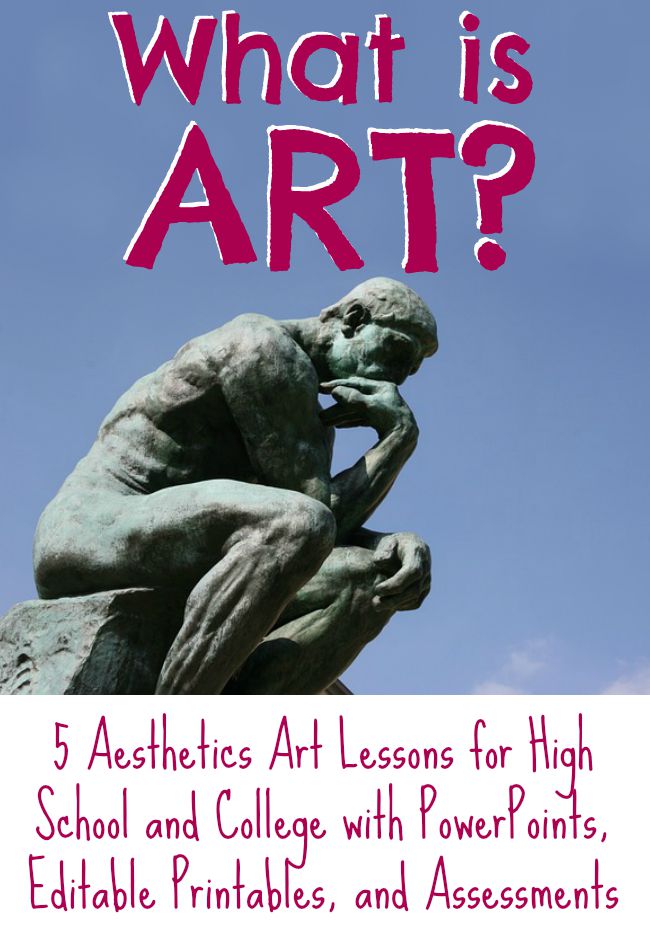
As a part of The Curated Connections Library, I have developed a bundle of art and aesthetics lessons, complete with lesson plans, PowerPoints, ready-to-use editable student activity sheet handouts, artwork questioning strategies, and assessment questions.

The Art Curator for Kids and Museum Art School - What is art - Art and Aesthetics Lesson Plan Bundle with PowerPoints, Printable Worksheets, and Assessments

Get the Full Lesson!

This Lesson is in The Curated Connections Library!

Find the full lesson from this post along with hundreds of other art teaching resources and trainings in the Curated Connections Library. Click here for more information about how to join or enter your email below for a free SPARKworks lesson from the membership!
Join the List

Get the Full Lesson!

This Lesson is in The Curated Connections Library!

Find the full lesson from this post along with hundreds of other art teaching resources and trainings in the Curated Connections Library. Click here for more information about how to join or enter your email below for a free SPARKworks lesson from the membership!

Art and Aesthetics

Aesthetics is the philosophy of art. Every time you say “My kid could have done that!” in a museum, you are engaging in an aesthetics discussion worthy of the great philosophers.

Examples of philosophy art and aesthetic questions include:

  • What is art?
  • What is an artist? Can it be art if it was not made by an artist?
  • Why is that art and that not?
  • Why did that artwork sell for $4 million?
  • Does art have to be beautiful to be considered art?
  • Are a child’s drawings art?
  • Can something be art that wasn’t intended to be art?

Why Teach Art and Aesthetics?

So much of a child’s education is concrete and filled with correct answers. There are no right answers in aesthetics. This helps a student’s creativity, confidence, and problem-solving skills. Art is not one thing, and discussing aesthetics helps students learn the depth and complexities of art.

Art and Aesthetics Lesson Bundle

Introduce your high school and college students to the complexities of art with this art and aesthetics lesson plans bundle.

This resource includes:

  • Lesson: Introduction to Art/Why Study Art
  • Lesson: What is art?
  • Lesson: Aesthetics Puzzles about Art
  • Lesson: Object Analysis – Art/Artifact
  • Aesthetics Artworks: Art about Art with Discussion Questions
  • Aesthetics Assessment Questions

Files:

  • 13 page PDF with lesson outlines, discussion questions, assessment questions, and resources
  • 5 PowerPoint files
  • 4 Printable and editable student activity sheets (each in 2 formats–pdf and doc)

If you are a member of The Curated Connections Library, you can get this lesson and all of my other resources for one low monthly or yearly fee. Find out more information here.

Aesthetics Lesson Bundle

What is art? Get your students in the mindset to THINK in art class and lead fun art discussions with this lesson bundle!

Buy Now

Filed Under: Art Connection Activities, Downloads and Resources, Featured


August 7, 2015 2 Comments

Looking at Art with Kids: Video of John Sloan’s South Beach Bathers

The Art Curator for Kids - How to Talk about Art with Kids - John Sloan , South Beach Bathers, 1907-1908

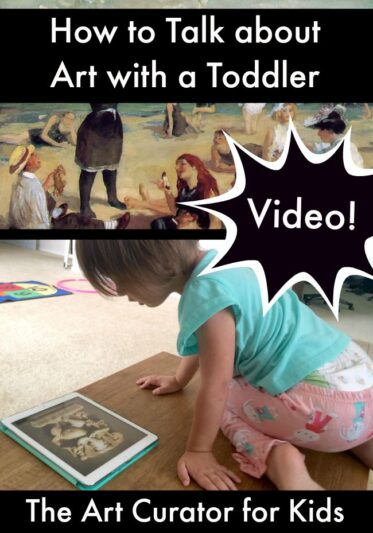
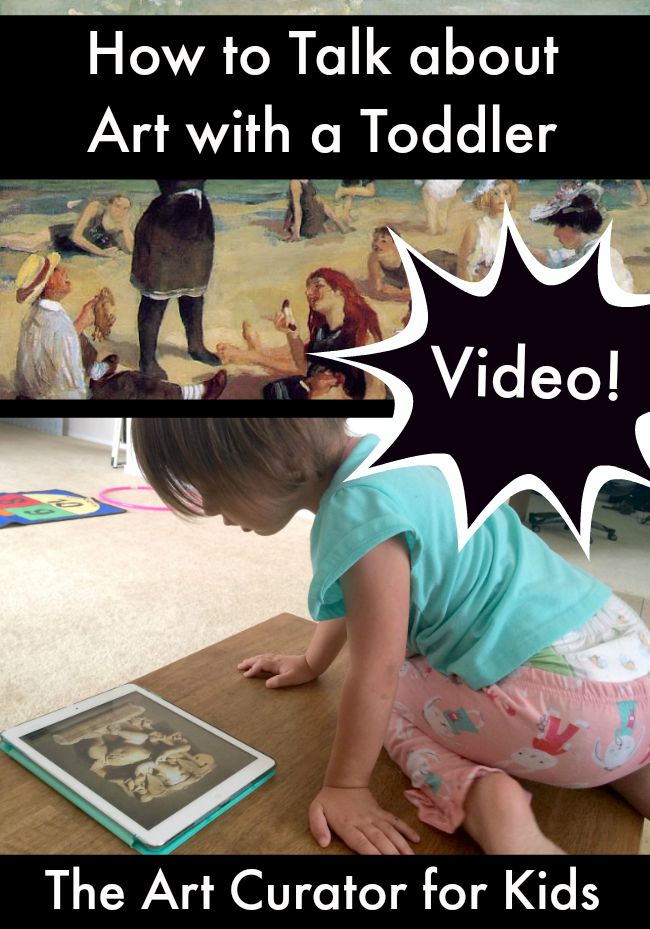
I made a video of me talking about art with my toddler last year after I wrote about How Artists Depict Space with John Sloan’s South Beach Bathers, but then I never posted it! I’m fixing that now. She is now half a year older, so I love hearing her sweet voice again.

The Art Curator for Kids - How to Talk about Art with Kids - John Sloan , South Beach Bathers, 1907-1908

Here’s the video of my Zuzu talking about art. She gets bored, and I left that in. Keeping it real! 🙂

I love using this painting to teach about space, and I just find it to be a delightful painting.

Filed Under: Art and Artists, Art Connection Activities
Tagged With: john sloan


August 5, 2015 2 Comments

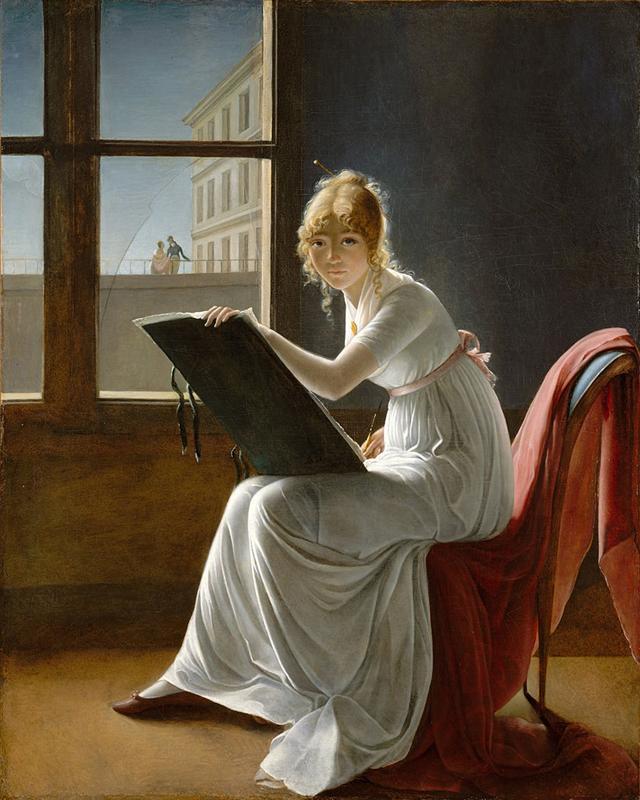
Artwork of the Week: Young Woman Drawing by Marie-Denise Villers

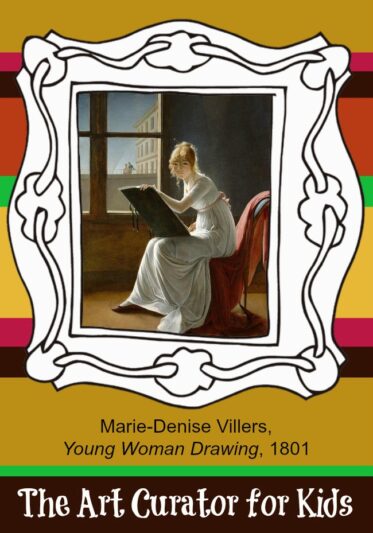
The Art Curator for Kids - Artwork of the Week - Marie-Denise Villers, Young Woman Drawing, 1801

The Art Curator for Kids - Artwork of the Week - Marie-Denise Villers, Young Woman Drawing, 1801

Welcome back to Artwork of the Week! I’m really enjoying writing the posts for this series, so I hope you are finding them useful. 🙂

Today, I chose another painting that I just find beautiful.

Marie-Denise Villers, Young Woman Drawing, 1801

There is a lot to find intriguing about this artwork. The first thing that grabs me is the woman’s haunting stare. I love that the lighting comes from behind her because she is an artist. She would sit in a way that her art was well lit. Her hair and dress glow with the backlighting.

The people on the balcony in the background emphasize her solitude. We are left to wonder what is on her paper, but the way she stares intently out to the viewer makes me think she is drawing me, and now you, and also whoever else is reading this post, and whoever is looking at this right now at the Met Museum. She pulls us in and makes us a part of the painting.

Another intriguing aspect of this painting is its history. It was originally attributed to the famed Neoclassical painter, Jacques-Louis David, but after studying the history of its exhibition, they realized he could not have painted this. For a long time, this was a whodunnit mystery. It was attributed to another female painter for a while, and then it was labeled as unknown artist until 1996, more study revealed that it was probably created by Marie-Denise Villers.

I got all my information about this painting on the Met Museum website. Click this link and then click “Catalogue Entry” for more information about the artist and artwork.

The Met Museum has an awesome audio series on their website called Connections. Curators and others talk about the art in the museum in relation to their own lives. It’s a beautiful series. This artwork is in a great one called Anonymous, and it reflects on the anonymous women depicted in artworks. It’s great. Check it out here.

Filed Under: Art and Artists
Tagged With: marie-denis villers


July 31, 2015 4 Comments

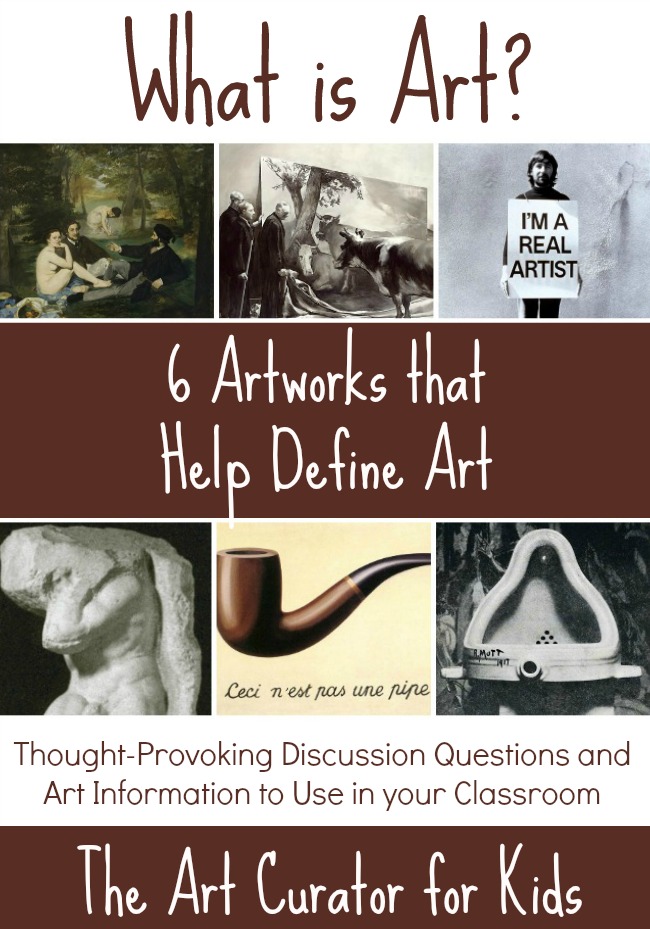
What is art? 6 Artworks that Help Define Art

The Art Curator for Kids - Art About Art - What is art? - 6 Artworks that Help Define Art - Aesthetics Discussion Questions

A few months ago, I shared with you 6 artworks about other artworks. I love this art about art theme, so I want to keep going with it today. The art about art artworks in this collection are works that help define what art is. They make you think about that ultimate art and aesthetics question, “What is art?“

The Art Curator for Kids - Art About Art - What is art? - 6 Artworks that Help Define Art - Aesthetics Discussion Questions

In my community college classes early in the semester, I have all of these artworks in an “art about art” lesson. I’ll share some of the discussion points and why I put them in this art about art category below. You will see the last question of each question list below is, “What does this artwork tell us about art?” That’s how I tie them all together. I have also divided the class into groups assigning each group one artwork to analyze and then present their ideas to the class.

Grade Level: These artworks and discussion questions are best geared toward high school or college students.

Note: Several of these artworks have nudity. My policy is to not censor on the blog because that is my personal approach, and I leave it up to you as the teacher or parents to decide if you are comfortable with that.

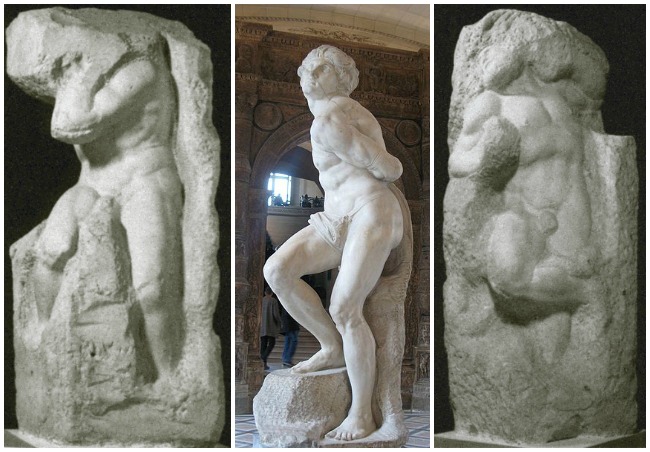
Michelangelo Buonarotti, Slaves, 1513-1516

Michelangelo Buonarotti, Slaves, 1513-16 - Middle Photo Credit-Dada
Michelangelo Buonarotti, Slaves (Atlas, Rebellious, Awakening), 1513-16 (Middle Photo Credit: Dada)

I don’t know if Michelangelo was considering this when he made these artworks, but to me, these sculptures address this art about art theme in two different ways. First, I love how these sculptures show the relationship of the artist to the art. You can see the artist’s hand, and it really shows you how incredibly hard it is to make these sculptures. The contrast of the rough and smooth textures really highlights this.

But, the main reason I chose these artworks is how they show the figures attempting to break free from the stone. Michelangelo famously said, “I saw the angel in the marble and carved until I set him free.” And he also said, “The best artist has that thought alone Which is contained within the marble shell; The sculptor’s hand can only break the spell To free the figures slumbering in the stone.” Michelangelo believed the figure was there, and it was his job to release it.

Questions to Ask: What is happening here? What do you notice? What is this sculpture about? Who are these men? What are they doing? Why did Michelangelo choose to depict them this way? What does this sculpture tell us about art?

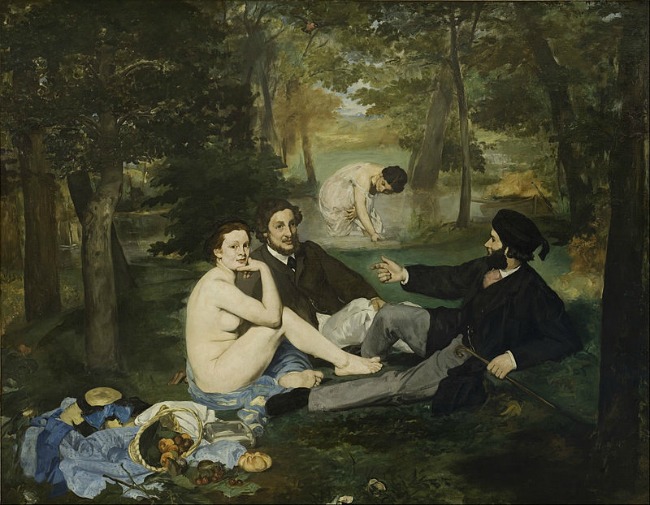
Edouard Manet, Le Dejeuner sur L’Herbe (Luncheon on the Grass), 1863

Edouard Manet, Le Dejeuner sur L'Herbe (Luncheon on the Grass), 1863
Edouard Manet, Le Dejeuner sur L’Herbe (Luncheon on the Grass), 1863

Nudity is a very common subject in art, but when this painting was first displayed at the Salon des Refusés it was really shocking and controversial? Why? Because, it was normal to have nudes in a mythological or allegorical context, but it was not normal to have a nude woman in a contemporary setting–especially one surrounded by clothed men.

Another dimension to this is the stare by the woman to the viewer. Her looking out at us makes us feel a little voyeuristic in a way. I think it can spark an interesting discussion about the connection between the artwork and the viewer.

Questions to Ask: What is your initial reaction to this picture? How does this painting make you feel? Comfortable? Uncomfortable? Why? What is happening here? How does the artist address gender? Why is the woman looking out at us? What does this painting tell us about art?

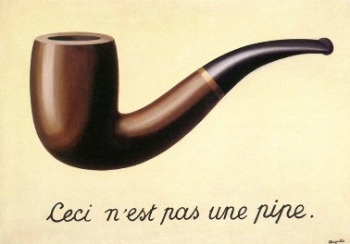
René Magritte, The Treachery of Images (This is Not a Pipe), 1929

René Magritte, The Treachery of Images (This is Not a Pipe), 1929

The text on this image says, “This is not a pipe.” At first, this is confusing to my students usually. “Yes, it is.” they think. But, when you keep thinking about it, you realize no, it isn’t a pipe. It is a canvas with oil paint on it (or a bunch of pixels of color projected onto the screen on this website). It is not a pipe; it is a picture of a pipe. Ultimately, pictures and words are just symbols for the real thing.

I usually bring in a little bit of Plato’s philosophy into this discussion. Plato believed that art is an imitation of an imitation. He believed that all things were originally an idea from God. So a pipe is not a pipe. A pipe is an idea made by God. An actual real-life 3D pipe is an imitation of God’s idea of a pipe. So, a painting of a pipe is an imitation of the pipe-maker’s imitation of God’s idea of a pipe. Confused, yet?

Questions to Ask: This says, “This is not a pipe.” What was the artist trying to say? What is more real–a pipe that you could actually smoke, a picture of a pipe, or the word “pipe” written out on a piece of paper?

Aesthetics Lesson Bundle

What is art? Get your students in the mindset to THINK in art class and lead fun art discussions with this lesson bundle!

Buy Now

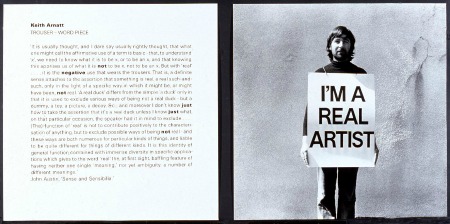
Keith Arnatt, Trouser – Word Piece, 1972-89

Keith Arnatt, Trouser - Word Piece, 1972-89
Keith Arnatt, Trouser – Word Piece, 1972-89

Conceptual art from the 1960s and 70s is some of the most intriguing art to me. Artists during this time just did anything and everything to push the boundaries of what is and is not considered art. This piece by Keith Arnatt has a photo of the artist holding a sign saying “I’m a real artist” plus a text quotation from a book that questions how something changes when you add the word “real” in front of it. Read more about the work here.

Questions to Ask: What is your first reaction to this? What message was the artist trying to convey? What is a real artist? What is a not real artist? What makes someone an artist?

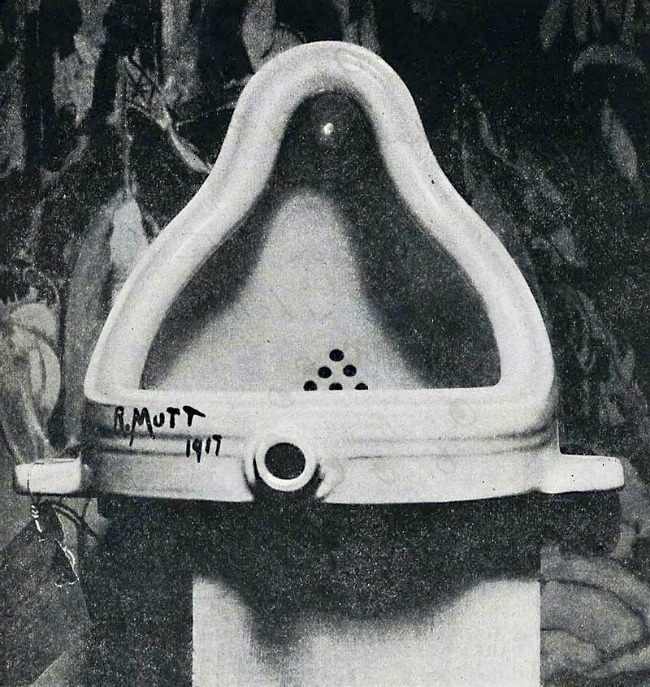
Marcel Duchamp, Fountain, 1917

Marcel Duchamp, Fountain, 1917

Marcel Duchamp took a urinal, placed it on its side, signed a fake artist’s name on it, and put it in an art exhibit. This begs the question, does the artist have to actually make the object in order for it to be art?

Questions to Ask: Is this art? Is this allowed? Is art about the idea or the end result? Would this still be art if it wasn’t in an art exhibit? 

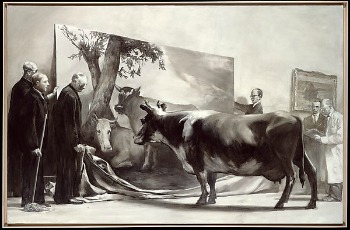
Mark Tansey, The Innocent Eye Test, 1981

Mark Tansey, The Innocent Eye Test, 1981

I think this artwork is delightful. I see these scientific men trying to determine the merits of a painting’s “realness” by seeing if it would fool a cow. It’s funny. Here’s a quotation from the artist to help you think about this one even more.

I think of the painted picture as an embodiment of the very problem that we face with the notion “reality.” The problem or question is, which reality? In a painted picture, is it the depicted reality, or the reality of the picture plane, or the multidimensional reality the artist and viewer exist in? That all three are involved points to the fact that pictures are inherently problematic.

— Mark Tansey, quoted in Mark Tansey: Visions and Revisions, by Arthur C. Danto (Source)

Questions to Ask: What is each character thinking, and why are they there? What do they want of the cow? Why is the cow there? What is he going through? What does the artist want from us? What’s with the mop? Why are they wearing glasses? What does this say about art? What does this painting mean?

Learn more about teaching Art and Aesthetics!

This post is small a part of my Art and Aesthetics Lesson Bundle. Get this lesson and more as a member of the Art Class Curator Curated Connections Library.

Get the Full Lesson!

This Lesson is in The Curated Connections Library!

Find the full lesson from this post along with hundreds of other art teaching resources and trainings in the Curated Connections Library. Click here for more information about how to join or enter your email below for a free SPARKworks lesson from the membership!

Join the List

Get the Full Lesson!

This Lesson is in The Curated Connections Library!

Find the full lesson from this post along with hundreds of other art teaching resources and trainings in the Curated Connections Library. Click here for more information about how to join or enter your email below for a free SPARKworks lesson from the membership!

Thanks for visiting! Which of these do you find the most interesting? What artworks did I miss? Share your thoughts in the comments!

Filed Under: Art and Artists, Art Connection Activities
Tagged With: edouard manet, keith arnatt, marcel duchamp, mark tansey, michelangelo, rene magritte


  • Previous Page
  • Page 1
  • Interim pages omitted …
  • Page 24
  • Page 25
  • Page 26
  • Page 27
  • Page 28
  • Interim pages omitted …
  • Page 38
  • Next Page

Primary Sidebar

Hi! I’m Cindy Ingram, the creator of Art Class Curator and The Curated Connections Library

I’m on a mission to revolutionize education with the power of life-changing art connections. Art is not “extra”. Art is essential. We are empowering teachers to bridge the gap between art making and art connection, kindling a passion for art that will transform generations.

More About Me

Free Worksheets!

-Free Bundle of Art Appreciation Worksheets-

In this free bundle of art worksheets, you receive six ready-to-use art worksheets with looking activities designed to work with almost any work of art.

Download

Free Worksheets!

-Free Bundle of Art Appreciation Worksheets-

In this free bundle of art worksheets, you receive six ready-to-use art worksheets with looking activities designed to work with almost any work of art.

Enrollment in Curated Connections Library is currently open. Click here to join. Join our list to get more information and to get a free lesson from the vault! If you are purchasing for a school or school district, head over here for more information.

Check Out What’s New In The Shop

Experience Art: Engaging Art Criticism Discussions and Activities for Teachers and Students of All Ages
Call to Art: An Un-Conference for Art Educators
Curated Connections Library Membership
Perspectives High School Curriculum

More Products

Have You Listened to the Latest Podcast Episode?

Falling for Naudline Pierre’s Evocative Art: A Conversation with Madalyn (Part 2)
More Episodes

Testimonials

I like how this program, unlike other art class resource membership programs, feels authentic. It's like art matters more here, and not fancy flash-in-the-pan trendiness. The goal of Art Class Curator seemed to be helping kids develop a lifelong love and art appreciation versus "Hey, look. I painted this fish."
Erin A.
Your questions are helping me to delve into much deeper learning, and my students are getting better at discussion-and then, making connections in their own work. Art Class Curator is awesome!
Denise W.
Interestingly, my lower performing classes really get engaged in these [lessons] and come away with some profound thoughts!
Melissa G.
I had the most amazing 6th grade class today. They were jumping out of their seats with hands raised just to respond and give input. It was as if I was waving candy in front of them! They saw more and more and the ideas and interpretations unfolded. So cool!!! This is what makes teaching art so wonderful – thank you!!
Caroline G.
I just wanted to thank you for the invaluable resource you have through Art Class Curator. Not only do you have thought provoking activities and discussion prompts, but it saves me so much time in preparing things for myself! I feel like I’ve only scratched the surface with your site.
Maryjane F.

Get Art Inspiration To Your Inbox!

Enter your email address to get regular art inspiration to your inbox
plus a BUNDLE OF 6 FREE WORKSHEETS!
We hate SPAM and promise to keep your email address safe.
Download

Free Worksheets!

*Free Bundle of Art Appreciation Worksheets*

In this free bundle of art worksheets, you receive six ready-to-use art worksheets with looking activities designed to work with almost any work of art.

Copyright © 2026 Ignite Art, LLC DBA Art Class Curator •  All rights reserved  •  Privacy Policy  •  Terms of Service  •  Site Design by Emily White Designs