• Skip to main content
  • Skip to primary sidebar
  • About
    • About Art Class Curator
    • Contact
    • Speaking
    • Media & Press
    • Programs for Schools
  • Blog
  • Podcast
  • Shop
  • Join
  • Member Login

Art Class Curator

Hands-on and Minds-curious Art Learning

  • Art & Artists
  • Art Connection Activities
  • Art Teacher Tips
  • Elements & Principles
  • Downloads & Resources
Home
  • About
    • About Art Class Curator
    • Contact
    • Speaking
    • Media & Press
    • Programs for Schools
  • Blog
    • Art & Artists
    • Elements & Principles
    • Art Connection Activities
    • Art Teacher Tips
    • Downloads & Resources
  • Book
  • Podcast
  • Shop
  • Join
  • Member Login

lawrence beall smith

January 29, 2017 2 Comments

Easy to Interpret for a Reason: Analyzing World War II Propaganda Posters

This semester, my schedule works out to where one of my classes will not have art almost each Friday due to our school’s new (awesome) service program. I’d like to keep them on the same schedule with my other classes, so I decided to implement an artwork of the week discussion on Fridays with my other classes so that I can (attempt to) keep them all at the same pace.

The artwork of the week will be one that I choose that may or may not be related to what we are covering in class, but it will give them by the end of the semester a lot of art discussions under their belt just for the sake of looking at and thinking about art. Because that is important.

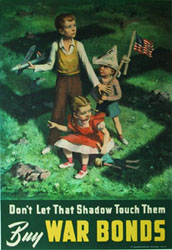
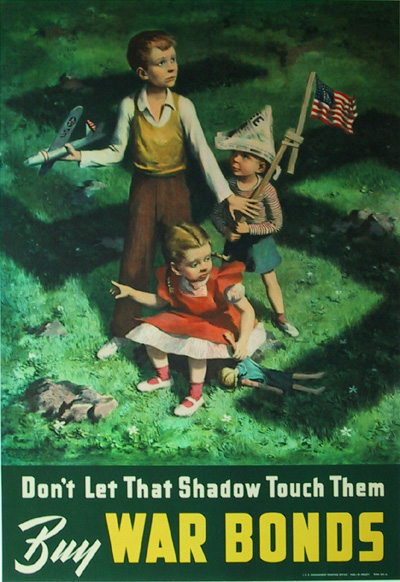
This week, we looked at Don’t Let That Shadow Touch Them by Lawrence Beall Smith. I’ve discussed this artwork many times with varying ages of students, and I would say it is good for 6th grade and older as 6th graders usually would have covered World War II at some point in their education. I also have included this work as an art criticism essay test question when I taught college as well.
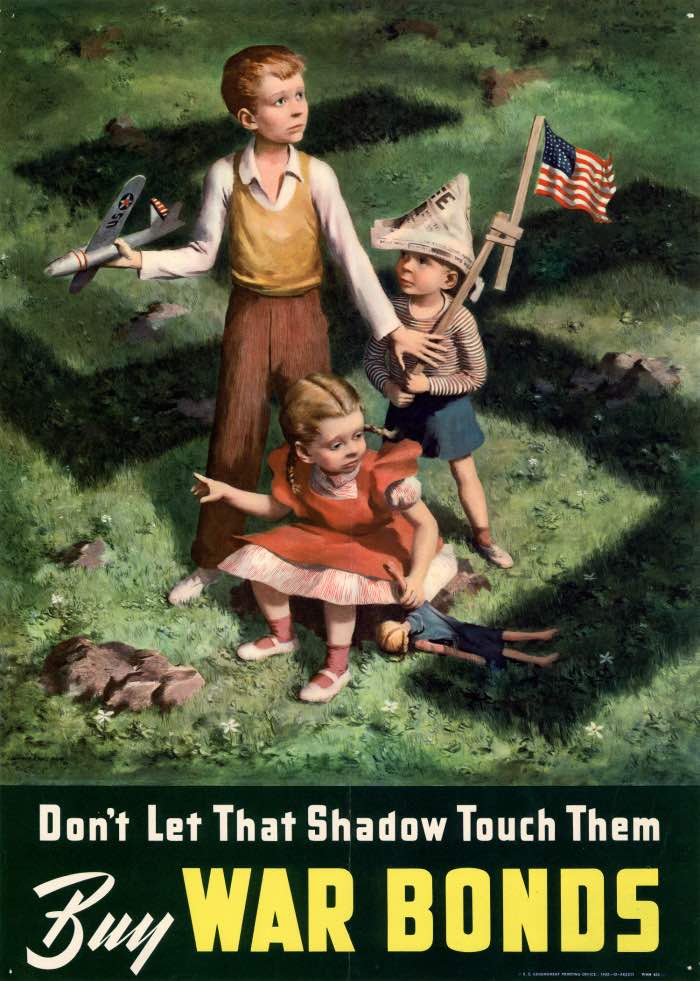
Take a look at the artwork and think about the following questions. I had my students look and write about it quietly before we had any discussion about it. These are the questions I used.

  • What does the shadow represent, and why would you not want it to touch the children?
  • What symbols and images did the artist use to create emotion in the viewer?
  • What emotion did the artist want you to feel when viewing this artwork?
  • Why was this artwork created?

I like to have students write about this one first because it is pretty easy to interpret so the discussions are not quite as long as they would be if the meaning was more enigmatic. We discuss that point though; it is easy because it was meant to be easy. The makers of the poster wanted to hit you hard and fast so you would take action.

This was a work of propaganda from the U.S. Government during World War II. The U.S. and other governments printed posters during the war in order to encourage people to support the war effort, especially through financial support by buying war bonds.
Free Poster

What Do Kids Learn from Looking at Art Poster

Our students learn so much from looking at art. Use this poster in your classroom to remind them of all the skills they’re growing!

Download

Free Poster

What Do Kids Learn from Looking at Art Poster

Our students learn so much from looking at art. Use this poster in your classroom to remind them of all the skills they’re growing!

The shadow is of course the swastika, the emblem of the Nazi party. The All-American children hold symbols of their country and the war — a toy plane, an American flag, a newspaper, and a doll. The artist inspires fear with the looming shadow and concerned expressions but takes it to the extreme with the doll who has been touched by the shadow and who now appears dead.

This artwork was featured for Masterpiece Monday, a weekly art discussion I lead on Facebook. You can watch the video below and sign up to get reminders for Masterpiece Monday by clicking here.

According to Grinnell College, this artwork was originally based off of a Canadian work with a similar theme.
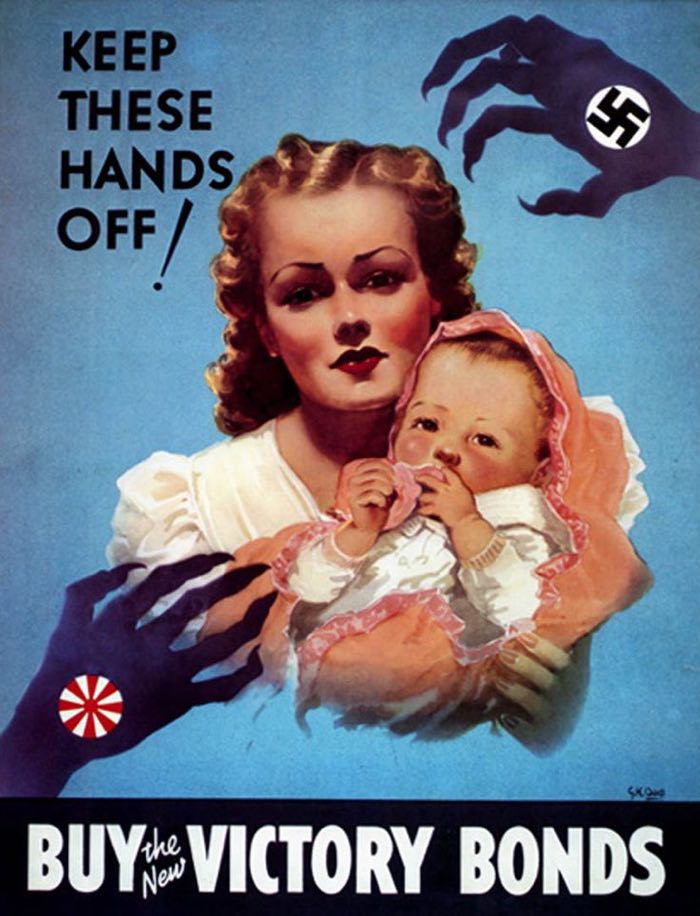
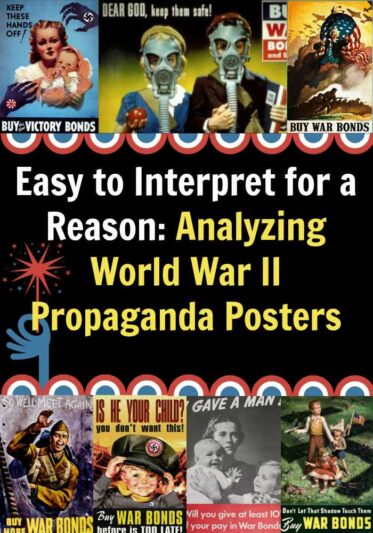
Looking through even more World War II propaganda posters, it’s interesting to see all of the people they are trying to reach and the emotions. From a patriotic dad to a lovesick new wife to a worried mom, they’ve got them all covered.

Check out this slideshow for a few more World War II posters that I found interesting!

[slideshow_deploy id=’11564′]

After discussing the work, I discuss with the students the meaning of propaganda and the choices that artists and the people who commission them make to manipulate the viewer.

We live in a world that bombards us by images, and I’d like to think that stopping and looking at art like this makes us better prepared to face what we see in magazines, on the internet, and in newspapers today.
Filed Under: Art Connection Activities
Tagged With: lawrence beall smith


September 2, 2015 Leave a Comment

Artwork of the Week: World War II Propaganda

Please note, this post includes Amazon affiliate links. As an Amazon Associate I earn from qualifying purchases.

I just finished reading an incredible book, Those Who Save Us by Jenna Blum. It’s a story about a German woman and her child from World War II in Germany. It was a truly incredible book, and I am actually a little sad I finished it. I’ve been thinking of the book all day, so I decided to let me reading inspire this week’s Artwork of the Week. This artwork was also included in my 10 Artworks for a Stimulating Discussion last week.

The Art Curator for Kids - Don't Let That Shadow Touch Them - Buy War Bonds - Artwork of the Week
Lawrence Beall Smith, Don’t Let That Shadow Touch Them, 1942

Buy a print of this poster on Amazon for only $6.98.

Propaganda artworks are often great choices for students to analyze because they usually have very clear and blunt design choices. Because the goal was often to impact the viewer’s emotions and lead them to some sort of action, the choices of the artist are bold.

This one, like so many, uses children to impact the viewer. By juxtaposing the innocence of the child with the dark, sinister symbolism of the Nazi swastika, it incites fear and our parental protective instincts. If the image didn’t grab you enough, the artist adds text to make it clear what he wants us to do after seeing this image.

In our media-frenzied society, it is absolutely imperative that we teach our kids to decipher this sort of image.

Here are some discussion questions you could use to discuss this image with your students.

  • What’s going on in this picture?
  • What is the shadow on the ground? What does it symbolize?
  • What do you think this artist was trying to accomplish with this picture? How does the artist use children to accomplish this?
  • What emotions does this artwork incite?
  • What parts of the image are touched by the shadow? What happened to it? (the doll touches the shadow and looks dead)
  • How do you think the American people during World War II would have responded to this picture?

This artwork is included in the first test that I give to my community college classes. I have the students analyze it using the Four Steps of Art Criticism.

The Four Steps of Art Criticism Lesson Plan

This lesson covers the four steps of art criticism using artworks. Explore description, analysis, interpretation, and evaluation with your students using engaging activities and examples.

Buy Now

Filed Under: Art and Artists
Tagged With: lawrence beall smith


August 24, 2015 2 Comments

10 Artworks Perfect for an Art Criticism Lesson

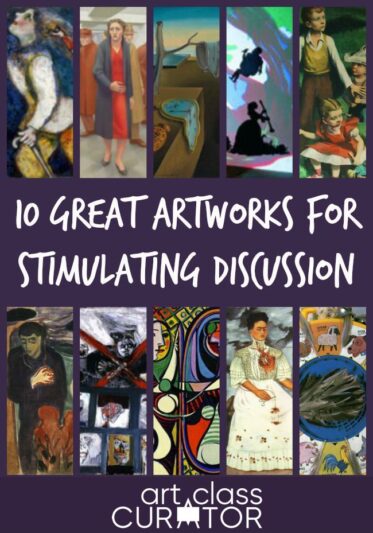
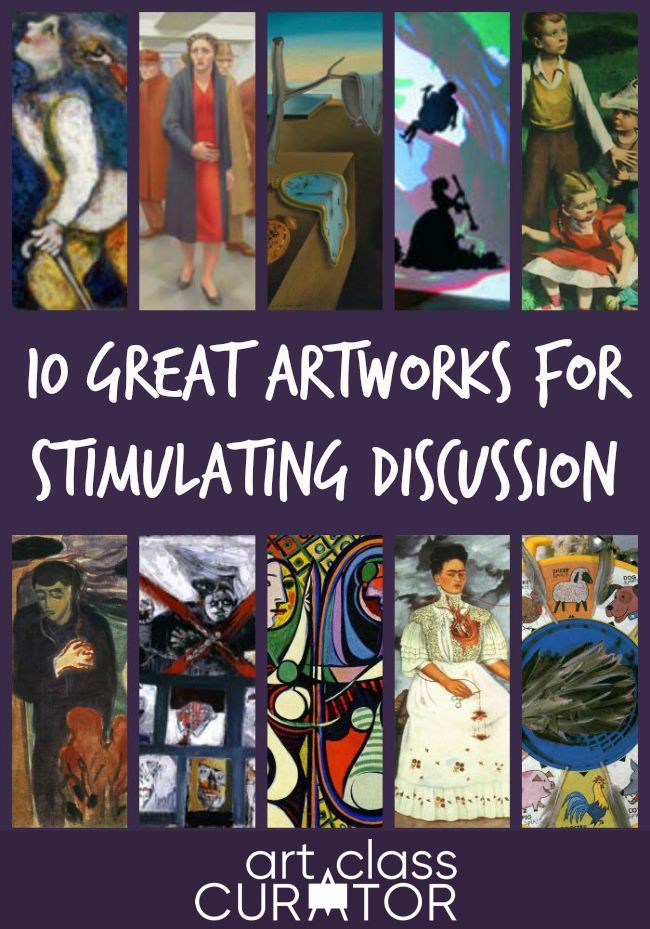
Artworks for Stimulating Discussion

Through my many years of teaching, I’ve accumulated a nice list of artworks that are perfect to discuss with students and teach them how to analyze art. These artworks spark lots of interesting ideas, have easy to notice design choices that contribute to the meaning and always lead to a great art criticism discussion (or a great student-written essay) with the students.

Artworks for Stimulating Discussion

These artworks are great for high school and college students, but many work for elementary and middle as well. You can use your judgment to decide what works best for your students.

The Four Steps of Art Criticism Lesson Plan

I created this list for my lesson on the art criticism steps available for sale. The Four Steps of Art Criticism lesson teaches students how to analyze art through the art criticism steps of description, analysis, interpretation, and evaluation. This resource includes a lesson outline (pdf), a PowerPoint, a written assignment instructions handout (pdf and editable .doc), a quiz (pdf and editable .doc), and a list of artworks including (but not limited to) the ones below. Buy it now for $14, and use it in your classroom tomorrow!

The Four Steps of Art Criticism Lesson Plan

This lesson covers the four steps of art criticism using artworks. Explore description, analysis, interpretation, and evaluation with your students using engaging activities and examples.

Buy Now

Ten Artworks Perfect for Art Criticism with Students

Most of these are not in the public domain. I have included small thumbnails for your reference. Click the picture to view a larger image.

Marc Chagall, Young Girl in Pursuit, ca. 1927-28

Marc Chagall, Young Girl in Pursuit, ca. 1927-28

This one is so simple and straight-forward, but it always sparks the imagination of the students.

Questions to Ask: How does this artwork make you feel? What choices does the artist make to make you feel that? Who is this woman? Why is there a woman in her hair? What is the meaning of this artwork?

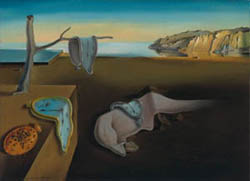
Salvador Dalí, Persistence of Memory, 1931

Salvador Dalí, Persistence of Memory, 1931

Everyone knows this one. I read some study one time that said Salvador Dalí was the most recognized artist name among people interviewed on the street. I found that to be fascinating. From the melting clocks to the sleeping head, to the ants crawling all over the pocket watch, to is that a snake coming out of his nose?, this one has a lot for students to unpack.

Get the Full Lesson!

This Lesson is in The Curated Connections Library!

Find the full lesson from this post along with hundreds of other art teaching resources and trainings in the Curated Connections Library. Click here for more information about how to join or enter your email below for a free SPARKworks lesson from the membership!

Join the List

Get the Full Lesson!

This Lesson is in The Curated Connections Library!

Find the full lesson from this post along with hundreds of other art teaching resources and trainings in the Curated Connections Library. Click here for more information about how to join or enter your email below for a free SPARKworks lesson from the membership!

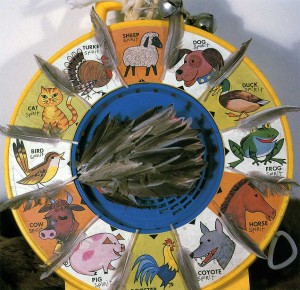
John Feodorov, Animal Spirit Channeling Device for the Contemporary Shaman, 1963

John Feodorov, Animal Spirit Channeling Device for the Contemporary Shaman, 1997

I wrote more about this one on the post: 5 Artworks to Intrigue your High Schooler.

Frida Kahlo, The Two Fridas, 1939

Frida Kahlo, The Two Fridas, 1939

This one is also on 5 Artworks to Intrigue your High Schooler. Read more there. 🙂

Edvard Munch, Separation, 1896

Edvard Munch, Separation, 1896

Students love coming up with stories about this one. He is having a heart attack, and the woman is an angel taking him away. The woman is the ghost of his wife who has passed. And more, lots of great stories. The artist’s use of line, color, and contrast adds meaning to the student’s interpretations.

Luis Felipe Noé, Cerrado por brujería [Closed by Sorcery], 1963

Luis Felipe Noé, Cerrado por brujería [Closed by Sorcery], 1963


This is one of my all time top artworks to discuss with students. I usually show it on the first day of class in my community college art appreciation class. I wrote a whole post about it here.

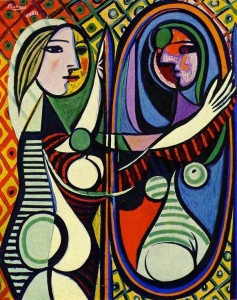
Pablo Picasso, Girl before a Mirror, 1932

Pablo Picasso, Girl Before a Mirror, 1932

This painting made me weep when I saw it the first time. It’s stunning in person. Read more about it on 5 Artworks that Promote Introspection. This is a great one to have students write about at the beginning of class.

Lawrence Beall Smith, Don’t Let That Shadow Touch Them, 1942

Lawrence Beall Smith, Don’t Let That Shadow Touch Them, 1942

I love connecting history and art. I include this piece of propaganda art on one of my tests for students to write about. You would be surprised how many students don’t recognize the swastika. In addition to discussing the power images have on our feelings and decision, the historical significance of the image is an important discussion to have with the students.

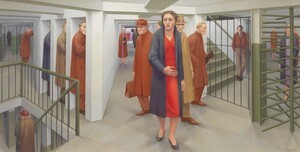
George Tooker, The Subway, 1950

George Tooker, The Subway, 1950

Creepy, suspicious men and multiple perspectives make this one a fun one to talk about with students. The lone, solitary woman with the concerned expression makes us think, and why is she holding her stomach? Lots to talk about.

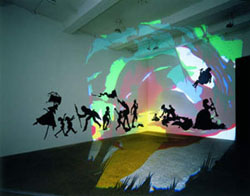
Kara Walker, Darkytown Rebellion, 2001

Kara Walker, Darkytown Rebellion, 2001

This one has some sensitive subject matter. I wouldn’t hesitate to use this for a college class, but only you can decide if it works for your students. I actually got in an argument with one of my friends in front of one of Kara Walker’s artworks like this one. I love art that sparks opinion and discussion. I don’t shy away from big topics in my classroom. Art opens up important dialogues, so I think it is important to let those happen in the classroom. After students look and figure out what is going on through art criticism, we discuss the element of the projection and how the viewer can become a part of the art by standing in between the light and the wall. It leads to some interesting thoughts.

Filed Under: Art and Artists
Tagged With: best of art class curator, edvard munch, frida kahlo, george tooker, john feodorov, kara walker, lawrence beall smith, luis felipe noe, marc chagall, pablo picasso, salvador dali


Primary Sidebar

Hi! I’m Cindy Ingram, the creator of Art Class Curator and The Curated Connections Library

I’m on a mission to revolutionize education with the power of life-changing art connections. Art is not “extra”. Art is essential. We are empowering teachers to bridge the gap between art making and art connection, kindling a passion for art that will transform generations.

More About Me

Free Resource!

82 Questions About Art

82 questions you can use to start and extend conversations about works of art with your classroom. Free download includes a list plus individual question cards perfect for laminating!

Download

Free Resource!

82 Questions About Art

82 questions you can use to start and extend conversations about works of art with your classroom. Free download includes a list plus individual question cards perfect for laminating!

Enrollment in Curated Connections Library is currently open. Click here to join. Join our list to get more information and to get a free lesson from the vault! If you are purchasing for a school or school district, head over here for more information.

Check Out What’s New In The Shop

Experience Art: Engaging Art Criticism Discussions and Activities for Teachers and Students of All Ages
Call to Art: An Un-Conference for Art Educators
Curated Connections Library Membership
Perspectives High School Curriculum

More Products

Have You Listened to the Latest Podcast Episode?

Falling for Naudline Pierre’s Evocative Art: A Conversation with Madalyn (Part 2)

More Episodes

Testimonials

I like how this program, unlike other art class resource membership programs, feels authentic. It's like art matters more here, and not fancy flash-in-the-pan trendiness. The goal of Art Class Curator seemed to be helping kids develop a lifelong love and art appreciation versus "Hey, look. I painted this fish."
Erin A.
Your questions are helping me to delve into much deeper learning, and my students are getting better at discussion-and then, making connections in their own work. Art Class Curator is awesome!
Denise W.
Interestingly, my lower performing classes really get engaged in these [lessons] and come away with some profound thoughts!
Melissa G.
I had the most amazing 6th grade class today. They were jumping out of their seats with hands raised just to respond and give input. It was as if I was waving candy in front of them! They saw more and more and the ideas and interpretations unfolded. So cool!!! This is what makes teaching art so wonderful – thank you!!
Caroline G.
I just wanted to thank you for the invaluable resource you have through Art Class Curator. Not only do you have thought provoking activities and discussion prompts, but it saves me so much time in preparing things for myself! I feel like I’ve only scratched the surface with your site.
Maryjane F.

Get Art Inspiration To Your Inbox!

Enter your email address to get regular art inspiration to your inbox
plus a BUNDLE OF 6 FREE WORKSHEETS!
We hate SPAM and promise to keep your email address safe.
Download

Free Worksheets!

*Free Bundle of Art Appreciation Worksheets*

In this free bundle of art worksheets, you receive six ready-to-use art worksheets with looking activities designed to work with almost any work of art.

Copyright © 2026 Ignite Art, LLC DBA Art Class Curator •  All rights reserved  •  Privacy Policy  •  Terms of Service  •  Site Design by Emily White Designs