• Skip to main content
  • Skip to primary sidebar
  • About
    • About Art Class Curator
    • Contact
    • Speaking
    • Media & Press
    • Programs for Schools
  • Blog
  • Podcast
  • Shop
  • Join
  • Member Login

Art Class Curator

Hands-on and Minds-curious Art Learning

  • Art & Artists
  • Art Connection Activities
  • Art Teacher Tips
  • Elements & Principles
  • Downloads & Resources
Home
  • About
    • About Art Class Curator
    • Contact
    • Speaking
    • Media & Press
    • Programs for Schools
  • Blog
    • Art & Artists
    • Elements & Principles
    • Art Connection Activities
    • Art Teacher Tips
    • Downloads & Resources
  • Book
  • Podcast
  • Shop
  • Join
  • Member Login

All Posts from Art Curator for Kids

May 19, 2014 9 Comments

Charlotte Mason Picture Study: An Easy Way to Introduce Art to your Kids

Charlotte Mason Introduce important works of art to your kids

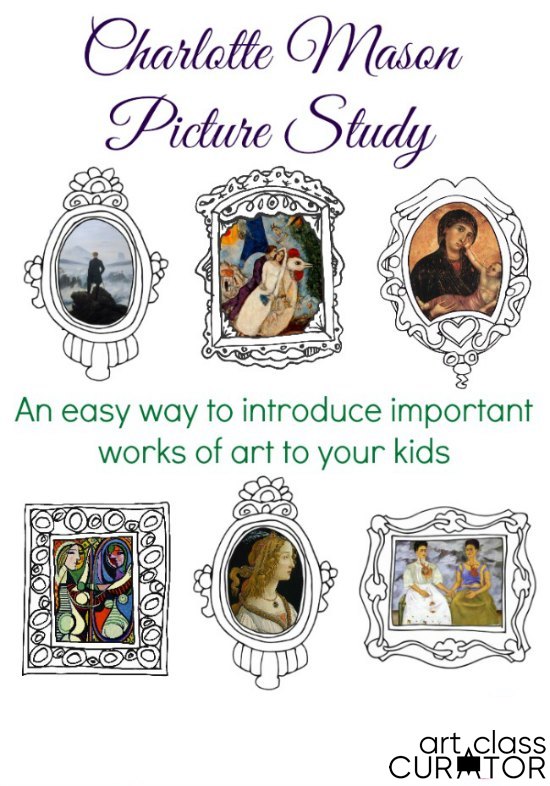
I just came across an excellent strategy for teaching homeschool art appreciation. I just had to share. It is Charlotte Mason’s Picture Study.Charlotte Mason Introduce important works of art to your kids
First off, an excellent quotation given on the post below to get is in the mood.

“Every child should leave school with at least a couple of hundred pictures by great masters hanging permanently in the halls of his imagination . . . At any rate he should go forth well furnished because imagination has the property of magical expansion, the more it holds the more it will hold.” — Charlotte Mason, Vol. 6, p. 43

Over on Homeschool Encouragement, Tonia from The Sunny Patch did a guest post called “Art Study the Easy Way.” She describes a strategy of studying 6 artists a year for 6 weeks each. Each week, you discuss just one artwork with your students. Tonia gives a great how-to which consists of the student looking closely and studying the artwork, and then narrating it back to you. Printing it in color and keeping in a binder will give your students a reminder of all the great art they have learned about in the year. Click over to the post to find out more!

Here is a good video demonstrating this process and its value. It is a must watch if you plan on doing this! She talks about how to find cheap reproductions as well.

I really love the simplicity of this program and the focus on putting the kid in the driver’s seat. In the video, she talks about having your child developing a personal relationship with the art and the artist. Love. Love.

I have a couple of additional thoughts on this activity. The picture on the post had some artist names that were all very similar. I would add some variety to make it more interesting for the kids. A whole year of Impressionism would be super boring! Also, be sure to include artists from other cultures and time periods. It is easy to focus on just the “great masters” and forget that those artists were seemed great by historians in a Western-centric and male-centric perspective.

I plan on furthering the resources on this topic and do some of the art finding and selecting for you, but this post is getting a little long. Next time, I will be sharing 6 American artists, and future posts will delve into more.

Charlotte Mason Picture Study Resources on the Art Class Curator

Here are the resources I have created so far for Charlotte Mason Picture Study. Each has a PowerPoint of 6 artworks and information about the artist.

  • Charlotte Mason Picture Study: Henry Ossawa Tanner
  • Charlotte Mason Picture Study: John Singleton Copley
  • Charlotte Mason Picture Study: Thomas Cole
  • Charlotte Mason Picture Study: Mary Cassatt
  • Charlotte Mason Picture Study: Frederic Remington

Charlotte Mason Picture Study Books and Postcards

  • Dover Art Postcard Books – In the video, she talks about the Dover art postcard books. I used to be so addicted to these back when I worked in a museum store in college! I am really trying not to order them all right now. Dover also has artist sticker books and famous artwork coloring books. I might have to break my coloring book rule for those. Step away from Amazon.com, Cindy. Step away.
  • Taschen Basic Art Series – I’ve mentioned these Taschen books on my blog before, but they are great. They focus on individual artists or styles with big reproductions and not a whole lot of text. Plus, they are cheap!

I am an affiliate of Amazon.com, and your purchase through the above links gives financial support to this blog. Thank you!
Filed Under: Art and Artists, Art Connection Activities, Art Teacher Tips


May 11, 2014 Leave a Comment

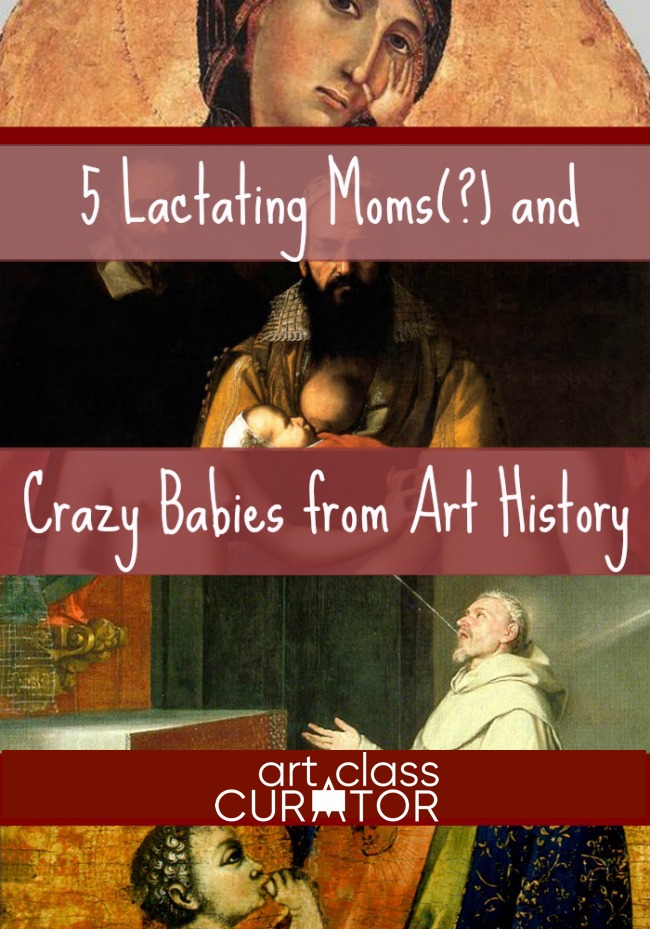
5 Lactating Moms(?) and Crazy Babies from Art History

Lactating Moms and Crazy Babies from Art History

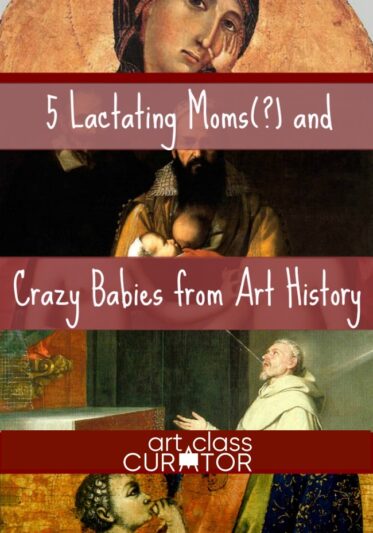
Being that today is Mother’s Day and I just finished weaning my breastfed 2-year-old off the boob juice, so I thought I’d have a little bit of fun with the Art Round-Up post this week. This is really not for your homeschool. It’s just for the moms out there, so I’m going to leave out the usual discussion questions and stuff.

Just enjoy.Lactating Moms and Crazy Babies from Art History

They really do speak for themselves.

You’re welcome.

[Read more…] about 5 Lactating Moms(?) and Crazy Babies from Art History

Filed Under: Art and Artists
Tagged With: alonso cano, cimabue, gabrielle d'estrées, jusepe de ribera, meneghello di giovanni de' canali


May 9, 2014 7 Comments

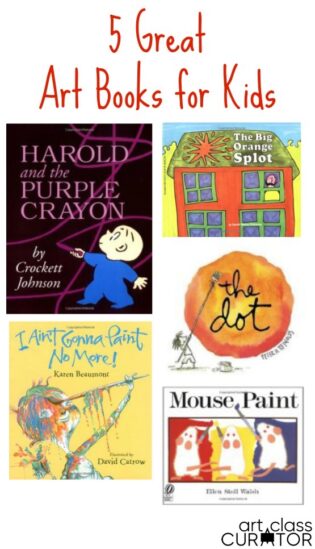
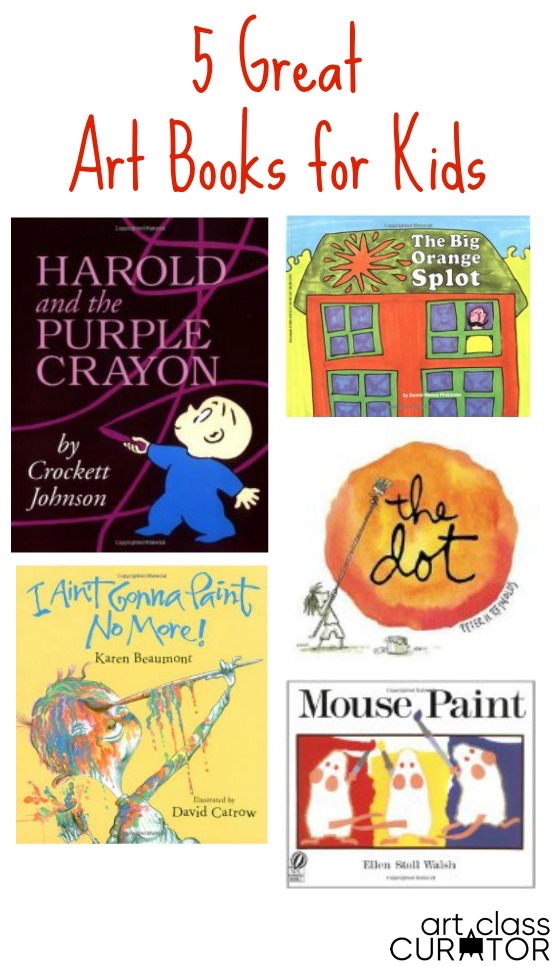
5 Great Children’s Books about Art

Great Art Books for Kids

All of these books I either own or have read before. I’ve used all of them in either my classroom or with my own kids. I highly recommend each book on this list!Great Art Books for Kids

Please note, this post includes Amazon affiliate links. As an Amazon Associate I earn from qualifying purchases.


Harold and the Purple Crayon by Crockett Johnson homeschool artHarold and the Purple Crayon by Crockett Johnson
“‘One night, after thinking it over for some time, Harold decided to go for a walk in the moonlight.’ Armed only with an oversized purple crayon, young Harold draws himself a landscape full of wonder and excitement. Full of funny twists and surprises, this joyful story shows just how far your imagination can take you. Harold and the Purple Crayon has delighted readers of all ages for over fifty years.” — Amazon.com

** My Thoughts: This book is magic. Pure and simple. I love it so much. I envision some cool room designed with this drawing as a mural. That would be awesome.


the dot by peter h. reynolds homeschool artThe Dot by Peter H. Reynolds
“A frustrated grade school artist, Vashti sits slumped over her blank piece of paper at the end of art class. ‘I just CAN’T draw!’ she tells her teacher. Her teacher first uses wit, then subtle yet clever encouragement to inspire her student to go beyond her insecurities and become, in the words of a younger boy who ‘can’t’ draw either, ‘a really great artist.'” — Amazon.com


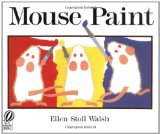
mouse paint by ellen stoll walsh homeschool artMouse Paint by Ellen Stoll Walsh
“One day three white mice discover three jars of paint–red, blue, and yellow. Both parents and children alike will appreciate this lighthearted presentation of a lesson in color. Walsh’s cut-paper collage illustrations have bold colors and just the right simplicity for the storyline. A real charmer that’s great fun as well as informative.” — School Library Journal


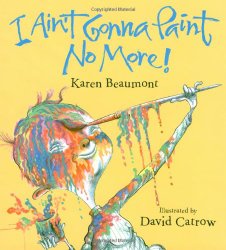
I Ain't Gonna Paint No More! by Karen Beaumont homeschool artI Ain’t Gonna Paint No More! by Karen Beaumont
“A dab of blue here, a splash of red there, a goopy smear of green . . . everywhere. To the tune of “It Ain’t Gonna Rain No More,” one creative kid floods his world with color, painting first the walls, then the ceiling, then HIMSELF! Before this feisty artist is through, he’ll have painted his head, back, hands, legs, feet, and . . . Oh no–here comes Mama!” — Amazon.com
** My Note: This does contain the phrase, “What the heck!” I think the book is so good that it’s worth your kid running around saying that. Up to you. 🙂 You haven’t lived until you have seen a classroom of kindergarteners saying “I ain’t gonna paint no more no more I ain’t gonna paint no more!”


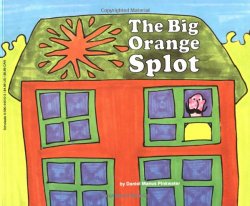
The Big Orange Splot by D. Manus Pinkwater homeschool artThe Big Orange Splot by D. Manus Pinkwater
“When Mr. Plumbeans’ house is splashed with bright orange paint, he decides a multi-colored house would be a nice change. This favorite story of creativity and individuality is back by popular demand.” — Amazon.com
** My Note: This book is so good. It’s less than $4, but it has so much possibility for art lesson connections.


I have so many more that I love, but I will save them for another day!

What did I miss? What children’s art books do you love?

Filed Under: Downloads and Resources


May 5, 2014 2 Comments

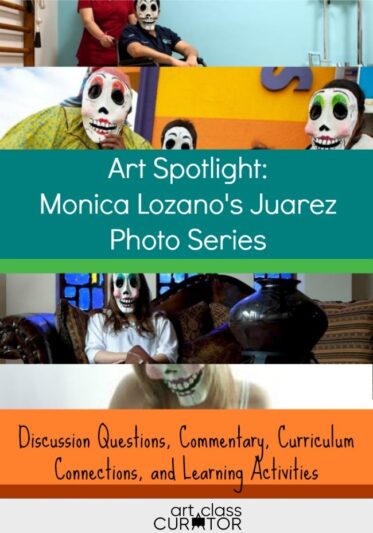
Art Spotlight: Monica Lozano’s Juarez Series

Artist Spotlight Monica Lozano Juarez photo series

Welcome to my Art Spotlight series. In this series, I delve a little deeper into individual works of art to help give you ideas for how to use them in your classroom. For each artwork, I will include discussion questions, a short description of its significance and context, learning activities, and curriculum connections.

In honor of Cinco de Mayo, I have chosen a contemporary Mexican-American artist who was born and raised in Juarez, Mexico.

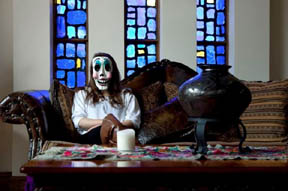
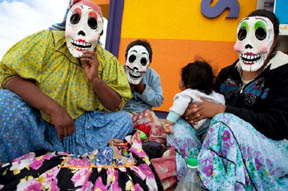
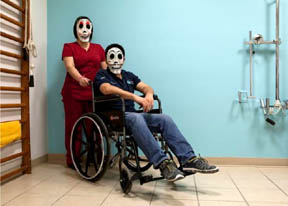
monica lozano juarez2-tn monica lozano juarez3-tn monica lozano juarez4-tn monica lozano juarez-tn

This is a photo series with multiple artworks. To view them all, visit Monica Lozano’s website at this link. I have include small, low quality thumbnails here for reference. There is a great pdf on her site of all the images in the series. Click “download pdf” in the top right corner.

As always, use these tips for how to look at art with kids. Always let them look and think about it before you give them any information!

Recommended Age: Upper Elementary through High School

Questions to ask

  • What is going on in these photographs? What do you see that makes you say that?
  • Why are these people wearing masks?
  • What masks do you wear in your life (real or hypothetical)?
  • What emotions do you feel when looking at this? What emotions do you think the artist feels? What emotions do the people in the pictures feel?
  • What do you think is the artist’s connection to these people? To this place? How can you tell?
  • Which photograph do you connect to the most? Why?
  • What is the artist trying to say about the people of Juarez?

Commentary

I love this series because it makes us see a place in a new way. Being more aware of stereotypes is important. Whether it be a person stereotyped because the color of their skin or the size of their body, a place can be stereotyped too. Juarez is home to Monica Lozano. In recent years, Juarez has changed from an active border town to a place filled with violence. What she feels and what she experiences in the people of Juarez is not what makes it on the news. The people in Juarez are real–not the caricatures we see from afar. Lozano says, “I wanted to scream out to the world that we are also powerful, loving, happy, strong and compassionate people, we are not only the face of violence” (source).

This photograph series highlights that in a powerful way. She places the people she knows and loves in their natural settings, going about their day, but she covers them with a Day of the Dead mask, which connects the person with their ancestors and cultural history. This series of artworks can spark a powerful discussion about appearances not being always what they seem and the harmful mistake we make when we don’t look past stereotypes to see the real underneath.

Get the Full Lesson!

This Lesson is in The Curated Connections Library!

Find the full lesson from this post along with hundreds of other art teaching resources and trainings in the Curated Connections Library. Click here for more information about how to join or enter your email below for a free SPARKworks lesson from the membership!

Join the List

Get the Full Lesson!

This Lesson is in The Curated Connections Library!

Find the full lesson from this post along with hundreds of other art teaching resources and trainings in the Curated Connections Library. Click here for more information about how to join or enter your email below for a free SPARKworks lesson from the membership!

Learning Activities

1. What masks do you wear? After discussing stereotypes and the meaning behind this artwork, have students brainstorm the hypothetical masks they wear. If you were to recreate this artwork connecting to your personal and cultural history and your home, what would you include? Write a description of your new hypothetical work or get to work making your own mask and photograph in this vein.

2. Make some Day of the Dead art! Study these artworks in a unit about Day of the Dead. Make a Day of the Dead mask or papier mache skull. Make an altar honoring your ancestor(s). Or, do any of these projects from the fabulous Deep Space Sparkle website!

Resources

  • Lozano’s Website, check out her portfolio of other work
  • Day of the Dead Stick Masks
  • Day of the Dead Children’s Book
  • Calavera Abecedario: A Day of the Dead Alphabet Book

Please note, this post includes Amazon affiliate links. As an Amazon Associate I earn from qualifying purchases.

“Life continues in Juarez despite all the violence. These are people with strength. They stay and fight and continue. I admire their love for the land.” — Monica Lozano (source)


What did you and your children think of this series? Is there an artwork you love that you’d like for me to cover in this series? Let me know in the comments!

Filed Under: Art and Artists
Tagged With: monica lozano


April 3, 2014 9 Comments

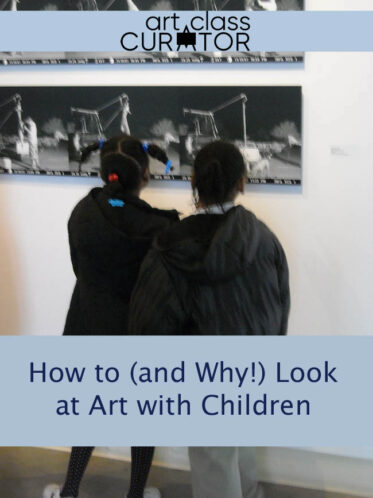
Looking at Art with Children: Why and How?

Looking at Art with Children

One of the main goals of my career has been to help people become more comfortable looking at and talking about art as well as help them understand the value that art has one their lives. The #1 comment I get when I tell people I am an art teacher is “I can’t draw.” I have lots of issues with this. First. No, I don’t believe that. Yes, you can. Everyone except those with certain disabilities can draw. The best way to get better at drawing is to draw more. But more importantly for me, I want everyone to understand that are is more than just drawing well.

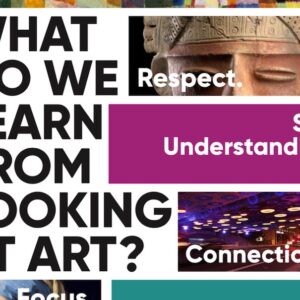
Art is about:

  • looking closely
  • understanding life and the human spirit
  • connecting to the past
  • connecting to other cultures
  • thinking critically and solving problems
  • knowing ourselves deeply
  • feeling and expressing

Free Poster

What Do Kids Learn from Looking at Art Poster

Our students learn so much from looking at art. Use this poster in your classroom to remind them of all the skills they’re growing!

Download

Free Poster

What Do Kids Learn from Looking at Art Poster

Our students learn so much from looking at art. Use this poster in your classroom to remind them of all the skills they’re growing!

The everyday person feels inept and ill-prepared at looking at and understanding art. They feel like there is something that people who enjoy art have that they themselves don’t. This is partly because of the elitism formed around art and the art world for a good part of the 20th century. I am here to tell you that art is for everyone. You, as you are today, are fully capable of experiencing art for yourself.

Young children on the other hand don’t come with these hesitancies and blocks. They accept art and enjoy it for what it is. Your first goal when talking about art with your kids: be more like them!

Below I have included some tips on how to talk to your kids about art, especially breaking out a painting or sculpture from a museum, book, or the internet and leading a discussion with your kid about it.

In a future post, I will write about ways to integrate artworks into your core curriculum. This post is about looking at works of art for the sake of experiencing art.

  1. Your (or your child’s) meaning isn’t any less true or valid than the artist’s meaning. It doesn’t matter what the museum labels, the Wikipedia pages, or the textbooks say. Art becomes yours when you look at it. What do you think? You don’t need to know anything about the work to enjoy it.
  2. Don’t give away the “answers” before the kids have a chance to find them for themselves. As an art teacher, I hate nothing more than a PowerPoint with an artwork with a bunch of descriptive text right next to it. You must let the student figure out the information for herself by looking at and experiencing the artwork. If you give away all of the information at the beginning, your student is less likely to enjoy the work, remember it, or learn from it. Knowledge that is formed through experience is more likely to stick.
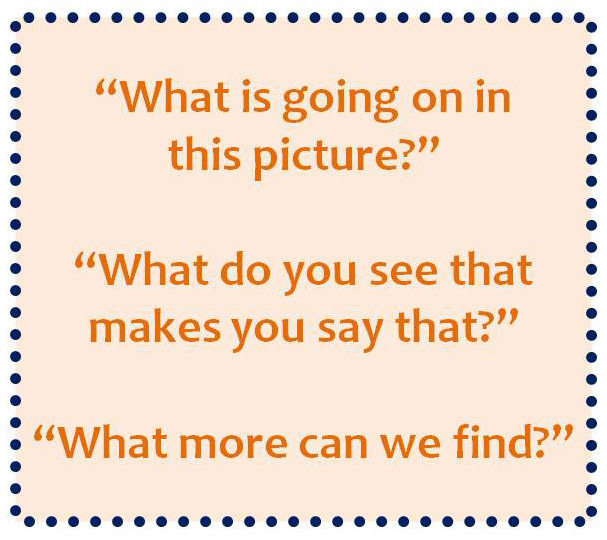
  3. vts imageUse open-ended questions or use a critical analysis strategy. That sounds a lot scarier than it is. One option is using something called Visual Thinking Strategies. With VTS, you use three questions only: “what’s going on? What do you see that makes you say that? And what more can you find?” That’s it! You basically just keep poking and prodding the student for more information and connecting his or her ideas together. I plan on writing a post about this in the future. Another option is art criticism using the steps of description, analysis, interpretation, and evaluation. This is a more regimented process when you don’t know exactly where to start. By focusing on description and analysis at the beginning, it gives you a chance to see and notice every detail. Click here for more information about these steps.
  4. Try new ways to experience the art. Have fun with it! Act out the painting, pose like the characters, write a poem about the artwork, or play an I-spy game. Try new ways to connect, and don’t be afraid to experiment!

I honestly could go on all day about this. I have a lot more blog posts to write.

Free Worksheets!

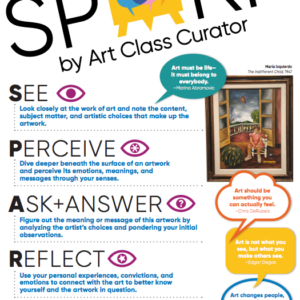
SPARK Art Criticism Framework

SPARK is a complete art criticism and discussion framework that ignites deeper student art connections and more engaging classroom art discussions. Download these free SPARK posters plus a worksheet to use in your classroom!

Download

Free Worksheets!

SPARK Art Criticism Framework

SPARK is a complete art criticism and discussion framework that ignites deeper student art connections and more engaging classroom art discussions. Download these free SPARK posters plus a worksheet to use in your classroom!

Please share your experiences looking at and discussing art with your kids in the comments. What has worked for you?

Filed Under: Art Teacher Tips
Tagged With: best of art class curator


  • Previous Page
  • Page 1
  • Interim pages omitted …
  • Page 36
  • Page 37
  • Page 38

Primary Sidebar

Hi! I’m Cindy Ingram, the creator of Art Class Curator and The Curated Connections Library

I’m on a mission to revolutionize education with the power of life-changing art connections. Art is not “extra”. Art is essential. We are empowering teachers to bridge the gap between art making and art connection, kindling a passion for art that will transform generations.

More About Me

Free Worksheets!

-Free Bundle of Art Appreciation Worksheets-

In this free bundle of art worksheets, you receive six ready-to-use art worksheets with looking activities designed to work with almost any work of art.

Download

Free Worksheets!

-Free Bundle of Art Appreciation Worksheets-

In this free bundle of art worksheets, you receive six ready-to-use art worksheets with looking activities designed to work with almost any work of art.

Enrollment in Curated Connections Library is currently open. Click here to join. Join our list to get more information and to get a free lesson from the vault! If you are purchasing for a school or school district, head over here for more information.

Check Out What’s New In The Shop

Experience Art: Engaging Art Criticism Discussions and Activities for Teachers and Students of All Ages
Call to Art: An Un-Conference for Art Educators
Curated Connections Library Membership
Perspectives High School Curriculum

More Products

Have You Listened to the Latest Podcast Episode?

Falling for Naudline Pierre’s Evocative Art: A Conversation with Madalyn (Part 2)

More Episodes

Testimonials

I like how this program, unlike other art class resource membership programs, feels authentic. It's like art matters more here, and not fancy flash-in-the-pan trendiness. The goal of Art Class Curator seemed to be helping kids develop a lifelong love and art appreciation versus "Hey, look. I painted this fish."
Erin A.
Your questions are helping me to delve into much deeper learning, and my students are getting better at discussion-and then, making connections in their own work. Art Class Curator is awesome!
Denise W.
Interestingly, my lower performing classes really get engaged in these [lessons] and come away with some profound thoughts!
Melissa G.
I had the most amazing 6th grade class today. They were jumping out of their seats with hands raised just to respond and give input. It was as if I was waving candy in front of them! They saw more and more and the ideas and interpretations unfolded. So cool!!! This is what makes teaching art so wonderful – thank you!!
Caroline G.
I just wanted to thank you for the invaluable resource you have through Art Class Curator. Not only do you have thought provoking activities and discussion prompts, but it saves me so much time in preparing things for myself! I feel like I’ve only scratched the surface with your site.
Maryjane F.

Get Art Inspiration To Your Inbox!

Enter your email address to get regular art inspiration to your inbox
plus a BUNDLE OF 6 FREE WORKSHEETS!
We hate SPAM and promise to keep your email address safe.
Download

Free Worksheets!

*Free Bundle of Art Appreciation Worksheets*

In this free bundle of art worksheets, you receive six ready-to-use art worksheets with looking activities designed to work with almost any work of art.

Copyright © 2026 Ignite Art, LLC DBA Art Class Curator •  All rights reserved  •  Privacy Policy  •  Terms of Service  •  Site Design by Emily White Designs