• Skip to main content
  • Skip to primary sidebar
  • About
    • About Art Class Curator
    • Contact
    • Speaking
    • Media & Press
    • Programs for Schools
  • Blog
  • Podcast
  • Shop
  • Join
  • Member Login

Art Class Curator

Hands-on and Minds-curious Art Learning

  • Art & Artists
  • Art Connection Activities
  • Art Teacher Tips
  • Elements & Principles
  • Downloads & Resources
Home
  • About
    • About Art Class Curator
    • Contact
    • Speaking
    • Media & Press
    • Programs for Schools
  • Blog
    • Art & Artists
    • Elements & Principles
    • Art Connection Activities
    • Art Teacher Tips
    • Downloads & Resources
  • Book
  • Podcast
  • Shop
  • Join
  • Member Login

All Posts from Art Curator for Kids

January 6, 2015 19 Comments

A Year of Art Appreciation for Kids: 52 Artworks your Child Should Know

I have compiled for you a massive list of artworks for you to look at with your kids this year. I picked one artwork for each week of the year, and I tried to pick the best of the best. If you haven’t been showing art to your kids, this is a great list to start with! Just sit down and talk about a new artwork each week for a few minutes.
Please note, this post includes Amazon affiliate links. As an Amazon Associate I earn from qualifying purchases.

How to Talk about Art with Your Kids

Here are some posts from Art Class Curator for tips at looking at art with your kids.

  • How to Look at Art with your Children
  • How to Look at Art with Toddlers and Preschoolers
  • Charlotte Mason Picture Study: An Easy Way to Introduce Art to your Kids

Art Appreciation for Kids

Instead of dividing by week, I divided by time period. Regrettably, this list does not include non-western art or contemporary art. For more awesome non-western art, check out my Art Around the World series. Each entry below includes a link to find the picture.

the Art Curator for Kids - Art Appreciation for Kids - Ancient to Classical Art

Ancient to Classical Art

  • Prehistoric, Nude Woman (Venus of Willendorf), c. 28,000-25,000 B.C.E (On ACFK, 5 Artworks to Promote Introspection) (Buy replica on Amazon)
  • Sumer, the Standard of Ur, about 2600-2400 B.C.E. (Book about this artwork)
  • The Law Code of Hammurabi, King of Babylon, c. 1750 B.C.E (Book about Hammurabi’s Code)
  • Ancient Egyptian, Palette of King Narmer, c. 3000-2920 B.C.E.
  • Myron (Ancient Greek), Discus-thrower (Discobolus), Roman copy of a bronze original of the 5th century BC (Book about this artwork)
  • Hellenistic Greek, Laocoön and His Sons, early first century C.E.
  • Ancient Roman, Augustus of Primaporta, first century, C.E.
  • Ancient Roman, The Alexander Mosaic, ca. 100 BC (Poster of this artwork)
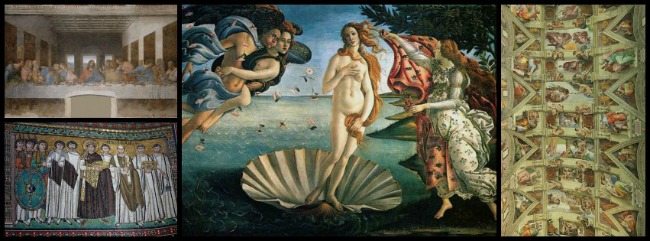
the Art Curator for Kids - Art Appreciation for Kids - Medieval to Renaissance Art

Medieval and Renaissance Art

  • Byzantine, Justinian and his Attendants, Basilica di San Vitale, 547 C.E
  • Gothic, Chartres Cathedral (Book about Chartres)
  • Jan and Hubert van Eyk, Adoration of the Mystic Lamb (Ghent Altarpiece), 1432 (Book about the Nazi theft of this artwork)
  • Sandro Botticelli, The Birth of Venus, 1482-85 (Poster of this artwork)
  • Leonardo da Vinci, Last Supper, 1498 (Print of this artwork on wood)
  • Michelangelo Buonarroti, Sistene Chapel Ceiling, 1508-12 (Jigsaw puzzle of this artwork)
  • Raphael, School of Athens, 1509-11 (Coffee mug of this artwork)
  • Michelangelo Buonarroti, Slaves or Prisoners, ca. 1520-23
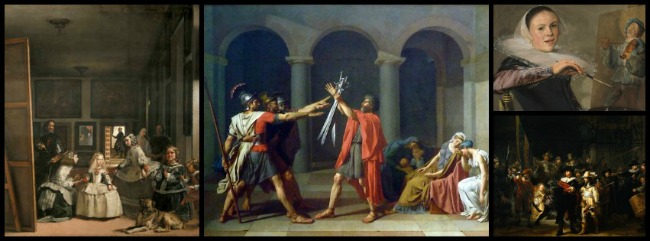


the Art Curator for Kids - Art Appreciation for Kids - 17th-18th Century Art

17th-18th Century Art

  • Artemisia Gentileschi, Judith Beheading Holofernes, 1614-20 (On ACFK, Masterpiece Monday) (Novel about the Artist)
  • Gianlorenzo Bernini, Apollo and Daphne, 1622-25 (Replica of this sculpture)
  • Judith Leyster, Self-Portrait, c. 1630
  • Rembrandt, Officers and Men of the Company of Captain Frans Banning Cocq and Lieutenant Wilhelm van Ruytenburgh, known as the Night Watch, 1642 (Canvas print of this artwork)
  • Diego Velázquez, Las Meninas, 1656 (On ACFK, 20 Great Artworks to Look at with Young Kids) (Poster of this artwork)
  • Jean-Honoré Fragonard, The Swing, 1767 (Poster of this artwork)
  • Jacques-Louis David, Oath of the Horatii, 1785 (Poster of this artwork)
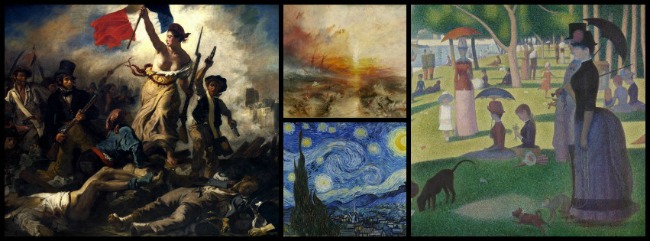
the Art Curator for Kids - Art Appreciation for Kids - 19th Century Art

19th-Century Art

  • Francisco Goya, Third of May, 1808 (Mouse pad of this artwork)
  • Eugène Delacroix, July 28: Liberty Leading the People, 1830 (Poster of this artwork)
  • William Turner, Slave Ship (Slavers Throwing Overboard the Dead and Dying, Typhoon Coming On), 1840 (Poster of this artwork)
  • Claude Monet, Les Nymphéas (The Water Lilies), 1840-1926 (Monet magnets)
  • Jean-François Millet, L’Angélus, c. 1857-1859
  • Georges Seurat, A Sunday on La Grande Jatte, 1884 (Coffee mug of this artwork)
  • Auguste Rodin, The Burghers of Calais, 1884-95 (Coffee mug of this artwork)
  • Paul Gauguin, Where do we come from? What are we? Where are we going?, 1897-98
  • Vincent van Gogh, The Starry Night, 1889 (On ACFK, 5 Exciting Art History Projects for Kids that Made me Say “WOW!”) (Umbrella of this artwork)
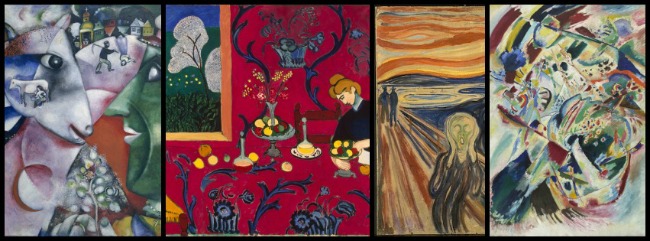
the Art Curator for Kids - Art Appreciation for Kids - Modern Art

Modern and Contemporary Art

  • Henri Matisse, Harmony in Red/La Desserte, 1908 (Jigsaw puzzle of this artwork)
  • Edvard Munch, The Scream, 1910 (Inflatable Scream Doll)
  • Franz Marc, Fate of the Animals, 1913 (On ACFK, Art Spotlight: Franz Marc’s Fate of the Animals)
  • Marc Chagall, I and the Village, 1911 (On ACFK, 5 Artworks Your Children will Love) (Poster of this artwork)
  • Wassily Kandinsky, Panel for Edwin R. Campbell No. 4, 1914
  • Salvador Dali, The Persistence of Memory, 1931 (Melting clock)
  • Pablo Picasso, Guernica, 1937 (Jigsaw puzzle of this artwork)
  • Frida Kahlo, The Two Fridas, 1939 (On ACFK, 5 Artworks to Intrigue Your High Schooler) (Poster of this artwork)
  • Jackson Pollock, One: Number 31, 1950, 1950 (Book about this artwork)
  • Francis Bacon, Study after Velazquez’s Portrait of Pope Innocent X, 1953 (On ACFK, Art Around the World in 30 Days – Ireland)
  • Andy Warhol, Campbell’s Soup Cans, 1962 (Converse shoes of this artwork)
  • Robert Rauschenberg, Skyway, 1964
  • Andy Goldsworthy, Fall Leaves (On ACFK, 5 Exciting Art History Projects for Kids that Made me Say “WOW!”) (Book about this artist)

the Art Curator for Kids - Art Appreciation for Kids - American

American Art

  • John Singleton Copley, Watson and the Shark, 1778  (On ACFK: Charlotte Mason Picture Study: John Singleton Copley)
  • Thomas Moran, The Grand Canyon of the Yellowstone, 1872 (Jigsaw puzzle of this artwork)
  • John Singer Sargent, El Jaleo, 1882 (Poster of this artwork)
  • Frederic Remington, A Dash for the Timber, 1889 (Poster of this artwork)
  • Grant Wood, American Gothic, 1930 (Children’s book about this artist)
  • Jacob Lawrence, The Migration Series, 1940-41 (Children’s book about this series)
  • Edward Hopper, Nighthawks, 1942 (Poster of this artwork)

Whew! This is quite a list. It was hard to choose, and I know I left out some great artworks. Keep reading on Art Class Curator to learn more about teaching art to kids.

More Art Class Curator on Pinterest:
Follow Cindy @ The Art Class Curator’s boards on Pinterest.

Filed Under: Art Connection Activities
Tagged With: andy goldsworthy, andy warhol, artemisia gentileschi, auguste rodin, claude monet, diego velazquez, edvard munch, edward hopper, eugene delacroix, francis bacon, francisco goya, franz marc, frederic remington, frida kahlo, georges seurat, gian lorenzo bernini, grant wood, henri matisse, jackson pollock, jacob lawrence, jacques-louis david, jan van eyck, jean-francois millet, jean-honore fragonard, john singer sargent, john singleton copley, judith leyster, leonardo da vinci, marc chagall, michelangelo, pablo picasso, paul gauguin, raphael, rembrandt, robert rauschenberg, salvador dali, sandro botticelli, thomas moran, vincent van gogh, wassily kandinsky, william turner


January 4, 2015 Leave a Comment

Software Coding for Kids

the Art Curator for Kids - Software Coding for Kids with Alice - A-Z STEM - Computer Programming for Kids

A-Z STEMI’m joining up with a group of amazing kid bloggers this month for a series called A-Z STEM for Kids. If you don’t know what STEM is, it means Science, Technology, Engineering, and Math. Each day, bloggers will tackle STEM concepts starting with A all the way to Z. I have two posts planned for the month, but of course I will be turning STEM to STEAM and adding a some Art into my posts.

The A-Z STEM series was organized by the fabulous Sarah at Little Bins for Little Hands. Visit this landing page for an introduction to the series as well as links to all the other amazing posts for the month!

Today, I am tackling letter C for Coding.

Here’s a little known fact about me. Over the last couple years, I have been learning to code (aka computer programming). I took some classes and did a lot of work on my own, and I now know Java pretty well. It was such a fun experience, and I eventually hope to merge my art knowledge and my computer programming skills in the future. I eventually hope to have an app or two. I have some ideas.

I think coding is extremely important. Everything is dictated by software these days, but more than just you need this to get a job, learning to think like a programming is such a valuable skill. It requires being very regimented in your thinking, thinking through all possible alternatives, and thinking logically. Learning coding is a great way to teach kids to think.

I also think that if your child is an artist, and they are serious about using art in their futures, they must be skilled in technology. Artists can be front end and user experience designers, graphic designers, and more.

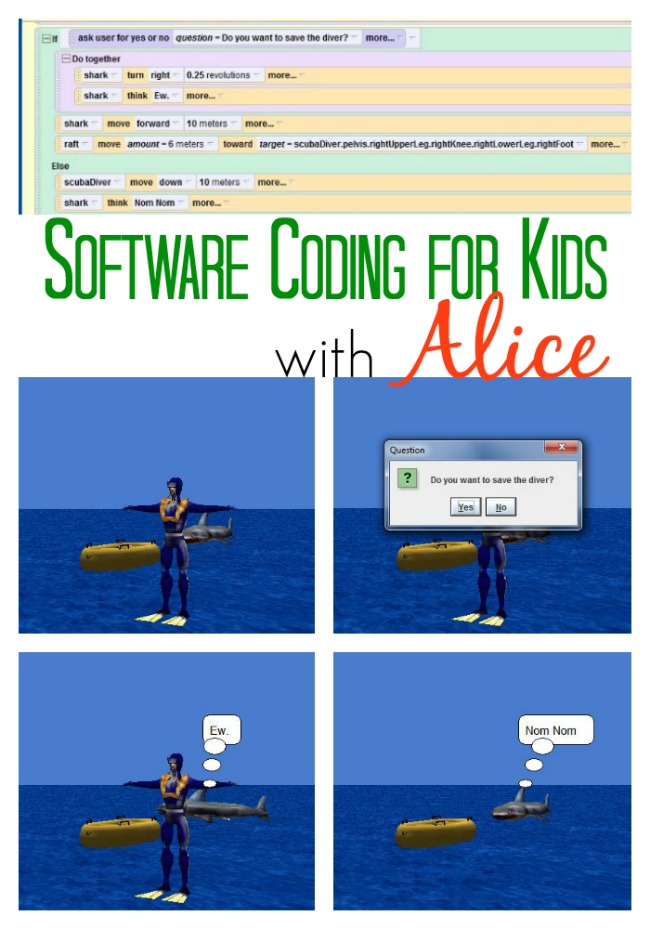
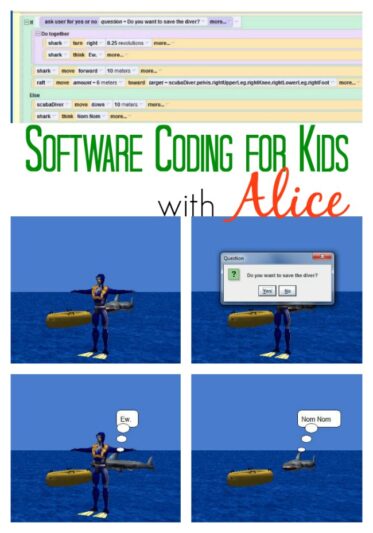
the Art Curator for Kids - Software Coding for Kids with Alice - A-Z STEM - Computer Programming for KidsIn my very first coding class, Programming Logic and Design, we started with a really cute and and fun tool that would be great for your kids, (the website recommends ages 8 and up). It is called Alice. It was developed by Carnegie Mellon University as a tool to teach rudimentary coding ideas like if/then, chronology, objects, methods, variables, etc using images and animation. It is super fun and silly, and your creative kids would probably get a big kick out of it. Best of all, the program is completely FREE!

Basically, you take images already stored in their system and make them do stuff by writing a computer program.

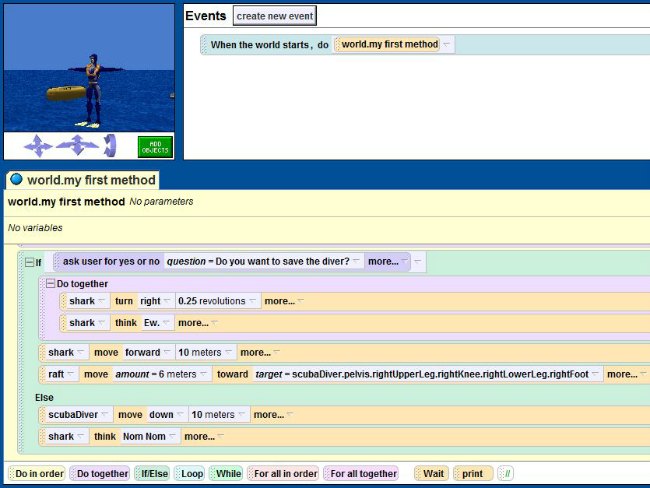
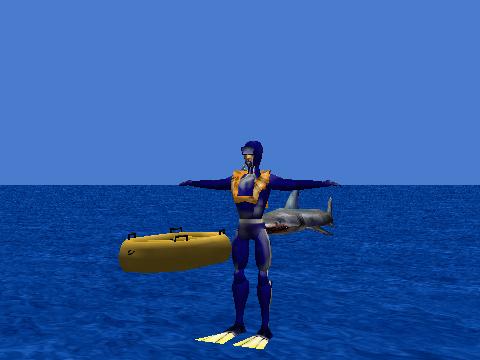
the Art Curator for Kids - Coding for Kids - Alice - A-Z STEM - Coding screen2In this program I wrote for my class, I have a shark swim to a scuba diver. I took some screen shots, but this is animated on my end when I run the program (can you see the art connection a bit now?).

the Art Curator for Kids - Coding for Kids - Alice - A-Z STEM - Shark 2, Computer Programming for KidsThen, the software asks the user if they want to save the diver.

the Art Curator for Kids - Coding for Kids - Alice - A-Z STEM - Shark 3If yes is chosen, the raft comes in and the shark leaves, thinking “Ew.”

the Art Curator for Kids - Coding for Kids - Alice - A-Z STEM - Shark 4

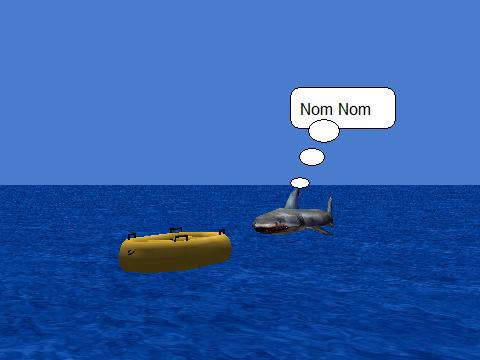
If no is chosen, the diver drops into the water, and the shark thinks “Nom. Nom.”

the Art Curator for Kids - Coding for Kids - Alice - A-Z STEM - Shark 5It’s totally silly, but I used some important software coding concepts in a fun and easy way. It is a great introduction to some more serious concepts, and it doesn’t feel like work. It’s just plain FUN.

I wrote another one with a Zombie running to an abandoned house followed by a clap of thunder, a scream, and a woman running out of the house. Yeah, you can add sounds!

the Art Curator for Kids - Coding for Kids - Alice - A-Z STEM - Zombie 1

Visit the website for Alice to download the program. This is not a sponsored post or anything. I just really like the program. 🙂


For more posts from A-Z STEM for Kids, visit the series index or the STEM Learning Activities Pinterest Board.

Filed Under: Art Teacher Tips


January 1, 2015 1 Comment

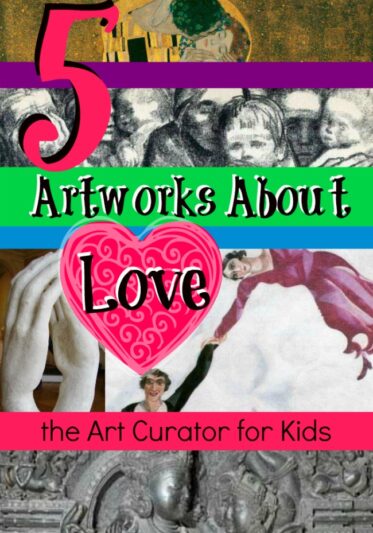
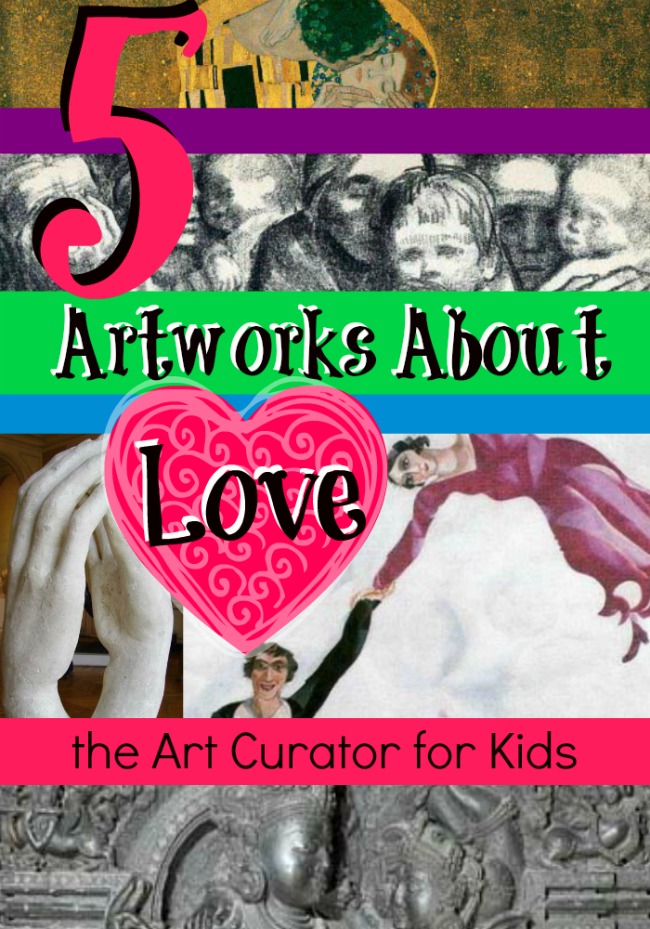
5 Artworks about Love

the Art Curator for Kids - 5 Artworks about Love from Art History - Art About Love

I’m so excited today to be guest posting on the 31 Days of Love series which started today on Red Ted Art, an amazing blog I greatly admire! Hop on over to my post called “5 Artworks About Love” to learn about some new art and be inspired just in time for Valentine’s Day. Each lovely artwork has some information about it as well as some looking questions to help guide your discussion about the art with your kids.

5 Artworks About Love
the Art Curator for Kids - 5 Artworks about Love from Art History - Art About Love - Valentine's Day Art History

Filed Under: Art and Artists
Tagged With: auguste rodin, gustav klimt, kathe kollwitz, marc chagall


December 29, 2014 Leave a Comment

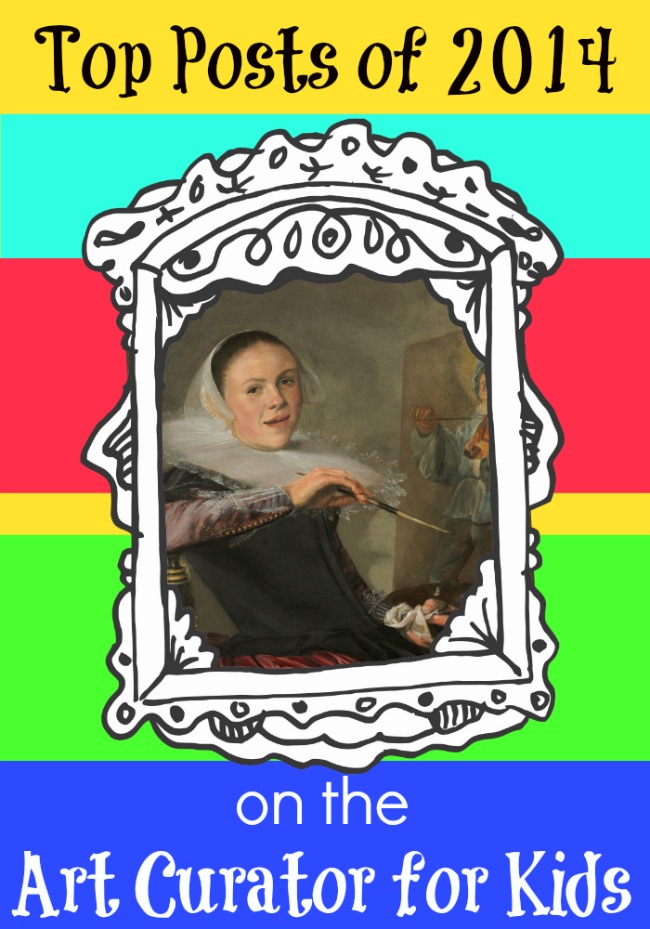
Top Posts of 2014

the Art Curator for Kids - Top Posts of 2014

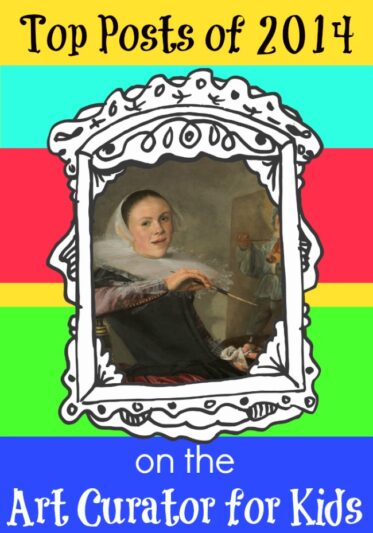
Hello! 2014 was my first year here at Art Class Curator, and I am so excited I started this thing back in March. It feels like a perfect fit for me, and I am having such a great time developing art lessons and resources for you. To celebrate, I thought I’d post some of my favorite posts from the year as well as those that were the most popular.

the Art Curator for Kids - Top Posts of 2014

5 Most Popular Posts from 2014

These five posts got the most pageviews this year.

  1. Free Printable Art Appreciation Worksheets
  2. Making Art with Kids: Block Printing
  3. Art Around the World in 30 Days
  4. 5 Artworks Your Children Will Love
  5. 7 Exciting Art History Projects for Kids that Made Me Say “Wow!”

Free Worksheets

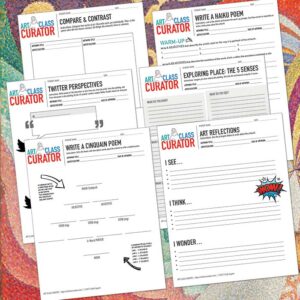
8 Free Art Appreciation Worksheets

includes the Elements & Principles!

Download 8 Free Art Appreciation Worksheets – including 2 Elements and Principles pages! Activities designed to work with almost any work of art. Help your students connect with art while having fun!

Download

Free Worksheets

8 Free Art Appreciation Worksheets

includes the Elements & Principles!

Download 8 Free Art Appreciation Worksheets – including 2 Elements and Principles pages! Activities designed to work with almost any work of art. Help your students connect with art while having fun!

My 5 Favorite Posts from 2014

Okay, this was SO HARD. I love all my babies. Here are my top 5 favorite posts from the year.

  1. Mystery Post: I will reveal this one on January 2 in a post along with an awesome link-up with my bloggy pals from the Kid Blogger Network.
  2. The Art Around the World in 30 Days eBook is here! – November was such a whirlwind month for me writing a post every day. I am so proud of the amazing resources I came up with which are all collected together in this eBook.
  3. How to Look at Art with a Toddler: My first YouTube video and a printable! – This has a video of my sweet 2yo talking about art. How could I NOT love it?
  4.  5 Artworks to Promote Introspection – I love these artworks and also this series of posts I did at the beginning. Back when the blog was called Two Muses Homeschool, I called this series “Curated Homeschool.” I don’t do many of these because they take a long time to write. I have been doing one artwork per post instead because 5 with all the information is a bit much. I still love them though. There is a new one coming in January.
  5. Exploring Narrative through Art – These are some of my favorite activities to do in front of artworks.

Here’s to a great 2015! Happy New Year!

Filed Under: Downloads and Resources


December 19, 2014 9 Comments

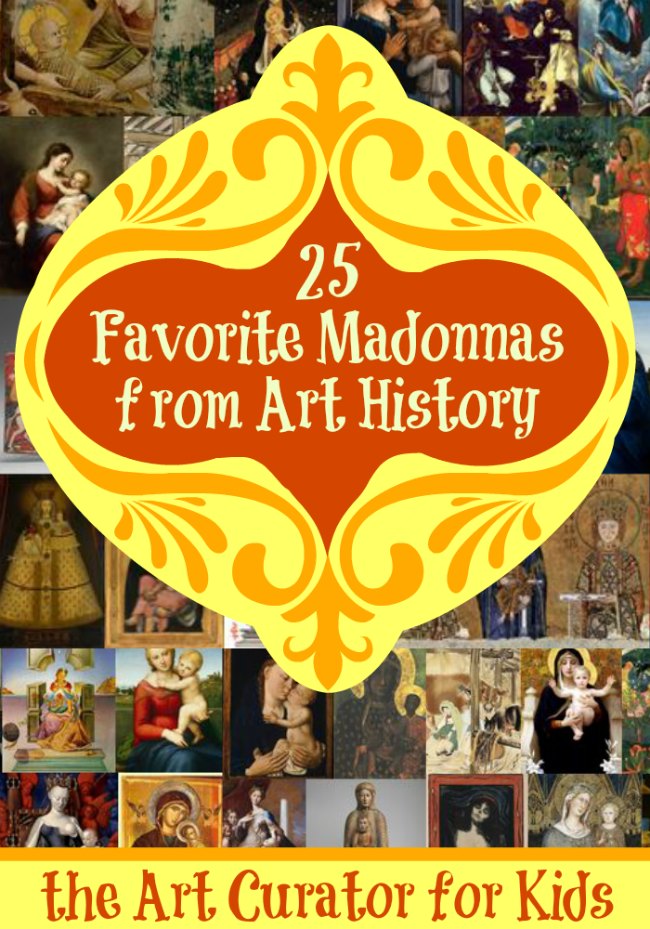
25 Favorite Madonna and Childs in Art History

the Art Curator for Kids - 25 Favorite Madonna and Childs from Art History

the Art Curator for Kids - 25 Favorite Madonna and Childs from Art History

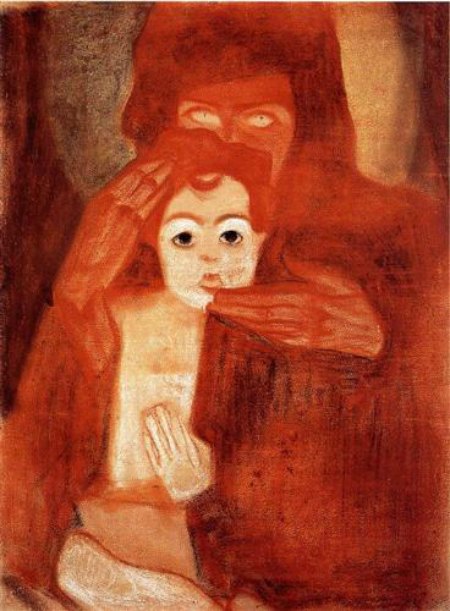
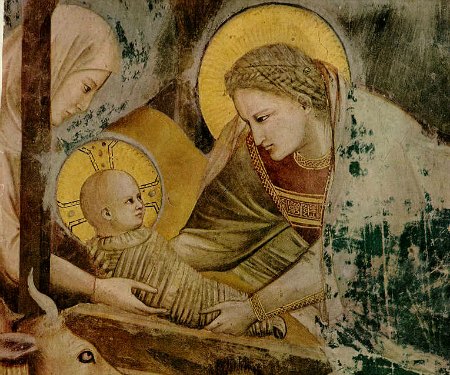
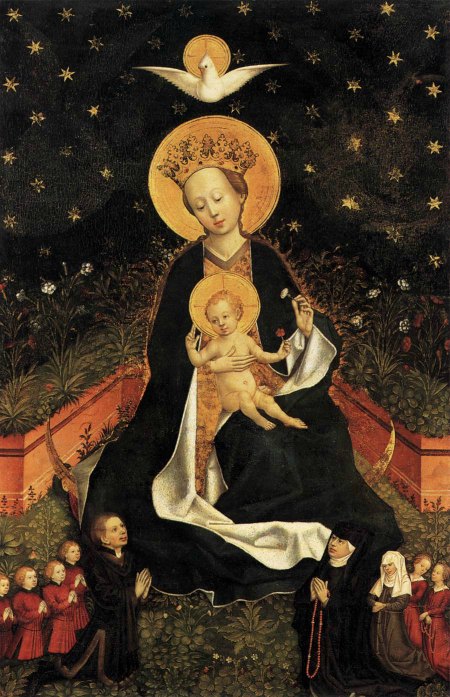
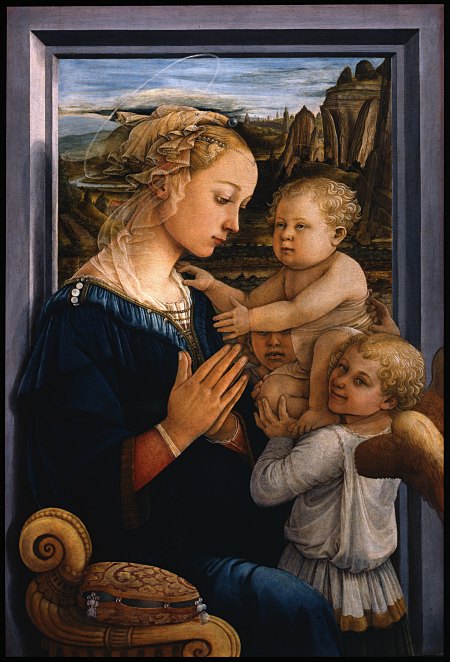
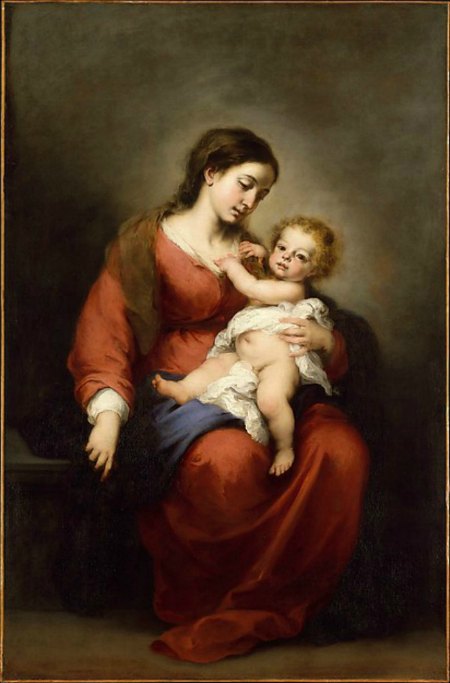
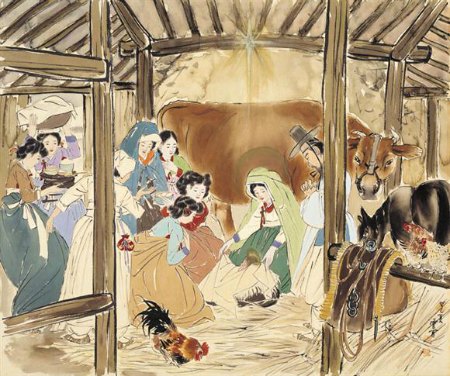
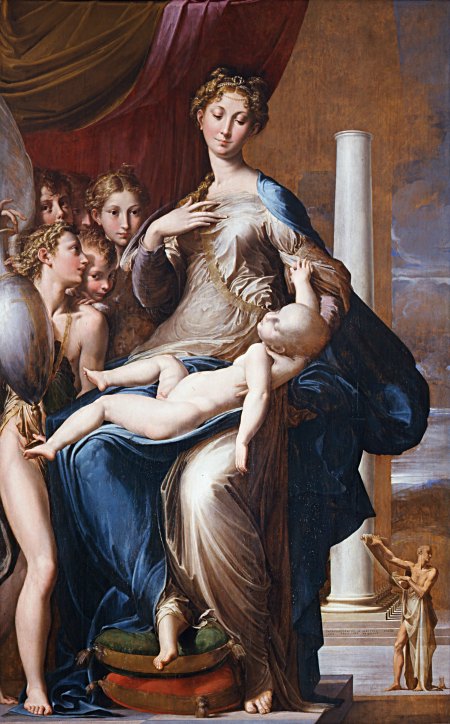
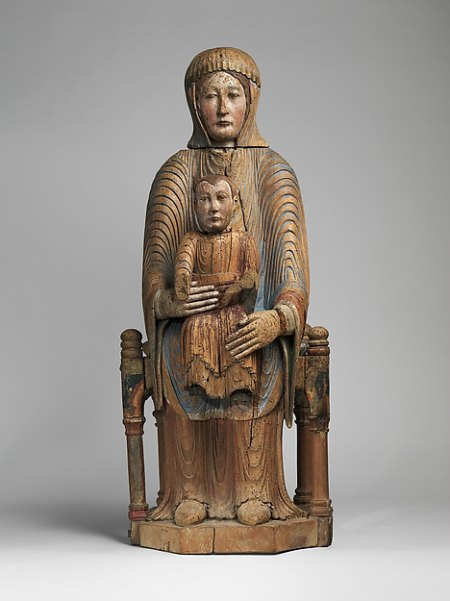
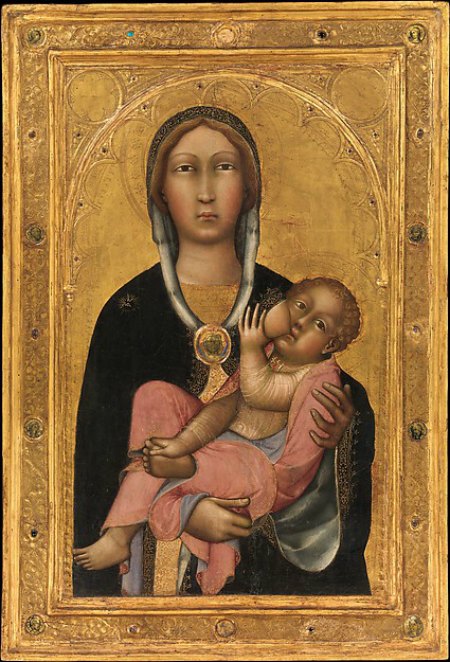
Of all the subjects in all of art history, I would place money on Madonna and Child being the most represented subject in art. Just type “Madonna and Child” into a Google image search, and you will find an endless list of beautiful artworks.  Today, I was going to do a 5 favorite Madonna and Child paintings post, but I absolutely couldn’t pick 5. I moved it to 10, then 12, then 20, and then I ended up at 25. I just found a 26th, and I can’t leave it out, so technically there are 26 in this list now.  I pretty much spent all day looking at Madonnas.

Click on the image to view it larger.

Egon Schiele, Mother and Child (Madonna), 1908

Giotto, Scenes from the Life of Christ, 1. Nativity, Birth of Jesus, 1304-06

German, Madonna on a Crescent Moon in Hortus Conclusus, 1450s

Filippo Lippi, Madonna and Child, c. 1465

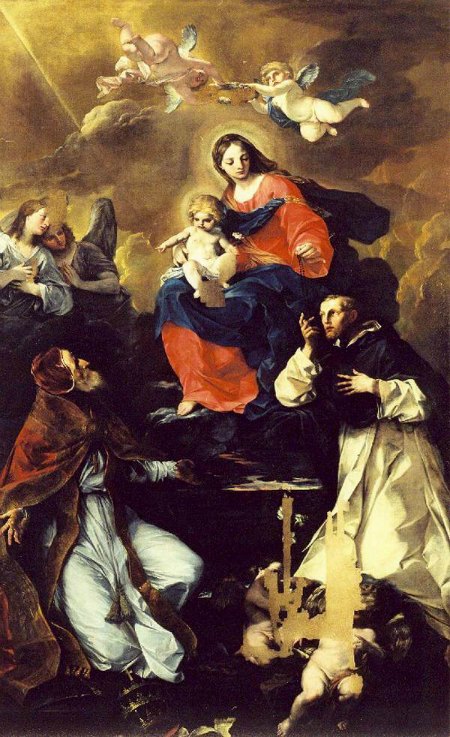
Felice Torelli, Virgin and Child with Angels and Saints, circa 1700

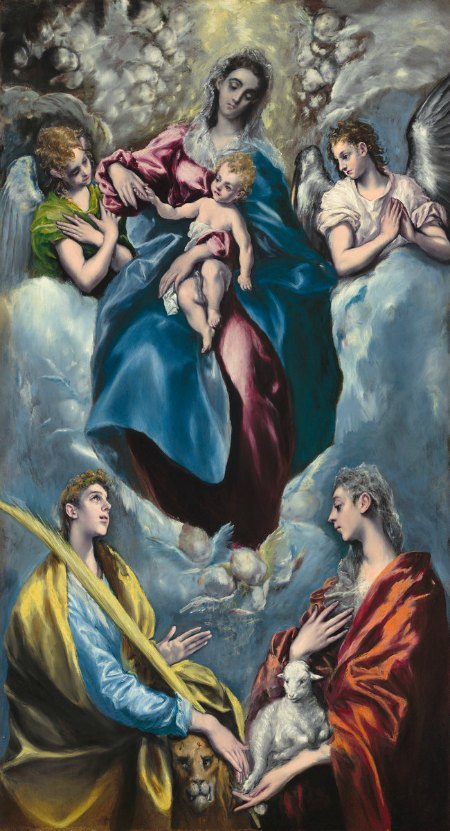
El Greco (Domenikos Theotokopoulos), Madonna and Child with Saint Martina and Saint Agnes, 1597-1599

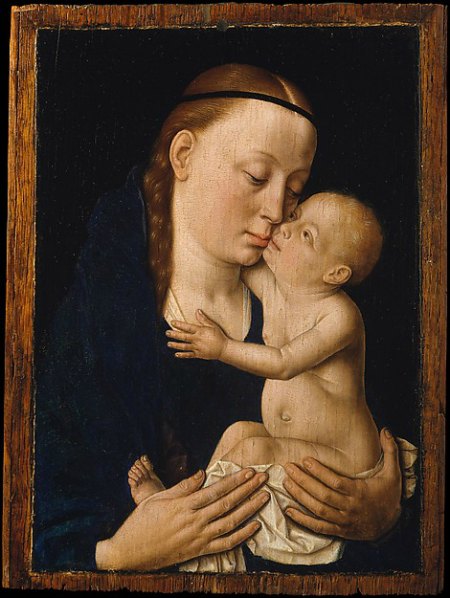
Dieric Bouts, Virgin and Child, ca. 1455–60, Oil on wood

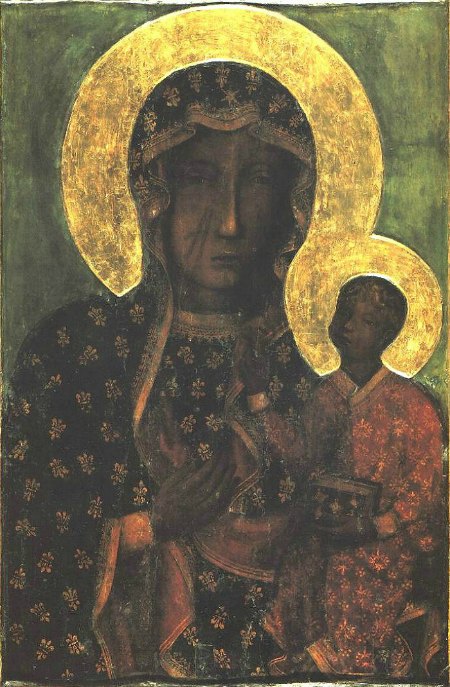
Black Madonna of Częstochowa

Bartolomé Estebán Murillo, Virgin and Child, ca. 1670–72

Woonbo Kim Ki-chang, The Birth of Jesus Christ, 1952-53

William-Adolphe Bouguereau, The Virgin of the Lilies (La Vierge au lys), 1899

the Art Curator for Kids - 5 Favorite Madonnas in Art - Paul Gauguin, la Orana Maria (Hail Mary), 1891, oil on canvas
Paul Gauguin, la Orana Maria (Hail Mary), 1891, oil on canvas

the Art Curator for Kids - 5 Favorite Madonnas in Art - Parmigianino, Madonna of the Long Neck, c. 1535-1540
Parmigianino, Madonna of the Long Neck, c. 1535-1540

the Art Curator for Kids - 5 Favorite Madonnas in Art - French, Virgin and Child in Majesty, ca. 1175–1200
French, Virgin and Child in Majesty, ca. 1175–1200

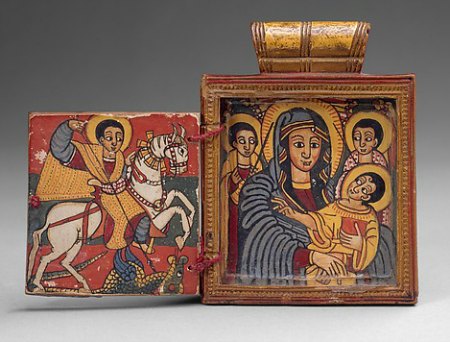
the Art Curator for Kids - 5 Favorite Madonnas in Art - Ethiopia, Double Diptych Icon Pendant, early 18th century, wood, tempera pigment, string
Ethiopia, Double Diptych Icon Pendant, early 18th century

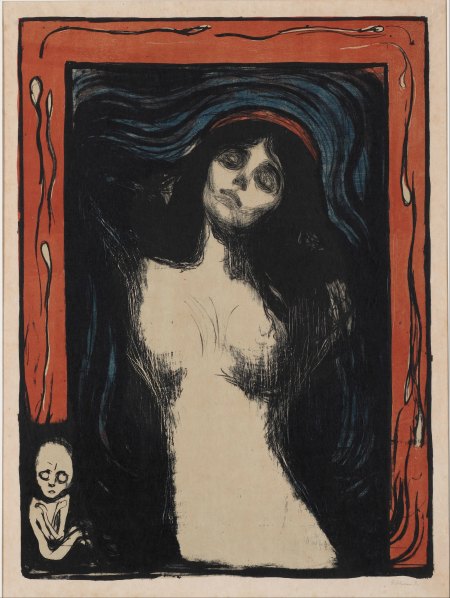
the Art Curator for Kids - 5 Favorite Madonnas in Art - Edvard Munch, Madonna, 1895–1902, Color Lithograph
Edvard Munch, Madonna, 1895–1902, Color Lithograph

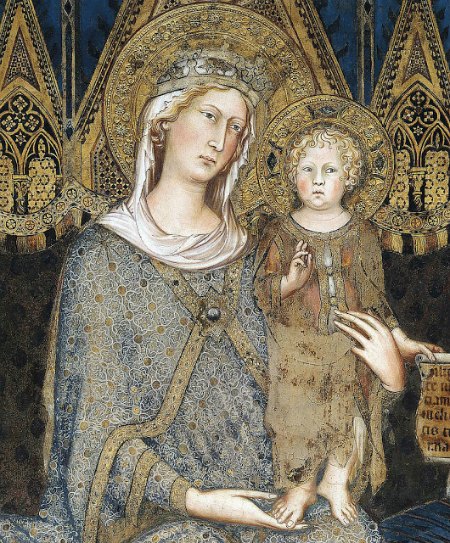
Simone Martini, Maestà (detail), 1315

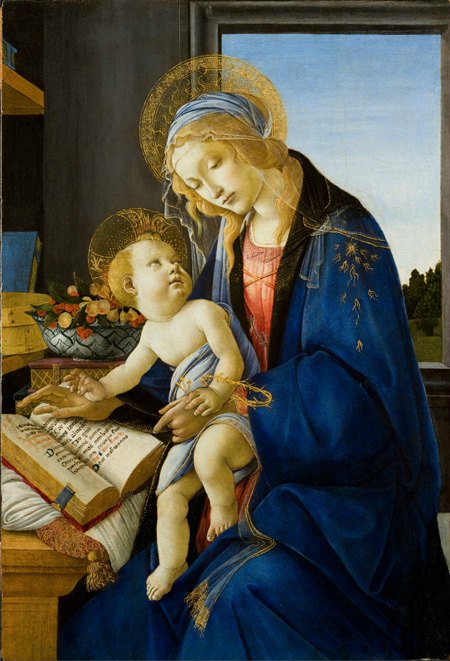
Sandro Botticelli, The Virgin and Child (The Madonna of the Book), 1480

Salvador Dalí, The Madonna of Port Lligat, 1949

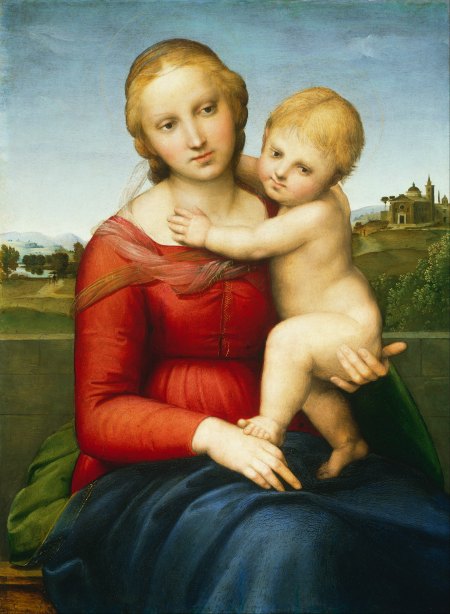
Raphael, The Small Cowper Madonna, circa 1505, oil on panel

Peruvian, Virgin of the Rosary of Guápulo, ca. 1680, Oil on canvas

Paolo di Giovanni Fei, Madonna and Child, 1370s, Tempera on wood, gold ground
Paolo di Giovanni Fei, Madonna and Child, 1370s

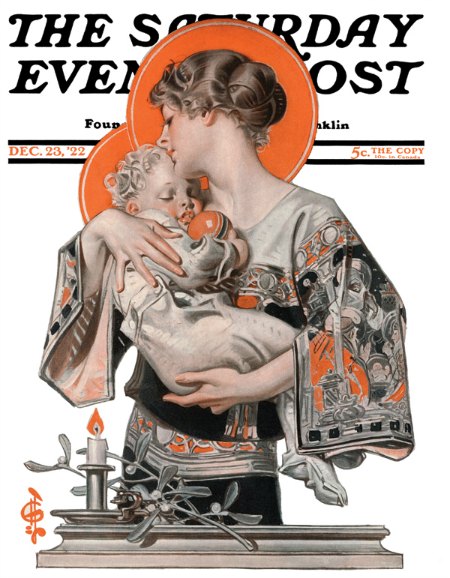
Modern Madonna and Child, December 23, 1922, J.C. Leyendecker

John II Comnenus, Byzantine emperor, and his wife, Irene, with Madonna and child. Mosaic in Hagia Sophia, Istanbul, ca. 1118

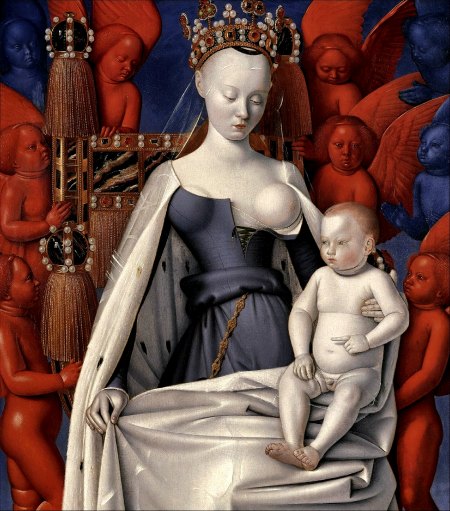
Jean Fouquet, Virgin and Child Surrounded by Angels, 1452, oil on panel

Icon of the Virgin Mary, 16th century. St. Catherine's Monastery in the Sinai
Icon of the Virgin Mary, 16th century. St. Catherine’s Monastery in the Sinai

I’ll probably use these in future lessons on the blog. Let me know which one is your favorite so I know which one to do first. 🙂

I’m taking a 2 week blogging break. I’ll see in you 2015! Merry Christmas, Happy Holidays, Happy New Year! 🙂

Filed Under: Art and Artists
Tagged With: bartolome esteban murillo, dieric bouts, edvard munch, egon schiele, el greco, felice torelli, filippo lippi, giotto, j.c. leyendecker, jean fouquet, paolo di giovanni fei, parmigianino, paul gauguin, raphael, salvador dali, sandro botticelli, simone martini, william-adolphe bouguereau, woonbo kim ki-chang


December 17, 2014 Leave a Comment

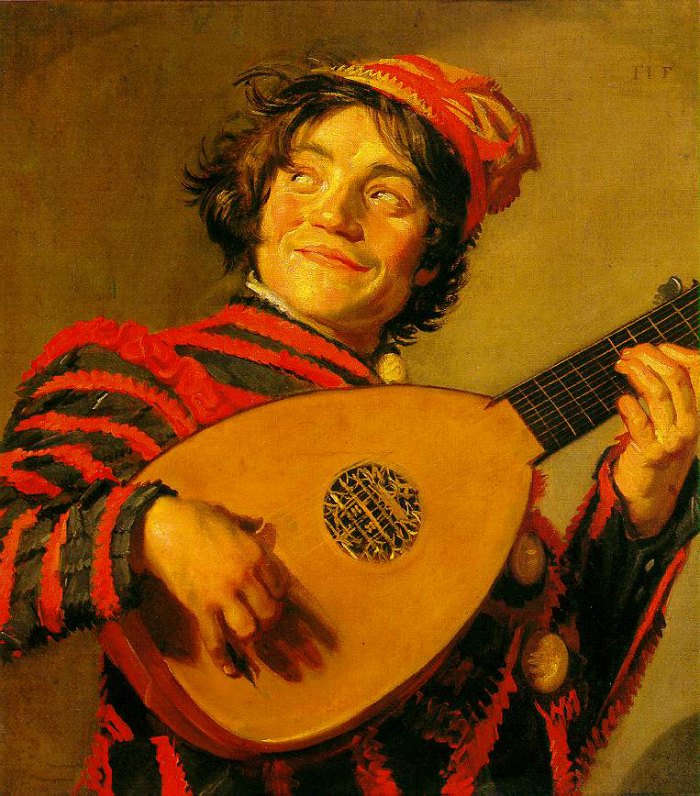
Wordless Wednesday: Jester with a Lute by Frans Hals

the Art Curator for Kids - Wordless Wednesday - Art Appreciation for Kids - Frans Hals - Jester with a Lute

the Art Curator for Kids - Wordless Wednesday - Art History for Kids - Art of the Day

Hello! I am back with Wordless Wednesday where I share with you some artworks that I love. Today, I’ve got an artwork that I have always loved. There is something about this painting that just makes me smile.

the Art Curator for Kids - Wordless Wednesday - Art History for Kids - Frans Hals - Jester with a Lute
Frans Hals, Jester with a Lute, c. 1620-25, Oil on wood

Frans Hals is a portrait painter from the Dutch “Golden Age.” (Think the same time period as Rembrandt, Vermeer, and Leyster). He just had such a great ability to capture a spirit and life in his portraits. I wonder if the joy you can find in his paintings was inspired by his large family. With 13(ish) kids, he had a lot of little smiling faces to be inspired by!

You can see more of the artwork of Frans Hals and read more about him on the Met Museum’s website.

the Art Curator for Kids - Wordless Wednesday - Art Appreciation for Kids - Frans Hals - Jester with a Lute

Filed Under: Art and Artists
Tagged With: frans hals


December 15, 2014 4 Comments

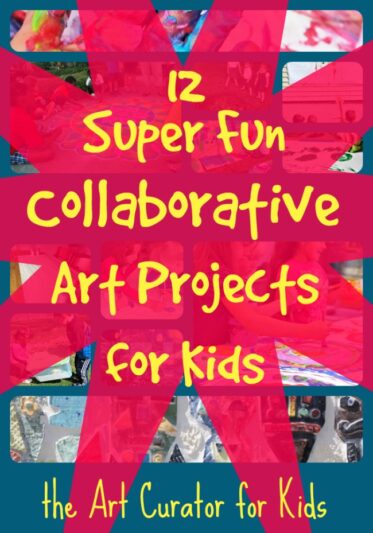
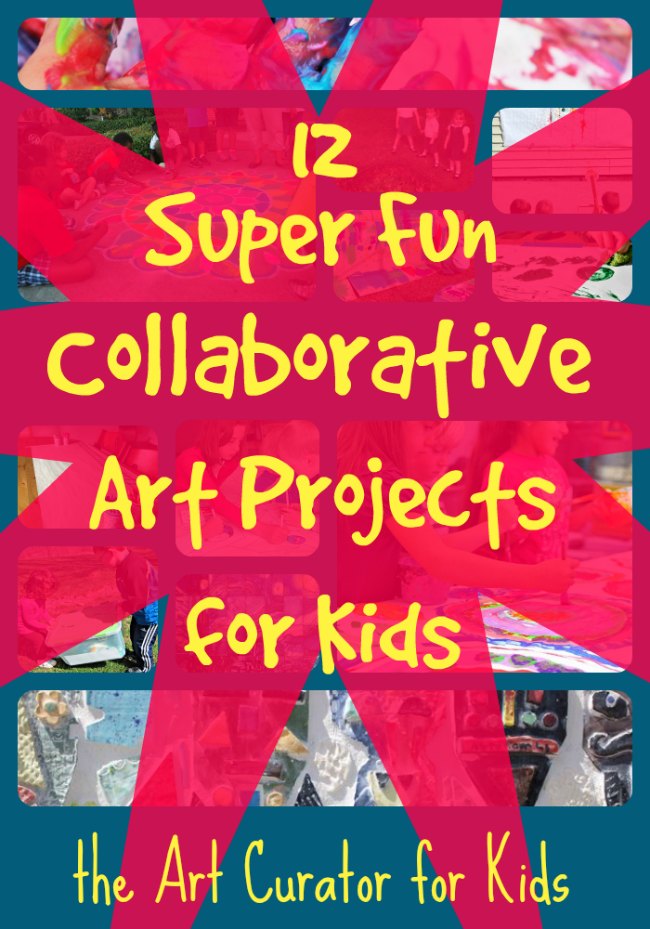
12 Super Fun Collaborative Group Art Projects for Kids

the Art Curator for Kids - 12 Super Fun Collaborative Art Projects for Kids

Magic happens when kids work together in group art projects. From paint made with pudding to clay masks to painting with catapults, these collaborative group art projects for kids will be a hit in your home or classroom.

the Art Curator for Kids - 12 Super Fun Collaborative Group Art Projects for Kids

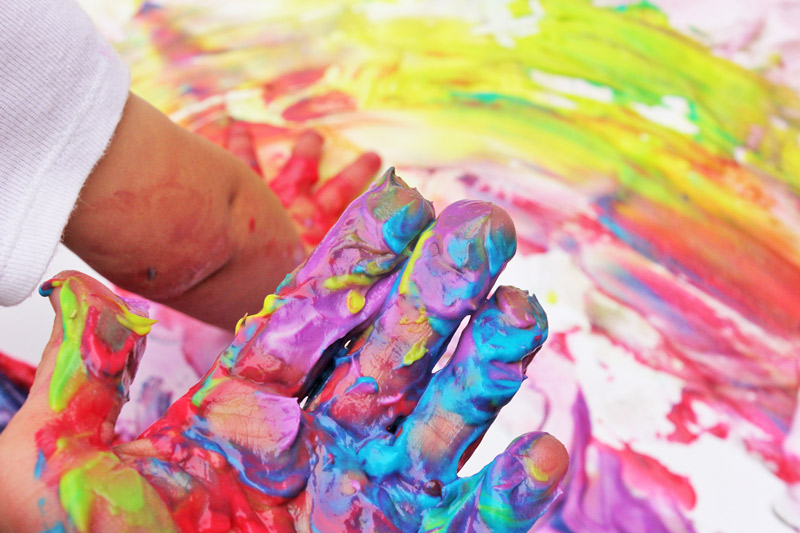
Family Collaborative Process Art by Twodaloo

Super Fun Collaborative Group Art Projects for Kids

Edible paint and cute, little babies. Squee! The activity is awesome, and the kids in her photos are adorable.

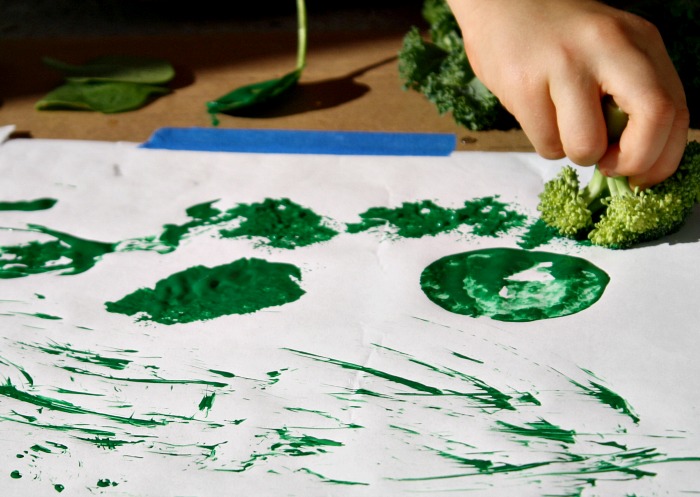
Painting with Vegetables by Fantastic Fun and Learning

Super Fun Collaborative Group Art Projects for KidsThis is a collaborative group art project over multiple sessions with a book tie-in and lessons on color. Very cool. I think my kids would love doing this together.

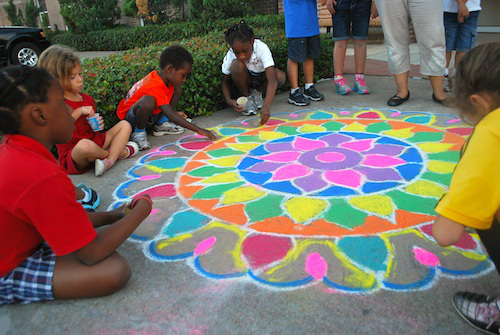
Diwali Rangoli Art from India by Kid World Citizen

Super Fun Collaborative Group Art Projects for Kids

I love this group art project. Colossal culture and color!

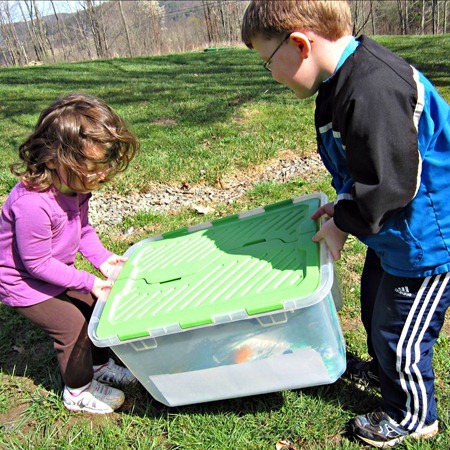
Silly Sensory Ball Kids Painting by B-Inspired Mama

Super Fun Collaborative Group Art Projects for Kids

I definitely need to do this with my girls. One of my daughter’s OT goals for her Sensory Processing Disorder is heavy work, and she LOVES art, so this would be a great fit for her.

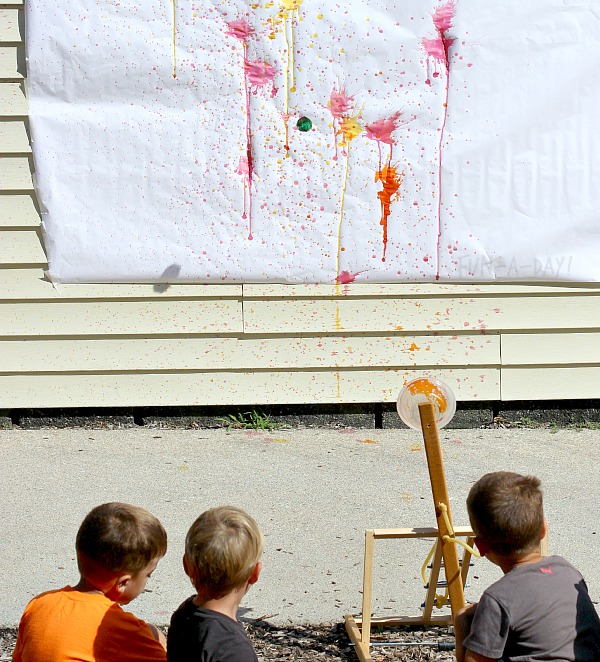
Catapult Painting by Fun-A-Day

Super Fun Collaborative Art Projects for Kids

This is so good. So good. I can’t take it.

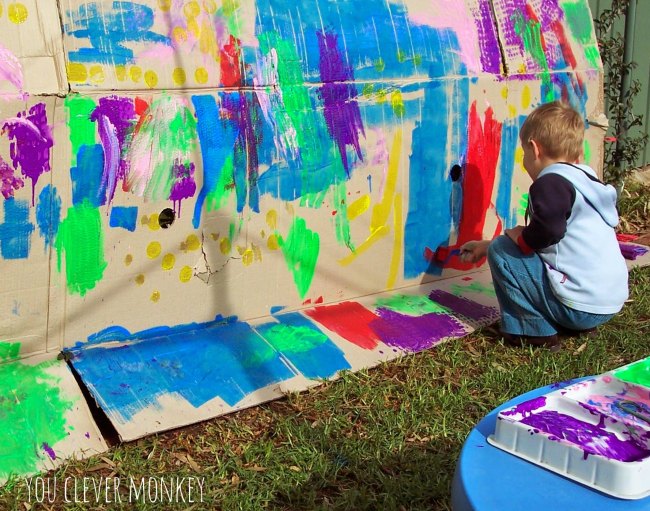
Big Art by You Clever Monkey

Super Fun Collaborative Art Group Projects for Kids

I love this blog, You Clever Monkey. Visit this link and check out Nichole’s blog. She’s awesome!

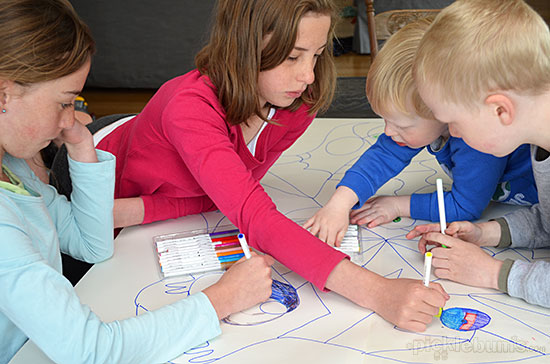
Collaborative Doodle Drawings from Pickle Bums

Super Fun Collaborative Art Projects for Kids

I love the focus on the faces of these kids. I love this collaborative group art project! Easy and fun.

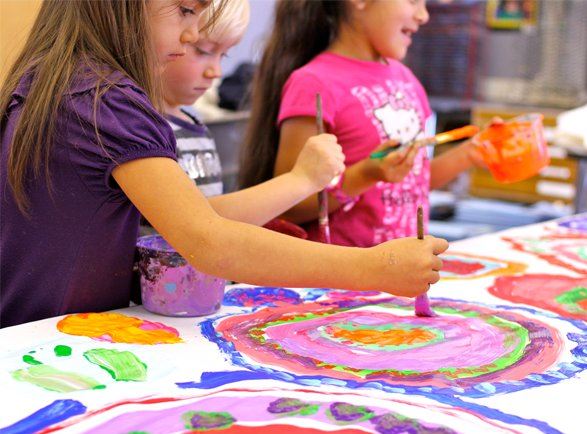
Circle Painting by Kinders by Deep Space Sparkle

Super Fun Collaborative Art Projects for Kids

There is a reason why Kandinsky projects are all over the internet. They work, they are fun, they are freeing, and the final results are beautiful! If you don’t already visit Deep Space Sparkle for your art lessons, go there now. Right away.

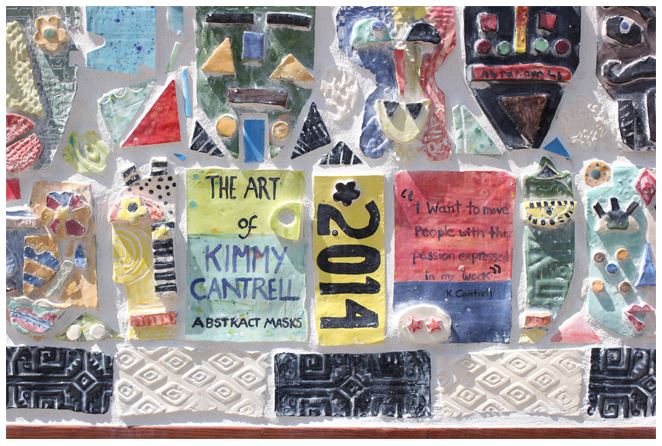
Kimmy Cantrell-Inspired Ceramic Tile Mural by Deep Space Sparkle

Super Fun Collaborative Art Projects for KidsThis is an awesome, but it’s more labor-intensive than the other group art projects. It is well worth the results though!

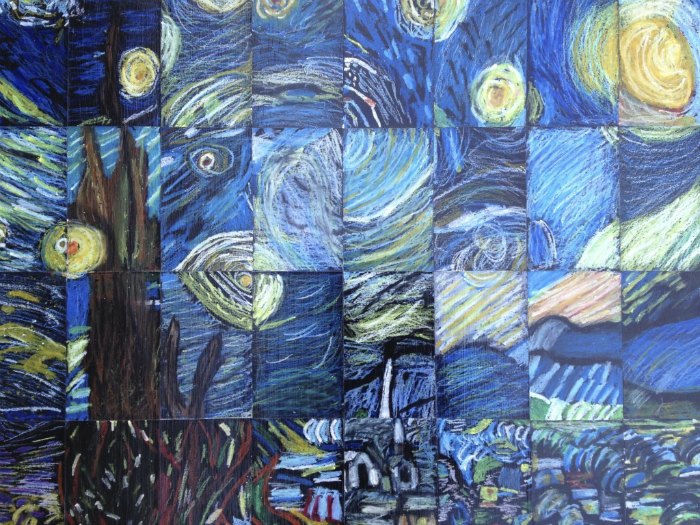
Masterpiece Mosaics: a Collaborative Art Project for Grades K — 8 by Teach Kids Art

Super Fun Collaborative Art Projects for Kids

What a fun way to study and appreciate works of art!

Wild Art by Here Comes the Girls

Super Fun Collaborative Art Projects for Kids

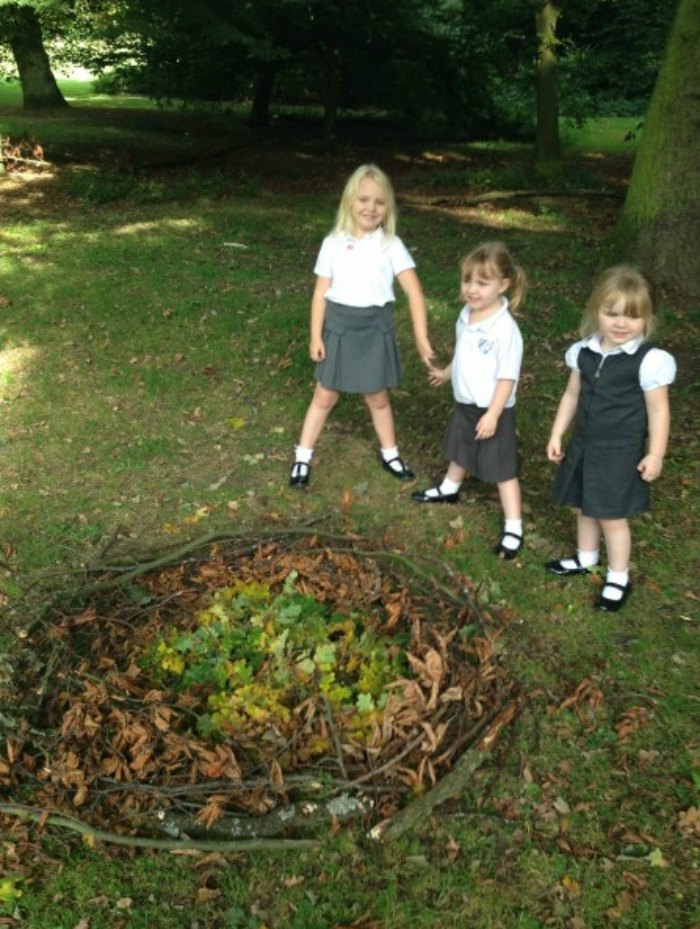
A fun group art project inspired by earthworks artist Andy Goldsworthy.

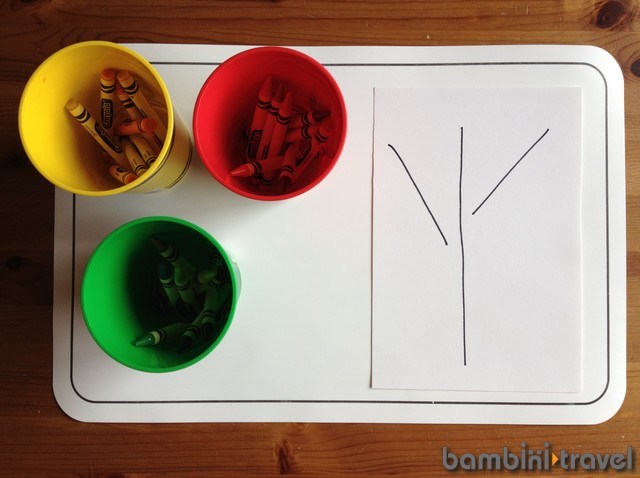
Drawing Prompt: Fall Tree by Bambini Travel
Super Fun Collaborative Art Projects for Kids


This is a great idea. Adding a little bit of a drawing can really spark creativity for more hesitant little artists. Sometimes a blank piece of paper can be a scary thing!


For more awesome curated art content, check out my boards on Pinterest!
Visit Cindy @ The Art Class Curator’s profile on Pinterest.

Filed Under: Art Teacher Tips
Tagged With: andy goldsworthy, diego rivera, wassily kandinsky


December 12, 2014 1 Comment

Is it okay to hate a work of art?

Back when I taught art appreciation at a local community college, I had many many adult students who came into class saying things like “I just don’t get it!” or “My kid could paint that!” or “I just don’t like that artwork!”

The Art Curator for Kids - Is it Okay to Hate a Work of Art

In a way, I think many of my students felt like there is this thing that they are supposed to be or there is a bunch of stuff they should know before they are able to appreciate art. And, if they don’t like a painting, if that painting doesn’t do anything for them, that it is their fault.

Here’s the secret. It is totally OKAY to hate a work of art.

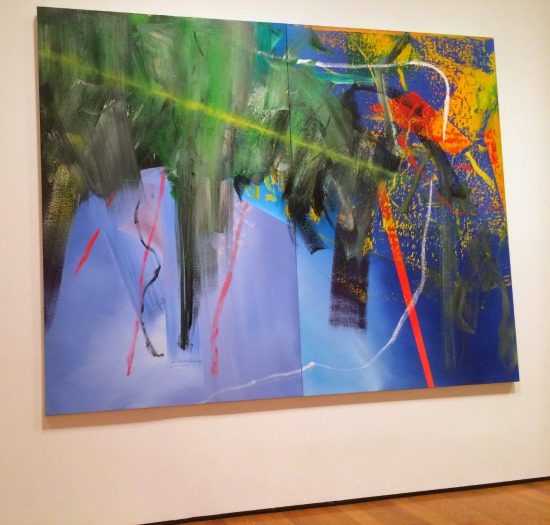
I was recently flipping through my pictures from my summer trip to New York City looking for an Oceanic artwork I thought I photographed at the Met to use in my Masterpiece Monday series. While clicking through the pics, I came across this one and recoiled.

Gerhard Richter, Clouds, 1982
Gerhard Richter, Clouds, 1982, Blech

Ugh. I really don’t like that painting. I had taken a picture of it just for the purpose of writing a post just like this one. I have strong feelings about this ones, my friends. It. is. the. worst. But, I do understand it’s value in this world as an extension of an artist and a moment in time. I respect its place in the world; I just don’t want to occupy that same space.

I always told my students that it is perfectly fine to hate a work of art, but just tell me why. Spend some time with it. Look at it a little longer if you can stand it, and see if it changes. Look at it again next week, and see if it changes. If it doesn’t, that’s fine.

Actually, it is more than fine. It’s good to hate an artwork. The artwork is making you feel and making you think, and that alone is awesome. Even if all you can think about is taking a knife to it.

Sarah Urist Green from the Art Assignment YouTube channel did a really great video recently on Art Critique. I recommend it as a way to think about how we can respect and discuss artworks we don’t find “interesting.” (Watch the video to find out about using that word.)

Long story short: My tip today is just to follow your interests. If you don’t like an artwork or an art movement, learn from it and then skip it. Find things you love and connect with and don’t feel bad if you don’t like it all.

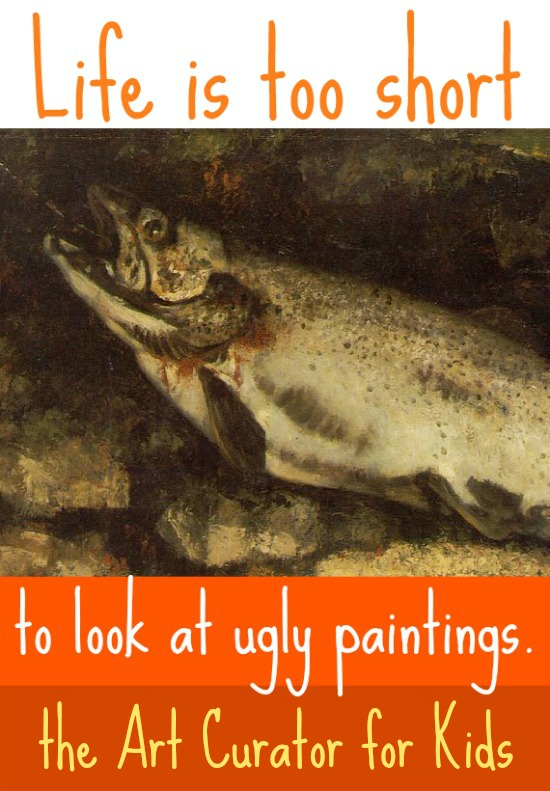
the Art Curator for Kids- Life is too short at look at ugly paintings.

Life is too short to look at ugly paintings.

Filed Under: Art Teacher Tips
Tagged With: gerhard richter, gustave courbet


December 10, 2014 Leave a Comment

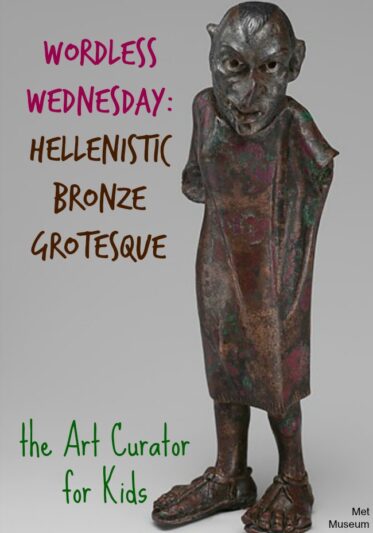
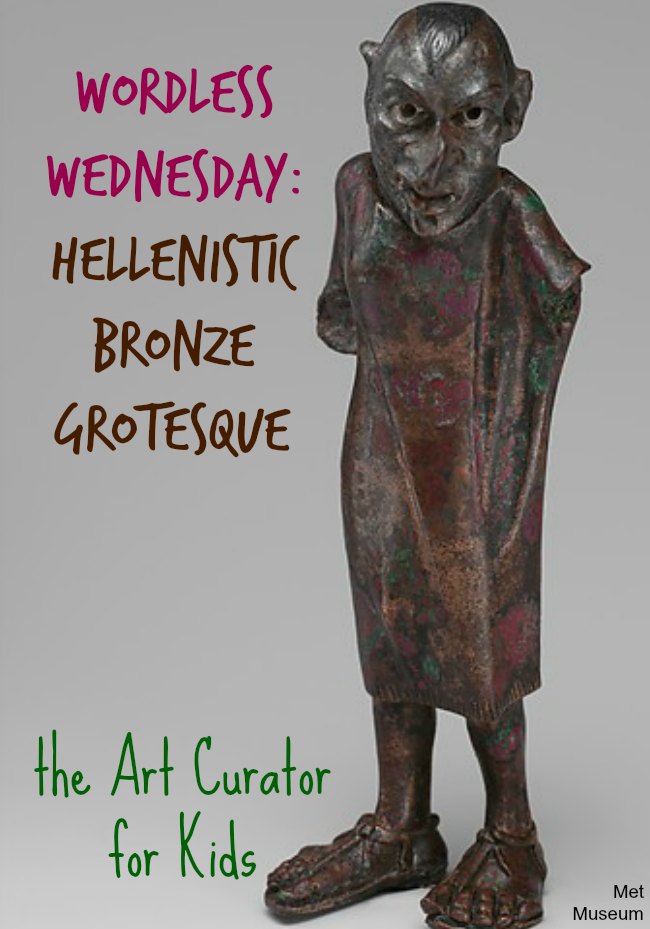
Wordless Wednesday: Hellenistic Bronze Grotesque

the Art Curator for Kids - Wordless Wednesday - Art History for Kids - Hellenistic Bronze Grotesque from the Met Museum

the Art Curator for Kids - Wordless Wednesday - Art History for Kids - Art of the Day

There is just so much art out in the world, and  I want you to see it all! But, I don’t have the time to write about it all. I’m going to start sharing some random artworks that I like every Wednesday for an art history-fied Wordless Wednesday! I am going to try not to write all about them, because honestly this will be a struggle here to just put this up and not say anything about it. I tend to overdo things.

Here’s your art for today.

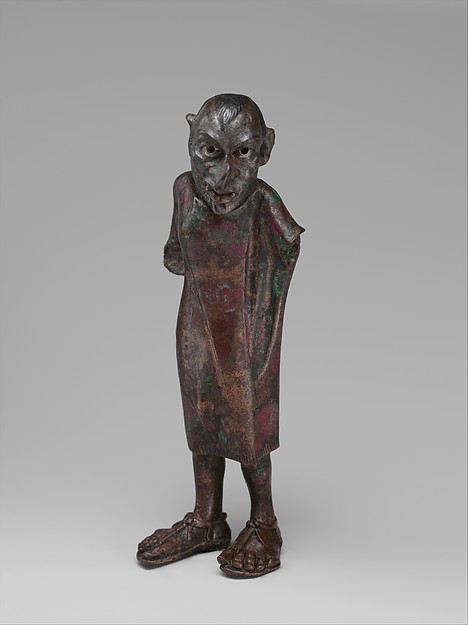
the Art Curator for Kids - Wordless Wednesday - Art History for Kids - Hellenistic Bronze Grotesque
Bronze Grotesque, Hellenistic Greek, 2nd Century B.C.E. to 1st Century C.E., Met Museum

I came upon this one when I was researching art for Art Around the World in 30 Days. I pinned it, but didn’t end up choosing it for the series. It stayed on my mind though, because I really have never seen anything like this. It kind of reminded me of Gollum from Lord of The Rings, of medieval gargoyles, and of this Romantic Nightmare painting. I was so surprised when I read it was from Hellenistic Greece!

He’s delightful. You can read a little bit about him on the Met’s website (basically they don’t know a lot about it). I’m also surprising he is only 4 inches tall! My precious.

You should have heard my 2-year-old‘s response to this. She saw it on my screen, squealed with delight and laughed, and then start discussing his flip flops. It was adorable.

Enjoy! Let me know what you think of this one in the comments.

the Art Curator for Kids - Wordless Wednesday - Art History for Kids - Hellenistic Bronze Grotesque from the Met Museum

Filed Under: Art and Artists


December 8, 2014 11 Comments

How Artists Depict Space

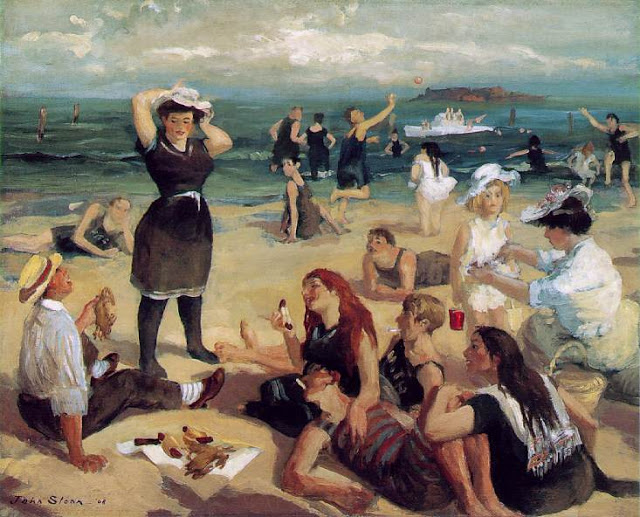
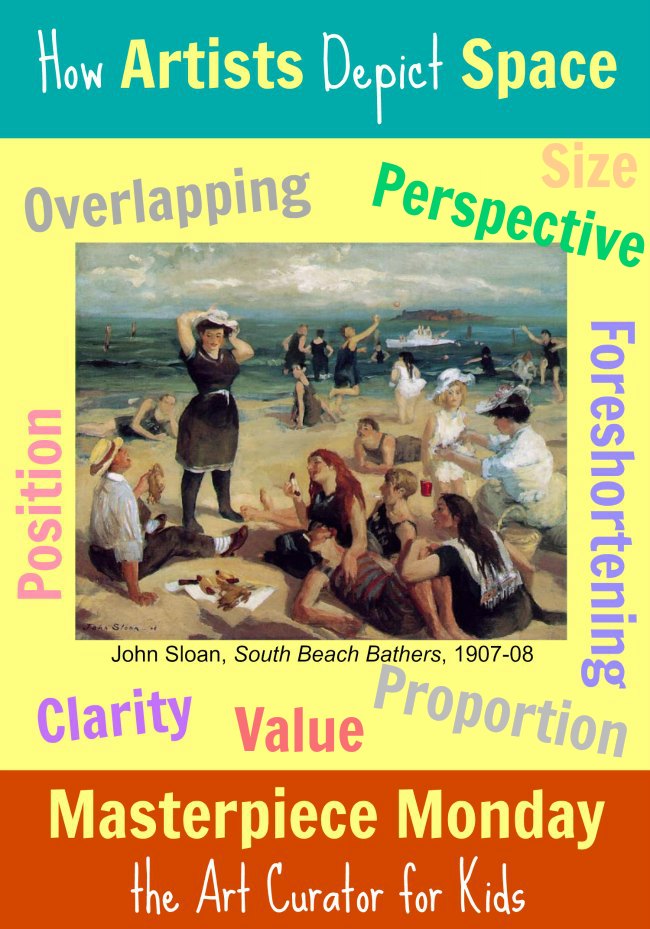
Hello there! Today on Masterpiece Monday, we are going to talk about how artist show space with South Beach Bathers by John Sloan. I’ve been using this artwork for years and years to teach about choices artists makes to show depth in their artworks.

Take a look and ask your student(s):

How does this artist show space/depth? How do we know that the people at the front are closer to us than the people in the background?

The Art Curator for Kids - How Artists Depict Space - Masterpiece Monday, John Sloan , South Beach Bathers, 1907-1908, Space Art Lesson, Elements of Art Lesson
John Sloan , South Beach Bathers, 1907-1908

This is a great exercise in looking and in figuring out all the things the artist has to do to convince us that a place and the people are real. Make sure you have your kids think through all of the strategies the artist used before giving them any of the below information. The learning happens through discovery not through telling.

Strategies for Depicting Space in Art

  • Position – The stuff at the bottom of the picture plane (the 2d space the painting occupies) is closer to us, and the stuff at the top is farther away. You can introduce art vocabulary words here–background, middleground, and foreground.
  • Size – The figures that are close to us are painted larger than the figures farther away.
  • Clarity – The figures that are farther from us are painted fuzzier and less detailed than the figures close to us. This is called atmospheric or aerial perspective.
  • Value – The use of shading adds form to the figures and adds to the depth.
  • Proportion – Proportion in art is the size of something in relationship to the size of something else. If something is “in proportion,” everything make sense to our eyes. The eyes are the right size on the face compared with the mouth, the hot dog is not too small or too big compare to the mouth, etc. Putting everything in the correct proportions makes the space believable.
  • Overlapping – When you overlap something on top of another thing. It tells our eyes that the thing on top is closer. If Sloan would have painted the above picture with no overlapping and each figure with space around it, it would flatten the picture and remove the realistic sense of depth.
  • Foreshortening – This is a way of shortening an object in order to make it appear as if it is coming out at the viewer in the artwork. Take a look at the arms of the woman standing. If you measure the arms, her left arm is shorter than the right. We know that her arms aren’t actually different lengths. Our eye sees her left elbow sticking out at us, and the artist understands how to manipulate his figures and proportions to show that to us.
  • Linear Perspective – This is not a strategy covered in the artwork above, but I didn’t want to leave it out. Learn more about linear perspective over at Khan Academy.

Six Ways to Create the Illusion of Space

I love this video illustrating many of these strategies with simple drawings from Italian art teacher Miriam Paternoster.

Space and Perspective Lessons and Project Ideas

Now that you have discussed this work with your kids, here are some extension activities and lessons about depicting space from around the web.

  • From Foreground to Background Lesson from the Getty Museum — This excellent lesson for upper elementary covers a lot of the above concepts in relationship to landscape painting. It has several resources and printables as well as focuses on a work from the Getty’s collection.
  • Free-Fall Foreshortening Art – This is a cute art project good for upper elementary about foreshortening.
  • Drawing Steps for One Point Perspective – A great step-by-step tutorial for drawing with one-point perspective with lots of pictures from . This is another great lesson for upper elementary and middle.
  • Hear, Near, and Far Winter Trees – This is a great lesson on Deep Space Sparkle for the younger lower Elementary kids on perspective introducing the idea in very simple terms. The results are lovely!
  • Perspective Drawing – A HUGE Collection of Perspective Lessons and Resources from the Incredible Art Department.

More About This Artwork

I filmed another video of me talking with my daughter about this artwork. That is coming later soon, and I will also talk a little bit more about this artist and artwork in that post. Warning: It is SO CUTE. 🙂


Want more elements and principles of art resources? Check out the below posts.

The Art Curator for Kids -Example Artworks that Show Space - The Elements and Principles of Art Series-300The Art Curator for Kids - Example Artworks that Show Line - The Elements and Principles of Art - 300The Art Curator for Kids - Example Artworks that Show Emphasis - The Elements and Principles of Art SeriesElements and Principles of Art - Artworks that Show Proportion in art and ScaleThe Art Curator for Kids - Elements and Principles of Art Series - Artworks that Show Shape - 300The Art Curator for Kids - Why I Hate the Elements and Principles But Teach Them Anyway - 300The Art Curator for Kids - How Artists Depict Space - Masterpiece Monday - John Sloan , South Beach Bathers, 1907-1908, Art Lessons for Kids - Elements of Art Lessons

Filed Under: Elements and Principles of Art
Tagged With: john sloan


  • Previous Page
  • Page 1
  • Interim pages omitted …
  • Page 30
  • Page 31
  • Page 32
  • Page 33
  • Page 34
  • Interim pages omitted …
  • Page 38
  • Next Page

Primary Sidebar

Hi! I’m Cindy Ingram, the creator of Art Class Curator and The Curated Connections Library

I’m on a mission to revolutionize education with the power of life-changing art connections. Art is not “extra”. Art is essential. We are empowering teachers to bridge the gap between art making and art connection, kindling a passion for art that will transform generations.

More About Me

Free Worksheets!

-Free Bundle of Art Appreciation Worksheets-

In this free bundle of art worksheets, you receive six ready-to-use art worksheets with looking activities designed to work with almost any work of art.

Download

Free Worksheets!

-Free Bundle of Art Appreciation Worksheets-

In this free bundle of art worksheets, you receive six ready-to-use art worksheets with looking activities designed to work with almost any work of art.

Enrollment in Curated Connections Library is currently open. Click here to join. Join our list to get more information and to get a free lesson from the vault! If you are purchasing for a school or school district, head over here for more information.

Check Out What’s New In The Shop

Experience Art: Engaging Art Criticism Discussions and Activities for Teachers and Students of All Ages
Call to Art: An Un-Conference for Art Educators
Curated Connections Library Membership
Perspectives High School Curriculum

More Products

Have You Listened to the Latest Podcast Episode?

Falling for Naudline Pierre’s Evocative Art: A Conversation with Madalyn (Part 2)

More Episodes

Testimonials

I like how this program, unlike other art class resource membership programs, feels authentic. It's like art matters more here, and not fancy flash-in-the-pan trendiness. The goal of Art Class Curator seemed to be helping kids develop a lifelong love and art appreciation versus "Hey, look. I painted this fish."
Erin A.
Your questions are helping me to delve into much deeper learning, and my students are getting better at discussion-and then, making connections in their own work. Art Class Curator is awesome!
Denise W.
Interestingly, my lower performing classes really get engaged in these [lessons] and come away with some profound thoughts!
Melissa G.
I had the most amazing 6th grade class today. They were jumping out of their seats with hands raised just to respond and give input. It was as if I was waving candy in front of them! They saw more and more and the ideas and interpretations unfolded. So cool!!! This is what makes teaching art so wonderful – thank you!!
Caroline G.
I just wanted to thank you for the invaluable resource you have through Art Class Curator. Not only do you have thought provoking activities and discussion prompts, but it saves me so much time in preparing things for myself! I feel like I’ve only scratched the surface with your site.
Maryjane F.

Get Art Inspiration To Your Inbox!

Enter your email address to get regular art inspiration to your inbox
plus a BUNDLE OF 6 FREE WORKSHEETS!
We hate SPAM and promise to keep your email address safe.
Download

Free Worksheets!

*Free Bundle of Art Appreciation Worksheets*

In this free bundle of art worksheets, you receive six ready-to-use art worksheets with looking activities designed to work with almost any work of art.

Copyright © 2026 Ignite Art, LLC DBA Art Class Curator •  All rights reserved  •  Privacy Policy  •  Terms of Service  •  Site Design by Emily White Designs