• Skip to main content
  • Skip to primary sidebar
  • About
    • About Art Class Curator
    • Contact
    • Speaking
    • Media & Press
    • Programs for Schools
  • Blog
  • Podcast
  • Shop
  • Join
  • Member Login

Art Class Curator

Hands-on and Minds-curious Art Learning

  • Art & Artists
  • Art Connection Activities
  • Art Teacher Tips
  • Elements & Principles
  • Downloads & Resources
Home
  • About
    • About Art Class Curator
    • Contact
    • Speaking
    • Media & Press
    • Programs for Schools
  • Blog
    • Art & Artists
    • Elements & Principles
    • Art Connection Activities
    • Art Teacher Tips
    • Downloads & Resources
  • Book
  • Podcast
  • Shop
  • Join
  • Member Login

All Posts from Art Curator for Kids

December 3, 2014 Leave a Comment

Fun Art and Manga Gifts for Teens

I’ve done a Gift Guide for Teens Who Love Art focusing on good quality art supplies, and today, I have more fun art gifts for teens to add to your gift list. The first half is cute art history stuff like dress-up magnets, paper dolls, and finger puppets. At the bottom I focused on Manga, because who are we kidding? When a teenager says they love art, what they really mean is they love Manga.
Gift Ideas for Artsy TeensPlease note, this post includes Amazon affiliate links. As an Amazon Associate I earn from qualifying purchases.

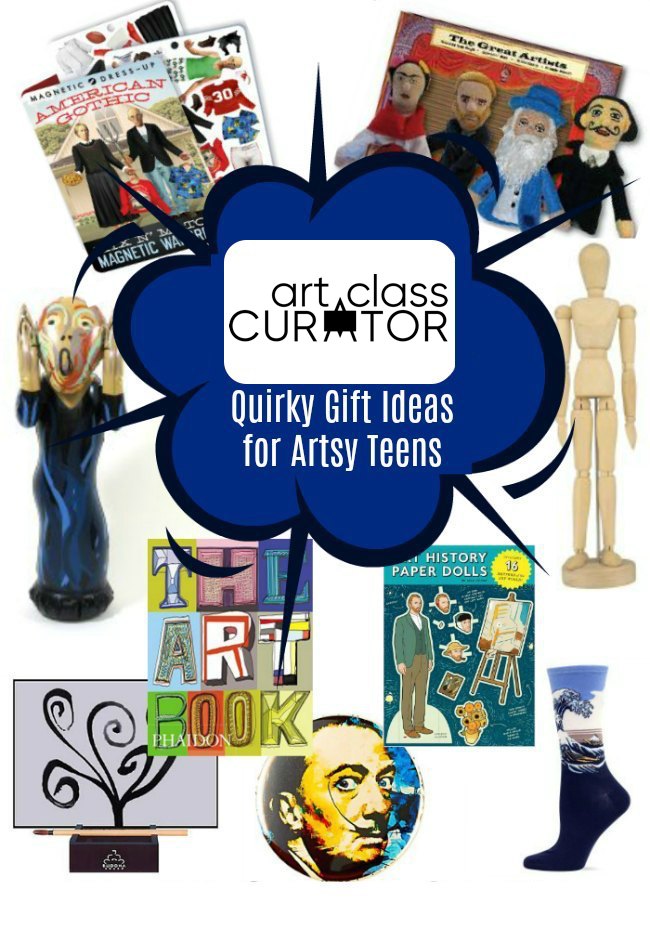
Fun Art Gifts for Teens:

  • Art History Paper Dolls – This include paper dolls of 13 different artists including Picasso, O’Keeffe, van Gogh, and da Vinci! So fun!
  • Frida Kahlo’s Frocks & Smocks Magnetic Dress-Up Set – I used to have a Michelangelo’s David version of this, and it was so fun!
  • American Gothic Magnetic Dress Up Set
  • Inflatable Scream Doll – We had these in the museum store I worked at in college, and I always wanted it for my dorm!
  • 12″ inch Drawing Mannequin Body – Nothing makes you feel more like an artist than one of these little guys sitting on your desk. Put it in different positions and practice drawing it.
  • Original Buddha Board – I had one of these when I was young, and it was so fun! And bonus, you can practice the brushstrokes in the Chinese brush painting we learned about last month. 🙂

Art Stocking Stuffers for Teens:

  • Artist Finger Puppets. Why not? Pablo Picasso, Leonardo da Vinci, Diego Rivera, Georgia O’Keeffe, Claude Monet, Gustav Klimt, and Frank Lloyd Wright.
  • Starry Night Socks or Mona Lisa or Van Gogh Sunflower Socks or Great Wave Socks or Frida Socks or you get the idea.
  • The Art Book: New Edition, Mini Format – I used to have an old version of this, and I used to love just flipping through and looking at all the art when I was first starting to learn about art and art history. There is a bigger version as well.
  • Salvador Dali Button – Perfect for a backpack! I want this.
Manga Gifts for Teens:

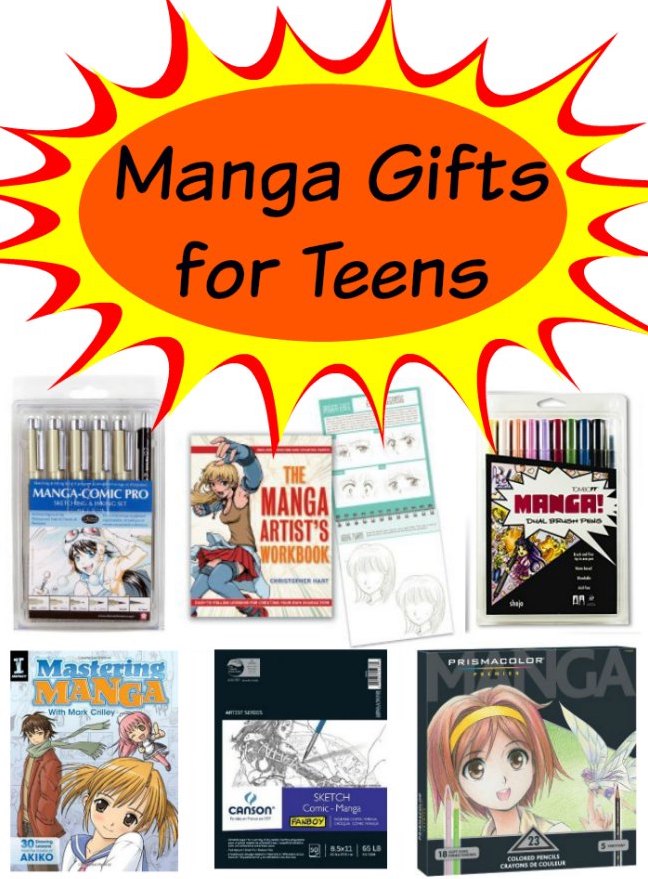
Chances are if you have a teen who loves art, what they REALLY mean is they love Manga. Am I right? I’ve been teaching high school for more than 4 years. It’s all about the Manga. Here are some great Manga supplies for your manga-lover.

  • Mastering Manga with Mark Crilley: 30 drawing lessons from the creator of Akiko
  • Royal & Langnickel Manga Satchel Artist Pack – An all-in-one pack with a bag, pens, pencils, eraser, character drawing book, and templates.
  • Fanboy Comic/Manga Sketch Pad 8.5X11
  • Sakura 50201 6-Piece Pigma Manga Comic Pro Drawing Kit
  • Tombow Dual Brush Pen Set, 10-Pack, Manga Shojo Colors (56173)
  • Prismacolor Premier Soft Core Colored Pencil, Set of 23 Assorted Manga Colors (1774800)
  • The Manga Artist’s Workbook: Easy-to-Follow Lessons for Creating Your Own Characters

Stayed tuned for more gift guides coming your way soon from Art Class Curator! Follow me on Facebook or sign up to receive posts by e-mail to not miss a thing!

See also:
Filed Under: Art Gift Guide


November 30, 2014 35 Comments

The Art Around the World eBook is Here!

The Art Curator for Kids - Art Around the World in 30 Days-eBook

I’m excited to present to you my Art Around the World in 30 Days eBook. Every day for the month of November 2014, I posted about amazing artworks that span the globe and span time. There are prehistoric artworks to artworks done in the 21st century. We visited every occupied continent. We learned about architecture, painting, sculpture, masks, installation art, fabric art, and more.

Among these pages, you will find information about the works of art, pictures, discussion questions, project and learning activity ideas, and resource lists.

I had a blast putting this together for you, and I am so proud of these 98 pages. 98 PAGES! It’s amazing to see it all together like this, and I hope you find these lessons useful. Please read the note on the product page about the images in the eBook.

Purchase

If you are a member of The Curated Connections Library, you can get this lesson and all of my other resources including monthly online teacher trainings for one fee.

Get the Full Lesson!

This Lesson is in The Curated Connections Library!

Find the full lesson from this post along with hundreds of other art teaching resources and trainings in the Curated Connections Library. Click here for more information about how to join or enter your email below for a free SPARKworks lesson from the membership!

Join the List

Get the Full Lesson!

This Lesson is in The Curated Connections Library!

Find the full lesson from this post along with hundreds of other art teaching resources and trainings in the Curated Connections Library. Click here for more information about how to join or enter your email below for a free SPARKworks lesson from the membership!

On the Blog

You can also check out the series on the blog:

The Art Curator for Kids - Art Around the World in 30 Days - Experience Art with Your Kids

Thank you!

I’d love to hear about your experiences, comments, and suggestions. Please drop me an e-mail, a facebook message, a tweet, a comment on a blog post, or whatever works best for you!

Thanks for your support. There is much more to come on Art Class Curator! 🙂

Cheers,
Cindy

Filed Under: Art and Artists


November 30, 2014 Leave a Comment

Art Around the World in 30 Days – The Last Day! – Germany

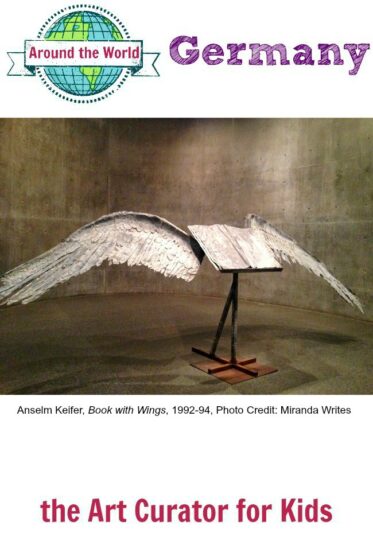
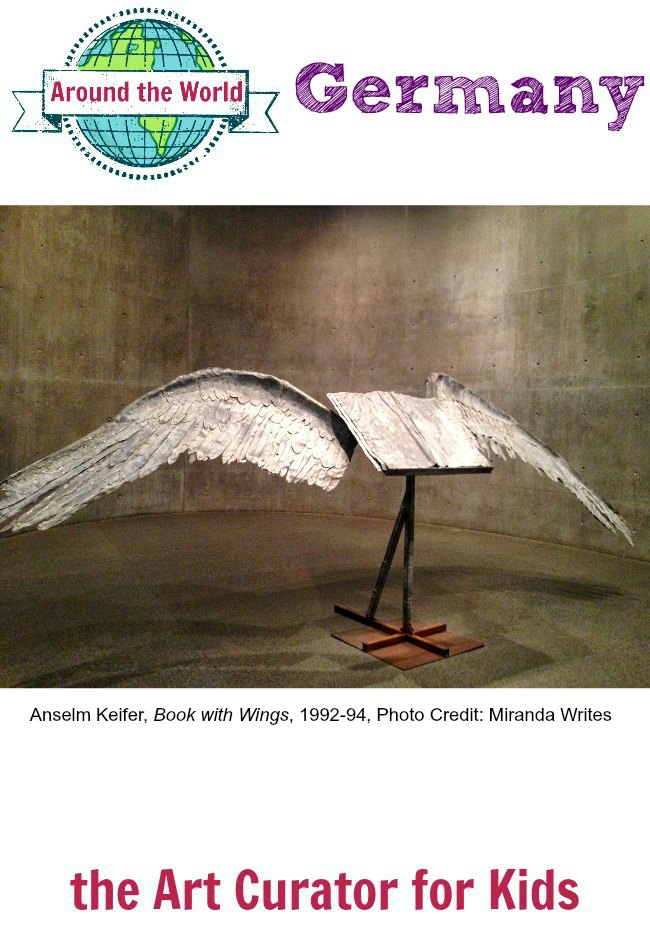
the Art Curator for Kids - Art Around the World in 30 Days - Germany - Anselm Keifer - Book with Wings - Art History for Kids

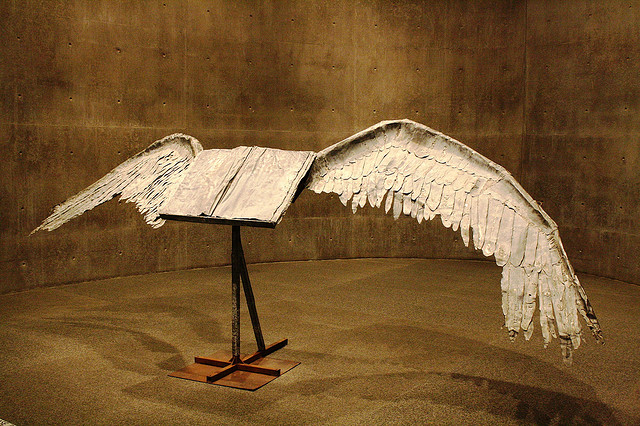
the Art Curator for Kids - Art Around the World in 30 Days - Germany - Anselm Keifer - Book with Wings - Art History for Kids
Photo Credit: Miranda Writes

We did it! This is the end. The last day of our month-long trip looking at amazing art from around the world. I need to pick something special for our last one. Something that sums up the wonder and power of art. Something joyful and celebratory. Something like this one?

the Art Curator for Kids - Anselm Keifer - Book with Wings - Art History for Kids - Art Around the World Germany
Anselm Keifer, Book with Wings, 1992-94, Photo Credit: Jen R (jypsygen/flickr)

This is Book with Wings by Anselm Keifer. It is in one of my local museums, The Modern Art Museum of Fort Worth, and it is just so wonderful. When they built the new building for the museum over 10 years ago, it seems they made this round room just for it. It fits so beautifully in the space.

It’s truly a triumphant artwork that makes us think about the power of reading, of knowledge, of education in our lives. Although it’s not specifically about art, I think it captures the importance of looking at and learning about art, so I will leave you with it to admire and think about on your own.

Thank you so much for following along. Here’s an index to all of the Art Around the World posts in case you missed any of them.

Filed Under: Art and Artists
Tagged With: anselm keifer


November 29, 2014 2 Comments

Art Around the World in 30 Days – Day #29 – Brazil

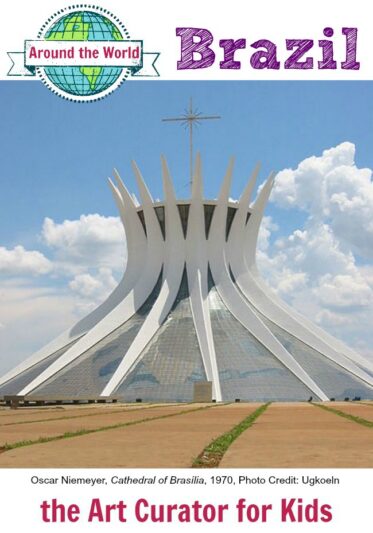
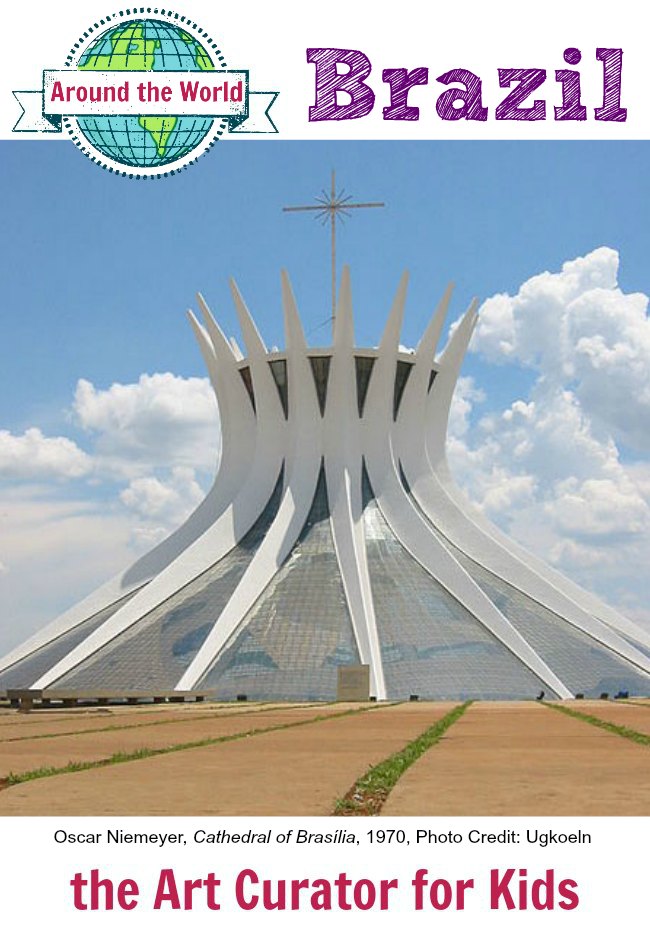
the Art Curator for Kids - Art Around the World - Oscar Niemeyer, Cathedral of Brasilia, 1970, Architecture for Kids, Art History for Kids

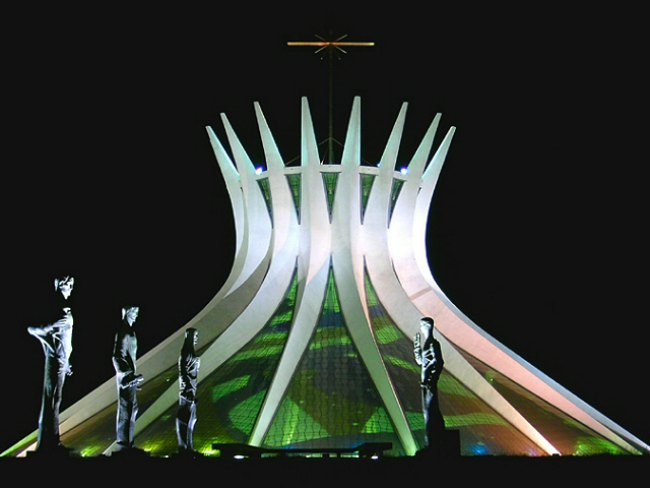
Welcome back to Art Around the World in 30 Days. We are on Day 29! Today, we’re going to look at a beautiful building in Brazil, the Metropolitan Cathedral of Brasília. It’s pretty amazing!

the Art Curator for Kids - Art Around the World - Oscar Niemeyer, Cathedral of Brasilia, 1970, Architecture for Kids, Art History for Kids, Brazil Metropolitan Cathedral

The History of Brasília, Brazil

The City of Brasília, Brazil has a pretty fascinating history. It is the capital of Brazil and was only founded rather recently in 1960. It was planned and developed specifically to be the nation’s capital, and several architects basically planned the city from scratch. The architects were Oscar Niemeyer and Lúcio Costa, and the landscape architect was Roberto Burle Marx.

I find that to be just amazing. Most cities have a history–starting from nothing and slowly evolving through time. It makes me think of Rome and in one short walk you see Ancient Roman ruins, Baroque cathedrals, and modern day businesses. To just start a city from the ground up in a matter of 41 months is just mind-boggling to me. 41 months! That’s how long it took to build the capital of Brazil.

Oscar Niemeyer designed the majority of the public buildings of Brasília including the Brazilian National Museum, the National Congress, the National Library, the residence of the President, and the Metropolitan Cathedral which we will learn about today. Each building has elements that tie them together to create unity.

The Metropolitan Cathedral of Brasília

The Metropolitan Cathedral of Brasília is just gorgeous. The outside is a hyperboloid structure, which is a building designed using hyperbolic geometry. Without getting too mathy on you, hyperboloid structures curve inward with the bottom being the widest area, a narrow spot about three quarters of the way up curving up to to a wider area at the very top. It can be used as a design element or as a way to hold up something high up.

This Cathedral is made with columns of reinforced concrete that almost look weightless as they are thin at the bottom and thicker at the top. The sides are entirely made of stained glass. Notice how I didn’t say that the walls are made of stained glass. Technically, those aren’t the walls. What we are looking at when we look at an exterior shot of this building is the ceiling. The rooms of the Cathedral are all underground.

The Art Curator for Kids, Architecture Lessons, Cathedral of Brasilia at Night, Photo Credit-Victor Soares-ABr. - Agência Brasil
Cathedral of Brasilia at Night, Photo Credit: Victor Soares/ABr. – Agência Brasil

Architecture is most amazing when the full experience of the visitor is taken into consideration, and Neimeyer did this beautifully. To enter, you walk past four sculptures of Evangelists, a bell tower, and a pillar with Bible stories. A almost 40 foot wide reflecting pool surrounds the exterior and visitors go under it on their way into the Cathedral.

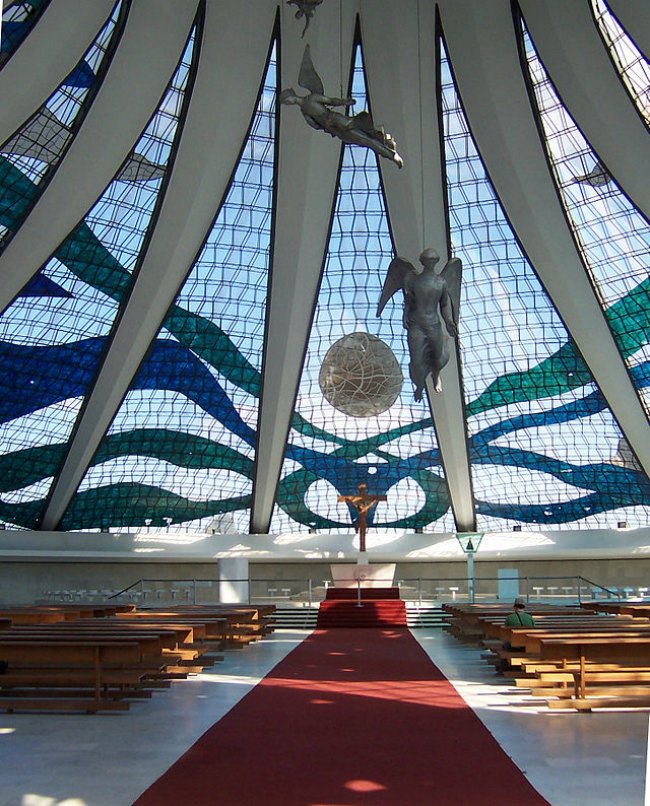
Continuing on, visitors must pass through a dark tunnel before entering the spectacular and brilliantly-lit interior of the Cathedral. The ceiling is almost entirely made of stained glass by artist Marianne Peretti. Her designs are curved and flowing lines as calm and cool as flowing water. Three sculptures of angels by Alfredo Ceschiatti float above as well.

Imagine what it must feel like headed through a dark tunnel and walking into this place? Wonderful.

The Art Curator for Kids, Architecture Lessons, Cathedral of Brasilia Interior, Photo Credit-Tampasteve
Cathedral of Brasilia Interior, Photo Credit: Tampasteve

Cathedral of Brasilia Discussion  Questions

  1. Describe the lines and colors in this building.
  2. How would it feel like to be in the place? What would it feel like to enter the building?
  3. What do you think the architect wanted you to think about when experiencing this building?
  4. Describe this place using your 5 senses. What would you see? hear? smell? feel? taste? (Check out my 5 senses worksheet here.)

Architecture Project Idea

Study other buildings that create a full experience for visitors and compare them with this one. Then, have students design their own building taking into consideration the full experience from the exterior to the interior. Have students think about how the design of architecture projects a feeling or mood and refers to the function of the building in a more symbolic way.

Other buildings you could study alongside this one:

  • Baslica di San Vitale, Ravenna Italy
  • Louvre Museum Pyramid by I.M. Pei
  • Chartres Cathedral (or any Gothic church)
  • Guggenheim Museum in Bilbao, Spain
  • Sultan Ahmed Mosque, Istanbul


That’s it! Thanks for reading. I’d love to hear your thoughts about the artwork in the comments. Click here to find more art from around the world, and come back tomorrow for our last stop on our world tour!

The Art Curator for Kids - Art Around the World in 30 Days - Experience Art with Your Kids400

Get the Full Lesson!

This Lesson is in The Curated Connections Library!

Find the full lesson from this post along with hundreds of other art teaching resources and trainings in the Curated Connections Library. Click here for more information about how to join or enter your email below for a free SPARKworks lesson from the membership!

Join the List

Get the Full Lesson!

This Lesson is in The Curated Connections Library!

Find the full lesson from this post along with hundreds of other art teaching resources and trainings in the Curated Connections Library. Click here for more information about how to join or enter your email below for a free SPARKworks lesson from the membership!

Filed Under: Art and Artists
Tagged With: oscar niemeyer


November 28, 2014 Leave a Comment

Art Around the World in 30 Days – Day #28 – Iraq

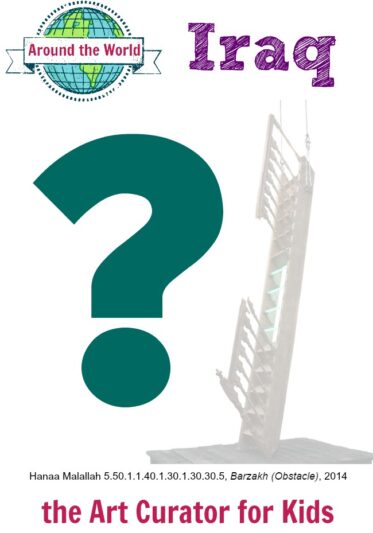
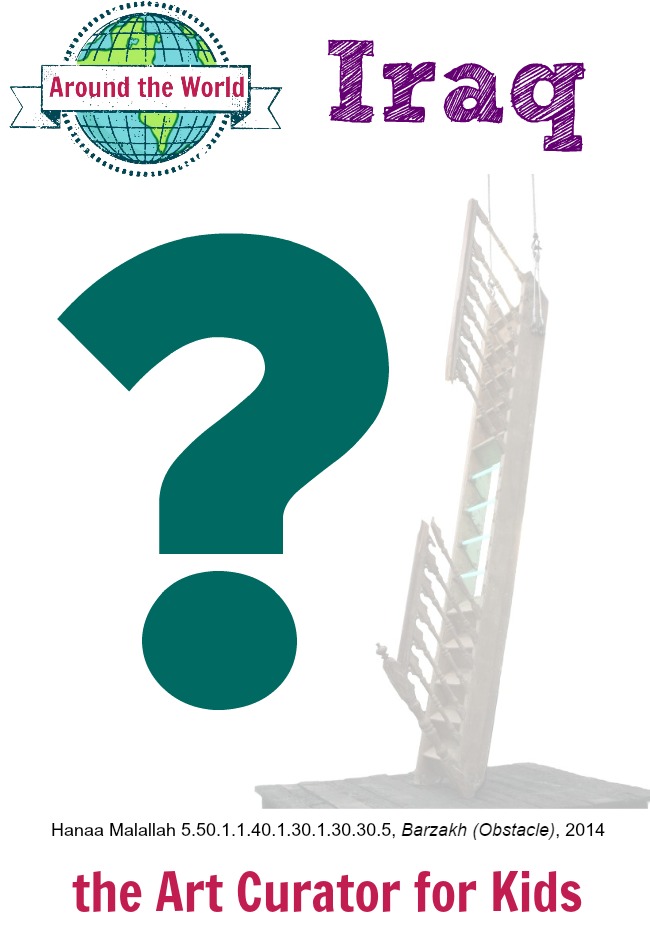
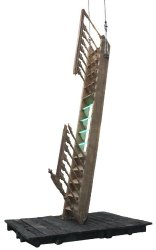
Day 28 of Art Around the World! We’re almost to the end! Today, we are headed to Iraq to study a sculpture installation by artist Hanaa Malallah. The artist, who signs her work with a series of numbers representing letters in the Arabic alphabet, creates compelling and thought-provoking works of contemporary art.

the Art Curator for Kids - Art Around the World - Iraq - Hanaa Malallah 5.50.1.1.40.1.30.1.30.30.5, Barzakh (Obstacle), 2014the Art Curator for Kids - Hanaa Malallah - Barzakh (Obstacle) - 2014 - Art History for Kids, Contemporary ArtClick over to Hanaa Malallah’s website to view this artwork. Read the blurb about it while you are there if you’d like.

I picked this artwork because I felt like any average person could see it and interpret it for themselves. It has imagery that makes sense and can help us think about ourselves and our place in the world. I love art that helps us be introspective. “The unexamined life is not worth living” (Socrates) and all that jazz.

In the artist’s blurb about this on her website (from the link above), she describes the title Barzakh (Obstacle). She says it “is an Arabic word denoting an in-between state separating the corporeal and spiritual worlds.” [Source: Hanaa Malallah]. She compares it to an isthmus which is a body of freshwater meeting a body of saltwater. You can read more about the meaning of this word here. It has a strong spiritual connection, but the artist says it can be explored in both spiritual and secular ways.

There are many ways to connect to this idea personally in many areas of life, and I invite you to explore this artwork and think about this artwork within the context of your own life.

I know that by choosing an artwork and artist from Iraq that you may expect me to talk about their history, war, and politics, but we can’t always tie an artwork to such things. Artists’ work can stand alone outside of those things (or inside of those things), and I think this work, in particular, is more global and can be understood and valued on its own merits without an expectation to be political or make some sort of global statement.

Am I making sense? I have a really bad cold at the moment, and I can’t believe I am even sitting up to do this. I better proofread this in a few days just to be sure. 🙂

Art Discussion Questions

  1. What’s going on in this artwork? What do you see that makes you say that?
  2. Where does this ladder going?
  3. What will happen when you try to climb this ladder?
  4. What do the broken rails and green lights mean?
  5. What is the artist trying to say? What is the meaning of this artwork?
  6. How can you connect this artwork and this concept with your own life?

Art Learning Activities

Here are some learning activity ideas for this artwork.

  • Journal about the artwork.
  • Have students write stories about themselves or write a fictional story inspired by the artwork.
  • Have students carry cameras and document areas of their world/lives that could represent this in-between place illustrated in the artwork.

Artist Information

  • Website of the Artist, explore more work by her.
  • Biography on the artist (Click “Biography”)
  • Interview with the Artist

That’s it! Thanks for reading. I’d love to hear your thoughts about the artwork in the comments. Click here to find more art from around the world, and come back tomorrow for a trip to Brazil!


The Art Curator for Kids - Art Around the World in 30 Days - Experience Art with Your Kids400

Filed Under: Art and Artists
Tagged With: hanaa mallalah


November 26, 2014 Leave a Comment

Art Around the World in 30 Days – Day #26 – Cyprus

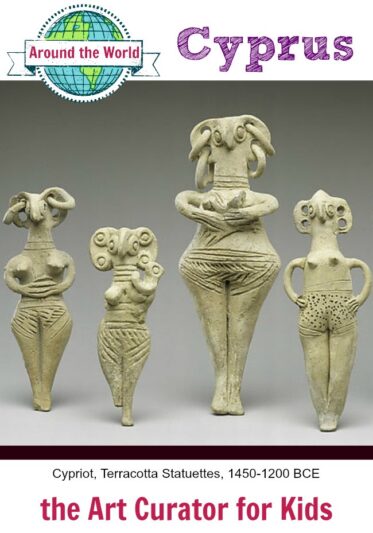
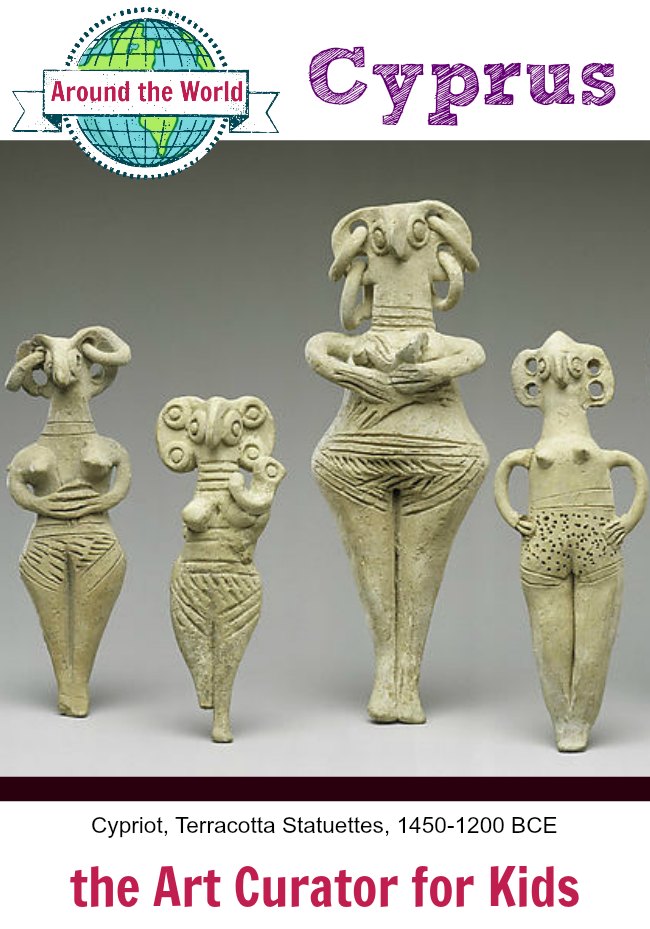
the Art Curator for Kids - Art Around the World - Cyprus - Cypriot, Terracotta Statuettes, 1450-1200 BCE

Okay, y’all, I am TIRED. 30 days of posting is rough, especially when each requires so much research and thinking. It has been super fun and an amazing challenge, but PHEW! 5 more days. I am delighted that I have these precious artworks to write about right now, because they are CUTE and light and lovely, and that is all my brain can handle at this moment I’m sorry to say.

the Art Curator for Kids - Art Around the World - Cyprus - Cypriot, Terracotta Statuettes, 1450-1200 BCE
Met Museum

SO CUTE! Look at the second one holding the little baby. I can’t take it. Cute.

Okay sorry, I guess you probably want to learn something now instead of hearing me ramble and gush about these precious Cypriot sculptures from 3,500 years ago. CUTE! So. Very. Cute.

These sculptures are from Cyprus which is in the Eastern Mediterranean sea south of Turkey and north of Egypt.

Unfortunately, we have another prehistoric art situation with these lovely bird ladies. I did some reading from some Met Museum publications like this one (Isn’t the Met amazing? The have all these free pdfs on their website of their books and publications. They are so generous.). It basically just listed their key visual characteristics like: (Source: Karageorghis)

  • bent arms with hands resting on sides of body, against the stomach, or holding an infant
  • birdlike face and large nose
  • large pierced ears (some still have earrings in tact)
  • accentuated pubic triangle and obvious breasts
  • flat head with curved hair at temples
  • possible influences of Syria and Mycenae
  • ranging from 5 to 8 inches tall

Because they were made in prehistory, before writing, we are left to wonder why they made them and what they mean. In the meantime, we can enjoy looking at something fun and delightful, and that is perfectly okay with art to just enjoy it. It doesn’t always have to teach us something.

Please note, this post includes Amazon affiliate links. As an Amazon Associate I earn from qualifying purchases.

Art Discussion Questions

  1. Describe these sculptures.
  2. What can you tell about the people who made these based on what you see?
  3. Why do you think these sculptures were made?

Cyprus Sculpture Art Project

Make a part animal-part person figure out of air-dry clay.

Citations

Ancient Art from Cyprus: The Cesnola Collection in The Metropolitan Museum of Art, Karageorghis, Vassos, in collaboration with Joan R. Mertens and Marice E. Rose (2000)


That’s it! Thanks for reading. I’d love to hear your thoughts about the artwork in the comments. Click here to find more art from around the world, and come back tomorrow for another visit to the USA to look at some more American Indian art in honor of Thanksgiving! Have a Happy Thanksgiving tomorrow to all my US friends. 🙂


The Art Curator for Kids - Art Around the World in 30 Days - Experience Art with Your Kids400

Filed Under: Art and Artists


November 25, 2014 Leave a Comment

Art Around the World in 30 Days – Day #25 – Kazakhstan

We’ve got another work of Contemporary Art on our trip around the world today. This artwork is from Kazakhstani artist, Yerbossyn Meldibekov.

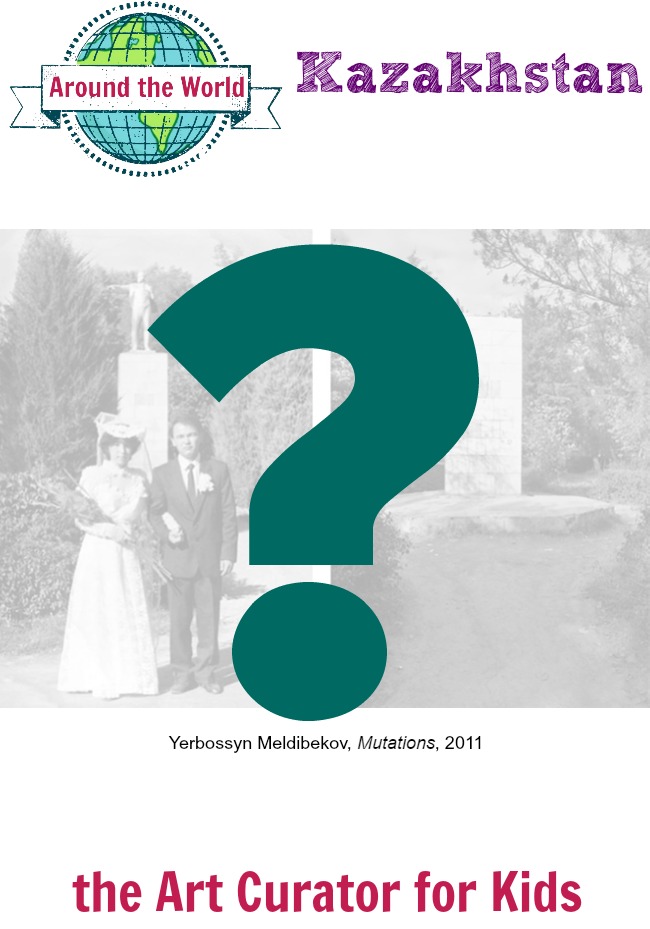
The Art Curator for Kids - Art Around the World - Kazakhstan- Yerbossyn Meldibekov, Mutations, 2011, Art History for Kids, Kazakhstan ArtSorry because of copyright I can’t post big pictures of these images. Here is a link to see a closer view of the pictures. The pictures are along the left side.

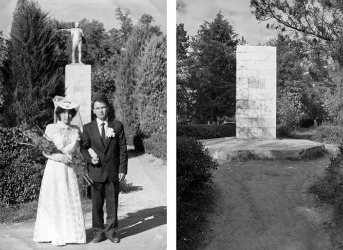
The Art Curator for Kids - Art Around the World - Kazakhstan Art - Yerbossyn Meldibekov, Family Album Mutations, Contemporary Art
Yerbossyn Meldibekov, Family Album/Mutations

Kazakhstan was the last of the republics to declare independence from the former Soviet Union. This series of photographs called Family Album/Mutations explores the history of Kazakhstan and how it has changed since the dissolution of the Soviet Union in 1991.

The Soviet Union had a tradition of grand monuments erected to be a form of propaganda to magnify revolutionary, communist ideals. When the USSR collapsed, many people replaced these communist monuments with new ones that supported capitalism and a new sense of national pride.

Meldibekov found old photos of people posing next to the former Soviet monuments and then took new photos next to the new monuments or even a blank pedestal where the old statue once stood. Often the new photo would include the same people from the original photo so you have both the progression of time through the age of the people juxtaposed with the historical changes of politics through the monuments.

Yerbossyn Meldibekov’s Family Album/Mutations  is a fascinating series that shows the tumultuousness of the 20th century in Kazakhstan. It reminds us of the history and the monumental leaders, but puts them into the perspective of individual people and families.

Kazakhstan Art Discussion Questions

  1. What’s going on in this picture? What is different? What is missing?
  2. What mood or emotion does the photograph on the left project? How is it different than the mood on the right?
  3. How do you think the people of Kazakhstan feel about this art?

Kazakhstan Art Learning Activity Ideas

Use this art in your lessons about the Soviet Union to help understand and explore the subject more deeply.

You could also have students brainstorm how we might do a similar photo series with history from our own location. For example, if you are a US citizen, maybe you could find a way to create a photo series using photographs and paintings from the Civil War.


That’s it! Thanks for reading. I’d love to hear your thoughts about the artwork in the comments. Click here to find more art from around the world, and come back tomorrow for a trip to Cyprus!

Filed Under: Art and Artists
Tagged With: yerbossyn meldibekov


November 24, 2014 Leave a Comment

Art Around the World in 30 Days – Day #24 – Colombia’s Fernando Botero

Masterpiece Monday - Amazing Works from Art History Each Week at the Art Curator for Kids - Art History for Kids, Art Appreciation for Kids

*sigh* I love Fernando Botero. He’s awesome.

the Art Curator for Kids - Art Around the World - Colombia - Fernando Botero, Dancing in Colombia, 1980, Fernando Botero Lesson, Art History for Kids, Contemporary Art for Kids
Fernando Botero, Dancing in Colombia, 1980, Fernando Botero Lesson, Art History for Kids, Contemporary Art for Kids
Fernando Botero, Dancing in Colombia, 1980

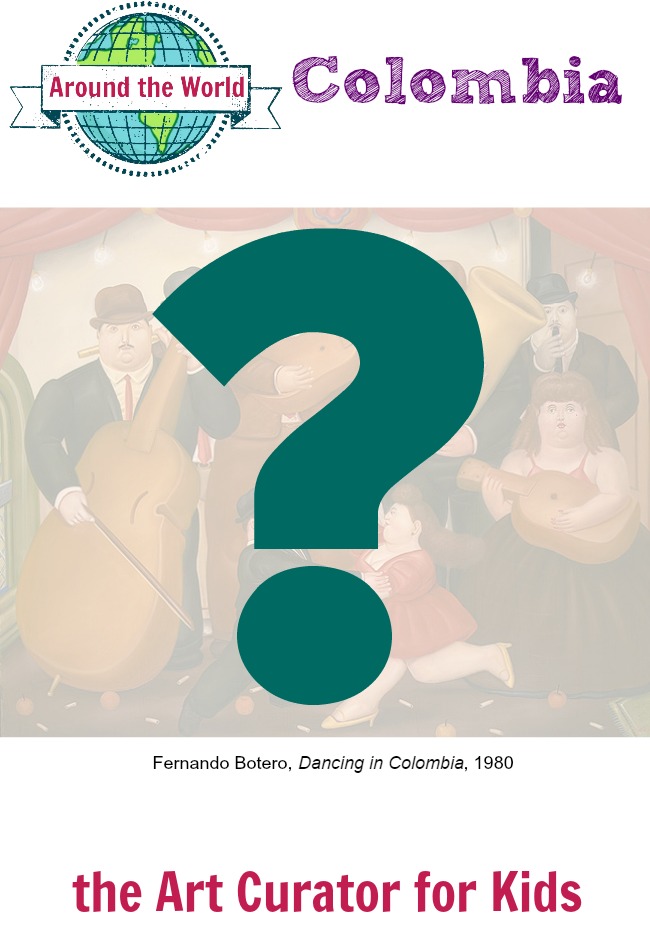
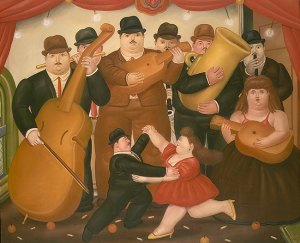
Another annoying question mark over the image thanks to copyright issues. Here is a thumbnail of this artwork. Click on the image or right here to see this artwork bigger.

Fernando Botero is a Colombian artist and probably one of the most famous artists alive right now. He traveled extensively in Europe when he was a young man and was greatly inspired by artists like Pablo Picasso who took the world and turned it on end. Changing perspective and proportion in art, Botero’s signature style includes very smooth and bold images of oversized people. He creates both painting and sculpture in this same stye.

I really love the way the Met Museum describes the piece:

[Botero] is a great storyteller, especially when inspired by scenes remembered from his native Colombia. Often depicting scenes of leisure activity, his satirical renderings may seem humorous at first, though they are often laden with social and political commentary. Dancing in Colombia depicts a lively café filled with music and dance. The small room seems overcrowded with seven huge musicians, two smaller dancers, and a rounded jukebox. . . . One can imagine the intoxicating confluence of loud music and odors of sweat, tobacco, liquor, and cheap cologne that fill the space. – Met Museum

Botero Art Discussion Questions

  1. What’s going on in this picture? Who are these people? What is the story being told?
  2. What would it feel like to be in this place? What would you hear? smell? feel? taste? see?
  3. How did this artist use line, color, and movement?

Fernando Botero Lesson

Botero’s work has such great depiction of people. His work is perfect for some character analysis and story telling activities.

I have MANY character worksheets in my free art appreciation worksheets and in my 20-pack of worksheets including: Twitter Perspectives, Write a Letter, Exploring Place: The 5 Senses, Send a postcard, The 5 Ws and H, Storyboard, Character Analysis, “I am” Character Poem, What do they see? Drawing.

Art Appreciation Worksheet Bundle

This art worksheets bundle from the Art Class Curator includes 25 ready-to-use art worksheets for use with individual works of art. The worksheets for art in this document are designed to work with lots of different types of artworks, so you can just pick an artwork, print a worksheet, and start the activity. Each has instructions at the top and plenty of space to do the activity.

Buy Now

Also, check out these posts on Art Class Curator about story and character:

  • Exploring Narrative in Art
  • Twitter Perspectives

More Botero Art

I wanted to keep writing, but it didn’t fit in well in my Botero lesson above, so here it is. 🙂

His artwork is delightful, but there are many artworks with stronger, more emotional, and more political subjects. He did a series of paintings on the awful torture of prisoners at Abu Ghraib in 2004-05. I hate to keep comparing him to Picasso, but Picasso’s trajectory was similar in a way. For the majority of his career, Picasso did artworks of lighter subjects and focused on women and children until the bombing of Guernica by the Nazis pushed him to make a political statement with his art.

Botero did 87 drawings and paintings of the Abu Ghraib prison scandal. Here’s an article with an interview of the artist. Beware these artworks are graphic and unsettling.

I would not show younger kids the Abu Ghraib works although it may be a good conversation to have with older kids–how we can use artwork to process our feelings and document. Botero himself said:

Art is important in time. It brings some kind of reflection to the matter. We have analyzed this thing from editorial pages and books, but somehow this vision by an artist completes what happened. He can make visible what’s invisible, what cannot be photographed. In a photo, you just do a click, but in art you have to put in so much energy. This concentration of energy and attention says something that other media cannot say. – Fernando Botero [Source]

That’s it! Thanks for reading. I’d love to hear your thoughts about the artwork in the comments. Click here to find more art from around the world, and come back tomorrow for a trip to Kazakhstan!

The Art Curator for Kids - Art Around the World in 30 Days - Experience Art with Your Kids400

Visit Cindy @ The Art Class Curator’s profile on Pinterest.

Filed Under: Art and Artists
Tagged With: fernando botero


November 23, 2014 6 Comments

Art Around the World in 30 Days – Day #23 – Panama Molas

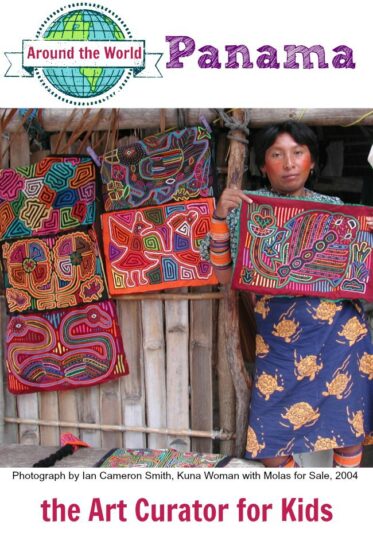
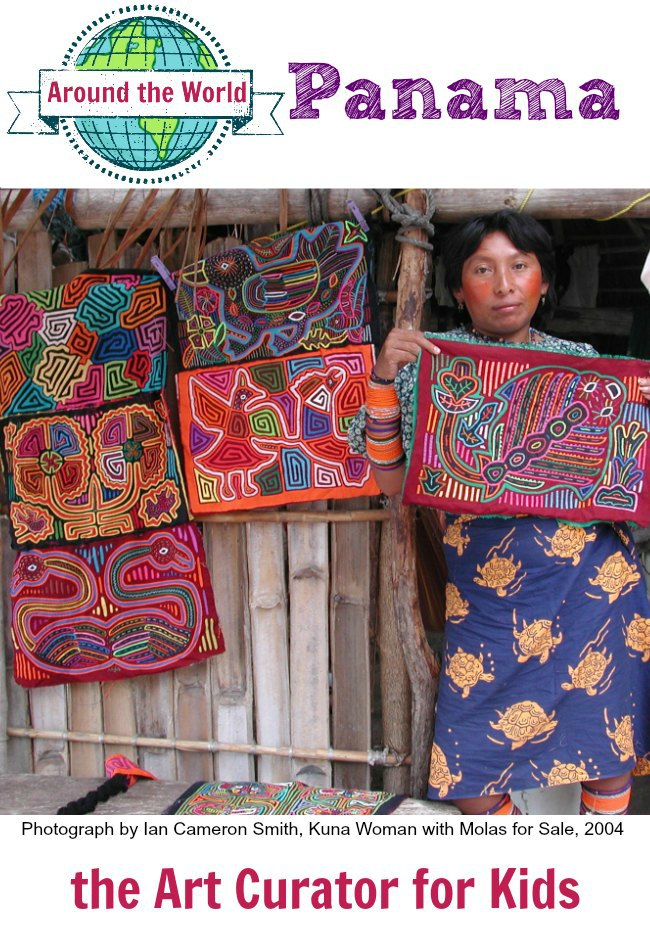
Today on Art Around the World, we’re doing a molas lesson, a fabric appliqué folk art from Panama. The Kuna people on the San Blas Islands cut and sew these bright and colorful panels and stitch them to the front and back of their clothes.

The Art Curator for Kids - Art Around the World - Panama - Kuna Woman with Molas

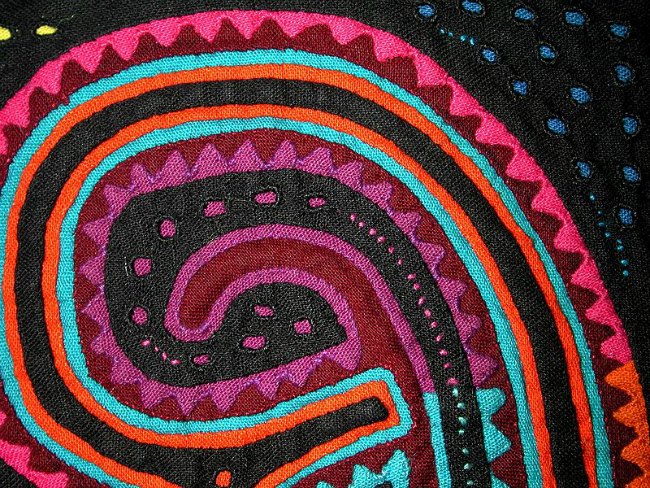
Molas are made with a technique called appliqué. Each color in a mola is one layer of fabric. Rather than cutting all the shapes and sewing them together along the edges, the layers are stacked and stitched together to make the design. Take a closer look of a mola here. Observe the fine details and level of complexity of the designs. These were cut and sewn by hand. What incredible craftsmanship!

Close-Up of Mola - Photo Credit SV Moonrise, Molas Lesson, Art Curator for Kids, Art History for Kids
Photo Credit: S/V Moonrise

These artworks have bold color and stunning designs of animals, geometric patterns, and more. Many of the examples we can find online are of plants and animals, but the Kuna women don’t stop there. From designs inspired by pop culture or images telling stories of their ancestors, the subjects are only limited by the imagination of the artist.

Check out many more mola designs in this slideshow from YouTube.

The Kuna people pass along knowledge of making molas from generation to generation and take great pride in their work.

Molas Art Discussion Questions

  1. Study the designs and colors. How do you think it was made? Which colors were layered first and last?
  2. How do you think the Kuna people feel about these molas?
  3. How do you think the rise in tourism and increased desire for molas as a cultural souvenir has impacted the Kuna people?

Molas Lesson

Well, you clearly need to make molas about of paper with your kids. Obviously. Here is a video showing you how to do a molas lesson.

Please note, this post includes Amazon affiliate links. As an Amazon Associate I earn from qualifying purchases.

Molas Lesson Resources

Great Bright and Bold Construction Paper

Paper Molas Lesson from Blick Art Materials

Paper Cut Molas Lesson from Deep Space Sparkle

This molas lesson from the Helpful Art Teacher does a good job at showing the layering process.

That’s it! Thanks for reading. I’d love to hear your thoughts about the artwork in the comments. Click here to find more art from around the world, and come back tomorrow for a trip to Colombia!

Remember you can get the whole month of Art Around the World posts as a PDF eBook in the Curated Connections Library!

Get the Full Lesson!

This Lesson is in The Curated Connections Library!

Find the full lesson from this post along with hundreds of other art teaching resources and trainings in the Curated Connections Library. Click here for more information about how to join or enter your email below for a free SPARKworks lesson from the membership!

Join the List

Get the Full Lesson!

This Lesson is in The Curated Connections Library!

Find the full lesson from this post along with hundreds of other art teaching resources and trainings in the Curated Connections Library. Click here for more information about how to join or enter your email below for a free SPARKworks lesson from the membership!

Filed Under: Art and Artists


November 22, 2014 Leave a Comment

Art Around the World in 30 Days – Day #22 – Algeria

Today’s artwork is a work of contemporary installation art from a French and Algerian artist. The subject matter is strong and sensitive, so you may consider diving into the content of this work with your older students.

Remember, this post describes an artwork created by an artist not my own personal feelings or politics. I don’t like to censor the artwork I choose for this site. I want to choose works that provoke and make you think and feel, because that is what art is all about.

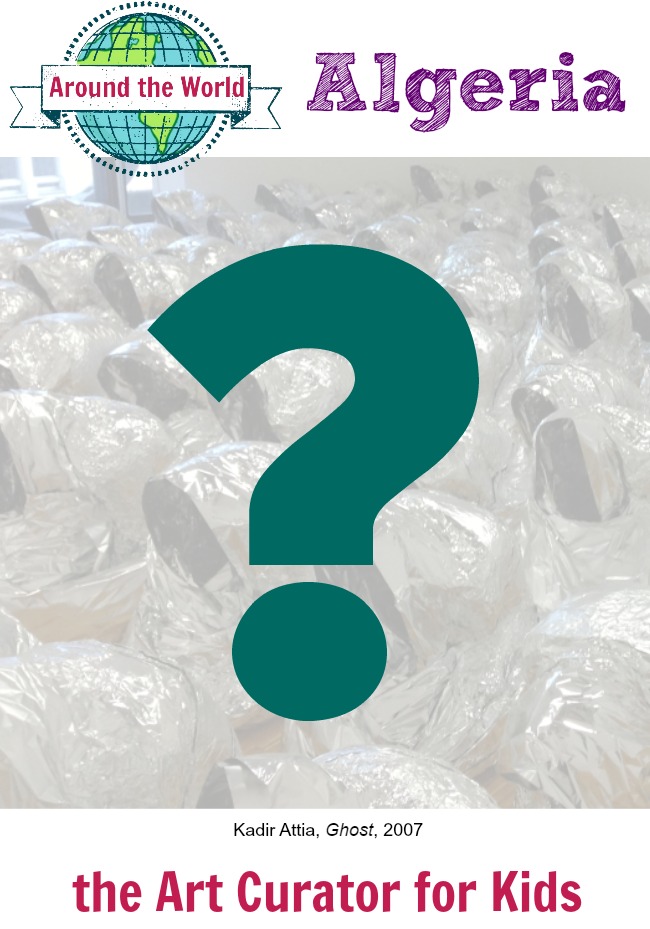
The Art Curator for Kids - Art Around the World - Algeria - Kadir Attia, Ghost, 2007, Art History for Kids, Contemporary Art for Kids, Installation Art Lesson

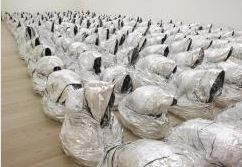
Please click here to see more images of this art installation. I couldn’t find a photo that had the right license to show large and with good quality on the blog.

Kadir Attia, Ghost, the Art Curator for Kids, Art Lessons, Art Appreciation for Kids, Installation Art LessonChoosing a country for this artwork is a little bit tricky. We live in such a global world, that the lines are not as clearcut as they once were. The artist, Kader Attia, was born in France, was raised in both Algeria and Paris, and now lives and works in Berlin. Not to mention his art has been shown all over the world from the Democratic Republic of Congo to San Antonio, TX. Coming from two very different cultures gives Kadir Attia a unique perspective on the word. His art explores the connections and influences from and between different places in our modern world. [1]

When viewing this artwork in an exhibit (it has been displayed in many places), you come in from behind and see many large forms made of aluminum foil. As you walk around and keep looking, you would start to notice that the forms look like women, covered head to toe like a Middle Eastern woman, kneeling in prayer in straight rows as if in the women’s section of a mosque. As you keep walking around to the other side of the installation, you discover than the aluminum women are facless, hollow, and black inside. Aluminum foil is a fragile and lightweight material.

“At once sinister and allusive, on its broadest interpretation the work addresses fundamentalist Islam’s treatment of women. But because the artist is from Algeria, another far more specific reference may be intended – the fate of the female schoolteachers and doctors murdered by Islamists during the Algerian Civil War in the 1990s.” [2, Dorment]

Installation Art Discussion Questions

  1. How did the artist want you to experience this piece? How does making the artwork big change the feeling of the piece?
  2. How does this artwork mark you feel? How might different people from different places feel differently about this artwork?
  3. What do you think the artist was trying to say with this artwork?
  4. What questions do you have for the artist?
  5. What questions do you have for the women represented in the piece?

Installation Art Learning Activities

This is a powerful work of art that makes you look at and think about the world in different ways. Here are some ideas to study this artwork further.

  • You could have students journal about the artwork to help them understand it and their thoughts about it better.
  • You could include this artwork when studying women’s right around the world.
  • You could also have students think of a social issue that is important to them and design an art installation that helps people see the issue in different ways. You don’t have to create the installation. The act of creating the design and the idea is beneficial enough.
  • You could study other works of art for an installation art lesson (see links below) and discuss how artists use space and people’s movement through the space to add meaning to artworks. (This installation art lesson plan from the Museum of Contemporary Art Chicago is the same idea with a different artist.)

Installation Art Lesson Resources and Citations

  • 34 Examples of Installation Art – Despite this article’s really annoying title and introductory paragraph (caution–a bit of bad language in the first line)
  • Top Ten Most Stunning Art Installations of 2013
  • Make a Statement Installation Art Lesson Plan – using art to think about social issues in new ways
  • What Is Art? Considering and Creating Artistic Works – an installation art lesson than discusses how art is no longer just painting or sculpture

Works Cited:

[1] “Kader Attia Artist Bio,” Lehmann Maupin, 2014

[2] Richard Dorment, “Unveiled: New Art from the Middle East at the Saatchi Gallery,” The Telegraph, January 26, 2009

That’s it! Thanks for reading. I’d love to hear your thoughts about the artwork in the comments. Click here to find more art from around the world, and come back tomorrow for a trip to Panama!


Filed Under: Art and Artists


  • Previous Page
  • Page 1
  • Interim pages omitted …
  • Page 31
  • Page 32
  • Page 33
  • Page 34
  • Page 35
  • Interim pages omitted …
  • Page 38
  • Next Page

Primary Sidebar

Hi! I’m Cindy Ingram, the creator of Art Class Curator and The Curated Connections Library

I’m on a mission to revolutionize education with the power of life-changing art connections. Art is not “extra”. Art is essential. We are empowering teachers to bridge the gap between art making and art connection, kindling a passion for art that will transform generations.

More About Me

Free Worksheets!

-Free Bundle of Art Appreciation Worksheets-

In this free bundle of art worksheets, you receive six ready-to-use art worksheets with looking activities designed to work with almost any work of art.

Download

Free Worksheets!

-Free Bundle of Art Appreciation Worksheets-

In this free bundle of art worksheets, you receive six ready-to-use art worksheets with looking activities designed to work with almost any work of art.

Enrollment in Curated Connections Library is currently open. Click here to join. Join our list to get more information and to get a free lesson from the vault! If you are purchasing for a school or school district, head over here for more information.

Check Out What’s New In The Shop

Experience Art: Engaging Art Criticism Discussions and Activities for Teachers and Students of All Ages
Call to Art: An Un-Conference for Art Educators
Curated Connections Library Membership
Perspectives High School Curriculum

More Products

Have You Listened to the Latest Podcast Episode?

Falling for Naudline Pierre’s Evocative Art: A Conversation with Madalyn (Part 2)

More Episodes

Testimonials

I like how this program, unlike other art class resource membership programs, feels authentic. It's like art matters more here, and not fancy flash-in-the-pan trendiness. The goal of Art Class Curator seemed to be helping kids develop a lifelong love and art appreciation versus "Hey, look. I painted this fish."
Erin A.
Your questions are helping me to delve into much deeper learning, and my students are getting better at discussion-and then, making connections in their own work. Art Class Curator is awesome!
Denise W.
Interestingly, my lower performing classes really get engaged in these [lessons] and come away with some profound thoughts!
Melissa G.
I had the most amazing 6th grade class today. They were jumping out of their seats with hands raised just to respond and give input. It was as if I was waving candy in front of them! They saw more and more and the ideas and interpretations unfolded. So cool!!! This is what makes teaching art so wonderful – thank you!!
Caroline G.
I just wanted to thank you for the invaluable resource you have through Art Class Curator. Not only do you have thought provoking activities and discussion prompts, but it saves me so much time in preparing things for myself! I feel like I’ve only scratched the surface with your site.
Maryjane F.

Get Art Inspiration To Your Inbox!

Enter your email address to get regular art inspiration to your inbox
plus a BUNDLE OF 6 FREE WORKSHEETS!
We hate SPAM and promise to keep your email address safe.
Download

Free Worksheets!

*Free Bundle of Art Appreciation Worksheets*

In this free bundle of art worksheets, you receive six ready-to-use art worksheets with looking activities designed to work with almost any work of art.

Copyright © 2026 Ignite Art, LLC DBA Art Class Curator •  All rights reserved  •  Privacy Policy  •  Terms of Service  •  Site Design by Emily White Designs