• Skip to main content
  • Skip to primary sidebar
  • About
    • About Art Class Curator
    • Contact
    • Speaking
    • Media & Press
    • Programs for Schools
  • Blog
  • Podcast
  • Shop
  • Join
  • Member Login

Art Class Curator

Hands-on and Minds-curious Art Learning

  • Art & Artists
  • Art Connection Activities
  • Art Teacher Tips
  • Elements & Principles
  • Downloads & Resources
Home
  • About
    • About Art Class Curator
    • Contact
    • Speaking
    • Media & Press
    • Programs for Schools
  • Blog
    • Art & Artists
    • Elements & Principles
    • Art Connection Activities
    • Art Teacher Tips
    • Downloads & Resources
  • Book
  • Podcast
  • Shop
  • Join
  • Member Login

All Posts from Art Curator for Kids

November 21, 2014 Leave a Comment

Art Around the World in 30 Days – Day #21 – Tatlin’s Tower in Russia

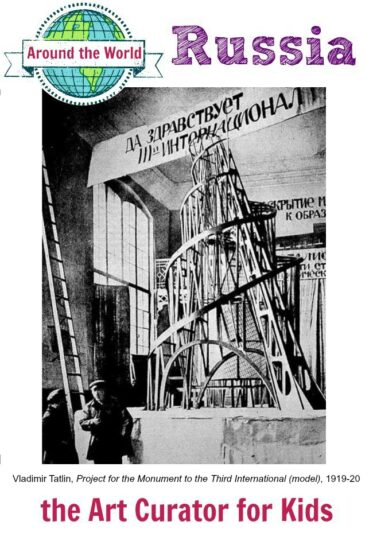
the Art Curator for Kids - Art Around the World - Russia - Vladimir Tatlin, Project for the Monument to the Third International (model), 1919-20, Art History for Kids, Russian Art History, Tatlin's Tower

Check out this awesome plan for a giant tower created by Vladimir Tatlin in early 20th-century Russia.
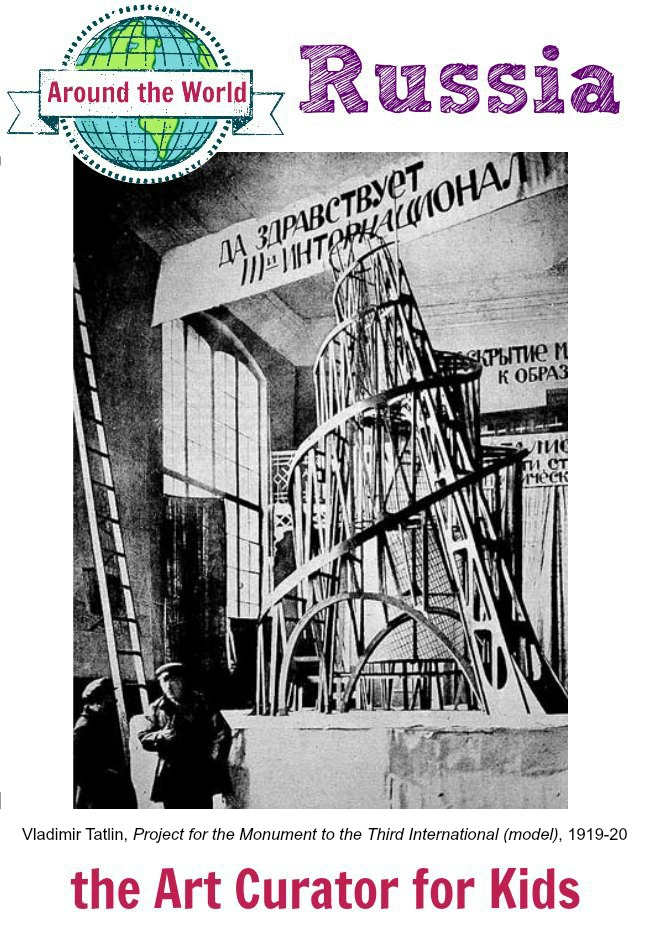
the Art Curator for Kids - Art Around the World - Russia - Vladimir Tatlin, Project for the Monument to the Third International (model), 1919-20, Art History for Kids, Russian Art History, Tatlin's TowerThis artwork was designed in 1919-20, amidst a tumultuous time in Russian history. The Russian Revolution of 1917 and the First World War had just taken place, and the Communists took control of the Russia turning it into the USSR/Soviet Union in 1922.
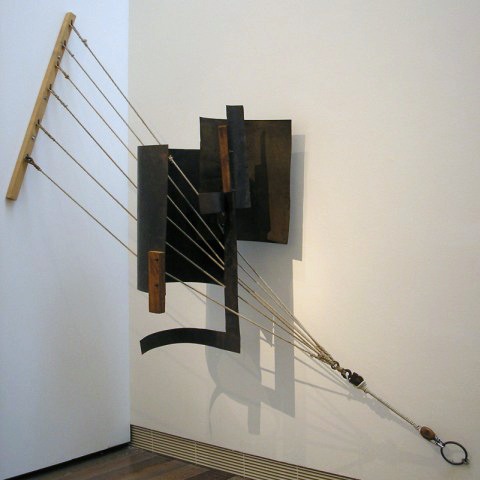
Vladimir Tatlin, Corner Counter-Relief, 1914

The artist, Vladimir Tatlin, was one of the founders of a Russian art movement called Constructivism. Constructivist art is very geometric, planned, and lacks the emotion of individual expression. Tatlin believed this art would lead to a more utopian society.
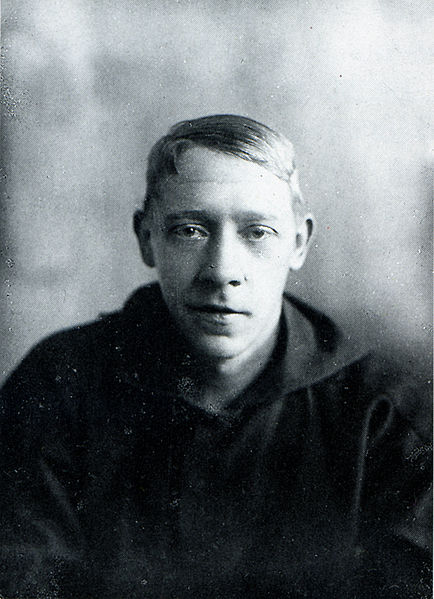
the Art Curator for Kids - Vladimir Tatlin - Art History for Kids
Vladimir Tatlin

Tatlin became an important and influential socialist artist. When Lenin created a new plan to use art for Monumental Propaganda for communism, Tatlin created his model of a bold and giant tower to trump the Eiffel Tower by 100 meters and draw attention to the new Soviet Union. He called it the Monument to the IIIrd International, but it is also called Tatlin’s Tower.

The project comprised a colossal tower in which two spirals wound around a dynamic, forty-five degree diagonal axis. The spirals would have appeared to screw out of the Earth towards the sky. Tatlin pointed his tower at the North Star (Polaris) to make it seem like the universe revolves around Moscow.
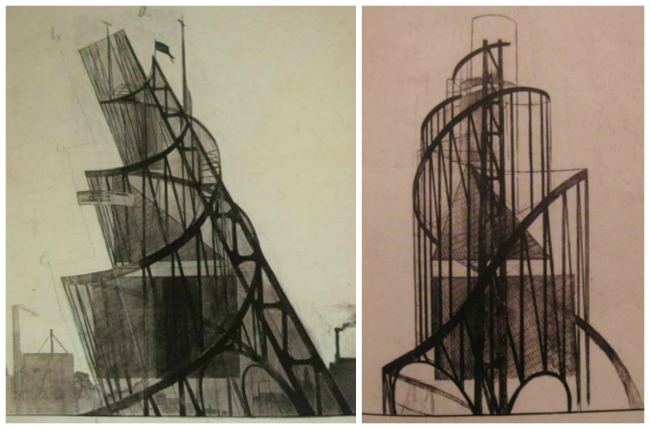
Sketches of Tatlin's Tower
Sketches of Tatlin’s Tower

Tatlin’s design of the Tower consisted of four glass enclosures (Roman, 121-22). The lowest section was to be a cube rotating on axis once a year. It was to house legislative international communist congresses and meetings. Above this cube, a pyramid was to rotate on axis once a month. This was to be an administrative center for the International Proletariat. The third section up was to be cylindrical; rotating once a day and housing a propaganda center including various venues for mass communication such as newspapers, radio, and brochures. The last, top section would rotate once an hour and was to house auxiliary services for the propaganda center. Radio antennae and film projectors were to be set up on top.

Tatlin's Tower on a Stamp
Tatlin’s Tower on a Stamp

Ultimately, Tatlin’s Tower was never erected, but the political message of this tower was powerful. The Tower’s political purpose was to celebrate the triumph of communism in Russia. Looking back, Tatlin’s Tower built would have a very different impact knowing that communism has failed. Perhaps the building of the Tower would have changed the course of Soviet history during the twentieth century, but we will never know.

Tatlin’s Tower Art Discussion Questions

  1. What meaning or message does the tower project? What does it make you think about?
  2. Read the description of the different rotating glass enclosures about. Imagine what it would be like to see this tower fully built. How would it feel to be inside? How would it feel to look up at it?
  3. Knowing the history of the last 100 years in Russia, how would the symbolism and impact of the tower change through time if it had been erected?

Tatlin’s Tower Art Monuments Lesson

Compare and Contrast Tatlin’s Tower with other monumental structures like the Great Pyramids, the Empire State Building, the Eiffel Tower, the Arch of Titus, etc. Have student write an essay about their favorite structure. Or, have them create a presentation of monuments being sure to discuss the form, the meaning, the materials, and the feelings of the monument. Please note, this post includes Amazon affiliate links. As an Amazon Associate I earn from qualifying purchases.

Then, have students design their own monument being sure to think through the location, meaning, materials, and design. Draw it or make a model using things like craft sticks, sculpture wire, q-tips, toothpicks, pipe cleaners, air-dry clay, and more.

More Resources and Citations

More info about Tatlin’s Tower

You may find this really boring, but what is good about this silent video is you can see a lot of Tatlin’s artwork from different angles. It shows his work better than still images can capture.

Works Cited:

My college research paper, Tatlin: The Constructor of the Tower, for Contemporary Russian Art, University of Texas at Austin, May 3, 2002. This wasn’t published, but it was my primary source for this post, and it felt weird not to give my former self of 12 years ago a little credit. 🙂

Roman, Gail Harrison, “Tatlin’s Tower: Revolutionary Art and Life in Russia.” Artistic Strategy and the Rhetoric of Power: Political uses of Art from Antiquity to the Present. Ed. David Casteriota. Carbondal: Southern Illinois University, 1986.


That’s it! Thanks for reading. I’d love to hear your thoughts about the artwork in the comments. Click here to find more art from around the world, and come back tomorrow for a trip to Algeria!
Filed Under: Art and Artists
Tagged With: vladimir tatlin


November 20, 2014 Leave a Comment

Art Around the World in 30 Days – Day #20 – Mexico, Olmec Art

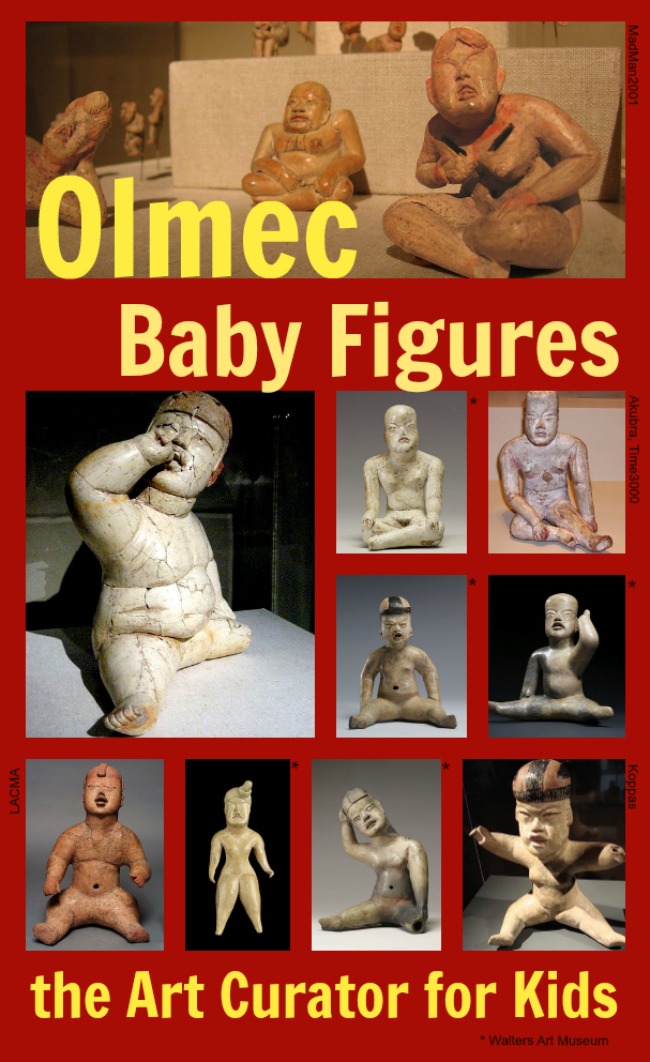
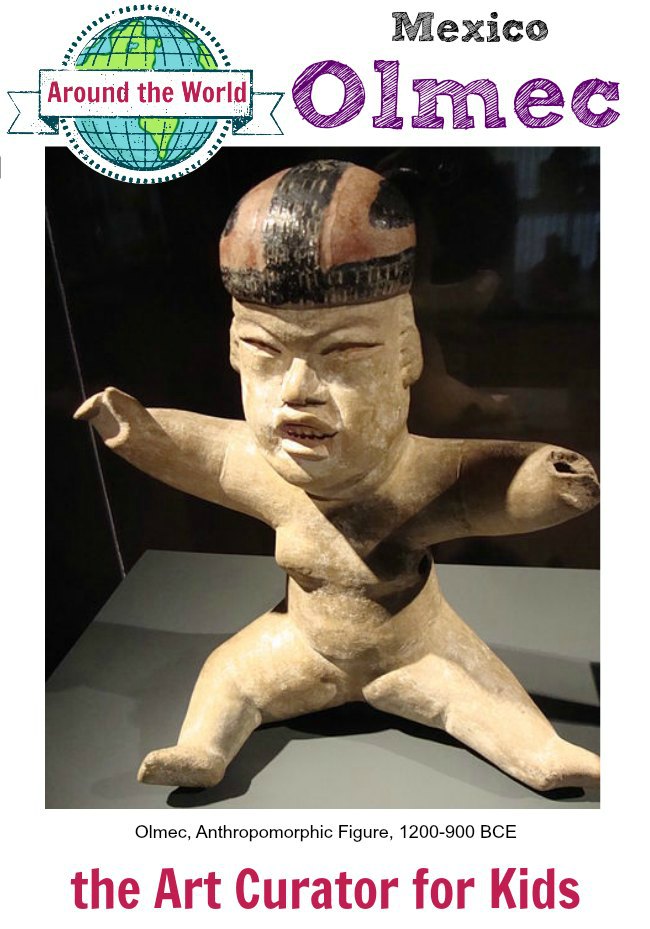
In October, I wrote a post about a really cool Zapotec sculpture. When I was researching it, I learned that the mouth of the Zapotec sculpture comes from an “Olmec baby rain god.” Since then, I’ve wanted to know more, so I looked around and discovered these Olmec baby figurative sculptures. I love them so much! Take a look.

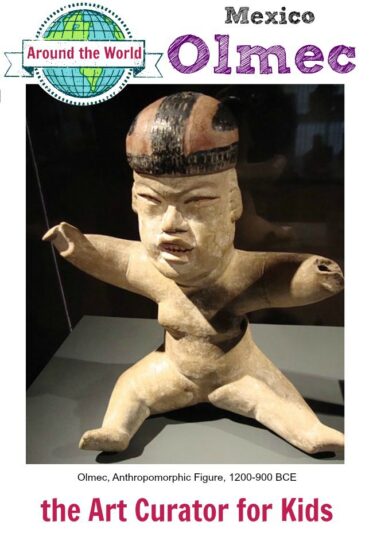
the Art Curator for Kids - Art Around the World - Mexico, Olmec - Olmec, Anthropomorphic Figure, 1200-900 BCE, Olmec art history for kids
Photo Credit: Koppas

The Olmec civilization in Mesoamerica dates back to around 1500 BCE to 400 BCE. To give you a sense of time, this falls about the same time as the Ancient Egyptian New Kingdom. They were the first complex civilization in Mesoamerica coming before and laying the foundations for the Mayans, Aztecs, Zapotec, and all of those guys.

They created lots of these baby figures, and we don’t really know much about them due to how long ago they were created. We can assume they had a special significance because so many were made, but we really don’t know what the significance is.

the Art Curator for Kids - Art Around the World - Olmec Art Baby Figures - Art History for Kids

Here are some of the basic characteristics of these adorable baby-faced sculptures.

  • Hollow and made of terracotta
  • Nude or minimal clothing
  • Chubby baby body with no genitalia
  • Baby face with down-turned mouth and puffy slit-like eyes
  • pear-shaped head (probably due to artificial cranial deformation)
  • Tight-fitting helmet
  • Usually in white or cream-colored slip or done completely in white clay
  • Uses expressive facial features and gestures to show mood and emotion

Olmec Art Discussion Questions

  1. Describe these sculptures.
  2. What meaning or significance do you think these objects had?
  3. Study the body positions and the facial expressions. What emotions do you notice in these sculptures? What choices did the artist make to emphasize the emotion?

Olmec Art Project

Make a baby figure out of air-dry clay. You’ve just got to with this one. This Olmec art lesson on the Denver Art Museum website is pretty much exactly the lesson I was imagining for this artwork. I love the internet. The lesson talks about the mood and the emotion in the artworks. Please note, this post includes Amazon affiliate links. As an Amazon Associate I earn from qualifying purchases.

More Olmec Art Lesson Plans and Resources

  • More information about the Olmec Civilization
  • Olmec: Colossal Masterworks of Ancient Mexico Curriculum from the Fine Arts Museum of San Francisco


That’s it! Thanks for reading. I’d love to hear your thoughts about the artwork in the comments. Click here to find more art from around the world, and come back tomorrow for a trip to Russia!

Filed Under: Art and Artists


November 19, 2014 Leave a Comment

Art Around the World in 30 Days – Day #19 – Nepal – Hindu Sculpture

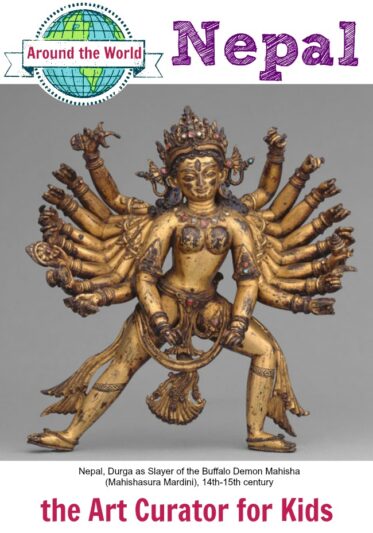
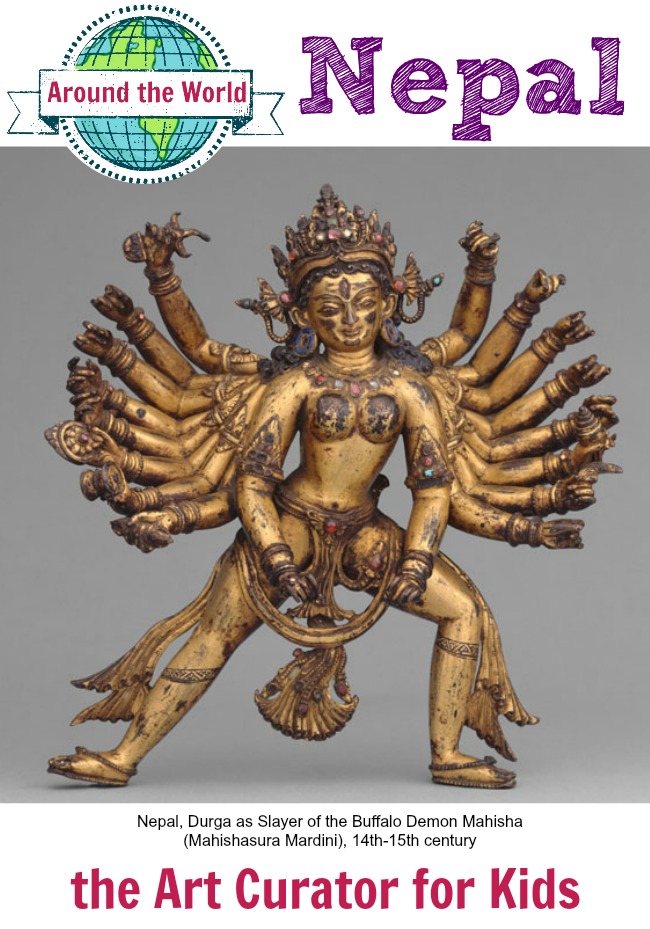
It’s time to visit Nepal on our trip of world art for a Hindu sculpture lesson from Nepal.

the Art Curator for Kids - Art Around the World - Nepal - Nepal, Durga as Slayer of the Buffalo Demon Mahisha (Mahishasura Mardini), 14th-15th century, Hindu Sculpture Lesson, Art History for Kids, Art Appreciation for Kids
Source: Met Museum

This special lady is Durga, a fierce Hindu goddess, created by a group of male Hindu deities who had all been defeated by the demon Mahisha. They created her in order to beat Mahisha who had turned himself into a fearsome, powerful buffalo. Each of the deities gave her a weapon, and you can see she holds several weapons in many of her 18 hands. In the story, she defeats Mahisha and “liberated the universe from darkness” (Source: Met Museum).

This sculpture is missing a component. It was originally on a pedestal where she trampled Mahisha under one foot in an ultimate display of good versus evil. (That might be a good conversation to have with the older students. How does an artwork change when you take it out of context and put it in a museum.)

Here are some views of Durga in other artworks. How is this artwork from Nepal different than the others? Artists in Nepal had the tendency to heavily embellish their art. Notice all of the added gold and jewels in this artwork. (Source: Met Museum Bulletin )

[slideshow_deploy id=’2437′]

Durga is an important deity in the Hindu religion, and she has an annual festival celebrating her called either Durga Puja or Durgotsava. During these festivals, sculptures depicting Durga’s story are displayed and worshipers place flowers on and around the scene. You can see a couple of these sculptures in the above slideshow and a lot more pictures on Wikipedia.

Hindu Sculpture Discussion Questions

  1. What’s going on in this sculpture? What do you see that makes you say that?
  2. Make a list of words that describe Durga based on what you see in the story.
  3. Compare and contrast this artwork to the dance in the video above.
  4. Why does Durga have many arms? What is she doing with her hands?

Storytelling through Dance Art Learning Activity

Have students work together to create a dance about a story or person who is important to them. How can they tell the story without using words? How does the music contribute to the story? How do the expressions and gestures help tell the story?

Hindu Sculpture Lesson Resources and Citations

I’ve done Hindu sculpture lessons in a couple other posts as well. Check out these:

  • 5 Artworks your Children will Love–Shiva Nataraja dances atop Apasmaru, a demon of ignorance and temptation
  • Art Around the World – India–The Meenakshi Amman temple in India holds 33,000 sculptures in/on it! Amazing!

Here are some more great Hindu art lesson plans from around the web:

  • Be a Vishnu Avatar, another great Hindu sculpture lesson incoporating dance from the Art Institute of Chicago
  • Rubin Museum of Art, Animal Symbolism (link to pdf is under “Lesson Theme Examples”)
  • A Lesson Plan from the Met Museum comparing Buddhist and Hindu art


Works Cited:

“The Arts of South and Southeast Asia”: The Metropolitan Museum of Art Bulletin, v. 51, no. 4 (Spring, 1994) (1994)


That’s it! Thanks for reading. I’d love to hear your thoughts about the artwork in the comments.

Click here to find more art from around the world, and come back tomorrow for a trip to Mexico to enjoy an Olmec sculpture! Remember you can get the whole month of Art Around the World posts as a PDF eBook in the Curated Connections Library!

Filed Under: Art and Artists


November 18, 2014 Leave a Comment

Art Around the World in 30 Days – Day #18 – Australia

Now we head to Australia on our trip around the world to take a look at some Australian aboriginal art or Indigenous Australian art. We’ll look at some examples, discuss the art with art looking questions, and share some more resources about Aboriginal art projects for kids.

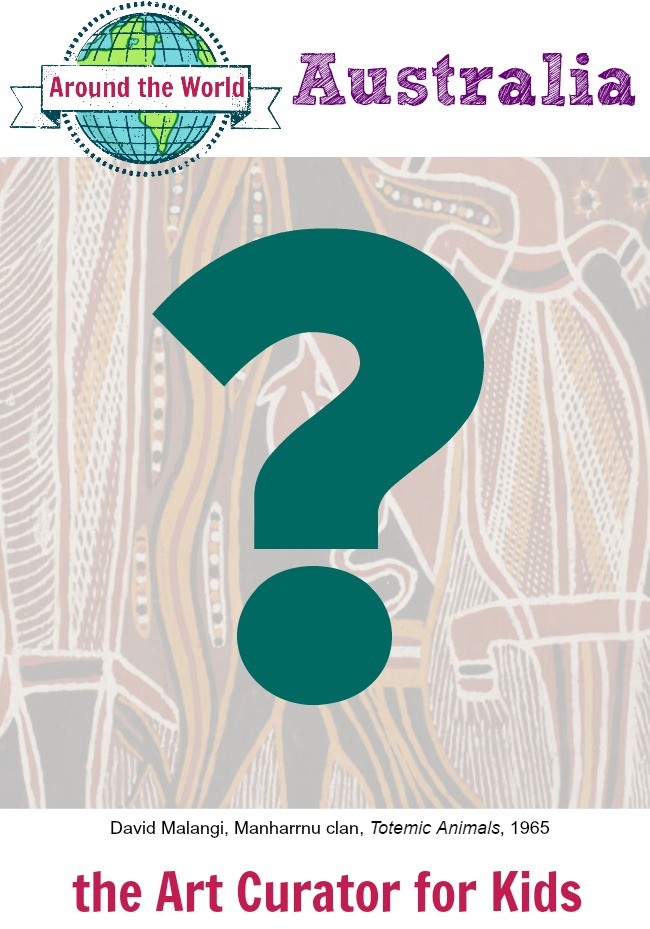
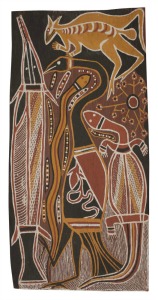
The Art Curator for Kids - Art Around the World - Australia Aboriginal Art - David Malangi, Manharrnu clan, Totemic Animals, 1965Aboriginal Art for Kids - David Malangi, Manharrnu clan, Totemic Animals, 1965-smI chose the work of aboriginal artist, David Malangi, of Central Arnheim land. Because he a contemporary artist, you’ll have to click over to the National Museum of Australia website to see better quality images of his work.

This work is from 1965, but aboriginal art is one of the longest running art traditions in the world. Art from the indigenous people of Australia dates back by around 28,000 years. Most Australian aboriginal art has a very strong spiritual undertone connecting to their beliefs called “Dreaming” and “Dreamtime.” I have a really hard time explaining Dreamtime, because it is a concept that I just don’t really understand, but it is this overarching place or structure or system that is related to the past, the present, or future.

Very clear, huh? I think I can’t understand, because I am not in it. W.E.H. Stanner, and Australian anthropologist once said, “We [non-Indigenous Australians] shall not understand The Dreaming fully except as a complex of meanings” (Stanner, The Dreaming, 1956). If an Australian anthropologist tells me that I can’t really understand it, it makes me feel better about my total ignorance in this area.

Here’s a video that explains it better than I can.

Here are some of the primary characteristics or conventions of Australian aboriginal artwork:

  • Connection with the spiritual Dreamtime
  • Pictures of animals and people
  • Lots of symbolism and stories
  • A lot of patterns and geometry
  • Warm color palette
  • Often shown from an aerial perspective, looking down on the subjects from above
  • Use of natural materials from the land

This painting by Malangi is a bark painting. It’s painted on the interior of a strip of tree bark. He includes many animals and paints them with their skeletons and organs exposed like an x-ray. Take another look at some other works by Malangi on the National Museum of Australia website. They all have a really cool use of pattern and movement. Love them.

Aboriginal Art Discussion Questions

  1. What is going on in this picture?
  2. Describe the lines, patterns, colors, shapes, movement, and other elements and principles of art.
  3. What can you tell about the aboriginal people based on what you see?
  4. What stories can you find?

More Resources

Pinterest Board with Aboriginal Art Lessons

Aboriginal Dreamtime Stories on YouTube

  • The Rainbow Serpent
  • How the Kangaroo Got Its Pouch
  • Mirram the Kangaroo and Warreen the Wombat
  • How the Moon was Made
  • Why the Koala Has a Stumpy Tail
  • Tiddalick the Frog


That’s it! Thanks for reading. I’d love to hear your thoughts about the artwork in the comments. Click here to find more art from around the world, and come back tomorrow for a trip to Nepal!

Filed Under: Art and Artists


November 17, 2014 Leave a Comment

Dorothea Lange’s Migrant Mother

We’ve been looking at art all over the world this month, and today, I’m staying home in the United States of America. As with all places I have covered so far, it is hard to pick just one. This was the first artwork to pop in my head when I thought of the US thought, and I think it’s one of those images that sticks with you.

the Art Curator for Kids - Art Around the World - USA - Dorothea Lange, Migrant Mother, 1936In the 1930s, a Great Depression engulfed the country. Many people lost their savings, their jobs, and their homes. Business, farms, banks, and factories failed. (Side Note: I originally wrote about the Stock Market crash of 1929 leading to the Great Depression, but it turns out it is much more complicated than that so I took it out. Watch this excellent Crash Course video to find out more.)

You would think that this period of devastation would lead to less art being produced, because people had to focus on things like survival, but the Franklin D. Roosevelt and Congress, in an effort to stimulate the economy and create jobs, created the New Deal. In the New Deal, there were many job programs to both help people support themselves and to help the country’s infrastructure.

Artists, sculptors, and photographers were hired to create art in public places, build buildings and bridges, and document the plight of the American people. Around 1,300 murals and 300 sculptures were commissioned in public spaces like courthouses, post offices, schools, federal buildings, and more.

“The New Deal arts projects provided work for jobless artists, but they also had a larger mission: to promote American art and culture and to give more Americans access to what President Franklin Roosevelt described as “an abundant life.” The projects saved thousands of artists from poverty and despair and enabled Americans all across the country to see an original painting for the first time, attend their first professional live theater, or take their first music or drawing class.” (Source: The National Archive: A New Deal for the Arts)

One program specifically was enacted by the Farm Security Administration. The FSA hired photographers to chronicle the lives of out-of-work farmers and migrant workers, and that was the assignment that led to our feature image today by Dorothea Lange. (It took me a minute to get there, but I got there! 🙂 )

Photographer Dorothea Lange worked for this program from 1935 to 1939. She took pictures and distributed them free to newspapers across the country. Her work “brought the plight of the poor and forgotten – particularly sharecroppers, displaced farm families, and migrant workers – to public attention” (Source: Wikipedia).

Lange’s most famous image is Migrant Mother. This is what she had to say about taking this photograph:

I saw and approached the hungry and desperate mother, as if drawn by a magnet. I do not remember how I explained my presence or my camera to her, but I do remember she asked me no questions. I made five exposures, working closer and closer from the same direction. I did not ask her name or her history. She told me her age, that she was thirty-two. She said that they had been living on frozen vegetables from the surrounding fields, and birds that the children killed. She had just sold the tires from her car to buy food. There she sat in that lean-to tent with her children huddled around her, and seemed to know that my pictures might help her, and so she helped me. There was a sort of equality about it.

Dorothea Lange, 1960, Popular Photography

Art Discussion Questions

  1. What’s going on? What do you see that makes you say that?
  2. What can you tell about these people based on what you see? What can’t you tell about the people in this photograph?
  3. What is the mood or feeling of this artwork?
  4. How do you feel about the people in this photograph? How do you think the artist felt about the people in this photograph?
  5. Why do you think this photograph was made?

Photography Project

Have students imagine that they are hired by the government today in 2014 to document life in America. What types of photographs would they take? What stories would they tell? How would they tell those stories through photography?

Additionally, try having students document the people in their lives with a camera. How can you tell the story of a person through picture only? What do pictures leave out?

Dorothea Lange Resources and Citations

  • Biographical Information and Photos by Dorothea Lange
  • More works by Dorothea Lange
  • Museum of Contemporary Photography: Dorothea Lange, Migrant Mother, and the Documentary Tradition
  • Crash Course – Great Depression
  • Crash Course – New Deal
  • The National Archive: A New Deal for the Arts, Exhibit

That’s it! Thanks for reading. I’d love to hear your thoughts about the artwork in the comments. Click here to find more art from around the world!

Artwork of the Week Lesson: Dorothea Lange, Migrant Mother

This is a complete lesson with discussion questions, talking points, activities, and project ideas for Dorothea Lange’s Migrant Mother.

Buy Now

Filed Under: Art and Artists
Tagged With: dorothea lange


November 16, 2014 Leave a Comment

Art Around the World in 30 Days – Day #16 – Vanuatu

We are now officially halfway through our trip around the world through art. Our artwork today is one I had the pleasure of seeing firsthand on my New York trip over the summer. Our feet were super sore, so we spent a lot of time on a bench next to this one. 🙂

Take a close look at this and see if you can figure out what it was used for. The answer my surprise you!

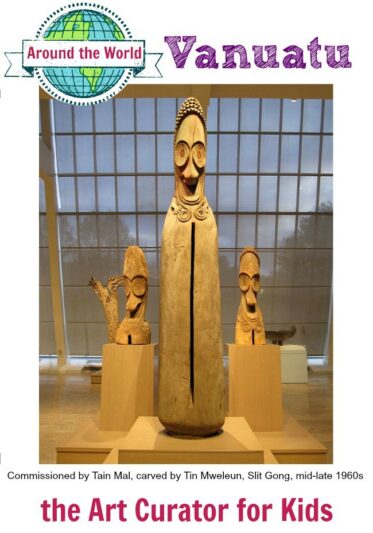
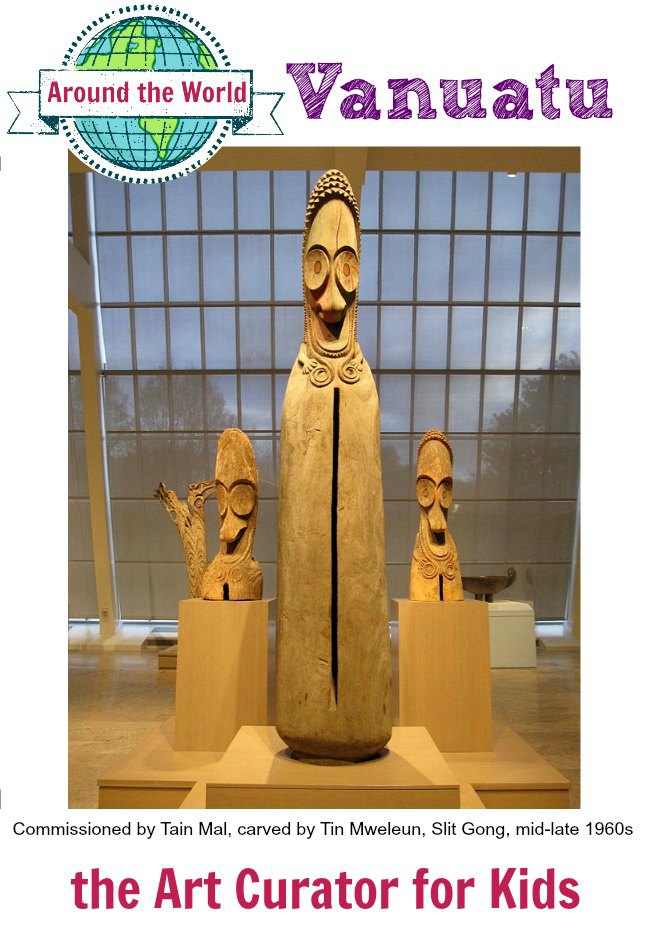
the Art Curator for Kids - Art Around the World - Vanuatu - Commissioned by Tain Mal, carved by Tin Mweleun, Slit Gong, mid-late 1960s
The Metropolitan Museum of Art

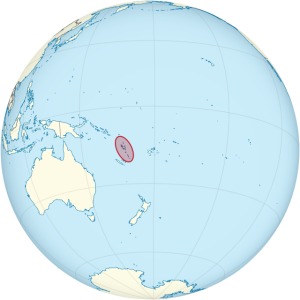
Location of Vanuatu, Image Credit: HUBS

Did you cheat and look at the title? I would’ve. If you did, you learned that this is a musical instrument–a slit gong. These slit gongs from Vanuatu, an island nation in the South Pacific Ocean, are “among the largest freestanding musical instruments on earth” (Source: Met Museum).

They are made from hollowed out breadfruit trees. To play the music, you hit the edges of the slit with a club (click for picture) to produce deep, resonating tones.

Check out the resources section for some links and videos to hear the sounds and see some dancing and such. The music was played for ceremonies, initiations, funerals, etc.

The gongs are carved to represent an important ancestor. You can see the stylized eyes, nose, and hands, but where is the mouth? The long slit in the front of the instrument is the ancestor’s mouth from which the music, or the ancestor’s voice, emanates.

Interestingly, the gongs were also used to communicate across villages. The sound can carry for miles, and they developed a very specific gong language for these messages.

Art Discussion Questions

  1. What do you notice? Take a close look and describe what you see.
  2. How does the size of this object impact the artwork? “How might the impact of this work change if you could fit it in your pocket? Why do you think the artist made it so large?”*
  3. What can you tell about the people of Vanuatu based on this artwork?
  4. “The gong represents an ancestor. When the instrument is struck, his or her voice comes out of the long, narrow mouth. What might this object tell us about the community’s feelings or ideas about their ancestors?”*

* These questions were adapted from the Lesson Plan, Voices of the Past, from the Metropolitan Museum of Art.

Vanuatu Slit Gong Art Project

This artwork was created to represent an important ancestor. Have student think about their own ancestors and how ancestors play a role in their family life and community. Have students create an artwork honoring their own ancestor(s).

Vanuatu Slit Gong Resources and Citations

  • Read the Met Museum’s Object Information.
  • Here is a great video with more information about this artwork. Unfortunately, it won’t let me embed the video, so you can find it on Vimeo at this link. You can even see the bench we sat on for a long time in this video. Thrilling. I know.
  • There is also an audio tour entry from the Bowers Museum with more information about slit gongs. It includes audio of the slit drums being played.
  • Here’s another video of a dance from Vanuatu with a slit gong being played. It has some nude-ish men in traditional dress, so you may want to pre-screen this before you show your kids and make that decision for yourself.
  • A great lesson plan from the Met Museum about these slit gongs. Voices of the Past.


That’s it! Thanks for reading. I’d love to hear your thoughts about the artwork in the comments. Click here to find more art from around the world, and come back tomorrow for a trip to the United States of America!

Remember you can get the whole month of Art Around the World posts as a PDF eBook at the end of the month by subscribing to my e-mail newsletter. Enter your e-mail to get that when it comes out! Also, check out my Facebook page. I’m sharing more art from around the world on there. 🙂

Filed Under: Art and Artists


November 15, 2014 Leave a Comment

Art Around the World in 30 Days – Day #15 – Ireland

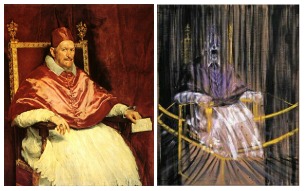
I love art that packs an emotional punch, and one of my favorite artists, Francis Bacon from Ireland, creates powerful and emotional artworks that make my breath catch in my chest. An as an art history nerd, I also love artworks that refer to art history, so this artwork of Pope Innocent X inspired by the painting of the same guy by Spanish Baroque painter Diego Velázquez in the 17th century.

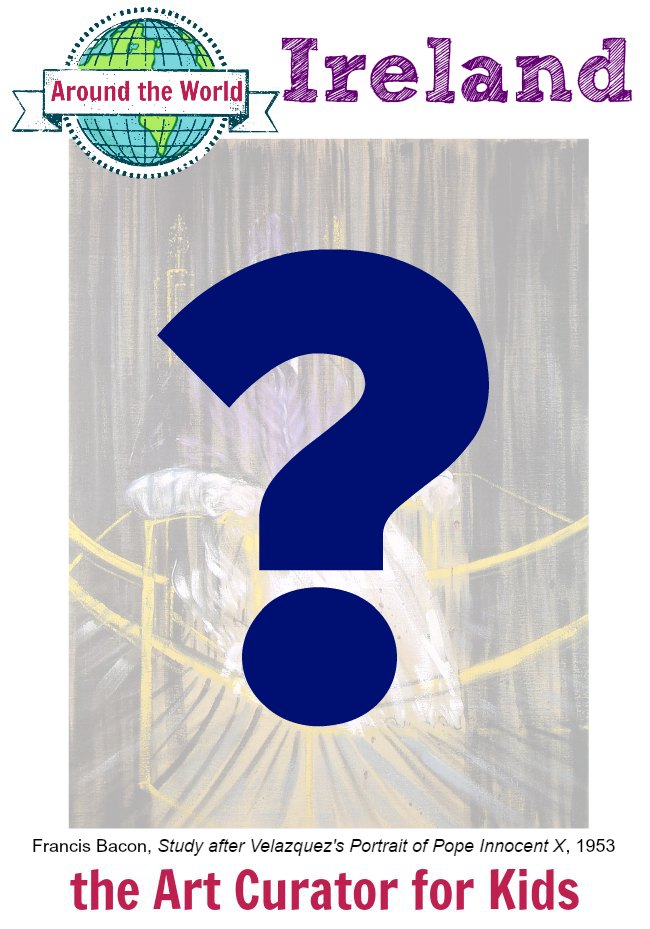
The Art Curator for Kids - Art Around the World - Ireland- Francis Bacon, Study after Velazquez's Portrait of Pope Innocent X, 1953

This is another work not in the public domain, so you have to click over to this site to see. Take a look at this site and compare with the original from Velázquez.

the Art Curator for Kids - Pope Innocent X by Diego Velázquez and Francis BaconAmazing, isn’t it? Bacon reworked this portrait of Pope Innocent X over 45 times over the span of over 20 years. It’s a bit of a mystery why he obsessively worked in this same topic. He says he has nothing against popes, and that it was an excuse to use those colors. This article goes over several theories if you are really interested.

I love how Bacon takes this image of confidence and power of the Velázquez painting and turns that on its head. He transforms the pope into a man who is flickering in and out of existence in the agony of a potential existential crisis. It could be about a loss of belief or a crisis of self or a commentary about contemporary politics. Bacon started his work on his series of Pope pictures just after the end of World War II. “In later works in the series, Bacon inserted references to photographs of the then pontiff, Pope Pius XII, a controversial figure who was thought by some to have appeased the Nazis.” (source: Phaidon)

Here is an orchestra written in response to Bacon’s screaming popes. See if you can compare the music to the paintings.

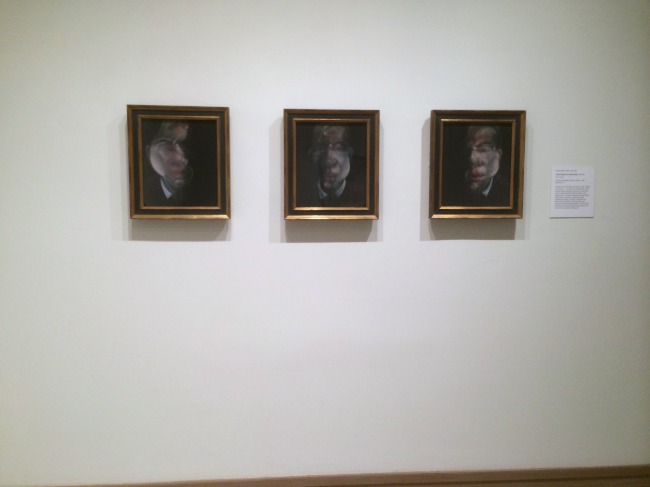
Francis Bacon also produced many self-portraits that are also infused with emotion. He distorts his face, uses emotional colors, and places himself in dark, enclosed spaces. Here’s a picture I took this summer on my trip to NYC of some of Bacon’s self-portraits.

the Art Curator for Kids - Francis Bacon Self-Portrait MOMA

Art Discussion Questions

  1. How does this painting make you feel? How did the artist feel? How does the pope feel?
  2. What choices did the artist make to convey this emotion?
  3. What is the meaning or message of this painting? What do you see that makes you say that?

Francis Bacon Art Project

I have a couple of ideas for art projects related to this artwork.

  • Print on a large piece of paper a picture of a famous painting/portrait. Paint over the top of it to enhance the emotion or change the portrait in some way. To make a large portrait, you could divide the painting into 4 and print each full size on a regular sheet of paper and tape them together.
  • Make an emotional or expressive self-portrait.
  • Look at a photograph or painting and paint a new version of it, intensifying the emotion or changing it in some way, adding your own interpretation.

More Resources and Citations

The truth behind Francis Bacon’s ‘screaming’ popes – This article is what I used as my primary source for this post.
Francis Bacon: Phaidon Focus — If you are really interested in this artist, check out this book about him.

 ~

That’s it! Thanks for reading. We are now halfway through the series! I’d love to hear your thoughts about the artwork in the comments.

Click here to find more art from around the world, and come back tomorrow for a trip to Vanuatu! Remember you can get the whole month of Art Around the World posts as a PDF eBook at the end of the month by subscribing to my e-mail newsletter. Enter your e-mail to get that when it comes out! Also, check out my Facebook page. I’m sharing more art from around the world on there. 🙂

Filed Under: Art and Artists
Tagged With: francis bacon


November 14, 2014 Leave a Comment

Art Around the World in 30 Days – Day #14 – Thailand

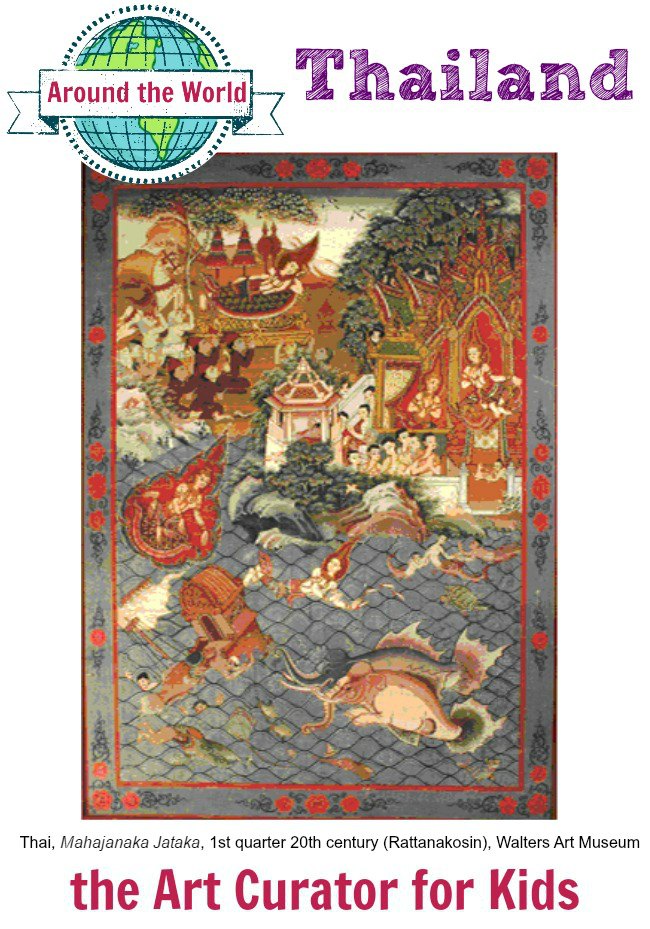
You may be wondering, “where can I find an artwork with mermaids, half elephant/half fish creatures, a shipwreck, deities a flambé, and a people-eating fish?” Right here on Art Class Curator! And in Thailand. Well, no. It’s in a museum in Baltimore. Look at this.

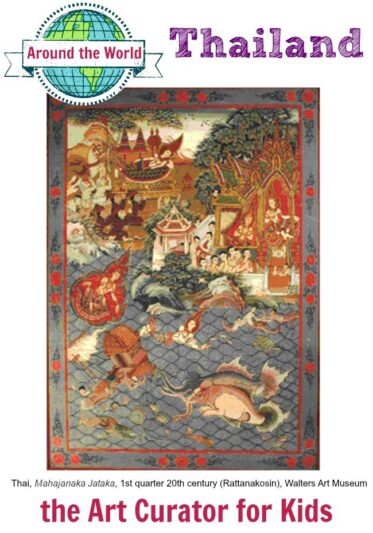
the Art Curator for Kids - Art Around the World - Thailand - Thai, Mahajanaka Jataka, 1st quarter 20th century (Rattanakosin), Walters Art MuseumI’m doing it again–rambling at the beginning of a post. I need to stop doing that.

When I was flipping through looking for art for this series, this one caught me eye because the more you look at, the more crazy-cool you notice. When I started to write, I was sad to see there was no information about this artwork on the museum’s site. It’s just this magical piece with amazing colors, images, patterns, and stories. I kind of like having no information about it, honestly, because it’s fun to make your own meaning about works of art sometimes all the time.

This picture is also a little fuzzy, which is unfortunate. Head over to the Walters Art Museum’s website and click “Explore Object.” You can zoom in a bit more to get a closer look. It is not a lot better.

This is a painting on cloth, and it is full of bold colors, detailed textures, striking patterns, overlapping, and narrative details. To me, this painting looks like and Indian narrative painting, so I wasn’t surprised when I did a little searching to find out that Jataka refers (in the title) refers to a body of literature from India about the previous lives of the Buddha.

The story of Mahajanaka can be found online as well (see links in resources). Long story short, Prince Mahajanaka was on a trade ship. The ship began to sink after seven days but Mahajanaka kept his wits about him, ate a nice hearty meal, and then tied himself to the mast of the boat. When the ship started to sink, sea life feasted on the men and animals from the boat, but Mahajanaka remained protected up on the mast. He then threw himself away from the ship with his super powerful strength and escaped the hungry sea life. He floated in the ocean for seven days showing perseverance and strong will. After seven days, he was rescued by a goddess of the sea who noticed that he was an important prince.

There is more to the story, but I think that’s enough for you to figure out what’s happening in the artwork. Super, super cool. I love it.

Art Discussion Questions

  1. What’s going on here? What is the story being told?
  2. How does this artist use color, line, space, and texture?
  3. What elements of this painting are strange?
  4. How can you tell who the important people are?

Art Narrative Learning Activities

Check out my past post on Exploring Narrative through Art. The activities discussed in that post would work well with this artwork.

More Resources and Citations

Here are some sites that tell the story of

  • http://www.sacred-texts.com/bud/j6/j6005.htm
  • http://www.buddha-images.com/mahajanaka-jataka.asp

In my Art Appreciation Printable Worksheet Bundle, use the following worksheets with this artwork. The ones with the asterisk are available in the free bundle for e-mail subscribers.

  • Twitter Perspectives*
  • Write a Letter*
  • 4 Steps of Art Criticism*
  • Exploring Place*
  • Send a postcard
  • 5Ws and H
  • Storyboard
  • “I am” Character Poem
  • Formal Analysis-Elements of Art.


That’s it! Thanks for reading. I’d love to hear your thoughts about the artwork in the comments. Click here to find more art from around the world, and come back tomorrow for a trip to Ireland!

Remember you can get the whole month of Art Around the World posts as a PDF eBook at the end of the month by subscribing to my e-mail newsletter. Enter your e-mail to get that when it comes out! Also, check out my Facebook page. I’m sharing more art from around the world on there. 🙂

Filed Under: Art and Artists


November 13, 2014 Leave a Comment

Art Around the World in 30 Days – Day #13 – Angola

We’re back in Africa today, and this time we’re in northeastern Angola for a super cool sculpture from the Chokwe people.

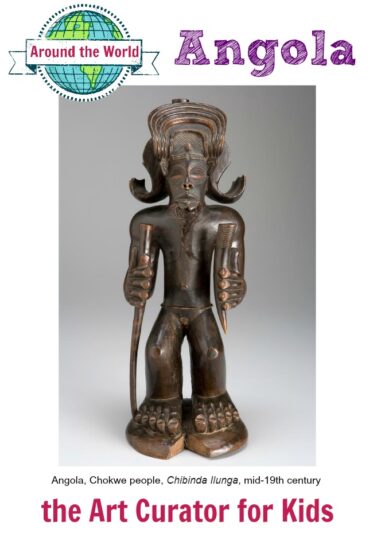
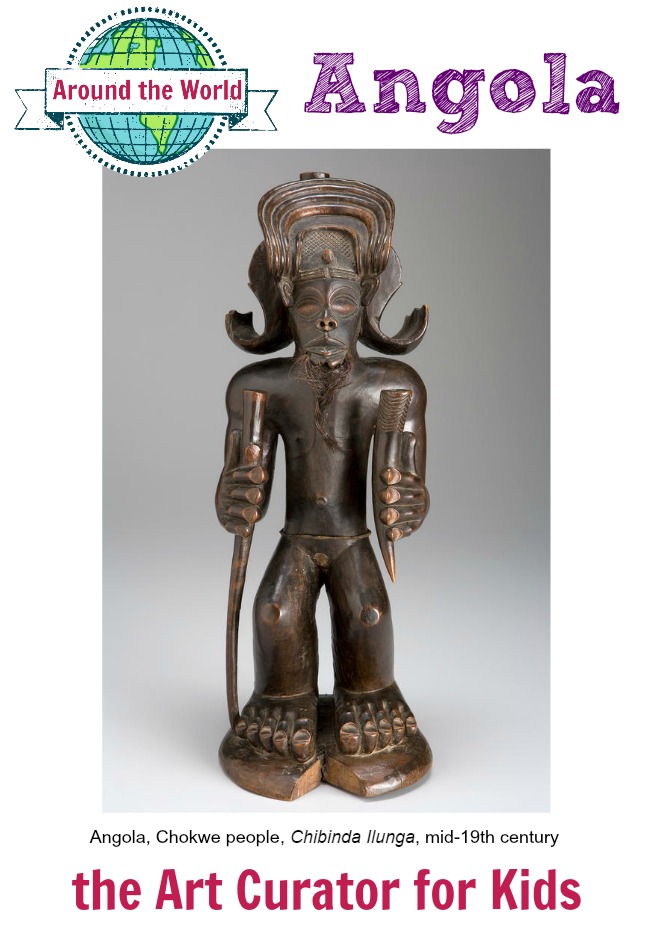
the Art Curator for Kids - Art Around the World - Angola - Angola, Chokwe people, Chibinda Ilunga, mid-19th century
Image Credit: Kimbell Art Museum

This carved wood sculpture is of Chibinda Ilunga, who was a royal ancestor of the Chokwe. He was famed for uniting two tribes. His marriage to a Lunda chieftainess brought together his tribe, the Luba, with hers into an empire which they ruled. As a great hunter, he taught all of people to hunt well.* For more infomation about this story, check out the Met Museum link in the resources section.

This pristine sculpture shows a him with large hands and feet–a symbol of power. The rolled-up sides of the headdress indicate he is royalty. He holds a staff in one hand and an antelope horn in the other which carries magic to help with the hunt. His face is calm, wise, and sensitive. The braided beard is made out of real hair and represents his age and wisdom. The slightly-bent knees show that he may be poised for the hunt.*

I learned all of this information here: https://www.kimbellart.org/collection-object/chibinda-ilunga. On the Kimbell Art Museum’s page for this artwork, you can find two audio recordings both for adults and kids about this art. The one for kids is super cute: the narrator has a conversation with an actor as Chibinda.

Here are some more sculpture of Chibinga Ilunga to compare with this one: British Museum, Met Museum, Artkhade, and a Pinterest Board of Chibindas.

Art Discussion Questions

  1. What can you tell about Chibinda Ilunga based on the features of this sculpture (the headdress, facial features and expressions, stuff he holds, body, etc)?
  2. How can you tell this is an important person?
  3. Why do you think the artist chose to make the hands and feet larger?

African Art Learning Activity

For this one, I think writing stories or poems from the perspective of Chibinda Ilunga or from the people that revere him would be a great learning activity for this sculpture.

Art Resources

  • Adult and Kids Audio Recordings about this sculpture
  • More Information about the Luba and Lunda Empires from the Met Museum

This artwork is at the Kimbell Art Museum in Fort Worth, TX. I worked there for a year in a fellowship after college, and it is such a beautiful, beautiful place. They have a small collection that focuses on quality rather than quantity, which I love. Instead of 10 mediocre examples of a certain type of art, they’ll have one stellar example. It makes it easy to focus and not get overwhelmed. You can view their collection online at https://www.kimbellart.org/collection.


Click here to find more art from around the world, and come back tomorrow for a trip to Thailand!

Remember you can get the whole month of Art Around the World posts as a PDF eBook at the end of the month by subscribing to my e-mail newsletter. Enter your e-mail to get that when it comes out!

Also, stop by my Facebook page or Pinterest for some more great art shares.

Filed Under: Art and Artists


November 12, 2014 3 Comments

Art Around the World in 30 Days – Day #12 – North America, Tlingit

We’re back in North America for Art Around the World today. We’ll look at a totem pole from the Tlingit, an American Indian tribe from the Northwest Coast of North America (Canada and Alaska).

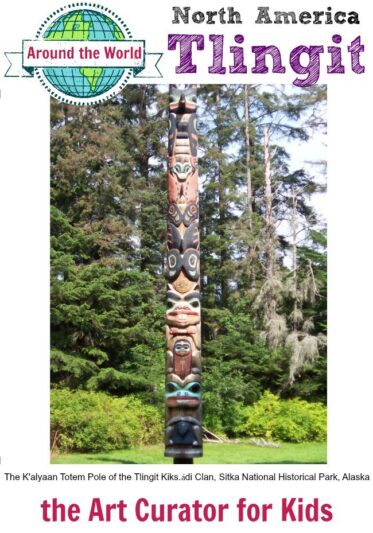
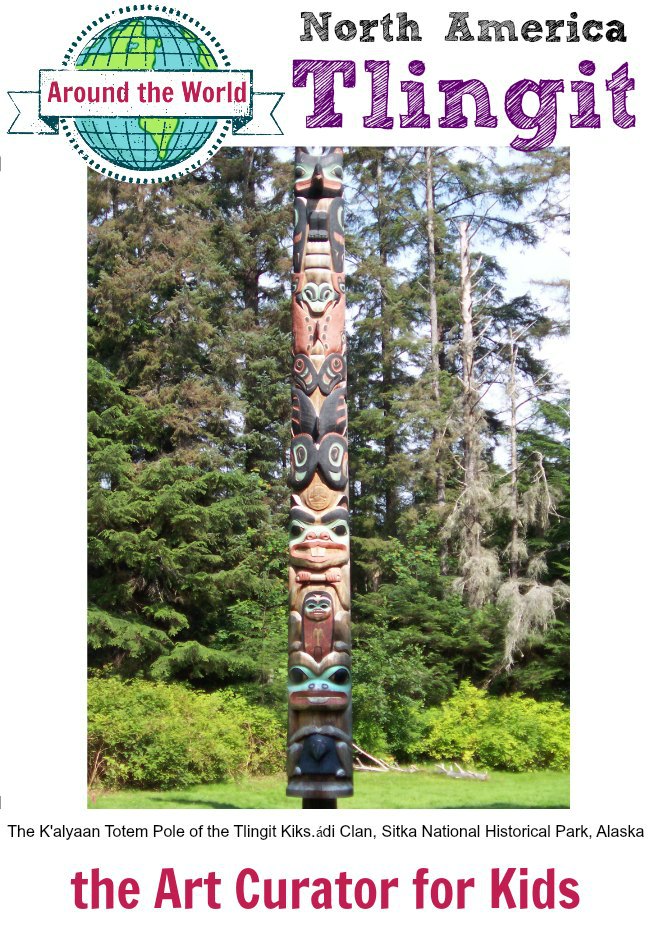
the Art Curator for Kids - Art Around the World - North America Tlingit - The K'alyaan Totem Pole of the Tlingit Kiks.ádi Clan, Sitka National Historical Park - Photo Credit: Robert A. Estremo
Photo Credit: Robert A. Estremo

Totem poles are super tall sculptures made from the trunk of a tree, usually cedar. The designs are usually stylized animals done in an abstract and bold way. The poles often include animals common in the Pacific Northwest like bears, eagles, whales, salmon, owls, wolves, etc. These animals have lots of symbolism that is usually specific to certain clans. The totems told the clan’s stories and was a physical representation or symbol of the clan.

Totem Poles at Totem Bight State Park — Here is a great website with more information about totem poles, the symbolism, and more.

More Pictures of Tlingit Totems

For more information, also check out this video about Totem Poles:

I love these. I really want one in my house. Okay, that’s it. 🙂

Art Discussion Questions

  1. What animals do you see? Describe the design of the animals. What shapes do you see?
  2. Why do you think they chose to show animals?
  3. What could each of the animals symbolize?
  4. How would it feel to stand in front of this totem pole? What would you think about?
  5. Why do you think the Tlingit made this totem pole?

Totem Pole Project

Take a look at this totem pole art project at this awesome blog I just found. This lesson has the students make totem animals from construction paper, and they are so bold and fun! The blog also has a PowerPoint and lesson for you to download! Love it.

Click here to find more art from around the world, and come back tomorrow for a trip to Angola!

Remember you can get the whole month of Art Around the World posts as a PDF eBook at the end of the month by subscribing to my e-mail newsletter. Enter your e-mail to get that when it comes out!

Also, stop by my Facebook page or Pinterest for some more great art shares.

The Art Curator for Kids - Art Around the World in 30 Days - Experience Art with Your Kids400
Follow Cindy @ The Art Class Curator’s board Art History for Kids on Pinterest.

Filed Under: Art and Artists


  • Previous Page
  • Page 1
  • Interim pages omitted …
  • Page 32
  • Page 33
  • Page 34
  • Page 35
  • Page 36
  • Interim pages omitted …
  • Page 38
  • Next Page

Primary Sidebar

Hi! I’m Cindy Ingram, the creator of Art Class Curator and The Curated Connections Library

I’m on a mission to revolutionize education with the power of life-changing art connections. Art is not “extra”. Art is essential. We are empowering teachers to bridge the gap between art making and art connection, kindling a passion for art that will transform generations.

More About Me

Free Worksheets!

-Free Bundle of Art Appreciation Worksheets-

In this free bundle of art worksheets, you receive six ready-to-use art worksheets with looking activities designed to work with almost any work of art.

Download

Free Worksheets!

-Free Bundle of Art Appreciation Worksheets-

In this free bundle of art worksheets, you receive six ready-to-use art worksheets with looking activities designed to work with almost any work of art.

Enrollment in Curated Connections Library is currently open. Click here to join. Join our list to get more information and to get a free lesson from the vault! If you are purchasing for a school or school district, head over here for more information.

Check Out What’s New In The Shop

Experience Art: Engaging Art Criticism Discussions and Activities for Teachers and Students of All Ages
Call to Art: An Un-Conference for Art Educators
Curated Connections Library Membership
Perspectives High School Curriculum

More Products

Have You Listened to the Latest Podcast Episode?

Falling for Naudline Pierre’s Evocative Art: A Conversation with Madalyn (Part 2)

More Episodes

Testimonials

I like how this program, unlike other art class resource membership programs, feels authentic. It's like art matters more here, and not fancy flash-in-the-pan trendiness. The goal of Art Class Curator seemed to be helping kids develop a lifelong love and art appreciation versus "Hey, look. I painted this fish."
Erin A.
Your questions are helping me to delve into much deeper learning, and my students are getting better at discussion-and then, making connections in their own work. Art Class Curator is awesome!
Denise W.
Interestingly, my lower performing classes really get engaged in these [lessons] and come away with some profound thoughts!
Melissa G.
I had the most amazing 6th grade class today. They were jumping out of their seats with hands raised just to respond and give input. It was as if I was waving candy in front of them! They saw more and more and the ideas and interpretations unfolded. So cool!!! This is what makes teaching art so wonderful – thank you!!
Caroline G.
I just wanted to thank you for the invaluable resource you have through Art Class Curator. Not only do you have thought provoking activities and discussion prompts, but it saves me so much time in preparing things for myself! I feel like I’ve only scratched the surface with your site.
Maryjane F.

Get Art Inspiration To Your Inbox!

Enter your email address to get regular art inspiration to your inbox
plus a BUNDLE OF 6 FREE WORKSHEETS!
We hate SPAM and promise to keep your email address safe.
Download

Free Worksheets!

*Free Bundle of Art Appreciation Worksheets*

In this free bundle of art worksheets, you receive six ready-to-use art worksheets with looking activities designed to work with almost any work of art.

Copyright © 2026 Ignite Art, LLC DBA Art Class Curator •  All rights reserved  •  Privacy Policy  •  Terms of Service  •  Site Design by Emily White Designs