• Skip to main content
  • Skip to primary sidebar
  • About
    • About Art Class Curator
    • Contact
    • Speaking
    • Media & Press
    • Programs for Schools
  • Blog
  • Podcast
  • Shop
  • Join
  • Member Login

Art Class Curator

Hands-on and Minds-curious Art Learning

  • Art & Artists
  • Art Connection Activities
  • Art Teacher Tips
  • Elements & Principles
  • Downloads & Resources
Home
  • About
    • About Art Class Curator
    • Contact
    • Speaking
    • Media & Press
    • Programs for Schools
  • Blog
    • Art & Artists
    • Elements & Principles
    • Art Connection Activities
    • Art Teacher Tips
    • Downloads & Resources
  • Book
  • Podcast
  • Shop
  • Join
  • Member Login

All Posts from Art Curator for Kids

February 11, 2015 2 Comments

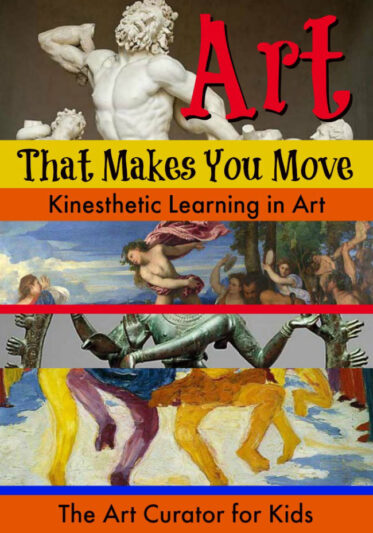
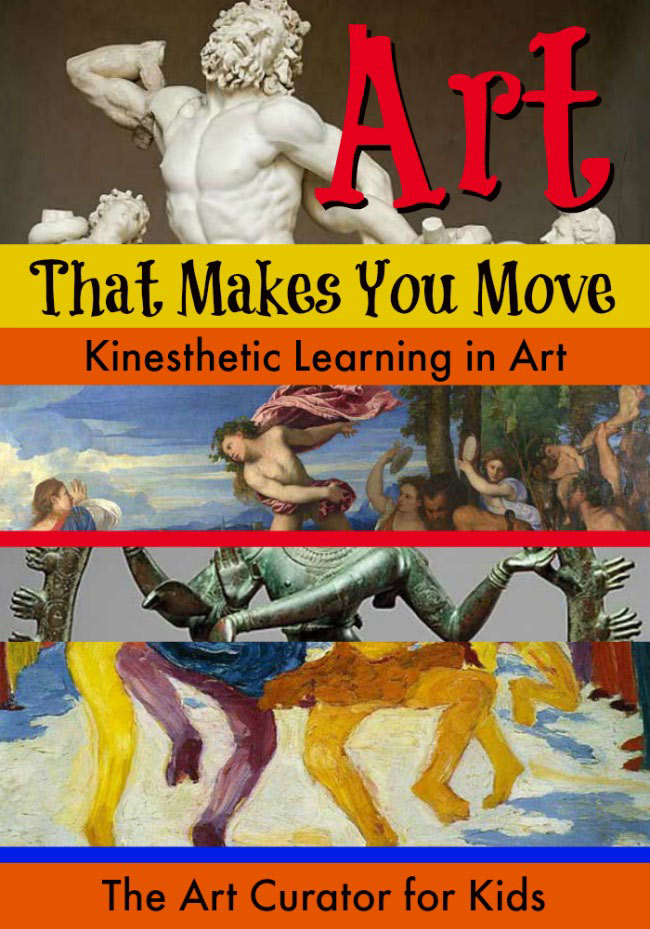
Kinesthetic Learning in Art: Artworks That Make You Move

The Art Curator for Kids - Kinesthetic Learning in Art - Art that Makes you Move

The Art Curator for Kids - Kinesthetic Learning in Art - Art that Makes you Move

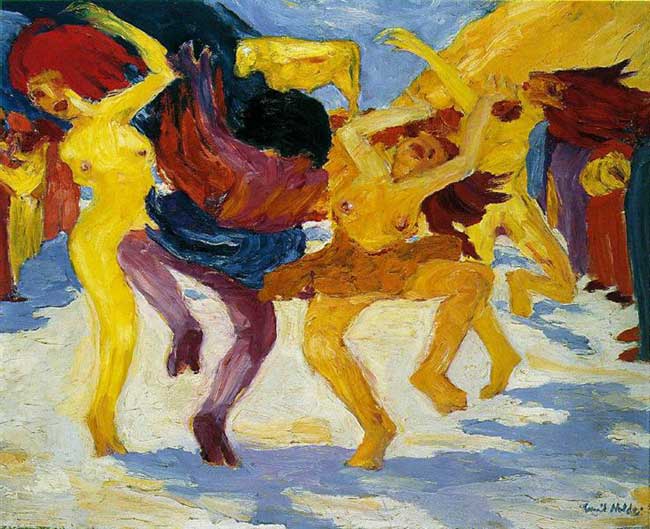
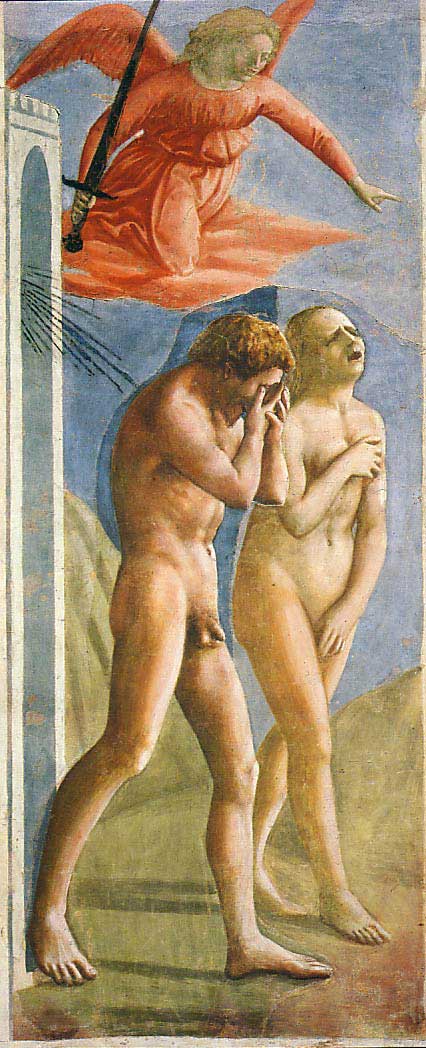
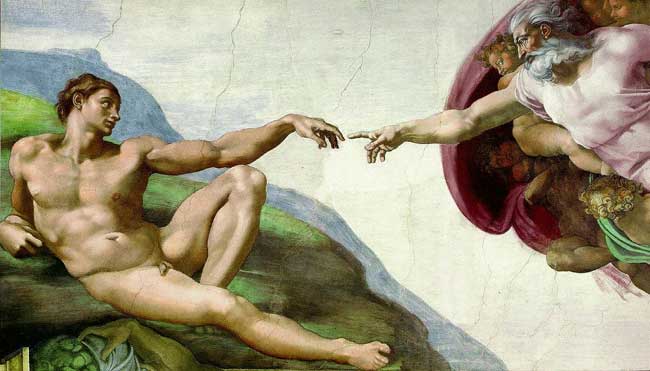
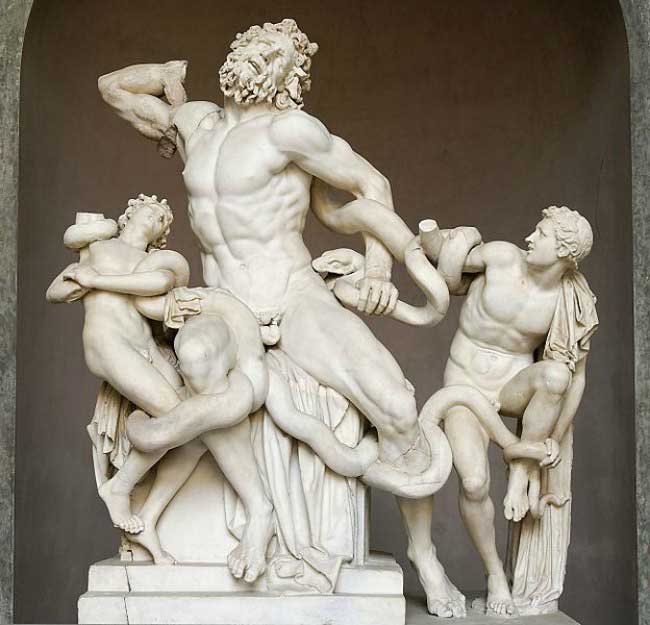
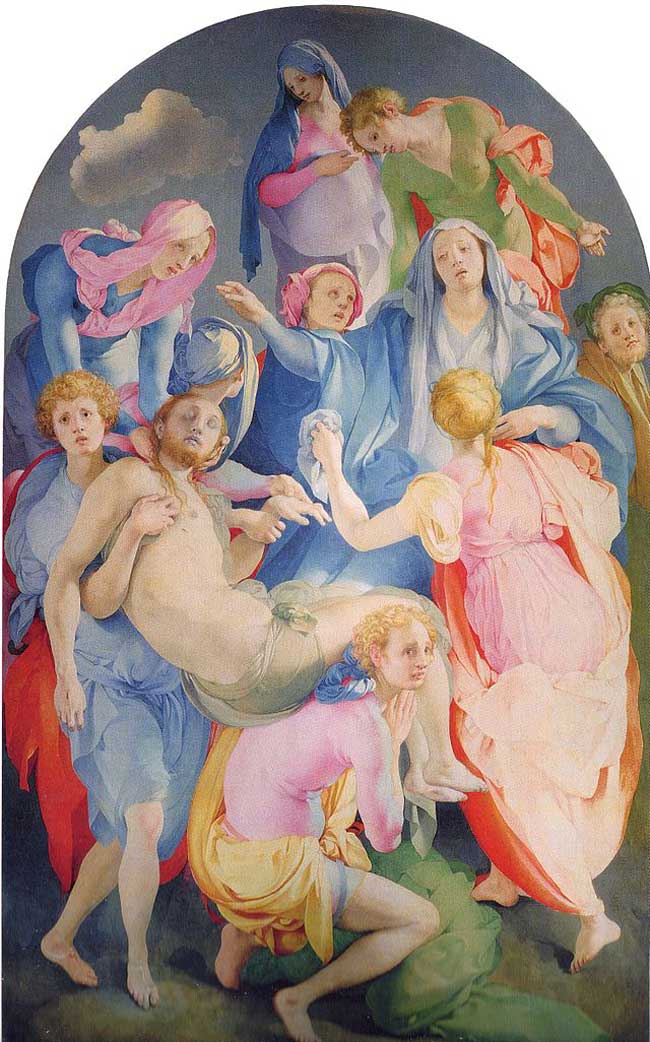
On Monday, I listed 10 kinesthetic art activities to do in front of works of art. Now, here are 12 artworks that can be explored through movement. Show the art to the kids and get them moving with some kinesthetic art appreciation activities!

Don’t stop there; be sure to discuss the artwork with your students as well using these ways to talk about art with kids.

Note: Some of these artworks contain nudity. You can make the decision for your own families/classes whether or not you are comfortable showing it to kids. The great majority of students I’ve taught were able to handle this respectfully. It’s only weird if you make it weird.
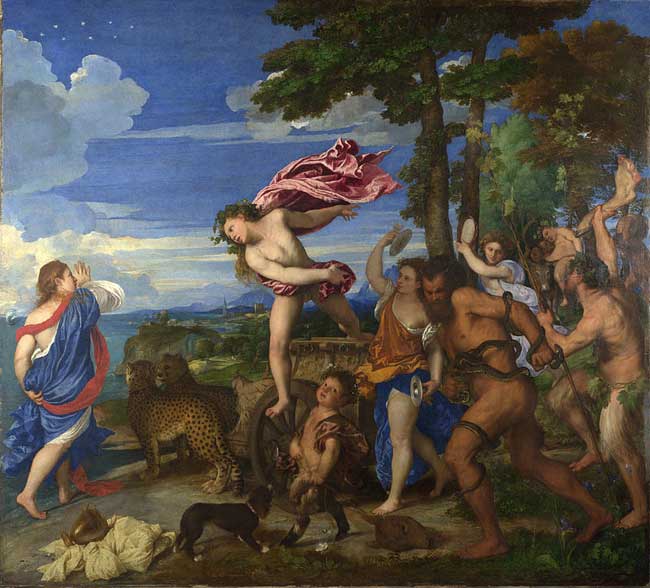
The Art Curator for Kids - Kinesthetic Art History, kinesthetic learning in art - Titian_Bacchus_and_Ariadne from 1520 until 1523
Titian, Bacchus and Ariadne, 1520-23

Teens of the 90s may recognize this one. “Mmm mmm mmm mmm.”
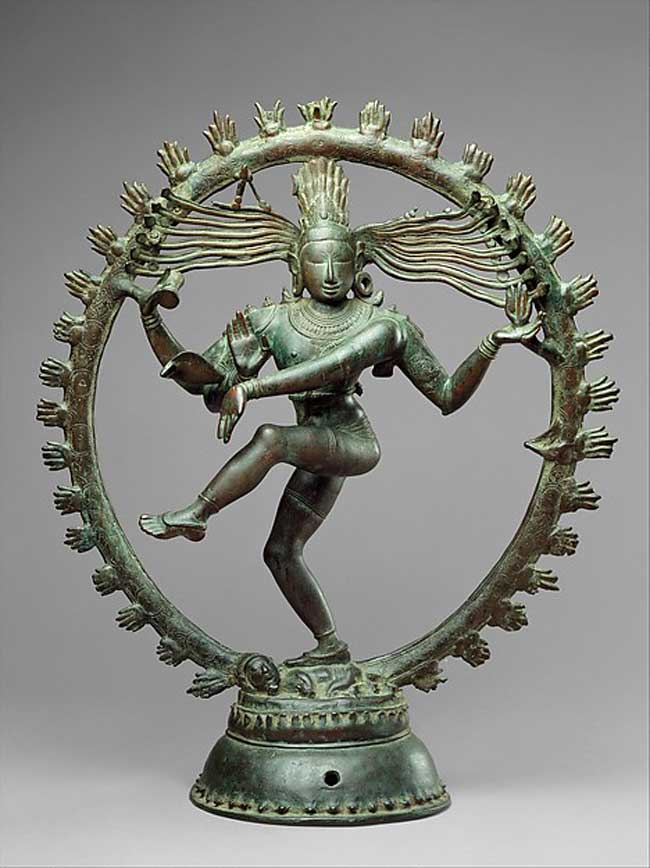
The Art Curator for Kids - Kinesthetic Art History, kinesthetic learning in art - Indian, Shiva as Lord of Dance (Nataraja), ca. 11th century
Indian, Shiva as Lord of Dance (Nataraja), ca. 11th century, Met Museum
The Art Curator for Kids - Kinesthetic Art History, kinesthetic learning in art - Emil Nolde, Dance Around the Golden Calf, 1910
Emile Nolde, Dance Around the Golden Calf, 1910
The Art Curator for Kids - Kinesthetic Art History, kinesthetic learning in art - El Greco (Domenikos Theotokopoulos), The Vision of Saint John, ca. 1609–14
El Greco (Domenikos Theotokopoulos), The Vision of Saint John, ca. 1609–14
The Art Curator for Kids - Kinesthetic Art History, kinesthetic learning in art - Auguste Rodin, The Burghers of Calais, 1884-86 by AgnosticPreachersKid
Auguste Rodin, The Burghers of Calais, 1884-86, Photo by AgnosticPreachersKid
The Art Curator for Kids - Kinesthetic Art History, kinesthetic learning in art - Durga as Slayer of the Buffalo Demon Mahisha (Mahishasura Mardini), 14th-15th century
Nepalese, Durga as Slayer of the Buffalo Demon Mahisha (Mahishasura Mardini), 14th-15th century, Met Museum
The Art Curator for Kids - Kinesthetic Art History, kinesthetic learning in art - Masaccio, Expulsion from the Garden of Eden, c. 1424-28
Masaccio, Expulsion from the Garden of Eden, c. 1424-28
The Art Curator for Kids - Kinesthetic Art History, kinesthetic learning in art - Michelangelo, Creation of Adam, Sistene Ceiling
Michelangelo, Creation of Adam, Sistene Ceiling, 1508-12
The Art Curator for Kids - Kinesthetic Art History, kinesthetic learning in art - Marc Chagall, The Juggler, 1943, Oil on canvas, The Art Institute of Chicago
Marc Chagall, The Juggler, 1943, Oil on canvas, Click to See Larger
The Art Curator for Kids - Kinesthetic Art History - kinesthetic learning in art, Laocoön and his sons, also known as the Laocoön Group, Copy after Hellenistic original of c. 200 BCE
Laocoön and his sons, also known as the Laocoön Group, Copy after Hellenistic original of c. 200 BCE
The Art Curator for Kids - Kinesthetic Art History, kinesthetic learning in art - Pontormo, Deposition from the Cross, 1525-1528
Pontormo, Deposition from the Cross, 1525-1528
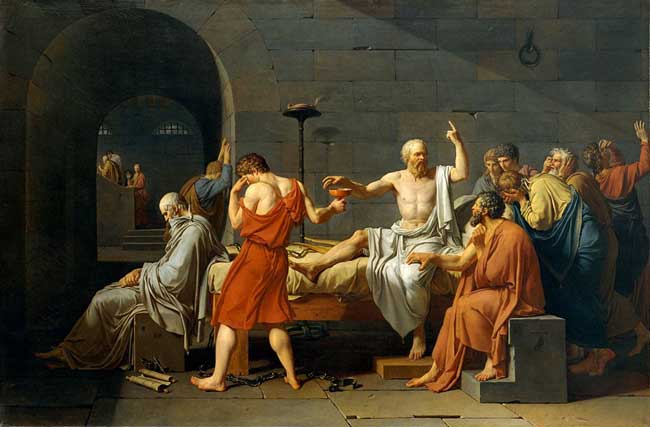
The Art Curator for Kids - Kinesthetic Art History, kinesthetic learning in art - Jacques-Louis David-The Death of Socrates
Jacques-Louis David, The Death of Socrates, 1787

Which one is your favorite?

Check out part one of this post:
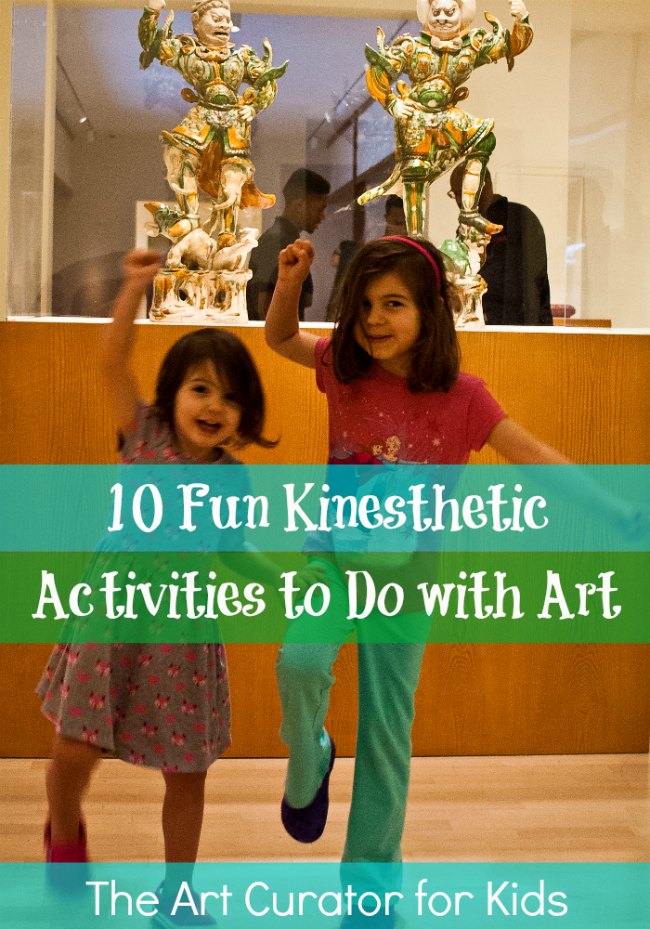
The Art Curator for Kids - Kinesthetic Learning in Art - 10 Fun Kinesthetic Activities to Do with Art - kinesthetic art activities

Get the Full Lesson!

This Lesson is in The Curated Connections Library!

Find the full lesson from this post along with hundreds of other art teaching resources and trainings in the Curated Connections Library. Click here for more information about how to join or enter your email below for a free SPARKworks lesson from the membership!
Join the List

Get the Full Lesson!

This Lesson is in The Curated Connections Library!

Find the full lesson from this post along with hundreds of other art teaching resources and trainings in the Curated Connections Library. Click here for more information about how to join or enter your email below for a free SPARKworks lesson from the membership!
Filed Under: Art Connection Activities, Art Teacher Tips
Tagged With: auguste rodin, el greco, emile nolde, jacopo pontormo, jacques-louis david, marc chagall, masaccio, michelangelo, titian


February 4, 2015 Leave a Comment

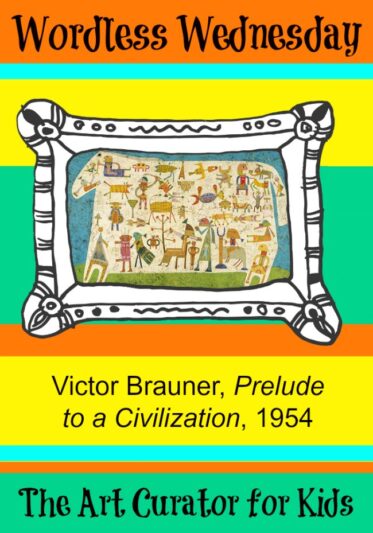
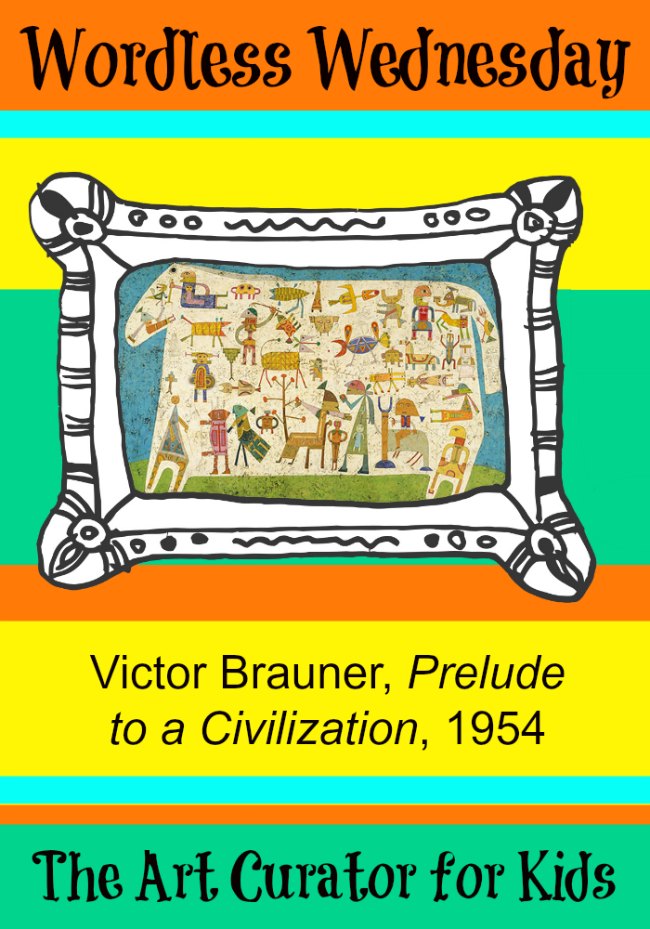
Wordless Wednesday: Brauner’s Prelude to a Civilization

The Art Curator for Kids - Wordless Wednesday - Victor Brauner, Prelude to a Civilization, 1954

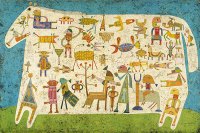
I saw today’s Wordless Wednesday artwork for the first time when I went to NYC over the summer. I snapped a picture of the label to remember to look it up and write about it later. This is Prelude to a Civilization by Victor Brauner. Sorry for the small thumbnail; click the image to view it larger.

Victor Brauner Prelude to a Civilization, 1954
Victor Brauner, Prelude to a Civilization, 1954

What do you think? Take a close look at all the imagery and designs. When I saw it for the first time, I assumed the artist would have some American Indian connections or even be Native American himself, because to me it looks like the colors, geometric patterns, and such that you would see on a Navajo blanket, a mask, or totem pole from the Northwest Coast Indians.

It turns out that Brauner was a Romanian Surrealist painter, but he was also fascinated with art from non-Western cultures. He owned both Native American and Oceanic artifacts. This painting contains stories and images from the artist’s imagination, but you can definitely tell his influences. You can read more about his painting on the Met Museum website.

These Wordless Wednesday posts keep getting less and less wordless. I probably should just start calling them just Wednesdays.

Pin it for Later:

The Art Curator for Kids - Wordless Wednesday - Victor Brauner Prelude to a Civilization, 1954

Filed Under: Art and Artists
Tagged With: victor brauner


February 2, 2015 5 Comments

The Art of Romare Bearden

The Art Curator for Kids - The Incredible Art of Romare Bearden for Kids - Black History Month Blog Hop

We kicked off the Black History Month Blog Hop on Multicultural Kid Blogs with a post about one of my favorite artists, Romare Bearden. His expressive and colorful collages are perfect artworks for any age child to enjoy from preschool up to high school.

The Art Curator for Kids - The Incredible Art of Romare Bearden for Kids - Black History Month Blog Hop, Romare Bearden Lesson

Click here to read more about the art Romare Bearden. My post on MKB also includes links to some really great lesson plans and resources! The post also includes an awesome giveaway.

Filed Under: Art and Artists
Tagged With: romare bearden


January 28, 2015 4 Comments

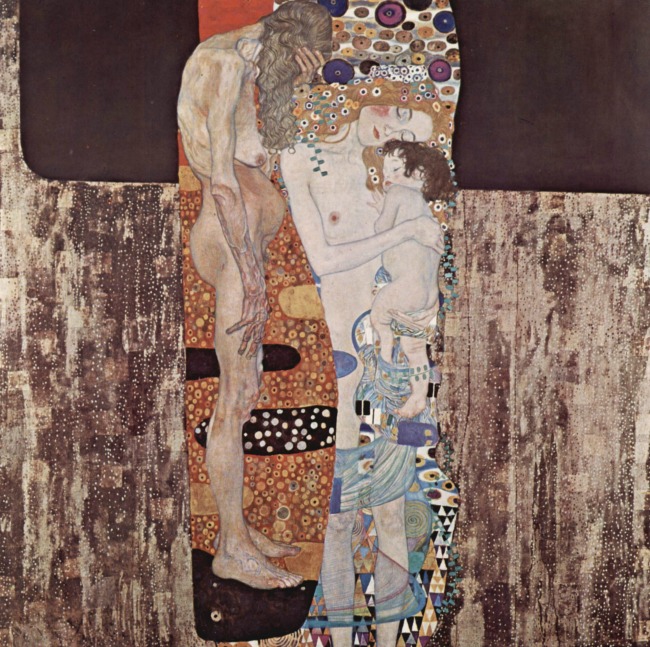
Wordless Wednesday: Gustav Klimt’s the Three Ages of Woman

the Art Curator for Kids - Wordless Wednesday - Gustave Klimt - the Three Ages of Woman

It’s Wordless Wednesday again, and it’s time for me to share with you a quick artwork that I think is great.

the Art Curator for Kids - Wordless Wednesday - Art History for Kids - Art of the DayAffiliate Disclosure Image-tnI discovered today’s artwork when I was finding artworks for my 25 Favorite Madonnas post before Christmas. This artwork is breathtakingly beautiful. It’s a mother and child, and I believe I will be buying it for my house very soon. Why have I not already? Please note, this post includes Amazon affiliate links. As an Amazon Associate I earn from qualifying purchases.

Look at it. So beautiful.

the Art Curator for Kids - Gustav Klimt - the Three Ages of Woman - Wordless Wednesday
Gustav Klimt, the Three Ages of Woman, 1905

The close up of the mom with the child is what I found first, and you can buy a print of just that part. Want.

Okay, I don’t know a lot about this painting, and the Wordless Wednesday is supposed to be wordless, but here are some things for you and your students to look at:

  • Compare/contrast the emotions between the different people.
  • Describe the textures and patterns.
  • How are the colors and patterns different behind the old woman and the mom/child duo?
  • What is the meaning? What was the artist trying to say?

Okay, that’s it.

Isn’t it gorgeous?

the Art Curator for Kids - Wordless Wednesday - Gustave Klimt - the Three Ages of Woman

Filed Under: Art and Artists
Tagged With: gustav klimt


January 26, 2015 4 Comments

Masterpiece Monday: David’s The Death of Socrates

The Art Curator for Kids - Masterpiece Monday - Jacques-Louis David The Death of Socrates - Art Analysis Video, Discussion Questions, Learning Activities, and Lesson Plans

Welcome back to Masterpiece Monday, where I share with you awesome artworks and share ways to use them in your classroom or homeschool. Today is a special one, because I’ve made a video to go along with the post!

Masterpiece Monday - Amazing Works from Art History Each Week at the Art Curator for Kids - The Art Curator for Kids - Masterpiece Monday - Jacques-Louis David The Death of Socrates - Art Analysis Video, Discussion Questions, Learning Activities, and Lesson Plans

I’ve selected The Death of Socrates by Jacques-Louis David, because it is one of my favorite paintings. I love how this painting tells a story and connects with history. I’ve featured it before on Exploring Narrative in Art, and today I’m diving into the painting a little deeper. First, take a good look at it!

The Art Curator for Kids - Kinesthetic Art History - Jacques-Louis David-The Death of Socrates
Jacques-Louis David, The Death of Socrates, 1787

I’ve made for you a YouTube video going through the process of interpreting this painting as well as sharing the story of the painting and how it relates to history (the French Revolution). I wouldn’t hesitate to show this artwork to as young as maybe third or fourth grade. The video would work best for high school and adults (you!) probably.

If you don’t feel like watching, you can read the video transcript.

Art Discussion Questions

Use these questions to help discuss this painting:

  • What’s going on in this painting?
  • Describe the actions and emotions in the painting.
  • What’s the story in this painting? How can you tell?
  • What choices did the artist make to emphasize Socrates?
  • How is Socrates different from the other people in the painting?
  • What does this painting tell us about the people who made it?

Art Learning Activities

Here are some art learning activities that can accompany this painting. Please note, this post includes Amazon affiliate links. As an Amazon Associate I earn from qualifying purchases.

  • For high school and college students, read these accounts of the Trial and Death of Socrates by Plato ($2.70 on Amazon and only $.99 on Kindle).
  • Complete any of the creative activities from Exploring Narrative in Art.
  • Check out this awesome collection of art lesson plans on Neoclassical art from the Getty for middle and high school students.
  • Learn more about Ancient Greek philosophy with this video.

That’s it! Thanks for reading, and I hope you enjoyed my foray into making videos! 🙂

Filed Under: Art, Art and Artists
Tagged With: best of art class curator, jacques-louis david


January 23, 2015 2 Comments

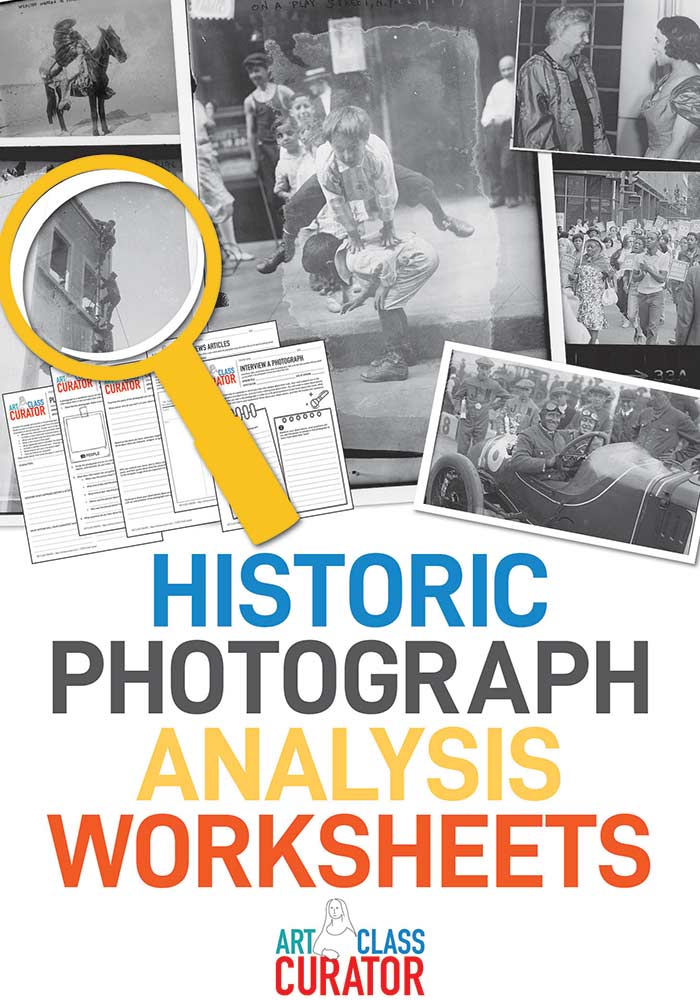
Photograph Analysis Worksheet and Learning Activities

Inside: Use this photo analysis worksheet and these creative photography analysis learning activities to explore photography from the past.

Hello! Today, I’m sharing a bunch of learning activities you can do with your students to study historic photographs. One of the best places to find historic photographs to use as primary sources in your lessons is the Library of Congress. Check out their amazing online collection of photos and then use these activities below to help your students study the photographs carefully.

This below photograph analysis learning activities are available in a free download with a photo analysis worksheet!

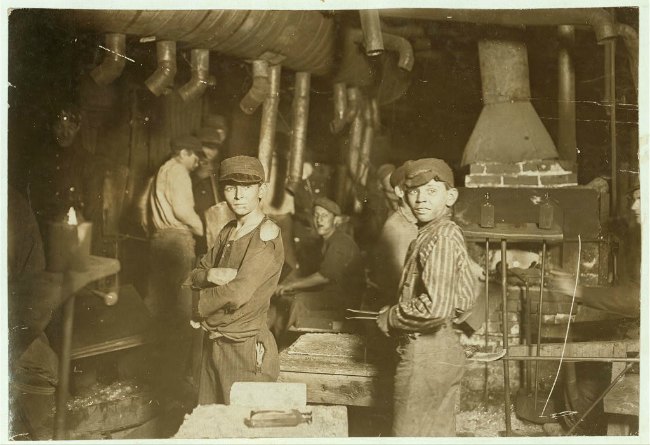
Photography Analysis Worksheet - Lewis Hine, Glass works, Midnight, Location: Indiana, Library of Congress
Lewis Hine, Glass works, Midnight, Location: Indiana, Library of Congress

Looking Questions and Photo Analysis Worksheet

Look at a photograph together and talk about how the details of the photograph can tell us about the people and places of the past. Use the following questions to continue the discussion.

  • What do you notice?  What do you see that makes you say that?
  • Study each person and object in the picture.  What can you tell based on these observations?
  • What are the people doing?
  • Describe the environment.  What would it be like to live here?  What sounds would you hear?  What would you smell?
  • What may have happened before this scene?  What might happen after?
  • When a student makes an observation, ask the student how he or she knows that.  For example, if the student says “she’s farming,” ask “what do you see that makes you say that?”  This will help focus the student’s looking and allow the students to notice details and make assumptions about those details.
  • What does the photograph tell you about the life of these people?
  • Use the Photograph Analysis Worksheet.
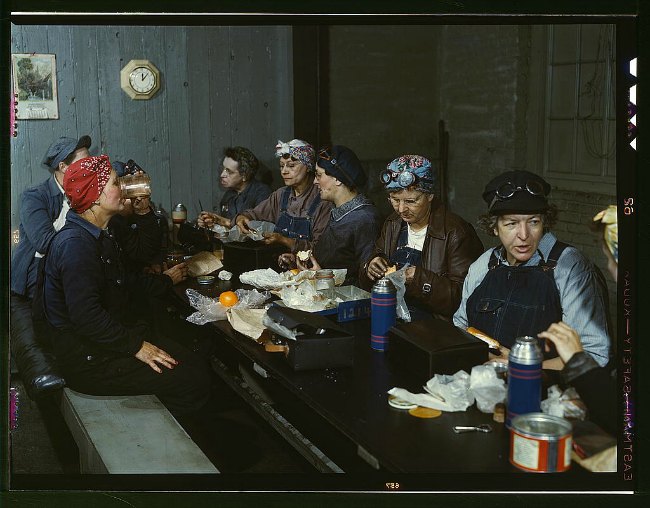
Jack Delano, Women workers employed as wipers in the roundhouse having lunch in their rest room, C. & N.W. R.R., Clinton, Iowa, Library of Congres Photography Analysis
Jack Delano, Women workers employed as wipers in the roundhouse having lunch in their rest room, C. & N.W. R.R., Clinton, Iowa, Library of Congress

Cut-up Photos

  • Cut up a photo into 4-8 pieces.  Divide students into groups based on the number of pieces from each picture puzzle.
  • Give each student in a group one of the pieces. Have each student analyze the piece.
  • After they analyze each piece, have students join them together like a puzzle.
  • Each group member can then share his or her observations with the group.
  • Students may then create an overall interpretation uniting their interpretations from the individual pieces.
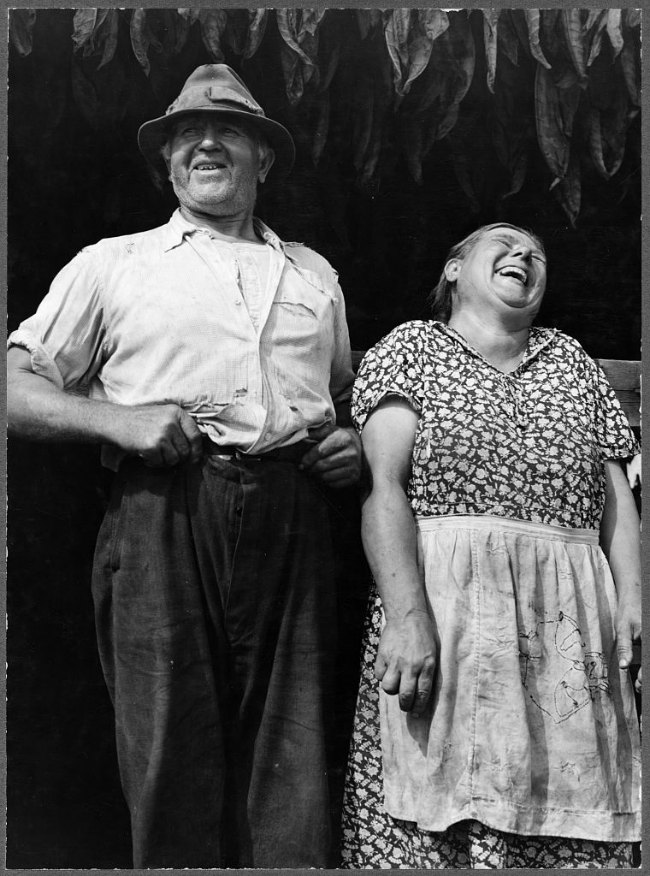
Photograph Analysis worksheet - Mr. and Mrs. Andrew Lyman, Polish tobacco farmers near Windsor Locks, Connecticut, Library of Congress
Mr. and Mrs. Andrew Lyman, Polish tobacco farmers near Windsor Locks, Connecticut, Library of Congress

Photography Analysis Interview Questions

  • Ask students to imagine they will get to interview the people in the photographs and ask her about their lives.
  • Have them write a list of interview questions they would ask the people in the photograph.

Writing Newspaper Articles

  • Discuss what makes a good newspaper article.  Make a list together of the types of information you would find in a newspaper article.
  • In this photography analysis activity, have students write a newspaper article using information found in the photographs.
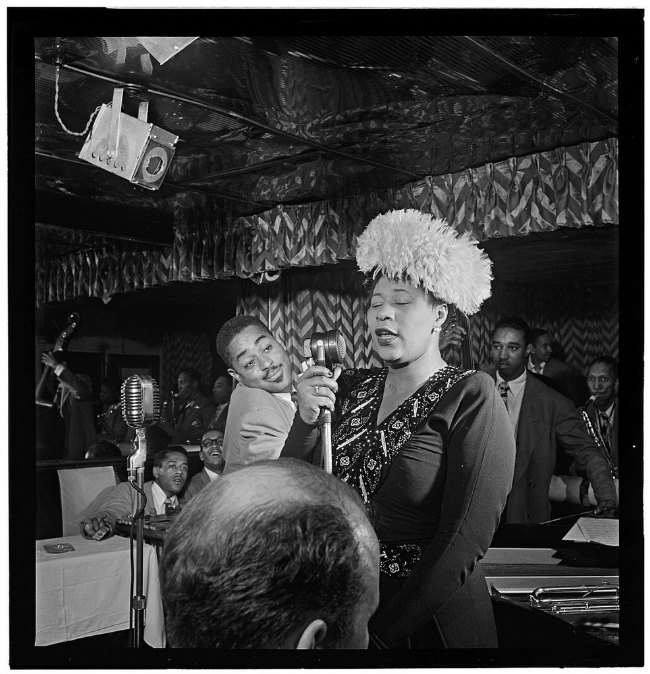
Photography Analysis - William Gottlieb, Portrait of Ella Fitzgerald, Dizzy Gillespie, Ray Brown, Milt (Milton) Jackson, and Timmie Rosenkrantz, Downbeat, New York, N.Y., ca. Sept. 1947, Library of Congress
William Gottlieb, Portrait of Ella Fitzgerald, Dizzy Gillespie, Ray Brown, Milt (Milton) Jackson, and Timmie Rosenkrantz, Downbeat, New York, N.Y., ca. Sept. 1947, Library of Congress

Playwrights or Storytelling

  • Have students analyze the people and events in the photograph paying close attention to characters and details
  • Have students write a script that described the interactions in the photograph being sure to think about what happened before and after the events in the photo.
  • Then, ask students to act out their plays for their classmates or family.
  • Alternatively, students can write a story using clues from the photograph.
Photography Analysis, A Kodak creates a sensation (LOC), [between 1890 and 1910]
A Kodak creates a sensation, [between 1890 and 1910], Library of Congress

Photograph Analysis Drawing Activity

  • Cut each photo in half.  Give each student one half of a photo.
  • Have the student draw what they think is in the rest of the photograph, being attentive to the small details and the story of the photograph.

Download the printable resource which includes these activities plus the photo analysis worksheet!

Free Worksheet!

Photograph Analysis Worksheet

Free photo analysis worksheet to explore historic photographs in depth.

Download

Free Worksheet!

Photograph Analysis Worksheet

Free photo analysis worksheet to explore historic photographs in depth.

Click here to pin this post for later!

There you go! Let me know how it goes in the comments. 

Filed Under: Art Connection Activities, Downloads and Resources


January 21, 2015 2 Comments

Wordless Wednesday: Kuba Mask

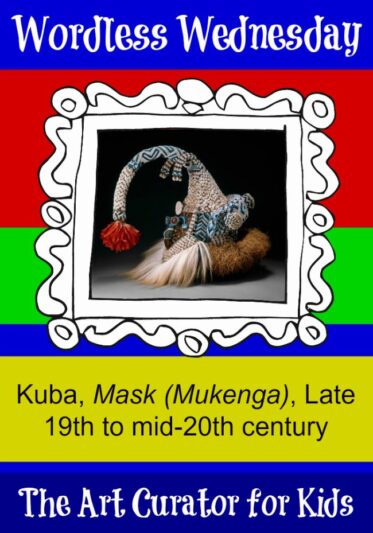
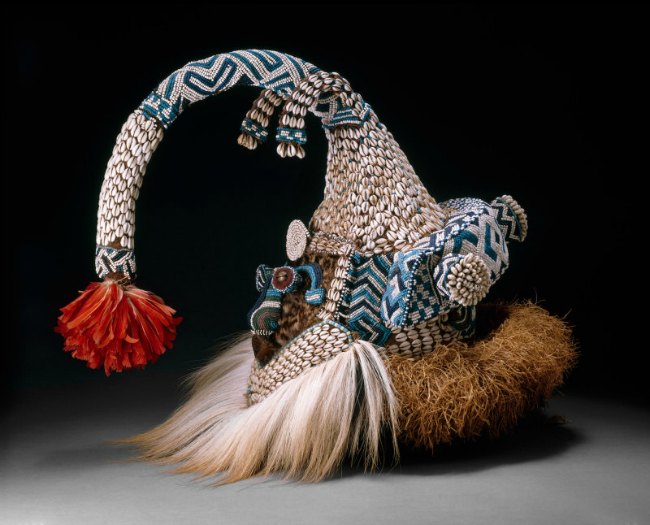
The Art Curator for Kids - Wordless Wednesday - Kuba, Mask (Mukenga), Late 19th to mid-20th century

I’m back for Wordless Wednesday, where I find amazing art and show it to you! I like this series, because there is just so much art out there, and I couldn’t cover it in a lifetime on the blog if I tried. This series allows me to show you something quickly as a nice, easy way to add a little extra bit of beauty and wonder to your lives. 🙂

I found this artwork when I was looking for lesson plans to link in one of my Africa posts for Art Around the World in 30 Days. I wanted to drop everything and write about it, but I was too far into the series to start over. I saved it and kept in the back of my mind to show you another time.

Look at how awesome this is!

Kuba, Mask (Mukenga), Late 19th to mid-20th century

This is a Kuba mask from the Kuba people who are currently in the Democratic Republic of Congo. It was worn at the funeral of important men in the culture. What strikes me most about the artwork is the bright colors, the intricacy of the design, and the many varied materials. It is just too cool.

You can learn more about this Kuba mask from the Art Institute of Chicago’s website. Also, at that link, there are African art lesson plans, learning activities, maps and other media, and more! What a great resource!

Pin it For Later:

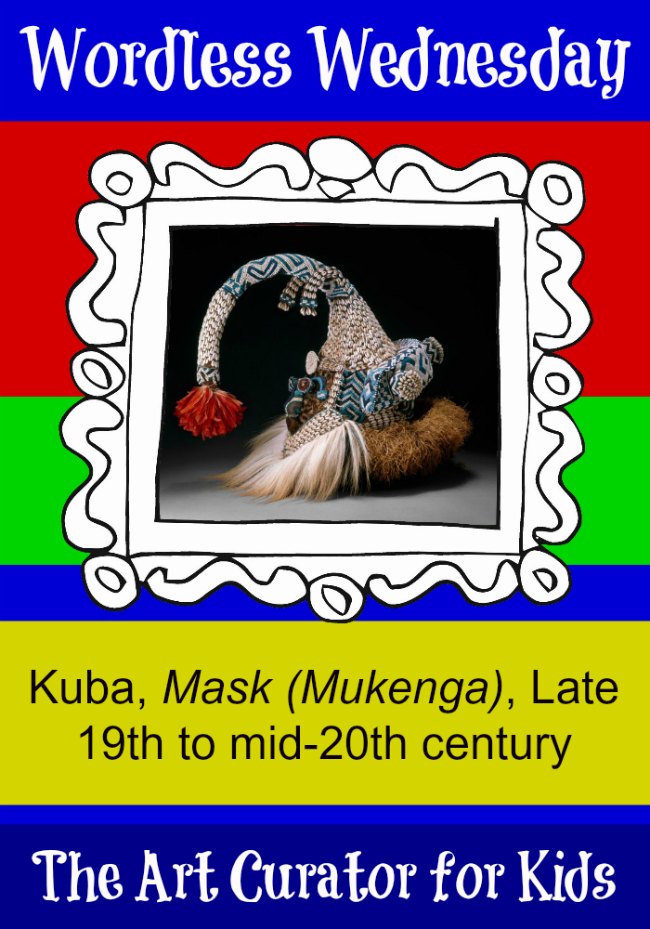
The Art Curator for Kids - Wordless Wednesday - Kuba, Mask (Mukenga), Late 19th to mid-20th century

Filed Under: Art and Artists


January 16, 2015 Leave a Comment

All Things Origami for Kids

the Art Curator for Kids - Origami for Kids - STEM STEAM Learning Activities

I’m back again with another post for the A-Z STEM for Kids series hosted by Little Bins for Little Hands. Each day, bloggers will take on Science, Technology, Engineering, and Math concepts starting with A all the way to Z. I, of course, am turning STEM to STEAM by adding Art into my posts.

I already wrote about Coding for Kids, and today I am tackling “O for Origami.”

the Art Curator for Kids - Origami for Kids - STEM STEAM Learning Activities

When I was brainstorming ideas for the series, I had just recently watched a really cool documentary on PBS called Between the Folds about Origami.

I found this documentary to be incredibly mesmerizing. You would just not believe what these artists can produce with a single (huge) piece of paper. Not only was the artwork made by these origami masters totally, unfathomably cool, but it was also really amazing to see all the connections Origami has to the STEM fields of science, math, engineering, and technology.

Definition and History of Origami

Origami is the art of paper folding which originated in Japan as early as the late 17th century. Classic origami usually consists of one sheet of paper (with no cuts) that is folded using a series of standard origami folds to create intricate designs. Origami is now practiced around the world and has exploded to new heights in the 21st century (see the TED Talk video below).

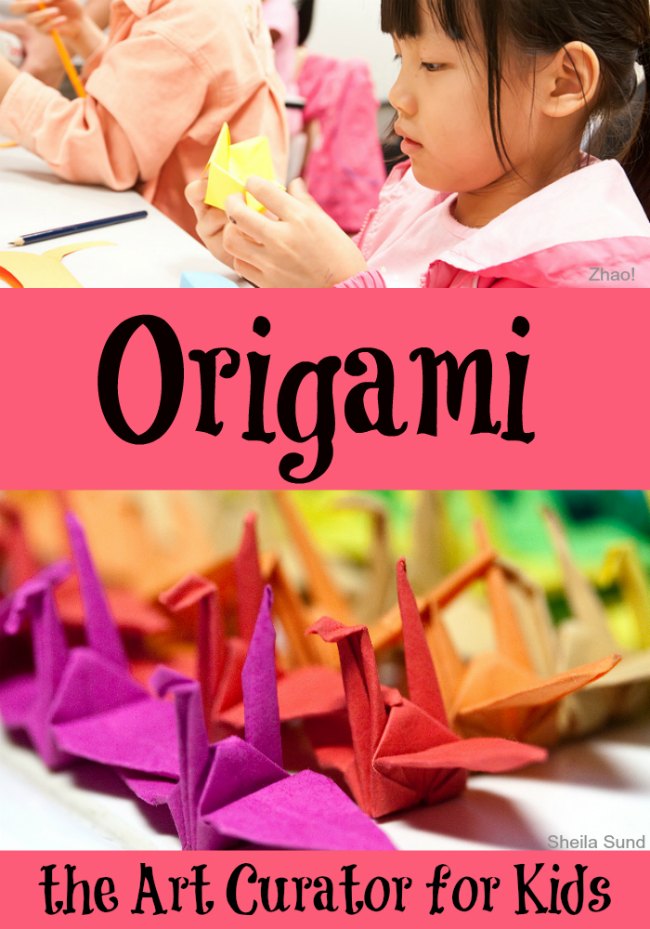
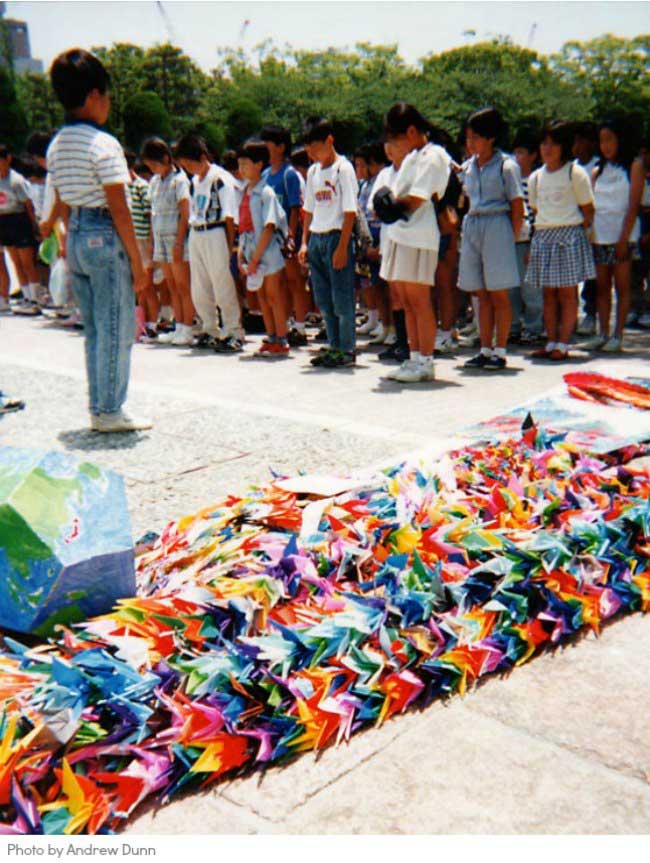
My favorite Origami tradition is the legend of the thousand paper cranes. It is said that if anyone who folds one thousand paper cranes will be granted a wish or good luck. One of our local art museums here in Dallas, the Crow Collection of Asian Art, has (or had, it’s been a while since I visited) a hallway with a thousand paper cranes folded by school students, and it is so joyful and colorful.

the Art Curator for Kids - Origami for Kids - STEM Learning Activities - Photo by Andrew DunnThe legend has added significance with the story of a young girl, Sadako, who was 3 years old when the atomic bomb dropped just a mile from her house in Hiroshima, Japan. After being diagnosed with leukemia at age 12, Sadako began folding paper cranes in order to ensure her defeat of cancer. She only was able to fold 644 cranes before she died. You can read about her story in the classic children’s book, Sadako and the Thousand Paper Cranes.

STEM Applications of Origami

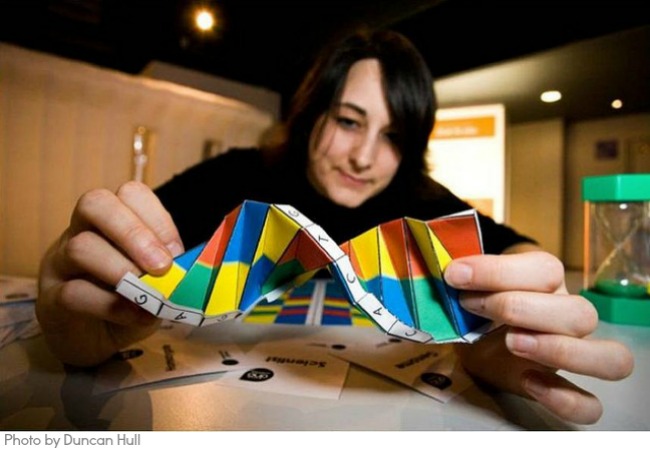
the Art Curator for Kids - Origami for Kids - STEM Learning Activities - Photo by Duncan Hull

Origami artists have been called to work in many fields to share their expertise. Often, the origami comes in to play when engineers need to have something into a compact shape to get it into something or somewhere, so they can expand it at its destination. Here are just a couple I have found. The links take you to the article where I found the information if you want to read more.

  • Automobile Applications: Folding airbags into the steering wheels of cars, designing bumpers that crumple safely when hit, making train tunnels more secure
  • Surgical applications: heart stents, retinal implants
  • Space Application: Folding mirrors and solar panels, folding the lens of a telescope
  • Robotics: a robot that starts flat and can build itself
  • DIY Microscope
  • and more!

The Math and Magic of Origami, Robert Lang

Also, check out this awesome TED Talk that talks about the progression of origami and how they applied mathematical principles to origami to make it the incredible art form it is today. It may be the nerd in me, but I can’t get enough of this.

Benefits of Origami for Kids

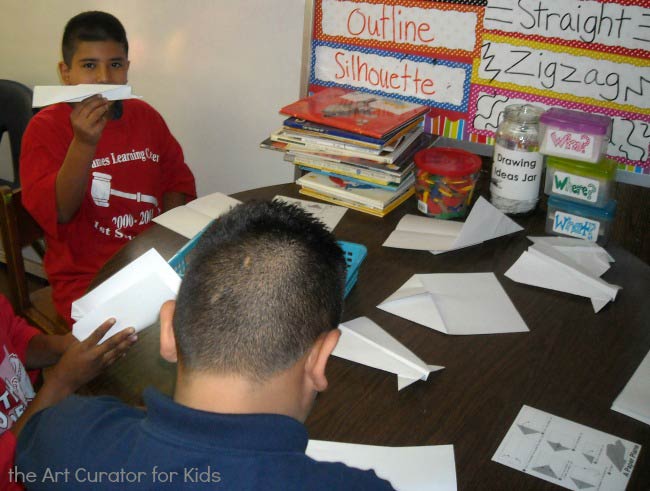
I had an origami station set up in my elementary classroom available for students to work on if they finished their work. The kids LOVED this. It was probably the most utilized activity in my “Creativity Corner.” I filled it with origami paper and laminated instructions for origami animals and paper airplanes (now you see why they loved it so much).

the Art Curator for Kids - Origami for Kids - STEM Learning ActivitiesSeeing them work out how to create the origami sculptures on their own really showed me how beneficial origami is to student’s brains.

In addition to the sheer fun of the activity, origami helps students with:

  • fine motor skills, eye-hand coordination
  • following directions
  • focus
  • math skills (fractions, symmetry, geometry)
  • spatial reasoning
  • problem-solving skills

I also saw great examples of students working together to figure out how to make the paper sculptures. It was so fun to see. Sure some students got frustrated and needed some help, but a challenge is a good thing.

I tried to find some research on Origami for Kids, and I came across this article. It has some links to research and talks about this stuff in a lot more detail.

Origami Instructions for Kids

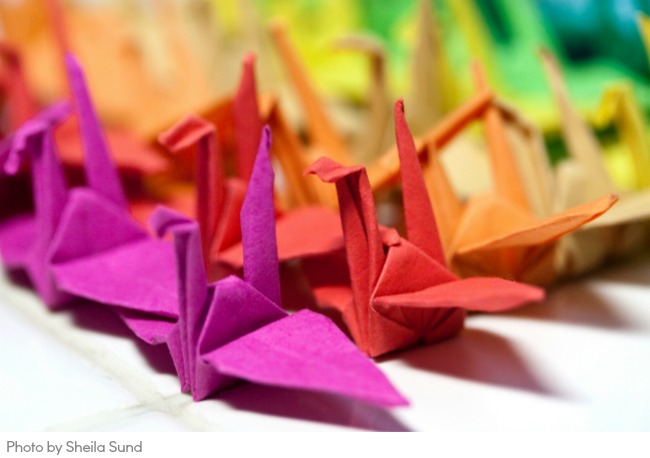
the Art Curator for Kids - Origami for Kids - STEM Learning Activities - Photo by Sheila Sundjpg

I was going to link to a bunch of posts from around the web with great origami activities, but I found one that trumps them all! You must check out Origami Club! It has tons of templates (hundreds at least) with printable step-by-step instructions plus animations that show you how to do it. It even has a rating system from 1 star for easy to 5 stars for very difficult. What a great resource for your classroom!

Origami Resources

Please note, this post includes Amazon affiliate links. As an Amazon Associate I earn from qualifying purchases.

  • Sadako and the Thousand Paper Cranes
  • Between the Folds
  • Easy Origami: Over 30 simple projects – only $2.45!
  • Origami Fun Kit for Beginners – $1.99
  • Fun with Origami: 17 Easy-to-Do Projects and 24 Sheets of Origami Paper
  • Japanese Origami Washi Folding Paper – 100 – Beautiful patterns!
  • Origami Paper – 500 Sheets/6 Inch Square/20 Vivid Colors/Design Ebook


Try out an origami design and let me know how it goes in the comments. Be sure to visit this landing page for an introduction to the A-Z STEM for Kids series as well as links to all the other amazing posts for the month!

A-Z STEM

Filed Under: Art Teacher Tips


January 14, 2015 Leave a Comment

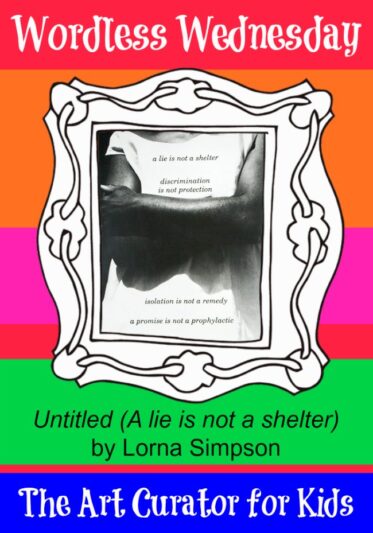
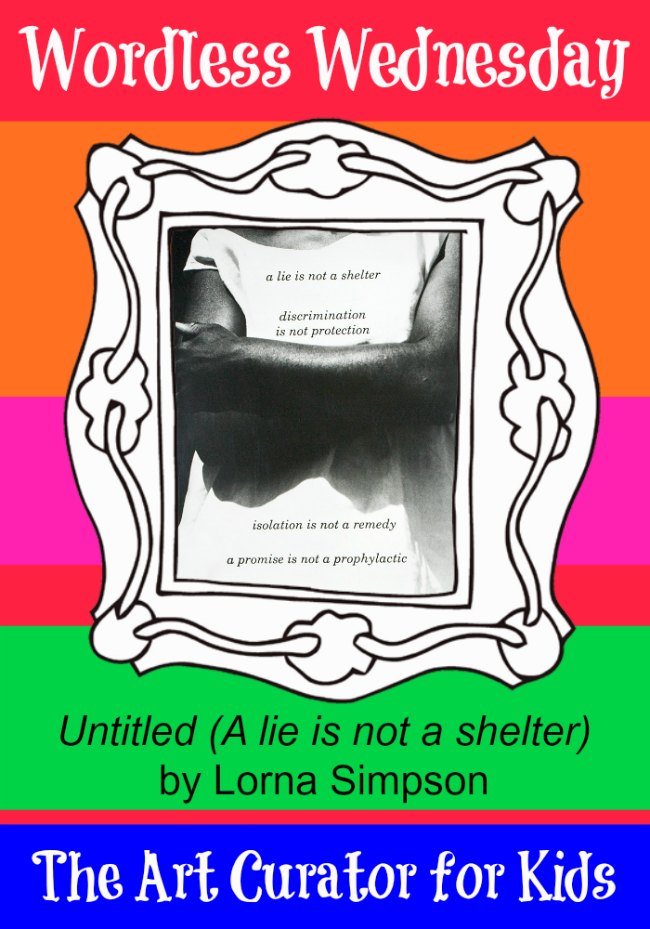
Wordless Wednesday: “Discrimination is Not Protection”

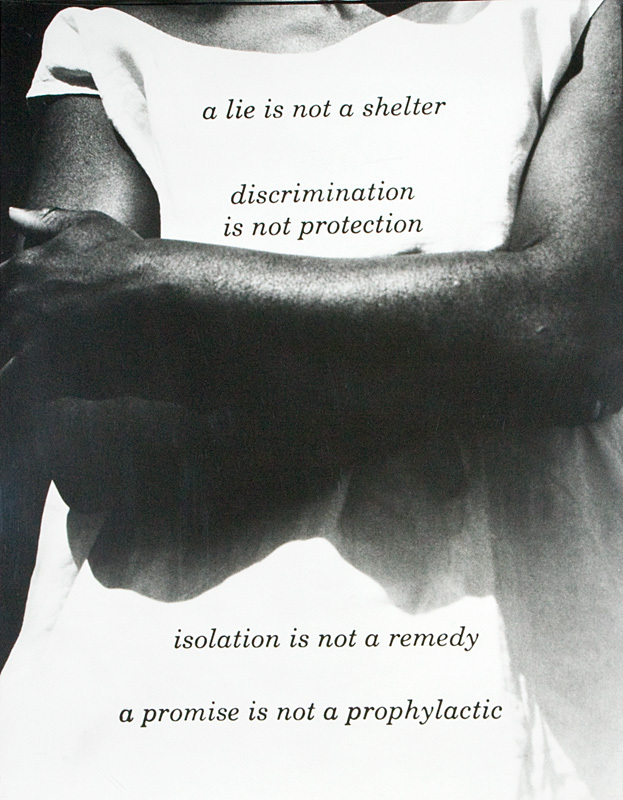
The Art Curator for Kids - Wordless Wednesday - Lorna Simpson, Untitled (A lie is not a shelter), 1989

the Art Curator for Kids - Wordless Wednesday - Art History for Kids - Art of the DayWhen I wrote my Civil Rights Movement art article on Monday, I had A LOT of other choices selected, many of which I wrote about and then removed for some reason or another. It was so hard to narrow it down as much of the art was so powerful and moving. This artwork Lorna Simpson was in the post, and I studied it enough to do the looking questions before I took it out. It is about Civil Rights, but it was not related enough to the 1960s/MLK time that I was ultimately focusing on for the #MLKonMKB series.

For larger view of image, please click the image. My copyright information page has more information on why this is small.

Lorna Simpson, Untitled (A lie is not a shelter), 1989, Click image to view larger

Take a look at the artwork and interpret it for yourself, before reading any of the below information/links!

Simpson compels viewers to realize that any judgment about this woman will be based on incomplete information, on assumptions rather than on a true understanding of this individual. — Smithsonian Institution

Read more about this artwork on the excellent resource, Oh Freedom! Teaching African American Civil Rights Through American Art at the Smithsonian. They have a downloadable PDF of the artwork, looking questions, information about the artist and artwork, and related artworks. You can also find lesson plans as well!

Enjoy! Let me know what you think in the comments.

The Art Curator for Kids - Wordless Wednesday - Lorna Simpson, Untitled (A lie is not a shelter), 1989

Filed Under: Art, Art and Artists
Tagged With: lorna simpson


January 12, 2015 Leave a Comment

Civil Rights Art

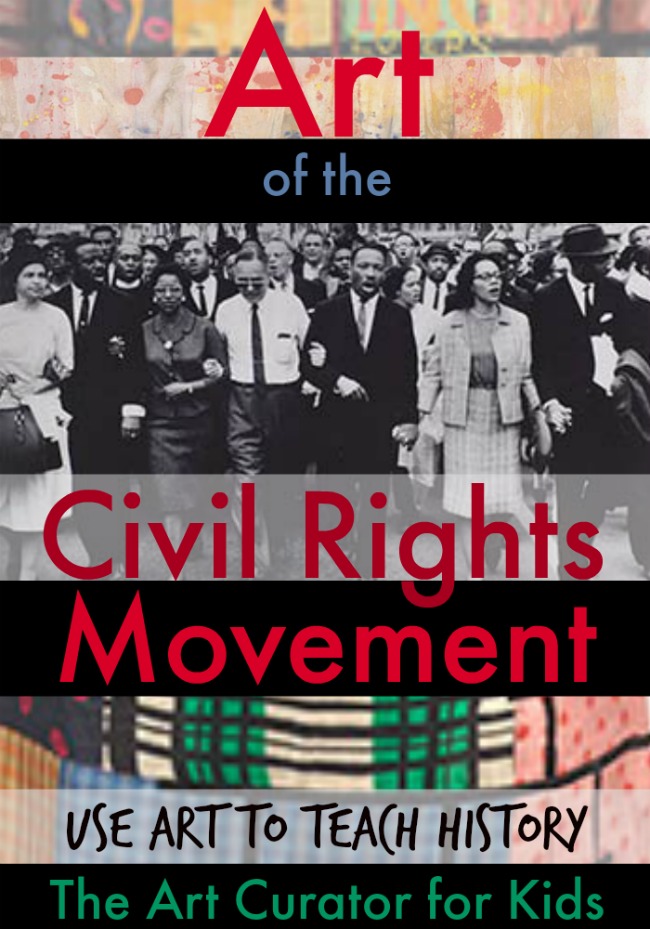
Art of the Civil Rights Movement - Use Art to Teach History - the Art Curator for Kids

Today, I’m going to share with you some important Civil Rights art. Art is such a vital tool to understanding the emotions, beliefs, and ideas of people throughout history. Art gives us insights into people like no other can. Please, use these artworks to supplement your social studies lessons about this time period and also use the list of civil rights art as an avenue to discuss the influences behind current events.

Art of the Civil Rights Art Movement - Use Art to Teach History - the Art Curator for Kids
Big Idea: Art helps us understand the emotions, beliefs, and ideas of people in a particular place during a particular time.

To help discuss artwork with your kids, read this post for tips.

Remember to have the students look, discuss, write, and think about the artwork before giving them any information about the artwork. Use the questions below or one of my free art appreciation worksheets as a starting place. I also have a 20-pack of worksheets available for in the Art Class Curator Store if you want more options.

Art Appreciation Worksheet Bundle

This art worksheets bundle from the Art Class Curator includes 25 ready-to-use art worksheets for use with individual works of art. The worksheets for art in this document are designed to work with lots of different types of artworks, so you can just pick an artwork, print a worksheet, and start the activity. Each has instructions at the top and plenty of space to do the activity.

Buy Now

Recommended Age: 5th grade and up

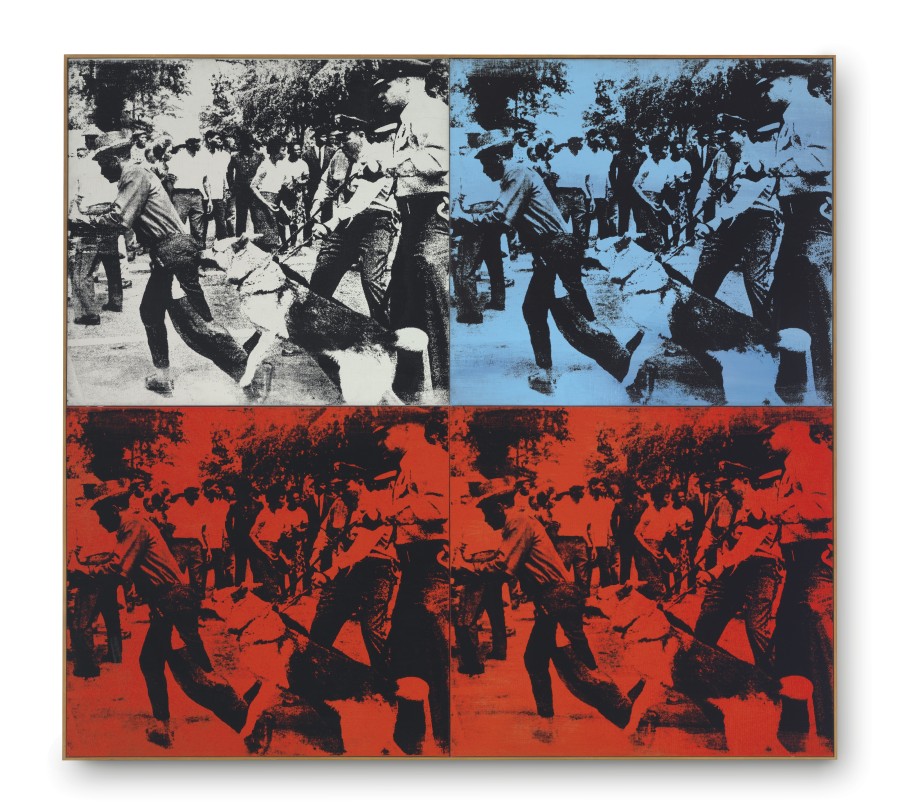
Andy Warhol, Race Riot, 1964

Civil Rights art - Andy Warhol, Race Riot, 1964
Andy Warhol, Race Riot, 1964 – Click Image to View Larger

Pop artist, Andy Warhol, wasn’t particularly known for his serious artworks. However in this work, he employed his usual strategies of repetition and color that he used he did in his iconic works of Campbell’s Soup Cans and portraits of Marilyn Monroe to create and emotional and political impact. The photograph repeated in Warhol’s artwork is of police officers in Birmingham sicking attack dogs on a retreating black man.

Although some might argue that the repetition of the image desensitizes us, I think the repetition forces the viewer to keep looking and keep thinking about the subject. The addition of the colors, especially taking into consideration the symbolism of red, white, and blue, enhances the emotion of this civil rights art and adds powerful commentary to the photos.

Questions to ask: What is happening in this picture? Why did the artist repeat this same image four times? What emotional effect does the repetition have? Does the repetition make you feel more angry about the actions in the photograph or does it desensitize you to the events? What does the black and white quality of the photograph remind you of? What was the artist saying by printing it in this way? Why did the artist choose these colors? What do these colors signify? What do you think the artist wanted to tell us by making this artwork? What did the artist want us to feel?

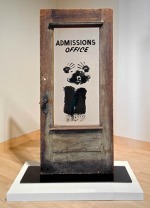
David Hammons, The Door (Admissions Office), 1969

Civil Rights art, David Hammons, The Door (Admissions Office), 1969
David Hammons, The Door (Admissions Office), 1969, Click Image to View Larger

This artwork packs such a punch that I don’t really think it needs many words from me. Hammons made a print of his body on the admissions door highlighting the struggles African Americans had in pursuit of an education. The figure looks desperate to get in, but the door is locked.

Questions to ask: What’s happening in this artwork? Describe position, emotions, situation, and motives of the figure in the glass. How would you feel if you wanted to get an education, but you weren’t allowed to because of how you look?

This would be an excellent artwork for a poetry activity. Have students take the role of the figure in the painting and try to think from his or her perspective.

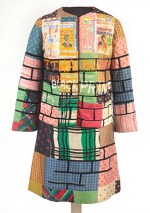
Jae Jarrell, Urban Wall Suit, circa 1969

Civil Rights art, Jae Jarrell, Urban Wall Suit, circa 1969
Jae Jarrell, Urban Wall Suit, circa 1969, Click Image to View Larger

Not all art at this time was about the brutality and the darkness, many black artists embraced positivity and connectedness in their work. This artwork by fashion designer, Jae Jarrell, captures the spirit of excitement that came from the rallies, speeches, and marches that proud people together.

I want you to read what Jae Jarrell wrote about this time here at the Brooklyn Museum website. She writes about her experiences in COBRA, the Coalition of Black Revolutionary Artists. It’s powerfully written and her pride for the work they did together shines through her words and her art. The short article also tells about this artwork, so head over there to learn more!

Questions to ask: What is your first reaction to this artwork? What does it remind you of? What is the mood of this artwork (what feeling does it project)? What are the images of? What does the grid represent? Is this art? Why or why not? What clothing do you wear that makes you proud of who you are?

Speeches, marches, rallies, and demonstrations filled the airwaves, newscasts, and Black artists’ consciousness nationwide. It was a call to all the aesthetically endowed to show up! Bring it: outspoken word, music with infectious cadence, images that look like me and mine, fond titles of ‘Sister’ and ‘Brother,’ and the Black community was utopia. — Jae Jarrell, June 2013

Sam Gilliam, Red April, 1970

Civil Rights Movement art, Sam Gilliam, Red April, 1970
Sam Gilliam, Red April, 1970, Click Image to See Larger

Usually, art that looks like this has no other sort of alternative meaning or reference. Artists are careful to give titles like “Untitled” or “Composition #34” or whatever. In this case though, Sam Gilliam took this Abstract Expressionist style and infused it with meaning and emotion. He called his painting Red April which refers to the April 1968 assassination and subsequent rioting in Washington, D.C., where the artist lived. I had chosen a more illustrative example for this slot, but I liked the idea of choosing something without a clear meaning, so students can think about how to express emotions and stories without showing any specific imagery.

Questions to ask: What’s going on in this painting? What emotions do you feel when looking at this? How do you think the artist felt when he made this? What are ways you can express emotion without using pictures or words?

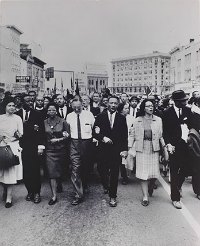
Moneta Sleet Jr., Rosa Parks, Dr. and Mrs. Abernathy, Dr. Ralph Bunche, and Dr. and Mrs. Martin Luther King, Jr. leading marchers into Montgomery, 1965

Civil Rights Movement art, Moneta Sleet Jr., Rosa Parks, Dr. and Mrs. Abernathy, Dr. Ralph Bunche, and Dr. and Mrs. Martin Luther King, Jr. leading marchers into Montgomery, 1965
Moneta Sleet Jr., Rosa Parks, Dr. and Mrs. Abernathy, Dr. Ralph Bunche, and Dr. and Mrs. Martin Luther King, Jr. leading marchers into Montgomery, 1965, Click Image to See Larger

What a powerful photograph! Make sure you click it so you can see it bigger to really get the full effect. It includes many of the most important leaders of the Civil Rights Movement including Dr. and Mrs. Martin Luther King, Jr., Rosa Parks, and others. But it also includes thousands of ordinary citizens fighting for African American citizens’ right to vote. They marched from Selma, Alabama to the state capitol, Montgomery. Just over four months later, the 1965 Voting Rights Act was signed into law.

This photograph captures the solidarity, the power, the emotion, and the spirit of the time. The photographer photographed Martin Luther King, Jr. several times and won the 1969 Pulitzer Prize for his photo of Dr. King’s widow at his funeral.

Questions to ask: What’s going on in this photograph? Describe the expressions and actions of the people. What does that teach you about them? How does this photograph make you feel?

The Smithsonian’s website, History Explorer, has a great PDF resource for learning about historical photographs. Visit this link and then scroll down and click “Engaging Students with Primary Sources.” There is a chapter on photography.

Civil Rights Art Resources

Free Resources on the Web:

  • Oh Freedom! Teaching African American Civil Rights Through American Art at the Smithsonian –  More Artworks, Lesson Plans, and Student-created podcasts
  • Witness: Art and Civil Rights in the Sixties
  • Engaging Students with Primary Sources

Please note, this post includes Amazon affiliate links. As an Amazon Associate I earn from qualifying purchases.

  • The Civil Rights Movement: A Photographic History, 1954-68
  • Special Moments in African-American History, 1955-1996: The Photographs of Moneta Sleet, Jr., Ebony Magazine’s Pulitzer Prize Winner
  • Child of the Civil Rights Movement
Martin Luther King Day for Kids

Filed Under: Art and Artists
Tagged With: andy warhol, david hammons, jae jarrell, martin luther king jr., moneta sleet jr., sam gilliam


  • Previous Page
  • Page 1
  • Interim pages omitted …
  • Page 29
  • Page 30
  • Page 31
  • Page 32
  • Page 33
  • Interim pages omitted …
  • Page 38
  • Next Page

Primary Sidebar

Hi! I’m Cindy Ingram, the creator of Art Class Curator and The Curated Connections Library

I’m on a mission to revolutionize education with the power of life-changing art connections. Art is not “extra”. Art is essential. We are empowering teachers to bridge the gap between art making and art connection, kindling a passion for art that will transform generations.

More About Me

Free Worksheets!

-Free Bundle of Art Appreciation Worksheets-

In this free bundle of art worksheets, you receive six ready-to-use art worksheets with looking activities designed to work with almost any work of art.

Download

Free Worksheets!

-Free Bundle of Art Appreciation Worksheets-

In this free bundle of art worksheets, you receive six ready-to-use art worksheets with looking activities designed to work with almost any work of art.

Enrollment in Curated Connections Library is currently open. Click here to join. Join our list to get more information and to get a free lesson from the vault! If you are purchasing for a school or school district, head over here for more information.

Check Out What’s New In The Shop

Experience Art: Engaging Art Criticism Discussions and Activities for Teachers and Students of All Ages
Call to Art: An Un-Conference for Art Educators
Curated Connections Library Membership
Perspectives High School Curriculum

More Products

Have You Listened to the Latest Podcast Episode?

Falling for Naudline Pierre’s Evocative Art: A Conversation with Madalyn (Part 2)

More Episodes

Testimonials

I like how this program, unlike other art class resource membership programs, feels authentic. It's like art matters more here, and not fancy flash-in-the-pan trendiness. The goal of Art Class Curator seemed to be helping kids develop a lifelong love and art appreciation versus "Hey, look. I painted this fish."
Erin A.
Your questions are helping me to delve into much deeper learning, and my students are getting better at discussion-and then, making connections in their own work. Art Class Curator is awesome!
Denise W.
Interestingly, my lower performing classes really get engaged in these [lessons] and come away with some profound thoughts!
Melissa G.
I had the most amazing 6th grade class today. They were jumping out of their seats with hands raised just to respond and give input. It was as if I was waving candy in front of them! They saw more and more and the ideas and interpretations unfolded. So cool!!! This is what makes teaching art so wonderful – thank you!!
Caroline G.
I just wanted to thank you for the invaluable resource you have through Art Class Curator. Not only do you have thought provoking activities and discussion prompts, but it saves me so much time in preparing things for myself! I feel like I’ve only scratched the surface with your site.
Maryjane F.

Get Art Inspiration To Your Inbox!

Enter your email address to get regular art inspiration to your inbox
plus a BUNDLE OF 6 FREE WORKSHEETS!
We hate SPAM and promise to keep your email address safe.
Download

Free Worksheets!

*Free Bundle of Art Appreciation Worksheets*

In this free bundle of art worksheets, you receive six ready-to-use art worksheets with looking activities designed to work with almost any work of art.

Copyright © 2026 Ignite Art, LLC DBA Art Class Curator •  All rights reserved  •  Privacy Policy  •  Terms of Service  •  Site Design by Emily White Designs