• Skip to main content
  • Skip to primary sidebar
  • About
    • About Art Class Curator
    • Contact
    • Speaking
    • Media & Press
    • Programs for Schools
  • Blog
  • Podcast
  • Shop
  • Join
  • Member Login

Art Class Curator

Hands-on and Minds-curious Art Learning

  • Art & Artists
  • Art Connection Activities
  • Art Teacher Tips
  • Elements & Principles
  • Downloads & Resources
Home
  • About
    • About Art Class Curator
    • Contact
    • Speaking
    • Media & Press
    • Programs for Schools
  • Blog
    • Art & Artists
    • Elements & Principles
    • Art Connection Activities
    • Art Teacher Tips
    • Downloads & Resources
  • Book
  • Podcast
  • Shop
  • Join
  • Member Login

All Posts from Art Curator for Kids

April 13, 2015 8 Comments

Where the Wild Things Are Art Project

The Art Curator for Kids - Where the Wild Things Are Art Project - Maurice Sendak-FEATURE

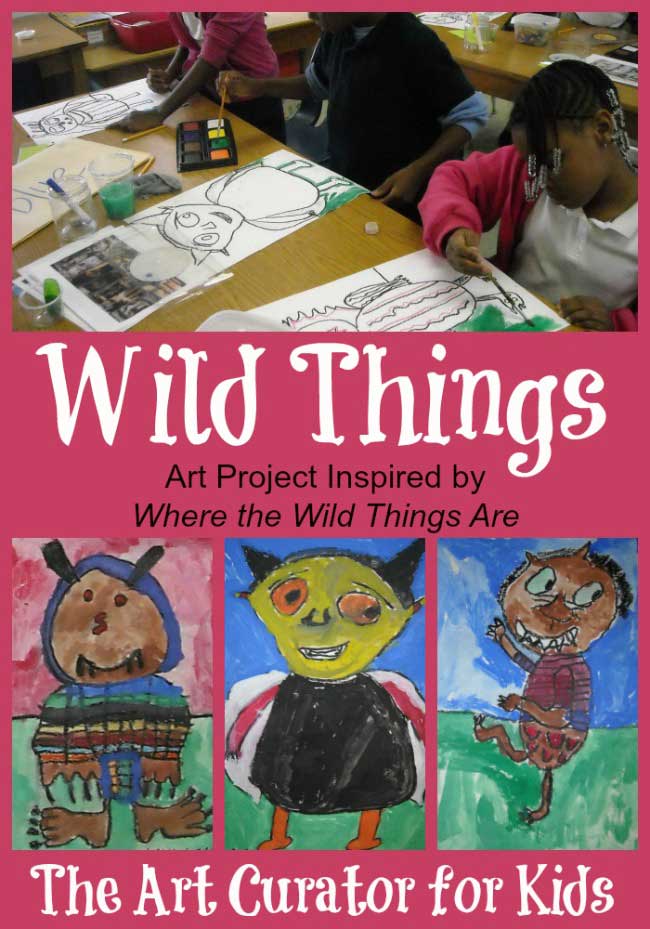
One of my favorite projects I did with my elementary students was an art project inspired by the amazing children’s book by Maurice Sendak, Where the Wild Things Are.
The Art Curator for Kids - Where the Wild Things Are Art Project Maurice Sendak

Maurice Sendak

Maurice Sendak is a beloved children’s book illustrator and author. He wrote and/or illustrated about 100 books in his life. His most renowned work is Where the Wild Things Are, a magical book about a boy who disobeys his mom and leaves on an adventure in his imagination to a world of scary, wild things where becomes king. The story is magic, but the art is what really shines for me.

I think Maurice Sendak really understands what it is like to be a child. Please watch this video from PBS Digital Studios. It gave me goose bumps in parts.

Booking Across the USAThis post is a part of the Booking Across the USA series organized by Jodie at Growing Book by Book. Bloggers from across the web are each featuring children’s authors from all 50 states. I chose Connecticut, because Maurice Sendak lived in Ridgefield, Connecticut for more than 40 years. He died in 2012 and in his will, he chose to donate all his work to a foundation dedicated to creating a museum to house his collection in Ridgefield.

Where the Wild Things Are Art Project

I was just teaching and not blogging when I did this project, so it didn’t matter whether it was a new idea or not, but the original inspiration for this project was from Patty at Deep Space Sparkle. See her Wild Things lesson here. She has created some amazing art projects for kids, and her site was an amazing resource for me as an elementary art teacher! If you don’t visit her site regularly, you should. 🙂

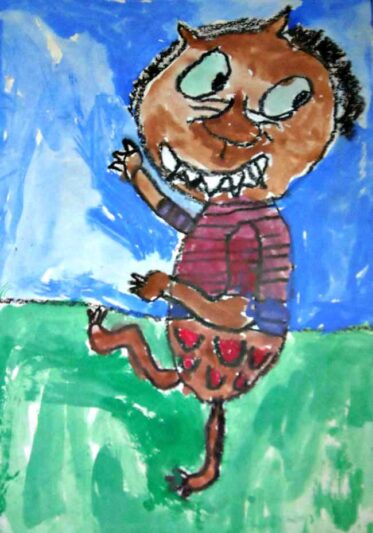
I did this Wild Things lesson with third grade, and the results were too cute!

Here’s the process.

1. Read the book and discuss the art. I read the book to the class, and then I made color copies of some of the illustrations. I had the students notice and point out the different features of the monsters and the textures.
The Art Curator for Kids - Where the Wild Things Are Art Project - Maurice Sendak4

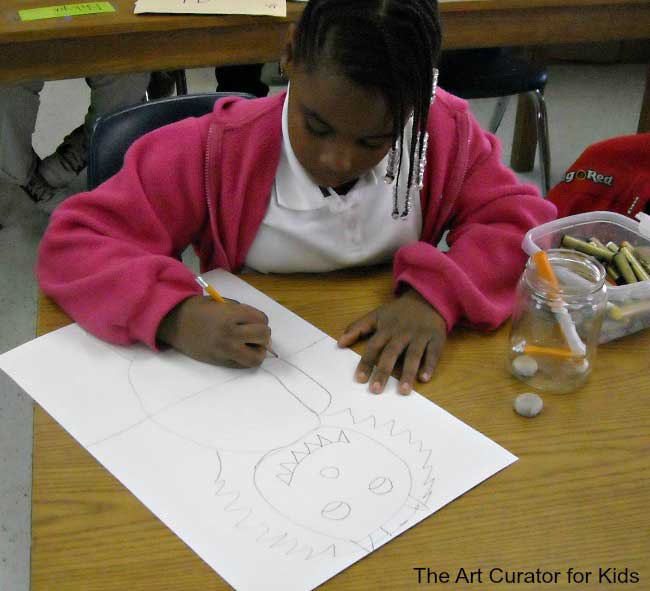
2. Draw the monster BIG with pencil. We used 12″x18″ white paper, and I had the students draw the monster as big as they could on the paper. I distributed the color copies from the book to the tables not for them to copy, but just to be inspired and remember all of the possibilities. Also have students draw the horizon line.
The Art Curator for Kids - Where the Wild Things Are Art Project - Maurice Sendak (2)

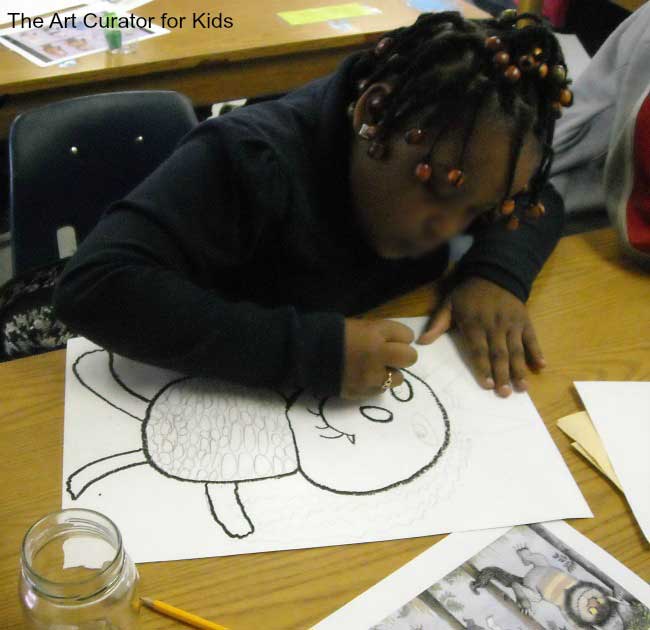
3. Trace the pencil lines with black oil pastels, and add details and textures with other colors.
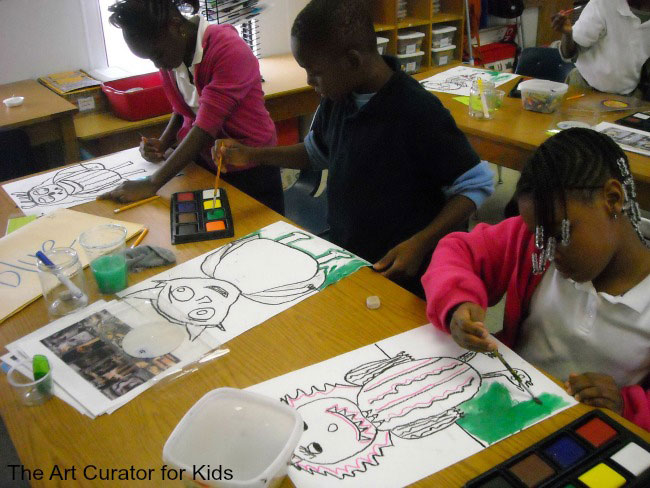
The Art Curator for Kids - Where the Wild Things Are Art Project - Maurice Sendak5

4. Paint the monster and the background with paint. We used tempera cake paint with great results. Patty used watercolor.
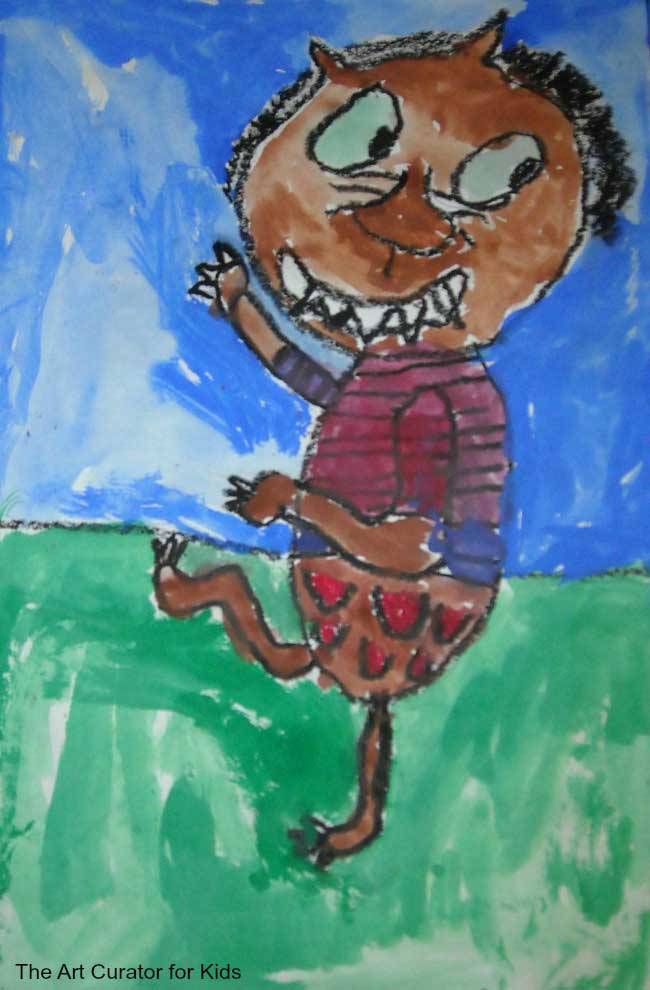
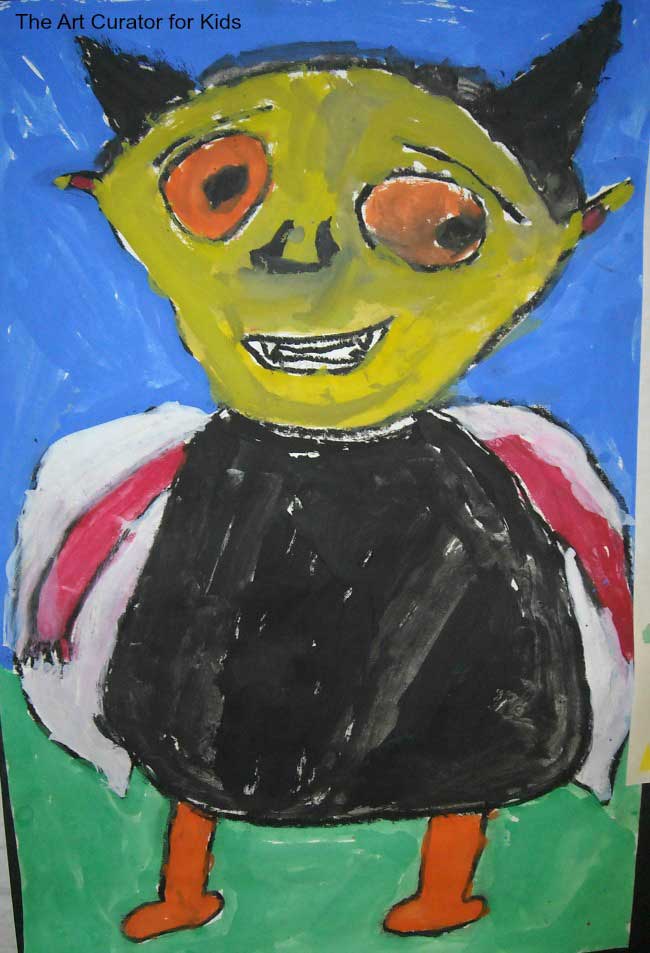
The Art Curator for Kids - Where the Wild Things Are Art Project - Maurice SendakThe Art Curator for Kids - Where the Wild Things Are Art Project - Maurice Sendak2

If I had to do it again, I would probably have students draw textures on top of the paint (like I did in this project).

I also just came across this post with a similar idea. I love the worksheet she created to observe the textures and animal parts! Great idea.

Booking Across the USA

Here are all of the bloggers participating in the Booking Across the USA series today! Check them out. 🙂
edSnapshots, Incredibly Confident Kids, Crayonbox Learning, The Educators’ Spin On It, Art Class Curator, Kathys Cluttered Mind, Story Time Secrets, True Aim, The Jenny Evolution, Primary Inspired, KC Edventures, Chicken Babies, Mosswood Connections, Picture Books & Piourettes, Mama Smiles, Buggy and Buddy, Wise Owl Factory, Bambini Travel, Inspiration Laboratories , Kids Yoga Stories, Elementary Matters, Just Another Mom, All Done Monkey, Something 2 Offer, Cutting Tiny Bites, JDaniels4’s Mom, Living Montessori Now, Pragmatic Mom, Kid World Citizen, Teach Beside Me, Kitchen Floor Crafts, and Brain Power Boy
 

Filed Under: Art and Artists, Downloads and Resources
Tagged With: maurice sendak


April 10, 2015 13 Comments

Best Artist Books and Movies for Kids and Adults

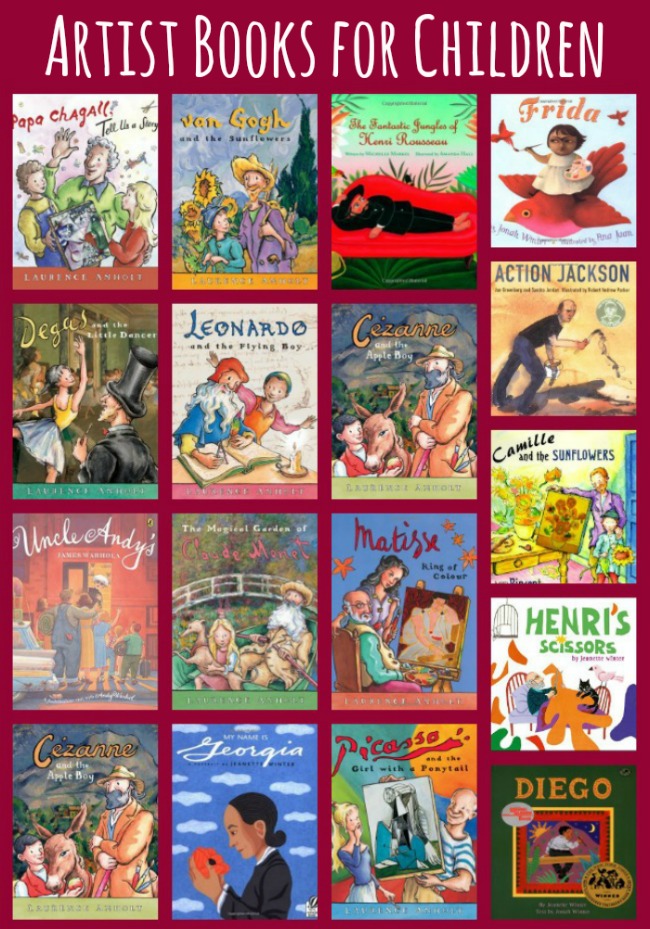
The Art Curator for Kids - Children's Books about the Lives of the Artists - Artist Books for Kids

Although I don’t think it is necessary to study the lives of individual artist to enjoy and connect with their artwork, hearing stories about artists can make their art come alive in new and exciting ways.

Several months ago, I received a message from a reader. This is what she said.

My number one struggle in teaching art to my kids is making artists come alive. I really want them to grasp art from cave drawings to modern art. To help them understand that there is a person behind each piece that has lived through struggles and joys. I want them to understand that art is an expression of the soul creating it.

~Tee from Wisteria and Worms

I love her statement here, because art is about people and connecting with people. When you are moved by a work of art, you are moved because of the person behind that artwork and what they were thinking and feeling. I believe art becomes more powerful when you recognize that truth.

I will never forget reading The Agony and the Ecstasy about Michelangelo. I read it before I studied abroad in Italy in college. After reading that book, I felt like I intimately knew both Michelangelo and where he lived, Florence, Italy. Going to Florence after reading that book was a magical experience for me.

Here are my favorite biographical novels, movies, and children’s books for both kids AND adults!

Please note, this post includes Amazon affiliate links. As an Amazon Associate I earn from qualifying purchases.

Books about Artists for Kids

The Art Curator for Kids - Children's Books about the Lives of the Artists - Artist Books for Kids

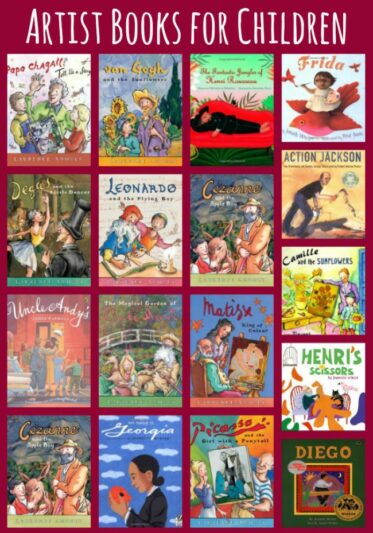
  • Henri’s Scissors by Jeanette Winter
  • Action Jackson by Jan Greenberg and Sandra Jordan
  • Uncle Andy’s by James Warhola
  • Frida by Jonah Winter
  • Diego by Jonah Winter
  • My Name Is Georgia by Jeanette Winter
  • The Fantastic Jungles of Henri Rousseau by Michelle Markel

Laurence Anholt’s Books about Artists For Children

This is a great series of books where artists and children meet.

  • Degas and the Little Dancer
  • Cezanne and the Apple Boy
  • The Magical Garden of Claude Monet
  • Leonardo and the Flying Boy
  • van Gogh and the Sunflowers
  • Picasso and the Girl with a Ponytail
  • Camille and the Sunflowers
  • Papa Chagall, Tell Us a Story
  • Matisse, King of Colour

Movies and Books about Artists for Adults

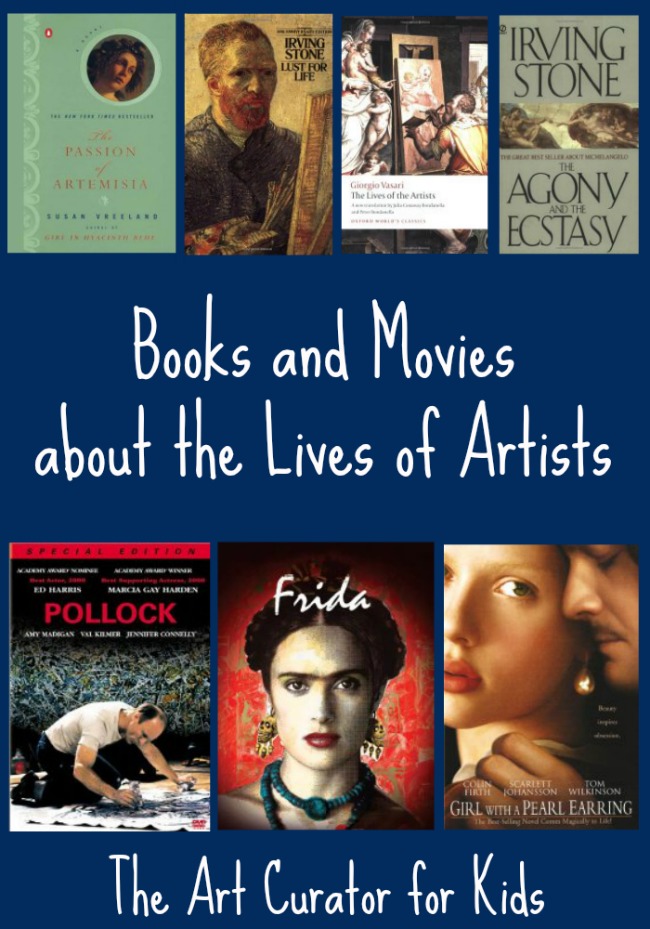
The Art Curator for Kids - Artist Biographies for Adults, Books and Movies - Michelangelo, van Gogh, Vasari, Artemisia Gentileschi, Frida Kahlo, Jackson Pollock

Books about Artists

  • The Agony and the Ecstasy: A Biographical Novel of Michelangelo by Irving Stone
  • The Lives of the Artists by Giorgio Vasari
  • The Passion of Artemisia: A Novel by Susan Vreeland
  • Lust for Life by Irving Stone

Other Books about Artists

Tracy Chevalier and Susan Vreeland write good books surrounding artists but the historical accuracy isn’t as good, so I didn’t put them in the above list. I also really want to read The Private Lives of the Impressionists, but since I haven’t read it, I didn’t put in on the list. 🙂

Movies

  • Pollock
  • Frida
  • Girl with a Pearl Earring
  • Basquiat
  • Midnight in Paris


Filed Under: Downloads and Resources
Tagged With: andy warhol, artemisia gentileschi, basquiat, camille pissarro, diego rivera, edgar degas, frida kahlo, georgia o'keeffe, giorgio vasari, henri matisse, henri rousseau, jackson pollock, leonardo da vinci, marc chagall, michelangelo, pablo picasso, paul cezanne, vincent van gogh


April 7, 2015 8 Comments

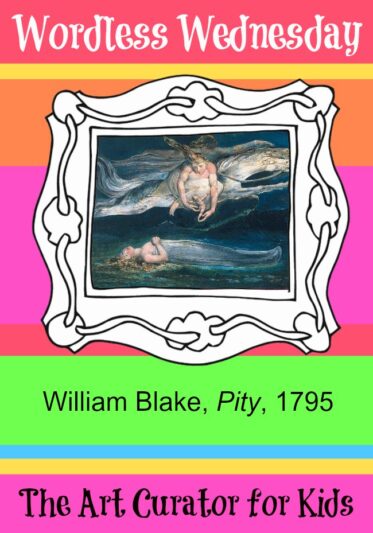
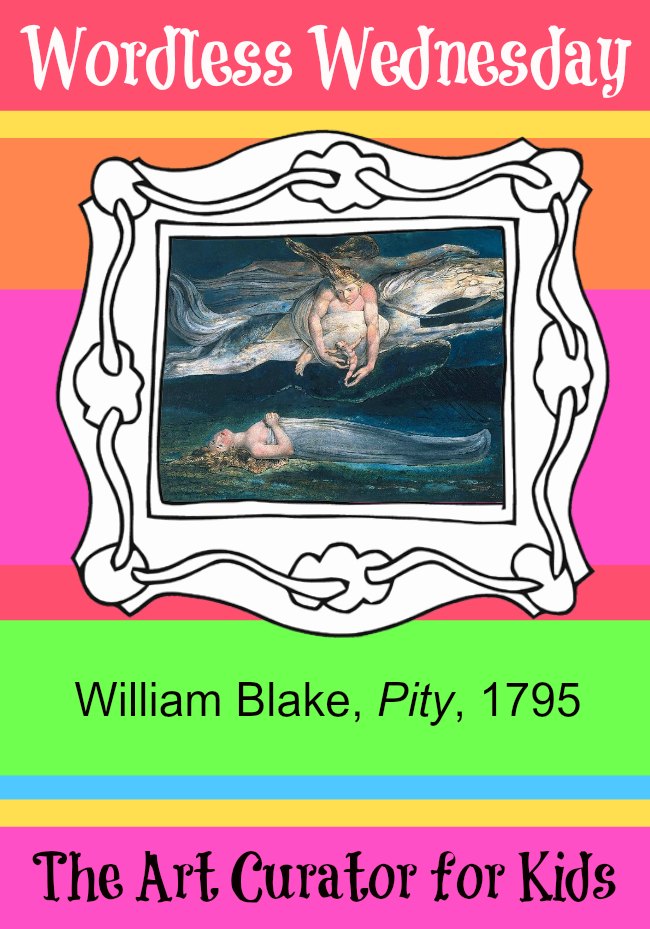
Wordless Wednesday: William Blake, Pity, 1795

The Art Curator for Kids - Wordless Wednesday - William Blake, Pity, 1795

The Art Curator for Kids - Wordless Wednesday - William Blake, Pity, 1795

I <3 William Blake. He is both a poet and an artist from the Romantic age in the late 1700s and early 1800s which is one of my favorite time periods in art history. Through their creative endeavors, Romantic artists celebrated emotion, passion, imagination, nature, literature, art, and more. I find Romantic art to be incredibly inspiring.

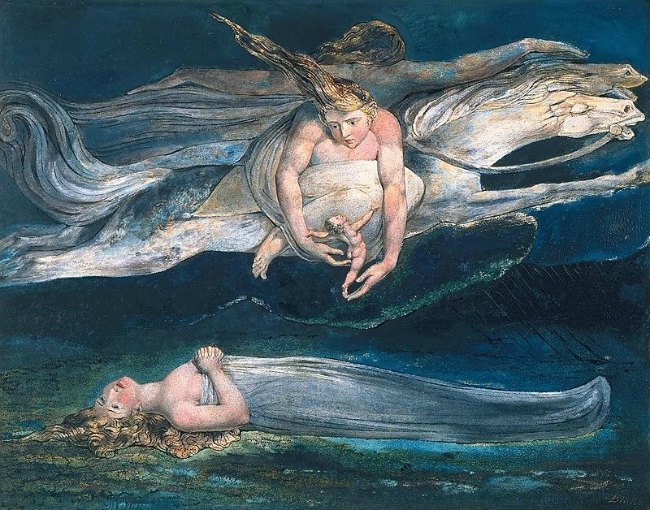
Here is William Blake’s Pity for Wordless Wednesday.

William Blake, Pity, 1795

William Blake is not necessarily a great topic for Wordless Wednesday as he is all about words. He was a poet and much of his visual art was created as illustrations for literary works. This painting is inspired by Shakespeare’s Macbeth.

And pity, like a naked new-born babe,
Striding the blast, or heaven’s cherubim, horsed
Upon the sightless couriers of the air,

William Shakespeare, Macbeth

For more about this painting, visit the Tate’s blog.

What do you think? How could you include this work in your classroom?

More Wordless Wednesday posts:

the Art Curator for Kids - Wordless Wednesday - Art History for Kids - Art of the Day

Filed Under: Art and Artists
Tagged With: william blake


April 6, 2015 Leave a Comment

My Top 5 Art Lessons that Never Fail

The Art Curator for Kids - My Top 5 No-Fail Art Lessons

In my experience as an art teacher, I have many lessons that never fail. Here is my list of top 5 art lessons that always lead to engaged students and fun conversations!

My Top 5 No-Fail Art Lessons

Haikus About Art

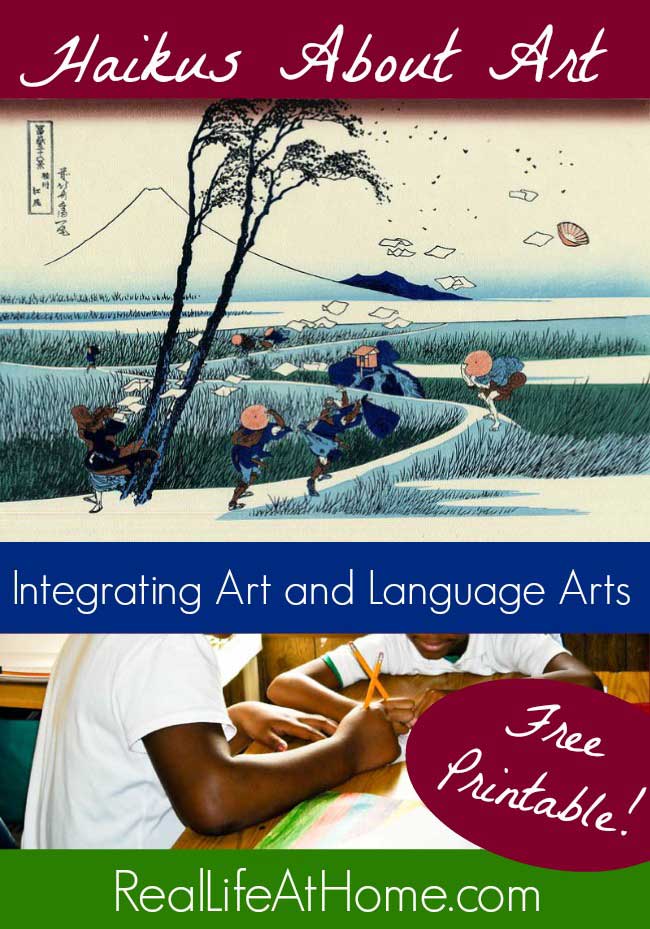
the Art Curator for Kids for Real Life At Home - Writing Haikus about Art with Kids - Integrating Art and Language Arts - Final

This was my first post as a contributing writer for the homeschool blog, Real Life at Home. I love love LOVE having students write haikus about art. Somehow students manage to capture the essence of the art with their words, and it is always a positive experience. Try it out, and see for yourself! Read more…

Puzzles About Art

The Art Curator for Kids - Aesthetics Puzzles about Art - The Chimpanzee Painter

I usually do this aesthetics lesson in the first couple of class periods in my community college classes, but these are also great for high school. The discussions are always fun and interesting. There are two scenarios up on the site, but I have a lot more. I usually break the students up into groups and have each group do a different scenario and then we come back together as a class to share the results. Read more…

You can download this lesson along with 3 other aesthetics lessons in my Art and Aesthetics Lesson Bundle. Read more…

Aesthetics Lesson Bundle

What is art? Get your students in the mindset to THINK in art class and lead fun art discussions with this lesson bundle!

Buy Now

Classical Sculpture Activity

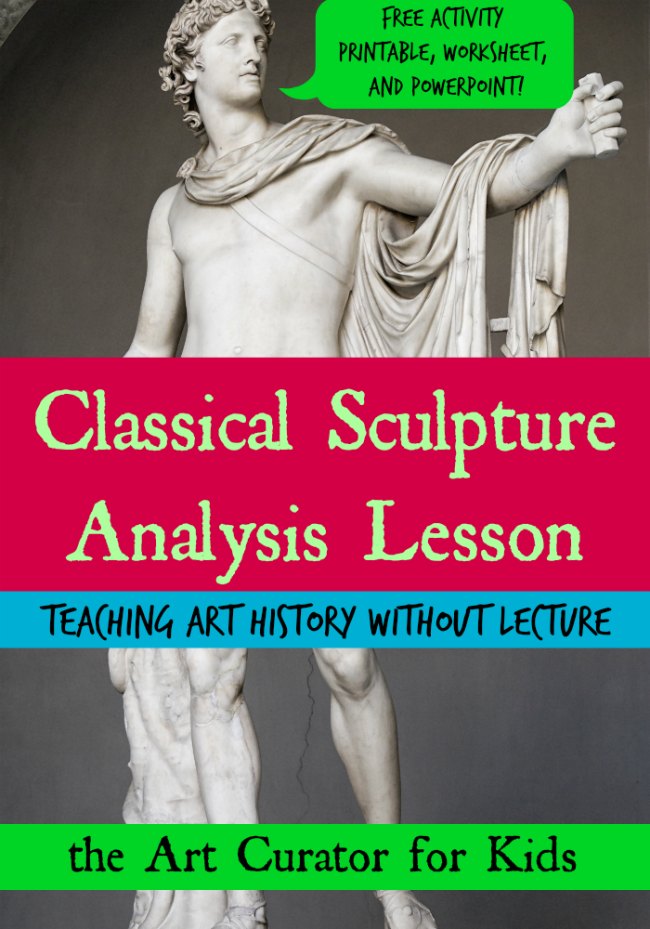
The Art Curator for Kids - Classical Sculpture Analysis Art History Lesson

This lesson is so fun. I print out a bunch of pictures of sculptures from Ancient Greece and Rome and have students analyze the style and divide them into groups based on their observations. It’s such a great looking and thinking exercise! Read more…

Classical Sculpture, Ancient Greek, & Ancient Rome Lesson Bundle

In these lessons, students will learn about the art of Ancient Greece & Ancient Rome. Plus, get a complete Classical Sculpture lesson with an interactive activity to empower students to figure out the conventions on their own!

Buy Now

Baroque Comparison

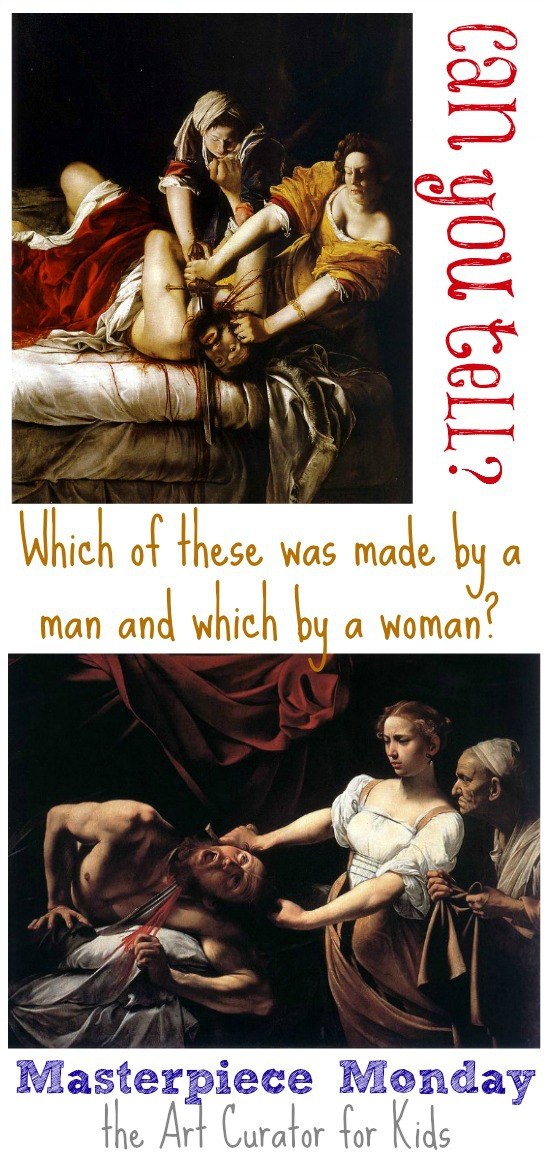
the Art Curator for Kids - Masterpiece Monday - Judith beheading Holofernes

This is only a partial piece to my successful lesson. I start by having students compare Renaissance art with Baroque pieces to make a list of characteristics of Italian Baroque art. Then, I do the intriguing comparison activity in this post. The art alone gets kids engaged, but I like how the questions cause kids to think deeply about stereotypes. Read more…

Get the Full Lesson!

This Lesson is in The Curated Connections Library!

Find the full lesson from this post along with hundreds of other art teaching resources and trainings in the Curated Connections Library. Click here for more information about how to join or enter your email below for a free SPARKworks lesson from the membership!

Join the List

Get the Full Lesson!

This Lesson is in The Curated Connections Library!

Find the full lesson from this post along with hundreds of other art teaching resources and trainings in the Curated Connections Library. Click here for more information about how to join or enter your email below for a free SPARKworks lesson from the membership!

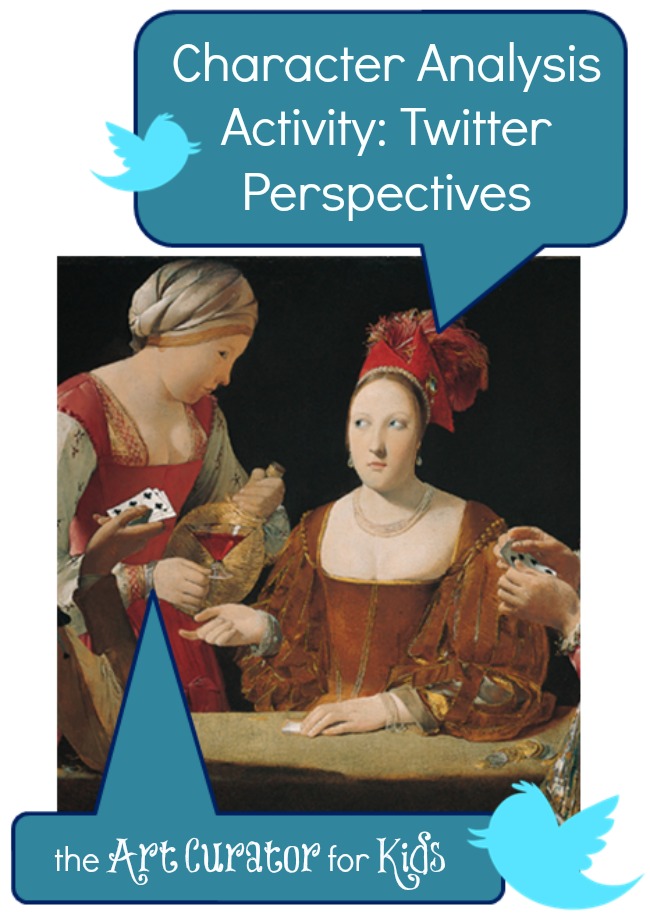
Twitter Perspectives

The Art Curator for Kids - Character Analysis Art Activity - Twitter Perspectives

This is a fun one, because I actually came up with the activity and wrote about it on the blog before I ever tried it with students. I have since tried it with several groups of students, and it was a total blast! The hashtags alone were hilarious. I did it this week with some kids using the work of Edvard Munch, and the kids had such a great time. Read more…

Free Worksheets!

Art Appreciation Worksheets

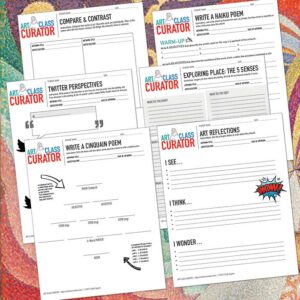
In this free bundle of art worksheets, you receive six ready-to-use art worksheets with looking activities designed to work with almost any work of art.

Download

Free Worksheets!

Art Appreciation Worksheets

In this free bundle of art worksheets, you receive six ready-to-use art worksheets with looking activities designed to work with almost any work of art.

Thanks for reading! What is your favorite no-fail art lesson in your classroom? Let me know in the comments!

Filed Under: Art Connection Activities


March 30, 2015 1 Comment

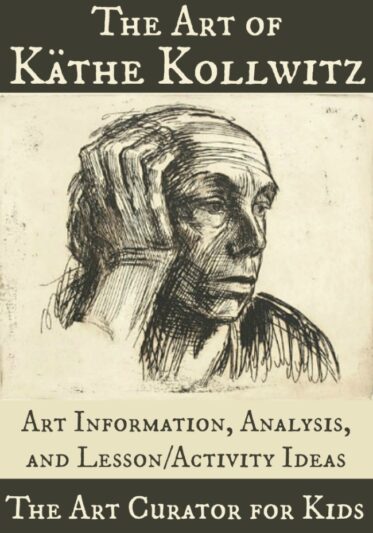
The Art of Käthe Kollwitz

The Art Curator for Kids - The Art of Kathe Kollwitz - Analysis and Lesson Ideas
The Art Curator for Kids - The Art of Käthe Kollwitz - Analysis and Lesson Ideas

My favorite type of art is art that expresses feeling–art that makes my breath catch in my throat, makes me gasp or cry, or makes my heart churn. These expressions of humanity and raw human emotion can be created in so many different ways by so many different artists from different times and places. One artist who work does this for me is an expressionist artist from the late 1800s and early to mid 1900s, Käthe Kollwitz. Experiencing art like hers is why I love art and dedicate my life to helping others experience art the way I do.

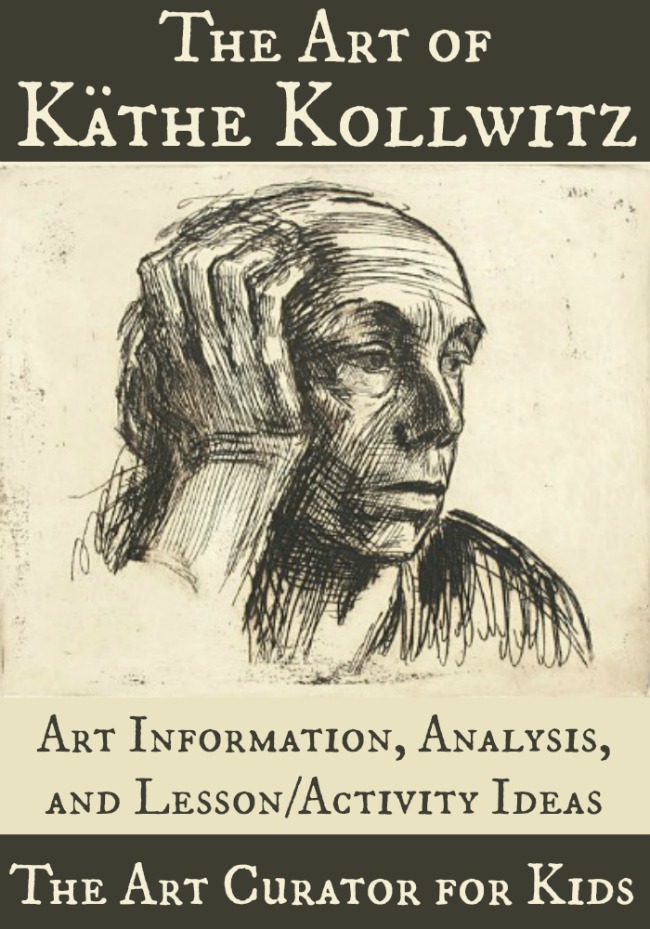
The Art Curator for Kids - Käthe Kollwitz, Self Portrait, Etching, 1921
Käthe Kollwitz, Self Portrait, 1921

Some of the below images are small. Please click them to view a larger image.

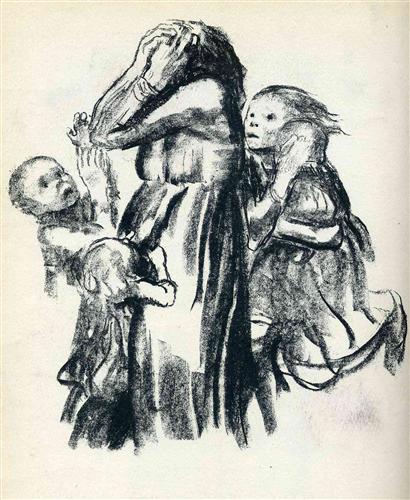
Käthe Kollwitz lived in Germany from roughly 1883 to her death in 1945 and dedicated her life to documenting the pain, suffering, and trauma of war. Even before World War I and World War II, which she lived and suffered through, she documents other hardships and human suffering such as the German Peasants’ War and others. She lost her son in World War I, and this solidified her stance as a pacifist and socialist.

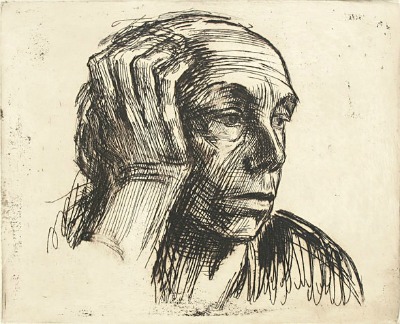
The Art Curator for Kids - Käthe Kollwitz, The Survivors, 1923
Käthe Kollwitz, The Survivors, 1923

It is my duty to voice the suffering of men, the never-ending sufferings heaped mountain-high. — Käthe Kollwitz

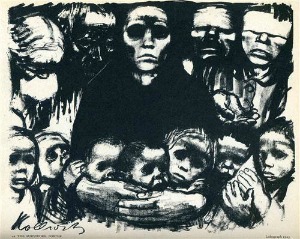
Her art is so simple, but so incredibly powerful. Her work is often drawings or prints of individuals or groups of people. There is often no setting or context, but you don’t need it. The expressions on the faces, the quality of the lines, the texture, and the absence of color capture the deep emotion of the figures in such a compelling way.

The Art Curator for Kids - Käthe Kollwitz, Young Girl in the Lap of Death, 1934
Käthe Kollwitz, Young Girl in the Lap of Death, 1934

Lesson and Activity Ideas

In my mind, there are three tracks of lessons you can take in your classroom with her work: using her art to support lessons on the World Wars, discussing her work to teach about expression in art, and using her work among others to teach about different elements of art and principles of design.

Expressionism Lesson

As I have mentioned, her artwork displays amazing expression of emotion. Have students study the work to analyze the artist’s choices. What artist choices did she make and how do the impact the emotion? Have students practice drawing different emotions using Kollwitz’s work as a guide. Give the students mirrors and let them practice expressing emotion on their own face.

You could also so some character analysis activities or creative writing exercises to analyze the emotions even further.

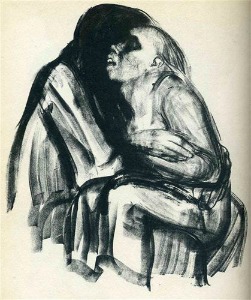
The Art Curator for Kids - Käthe Kollwitz, Killed in Action, 1921
Käthe Kollwitz, Killed in Action, 1921

While I drew, and wept along with the terrified children I was drawing, I really felt the burden I am bearing. I felt that I have no right to withdraw from the responsibility of being an advocate. — Käthe Kollwitz

Art Analysis with the Elements and Principles

Kollwitz’s work is masterful in its use of elements and principles of art. Have students analyze the works using the elements and principles worksheets in my Art Appreciation Printable Worksheet Bundle.

Art Appreciation Worksheet Bundle

This art worksheets bundle from the Art Class Curator includes 25 ready-to-use art worksheets for use with individual works of art. The worksheets for art in this document are designed to work with lots of different types of artworks, so you can just pick an artwork, print a worksheet, and start the activity. Each has instructions at the top and plenty of space to do the activity.

Buy Now

Here are some talking points for this activity and things your students may point out with this activity. Of course, let them discover these for themselves. I was looking at a large grouping of her work as a whole for this, so you could have students look at several of her works and look for commonalities with the use of elements and principles.

  • Line — The artist uses a variety of thick and thin lines to create texture, form, and expression. She varies the value of the lines as well.
  • Texture — The artist uses lines and shading to create on the faces to both add form.
  • Value — Dark areas highlight special focus areas like hardworking hands or sunken sad eyes.
  • Space — The negative space along the edges focuses our attention and doesn’t distract us from the main figure. She presses figures together in her artworks that include many figures leaving no personal space between them.
  • Color — The absence of color intensifies the emotion.
  • Emphasis — The artist uses line, value, and space as described above to emphasize the emotions of the figure.
  • Unity — The color and texture lines create a sense of unity. The whole artwork works well together.

History Integration

Art is a great way to study the impact on people and the emotions of history. Use these works when studying World War I and World War II. I’ve also written a post about Franz Marc’s Fate of the Animals which goes along with World War I. Have students look at both artworks and talk about how the different artists took the same emotions and themes and expressed them in two very different ways.

Filed Under: Art and Artists
Tagged With: kathe kollwitz


March 27, 2015 Leave a Comment

Creating Art Alongside your Children “En Plein Air”

The Art Curator for Kids - Painting en plein air for kids - Painting Outside - Kids Process Art

Today is my last Friday guest post! For the last two months, I have enjoyed so many diverse voices on the blog each Friday sharing experiences making art with kids. I love this guest post from Betsy Finn from BPhotoArt.com. Art is such a great way to connect together, and this is such a nice story of her experience making art with her family. Please be sure to check out Betsy’s blog after enjoying her post here. 🙂

The Art Curator for Kids - Painting en plein air for kids - Painting Outside - Kids Process Art

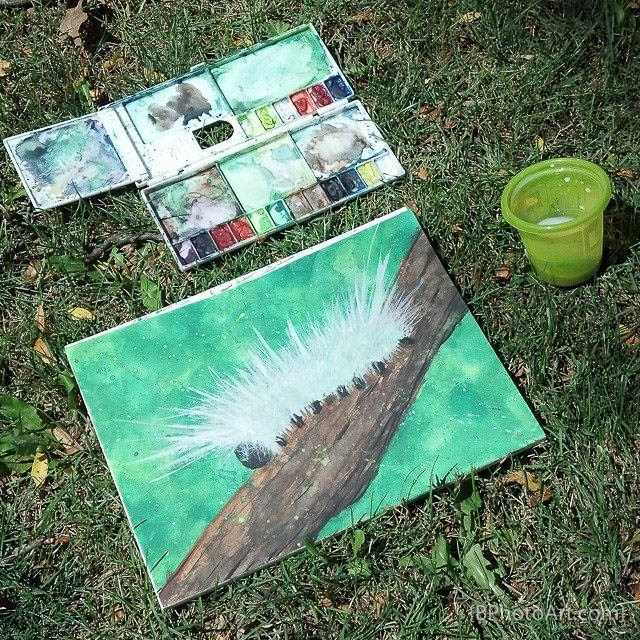
Art has been a part of my life for as long as I can remember. When I was a toddler, my grandfather would invite me to paint alongside him (read more about my memories of painting with Grandpa). He enjoyed using a variety of media, but I most remember him teaching me how to use watercolor paints and mix colors.

The Art Curator for Kids - Painting en plein air for kids - Painting Outside - Kids Process Art

Through my school years, I always enjoyed art classes, and my mom bemoaned the fact I would always come home with paint all over me. Many a nice outfit was ruined in this manner. Even as an adult, I’m still a messy artist. But I’m ok with that. Art has stuck with me all these years, and while my profession is now photography, I still enjoy using other media as a creative outlet.

The Art Curator for Kids - Painting en plein air for kids - Painting Outside - Kids Process Art

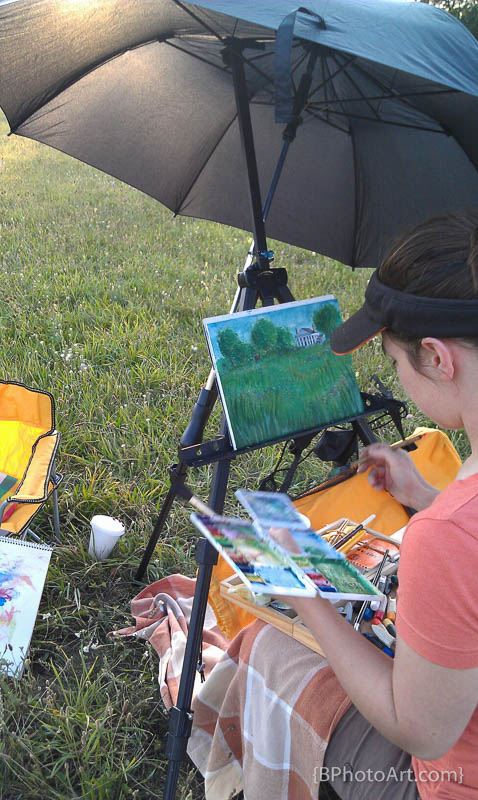
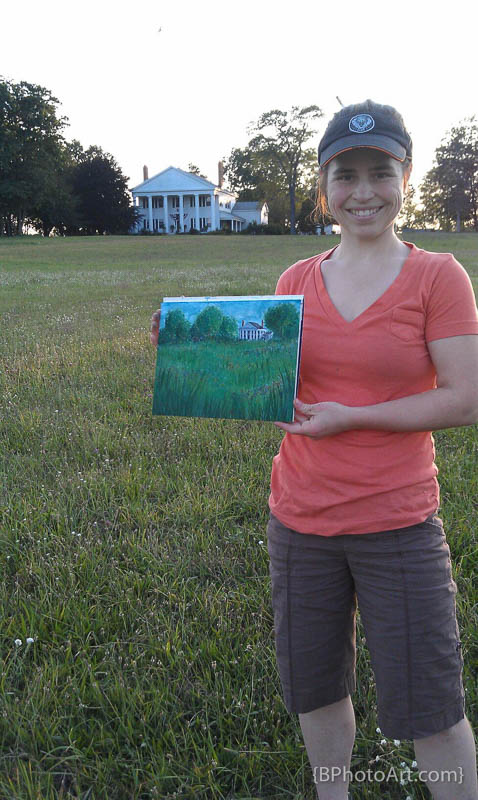
Several years ago, I joined a local artists’ association and heard about a plein air festival that was just getting started. In case you’re wondering “plein air? huh” — let me explain. Plein air means in the great outdoors, on location, painting what you see before your eyes, rather than from a photograph. If you’ve never created art “en plein air” …you’re missing out.

The Art Curator for Kids - Painting en plein air for kids - Painting Outside - Kids Process Art

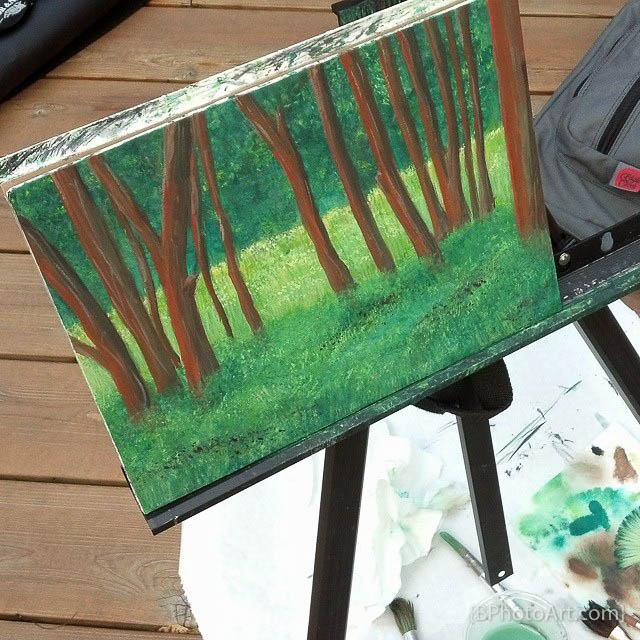
I’ve participated in the plein air festival for two years and plan to do so again this upcoming summer. The festival has some rules that I’ve had to work within (locations where you can paint, time frame for completing the paintings, etc), so it really was a great motivator. In one week’s time I was able to turn out several paintings that were a pleasure to create.

The Art Curator for Kids - Painting en plein air for kids - Painting Outside - Kids Process Art

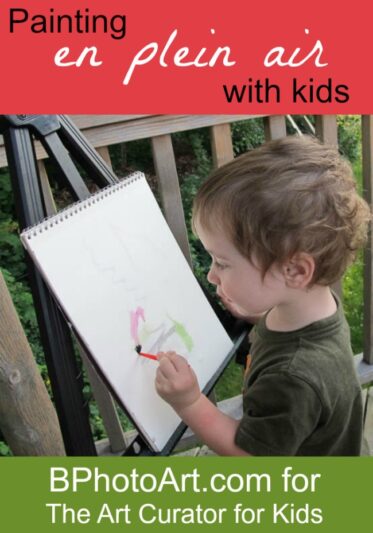
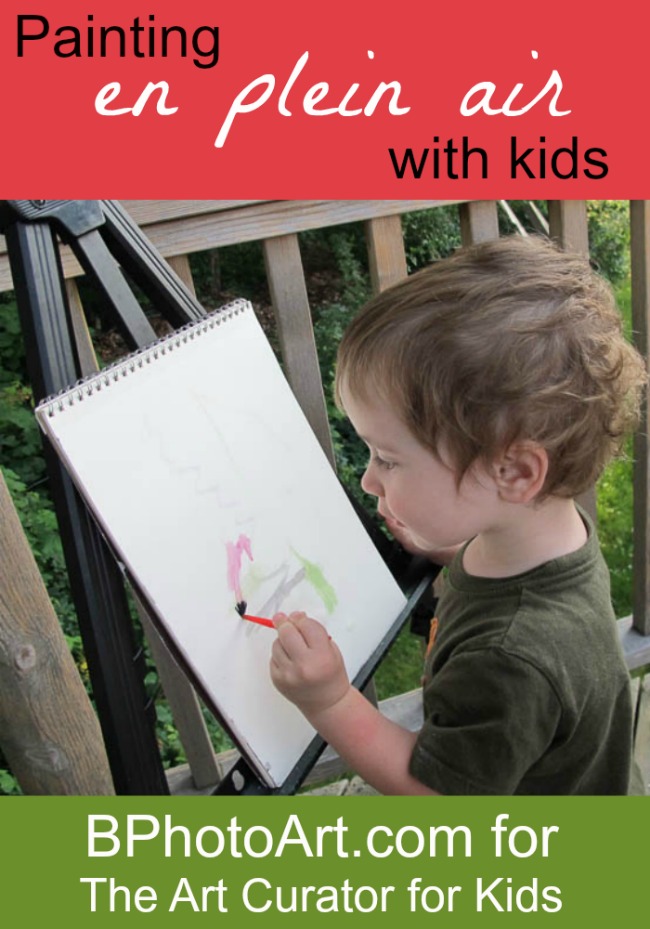
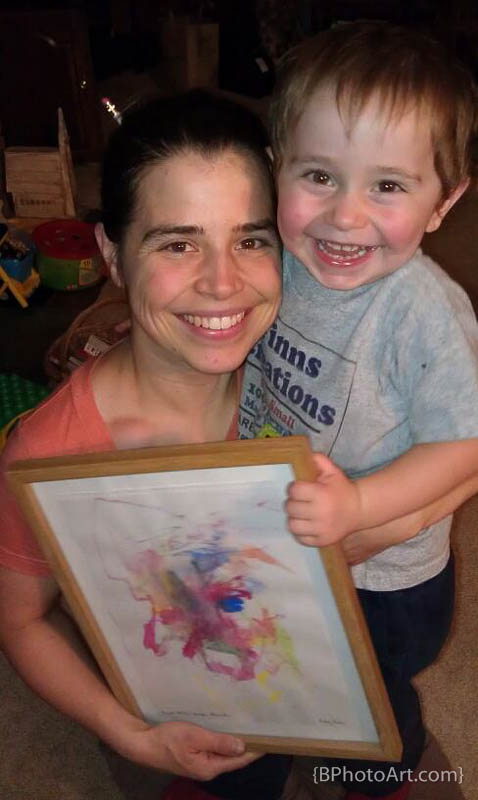
But what’s more, I included my son(s) in the process. The first year of the Plein Air Festival, my older son joined me, under the supervision of grandma. After a picnic lunch in the grass, we painted for several hours. Okay, I painted for that long; my toddler ate slowly, painted for a brief time, and then played cheerfully with his grandma. But he was excited to be making art with mom. We even framed his artwork, just like mom’s (all the pieces created during the festival were hung for a weekend-long show).

The Art Curator for Kids - Painting en plein air for kids - Painting Outside - Kids Process Art

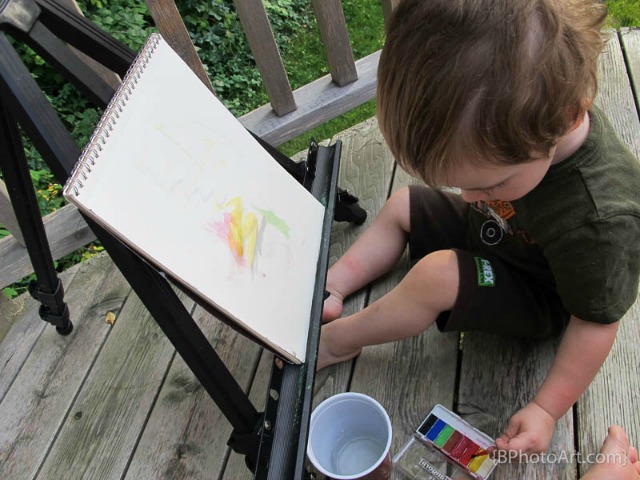
The next year, Grandma accompanied us again, and this time was gracious enough to help out with my toddler and the newly arrived baby. While my younger son slept, the three of us set up shop and painted. Again, my toddler didn’t paint the whole time, but he did enjoy the process, being outdoors, and having his own paper, paints, and brushes to use.

The Art Curator for Kids - Painting en plein air for kids - Painting Outside - Kids Process Art

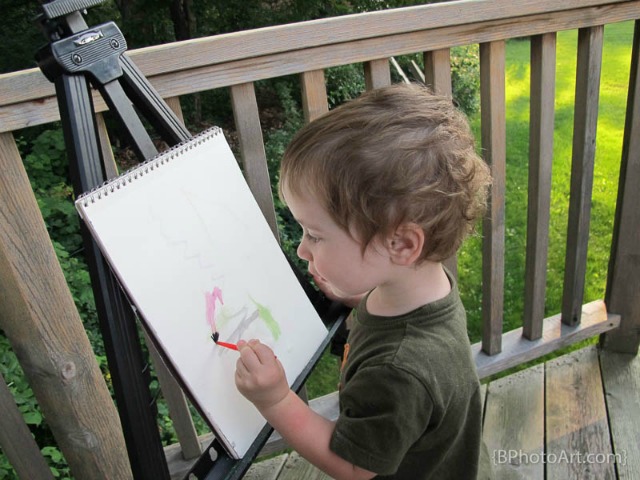
I love how my son has taken naturally to creating art alongside me. My plan of action has been simple.  I encourage and invite Toby to paint and create with me.  More often than not, it’s an unstructured activity.  I prefer projects that allow for creativity and out of the box thinking.  I don’t want to sit there and say “no you can’t put that color paint there.”

The Art Curator for Kids - Painting en plein air for kids - Painting Outside - Kids Process Art

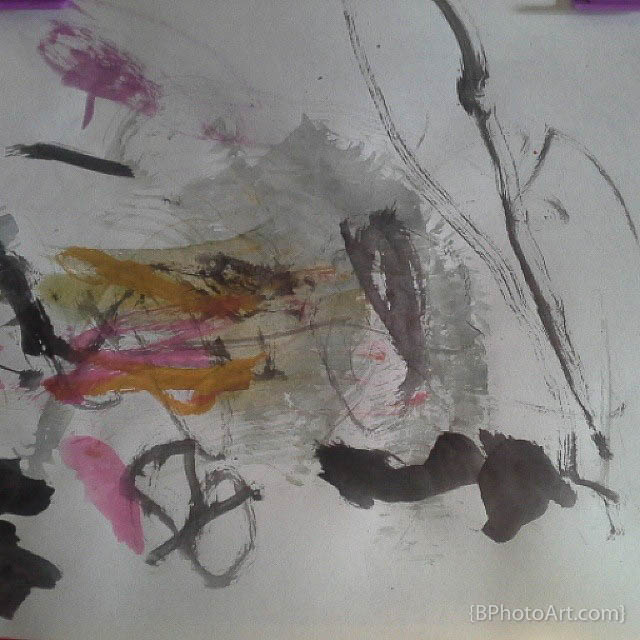
Often, we will paint outdoors — it eliminates my worry over keeping the mess contained, and then I can encourage my mess-conscious toddler to let loose and get messy as he creates.  And it’s tough when things don’t according to plan, but I try to remind myself that ultimately, the creation process is not an experience “for me” — but for my son.  It’s important to me that my toddler feels in charge and at liberty to experiment and try without worrying about doing things “right.”  It’s ok to let the plans go and go with the flow (I blogged about one such outdoor painting activity where the rain enhanced our creative experience).

The Art Curator for Kids - Painting en plein air for kids - Painting Outside - Kids Process Art

All in all, I am glad that my son loves to join me in my creative endeavors.

Betsy Finn, M.Photog.Cr.,CPP, lives with her husband, two boys, and two cats in Michigan In addition to being a full time mom, she has a portrait photography studio and enjoys capturing memories for her clients. Betsy blogs about life as a mom, activities that have caught the interest of her boys, capturing every day memories, and other parenting topics. Some of her most enjoyed posts are:

  • Finding Ways for Kids to Discover Nature,
  • The ABCs of Photography (an Educational Series for Kids)
  • 50 Things You Can Do With Your Toddler While Caring For Your Newborn

Betsy would love to connect with you via her site, BPhotoArt.com, or on social media: Twitter, Facebook, Instagram, G+, Pinterest.


Filed Under: Art Connection Activities


March 26, 2015 4 Comments

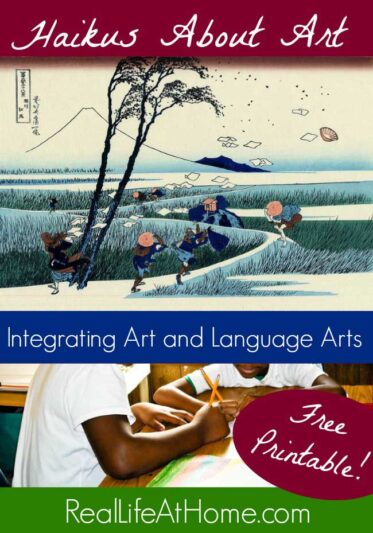
Haikus About Art

the Art Curator for Kids for Real Life At Home - Writing Haikus about Art with Kids - Integrating Art and Language Arts - Final

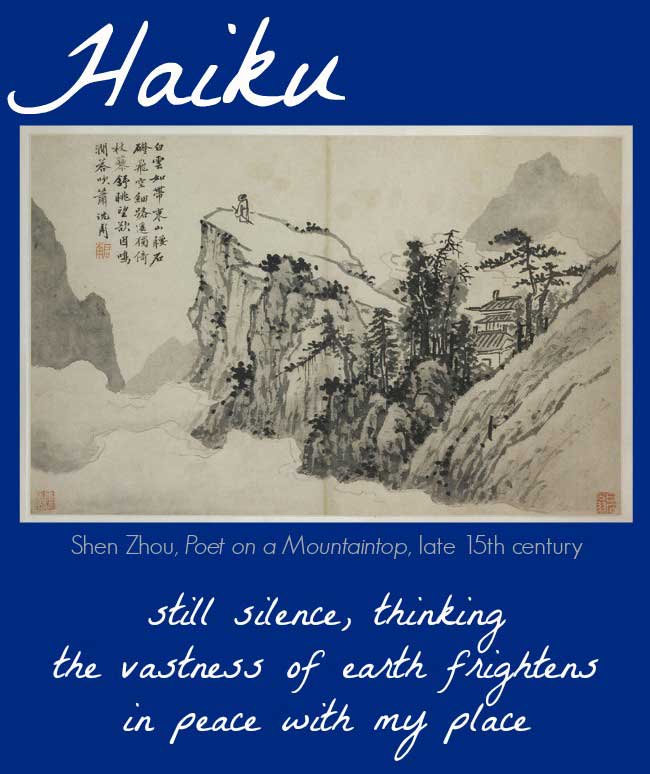
I’ve written before about how I have a couple lessons that always work in my classroom, and this is another one! Today, my first post as a contributing writer at Real Life at Home went live. In this post, you’ll learn about how I have students write haiku poems about works of art. It’s an amazing way to create personal connections to works of art. There is a free printable worksheet in this post as well, which you can get in the free worksheet bundle below!

Check it out here: Haikus about Art.

Free Worksheets!

Art Appreciation Worksheets

In this free bundle of art worksheets, you receive six ready-to-use art worksheets with looking activities designed to work with almost any work of art.

Download

Free Worksheets!

Art Appreciation Worksheets

In this free bundle of art worksheets, you receive six ready-to-use art worksheets with looking activities designed to work with almost any work of art.

the Art Curator for Kids for Real Life At Home - Writing Haikus about Art with Kids - Haiku Example2

Filed Under: Art Connection Activities


March 24, 2015 Leave a Comment

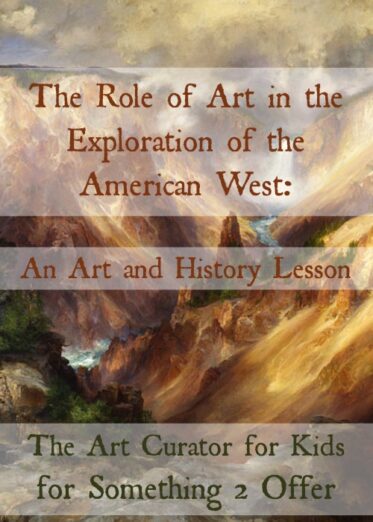
The Role of Art in the Exploration of the American West

The Art Curator for Kids - The Role of Art in American Westward Expansion

Today, I am participating in the ABC’s of American History series on Something 2 Offer.

abc-American-History-series-300x300

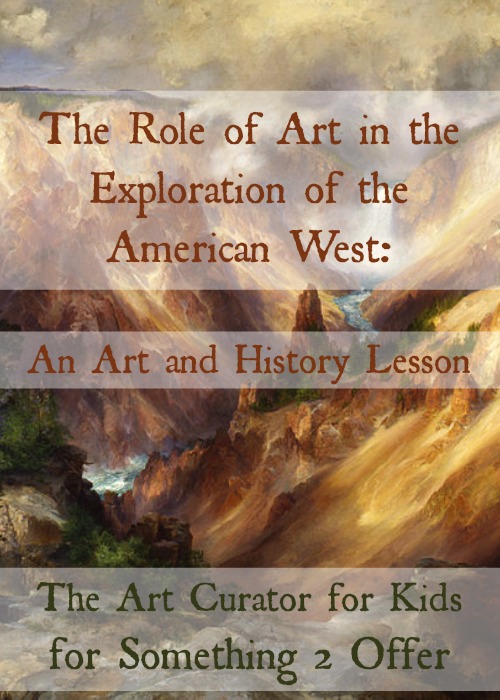
In the post, I talk about how painters and photographers traveled to the American West to document. The post is a lesson plan outline that includes both an art and writing project. Go check it out–L is for Landscapes: The Role of Art in the Exploration of the American West.

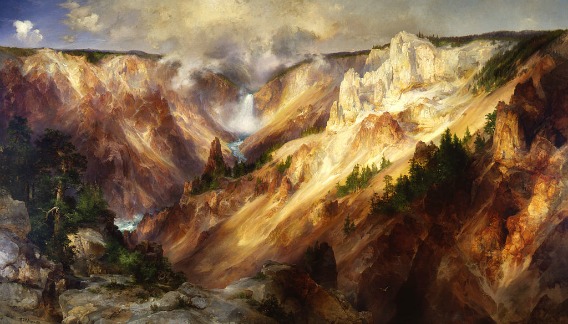
Here’s a little taste of the art you will learn about if you read the post. 🙂

Left: Lower Falls of the Yellowstone, William Henry Jackson Right: Grand Canyon of the Yellowstone (detail), Thomas Moran
Left: Lower Falls of the Yellowstone, William Henry Jackson
Right: Grand Canyon of the Yellowstone (detail), Thomas Moran

Thomas Moran, Grand Canyon of the Yellowstone, 1893-1901

Filed Under: Art and Artists
Tagged With: thomas moran, william henry jackson


March 23, 2015 7 Comments

Masterpiece Monday: Manifest Destiny Art with Printable

The Art Curator for Kids - Manifest Destiny in Art - Masterpiece Monday - John Gast, American Progress, 1872
The Art Curator for Kids - Manifest Destiny Art - Masterpiece Monday - John Gast, American Progress, 1872

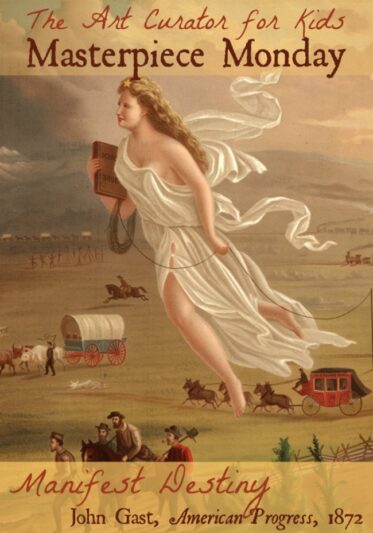
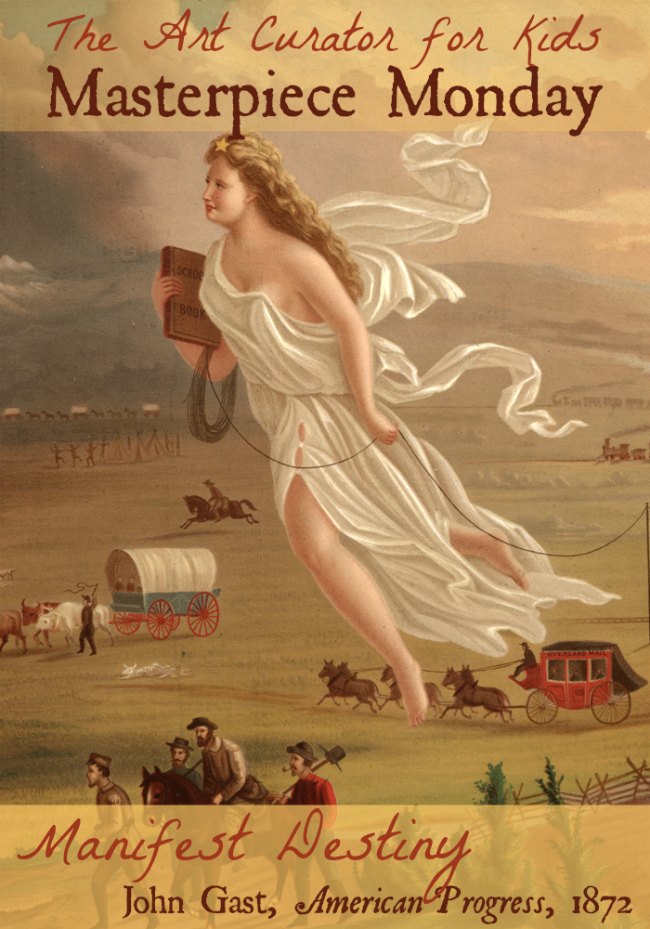
Today is Masterpiece Monday where I show you intriguing works of art and talk about how to use them with your students in your classroom or homeschool. I’ve chosen another great painting that works really well in history lessons. It is American Progress by John Gast. Take a look.

John Gast, American Progress, 1872, Manifest Destiny Art
John Gast, American Progress, 1872

This painting epitomizes the concept of Manifest Destiny in 19th-century America. In the 1800s, many Americans felt it was their justifiable, God-given duty to colonize the American west all the way to the Pacific ocean.

Art Discussion Questions

Take a look at this painting with your child and discuss it. You can use these tips for looking at art with kids. As always, don’t give any information about the painting or what it is about before discussing it with the kids. Let them figure it out for themselves.

Use these questions to guide your discussion.

  • What’s going on in this painting?
  • Compare and contrast the left side of the painting with the right side of the painting being sure to address the following areas: transportation, color, people, land, sky, animals, technology, emotions.
  • Which direction is everyone moving in the painting? Why? What does this represent?
  • Only one group of people look back in this painting. Who is it, and why are they looking back?
  • Who is the woman in the center? What is she doing? What is she holding? What might she symbolize?
  • What is the meaning or message of this painting?
  • What does this painting teach us about the people in 19th century America? How do you think this painting summed up the ideas and thoughts of the people at the time?

Art Analysis

You may have noticed that this is a very straightforward and easy-to-interpret painting. Everything in the painting is traveling to the left (the West). The floating, heavenly woman in the middle looks forward with purpose while she strings telegraph wire across the land. Trains and carriages take over while the Native Americans and animals scatter. The animals are domesticated on the right, and wild on the left. The white men confidently walk, while the Native Americans run and protest. Even the right side of the painting is lighter and brighter than the dark and untamed West. It is definitely clear how the Americans felt about the West.

Learning Activities

As I mentioned above, this is a great artwork to use in history lessons about Manifest Destiny. Here are some more activities you can do to use this artwork in your classroom.

Art Analysis Group Activity

Use this printable worksheet to have students analyze the painting:

John Gast, American Progress, 1872

Free Worksheet!

Manifest Destiny Art Interpretation Activity

Use this worksheet to explore the painting that epitomizes the concept of Manifest Destiny in 19th-century America.

Download

Free Worksheet!

Manifest Destiny Art Interpretation Activity

Use this worksheet to explore the painting that epitomizes the concept of Manifest Destiny in 19th-century America.

They can work alone or in groups to compare the left side of the painting with the right side.

Poetry Activity

If you’ve been reading my blog for a while, you know I love having students write poems about art. With this one, I think it would be fun doing an acrostic poem where you take a word and write a poem with the first letter of each line being a letter from the word. You could use WEST or MANIFEST DESTINY or something like that.

Point of View Writing Activity

Have students write from the perspective of characters in the painting.

  • Have students imagine they are traveling to the West and have them write letters back home.
  • Have students write about their experience as a Native American being pushed off their land.
  • Have students write from the perspective of the floating lady in the picture. What is she thinking about?

History Lessons

There are tons of lesson plans out there for history teachers. I did a search for “American Progress John Gast Lesson Plan” and come up with lots of resources!

Use this artwork in your classroom, and let me know how it goes in the comments!

Filed Under: Art and Artists
Tagged With: john gast


March 20, 2015 Leave a Comment

Notre-Dame of Paris

The Art Curator for Kids - Notre-Dame Cathedral of Paris

This is a guest post by Eolia Disler at La Cité des Vents (a blog in both French and English). I love this post because Gothic architecture might be my very favorite art period in all of art history. It is a close call, but it’s definitely up there! I also have a big announcement coming up on the blog in a couple of weeks, and this post is a big hint about what it might be! For those of you on my newsletter list, you’ve already gotten a couple of hints, so you can add this to those. 🙂 A huge thank you to Eolia. Please go visit her site and see all the wonderful cultural ideas and insight she has over there.

In September 2014, we spent a few days in Paris (my husband, my two children, and I) and for once we had the joy to be able to visit the interior of the cathedral Notre-Dame of Paris. When we lived in the Paris area, each time we wanted to show this church to my son this treasure of the Gothic French patrimony, a very long queue was waiting on the parvis.

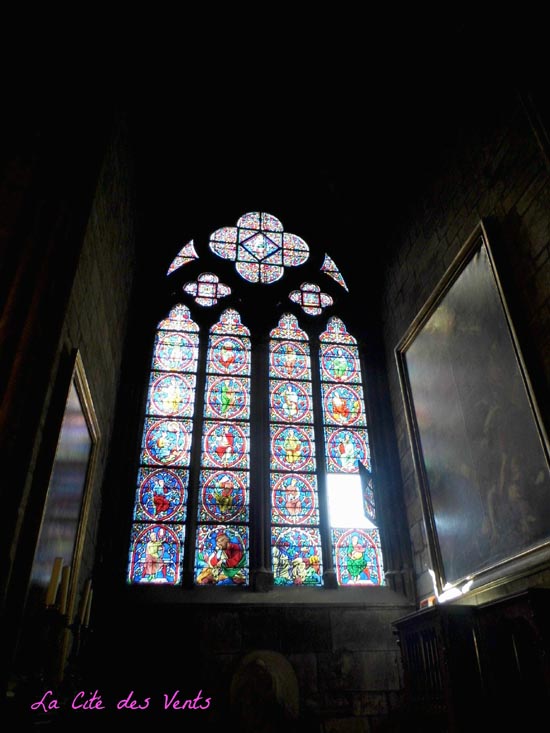
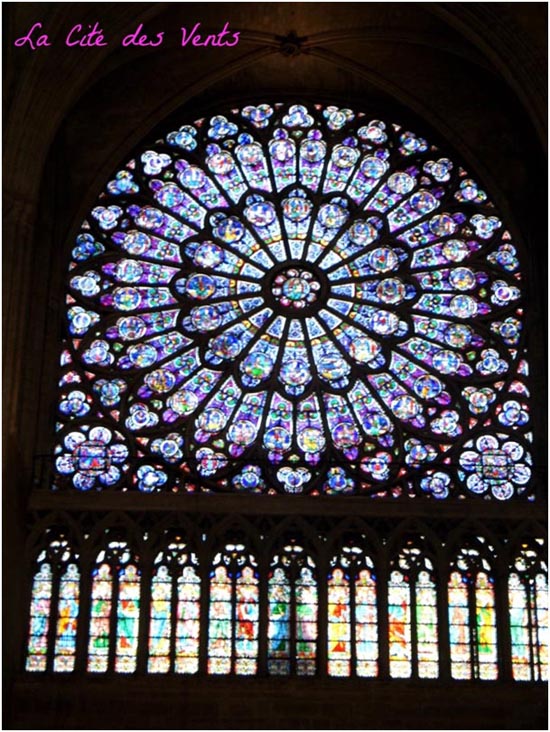
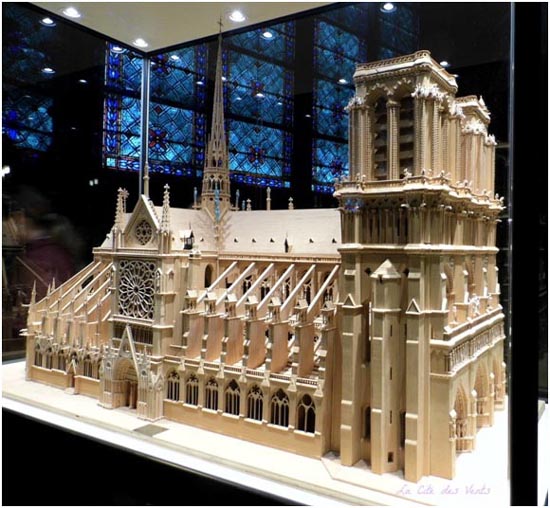
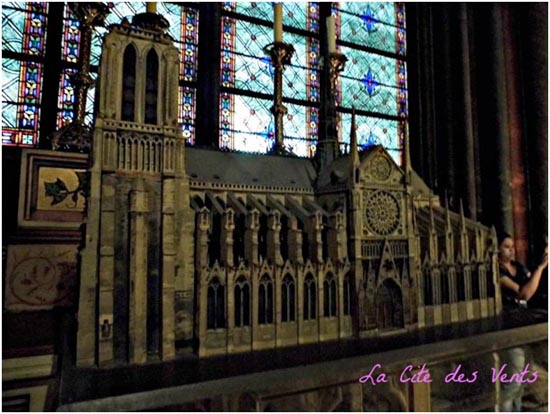
This time, at 1:45pm, we had only to wait 3 minutes, and we were in! My two kids gazed at the impressive high ceiling, the colorful stained glasses (they loved the ones with blue background), the statues and other sculptures and of course the models showing the cathedral that are exposed in one of aisle (near the souvenir shop).

Here is a quick account of that sunny early afternoon:

1 - The Art Curator for Kids - Notre-Dame Cathedral of Paris
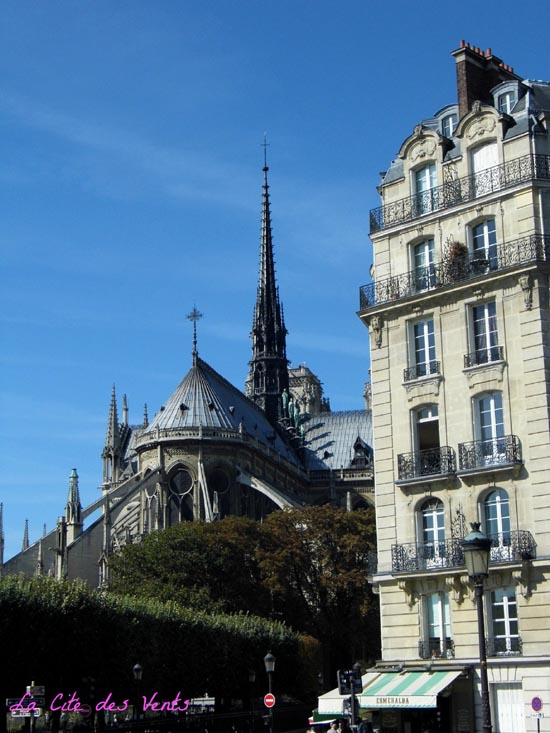
View from the bridge between Ile St Louis and Ile de la Cité

The Art Curator for Kids - Notre-Dame Cathedral of Paris
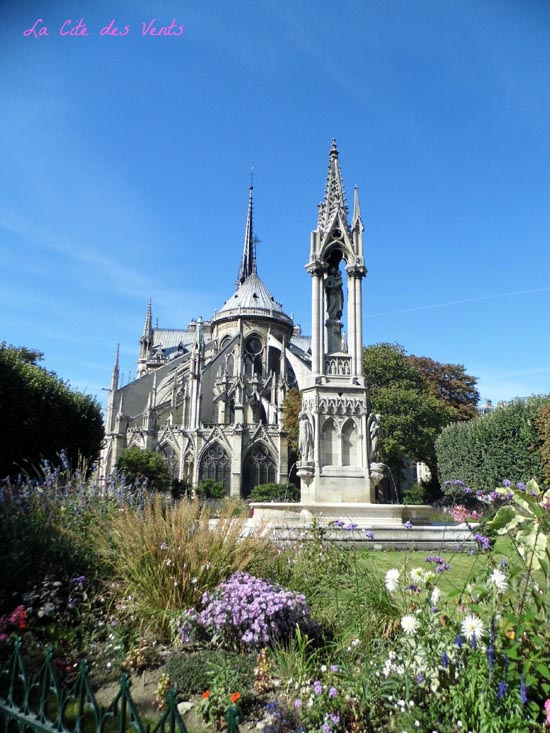
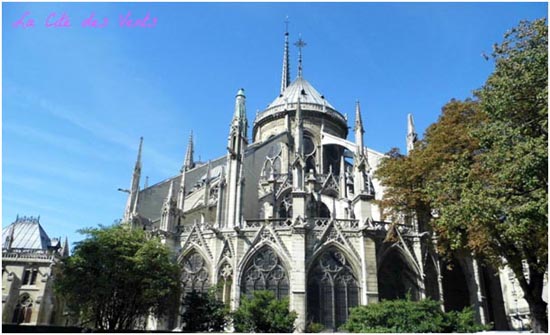
View from the Square Jean XXIII, the lovely park behind the cathedral

There are three spots for the children to play, and as they are under the trees, it’s a great place to have a rest when the weather is a bit hot. In 2012, the park won the 3rd place in the category Big gardens/parks of Paris for its floral decoration.

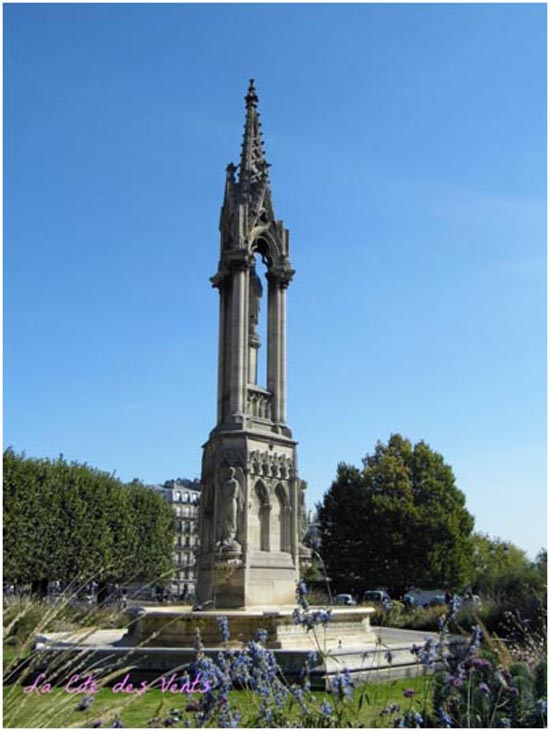
In the middle of the park, the fountain de la Vierge, sculpted in 1845 by Vigoureux in a Gothic style, complements beautifully the sight you have of the lacework and the flying buttresses’ abutments.

The Art Curator for Kids - Notre-Dame Cathedral of ParisThe Art Curator for Kids - Notre-Dame Cathedral of ParisHere’s another view of the Fontaine de la Vierge. Right across the street and at the end of the island, you have the smaller square de l’Ile-de-France where a memorial for the Martyrs of the Deportation has been erected.

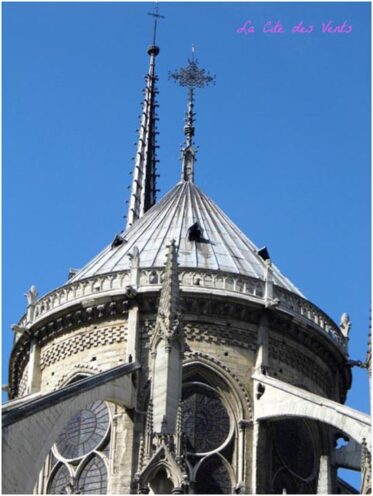
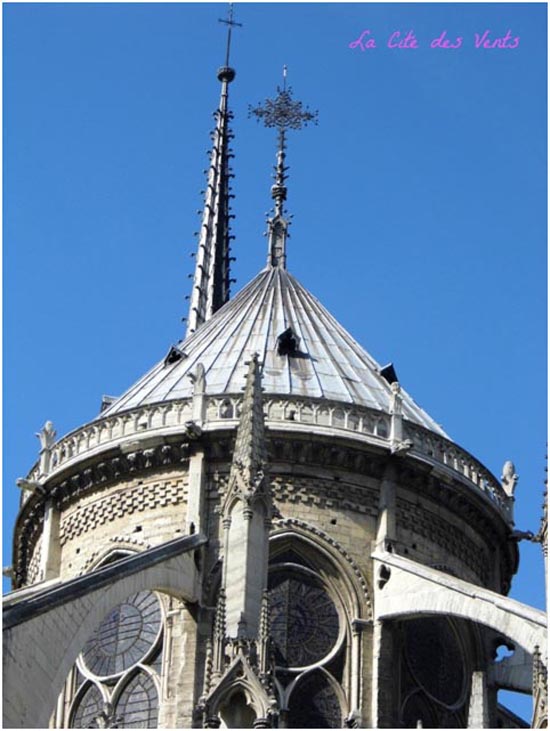
The Art Curator for Kids - Notre-Dame Cathedral of ParisAh! This roof, this spire and these stones looking like polished jewels.

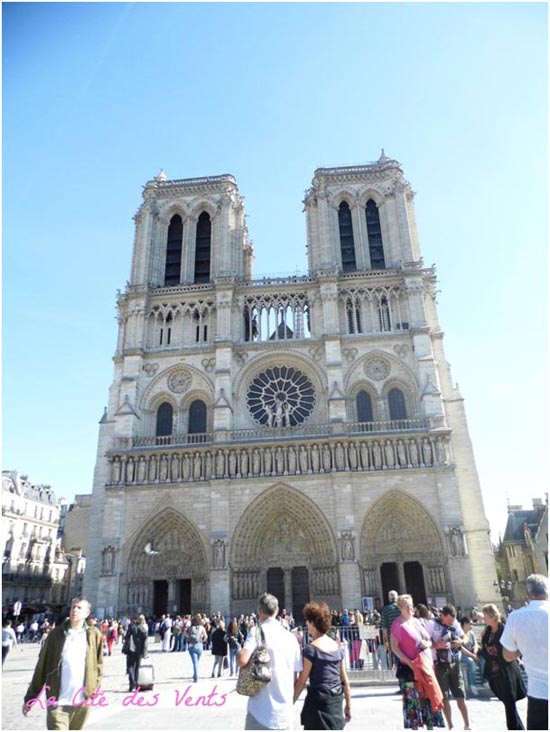
After a few rounds on the games, we gathered the kids and walk to the entrance of the cathedral, on the parvis. As you see in the photo below, there were not many people for such a lovely day (no, I’m not joking!) and I had the time to show to my nearly 6 years old son the portals and the rest of the west façade. I didn’t explain all the details; he was too busy annoying his sister. But have a look at the two links above, you will learn a great deal!

The Art Curator for Kids - Notre-Dame Cathedral of Paris

The cathedral started to be built in 1163 and was completed a century later. Four architects supervised the site. During the 19th Century, Viollet-le-Duc completed some restorations and added the spire. The cathedral is dedicated to Mary, mother of Jesus, who is an important figure of Catholicism.

The Art Curator for Kids - Notre-Dame Cathedral of Paris

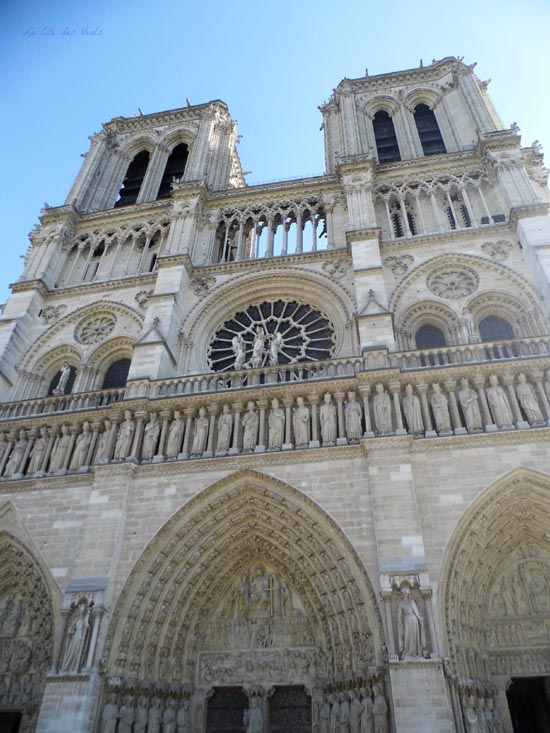
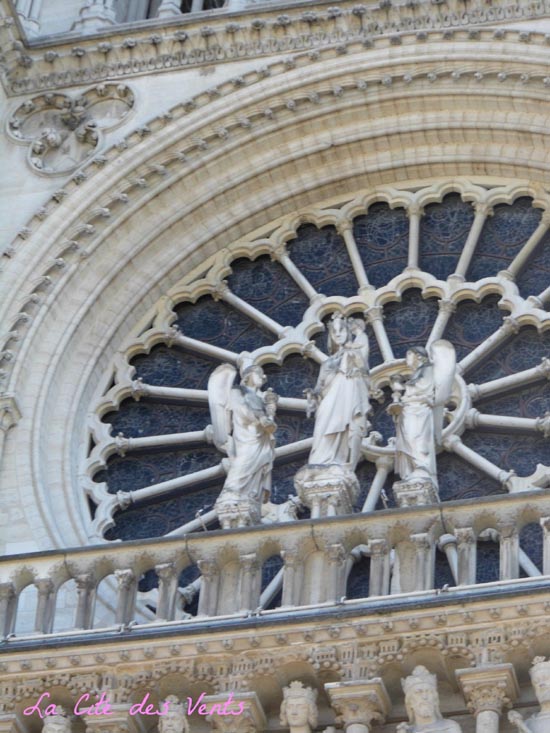
The Kings gallery up the portals (in the middle, the Portal of the Last Judgement), and in front of the rose the statues of the Virgin Mary with Jesus as a child between two angels. You can also see the statues of Adam and Eve on the same gallery as the Virgin Mary. The west façade has been built between 1200 and 1250 AD by two different architects.

The Art Curator for Kids - Notre-Dame Cathedral of ParisThe Virgin Mary presenting the child Jesus.

The Art Curator for Kids - Notre-Dame Cathedral of Paris
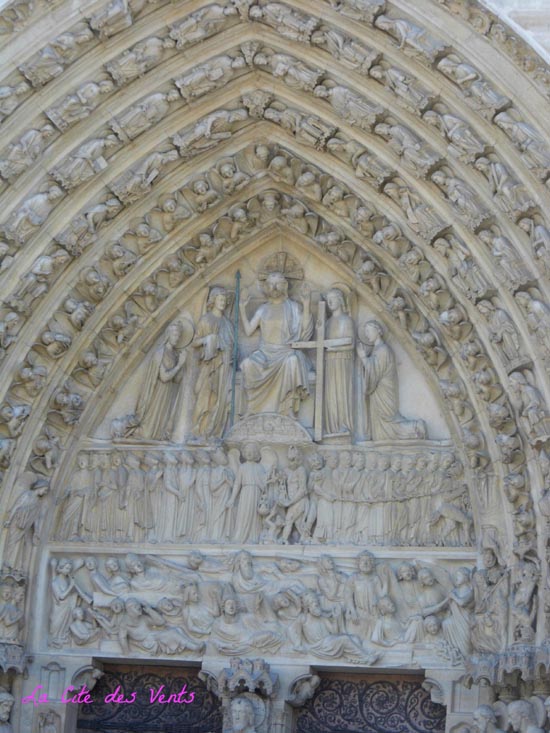
Portal of the Last Judgement

Portal of the Last Judgement: will you go to the Paradise (left side of the picture, but right side of Jesus) or to Hell (on the right side of the picture, but the left side of Jesus)? Don’t forget to look at all the angels surrounding the scene!

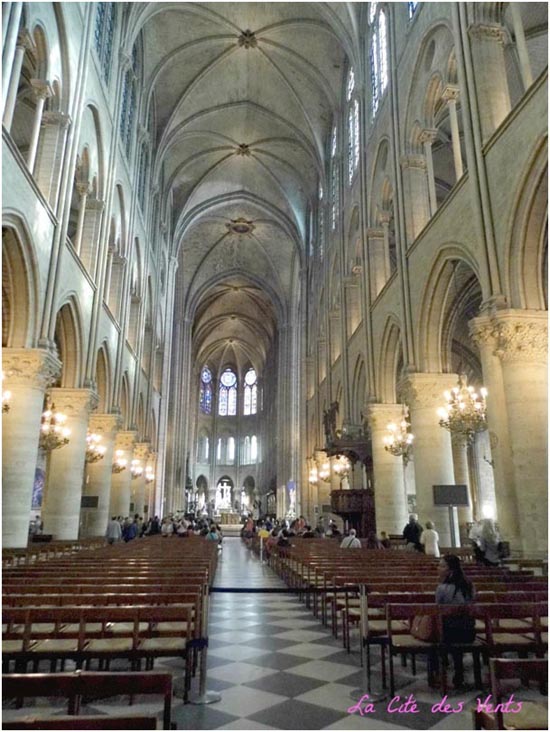
I love the inside of this cathedral: when you come into the building, you’re stumped by the height of the ceiling. You feel small, and that’s totally what was intended by the architects! It’s to make the believers know that they are just tiny specks in the eyes of God and eternity. Not that I really believe in this conception, but it was how the Catholic Church thought in the Middle Age and wanted their parishioners to think too. The more high you reach, the more light you will find. Heavens with the stained glasses and Earth with the more dark parts of the church, big pillars for the mortals and light arcs for where the angels dwell.

The whole architecture of the cathedral is meant to represent a specific conception of the order of the world, the way humans have to behave to be redeemed and how God manage the Universe.

The Art Curator for Kids - Notre-Dame Cathedral of Paris

The Art Curator for Kids - Notre-Dame Cathedral of Paris

The Art Curator for Kids - Notre-Dame Cathedral of ParisThe official website of the Cathedral is full of information: history, architecture, practical information, spiritual topics and daily life of the church, visits, etc. You will find many photos and pictures, historic facts, and architectural drawings. But what your kid will mostly enjoy is the special website for the children! Yep, they dedicated pages for the young visitors! You can even send drawings of the cathedral and they will be published on the website.

I can’t finish my post without talking of one of the best attraction for the kids (and the grown-ups too!): the models of the cathedral. There are three of them. When you don’t have the ability of flight, you can’t examine the whole building. However, with these models, you can inspect all the aspects of the exterior structure. You will also observe how the cathedral was built with a historical reenactment of the construction!

The Art Curator for Kids - Notre-Dame Cathedral of Paris

14 - The Art Curator for Kids - Notre-Dame Cathedral of Paris

If you want to see more pictures about Notre-Dame, you can look at these links:

  • Notre-Dame of Paris, by Travel Yes Please! Beautiful pictures and historical information.
  • The River Seine, Paris, France by the Wanderblogger A journey on the river Seine in Paris.
  • Notre-Dame, by Gunters abroad. Photos of the interior of the cathedral.

Eolia Disler is a blogger at La Cité des Vents, her blog in both French and English! She writes about her family life as a French mom expat near Frankfurt, Germany.

Filed Under: Art and Artists


  • Previous Page
  • Page 1
  • Interim pages omitted …
  • Page 27
  • Page 28
  • Page 29
  • Page 30
  • Page 31
  • Interim pages omitted …
  • Page 38
  • Next Page

Primary Sidebar

Hi! I’m Cindy Ingram, the creator of Art Class Curator and The Curated Connections Library

I’m on a mission to revolutionize education with the power of life-changing art connections. Art is not “extra”. Art is essential. We are empowering teachers to bridge the gap between art making and art connection, kindling a passion for art that will transform generations.

More About Me

Free Worksheets!

-Free Bundle of Art Appreciation Worksheets-

In this free bundle of art worksheets, you receive six ready-to-use art worksheets with looking activities designed to work with almost any work of art.

Download

Free Worksheets!

-Free Bundle of Art Appreciation Worksheets-

In this free bundle of art worksheets, you receive six ready-to-use art worksheets with looking activities designed to work with almost any work of art.

Enrollment in Curated Connections Library is currently open. Click here to join. Join our list to get more information and to get a free lesson from the vault! If you are purchasing for a school or school district, head over here for more information.

Check Out What’s New In The Shop

Experience Art: Engaging Art Criticism Discussions and Activities for Teachers and Students of All Ages
Call to Art: An Un-Conference for Art Educators
Curated Connections Library Membership
Perspectives High School Curriculum

More Products

Have You Listened to the Latest Podcast Episode?

Falling for Naudline Pierre’s Evocative Art: A Conversation with Madalyn (Part 2)

More Episodes

Testimonials

I like how this program, unlike other art class resource membership programs, feels authentic. It's like art matters more here, and not fancy flash-in-the-pan trendiness. The goal of Art Class Curator seemed to be helping kids develop a lifelong love and art appreciation versus "Hey, look. I painted this fish."
Erin A.
Your questions are helping me to delve into much deeper learning, and my students are getting better at discussion-and then, making connections in their own work. Art Class Curator is awesome!
Denise W.
Interestingly, my lower performing classes really get engaged in these [lessons] and come away with some profound thoughts!
Melissa G.
I had the most amazing 6th grade class today. They were jumping out of their seats with hands raised just to respond and give input. It was as if I was waving candy in front of them! They saw more and more and the ideas and interpretations unfolded. So cool!!! This is what makes teaching art so wonderful – thank you!!

Caroline G.
I just wanted to thank you for the invaluable resource you have through Art Class Curator. Not only do you have thought provoking activities and discussion prompts, but it saves me so much time in preparing things for myself! I feel like I’ve only scratched the surface with your site.
Maryjane F.

Get Art Inspiration To Your Inbox!

Enter your email address to get regular art inspiration to your inbox
plus a BUNDLE OF 6 FREE WORKSHEETS!
We hate SPAM and promise to keep your email address safe.
Download

Free Worksheets!

*Free Bundle of Art Appreciation Worksheets*

In this free bundle of art worksheets, you receive six ready-to-use art worksheets with looking activities designed to work with almost any work of art.

Copyright © 2026 Ignite Art, LLC DBA Art Class Curator •  All rights reserved  •  Privacy Policy  •  Terms of Service  •  Site Design by Emily White Designs