• Skip to main content
  • Skip to primary sidebar
  • About
    • About Art Class Curator
    • Contact
    • Speaking
    • Media & Press
    • Programs for Schools
  • Blog
  • Podcast
  • Shop
  • Join
  • Member Login

Art Class Curator

Hands-on and Minds-curious Art Learning

  • Art & Artists
  • Art Connection Activities
  • Art Teacher Tips
  • Elements & Principles
  • Downloads & Resources
Home
  • About
    • About Art Class Curator
    • Contact
    • Speaking
    • Media & Press
    • Programs for Schools
  • Blog
    • Art & Artists
    • Elements & Principles
    • Art Connection Activities
    • Art Teacher Tips
    • Downloads & Resources
  • Book
  • Podcast
  • Shop
  • Join
  • Member Login

All Posts from Art Curator for Kids

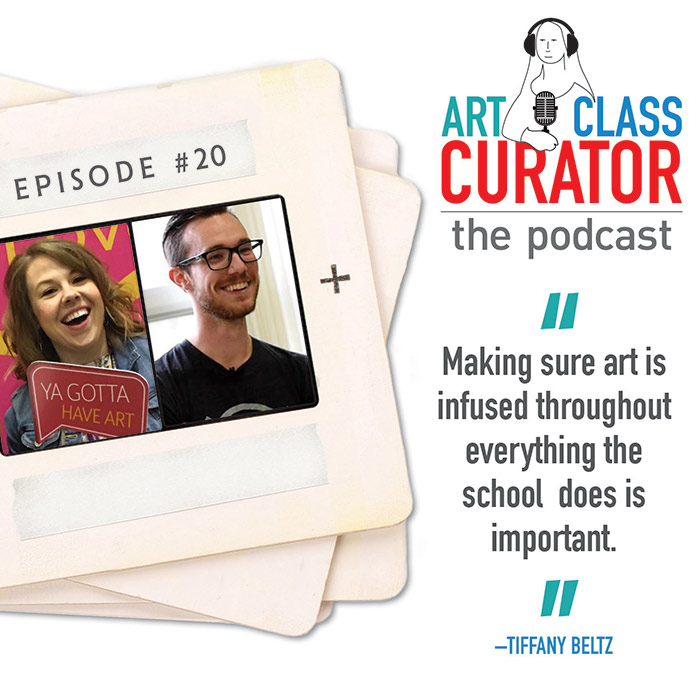
Arts Leadership with Tiffany Beltz and Devon Calvert

Most teachers know that when they leave school their work is not finished. Sometimes there are papers to grade, lessons to plan, and evaluations to give, etc. Devon and Tiffany are two examples of teachers sharing their passion for the arts. Outside of being art teachers in the classroom, they’re both actively involved in the Wisconsin Art Education Association. Listen to how they advocate art in any given situation and how you can too. 
Show Highlights:

  • Devon and Tiffany share their roles in planning and graphic design
  • How to get involved with the Wisconsin Art Education Association (WAEA)
  • The election process to becoming a member of the board
  • The importance of networking with other art teachers
  • The opportunities the WAEA’s annual fundraiser provides
  • How Devon and Tiffany’s art leadership carries over to the school level
  • Ways to be an advocate for Art Education
  • The art pieces that inspired Devon and Tiffany most
  • Ways to get others to take art, and your artwork, seriously

Links Mentioned in the Show:

  • Devon’s Website
  • Wisconsin Art Education Association   

Subscribe in Your Favorite Podcast Listening App

Subscribe and Review in iTunes

Have you subscribed to the podcast? I don’t want you to miss an episode and we have a lot of good topics and guests coming up! Click here to subscribe on iTunes!

If you are feeling extra kind, I would LOVE it if you left us a review on iTunes too! These reviews help others find the podcast and I truly love reading your feedback. You can click here to review and select “Write a Review” and let me know what you love best about the podcast!
View in iTunes

Filed Under: Podcast


Highly Sensitive Teachers with Amber Jordan and Monica Wright

highly sensitive teachers

As teachers, as coworkers, and even as humans, we want people to know that we’ve got it together, that we don’t need any help. “No, thank you, I’m fine. “ One thing we don’t talk about enough is anxiety, especially in highly-sensitive introverts. Today, Monica Wright & Amber Jordan are here to share their experiences with anxiety and the classroom. Coping mechanisms can be anything from the way the lights are adjusted in the classroom to having marked personal space between you and student. Join us as we share and connect as highly-sensitive introvert teachers.   

Show Highlights:

  • How to deal with a highly-sensitive introvert with anxiety
  • Amber shares how she’s able to hide her introvert tendencies in public
  • What exactly does “highly-sensitive person” mean?
  • How to deal with constant noise in the classroom
  • How to set the mood/tone of your classroom from the first day
  • What you should do the first 3 weeks of school that will help in the long run
  • The biggest thing that’s helped Amber the most
  • Embrace change in order to find where you truly fit
  • Monica shares her coping mechanisms at public events
  • Giving students the space to be heard

Links Mentioned in this Episode:

  • Highly-Sensitive Person Self-Test
  • How to Liberate yourself from Social Anxiety  

Subscribe in Your Favorite Podcast Listening App

Subscribe and Review in iTunes

Have you subscribed to the podcast? I don’t want you to miss an episode and we have a lot of good topics and guests coming up! Click here to subscribe on iTunes!

If you are feeling extra kind, I would LOVE it if you left us a review on iTunes too! These reviews help others find the podcast and I truly love reading your feedback. You can click here to review and select “Write a Review” and let me know what you love best about the podcast!
View in iTunes

Filed Under: Podcast


September 10, 2018 Leave a Comment

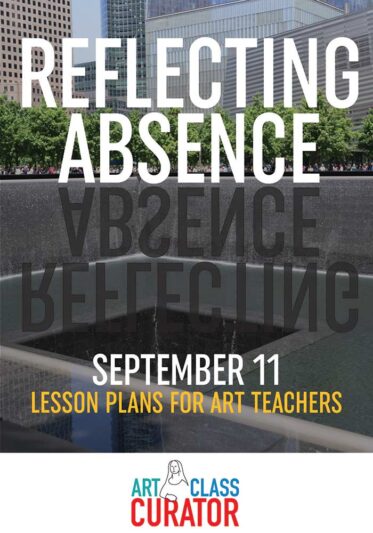
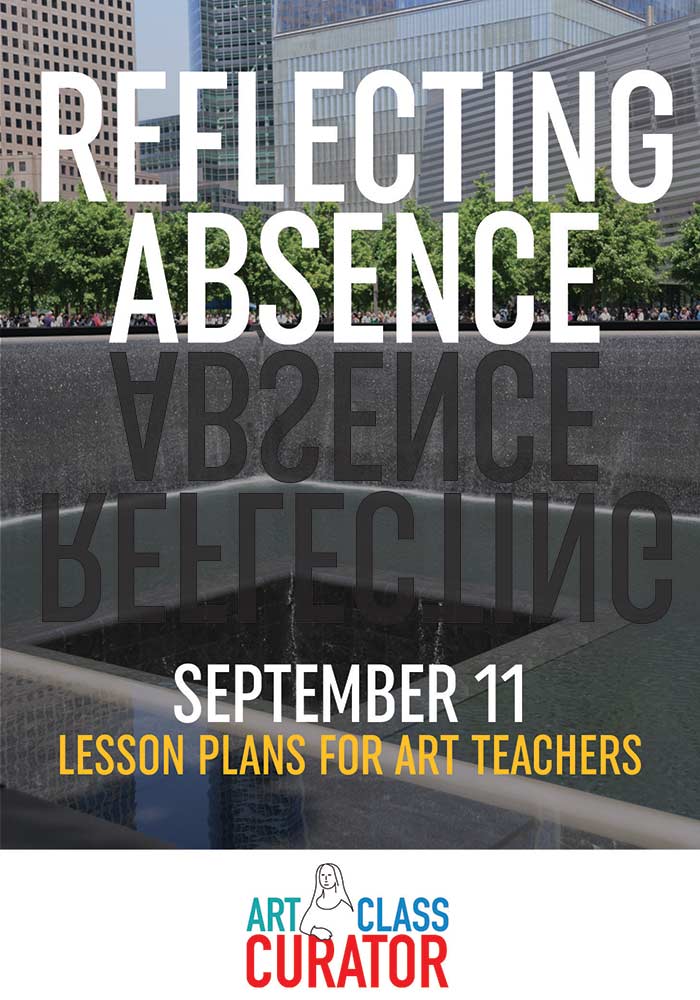
Reflecting Absence: September 11th Lesson Plans for Art Teachers

September 11th Lesson Plans for art teachers

Inside: September 11th lesson plans for art teachers focused on the 9/11 Memorial. Plus, the many reasons why it is important to teach about the attack in art class.

September 11th Lesson Plans for art teachers

Your students have no memories of September 11, 2001.

It is easy to discount the amount of time that has passed for an event that looms so large in our own memories, but it’s true. The largest foreign attack on American soil in living memory is no more than a horrific story to our children. The wars it sparked continue, and it is important that our students have an understanding of the complicated cause and effect that the attack on the World Trade Center has had on their lives. The impact is so great that many of our students are likely to spend their lives fighting a war that started before they were born. Given that fact, it is vital that they connect with the event on a human level so that they can become better, more informed citizens.

9/11 Memorial

Choosing a time close to the anniversary for September 11th lesson plans helps add a sense of connection and history. Reflecting Absence, better known as the 9/11 Memorial and designed by Michael Arad & Peter Walker, offers an excellent opportunity to discuss how art is used to remember, educate, and heal.

September 11 Lesson Plans Art Teachers

Though most of us will never take a class to the 9/11 Memorial in person, the sensory impact is powerful even without visiting Ground Zero.  Students can explore the Memorial on Google Maps. This video shares a personal story, as well as footage from and information about the 9/11 Memorial. You can share videos of the pools from both day and night so your classes can experience how the size and openness make you feel small but united and how the fall of the water drowns out the sounds of the city while encouraging quiet reflection.

September 11 Lesson Plans Art Teachers

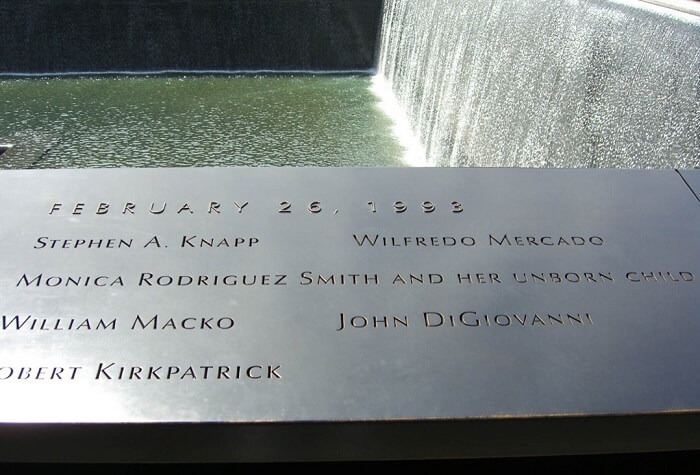
The names of the men, women, and children killed in the attacks of September 11, 2001 and the 1993 World Trade Center bombing are inscribed in the bronze parapets bordering the twin Memorial pools. Each of the pools cover nearly an acre and are the largest manmade waterfalls in North America. The pools are simple, stoic, and deep, making it impossible not to consider the chasm left by those who died that day and the gravity of everything that followed.

September 11th Lesson Plans

There is no reason for September 11th lesson plans to be the sole purview of history class. Our students need more than dates and facts. They need faces, stories, and emotions. Art allows us to contextualise tragedy, personally connect with the past, and give meaning to our grief. Don’t hesitate to shape the lesson plans offered on the 9/11 Memorial website to fit your art classroom.

The pools could easily tie into a unit on historical memorials from the United States or around the world. Older students would benefit from designing their own memorial for 9/11 or another historical event.

September 11 Lesson Plans Art Teachers

Get the Full Lesson!

This Lesson is in The Curated Connections Library!

Find the full lesson from this post along with hundreds of other art teaching resources and trainings in the Curated Connections Library. Click here for more information about how to join or enter your email below for a free SPARKworks lesson from the membership!

Join the List

Get the Full Lesson!

This Lesson is in The Curated Connections Library!

Find the full lesson from this post along with hundreds of other art teaching resources and trainings in the Curated Connections Library. Click here for more information about how to join or enter your email below for a free SPARKworks lesson from the membership!

Classroom Connection

A classroom art discussion about the 9/11 Memorial will allow students to connect with their peers and view the art from different perspectives. Here are some questions and suggestions to get you started:

  • What is a memorial?
  • Look at the photo of the monument and describe it.
  • What choices did the artists make?
  • Go through each element of the design and ask the students to discuss what emotional meaning and impact each part might have.
  • How did the artists want you to feel when visiting this site?
  • How would it feel to visit this site?

By asking our students to consider what a memorial is, as well as the emotional and historical purposes it serves, they are able to delve more deeply into their own reaction to both the art and the event itself.

September 11 Lesson Plans Art Teachers

Interpretation Activity

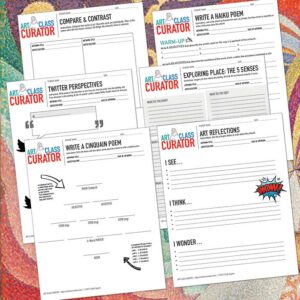
Even younger students will be able to appreciate and consider the sensory impact of the 9/11 Memorial, so it pairs well with The 5 Senses worksheet. Students explore the setting of the artwork through their imagined sensory experience. It’s a great way to add a writing component to your September 11th lesson plans.

You can get the worksheet as a part of the 25 Art Appreciation Worksheet Bundle or as one of the 6 free worksheets you receive when you sign up for our newsletter.

Free Worksheets!

Art Appreciation Worksheets

In this free bundle of art worksheets, you receive six ready-to-use art worksheets with looking activities designed to work with almost any work of art.

Download

Free Worksheets!

Art Appreciation Worksheets

In this free bundle of art worksheets, you receive six ready-to-use art worksheets with looking activities designed to work with almost any work of art.

There are many ways to connect with the past and world events, but few offer the internal experience and external connections forged through public art and memorials. I hope you’ll take the time to expose your students to these artworks so that they may become more thoughtful, empathetic individuals.

This week on the podcast, I spoke about Art in Times of Tragedy. Have a listen:

Subscribe in Your Favorite Podcast Listening App

Filed Under: Art and Artists
Tagged With: michael arad, peter walker


Art in Times of Tragedy

Today on the Art Class Curator Podcast, I share a personal story about a recent art encounter that called me to action and helped me cope with a profound tragedy. Please join me in considering how art in times of tragedy can console and restore us. Find out what you can do to help your students utilize art to connect, heal and take action. If you want an example of how art can change your life, listen to this episode. I am a dedicated teacher that strongly believes that art can help people deal with the tragedies that we see in today’s society. I want to help children use art as a way to feel less alone in this world. Children need more exposure to art in order for them to make a personal connection and use it as a tool to move through grief.  

Show Highlights:

  • The recent tragedies that schools are facing in today’s society. How has it affected schools, art teachers and students?
  • How art can help people through these situations and how art provides solace.
  • Her trip to see Hamilton in Houston after the tragedy in Santa Fe, Texas and the description of the musical and its impact on her.
  • Cindy talks about the podcast “Harry Potter and the Sacred Text” and how it connects to some tragedies that are happening today.
  • Art can be a comfort tool and we can teach children to use art in this way.
  • Finding ways for non-artistic kids to connect with art, find deeper meaning in art, and see themselves in a work of art.
  • How to use art to cope with tragedies, release stress and how to connect art in your life.
  • The need for teachers to talk to students about these tragedies and issues and the idea that using art is a safe way to do this.
  • Special Guest Speaker, “Jim O’Donnell” will talk about his experience with a school shooting and how he spoke to the students about it and how art affected him through all of this.

Links Mentioned in the Show: 

Please note, this post includes Amazon affiliate links. As an Amazon Associate I earn from qualifying purchases.

  • Hamilton Broadway Hip Hop Musical
  • Harry Potter and the Sacred Text podcast
  • The Soup of Europe painting by Miguel Barcelo

Subscribe in Your Favorite Podcast Listening App

Subscribe and Review in iTunes

Have you subscribed to the podcast? I don’t want you to miss an episode and we have a lot of good topics and guests coming up! Click here to subscribe on iTunes!

If you are feeling extra kind, I would LOVE it if you left us a review on iTunes too! These reviews help others find the podcast and I truly love reading your feedback. You can click here to review and select “Write a Review” and let me know what you love best about the podcast!
View in iTunes

Filed Under: Podcast


Art Teachers Abroad with Kristen Wilcox

Kristen Wilcox

If taking art trips with your students seems like a daunting and unachievable dream, you won’t want to miss today’s episode. There are ways to get your students out into the world to experience art first hand by seeing it and touching it. You’ll want to learn some of the tips that have allowed Kristen Wilcox to consistently expose her students to art first-hand! Kristen Wilcox is an art teacher that teaches different levels of art classes at Samuel Clemens High School in Texas. Much of Kristen’s art centers around her love for photography, but she dabbles in as many mediums as it takes to get the creative process started. She loves to travel and she tries to inspire her students to travel in order to learn art through the experience of seeing it in person. She helps her students earn the money and helps them plan their trips in order to facilitate this amazing hands-on exposure to art. She believes that students need to travel in order to get the full experience of learning art.   Show Highlights:

  • Steps that you can take to get a group together in order to travel with your students
  • People and organizations that will help students go on this adventure
  • The benefits of going on these educational trips
  • Ideas to help students raise money for their trip
  • Differences between Go Ahead Tours and EF Tours
  • Kristen shares her travel experiences in Europe and her favorite places
  • Tips for students on preparing for the trip and getting them ready for a successful trip
  • The artwork that changed Kristen’s life

Links Mentioned in the Show:

(Some of the links below are affiliate links which help financially support Art Class Curator.)

  • Go Ahead Tours (adult tours)
  • EF Tours (for students)  

Subscribe in Your Favorite Podcast Listening App

Subscribe and Review in iTunes

Have you subscribed to the podcast? I don’t want you to miss an episode and we have a lot of good topics and guests coming up! Click here to subscribe on iTunes!

If you are feeling extra kind, I would LOVE it if you left us a review on iTunes too! These reviews help others find the podcast and I truly love reading your feedback. You can click here to review and select “Write a Review” and let me know what you love best about the podcast!

View in iTunes

Filed Under: Podcast
Tagged With: Kristen Wilcox


August 29, 2018 Leave a Comment

Yinka Shonibare’s The Swing: Culture and Identity in a Global Society

Yinka Shonibare The Swing 700x1000

Inside: Comparing Yinka Shonibare The Swing (after Fragonard) with the original painting and exploring the commentary on race, class, and multiculturalism.

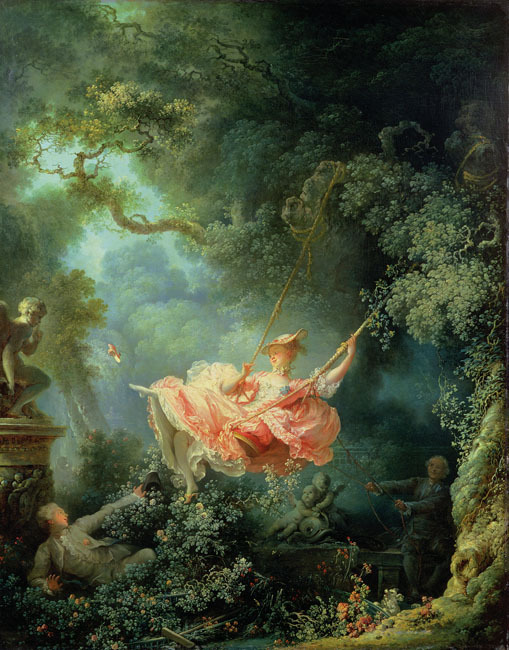
The Swing is Jean-Honoré Fragonard’s best known work and is an icon of the Rococo style. It’s a painting that’s so familiar, it can be easy to pass it by without considering the details or the story behind it. Yinka Shonibare, a bi-cultural artist whose work explores issues of race, class, and colonialism, recreated the famous artwork and gave us a lot more to think about.

Yinka Shonibare The Swing 700x1000

Fragonard’s original painting depicts a lavishly dressed young woman swinging with the help of a man in the shadows while another man looks up at her from below. Symbolic statues watch in the lush outdoor setting and the man below is well placed to look up the woman’s skirts. The woman is looking at the man while one of her shoes is flying over his head, seemingly flung from her foot. The artwork is rumored to have been commissioned by a man who wanted a painting of himself and his mistress, a detail which adds an interesting layer to the original title of the painting, The Happy Accidents of the Swing.

The Swing (after Fragonard)

Jean-Honoré Fragonard The Swing
Jean-Honoré Fragonard, The Swing, 1767

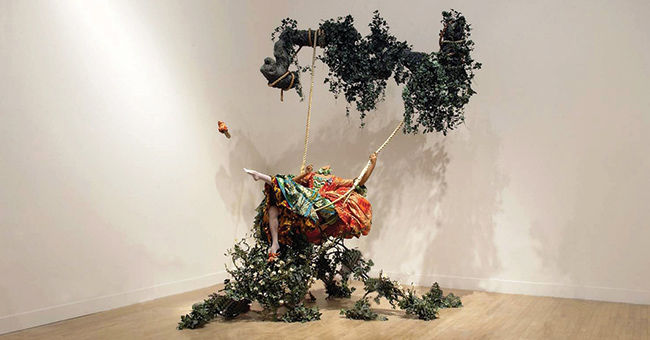
Yinka Shonibare The Swing (after Fragonard) features a lifesize, three-dimensional recreation of the woman on the swing with some of the surrounding foliage, but there are many notable differences. The eloquent dress is made with bright African wax prints (that aren’t exactly African) that are branded with a fake Chanel logo. The mannequin skin tone is brown rather than white.

And, oh, she’s headless.

Yinka Shonibare The Swing (after Fragonard)
Yinka Shonibare, The Swing (after Fragonard)

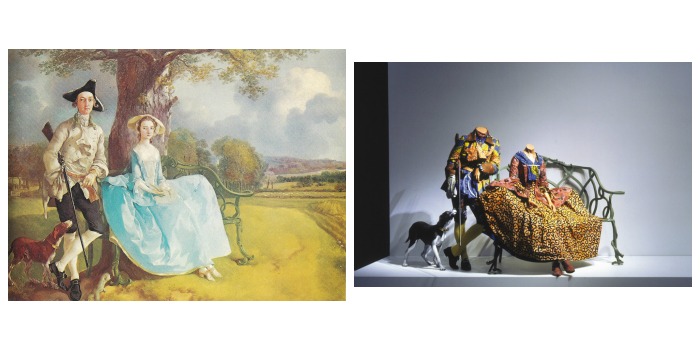
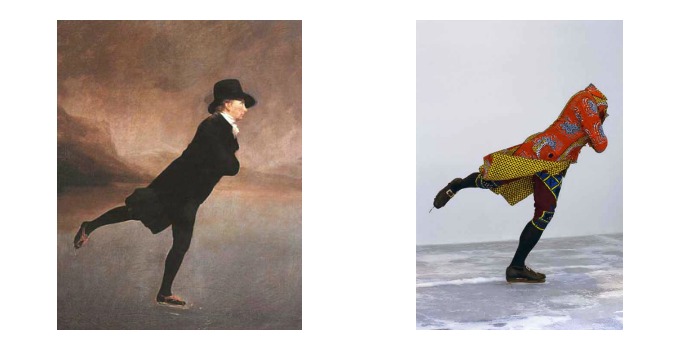
Yinka Shonibare The Swing (after Fragonard) was not the first or last Rococo artwork the artist took a guillotine to.

Thomas Gainsborough, Mr and Mrs Andrews, 1750 beside Yinka Shonibare, Mr.and Mrs. Andrews without their Heads, 1998


Thomas Gainsborough, Mr and Mrs Andrews, 1750 beside Yinka Shonibare, Mr.and Mrs. Andrews without their Heads, 1998

Henry Raeburn, The Reverend Robert Walker Skating on Duddingston Loch, 1790s beside Yinka Shonibare, Reverend on Ice, 2005

Henry Raeburn, The Reverend Robert Walker Skating on Duddingston Loch, 1790s beside Yinka Shonibare, Reverend on Ice, 2005

It’s worth pointing out that The Swing became a hallmark of the frivolity and wealth that philosophers in the Age of Enlightenment abhorred, and less than 30 years after Fragonard finished his painting, the French Revolution began claiming the heads of many in the aristocracy.

Shonibare’s version invites us to consider who society allows to be light-hearted, the trappings of sexism, racism, and classism, and the status symbols we use as a cultural shorthand to tell us who is important.

Much of how we define ourselves is determined by how society sees us and most people don’t take more than a glance. Our gender, the color of our skin, the clothes we wear, and the activities we take part in speak for us. Without our voice, without our heads, what do our bodies say?

Pattern in Yinka Shonibare Artworks

In addition to the beheading, another key change in Shonibare’s recreation is his use of color and pattern in the fabrics. When researching the work of Shonibare, I discovered these fabrics that we would usually associate with Africa did not originate in Africa. These “Dutch wax” fabrics were originally created in England and Holland, and they were sold to people in Africa after selling them in Indonesia failed. These fabrics became an integral part of African culture, and Shonibare found that duality of cultural identity interesting. He said, “But actually, the fabrics are not really authentically African the way people think. They prove to have a crossbred cultural background quite of their own. And it’s the fallacy of that signification that I like. It’s the way I view culture—it’s an artificial construct.”

Free Poster

What Do Kids Learn from Looking at Art Poster

Our students learn so much from looking at art. Use this poster in your classroom to remind them of all the skills they’re growing!

Download

Free Poster

What Do Kids Learn from Looking at Art Poster

Our students learn so much from looking at art. Use this poster in your classroom to remind them of all the skills they’re growing!

Identity in a Global World

Shonibare was born in London and grew up in both Nigeria and the United Kingdom. When asked about multiculturalism, he said, “In a diverse society, people have to find a way of being together, and that can only come from understanding other cultures. Otherwise, you’re just fighting for space.”

Yinka’s work asks us to think about how identities are constructed in today’s global society. This is an essential question for all of us, but especially the youth who are discovering and sculpting themselves for the first time. In a society that often reverts to ‘us versus them’ and prizes the individual over the collective, it is vital for our students to actively participate not only in the creation of their personal identity, but in the building of a shared, inclusive community identity. Comparing Yinka Shonibare The Swing (after Fragonard) with the original can help them do that.

Discussion Questions

Use Yinka Shonibare The Swing in your classroom with the following discussion questions.

  • What’s going on here? What do you see that makes you say that?
  • How does this artwork merge different cultures?
  • How are the mood/emotions different from this artwork to Fragonard’s version?
  • Why do you think this artist choose to depict this artwork as a sculpture?
  • Why did the artist choose to decapitate the figure?

Classroom Connection

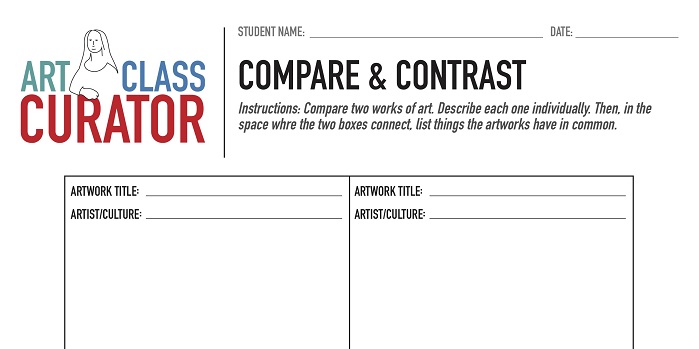
The compare and contrast art activity from the bundle of free art appreciation worksheets is a great way to get students thinking. This would be a great artwork for older students to write about, especially when they’re studying the history of the 1700s. Putting this artwork with others that show the duality of culture and reference colonization and class systems would open up the educational possibilities.

compare contrast art worksheet

Free Worksheets!

Art Appreciation Worksheets

In this free bundle of art worksheets, you receive six ready-to-use art worksheets with looking activities designed to work with almost any work of art.

Download

Free Worksheets!

Art Appreciation Worksheets

In this free bundle of art worksheets, you receive six ready-to-use art worksheets with looking activities designed to work with almost any work of art.

Filed Under: Art and Artists
Tagged With: jean-honore fragonard, yinka shonibare


Contemporary Art and Community with Don Masse

Don Masse Art Class Curator Podcast

Today’s guest is an elementary art teacher who writes a regular column for Arts and Activities Magazine, and his blog, Shine Brite Zamorano, where he shares his student’s projects. He masterly infuses contemporary art into his school and community in exciting and relevant ways. He contributes so much inspiration, motivation, and support to art teachers everywhere.  

Show Highlights:

  • Background on Don Masse
  • Working at Zamorano teaching kids art
  • Masse’s Blog when and why he started it
  • Started to use the internet to build his curriculum
  • Masse’s blog is mostly based on Contemporary artists 
  • Masse uses his Blog to help focus for his curriculum
  • Masse tells us some of the main internet search places he used
  • Tips on how to have projects based on artists but still be unique
  • How to incorporate writing and reflection in Masses lessons
  • Masse tells us about some of his favorite lessons
  • How Masse approaches talking to the kids about their work
  • How you need to embrace the silence
  • What artwork changed Masse’s life

Links Mentioned in the Show: 

Please note, this post includes Amazon affiliate links. As an Amazon Associate I earn from qualifying purchases.

  • Buck Rock Creative Art Camp
  • Colossal Art Blog
  • Bloom Blog
  • Shine Brite Zamorano Instagram: @ shinebritezamorano
  • Arts & Activities Magazine
  • Galla Placidia of Ravenna Rome

Subscribe in Your Favorite Podcast Listening App

Subscribe and Review in iTunes

Have you subscribed to the podcast? I don’t want you to miss an episode and we have a lot of good topics and guests coming up! Click here to subscribe on iTunes!

If you are feeling extra kind, I would LOVE it if you left us a review on iTunes too! These reviews help others find the podcast and I truly love reading your feedback. You can click here to review and select “Write a Review” and let me know what you love best about the podcast!
View in iTunes

Filed Under: Podcast
Tagged With: don masse


Play-based Art Education with George Szekely

As teachers, not only do we strive to make an impact on students, but we also strive to continue learning. Sometimes this means trying new methods to see what works best for us as well as the students. George Szekely is with me today to talk about his hands-on approach with teaching art and how to expand your students’ exposure to art. 


Show Highlights:

  • Why George says that Show & Tell should never die
  • The difference between Art and Lecture
  • The one method George could never get rid of
  • The benefits of teaching Adult Art with Kids Art
  • How to integrate more art into lesson plans
  • Why it’s important to give kids art they can physically handle
  • Advice to Art Teachers about options for showcases
  • George shares his thoughts on teaching art in high school
  • Techniques on how to connect with teenagers
  • The importance of letting students know they’re artists

Links Mentioned in the Show: 

  • George’s Website

Subscribe in Your Favorite Podcast Listening App

Subscribe and Review in iTunes

Have you subscribed to the podcast? I don’t want you to miss an episode and we have a lot of good topics and guests coming up! Click here to subscribe on iTunes!

If you are feeling extra kind, I would LOVE it if you left us a review on iTunes too! These reviews help others find the podcast and I truly love reading your feedback. You can click here to review and select “Write a Review” and let me know what you love best about the podcast!

View in iTunes

Filed Under: Podcast
Tagged With: best of art class curator, George Szekely


August 13, 2018 Leave a Comment

How to Avoid Classroom Management Problems in the Art Room

Inside: Tips for avoiding classroom management problems by creating a culture of trust and respect.

Whether you’ve been teaching for a year or a decade, you’ve no doubt learned the importance of avoiding classroom management problems. When a student doesn’t behave, it can keep the whole class from learning, and it doesn’t take long for one misbehaving student to become a whole class problem. That’s why it’s so important to establish expectations from day one and enforce them all year long.

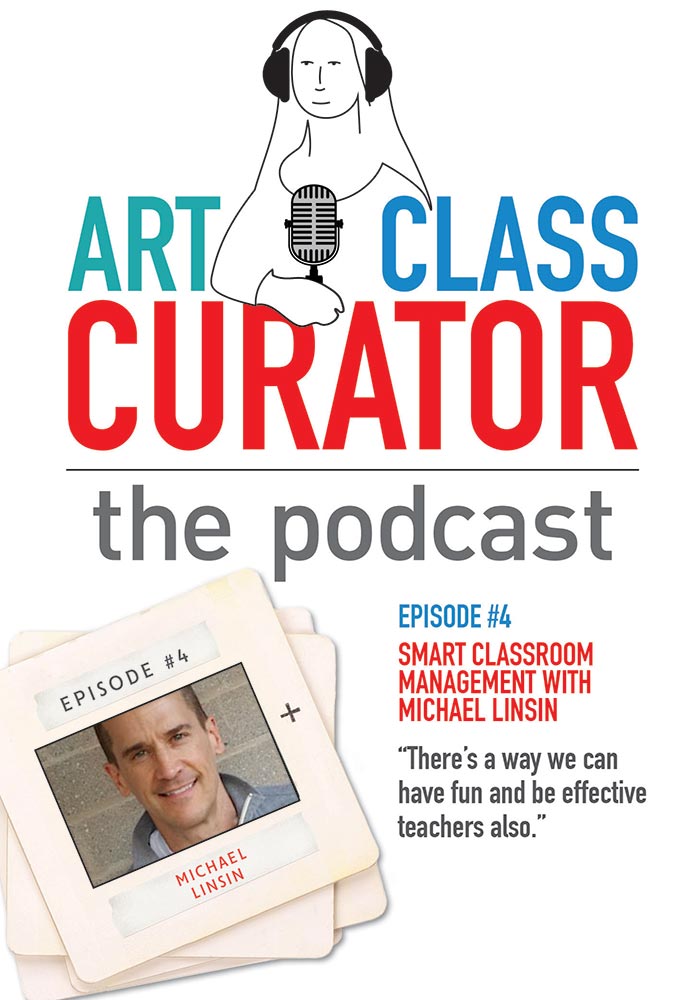
This post was inspired by my conversation with classroom management guru Michael Linsin on the Art Class Curator Podcast. Listen to our conversation at this link or wherever you listen to podcasts.

Subscribe in Your Favorite Podcast Listening App

Protect the Learning

We have a lot of goals as teachers–teach exciting lessons, mold students into thoughtful citizens, and widen their world with knowledge and learning experiences. Disruptions in the classroom do more than stress you out, they rob the students of the opportunity to learn and keep you from being the best teacher you can be.

Every peaceful classroom is built on a foundation of trust and respect that flows from both the students and the teacher. When we start with trust and respect, students are free to learn and we are free to teach.

A well-run classroom doesn’t require an iron grip. Dictatorships can be effective, but they’re not fun for anyone. Avoiding classroom management problems is vital to enjoying the day-to-day. The best way to protect the learning and the fun is to establish a culture of respect and trust, and you can do that with a promise.

Classroom Promises

Classroom management problems start when students don’t know what to expect. How do they know what to expect? You tell them. And then, you show them.

Telling Them What to Expect

Whether you realize it or not, when you tell your students what the classroom rules and consequences are, you are making them a promise. They are hearing what you want from them and what will happen if they do not deliver.

What behavioral issues do you usually face? What problems only come up every once in a while? Write them all down and use that as a guide to create your rules. You want to cover every possibility. Have clear consequences that you are comfortable enforcing every single time. Consistency matters more than what the actual consequence is. Remember, you’re making a promise. To keep their trust and respect, you have to keep your promise.

After you’ve thought about what you will require from them, consider what you will give to them and why it’s valuable. This is the second part of your promise.

Ideally, you’ll introduce your classroom promises the first time you meet your students. Here’s an example:

As your teacher, I promise to respect you and give you a classroom free from distraction and drama. I promise not to yell at you or belittle you. As a class, we promise to respect one another and our time so that we can learn and explore together.

A promise is a bond. It holds both you and your students responsible. You promised, so you have to follow through. They promised, so they know they have noone to blame but themselves when they break a rule. Putting it front and center from day one creates a culture of accountability that will strengthen every time you enforce the rules.

Showing Them What to Expect

It’s easy to stand in front of your class and say that you expect a distraction-free classroom, but what you consider a distraction is not likely to be shared by all of your students. This is where your list of rules comes in handy. Without a doubt, every classroom needs a rule restricting excessive noise. Kids are creative. They can make noise a LOT of different ways. You can’t list every single possible item that can be used to create excessive noise, but you need them to know the expectations. So, show them!

Have a student act as the teacher while you take on the role of a student. While they’re doing their best impression of you, start making noise.

Crunch a water bottle.
Tap the desk with the tip of a pen.
Whisper to someone nearby.
Interrupt!

Model all the behaviors, big and small, that are against the rules. Don’t be afraid to go a little over the top. Embrace the humor of the situation. You want to make an impression.

After that, model what good behavior looks like. Then, let all the students have a turn! Break them into groups or let the whole class act out what rule-breaking and rule-following looks like. Another benefit of this is giving the students an opportunity to self-reflect and see what their behavior looks like to those around them. You’re not only showing them how to act in your class, you’re teaching them how to be more thoughtful in their interactions with others.

Finally, go over the consequences in detail. Show them what an eye-contact warning looks like, what a verbal warning sounds like, and so on.

When the rules are defined and made clear with examples, the students know exactly what to expect. They know they did wrong, so the blame is not on you, it’s on them for breaking the rule.

Review the Rules

Art teachers have less time with students, so it’s even more critical to spend a few minutes of each class for the first few weeks of school going over the rules. Short rule reviews allow you to get more in-depth as you get to know the quirks of each class.

Do a monthly check-in and consider if there’s any specific rules you need to review with any of your classes. Even if things are going well, review the rules with your students periodically, such as after long holidays or at the beginning of a new grading period.

Life happens. When you’re stressed, things can start to slide. A rule review is a good way to reset expectations or renew your promises.

Shift the Focus

One of the biggest classroom management problems is a student thinking the teacher is being unfair when they get in trouble for breaking a rule. That’s why making classroom promises and creating a culture of trust and respect is so important–you’re taking the focus off of you as the rule enforcer and redirecting it to their behavior and how it violates the promise.

When you immediately and consistently follow your rules and consequences, there can be no cries of unfairness or favoritism. You promised your students a distraction-free classroom, and you’re delivering on that promise. You showed them the rules and the lines in the sand. They have no one to blame but themselves. When you keep your promises and hold them accountable, you can work with your students instead of battling them for control.

Student sitting at desks writing during an exam in college

Classroom Consequences

Your consequences have to be as consistent as your rules, but they don’t have to be dire. You don’t have to go from a warning to an office referral. A misbehaving student isn’t best served when left behind, and you don’t need to spend time bringing them up to speed when they return.

Besides, the simplest consequences are often the best. In my last school, students who misbehaved were required to write their names in a book. They didn’t have to list what they did wrong or anything else, but the act of writing their name down had so much power, they did not want to do it. Some would even try to bargain for detention! It led to instant changes despite the consequence not being severe.

Your Class is the Reward

Rewards work–kind of, temporarily, but they also grind down internal motivation. Students can become obsessed with the reward instead of the lesson. It teaches them that learning is work that they should be paid for, but learning is the reward!

When your lessons are worthwhile, engaging, and interesting, and your students find you charming and lovable, they’ll behave all on their own because they want to spend time with you and learn from you. Being personable doesn’t mean bending the rules. It means modelling kindness and enthusiasm. If students enjoy your class and see you enforcing the rules to protect their ability to enjoy it, they’ll do all they can to safeguard it.

This post was inspired by my conversation with classroom management guru Michael Linsin on the Art Class Curator Podcast. Listen to our conversation at this link or wherever you listen to podcasts.

Subscribe in Your Favorite Podcast Listening App

art teacher blogs

This post is a part of The Art Ed Blogger’s Network: Monthly Tips and Inspiration from Art Teacher Blogs. On the second Tuesday each month, each of these art teacher blogs will post their best ideas on the same topic. This month, we’re sharing our best ideas for the first day of school!

Participating Art Teacher Blogs:

  • Art Class Curator
  • Art Ed Guru
  • Art is Basic
  • Art Room Blog
  • Art Teacher Tales
  • Art with Mr. E
  • Arte a Scuola
  • Brava Art Press
  • Artful Artsy Amy
  • Capitol of Creativity
  • Create Art with ME
  • MiniMatisse
  • Mona Lisa Lives Here
  • Mr. Calvert’s Art Room Happenings
  • Mrs. Boudreaux’s Amazing Art Room
  • Mrs. T’s Art Room
  • Ms. Nasser’s Art Studio
  • Party in the Art Room
  • shine brite zamorano
  • Tales from the Traveling Art Teacher
  • There’s a Dragon in my Art Room

Filed Under: Art Ed Blogger's Network, Art Teacher Tips
Tagged With: best of art class curator


14: Tips for Leading a Powerful Art Discussion with Cindy Ingram

Today I’m doing something I’ve never done before, and instead of having a guest, I’m going solo today. Join me as I answer frequently asked questions from listeners and students. 

Show Highlights:

  • Art Making versus Art Looking
  • How to facilitate discussion during Art History 
  • Techniques to try so your students will know you’re listening
  • How to keep students engaged
  • Why you learn to find comfort in the silence
  • How to deal with insecurities of your knowledge of an art piece
  • The versatility of teaching Art History
  • Advice on how to teach art when nudity is involved 
  • Why we need to embrace being uncomfortable
  • How to avoid copycat artwork from students 

Subscribe in Your Favorite Podcast Listening App

Links Mentioned in the Show:

(Some of the links below are affiliate links which help financially support Art Class Curator.)

Resource Library 

The Nudity Question

How to Lead Art Discussions Webinar

5 Tips for Meaningful Classroom Art Discussion

Subscribe and Review in iTunes

Have you subscribed to the podcast? I don’t want you to miss an episode and we have a lot of good topics and guests coming up! Click here to subscribe on iTunes!

If you are feeling extra kind, I would LOVE it if you left us a review on iTunes too! These reviews help others find the podcast and I truly love reading your feedback. You can click here to review and select “Write a Review” and let me know what you love best about the podcast!
View in iTunes

Filed Under: Podcast
Tagged With: best of art class curator


  • Previous Page
  • Page 1
  • Interim pages omitted …
  • Page 11
  • Page 12
  • Page 13
  • Page 14
  • Page 15
  • Interim pages omitted …
  • Page 38
  • Next Page

Primary Sidebar

Hi! I’m Cindy Ingram, the creator of Art Class Curator and The Curated Connections Library

I’m on a mission to revolutionize education with the power of life-changing art connections. Art is not “extra”. Art is essential. We are empowering teachers to bridge the gap between art making and art connection, kindling a passion for art that will transform generations.

More About Me

Free Worksheets!

-Free Bundle of Art Appreciation Worksheets-

In this free bundle of art worksheets, you receive six ready-to-use art worksheets with looking activities designed to work with almost any work of art.

Download

Free Worksheets!

-Free Bundle of Art Appreciation Worksheets-

In this free bundle of art worksheets, you receive six ready-to-use art worksheets with looking activities designed to work with almost any work of art.

Enrollment in Curated Connections Library is currently open. Click here to join. Join our list to get more information and to get a free lesson from the vault! If you are purchasing for a school or school district, head over here for more information.

Check Out What’s New In The Shop

Experience Art: Engaging Art Criticism Discussions and Activities for Teachers and Students of All Ages
Call to Art: An Un-Conference for Art Educators
Curated Connections Library Membership
Perspectives High School Curriculum

More Products

Have You Listened to the Latest Podcast Episode?

Falling for Naudline Pierre’s Evocative Art: A Conversation with Madalyn (Part 2)

More Episodes

Testimonials

I like how this program, unlike other art class resource membership programs, feels authentic. It's like art matters more here, and not fancy flash-in-the-pan trendiness. The goal of Art Class Curator seemed to be helping kids develop a lifelong love and art appreciation versus "Hey, look. I painted this fish."
Erin A.
Your questions are helping me to delve into much deeper learning, and my students are getting better at discussion-and then, making connections in their own work. Art Class Curator is awesome!
Denise W.
Interestingly, my lower performing classes really get engaged in these [lessons] and come away with some profound thoughts!
Melissa G.
I had the most amazing 6th grade class today. They were jumping out of their seats with hands raised just to respond and give input. It was as if I was waving candy in front of them! They saw more and more and the ideas and interpretations unfolded. So cool!!! This is what makes teaching art so wonderful – thank you!!
Caroline G.
I just wanted to thank you for the invaluable resource you have through Art Class Curator. Not only do you have thought provoking activities and discussion prompts, but it saves me so much time in preparing things for myself! I feel like I’ve only scratched the surface with your site.
Maryjane F.

Get Art Inspiration To Your Inbox!

Enter your email address to get regular art inspiration to your inbox
plus a BUNDLE OF 6 FREE WORKSHEETS!
We hate SPAM and promise to keep your email address safe.
Download

Free Worksheets!

*Free Bundle of Art Appreciation Worksheets*

In this free bundle of art worksheets, you receive six ready-to-use art worksheets with looking activities designed to work with almost any work of art.

Copyright © 2026 Ignite Art, LLC DBA Art Class Curator •  All rights reserved  •  Privacy Policy  •  Terms of Service  •  Site Design by Emily White Designs