• Skip to main content
  • Skip to primary sidebar
  • About
    • About Art Class Curator
    • Contact
    • Speaking
    • Media & Press
    • Programs for Schools
  • Blog
  • Podcast
  • Shop
  • Join
  • Member Login

Art Class Curator

Hands-on and Minds-curious Art Learning

  • Art & Artists
  • Art Connection Activities
  • Art Teacher Tips
  • Elements & Principles
  • Downloads & Resources
Home
  • About
    • About Art Class Curator
    • Contact
    • Speaking
    • Media & Press
    • Programs for Schools
  • Blog
    • Art & Artists
    • Elements & Principles
    • Art Connection Activities
    • Art Teacher Tips
    • Downloads & Resources
  • Book
  • Podcast
  • Shop
  • Join
  • Member Login

All Posts from Art Curator for Kids

Global Understanding through Art with Holly Bess Kincaid

Art class teacher Holly Bess Kincaid is changing the world within the walls of her classroom. Her students make up a strongly diverse community of learners, so different languages, cultures, and life experiences are something she not only plans for but leverages to create powerful learning moments, using art as the conduit.
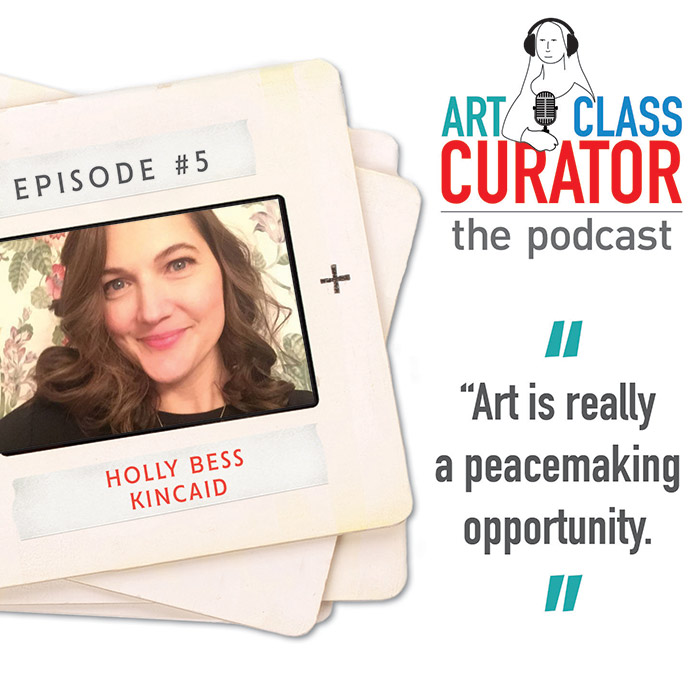
 

From practical tips on how to work with a variety of native languages in one classroom, to what projects have created the most excitement with students of all backgrounds, Holly Bess provides insights so that you can help students learn more about the world by learning from one another.

Show Highlights:

  • How to adapt your learning environment to a multilingual classroom
  • The way art lessons can bring out cultural lessons between students
  • Holly Bess shares an anecdote of celebrating Holi with a student’s family
  • Ways teachers can get to know their students’ communities better
  • Holly Bess shares about a particularly successful kite art project
  • Tips on managing students’ behavioral issues related to trauma
  • How to address tough conversations and fear with art lessons
  • The ways social media can isolate us from forging connections with others
  • How Holly Bess tailors her curriculum to her student’s needs
  • Why reading, writing or speaking are included every day in art class
  • How Holly Bess created a weekly lesson to critique art
  • The art that scared Holly Bess 

Links Mentioned in the Show:

  • Google Arts & Culture app
  • T.H.I.N.K. About Art – Weekly Lesson Guide
  • Holly Bess on Instagram – @artladyhbk
  • Holly Bess on Twitter – @artladyhbk
  • Capitol of Creativity
  • National Art Education Association (NAEA)
  • Art that scared Holly Bess: Ann Hamilton’s Offering (1991) 


Subscribe in Your Favorite Podcast Listening App

Subscribe and Review in iTunes

Have you subscribed to the podcast? I don’t want you to miss an episode and we have a lot of good topics and guests coming up! Click here to subscribe on iTunes!

If you are feeling extra kind, I would LOVE it if you left us a review on iTunes too! These reviews help others find the podcast and I truly love reading your feedback. You can click here to review and select “Write a Review” and let me know what you love best about the podcast!
View in iTunes

Filed Under: Podcast
Tagged With: holly bess kincaid


Smart Classroom Management with Michael Linsin

Making Your Classroom Management Easier and Effective with Michael Linsin

* This page contains affiliate links. As an Amazon Associate, I earn from qualifying purchases and will be awarded a small commission at no extra cost to you in the event of a sale. *

Positive moments in the classroom don’t just spring up out of nowhere. A well-run classroom makes teaching and learning fun for you and your students… something Michael Linsin has spent years studying, practicing, and offering in his guides on his website. 

Michael was one of my first interviews on the podcast. It’s among my favorites, and I want to share it again. So in this re-released episode, he offers his amazing tips and insights on best practices for effective classroom management planning and forming relationships with your students, with a special focus on art classrooms.

Making Your Classroom Management Easier and Effective with Michael Linsin

2:19​ – Michael’s #1 tip for being a fun and effective teacher

4:56 – What makes a good classroom management plan and why consequences really don’t matter

7:17 – The most effective way to teach your students the classroom rules

10:30 – How art teachers can find a balance between teaching the rules and teaching the lessons

13:55 – Why you might want to ditch filling out reflection forms as a consequence

16:29 – One important thing that can make running an effective classroom a bit easier

19:36 – How you can still leverage relationship-building with your students even if you have hundreds to teach

22:39 – When to transition away from time-outs and effective consequences for older students

26:19 – Why Michael doesn’t recommend a rewards system for your classroom

30:05 – What you can do to encourage your students to develop a motivation to do the work

32:21 – Why you must follow-through on your classroom management plan

Links Mentioned in the Show:

  • Smart Classroom Management
  • Smart Classroom Management on Facebook
  • The Smart Classroom Management Plan for High School Teachers     
  • Classroom Management for Art, Music, and PE Teachers by Michael Linsin
  • “What You Learned in School Will Keep You BROKE” – James Wedmore video
  • 82 Questions About Art


Subscribe in Your Favorite Podcast Listening App

Subscribe and Review in iTunes

Have you subscribed to the podcast? I don’t want you to miss an episode and we have a lot of good topics and guests coming up! Click here to subscribe on iTunes!

If you are feeling extra kind, I would LOVE it if you left us a review on iTunes too! These reviews help others find the podcast and I truly love reading your feedback. You can click here to review and select “Write a Review” and let me know what you love best about the podcast!
View in iTunes

Filed Under: Podcast
Tagged With: michael linsin


The Aesthetics of Health with Megan Hildebrandt

Sometimes our most challenging moments are the times that create the biggest spark. For Megan Hildebrandt, one of those chapters of her life was while she was earning her Masters Degree in Studio Art at the University of South Florida and was diagnosed with Hodgkin’s Lymphoma.

This experience completely changed the way she views art, community, and remaining present.

In this episode, Megan Hildebrandt dives into how her art transformed during her cancer treatment and how, now that she is in remission, she finds more and more ways to bring art students to communities in need of healing, inspiration, and consistency.

Show Highlights:

  • How cancer changed Megan’s perspective on art
  • Her evolution as an artist through cancer and the different mediums that captured her attention
  • Megan explains an artistic series that she produced while undergoing chemotherapy
  • How Megan got her experience as an art teacher
  • The story behind Megan’s course, “The Aesthetics of Health”
  • How cancer care experiences are enhanced with art in the waiting room
  • Anecdotes from figure drawing cancer patients
  • The difference between sympathy and empathy
  • Megan explains the importance of consistency in serving communities with art
  • How Megan sees her art programs scale to other schools and communities
  • The freedom and shared ownership of interpreting art
  • Megan shares 2 artists who have inspired her

Links Mentioned in the Show:

  • Megan’s Website
  • The Aesthetics of Health

Subscribe in Your Favorite Podcast Listening App

Subscribe and Review in iTunes

Have you subscribed to the podcast? I don’t want you to miss an episode and we have a lot of good topics and guests coming up! Click here to subscribe on iTunes!

If you are feeling extra kind, I would LOVE it if you left us a review on iTunes too! These reviews help others find the podcast and I truly love reading your feedback. You can click here to review and select “Write a Review” and let me know what you love best about the podcast!
View in iTunes

Filed Under: Podcast
Tagged With: megan hildebrandt


Connecting Communities with Nic Hahn

For over 15 years, Nic Hahn has worked with students of all ages in various schools and districts around the Midwestern US– and if there’s one thing she’s discovered, it’s the importance of community in teaching art.

Nic Hahn started a blog called Mini Matisse in 2010 to connect parents to the art projects that were coming home in the hands of their children, but the online connection was just the beginning. Her quest to bring people with interest and experience with students thirsty to try new forms of art has sparked local, nationwide, and international interest and participation– demonstrating that the invitation to create is universal and that we all have a lot to learn from one another.

Show Highlights:

  • What prompted Nic to create her blog, Mini Matisse
  • How often she creates blog posts, and what her philosophy on blogging is like
  • The ways blogging has impacted Nic’s teaching
  • Nic shares her favorite community art projects, and why they’re important
  • Ways to proactively manage emotionally challenging art lessons with students
  • Tips for engaging families and volunteers in art class support
  • How to find and support classroom volunteers
  • Unexpected benefits of having volunteers come in to support students
  • Tips and advice for teachers starting a community-driven art learning program
  • Nic explains what an Artist’s Trading Card is
  • How Nic’s classrooms began trading art with schoolchildren in Japan
  • Nic shares her artistic inspirations
  • Why Nic named her daughter Matisse

Links Mentioned in the Show:

  • Community Project from Mini-Matisse
  • Bit-O-Bios on Teachers Pay Teachers
  • Artist Trading Card Project on Mini-Matisse
  • Lisa Congdon Art Project on Mini-Matisse
  • Volunteer with RSVP 

Connect with Nic:

  • Nic’s Website: Mini Matisse
  • Nic on Instagram – @minimatisseart
  • Nic on Twitter – @minimatisse


Subscribe in Your Favorite Podcast Listening App

Subscribe and Review in iTunes

Have you subscribed to the podcast? I don’t want you to miss an episode and we have a lot of good topics and guests coming up! Click here to subscribe on iTunes!

If you are feeling extra kind, I would LOVE it if you left us a review on iTunes too! These reviews help others find the podcast and I truly love reading your feedback. You can click here to review and select “Write a Review” and let me know what you love best about the podcast!
View in iTunes

Filed Under: Podcast
Tagged With: nic hahn


Introducing The Art Class Curator Podcast

Welcome to Art Class Curator! This podcast is something that’s been in the back of my mind for years and I’m excited that it’s finally happening. Each episode will dive deep into different aspects of teaching art – from passionate art teachers sharing their work to mini-trainings on art appreciation strategies that you can use in your classroom, to conversations about the highs and lows that come with being a teacher.

art podcast

Show Highlights:

  • We’re launching– the Art Class Curator podcast is happening!
  • What the Art Class Curator podcast will be about
  • Hear highlights of a few upcoming interviews
  • The one telling question I ask guests at the end of every episode
  • A personal story of how host Cindy Ingram came into studying and loving art

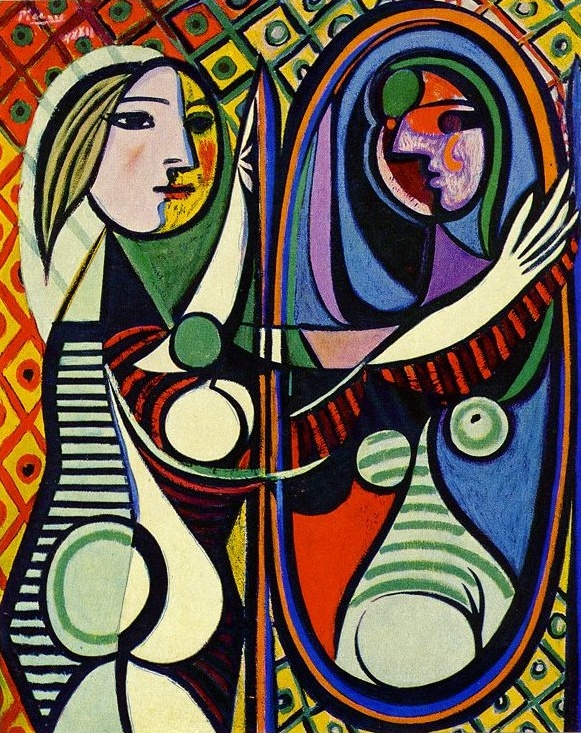
Which artwork changed your life?

Listen to the episode to find out how this artwork changed my life.

Pablo Picasso, Girl Before a Mirror, 1932

Join us each week for a new episode!


Subscribe in Your Favorite Podcast Listening App

Subscribe and Review in iTunes

Have you subscribed to the podcast? I don’t want you to miss an episode and we have a lot of good topics and guests coming up! Click here to subscribe on iTunes!

If you are feeling extra kind, I would LOVE it if you left us a review on iTunes too! These reviews help others find the podcast and I truly love reading your feedback. You can click here to review and select “Write a Review” and let me know what you love best about the podcast!
View in iTunes

Filed Under: Podcast
Tagged With: pablo picasso


May 21, 2018 Leave a Comment

Art Madness: May the Best Artist Win

Art Madness

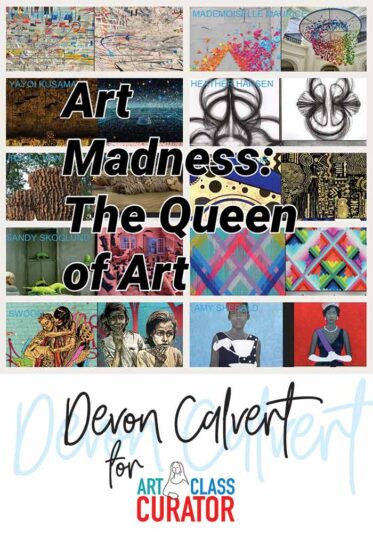
Inside: Art Madness, a tournament style art critiquing activity that exposes students to a variety of artists and allows them to vote for their favorite.

I’m excited to host Devon Calvert from Mr. Calvert’s Art Room today. His inspiring guest post reveals an exciting art critiquing activity that’s sure to get students talking, debating, and enjoying a wide variety of art. Thanks so much, Devon! Be sure to check out his blog for more elementary art education ideas.

Art Madness

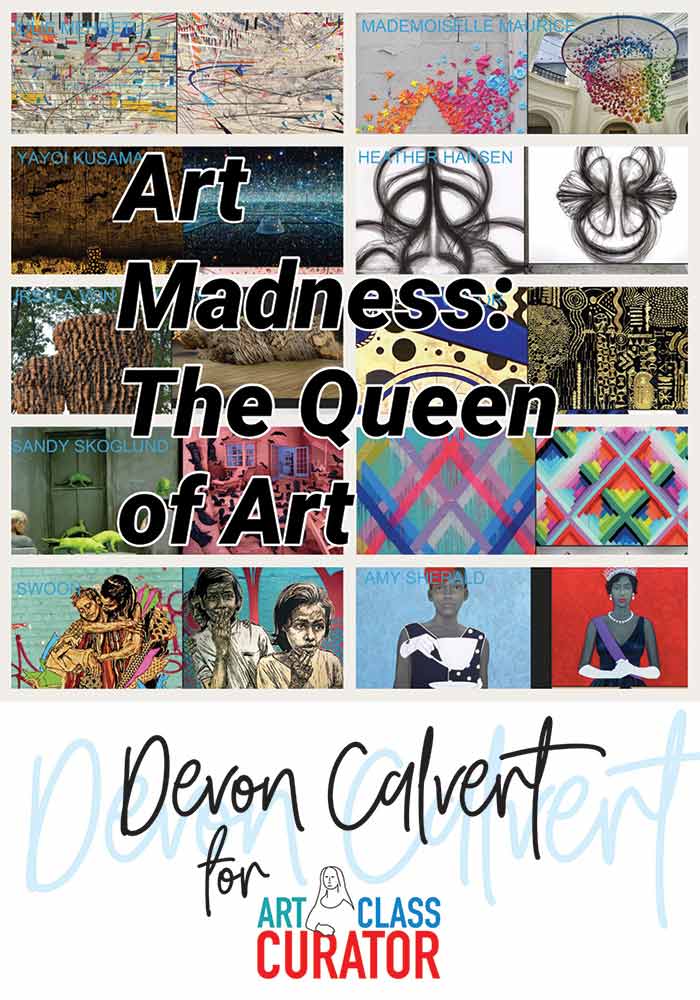
Art Madness is a unit that I do with 3rd graders to get them thinking and talking about art and their opinions of it. My first year of teaching, I found that I wasn’t doing enough critiquing with my students. Rather than just write about artists, I thought that an Art Madness tournament would be an exciting enough event to keep my students interested over an extended period of time. I do it each year in March so that it coincides with the NCAA March Madness tournament. I choose a different theme each year for the tournament. Typically, the theme correlates with the theme of my table-names (Pop Artists, Street Artists, Contemporary Female Artists, etc).

Prep Work

After choosing a theme, I find ten artists that fall under that category. I create a slide in PowerPoint for each artist that shows three examples of that artist’s work. This gives students a chance to see a variety of work. I really like this activity because it offers me the opportunity to talk about artists that I wouldn’t get the chance to teach otherwise.

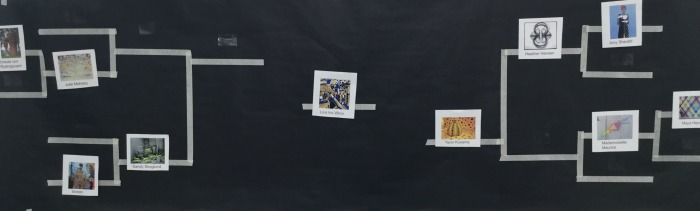
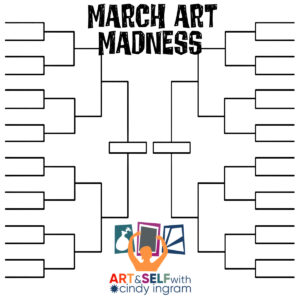
Before the event begins, I also create a tournament bracket with five artists on each side. Because each side is an odd number, one artist automatically advances to the second round.

Art Madness


Free Download

Art Madness – Empty Bracket

Download a free bracket for your classroom Art Madness competition! This includes a blank 32 artist bracket and a 16 artist bracket. Have fun!

Download

Free Download

Art Madness – Empty Bracket

Download a free bracket for your classroom Art Madness competition! This includes a blank 32 artist bracket and a 16 artist bracket. Have fun!

Art Madness: Day One

The first day, I introduce the students to Art Madness. I explain how this is inspired by the NCAA basketball tournament, March Madness. Being from Wisconsin (On Wisconsin!), we typically have a very good basketball team (not this year though, sadly), so my students know a lot about March Madness already. I explain to the students that we will spend the next two classes discussing art and NOT making it. This is usually met with a few groans but they end up loving the activity by the end. Each student is expected to voice their opinion at least once each class. This can be as simple as them saying what they do/don’t like about an artist.

I introduce the first two artists to the students and show them three artworks from each artist. Students then write down on a paper slip the artist that they like better. For the more tech-savvy, you could create a poll on Google Forms for students to fill out instead of using the paper slips. I prefer the slips because it builds suspense as we tally up the votes. I choose a student who reads the names and I tally them up as they are read. We then have a discussion about who students voted for and what their reasoning was for doing so. The winner moves on to the next section of the bracket until they reach the championship. The first day consists of four different votes.

Art Madness: Day Two

On day two of Art Madness, I cover the second half of the bracket and crown the champion. We have to work a little bit quicker this day because there will be five total votes instead of four like the previous class. We once again work our way down to the final vote and crown the King or Queen! After the champ has been chosen, I reorganize the bracket to show how my other classes voted so students can see how similar/different their bracket is compared to others. I also create a Google Form that I share out on Facebook and to my staff so students can see how adults voted.

Now, I know the thought that is running through your head, “This is a great idea, Devon! But why couldn’t you tell us about this BEFORE March Madness?! Now I have to wait until next year!” No way! Don’t let that stop you. Kids will love this! This would be a great end-of-the-year activity to wind down the school year. You could even cover the artists that your students have learned about throughout the school year! Still not sold on it? I’ll GIVE you my ten contemporary female artists that I used this year, as well as a little ditty about each of them! And, if you keep your eye out, you might find a few of my projects that went with some of the artists (hint hint).

This Year’s Art Madness Contenders

Julie Mehretu

Art Madness

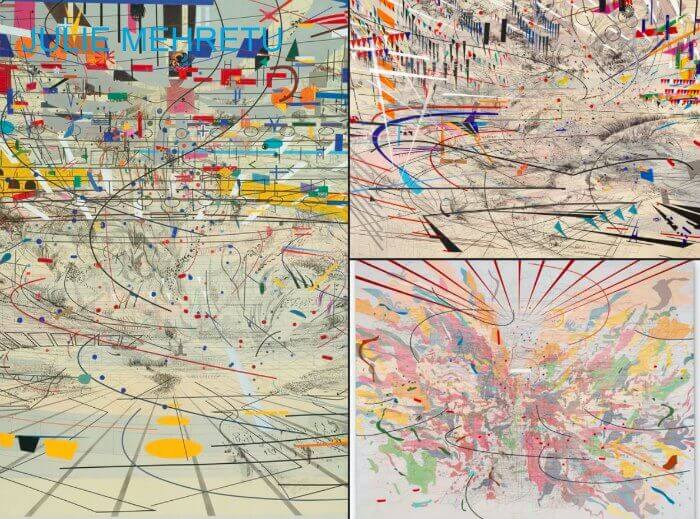
Julie is originally from Ethiopia but immigrated to the U.S. with her father when she was a child to escape the turmoil occurring in the area. Her work involves a lot of maps and architecture. However, she doesn’t paint an entire map or building, she chooses bits and pieces of them and paints them onto her enormous canvases. She paints layer upon layer of brightly colored lines and shapes that have a sense of movement and space that coalesce into one chaotically beautiful painting. As promised, here’s a project my 3rd graders did earlier in the year inspired by Julie.

Yayoi Kusama

Art Madness

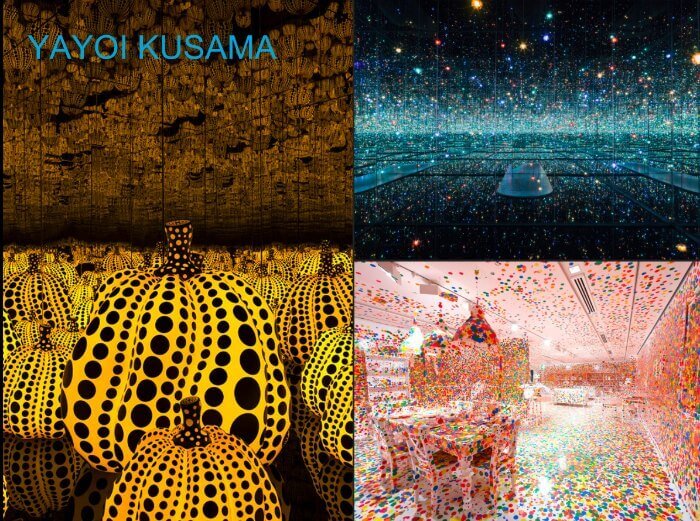
Yayoi is nicknamed the “Princess of Polka Dots” and rightfully so. Her works feature polka dots on EVERYTHING! My students are particularly drawn to her installation pieces. In her installations, she oftentimes uses mirrors that reflect off each other to make the rooms feel infinite. Their favorite installation though is her Obliteration Room. This room started out completely white. As people visited it, they were given stickers to place in the room wherever they wanted. My students were particularly drawn to the idea that Yayoi was giving everyone the chance to be an artist when interacting in this space. Yayoi was crowned the Queen of Art in one of my four classes. Looking for a good fall lesson? Here’s a Kusama pumpkin project!

Ursula von Rydingsvard

Art Madness

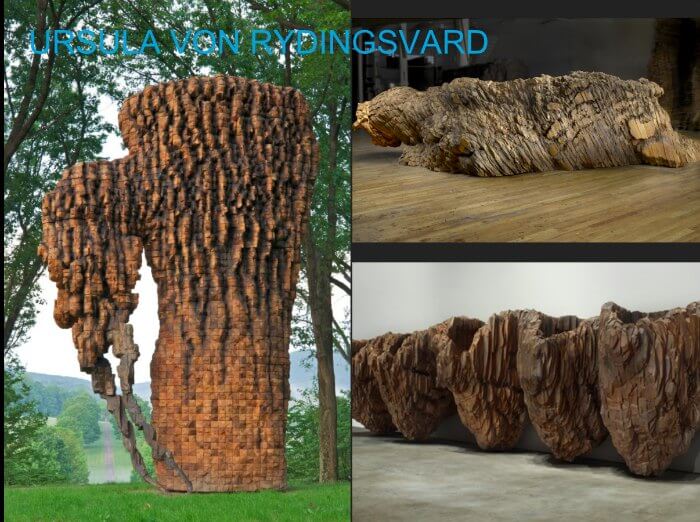
I had the chance to see Ursula present a mini-keynote at NAEA17. I first learned of her in college from an Art21 video. When I see Ursula’s monstrosities made of wood, the last artist that I picture making them is her. She is a small, petite, 75-year-old who makes HUGE sculptures from wood. After assembling the sculptures from small blocks of wood, she takes saws and grinders to the wood to alter the surface and create textures. Lastly, she rubs graphite all over the sculpture to stain it and give it an older look. Many of her artworks resemble otherworldly creatures.

Sandy Skoglund

Art Madness

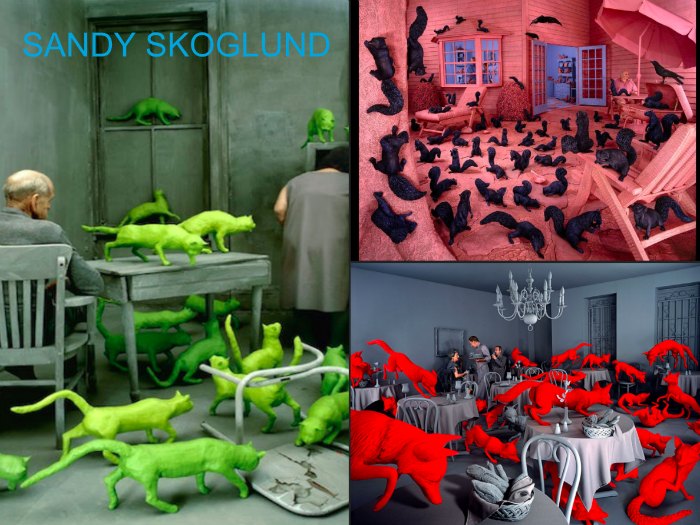
Sandy is a sculptor and a photographer. She creates an ordinary-looking background which is usually all one drab-ish looking color. She then repeats one thing, oftentimes an animal, over and over in her work. Usually, the animals are bright vivid colors, such as neon green cats or bright red foxes, that contrasts the background. Lastly, she stages actual people into her artwork and then photographs it. My students really liked Sandy’s work because it is so narrative. They liked that they could start to create stories about it in their heads. Sandy was crowned the Queen of Art in one of my four classes.

Swoon

Art Madness

Swoon is a pretty well-known street artist who uses printmaking to make her work which she then wheat-pastes to walls. My students liked that her style of street art was a little less conventional than using a can of spray paint. Swoon’s life-sized woodcuts are inspired by the people she encounters in local neighborhoods. She really strives to make connections between her artwork and the people who view it.

Mademoiselle Maurice

Art Madness

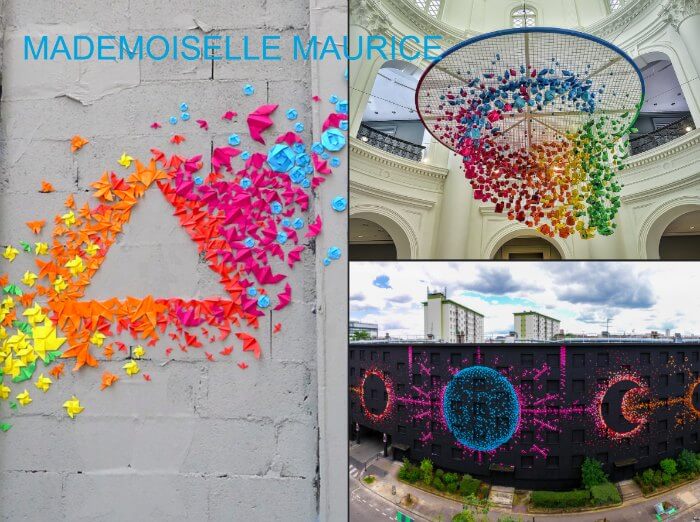
Speaking of non-traditional street artists, Mademoiselle Maurice is a French artist and unlike any other street artist I’ve seen! Her medium of choice is origami. She creates thousands of origami pieces that are often the same shape but vary in size. Her origami pieces are brightly colored and she does a great job of transitioning from one color to the next in larger than life gradations. Her work often uses negative space too to create shapes on walls as well. She was a hit with my classes due to her use of origami in her art, however, she was never crowned the Queen of Art.

Heather Hansen

Art Madness

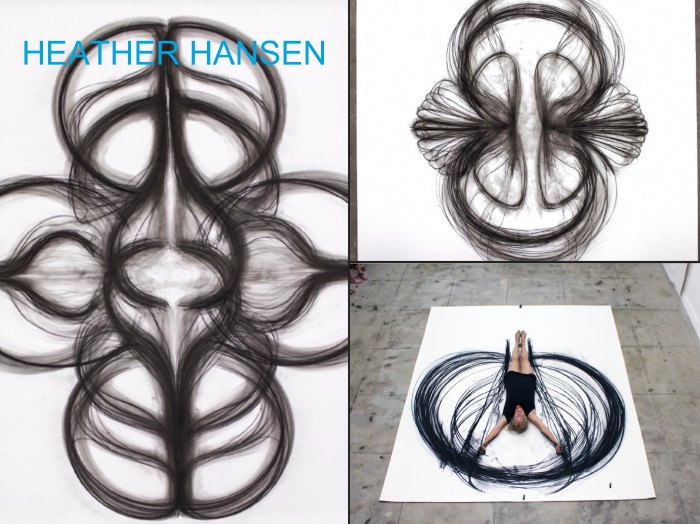
Heather is not only an artist but also a dancer. This was something that caught the interest of many of the girls in my class because many are in dance classes themselves. Heather lays on a large sheet of paper with a piece of charcoal in each hand. She slowly and rhythmically moves her body about the paper in a mesmerizing dance that creates symmetrical works of art. For Heather, her art process is very thoughtful and meditative. Here’s a project I did with my kiddos that I snagged from Don Masse over at Shine brite zamorano!

Lina Iris Viktor

Art Madness

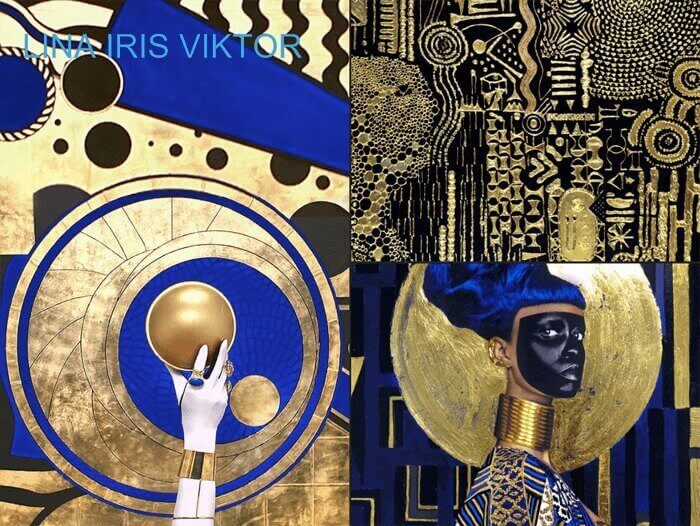
Lina’s work reminds me a lot of Gustav Klimt due to her use of 24k gold, as well as her geometric shapes and patterns. Her color palette is limited to black, occasionally white, 24k gold, and a very specific kind of blue called Majorelle Blue. She has been in the news lately because she is suing the rapper, Kendrick Lamar, for stealing her work in his latest music video called “All the Stars.” She was the ultimate Queen of Art this year winning two of the four classes! Lina was the last artist my students did a project based on before starting the Art Madness tournament, so that may have skewed the results a bit. Either way, I find her work amazing!

Maya Hayuk

Art Madness

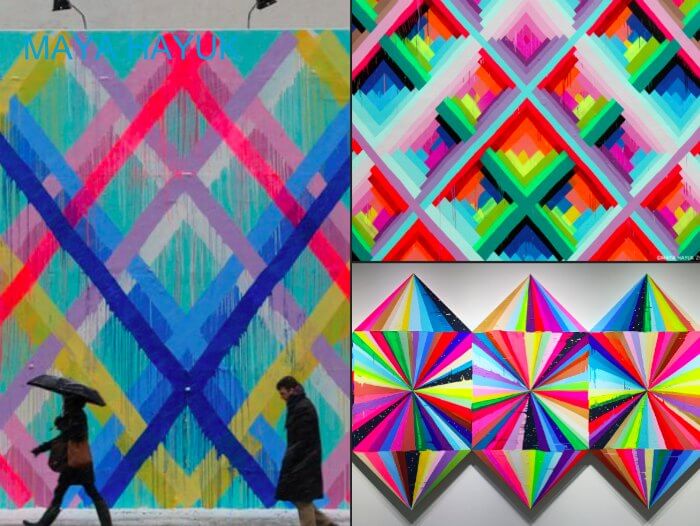
Maya’s work is bold, bright, and beautiful! She is a muralist who uses a lot of symmetry in her work. She thins out her paint so it is watery and semitransparent. As she paints, it drips down her artwork and previous layers of paint are revealed through the semitransparent streaks of paint. Her overlapping diagonal lines create a sense of space in her work. My students are really drawn to an idea that Maya has about her work. Maya believes that the darker our world gets each day, the brighter and brighter her work needs to become to cheer people up. Many of my girls were also inspired by the fact that she partnered with Billabong to create women’s swimsuits with her designs on them. My project on Maya is a great introductory project dealing with symmetry!

Amy Sherald

Art Madness

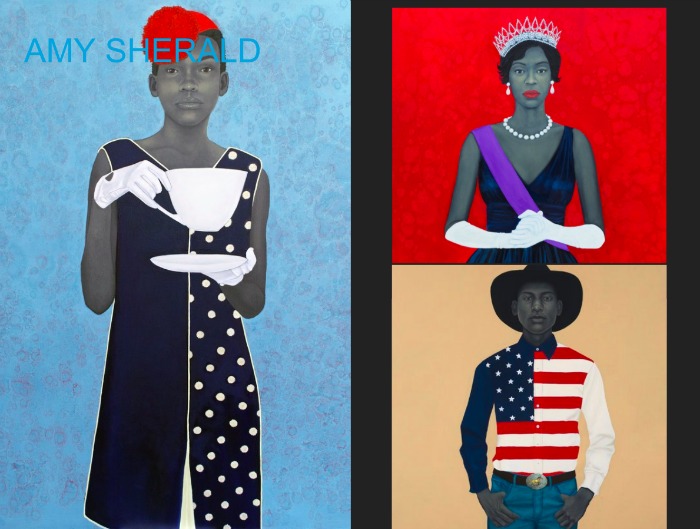
Amy is an African-American artist who makes portraits of other African-Americans. I find it interesting that she changes all of the skin-tones to a grey scale for her portraits. The skin is also beautifully rendered with highlights and shadows. To contrast the highly rendered people, she makes their clothing appear more flat with less detail. I find that contrast particularly striking. Her figures also usually have an item of flair with them such as a crown, white gloves, a boat, hat, etc. Amy was in the news recently for her awe-inspiring portrait of Michelle Obama for the National Portrait Gallery.

Devon Calvert is the art teacher at Harmony and Consolidated schools in Milton, WI. He believes art builds students’ problem-solving skills and perseverance. You can find out more about him and his art lessons on his blog, as well as Facebook and Twitter.

Filed Under: Art and Artists, Art Connection Activities, Art Teacher Tips
Tagged With: amy sherald, heather hansen, julie mehretu, lina iris viktor, mademoiselle maurice, maya hayuk, sandy skoglund, ursula von rydingsvard, yayoi kusama


May 16, 2018 2 Comments

Beyond Selfies: Unshuttering High School Photography Fundamentals

Selfies High School Photography

Inside: An examination of the teen-oriented social platform Getty Unshuttered and how its challenges can be used for high school photography lessons. This post is brought to you by WeAreTeachers and Getty Unshuttered.

Selfies High School Photography

Our lives were inundated with images long before the internet or smartphones came along. We’re a visual species and we’ve been creating images for as long as we’ve been human, but never before have our lives been so dominated by photographs.

A World of Images

One estimate says we’ve gone from seeing about 500 ads a day back in the 1970’s to as many as 5,000 a day now. And that’s just ads! Spend a few minutes scrolling through Twitter or Facebook and you’ll be above 500 images in no time. Our students spend a significant amount of time looking at screens and every day there are more photo-based apps clamoring for their attention.

What Makes a Photograph Good: High School Photography Lessons
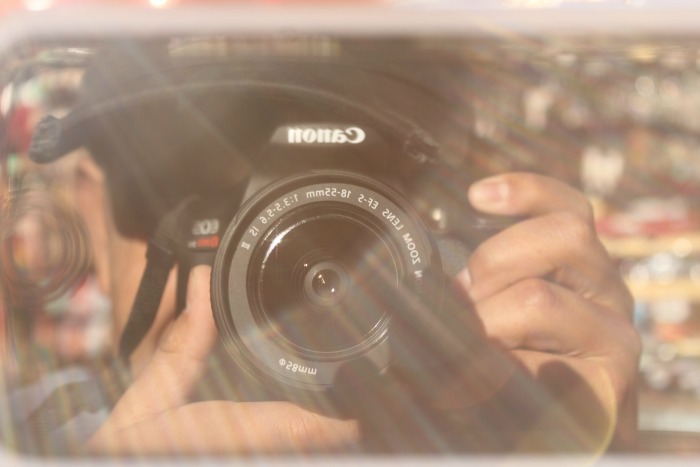
Photo Credit: @Valenzuela02

The popularity of apps like Instagram and Snapchat have passively educated our students to how photos communicate messages about the world and about themselves. They know that a single photo can make or break a reputation. They’ve seen it happen. The ability to take 20 selfies in 2.5 seconds has awakened them to the storytelling power of photographs. They know how their expression and setting can change the mood and emotion of a photo. They know that others will judge them based on what they show. Our students speak the language of photography, but a lot still gets lost in translation.

Advertisements and memes regularly rely on editing to change the meaning of a photograph. The internet is littered with arguments about the veracity of images because it is getting harder to determine the authenticity of the media we see. In this confusing and often dishonest landscape, I think we art teachers have a responsibility to help our students navigate the world of photography.

What Makes a Photograph Good: High School Photography Lessons
Photo Credit: @Valenzuela02

Getty Unshuttered

That’s where Getty Unshuttered comes in. Getty Unshuttered is a new social platform built specifically for teens. Each week, they introduce a new photography challenge that includes a video of a teenager sharing their own photographs and personal story. The concept introduced in the challenge video is explored further with written tips and explanations.

Teens are encouraged to post their own work in the free Getty Unshuttered app. I love that the photographs in the app can be favorited but not commented upon. We all know how cruel comment sections can be. Eliminating that aspect allows students to share their work free from unnecessary negativity.

What Makes a Photograph Good: High School Photography Lessons
Photo Credit: @Valenzuela02

High School Photography Lessons

Getty Unshuttered is the perfect tool for high school photography lessons because it pairs a medium that our students are hyper-familiar with and educates them on how it can be shaped and manipulated. By teaching the fundamentals of composition, light, and color, students will better understand why a photograph is good and what makes a photo memorable. Looking at and critiquing artworks inspired by the challenge and created by peers will make it easier for them to dissect the choices the artist made and how those choices impact the final photograph.

Getty Unshuttered can easily be used as the basis for a complete high school photography unit. The lessons will be a hit because they’re hands-on, fun, and incredibly relevant. Each week, you can choose a challenge to share with your classes. After watching the video and going over the written concepts, you can show students photographs that other teens have shared for inspiration and to critique in a controlled setting. Then, you can give students a homework assignment to complete the challenge using their own cameras or smartphones.

What Makes a Photograph Good: High School Photography Lessons
Photo Credit: @Valenzuela02

Once they’ve paired their knowledge and stories with the fundamental skills lessons available on Getty Unshuttered, students will be more discerning and observant of the images around them and become better artists themselves.

Light Challenge

There are several challenges already available on the Getty Unshuttered website, including features on skills like perspective, color, and composition. One of my favorites so far is the Light Challenge.

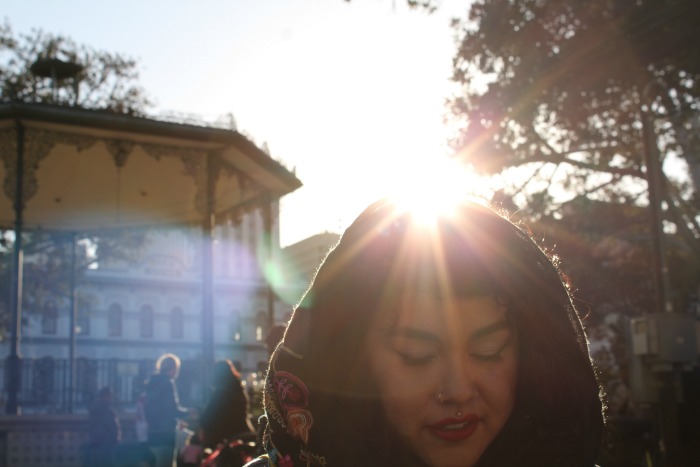
In the Light Challenge, Michael (the artist behind the photographs in this post) shares his own story of how growing up in the foster system impacted his life and how people see him. He discusses the importance of light and shadow and how they mold the story a photograph tells. Below the video, the challenge breaks down several lighting concepts so that they’re brief and easy to understand: hard and soft light, the drama of shadow, cool and warm light, and depth.

Getty Unshuttered makes it easy to empower students with the knowledge they need to take great photographs, tell their stories, appreciate the work of their peers, test their skills, and understand the increasingly visual world around them.

This post is brought to you by WeAreTeachers and Getty Unshuttered. While I was compensated for this post, all reviews and opinions expressed in this post are based on my personal view.

I’d love to hear about how you’ll use Getty Unshuttered in your classroom in the comments below!

Filed Under: Art Teacher Tips


May 6, 2018 Leave a Comment

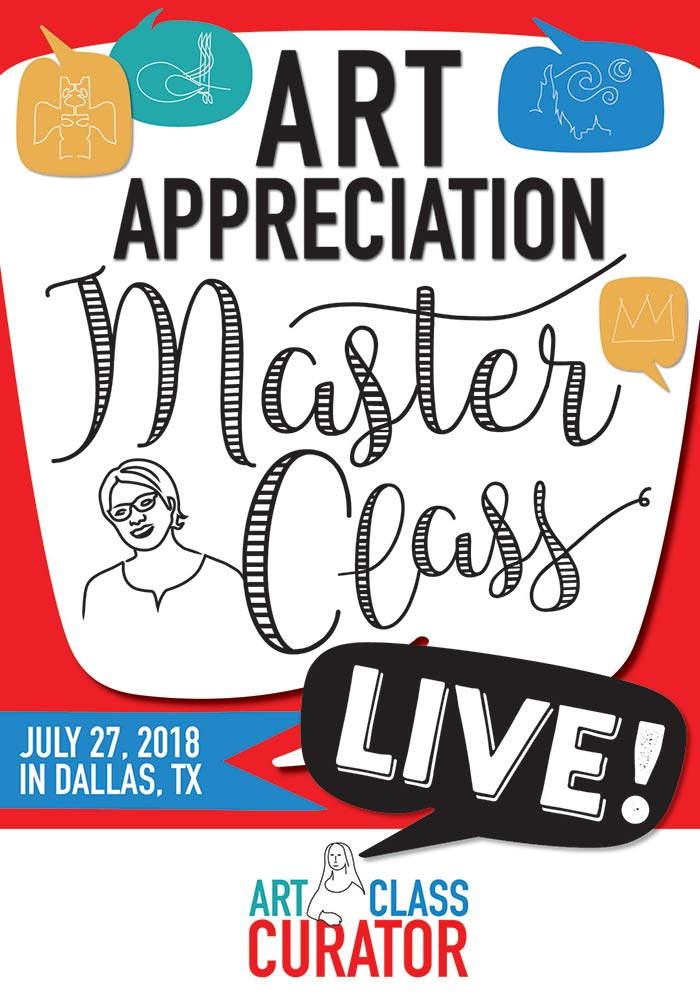
Art Appreciation Master Class LIVE! – Dallas, TX July 27, 2018

professional development for art teachers

I’m looking forward to holding a live professional development for art teachers on Friday, July 27, 2017 in Dallas, TX!

professional development for art teachers

What?


We will study creative ways to engage our students with works of art–from discussion to to writing to creative learning activities. In addition to practicing, modeling, and discussing the techniques, you will also have a chance to work with your colleagues to come up with your own learning activities in the art museum.

Because the workshop will be highly collaborative and discussion-based with a lot of hands-on, minds-on activities, the group will be small. I will only be accepting 25 participants.

I can’t wait to work with you!

Who?

This workshop is for:

  • Art teachers
  • Classroom teachers who want to incorporate more art discussion into their lessons
  • Home Educators
  • Museum Educators

The strategies we cover will work for any age group or level, so all are welcome who work with children!

When?

Friday, July 27, 2017, 10:00 am – 5:00pm

Where?

The Meadows Museum, SMU Campus
5900 Bishop Blvd, Dallas, TX 75205

** This workshop is not a Meadows Museum program. **

How much does it cost?

The workshop costs $169. This includes the full day workshop and materials, coffee/pastries in the morning, and lunch.

Come for FREE!

This event is free for active yearly members of The Curated Connections Library! If you are not a member and would like to join so you can attend this workshop, click here to join. The last day to join is May 11, 2018. Please note, you will still need to register for the workshop after you join. Instructions on how to register as a yearly member are on the workshop registration page.

Can my school pay?

Yes! Choose the school payment option on the registration form, and email us at support@artclasscurator.com to request an invoice. Once I receive the PO, I will consider your spot reserved.

Can I earn Professional Development credit?

We are not affiliated with an accrediting agency, but each participant will receive a certificate for 7 hours of professional development for art teachers. For more information about your state’s PD requirements and how this workshop might fit in, please visit this link.

What if I need to cancel?

I will offer a refund up until June 20 minus a $25 processing fee. After June 20, 2017, there will be no refunds. You are welcome to sell or transfer your ticket to someone else.

What should I bring/wear?

We will be walking around the museum at times, so be sure to wear comfortable shoes! Dress comfortably, and remember that even though it will be hot outside, museums are often chilly inside!


Filed Under: Art Connection Activities


April 24, 2018 3 Comments

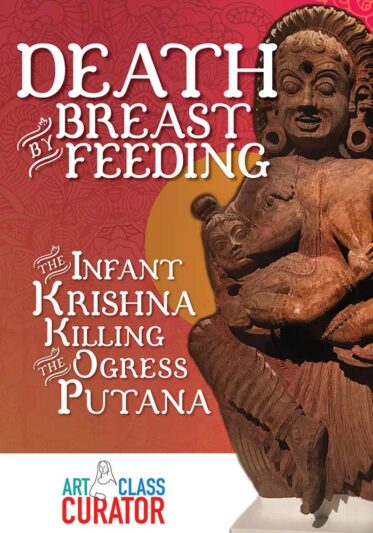
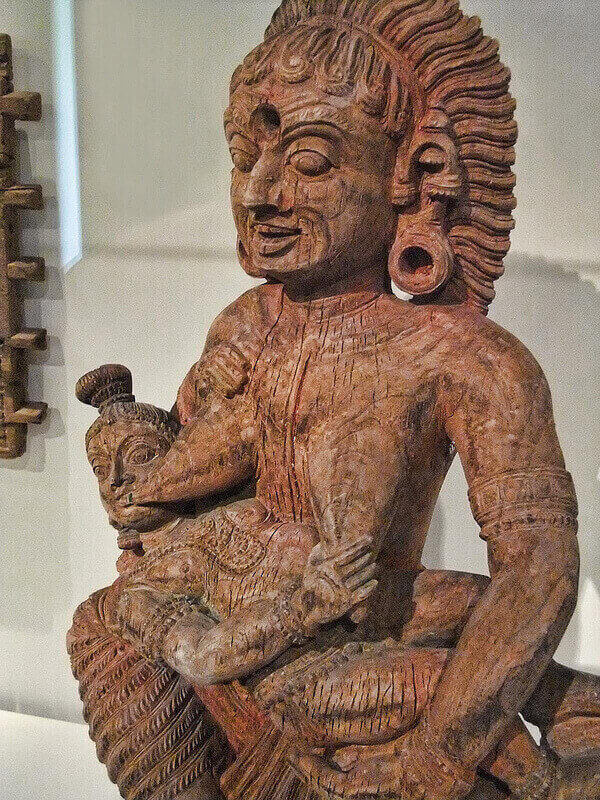
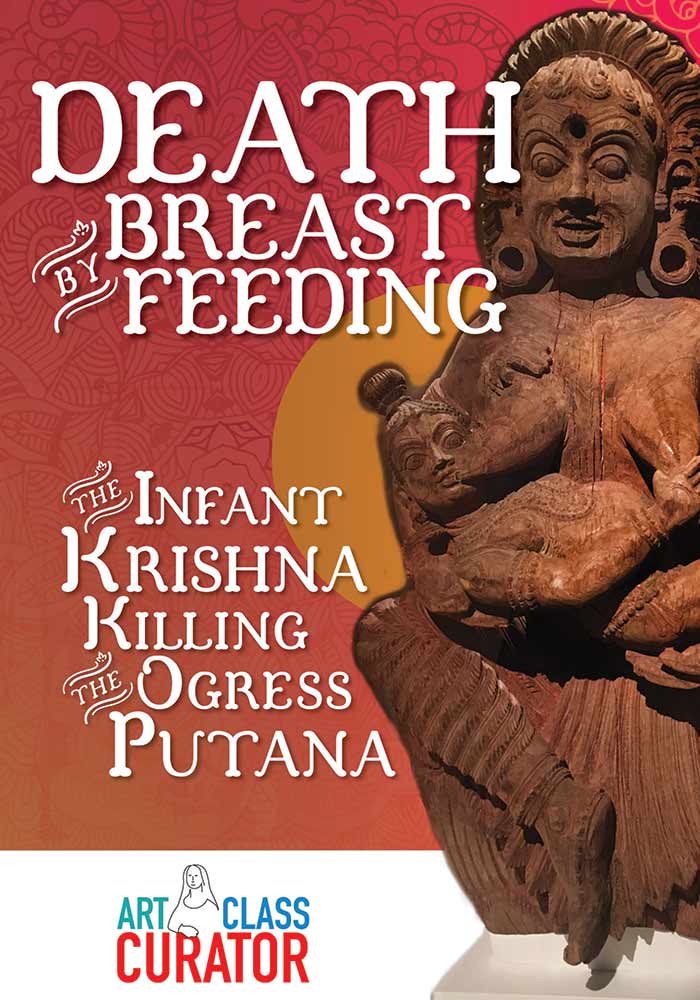
Death by Breastfeeding: The Infant Krishna Killing the Ogress Putana

Death by Breastfeeding: The Infant Krishna Killing the Ogress Putana Hindu artwork

Inside: The legend behind a Hindu artwork that will leave any breastfeeding mother grimacing in sympathy, including discussion questions and classroom activities to pair with the work of art.

Death by Breastfeeding: The Infant Krishna Killing the Ogress Putana Hindu artwork

Visiting a museum can be overwhelming. There’s so much to see, so much to feel. You often don’t know which discoveries will stay with you once the day is done. But sometimes an artwork makes such an immediate impression, you know you’ll remember it always. I experienced this while on a weekend trip to Chicago last year when I spent some time at the Art Institute of Chicago.

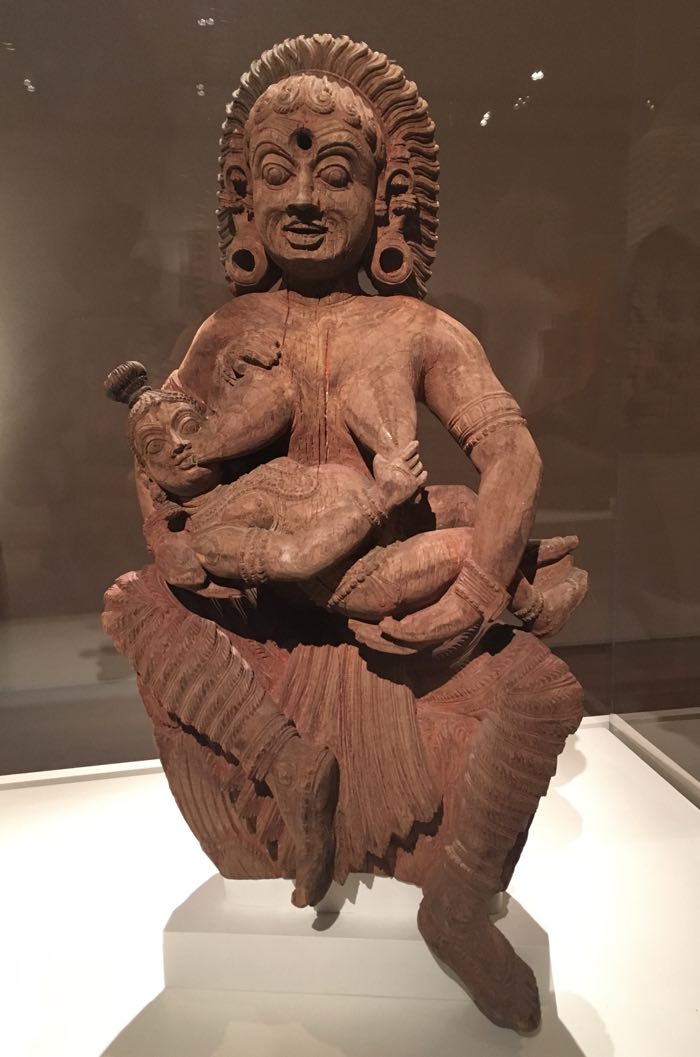
The Infant Krishna Killing the Ogress Putana, India, 17th century

Hindu Artwork: The Tale of Krishna & Putana

I was there with a group of friends, all of whom happen to be mothers. Naturally, we were drawn to a large wood carving that appeared to be a mother enduring a rough breastfeeding session with her infant (we’d all been there!). We were rather amused when we discovered the title of the artwork was The Infant Krishna Killing the Ogress Putana. One of the gallery attendants overheard our wild theories on how a baby might kill the person nursing them. She was kind enough to share the story behind the artwork, which was one of her personal favorites.

The Hindu artwork is based on the legend of Krishna, one of the most revered and popular Indian divinities, and Putana, a demoness also known as the “killer of infants”. There are many iterations of the legend, but most agree that Putana was sent to kill Krishna at his evil uncle’s behest.

Hindu artwork
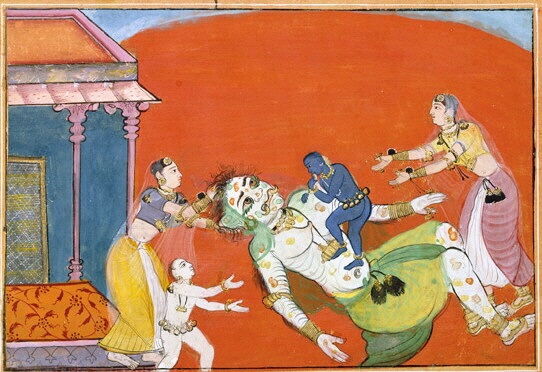
The Death of the Demoness Putana, India, 1610
This illustration is another depiction of the myth of Krishna and Putana from a religious text entitled Ancient Stories of Lord Krishna.

Putana posed as a beautiful woman (and possibly a Goddess) willing to act as foster mother and wet nurse to Krishna so that she could poison him as he breastfed. However, Krishna recognized the plot and instead sucked away Putana’s life force, or Prana, along with all of her milk. Putana is said to have either surrendered herself to Krishna or begged in vain for mercy. When she died, her body returned to its demonic form and the people of the town cut up her body, buried her bones, and burned her flesh. In this way, Putana was cleansed of her sins so that she could enter heaven.

Hindu artwork
The Infant Krishna Killing the Ogress Putana, India, 17th century (Photo Credit: Mary Harrsch)

Discussion Questions

Now I now most of you would NEVER show this in your classroom, because there’s a 100% chance your students will be full of giggles and jokes when you bring out this Hindu artwork. Nevertheless, I’m all for normalizing breastfeeding — even if it’s death by breastfeeding. Here are some questions to get them thinking deeper if you do decide to try it out:

  • What’s going on here? What do you see that makes you say that?
  • Look at the title. How do you think the baby could be killing Putana?
  • What can you tell about the characters based on what you see in the artwork?

Classroom Connections

In this story, Putana is killed by a seemingly innocuous task. Have students consider how other everyday tasks might be turned on their head into something dangerous. Imagine sweeping the floor as it turns to lava, watering the garden as the plants transform into monsters, or painting your nails only to discover the polish is poison. The possibilities are endless! Once they’re imagined a scenario they like, have students create a drawing or sculpture based on their idea.

This Hindu artwork brought to mind one of my favorite posts on this site. I wrote it after my youngest had just finished weaning. It’s called 5 Lactating Moms(?) and Crazy Babies from Art History. Maybe I should add Putana to the list!
Filed Under: Art and Artists, Art Connection Activities


April 18, 2018 7 Comments

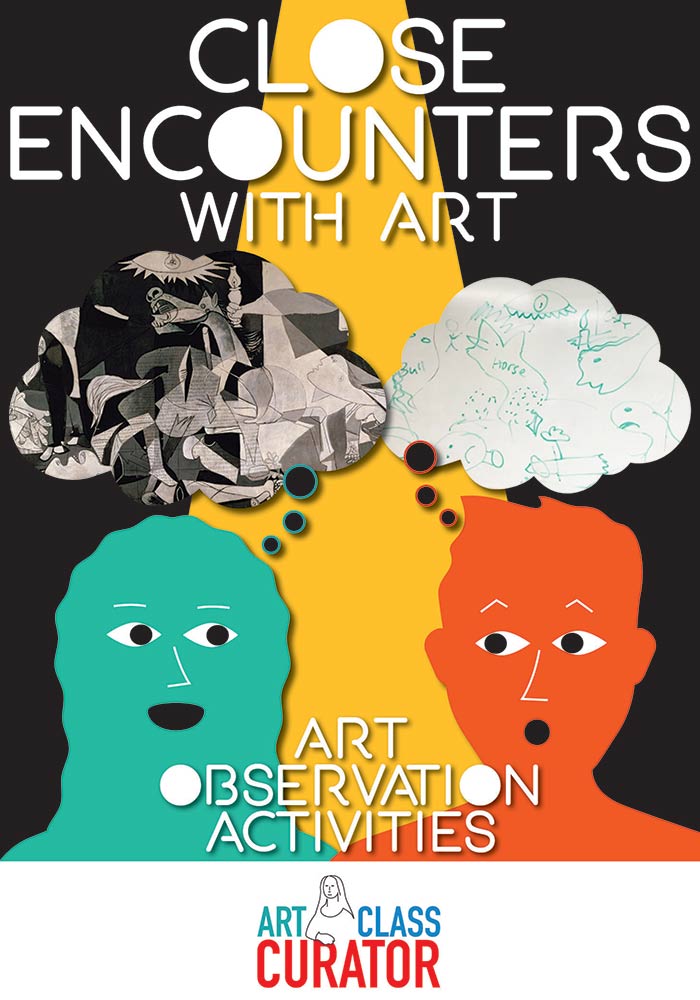
Close Encounters with Art – Art Observation Activities

Close Encounters with Art-Art Observation Activities 700x1000

Inside: Creative and engaging art observation activities that will help students connect with and remember works of art long after class ends.

How can we help our students truly see a work of art? Not just glance at it to make a judgment about whether or not they like it but really experience and connect with it?

Close Encounters with Art-Art Observation Activities 700x1000

Looking at Art

Students that spend an extended amount of time on art observation are more likely to take meaning from it and remember it. This close observation activity is at the core of the Charlotte Mason Picture Study technique and will encourage your students to study and analyze an artwork in a way that will stick with them long after the bell rings.

To start, give students at least five minutes of uninterrupted quiet time to look at an artwork and memorize every detail they can. If they get restless or say they’ve seen all there is to see, direct them back to the art observation and remind them that there is always more to find and commit to memory: colors, shapes, figures, composition, expression, and more.

Close Encounters with Art - Art Observation Activities
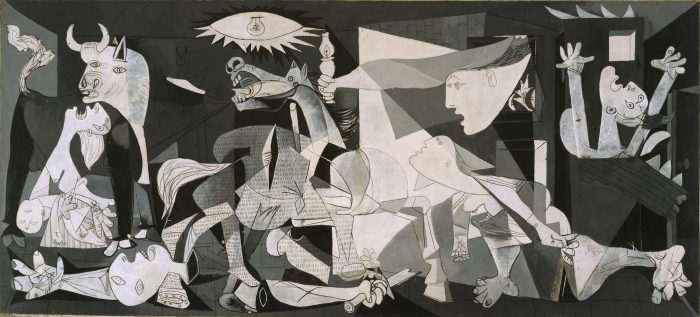
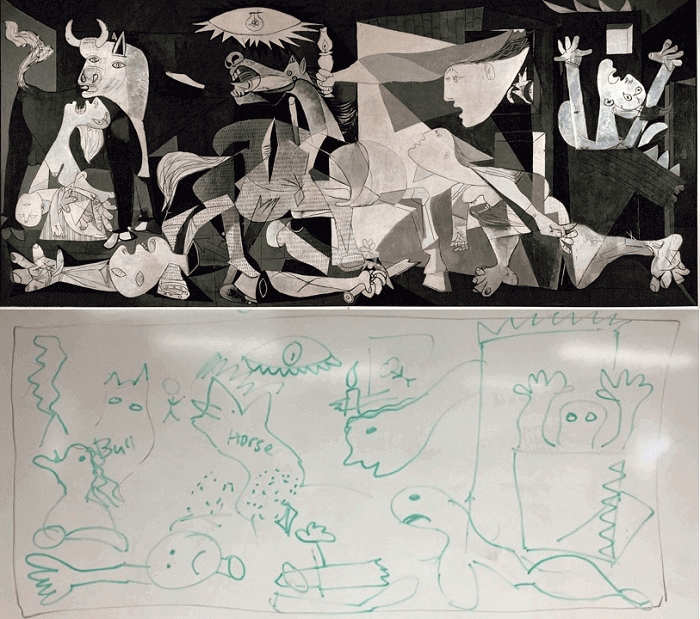
Guernica (1937) by Pablo Picasso is an excellent artwork for this close observation activity because of the many details.

Viewing the art this way allows each student to personally connect with the artwork. When you open with a class discussion, their attention is drawn to specific details as they are pointed out by other students but those features are less likely to stay with them since they didn’t recognize them on their own.

When time is up, remove the artwork from view. Now, there are a few options for testing their observation skills.

Here’s a Facebook Live video I did about this activity, and see a summary below.

Ultimate Art Appreciation Teaching Bundle

This stellar bundle includes everything you need to teach incredible, engaging art appreciation lessons.

Buy Now

Art Observation Activities

Solo Writing: Each student writes everything they remember

Solo Drawing: Each student draws what they remember

Team Competition: Groups of students draw the artwork and compete for the most accurate imitation

Class Discussion: An open dialogue where students work together to remember the artwork. See this post on Charlotte Mason Picture Study for a video of this discussion technique in action.

Whiteboard Drawing: Students describe the artwork and you draw what they remember (Even if they’re wrong!)

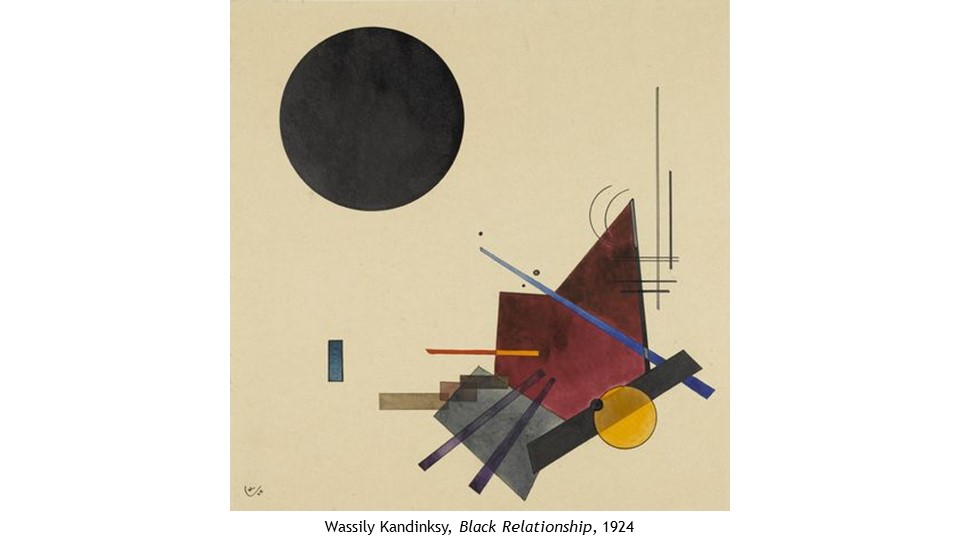
Abstract Construction: Choose an abstract artwork with well-defined shapes and colors. During the looking period, pass out scissors and construction paper in the colors of the artwork and students cut the shapes of the artwork from the paper. When you take the artwork away, have them arrange their cut shapes into the composition from memory.

Close Encounters with Art - Art Observation Activities

Whenever their memory is exhausted, compare their work to the original artwork so they can see what they got wrong and what they got right. Students are filled with a unique sense of delight and accomplishment after these memorization activities. The discussions that follow are rich with ideas and interpretations.

These activities are fun! Fun lessons are remembered lessons, and the artworks you explore this way will be carried by your students throughout their life. The more time they spend on art observation, the more enriching the experience will be and the more they’ll enjoy it.

art class guernica
Comparing Guernica with one of my class’s whiteboard drawing replicas.

If you’re interested in teaching Guernica, be sure to check out my lesson and reactions to Guernica in this post which includes a free symbolism worksheet!
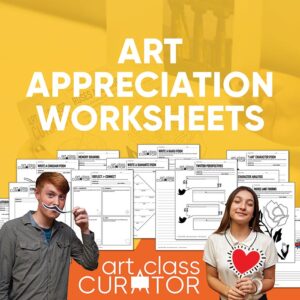
The Art Appreciation Printable Worksheet Bundle also has several worksheets for this activity–one for writing and one for drawing.

Art Appreciation Worksheet Bundle

This art worksheets bundle from the Art Class Curator includes 25 ready-to-use art worksheets for use with individual works of art. The worksheets for art in this document are designed to work with lots of different types of artworks, so you can just pick an artwork, print a worksheet, and start the activity. Each has instructions at the top and plenty of space to do the activity.

Buy Now

Filed Under: Art Connection Activities
Tagged With: pablo picasso, wassily kandinsky


  • Previous Page
  • Page 1
  • Interim pages omitted …
  • Page 13
  • Page 14
  • Page 15
  • Page 16
  • Page 17
  • Interim pages omitted …
  • Page 38
  • Next Page

Primary Sidebar

Hi! I’m Cindy Ingram, the creator of Art Class Curator and The Curated Connections Library
I’m on a mission to revolutionize education with the power of life-changing art connections. Art is not “extra”. Art is essential. We are empowering teachers to bridge the gap between art making and art connection, kindling a passion for art that will transform generations.

More About Me

Free Worksheets!

-Free Bundle of Art Appreciation Worksheets-

In this free bundle of art worksheets, you receive six ready-to-use art worksheets with looking activities designed to work with almost any work of art.

Download

Free Worksheets!

-Free Bundle of Art Appreciation Worksheets-

In this free bundle of art worksheets, you receive six ready-to-use art worksheets with looking activities designed to work with almost any work of art.

Enrollment in Curated Connections Library is currently open. Click here to join. Join our list to get more information and to get a free lesson from the vault! If you are purchasing for a school or school district, head over here for more information.

Check Out What’s New In The Shop

Experience Art: Engaging Art Criticism Discussions and Activities for Teachers and Students of All Ages
Call to Art: An Un-Conference for Art Educators
Curated Connections Library Membership
Perspectives High School Curriculum

More Products

Have You Listened to the Latest Podcast Episode?

Falling for Naudline Pierre’s Evocative Art: A Conversation with Madalyn (Part 2)

More Episodes

Testimonials

I like how this program, unlike other art class resource membership programs, feels authentic. It's like art matters more here, and not fancy flash-in-the-pan trendiness. The goal of Art Class Curator seemed to be helping kids develop a lifelong love and art appreciation versus "Hey, look. I painted this fish."
Erin A.
Your questions are helping me to delve into much deeper learning, and my students are getting better at discussion-and then, making connections in their own work. Art Class Curator is awesome!
Denise W.
Interestingly, my lower performing classes really get engaged in these [lessons] and come away with some profound thoughts!
Melissa G.
I had the most amazing 6th grade class today. They were jumping out of their seats with hands raised just to respond and give input. It was as if I was waving candy in front of them! They saw more and more and the ideas and interpretations unfolded. So cool!!! This is what makes teaching art so wonderful – thank you!!
Caroline G.
I just wanted to thank you for the invaluable resource you have through Art Class Curator. Not only do you have thought provoking activities and discussion prompts, but it saves me so much time in preparing things for myself! I feel like I’ve only scratched the surface with your site.
Maryjane F.

Get Art Inspiration To Your Inbox!

Enter your email address to get regular art inspiration to your inbox
plus a BUNDLE OF 6 FREE WORKSHEETS!
We hate SPAM and promise to keep your email address safe.
Download

Free Worksheets!

*Free Bundle of Art Appreciation Worksheets*

In this free bundle of art worksheets, you receive six ready-to-use art worksheets with looking activities designed to work with almost any work of art.

Copyright © 2026 Ignite Art, LLC DBA Art Class Curator •  All rights reserved  •  Privacy Policy  •  Terms of Service  •  Site Design by Emily White Designs