• Skip to main content
  • Skip to primary sidebar
  • About
    • About Art Class Curator
    • Contact
    • Speaking
    • Media & Press
    • Programs for Schools
  • Blog
  • Podcast
  • Shop
  • Join
  • Member Login

Art Class Curator

Hands-on and Minds-curious Art Learning

  • Art & Artists
  • Art Connection Activities
  • Art Teacher Tips
  • Elements & Principles
  • Downloads & Resources
Home
  • About
    • About Art Class Curator
    • Contact
    • Speaking
    • Media & Press
    • Programs for Schools
  • Blog
    • Art & Artists
    • Elements & Principles
    • Art Connection Activities
    • Art Teacher Tips
    • Downloads & Resources
  • Book
  • Podcast
  • Shop
  • Join
  • Member Login

All Posts from Art Curator for Kids

April 10, 2018 2 Comments

6 Early Finisher Activities Featuring Works of Art

early finisher activities for art class

Inside: Six art history-focused early finisher activities for students who complete their classwork long before everyone else. These activities are inspired by works of art with a focus on art history.

One of the biggest challenges any teacher faces is what to do with the early finishers. You know the students I’m talking about – the ones who turn in their paper while everyone else is still working and then twiddle their thumbs or distract their peers for the rest of the class period. You want these students to stay engaged and spend their class time productively, but who has time to plan a secondary lesson just in case there are some early finishers? I know I don’t. (If you do, please share your secrets!)
early finisher activities for art class

There is hope for the early finisher activities, though. You don’t have to spend hours brainstorming lessons and creating projects to keep them occupied. Simply choose a few of the meaningful art history-inspired early finisher activities below to keep all of your students learning until the bell rings.

When I finally transitioned from being an “art on the cart” teacher to having my own classroom, I set up an area called Creativity Corner. All of my students knew that when they finished their work early, they were expected to head to the corner. This let them take advantage of the supplies (modelling clay, paper, drawing instruments, etc.) and easy finisher activities there without distracting other students. I know this space was a luxury, so don’t fret if you don’t have the extra room. These art history early finisher activities are mess-free, take up little to no space, and can be done at students’ desks.

This post contains affiliate links. When you purchase using links from these links, Art Class Curator receives a small commission with no extra cost to you. Thank you for your support!

Complete the Picture
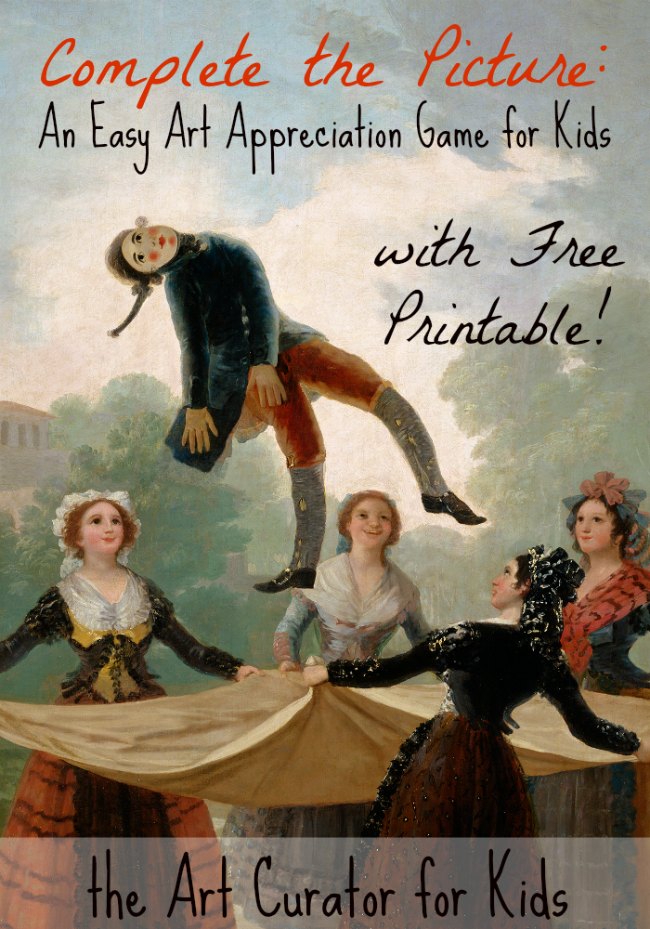
The Art Curator for Kids - Complete the Picture - An Easy Art Appreciation Game for Kids

This easy art appreciation game is perfect for all ages. For Complete the Picture, you give students a small part of a painting like the one above and have them draw the scene around it. Be sure to offer several intriguing images that will spark your students’ imaginations. When your early finishers are done drawing the scene they imagine, direct them to a copy of the full artwork so they can compare their drawing with the actual painting. You can download a free printable and see my favorite artworks for this activity in this post.
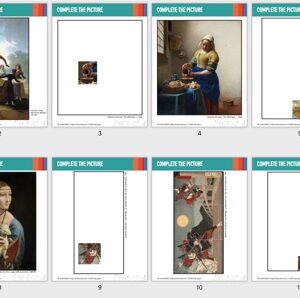
Free PDF!

Complete the Picture

Ready-to-go Art Appreciation Activity

This is a great activity to have on hand in your classroom. Just print it and give it to your student or the whole class. They draw the scene around a small portion of the artwork. Or, just discuss what they notice in the portion and have them predict what will be in the rest of the painting. When they’re done, show them the full (included) artwork and discuss!

Download

Free PDF!

Complete the Picture

Ready-to-go Art Appreciation Activity

This is a great activity to have on hand in your classroom. Just print it and give it to your student or the whole class. They draw the scene around a small portion of the artwork. Or, just discuss what they notice in the portion and have them predict what will be in the rest of the painting. When they’re done, show them the full (included) artwork and discuss!

Early Finisher Activities: Puzzles

Crowdsource a Puzzle

Have students collaborate across classes to complete a puzzle of an artwork. Putting together a puzzle requires students to use their observation skills and helps them pay attention to details. There are a lot of great artwork puzzles available, from Van Gogh and Hokusai to Vermeer and Renoir. If you’re short on space, use a puzzle mat for easy storage.

Make Your Own Puzzles

Since many art puzzles are in the 1,000+ piece category, an option that might work better for younger students is to create your own art history inspired puzzles. Print some of your favorite artworks and cut them into jigsaw pieces for your students to put back together. For durability, you can laminate the pieces or print the images on card stock or mount to thin cardboard (like cereal boxes).

Early Finisher Activities Art Class Curator

Art Library

Gather art books to create your own classroom library. Visual encyclopedias and artist biographies offer a wealth of information and images for early finishers to comb through while they wait for their classmates. They can explore art history as a whole or research a specific artist or time period. You can purchase your own books or use your school’s library to offer a variety of titles. If you don’t have the space for physical books but do have easy internet access, have students use websites like Khan Academy, The Met Museum or the art history section of Ducksters.

Scavenger Hunts

Art libraries are perfect for scavenger hunts and there are several ways to use the books (or websites) to get students searching and discovering.

  • Create worksheets that direct students to specific pages and have them answer questions about the artwork on that page.
  • Create codebreaker worksheets that ask students to find specific items (such as a seashell or Cupid, etc.) then use the page numbers the items were found on to correspond to letters and reveal a secret message.
  • Have students find and draw a list of specific items.
    • For younger students, add a math component by having them find and draw several of the same item (such as ten hats or three dogs, etc.). For a language integration, have them find objects that start with each letter of the alphabet and draw those (such as an ant for A, a ball for B, a cat for C, etc.).

Art Cards

Postcard sized artworks enable students to quickly ingest a lot of knowledge about multiple pieces. You can create your own or buy a set and write facts and questions on the back for students to ponder. The Louvre compiled a great deck that includes 100 artworks with in-depth historical information on each card.
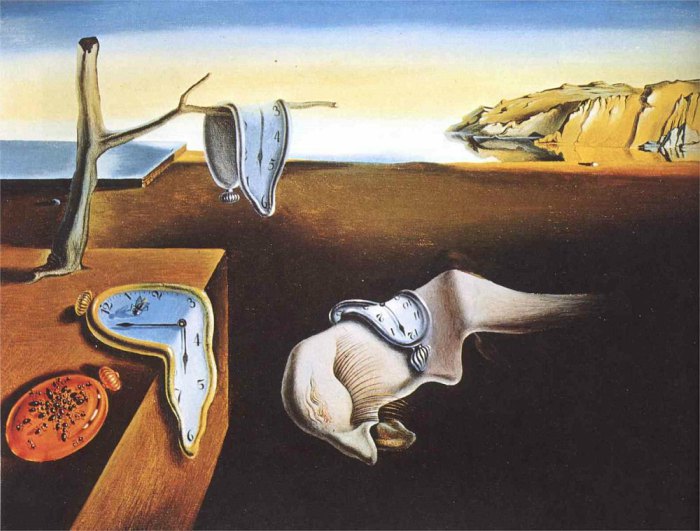
Early Finisher Activities - Art Class Curator - Salvador Dali, The Persistence of Memory, 1931
Salvador Dali, The Persistence of Memory, 1931

Drawing Prompts

One of my favorite early finisher activities is zany drawing prompts. I write several notecards and separate them into who, what, how, and where categories. Students pick a card from each category and draw the resulting combination. For example, a student might be asked to draw a giraffe (who) dancing (what) slowly (how) on the moon (where).
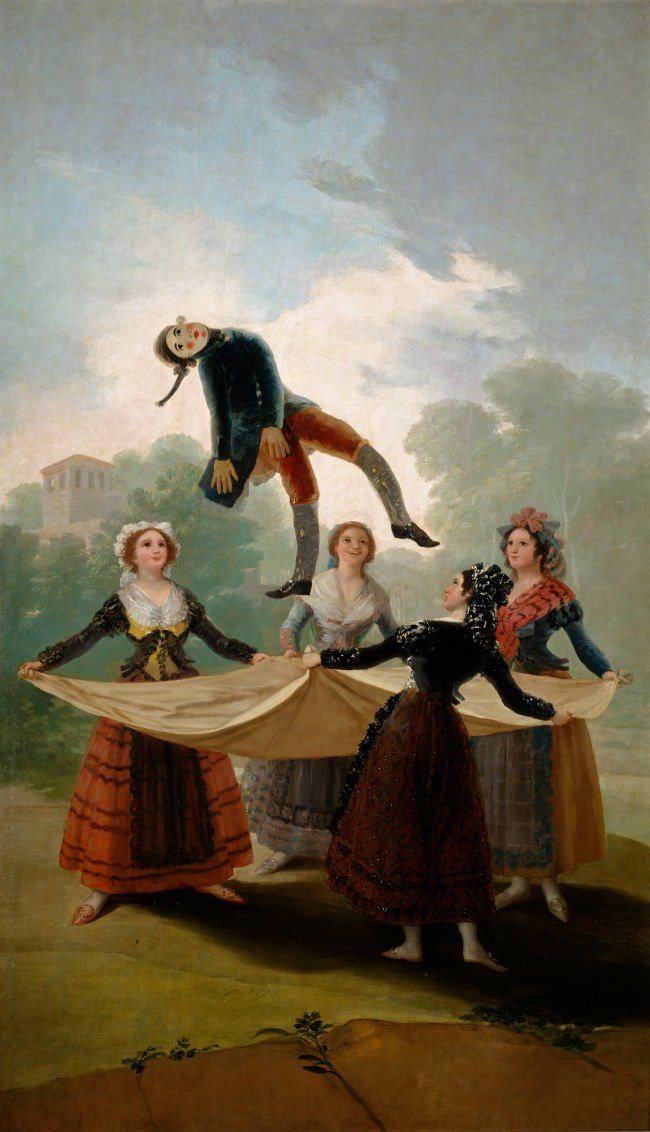
Early Finisher Activities The Art Curator for Kids - Francisco Goya - The Straw Manikin
Francisco Goya, The Straw Manikin, 1791-92

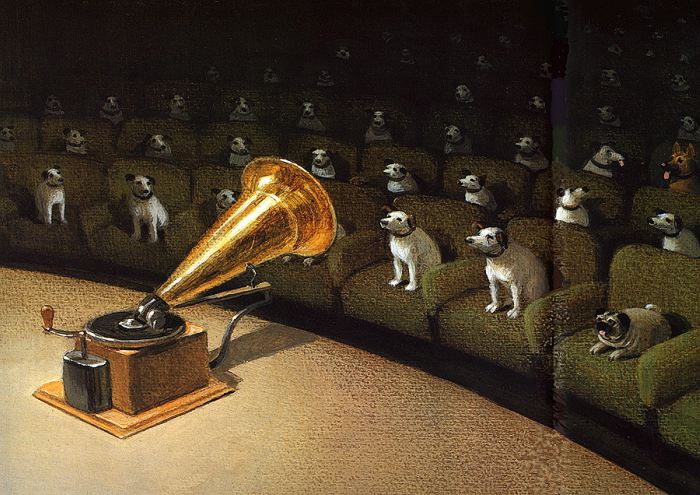
To put an art history twist on these freeform prompts, create cards based on specific artworks. For example, using The Straw Manikin as inspiration, you could write cards asking for a mannequin (who) being thrown (what) up high (how) in the air (where). Or, you can give them a complete prompt, such as ‘draw time moving slowly’ (based on The Persistence of Memory shown above) or ‘draw dogs in a theatre’ (based on Their Master’s Voice pictured below). When they complete their drawing, you can direct them to images of the artwork that inspired the prompt.
Early Finisher Activities - Art Class Curator - Michael Sowa, Their Master's Voice
Michael Sowa, Their Master’s Voice, 1996

Using Technology

It’s becoming more and more common for students to have their own computers or tablets in the classroom. Whether your students share a computer or have their own devices, utilizing technology is a great way to keep early finishers engaged.

There are endless art resources online, but searching through all of them to find quality content takes a lot of time, so here are some of my favorites:

  • The National Gallery of Art website offers fifteen entertaining, interactive activities that will allow students to explore their own creativity while learning about art history.
  • They can explore the elements and principles with The Artist’s Toolkit.
  • Students get to learn about the myths and legends that have influenced artists around the world on this site.
  • Many Native American languages do not have a word for art, yet their cultures are teeming with artworks that are both functional and, in many cases, sacred. Surrounded by Beauty introduces students to the unique art of Native Americans from across the continent.
  • Inside Art takes students on an interactive adventure that explores the techniques and artists behind four artworks.
  • Students can make their very own Jackson Pollock splatter painting.
  • A. Pintura: Art Detective lets students play the part of a 1940’s noir detective with a degree in art history who must identify the origin of a painting by exploring the works of various artists. The site offers a free worksheet that can be paired with the game.
  • Younger students will enjoy doodling over the masterpieces of artists from Rembrandt and Degas to Miro and Picasso on Toy Theater.
Ultimate Art Appreciation Teaching Bundle

This stellar bundle includes everything you need to teach incredible, engaging art appreciation lessons.
Buy Now
Art Teacher Blogs

This post is a part of The Art Ed Blogger’s Network: Monthly Tips and Inspiration from Art Teacher Blogs. On the first Tuesday each month, each of these art teacher blogs will post their best ideas on the same topic.

Participating Art Teacher Blogs:

  • Art Class Curator
  • Art Ed Guru
  • Art is Basic
  • Art Room Blog
  • Art Teacher Tales
  • Art with Mr. E
  • Arte a Scuola
  • Artful Artsy Amy
  • Capitol of Creativity
  • Create Art with ME
  • MiniMatisse
  • Mona Lisa Lives Here
  • Mr. Calvert’s Art Room Happenings
  • Mrs. Boudreaux’s Amazing Art Room
  • Mrs. T’s Art Room
  • Ms. Nasser’s Art Studio
  • Party in the Art Room
  • shine brite zamorano
  • Tales from the Traveling Art Teacher
  • There’s a Dragon in my Art Room

Please note, this post includes Amazon affiliate links. As an Amazon Associate I earn from qualifying purchases.
Filed Under: Art Connection Activities, Art Ed Blogger's Network, Art Teacher Tips
Tagged With: francisco goya, michael sowa, salvador dali


April 4, 2018 Leave a Comment

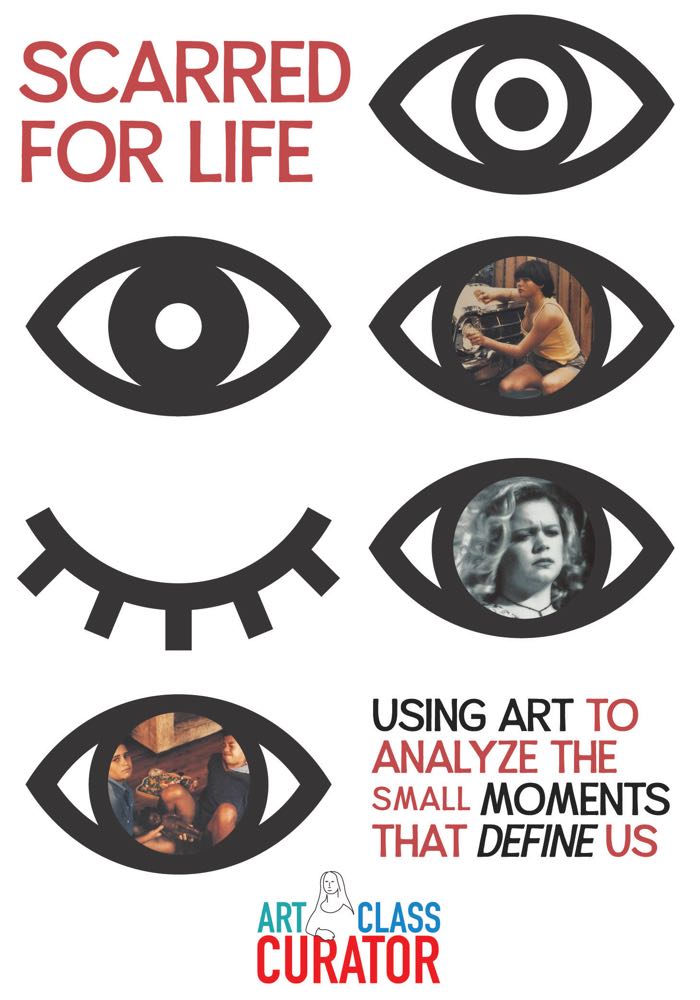
Scarred for Life: Using Art to Analyze the Small Moments that Define Us

Tracey Moffatt Artwork-700x1000-2

Inside: An exploration of Tracey Moffatt artwork that looks at the moments that scar us, including discussion questions and classroom activities tailored to middle and high school students.

There are moments that stay with us, both good and bad. Sometimes they are big moments that we know are coming, prepare for, and catalog in our memory. However, the moments we remember are often small and unannounced, leaving a watermark on our lives.

Tracey Moffatt Artwork

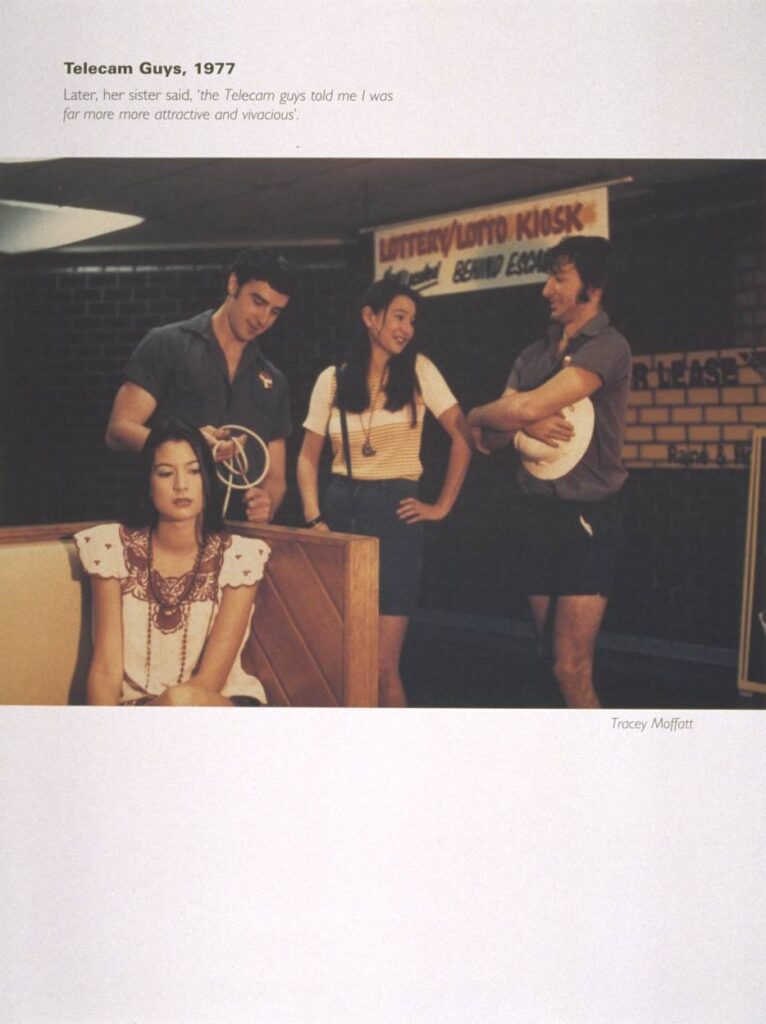
Our brains tend to focus on the negative moments, the dark events that mar our innocence and cause us pain. Those small but not insignificant moments are the subject of some Tracey Moffatt artwork, especially her 1994 photo series Scarred for Life.

Tracey Moffatt artwork
Tracey Moffatt, Telecam Guys, 1977, 1994

Get the Full Lesson!

This Lesson is in The Curated Connections Library!

Find the full lesson from this post along with hundreds of other art teaching resources and trainings in the Curated Connections Library. Click here for more information about how to join or enter your email below for a free SPARKworks lesson from the membership!

Join the List

Get the Full Lesson!

This Lesson is in The Curated Connections Library!

Find the full lesson from this post along with hundreds of other art teaching resources and trainings in the Curated Connections Library. Click here for more information about how to join or enter your email below for a free SPARKworks lesson from the membership!

Scarred for Life

Tracey Moffatt is a contemporary Australian photographer and filmmaker whose work focuses on cultural and societal norms and tackles issues of sexuality, history, representation, colonialism, and race. When I first discovered her work and scrolled through the Tracey Moffatt artwork on the Tate’s website, I found myself feeling a bit of anxiety and discomfort.

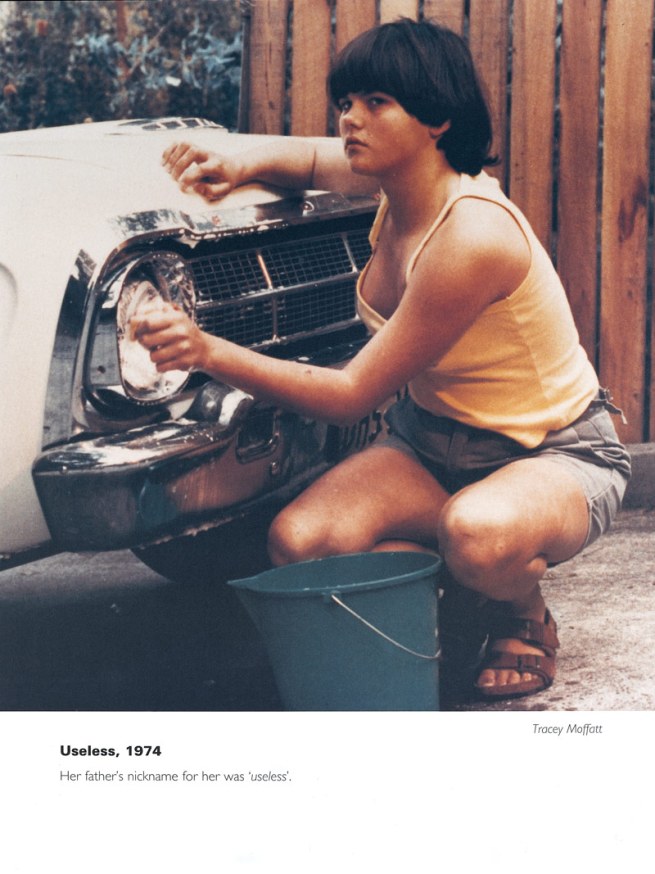
I leaned into my emotions, as we should when looking at art. Listening to our feelings allows a deeper exploration of both the art and ourselves. I noticed that all of the photographs from Scarred for Life have captions that, while not necessarily explaining the photos, add layers to what we see. For example, the caption on this artwork is: Her father’s nickname for her was ‘useless’.

Tracey Moffatt artwork
Tracey Moffatt, Useless, 1974, 1994

Each photograph documents brief, bitter family moments that are universal in their relatability. The details differ, but we all endure small digs at our self-worth that bring us down and subconsciously teach us about society, how it works, and where we fit (or don’t fit) in.

Tracey Moffatt artwork
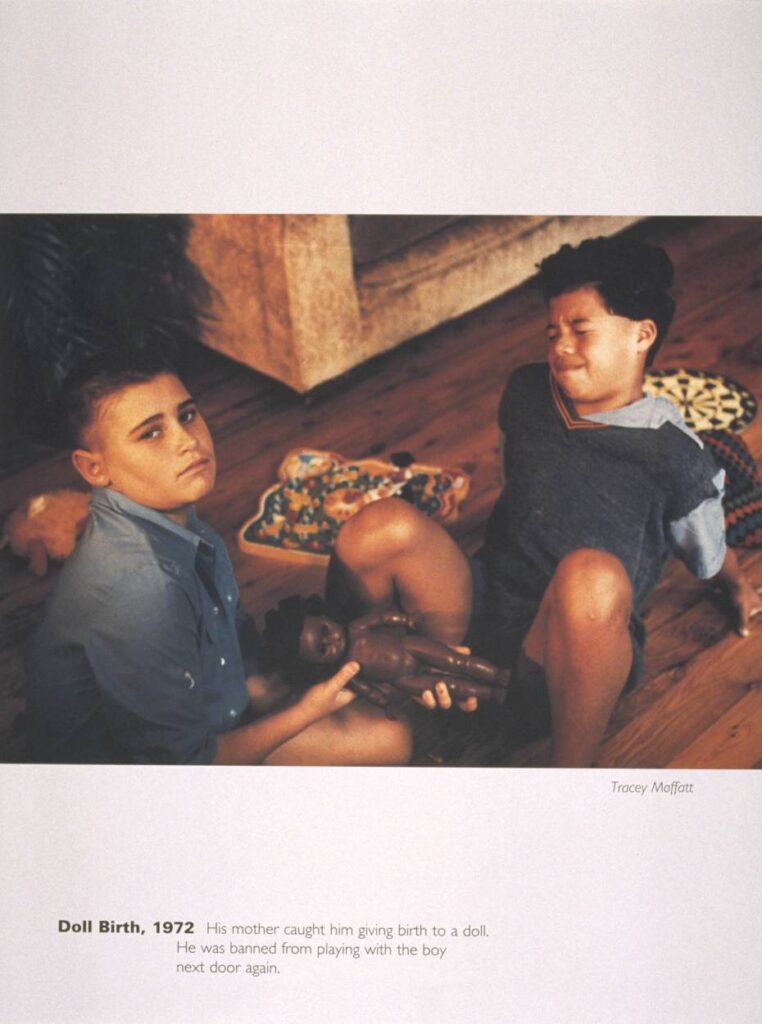
Tracey Moffatt, Doll Birth, 1972, 1994

Gender is another theme that runs through Moffatt’s work. In this photograph, entitled Doll Birth, 1972, the caption reads: His mother caught him giving birth to a doll. He was banned from playing with the boy next door again. The cultural pressure for children to conform to gender roles is lessening, but we still normally expect girls to play house and look pretty while boys get dirty and play with cars. This photograph invites us to imagine the child’s perspective, but it also speaks of the mother and society at large.

Tracey Moffatt artwork, especially this photo series, is an excellent choice to share with middle and high school students who are striving to understand themselves and find others that will understand and accept them. They need to know that the brief, bitter moments do not define who they are and that they are not alone in experiencing them. It’s also important for them to consider how words affect people and how we process negative messages.

Tracey Moffatt Artwork Discussion Questions

  • What’s going on here?
  • What do you see that makes you say that?
  • How is the person in this photograph feeling right now? How can you tell?
  • What feelings do you feel towards this person?
  • How does the caption change how you feel towards this situation?

Classroom Activities

The captions are an important part of these artworks. They add to our interpretations and change the narrative. There are a couple of ways you can illustrate their importance to students with writing activities.

Have students study the picture without the title and caption. Then, have them write a story of her life and what she is thinking. (Alternatively, they can write a letter from her perspective, which there is a template for in the Art Appreciation Worksheet Bundle.) Afterward, have students do the same thing with the second photograph. Reveal the titles and captions and discuss how they add a new layer of meaning.

Or, divide the students into groups. Show some groups the artwork with the caption and others the artwork without the caption. Then, have them write a story or letter and compare their interpretations when they finish.

Extensions

Assign a photography project in which the students take photos of their own lives and add captions to deepen the meaning of the photograph. The subject may be too personal for some students. If so, you may choose to let them focus on a more general issue, such as a story about someone they know or someone in the public eye.

Filed Under: Art and Artists
Tagged With: tracey moffatt


March 27, 2018 5 Comments

Parson Weems’ Fable: Using the Elements and Principles of Art to Tell a Story

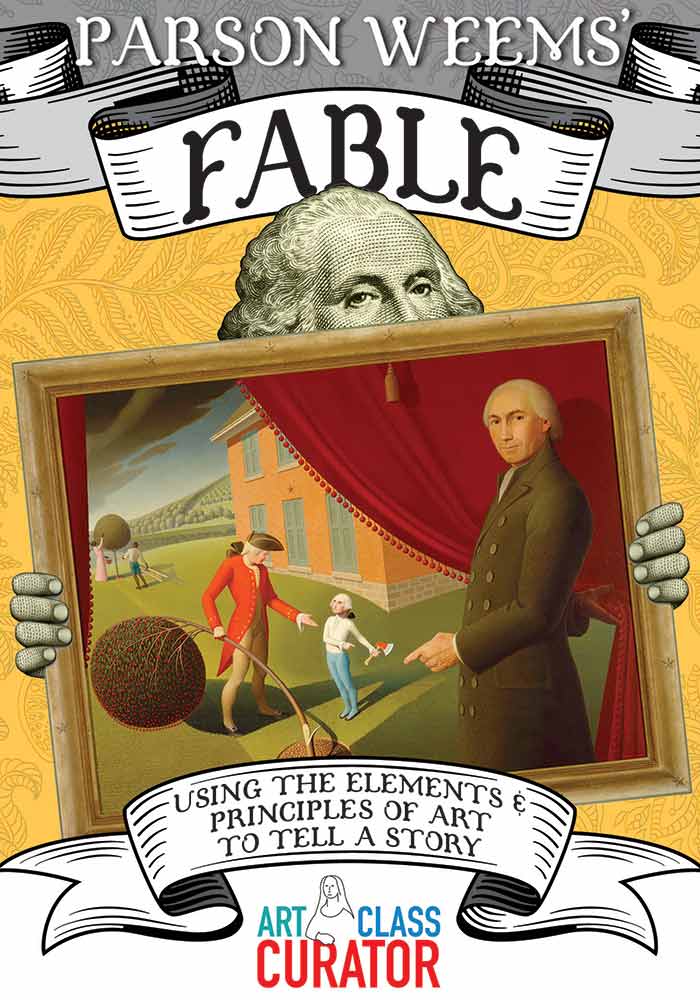
Parson Weems Fable-700x1000

Inside: Information and discussion ideas for Parson Weems Fable by Grant Wood. This is an excellent choice of artwork to discuss the elements and principles of art–especially emphasis, shape, line, and color!

Parson Weems Fable-700x1000

Grant Wood is best known for American Gothic, but he also created one of my favorite artworks to discuss with students. Parson Weems’ Fable is a special treat for elementary aged students, but older kids enjoy analyzing it as well. It’s both fun and instructional to interpret because of the pronounced uses of the elements and principles of art. It’s easy for students to see how the artist’s choices emphasize certain parts of the painting.

Grant Wood, Parson Weems Fable - Elements and Principles of Art
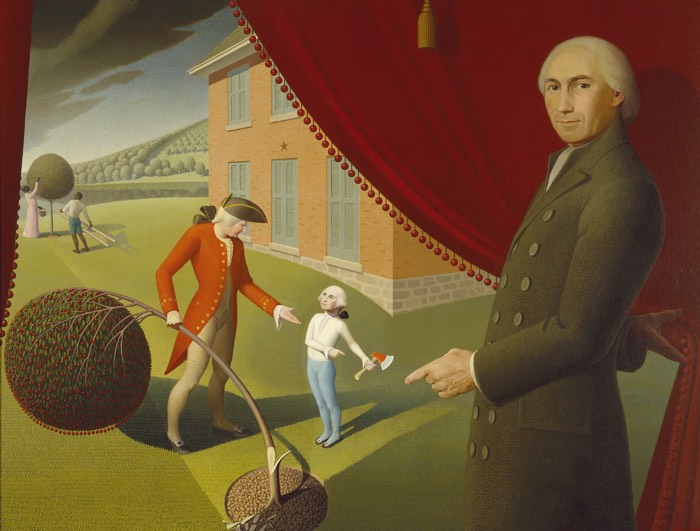
Grant Wood, Parson Weems’ Fable, 1939

The Elements and Principles of Art in Parson Weems Fable

Emphasis

One of the first things most people notice about this painting is the absurd adult head atop a child’s body. The wispy white wave of his hair and the iconic profile instantly mark him as George Washington. Within a few minutes, anyone who has heard the story of Washington and the cherry tree will recognize what is being depicted, but how do the artist’s choices direct us to this narrative?

Line

Nearly all of the lines in the painting are pointed towards Washington and his ax: the hand and fingers of the trio in the foreground, the edge of the house, the ladder, and the sliver of tree bark. This immediately draws our attention to that spot.

Shape

The repetition of circles and curves guides our eyes around the painting, a detail which students usually notice on their own if given time. There’s the curve of the curtain, the trees, the cherries, the circle of mulch around the bottom of the tree, as well as the many buttons.

Light

Light adds depth to the painting, from the dark clouds above the heads of the slaves to the spotlight and resulting shadows around George Washington. The bright white and blue of Washington’s clothes stand out in contrast to the more muted colors of the rest of the painting, adding further emphasis to the center point of the artwork.

Color

Wood used primarily red and green shades in this painting. These two complementary colors bring the picture together, showcasing another design element – unity.

Space, Perspective, and Scale

By placing the narrator in the foreground in front of a theatre curtain, Grant Wood tells us that the story is not true. The narrator, Parson Weems, stands in front telling the story.

Drawing Meaning from Parson Weems Fable

I was surprised by how many students had never heard the story of George Washington and the cherry tree. Meanwhile, many adults still believe the story to be true. Here’s what Grant Wood, who died in 1942, had to say about his painting:

When I was a boy, we all learned the story of George Washington and the cherry tree and accepted it as gospel truth. The present, more enlightened younger generation, however, is well aware that this incident never happened, but that it was the invention of Washington’s most famous biographer, the Rev. Mason Locke Weems.

The conviction that a valuable and colorful part of our national heritage is being lost as a result of the work of analytical historians and debunking biographers prompted me to paint my version of George Washington and the cherry tree. I sincerely hope that this painting will reawaken interest in the cherry tree and other bits of American folklore that are too good to lose.

Since it’s impossible to know who in your classroom has heard the story and who believes it to be true, I refrain from sharing the title until students have had a chance to discuss it. This allows the conversation to develop in interesting ways.

It’s fun to dissect how the choices Grant Wood made with the elements of art and principles of design lead to the development of meaning. The space and perspective of the narrator and curtain and the use of the elements of art to show emphasis tell us what we need to know about Weems’ role in the creation of the story.

Discussion Questions

  • What’s going on in this painting? How can you tell?
  • Who are these people?
  • Who is the guy in front? What is his role in the painting?
  • What is strange about this painting?
  • Why do you think the artist used the older version of George Washington’s head instead of a child’s head?
  • What shape is repeated throughout the painting? Why do you think the artist
    repeated that shape?
  • How does the artist use line and color to draw attention to George Washington?
  • Which area of the painting is emphasized by the artist?
  • What choices does the artist make to create emphasis?

The conversations that erupt from this artwork are always fun to listen to. Many students conclude that the man holding the curtain is someone related to Washington. Some think he is a version of George Washington presenting the scene from the future. Wherever your students’ minds fly, you’ll have fun exploring history, myth, and the elements and principles of art.

Download the Free Elements and Principles Printable Pack


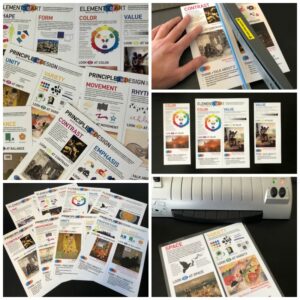
This pack of printables was designed to work in a variety of ways in your classroom when teaching the elements and principles of art. You can print and hang in your classroom as posters/anchor charts or you can cut each element and principle of art in its own individual card to use as a lesson manipulative.

Free Resource!

* Elements & Principles Printable Pack *

The Elements & Principles of Art are the foundation of every artwork, but teaching them can be a bore. Wake your students up and engage them with full color artworks, easy to understand definitions, and thought-provoking higher level thinking questions. This versatile resource can be hung in the classroom or used as an art manipulative.

Download

Free Resource!

* Elements & Principles Printable Pack *

The Elements & Principles of Art are the foundation of every artwork, but teaching them can be a bore. Wake your students up and engage them with full color artworks, easy to understand definitions, and thought-provoking higher level thinking questions. This versatile resource can be hung in the classroom or used as an art manipulative.

Last year, I did a video on Parson Weems Fable. Check it out:

Filed Under: Art and Artists, Elements and Principles of Art
Tagged With: grant wood


March 13, 2018 Leave a Comment

The Art of an Idea: Math and Art Integration with Sol LeWitt’s Instruction

The Art of an Idea-The Concepts of Sol Lewitt Instruction

Inside: An exploration of conceptual art with a focus on Sol LeWitt instruction installations. Students create their own version of a LeWitt wall drawing or write their own instructions to be interpreted by classmates.

The Art of an Idea-The Concepts of Sol Lewitt Instruction

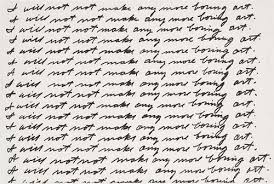
Conceptual art is hard to define. While other art movements are determined by their age or style, conceptualism is more concerned with an artist’s idea. Conceptual artworks may take the form of a performance like the famous work of Marina Abramovic or rely on text like John Baldessari’s I Will Not Make Any More Boring Art.

Conceptual Art sol lewitt instruction
John Baldessari, I Will Not Make Any More Boring Art, 1971

Many have challenged whether conceptual works should even be considered art, as they usually lack the expertise, appearance, and marketability of other pieces. Viewers might be tempted to remark that they could have created the artwork themselves. Love it or hate it, conceptual artworks challenge our suppositions and expand the boundaries of art.

One conceptual artist who focused on the concept over the construction was Sol LeWitt. After serving in the Korean War, LeWitt opened a studio on the Lower East Side of New York City, attended the School of Visual Arts, and worked at Seventeen magazine where he explored his interest in design. He later worked as a graphic designer for an architect and as a night receptionist and clerk at the New York Museum of Modern Art.

In conceptual art the idea or concept is the most important aspect of the work. When an artist uses a conceptual form of art, it means that all of the planning and decisions are made beforehand and the execution is a perfunctory affair. The idea becomes a machine that makes the art.
-Sol LeWitt

Sol LeWitt Instruction
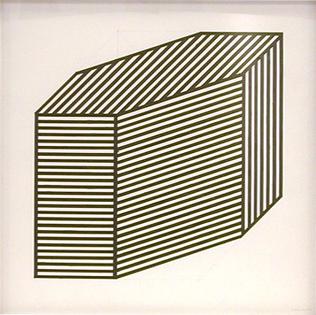
Sol LeWitt, Isometric Projection #13, 1981

These early experiences clearly influenced his work as an artist. In the early 1960s, LeWitt began to create “structures”, a term he preferred over sculpture. Later, he created wall drawings gouaches, artist’s books, and dabbled in architecture and landscaping.

Sol LeWitt Instruction
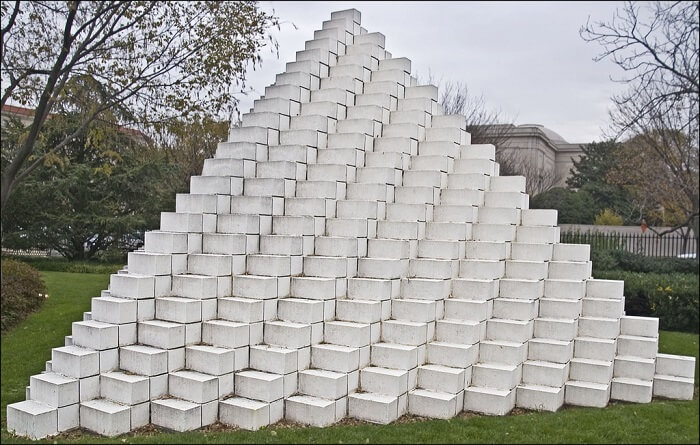
Sol LeWitt, Four-Sided Pyramid, 1965

Sol LeWitt Instruction

LeWitt’s instruction-based artworks may be his most recognizable. For these projects, LeWitt hired individuals to construct installations based only on his instructions. He viewed himself like an architect that created the design but left the actual building to others.

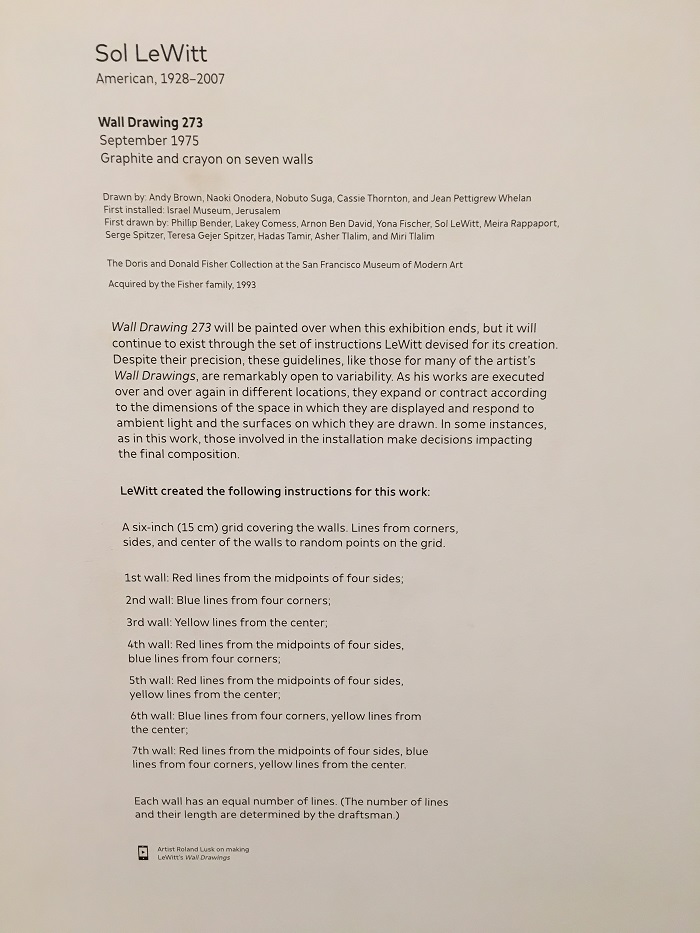
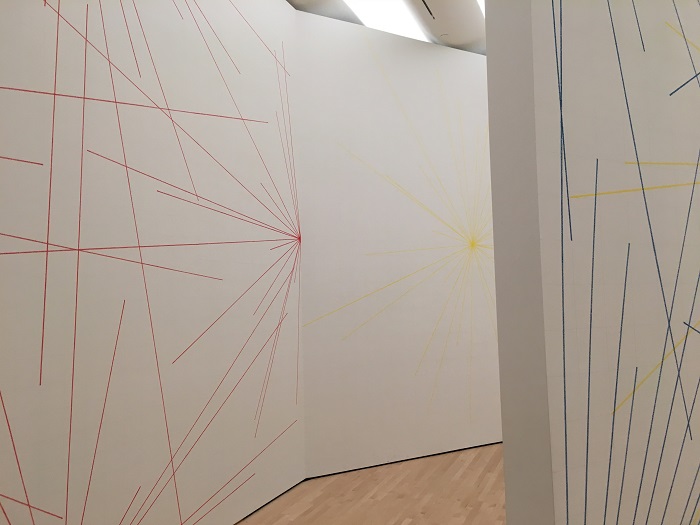
Here are the instructions for a piece I saw at the SFMOMA in December.

Sol LeWitt Instruction

Sol LeWitt instruction never reached the exact precision of the blueprints an architect authors. His instructions left much open to interpretation and no two installations were identical. However, his works did employ the geometric patterns and mathematical concepts used by architects.

Sol LeWitt Instruction
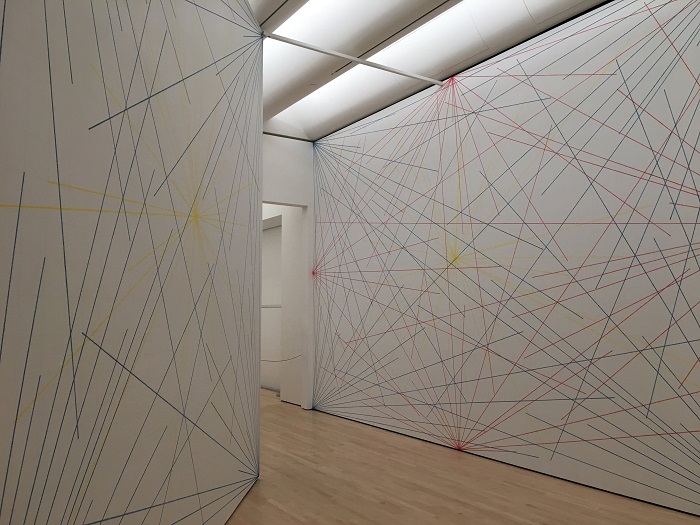
Wall Drawing 273, Sol LeWitt, 1975

How would you do it?

Before showing your students the San Francisco Museum of Modern Art’s take on Wall Drawing 273, you can give them the instructions (pictured above) and have them create their own version.

Give them pieces of white paper to use for the “walls,” rulers, and red, blue, and yellow markers. Have students compare their work to see how everyone interpreted Sol LeWitt’s instructions differently.

Sol LeWitt Instruction
Wall Drawing 273, Sol LeWitt, 1975

Discussion

Conceptual art elicits a wide variety of reactions, making it a conversational flashpoint. For a complete lesson, pair the Sol LeWitt instruction STEAM activity below with a classroom discussion.

Recommended Discussion Questions:

  • Is art the idea or is art the final product?
  • Should we call Sol LeWitt the artist since he didn’t physically make the piece?
  • Should the people who constructed the piece be given equal credit for its creation?

Sol LeWitt Instruction Math and Art Integration

The mathematical nature of DeWitt’s work makes it a great inspiration for STEAM-integrated art lessons.

For this classroom activity, separate students into pairs or groups. Each student or group will write instructions for the creation of an artwork. Require them to use their math vocabulary and their knowledge of the elements of art and principles of design in the instructions. For example, they may require specific measurements, the use of acute and/or obtuse angles, the inclusion of various shapes, lines of a certain width or length, or anything else they can imagine. Then, students swap instructions with their partner or another group and create the piece described in the instructions they receive.

While I’ve always seen the potential of the Sol LeWitt instruction pieces in the classroom, the math and art integration was inspired by a presentation I attended last Fall at the Arts School Network Conference. Magdalena Fitzsimmons of Baltimore County Public Schools presented about her take on Sol Lewitt’s math and art integration. Students had to reference 3 math concepts and 3 elements and principles in their instructions.

More Sol LeWitt Lessons and Resources

  • Check out this National Gallery of Art Lesson Plan for your high schoolers based on Four-Sided Pyramid pictured above.
  • You can also check our Devon Calvert’s lesson on Sol LeWitt for a related art project for your elementary students!
  • Have students read and interpret these sentences on conceptual art written by Sol LeWitt to further explore conceptual art.
  • Artist Abigail Levine performed and videotaped herself enacting a Sol LeWitt instruction piece. Discuss with your students who is the artist in this scenario!

This post is part of the The Art Ed Blogger’s Network monthly blog series! This month, we are writing about STEAM/Art Integration. Join us on the first Tuesday each month for new projects, ideas, and inspiration.

Participating Art Teacher Blogs:

  • Art Class Curator
  • Art Ed Guru
  • Art is Basic
  • Art Room Blog
  • Art with Mr. E
  • Arte a Scoula
  • Artful Artsy Amy
  • Brava Art Press
  • Capitol of Creativity
  • Create Art with ME
  • MiniMatisse
  • Mr. Calvert’s Art Room Happenings
  • Mrs. Boudreaux’s Amazing Art Room
  • Mrs. T’s Art Room
  • Party in the Art Room
  • shine brite zamorano
  • Tales from the Traveling Art Teacher
  • There’s a Dragon in my Art Room

Filed Under: Art Connection Activities, Elements and Principles of Art
Tagged With: sol lewitt


March 7, 2018 6 Comments

Things Said About Us: Art-Inspired Self Esteem Activity for Kids

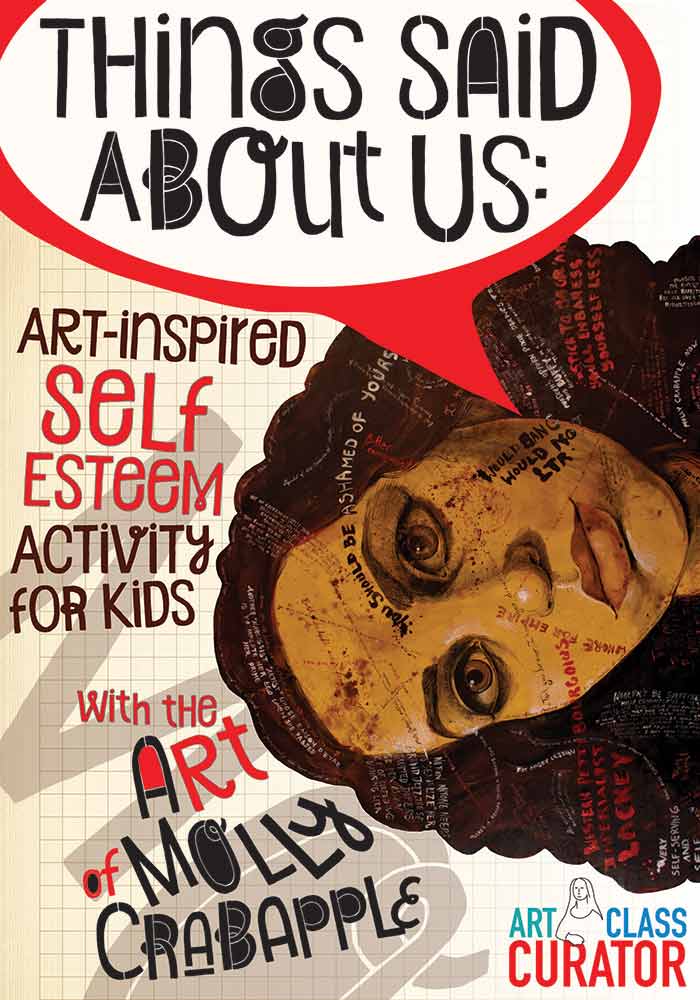
Things Said About Us-Art-Inspired Self Esteem Activity for Kids-Molly Crabapple-700x1000

Inside: In this art lesson, students analyze an artwork by Molly Crabapple and discuss how it relates to self-confidence and contemporary culture. Paired with art-inspired self esteem activities for kids where students compliment one another, they’ll discover the power of words.

Our students’ self-worth is under attack. Social media allows bullying and harassment to take place out of the sight of parents and teachers. Taunts and insults can be hurled with the press of a button, leaving little room to consider the consequences or the humanity of the person receiving the abuse. There is no escape because the places and times that were once safe spaces are now invaded by gadgets that we never turn off.

Things Said About Us-Art-Inspired Self Esteem Activities for Kids-Molly Crabapple-700x1000

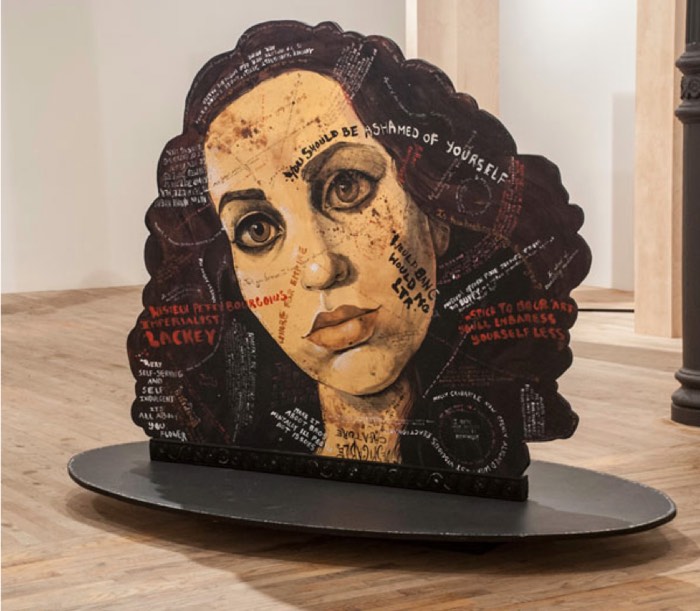
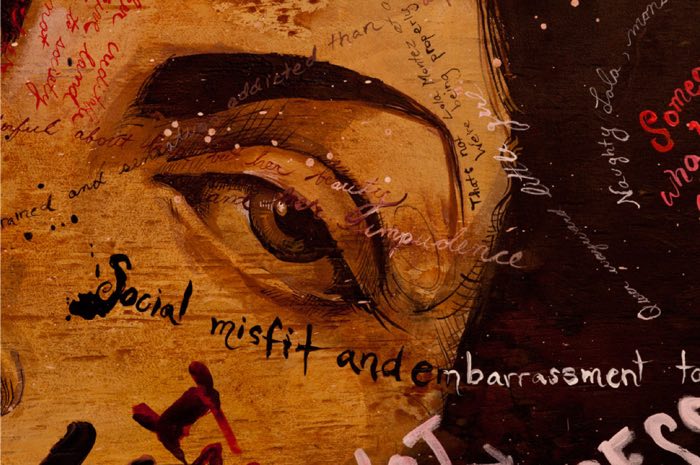
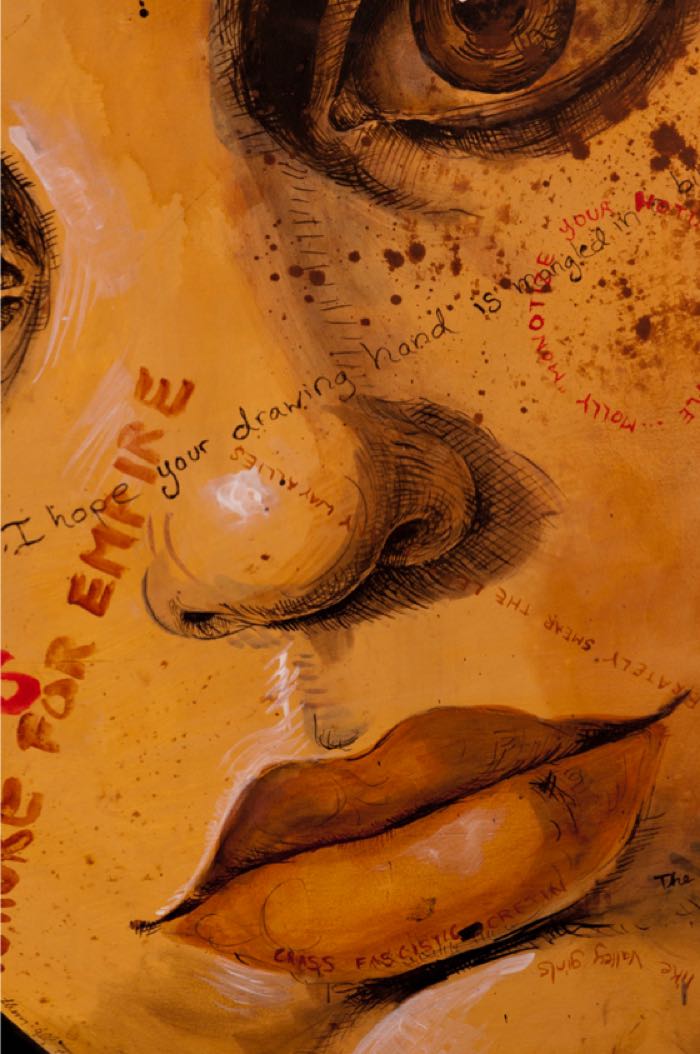
In this cultural climate, it’s easy for educators to feel powerless to help. But we can help with art-inspired self esteem activities for kids. Looking at art can be a healing, empathy-inducing experience for an entire class. Molly Crabapple’s Portraits of myself and Lola Montes with things said about us by our contemporaries is a powerful, transfixing two-sided sculpture that confronts these issues directly.

Get the Full Lesson!

This Lesson is in The Curated Connections Library!

Find the full lesson from this post along with hundreds of other art teaching resources and trainings in the Curated Connections Library. Click here for more information about how to join or enter your email below for a free SPARKworks lesson from the membership!

Join the List

Get the Full Lesson!

This Lesson is in The Curated Connections Library!

Find the full lesson from this post along with hundreds of other art teaching resources and trainings in the Curated Connections Library. Click here for more information about how to join or enter your email below for a free SPARKworks lesson from the membership!

Molly Crabapple, Portraits of myself and Lola Montes with things said about us by our contemporaries, 2014
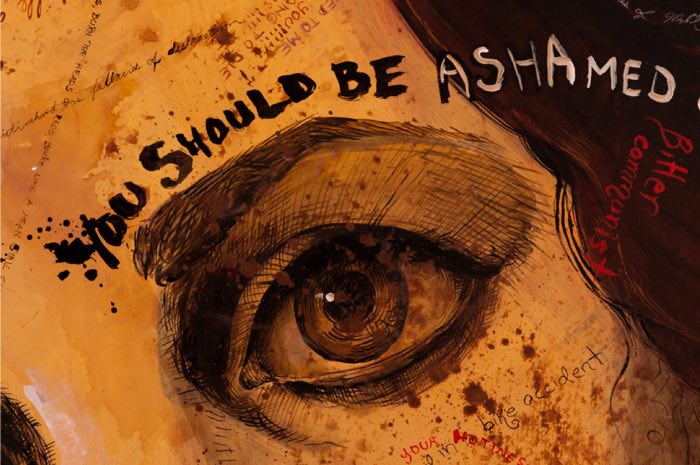
Molly Crabapple’s Portraits of myself and Lola Montes with things said about us by our contemporaries-detail self esteem activities for kids

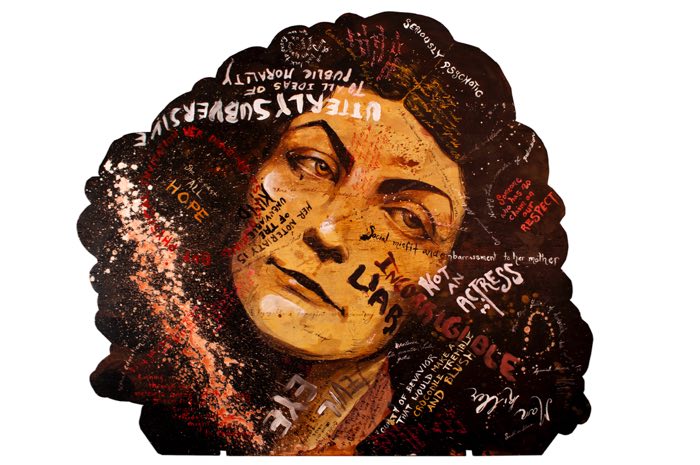
One side features a self-portrait of Molly Crabapple annotated with things written about her on the internet and the other side is a portrait of Lola Montez covered by the words of her critics.

Molly Crabapple’s Portraits of myself and Lola Montes with things said about us by our contemporaries - back
Molly Crabapple, Portraits of myself and Lola Montes with things said about us by our contemporaries, 2014
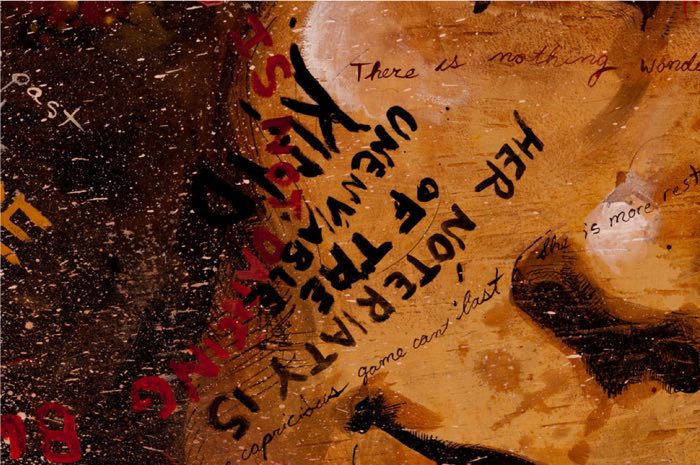
Molly Crabapple’s Portraits of myself and Lola Montes with things said about us by our contemporaries - detail

The mingled themes of dehumanization, self-confidence, intimidation, and the power of words that pervade this sculpture will resonate with your students, which makes it a perfect piece with which to create self esteem activities for kids. Below are some discussion questions that will help your students explore this piece and their reactions to it.

Art Discussion Questions

  • What’s going on in this picture?
  • How does this make you feel?
  • How does the artist’s choices in media and style impact the overall feeling of this work?
  • Why do you think the artist chose to depict herself in this way?
  • What does this artwork remind you of?
  • How does this artwork relate to our contemporary culture?

self esteem activity for kids - 2

Self Esteem Activities for Kids

After discussing the artwork, complete one or more self esteem activities for kids based on The Compliments Project that will uplift your students and remind them of the power they have to do good. You can have students:

  • Anonymously write compliments about each other on paper.
  • Have students draw a self-portrait with their name under it. Then let students walk around the room and write compliments on each other’s self-portraits.

To extend the lesson, students can create an artwork inspired by the compliments they wrote. Or, they can create an artwork that merges their compliments and the negative comments inspired by Crabapple’s work.

Watching this video of people reacting to being called beautiful is a touching way to wrap up the lesson, but be warned that there is some strong language.

Filed Under: Art and Artists
Tagged With: best of art class curator, molly crabapple


February 28, 2018 Leave a Comment

O’Keeffe-Inspired Art Lesson: Cow’s Skull with Calico Roses

Georgia O'Keefe-Inspired Art Project - Cows Skull with Calico Roses

Inside: Explore Cows Skull with Calico Roses by Georgia O’Keeffe with your students and have them create a work of art from the inspiration!

Amanda Koonlaba from Party in the Art Room is back for another post! Check out this art project inspired by Georgia O’Keeffe’s Cow’s Skull with Calico Roses.

Georgia O'Keefe-Inspired Art Project - Cows Skull with Calico Roses

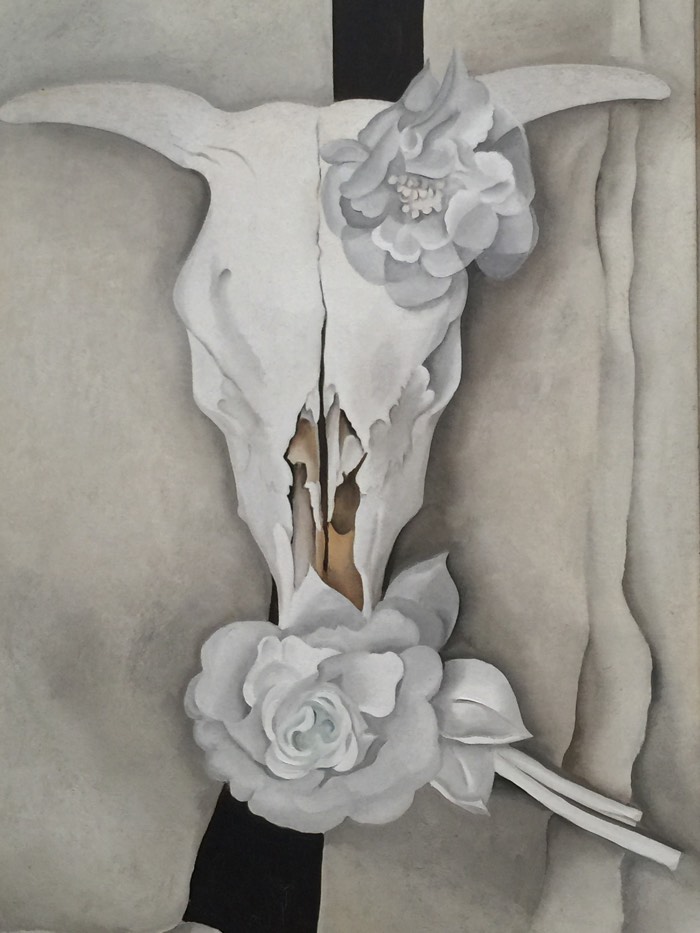
Cow’s Skull with Calico Roses

Georgia O’Keeffe was an American artist born in Wisconsin. Perhaps she is most known for her large paintings of flower blossoms, but my favorite work of hers is Cow’s Skull with Calico Roses

I was fortunate to see this work at the Art Institute of Chicago a couple of years ago. I’d always found it visually appealing, but after my visit I had a few other understandings that make me love this work even more.

(Cindy breaking in here! I totally agree with Amanda. I used to find O’Keeffe’s artwork to not be incredibly exciting until I visited the George O’Keeffe Museum in Santa Fe. Her artwork is so different and so much better in person!)

cows skull with calico roses georgia o'keefe art lesson
Photographed at AIC by Amanda Koonlaba |Party in the Art Room

First, this work was inspired by a drought in the American Southwest that caused the death of many animals. O’Keeffe witnessed the drought and was intrigued by the animal carcuses that littered the landscape. She even shipped some of the bones back to her studio in New York. She knew she would want to paint images of them one day.

Here is what she had to say about this:

“To me they are as beautiful as anything I know…the bones seem to cut sharply to the center of something that is keenly alive on the desert even tho’ it is vast and empty and untouchable.” (Source: AIC)

Interestingly, she painted this skull, in which she saw life, with artificial flowers. This is a nod to the way graves were decorated in New Mexico.

So, after admiring the work simply for the visual appeal, I was fascinated to learn about the drought. Also, I’d never known the flowers were artificial. Learning about the symbolism has made me appreciate it on a much greater level.

Creating with Students

cows skill with calico roses student work2

I created a lesson for my elementary students based on this painting. This is a lesson that can be completed in about two 45-50 minute sessions but is packed with skills.

Here’s what we did:

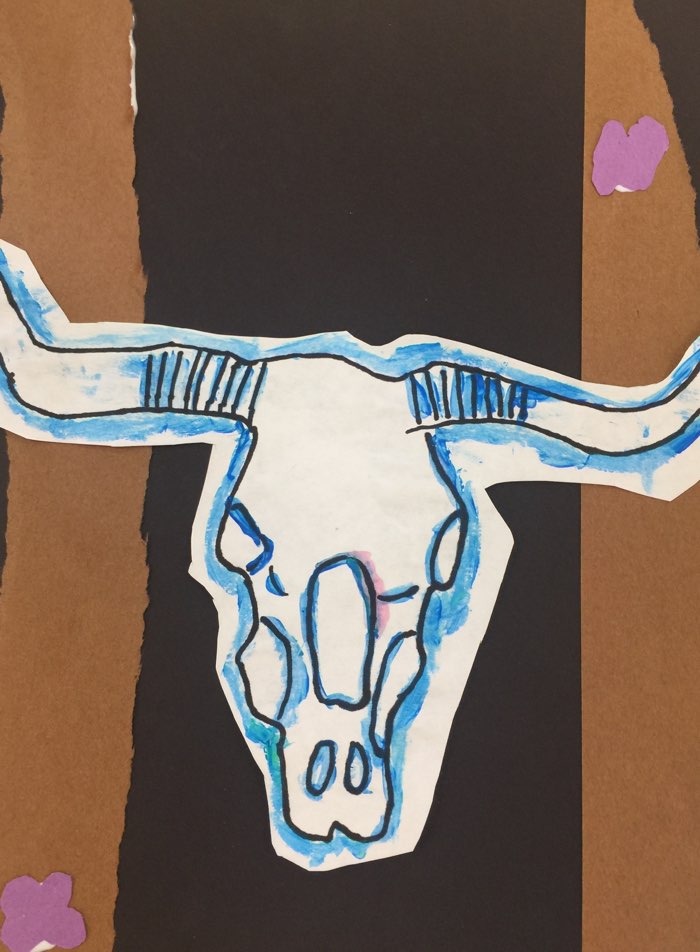
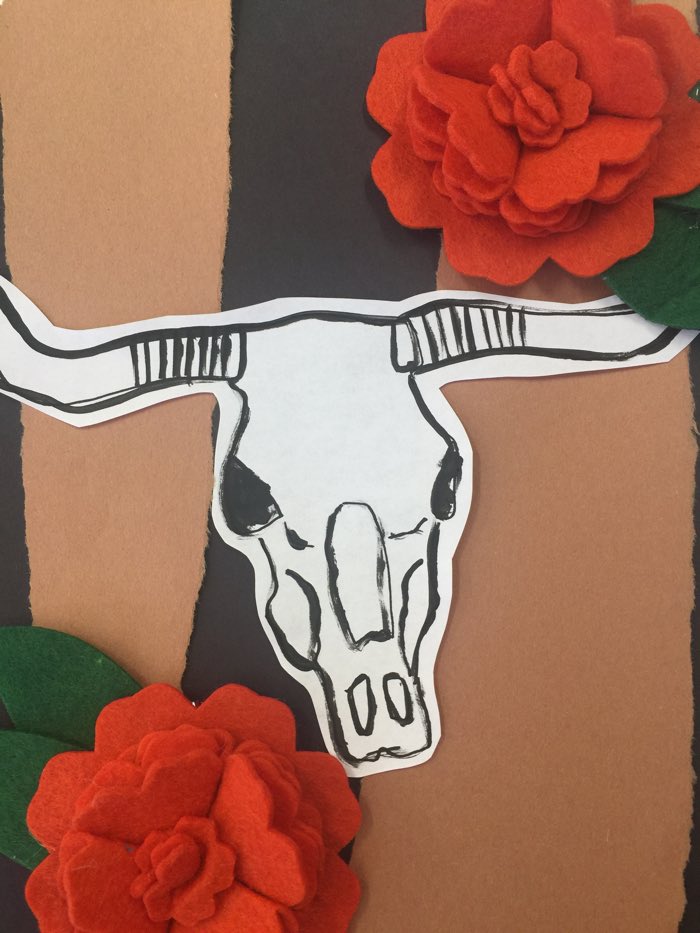
  1. The students viewed Cow’s Skull with Calico Roses and read the statement from O’Keeffe about the bones. They had to discuss how the quote related to the work, make assumptions about the symbolism, and relate it to their own experiences.
  2. The students viewed several line drawings of cow skulls and drew their own versions. They practice drawing for about 20 minutes total.
  3. Once they had a drawing they liked, they traced the lines with paint and a paintbrush.
  4. Then, they cut out the skull.
  5. They tore brown paper for the background and assembled it with the skull.
  6. Finally, they chose to make their own flowers or use artificial flowers and glued everything to black paper.

cows skill with calico roses student work

I’ve struggled for years figuring out how to teach this work of art and have my students create something inspired by it. I never could come up with a project that was appropriate for my students’ ability levels AND engaging AND visually appealing.

That is, I couldn’t seem to do it until I saw the work in person.

Want More? Let’s Chat!

Have you seen this work at the AIC? What did you think? How do you teach it? Do you have lessons you use with your students? I’d love to hear from you!

Oh! While we are talking about O’Keeffe, let me make sure you know about this O’Keeffe Art & Roll game from Party in the Art Room. It makes the perfect substitute lesson and is also great for mini-lessons! And don’t forget to check out the Party in the Art Room blog!

Filed Under: Art and Artists
Tagged With: georgia o'keeffe


February 14, 2018 6 Comments

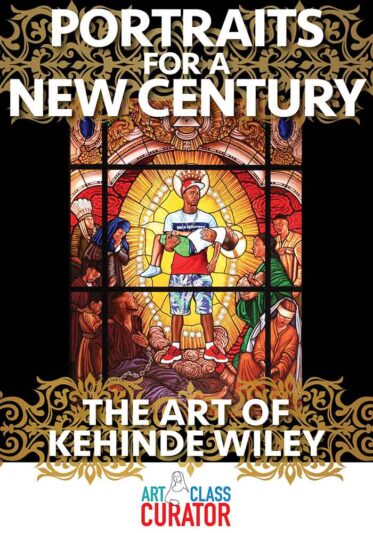
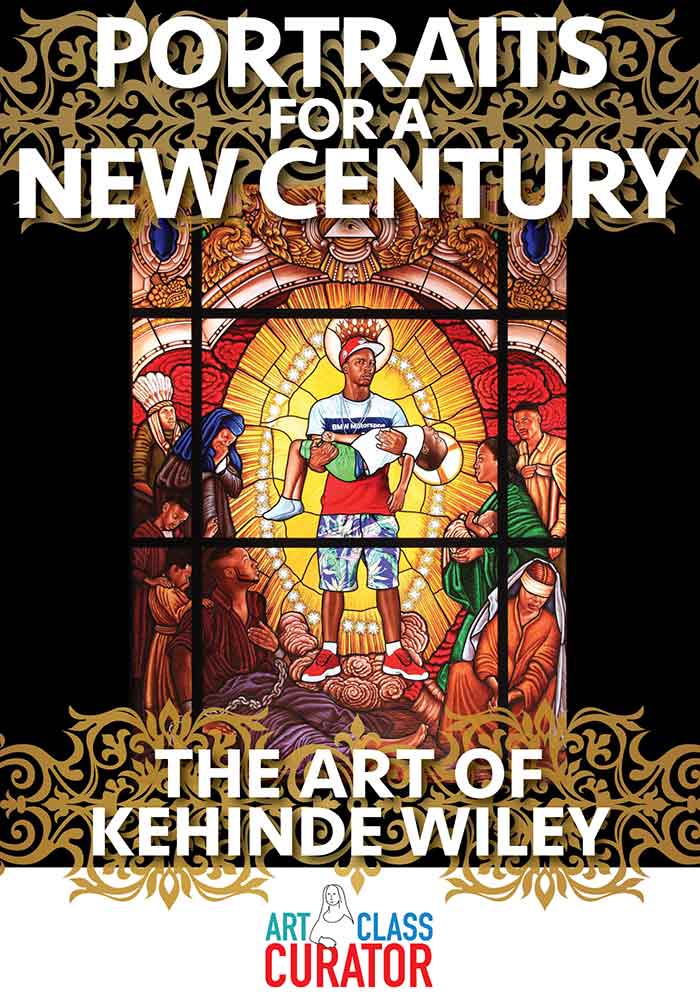
Portraits for a New Century: Kehinde Wiley Art Lesson

Kehinde wiley art lesson

Inside: In this Kehinde Wiley art lesson, have students compare and contrast the Kehinde Wiley stained class, Mary Comforter of the Afflicted with an earlier depiction of the same subject. Use the art appreciation worksheet bundle to further your student’s exploration of this artwork.

Kehinde wiley art lesson

I’m shining the spotlight on contemporary portrait painter Kehinde Wiley. His timely artworks are exciting to students and teachers alike as they confront the social and political issues that dominate many of today’s news cycles.

Get the Full Lesson!

This Lesson is in The Curated Connections Library!

Find the full lesson from this post along with hundreds of other art teaching resources and trainings in the Curated Connections Library. Click here for more information about how to join or enter your email below for a free SPARKworks lesson from the membership!

Join the List

Get the Full Lesson!

This Lesson is in The Curated Connections Library!

Find the full lesson from this post along with hundreds of other art teaching resources and trainings in the Curated Connections Library. Click here for more information about how to join or enter your email below for a free SPARKworks lesson from the membership!

Kehinde Wiley, Barack Obama, 2018

His powerful works are well-known in the art world and gained wider notoriety after being featured on the television series “Empire” in 2015. The recent decision to have Wiley paint Barack Obama’s official presidential portrait has no doubt cemented his popularity for decades to come.

Wiley is best known for painting young black people he encounters and placing them in revamped versions of traditional portraits. The glory, power and prestige once reserved only for white subjects is transferred to modern black men and women wearing everyday clothing. His paintings fuse the past and present in ways that force us to confront our notions of wealth, importance, race, and gender.

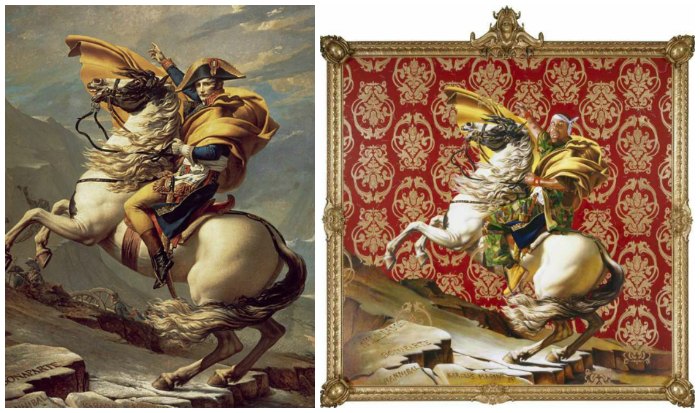
Kehinde Wiley art lesson At left: Kehinde Wiley stained glass, Napoleon Leading the Army over the Alps, 2005; At right: Jacques-Louis David, Napoleon Crossing the Alps, 1801
At left: Jacques-Louis David, Napoleon Crossing the Alps, 1801; At right: Kehinde Wiley, Napoleon Leading the Army over the Alps, 2005

Wiley’s bold backgrounds often feature flowers and greenery or intricate baroque patterns that clash with the photo-like realism of his subjects. Many of his portraits are larger than life and stand over six feet tall. Looking at Wiley’s portraits, it’s impossible to miss the gaze of his subjects. They make eye contact and hold the viewer in place, towering over and transfixing them until they ponder the decisions the artist made and the meaning he hoped to convey.

There is a political and racial context behind everything that I do. Not always because I design it that way, or because I want it that way, but rather because it’s just the way people look at the work of an African-American artist in this country.
-Kehinde Wiley

Race is an inescapable element of Wiley’s work. We experience it in light of the culture that surrounds us. We connect the meaning of the art to his race and the race of his subjects. How would our perspective change if he or the people in his paintings were another race? Regardless of Wiley’s intentions, his work speaks volumes about us and our society. This topic alone can provoke hours of conversation.

Kehinde Wiley Art Lesson

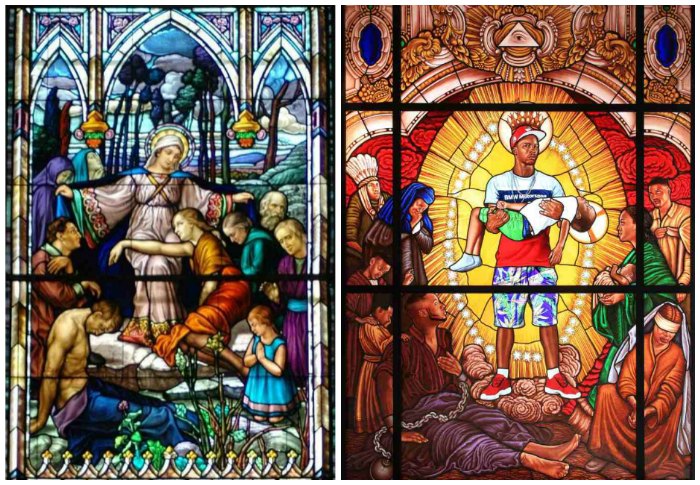
Comparing Kehinde wiley stained glass Mary, Comforter of the Afflicted I, 2016, with the original
Comparing Mary, Comforter of the Afflicted I, 2016, with the original

In the artwork above, Wiley uses religious iconography and modifies it to fit today. He replaced Mary, a symbol of comfort, protection, and virtue in Christianity, with a black man holding a child. The juxtaposition of these artworks is sure to spark curiosity in your students and invite a lively discussion into your classroom.

Discussion Questions

  • What’s going on here? What do you see that makes you say that?
  • Who is this man? What is he doing?
  • Explain the expression on his face. What do you think he is thinking?
  • What symbols do you notice in this artwork? (Note the Illuminati eye, shackles, blindfold, and the feather headdress.) What could these things symbolize?
  • What does afflicted mean? How do you see “Afflicted” in this artwork?
  • Examine each character in the artwork (or use one of the activities below). Who are they? What do they think/feel?

Activity Suggestions

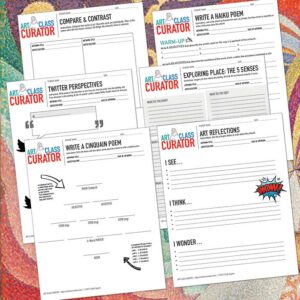
  • Compare and contrast the two versions of Mary, Comforter of the Afflicted. Ask students why Wiley made the choices he made. You may use the Compare and Contrast worksheet from the free art worksheet bundle.
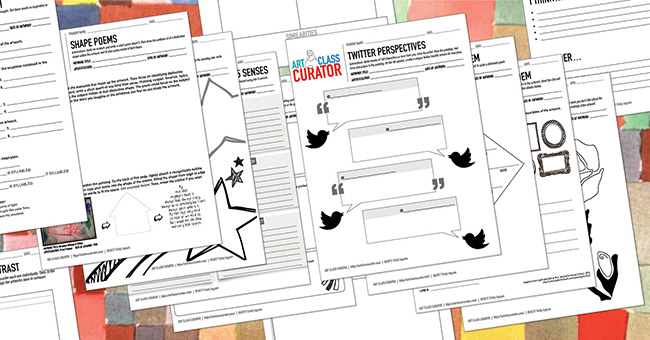
  • Use either the “I Am” Character Poem worksheet or the Character Analysis worksheet from the Art Appreciation Printable Worksheet Bundle or Resource Library. Assign each student (or have them choose) one character from the painting. Have each student study their character to determine what they are all about, how they feel, etc.

Free Worksheets!

Art Appreciation Worksheets

In this free bundle of art worksheets, you receive six ready-to-use art worksheets with looking activities designed to work with almost any work of art.

Download

Free Worksheets!

Art Appreciation Worksheets

In this free bundle of art worksheets, you receive six ready-to-use art worksheets with looking activities designed to work with almost any work of art.

Classroom Extensions

  • Young Students: Have students create portraits with a patterned background. See Devon Calvert’s lesson for an explanation.
  • Older students: Have students create an updated, contemporary version of an older artwork.

Filed Under: Art and Artists
Tagged With: best of art class curator, kehinde wiley


February 13, 2018 Leave a Comment

Artists that Inspire Delight, Emotion, and a New Perspective

AEBN Artists That Inspire Us

Art teachers are constantly asked about their favorite artists. And while it’s pretty impossible to choose a favorite, we all have artists that inspire us in various ways. The Art Ed Blogger’s Network has decided to write about these artists that inspire in this first post of our new monthly series. Check out some of my favorite artists below and then see the other art teacher blogs for the artists that inspire them.

AEBN Artists That Inspire Us

When I think about what I like about art and what art draws me in, I seem to have a couple different criteria.

  1. Art that delights or surprises me.
  2. Art that makes me see the world in a new way.
  3. Art that makes me feel something.

I’ve chosen my favorite artists for each of these categories. When I see their art in person, I am moved and changed in some way.

Artists that Inspire Delight: Nina Katchadourian

I recently visited the Cantor Center for the Visual Arts at Stanford University (totally worth a visit by the way! amazing museum) where they had a special exhibit on the work of Nina Katchadourian. I have never been so totally delighted by an exhibit. I laughed out loud over and over and over again at the absurd and the awkward and the unusual content of her work. She is a perfect artist to include in your classrooms as she is an artist that inspires looking at the world through different lenses and taking joy in the absurd. I definitely will be writing about her more in the future!

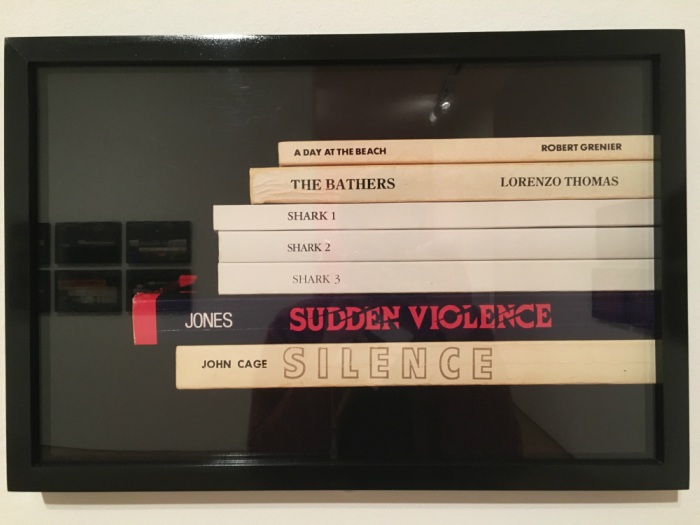
There were more than 30 of these book spine poems in the exhibit that read like haikus. What a perfect art experience activity for a trip to the school library (although that may make the librarian scream!)?

Nina Katchadourian, Sorting Shark, 2001

“Can you be a serious artist and also have humor in your work? I would say history proves the answer is yes. In fact, I would say history also proves there are times the only way you can talk about serious things is actually through humor. I also think humor is, as a tool for an artist, as a strategy, a very quick way in, a very useful way of getting people…inside and then you can do something else to them.” – Nina Katchadourian

Nina, Katchadourian, The Genealogy of the Supermarket (detail), 2015
Nina Katchadourian, The Genealogy of the Supermarket (detail), 2015

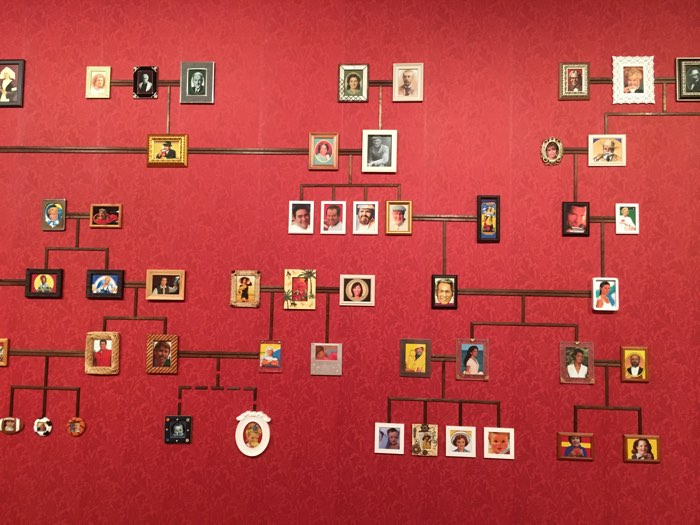
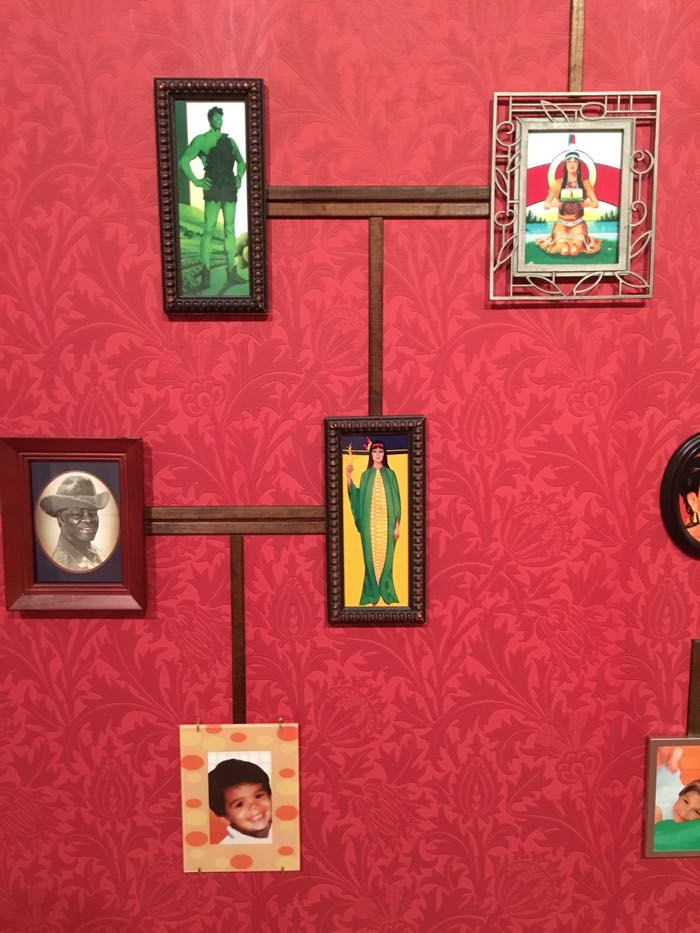
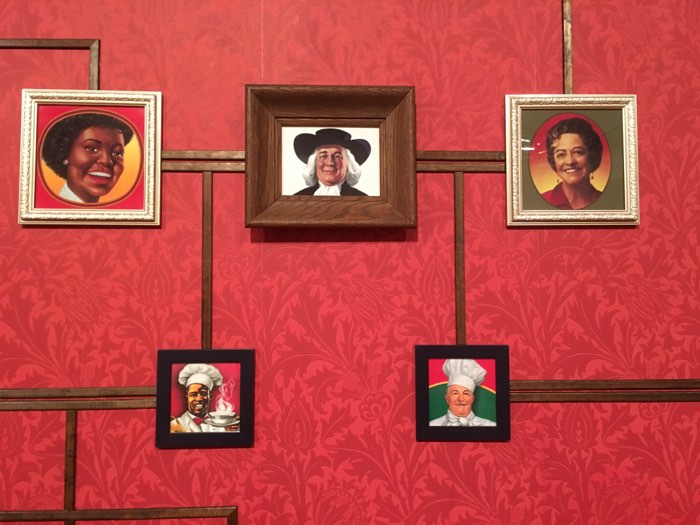
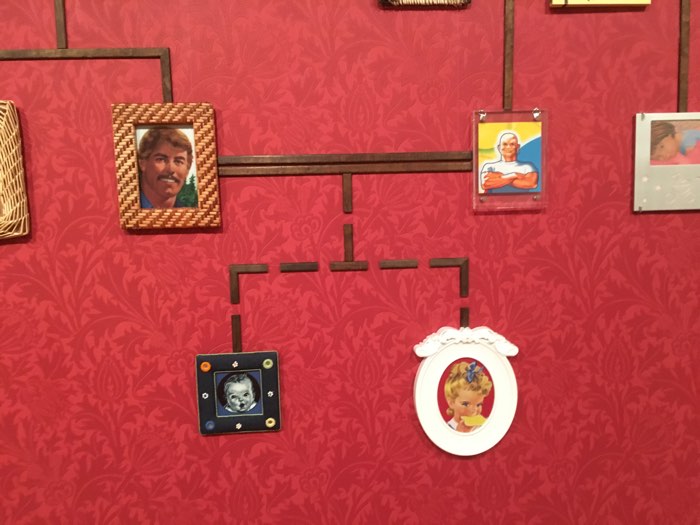
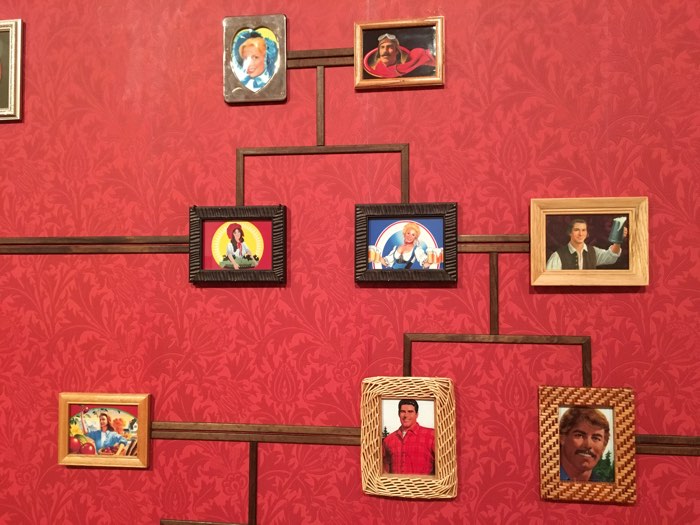
Since I told you how funny Nina Katchadourian’s art is, I can’t leave you hanging! This is her work The Genealogy of the Supermarket, 2015. In the work, Katchadourian studied famous faces on common grocery store packaging and organized them into one big family tree. I couldn’t get the whole thing in one shot, but here are some of my favorite pairings.

Nina, Katchadourian, The Genealogy of the Supermarket, 2015
Nina Katchadourian, The Genealogy of the Supermarket (detail), 2015

Nina, Katchadourian, The Genealogy of the Supermarket (detail), 2015
Nina Katchadourian, The Genealogy of the Supermarket (detail), 2015

Nina, Katchadourian, The Genealogy of the Supermarket (detail), 2015
Nina Katchadourian, The Genealogy of the Supermarket (detail), 2015

Nina, Katchadourian, The Genealogy of the Supermarket (detail), 2015
Nina Katchadourian, The Genealogy of the Supermarket (detail), 2015

Learn more about Nina Katchadourian.

Artists that Inspire a New Perspective: Fred Wilson

Art helps us look at the world in new ways, and that is where Fred Wilson excels. In his work, he takes varying objects and puts them together to make statements about our world.

Fred Wilson, Mining the Museum
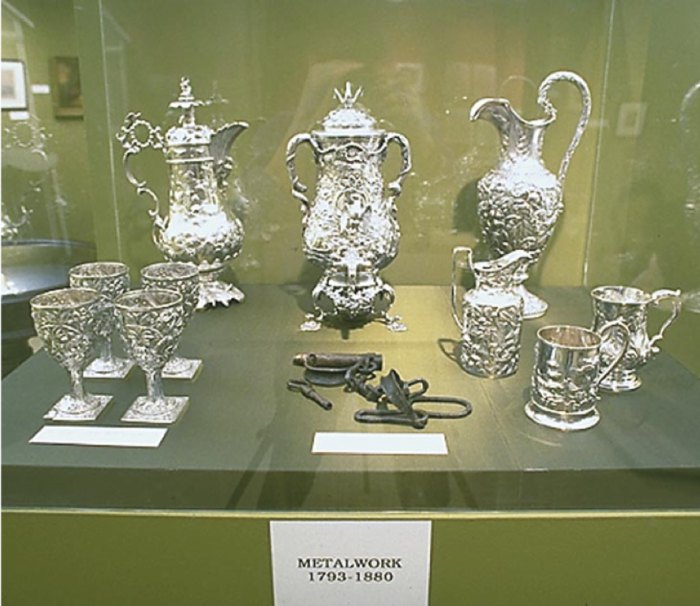
Fred Wilson, Metalwork 1793-1880, Mining the Museum, 1992, Photo: Jeff D. Goldman. Contemporary Museum, Baltimore.

For example in Metalwork 1793-1880, he places an exquisite silver tea set next to a set of slave shackles, dating them and labeling them stoically as an objective label text to show that these are the types of metalwork. The silver set by itself or the shackles by themselves would give a completely different meaning than they do placed together and labeled.

“I get everything that satisfies my soul from bringing together objects that are in the world, manipulating them, working with spatial arrangements, and having things presented in the way I want to see them.” – Fred Wilson

His art is fun to discuss with students because the Wilson rarely makes the art he creates. He makes the art through the juxtaposition of objects. Excellent for an aesthetics discussion!

Learn more about Fred Wilson.

Artists that Inspire Emotion: Kathe Kollwitz

Kathe Kollwitz, Killed in Action, 1921
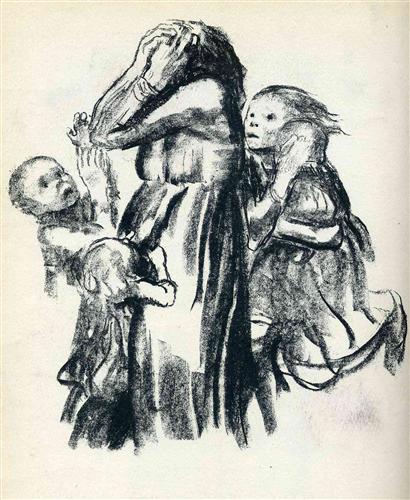
Kathë Kollwitz, Killed in Action, 1921

I love art that makes me feel–art that takes the breathe right out of chest, makes me cry, or makes me feel uneasy. I also love art that connects me to my humanity, connects me to other people feeling the same things I feel. You can tell that Kathë Kollwitz, a German artist of the early 20th century, feels deeply as she creates her black and white drawings and prints. We feel connected to the people in her pictures in visceral ways, and I always leave a work of hers feeling different than I did before looking at it.

“While I drew, and wept along with the terrified children I was drawing, I really felt the burden I am bearing. I felt that I have no right to withdraw from the responsibility of being an advocate.” – Kathë Kollwitz

Learn more about Kathë Kollwitz.

Artists that Inspire my Life: Pablo Picasso

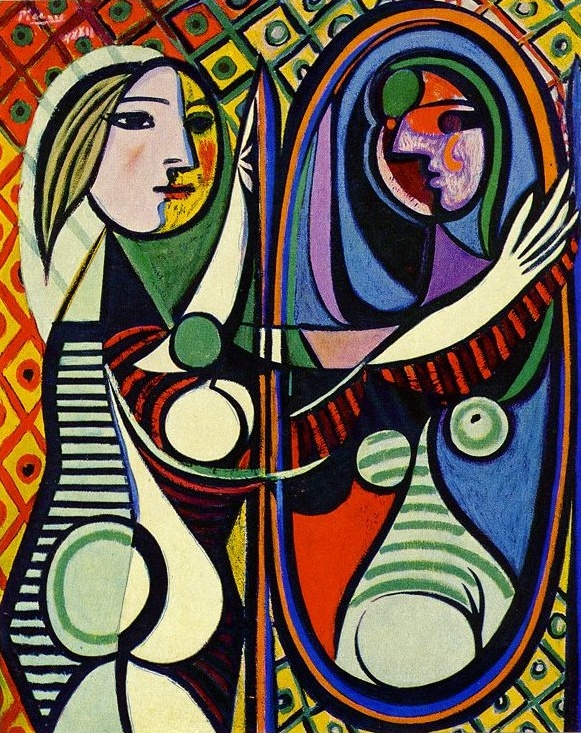
Pablo Picasso, Girl Before a Mirror, 1932

I was going to stop at three artists that inspire, but I can’t talk about being inspired by art without mentioning the impact of Picasso on my life. In 2004, I was knee-deep in applications for my PhD in art history when I went to the Museum of Fine Arts Houston to see the traveling exhibit of the most famous works from the MOMA while NYC museum was being renovated. When I saw Picasso’s Girl Before a Mirror, I was punched in the gut. I couldn’t leave the painting. I cried and was totally mesmerized. While standing there looking at this painting, I rethought my whole future. I decided that I never want to NOT feel like this when looking at art. I became worried that if I were to dive too deep into the details of the art history, that art would lose its magic so I changed my course to Art Education instead of art history because I wanted everyone else to experience the magic of art as I see it. I see magic and life and love and all that is amazing in the world in the bold colors of Picasso’s paintings, and they never cease to catch me off guard.

“Art is a lie that makes us realize the truth.” – Pablo Picasso

Art Teacher Blogs
This post is a part of The Art Ed Blogger’s Network: Monthly Tips and Inspiration from Art Teacher Blogs. On the first Tuesday each month, each of these art teacher blogs will post their best ideas on the same topic.

Participating Art Teacher Blogs:

  • Art Class Curator – Artists That Inspire
  • Art Ed Guru
  • Art is Basic
  • Art Room Blog
  • Art with Mr. E
  • Artful Artsy Amy
  • Capitol of Creativity
  • Create Art with ME
  • MiniMatisse
  • Mr. Calvert’s Art Room Happenings
  • Mrs. Boudreaux’s Amazing Art Room
  • Mrs. T’s Art Room
  • Party in the Art Room
  • shine brite zamorano
  • Tales from the Traveling Art Teacher
  • There’s a Dragon in my Art Room

Filed Under: Art Ed Blogger's Network


February 7, 2018 6 Comments

Introducing The Art Ed Blogger’s Network: Monthly Tips and Inspiration

Art Teacher Blogs - Art Ed Bloggers Network

I am so excited to announce a new partnership of art teacher blogs we’ve called The Art Ed Blogger’s Network. On the second Tuesday of each month, each of these art teacher blogs will post on the same topic relevant for art teachers.

Art Teacher Blogs - Art Ed Bloggers Network

Our first post is coming on Tuesday, and be sure to pin this page of art teacher blogs so that you keep up with the series! This page will be updated with links whenever we have a new post to share.

Art Teacher Blogs

Art Class Curator by Cindy Ingram

Explore art teacher tips, discover new art, and download innovative art lessons to make art history and art appreciation fun for you and your students!

Follow Art Class Curator: Blog, Facebook, Instagram, Pinterest

Art Ed Guru by Eric Gibbons

Sharing 30 years of art education experience and resources with teachers arround the world.

Follow Art Ed Guru: Blog

Art is Basic by Marcia Beckett


Art is Basic is about creativity, art techniques, projects and inspiration for the elementary art teacher.

Follow Art is Basic: Blog, Facebook, Instagram

Art Room Blog by Lee Darter

Elementary art lessons, art teacher tips and tricks and some random other things!

Follow Art Room Blog: Blog, Instagram, Twitter, Pinterest

Art with Mr. E by Ted Edinger

All Things Art, Art Ed, and other Eclectic Information.

Follow Art with Mr. E: Blog, Facebook, Twitter, Instagram, Pinterest

Arte a scuola by Miriam Paternoster

Since 2008 I worked on my blog to share, swap and explore lessons, educational systems, techniques and creations in other classrooms around the world.

Follow Arte a scuola: Blog, Twitter, Facebook

Artful Artsy Amy

K12 Arts Education with an emphasis on arts integration, STEAM, and curriculum design.

Follow Artful Artsy Amy: Blog, Facebook, Instagram, Twitter

Capitol of Creativity by Holly Bess Kincaid

A studio based learning environment where creativity and cross curricular connections meet in the MIDDLE!

Follow Capitol of Creativity: Blog, Instagram, Twitter, Pinterest

Create Art with ME by Michelle East

Create Art with Me provides art lessons, projects, posters and ready resources for the k-12 art room and home education environment.

Follow Create Art with ME: Blog, Facebook, Instagram, Pinterest

MiniMatisse by Nic Hahn

MiniMatisse is a celebration of the happenings of the Art Studio.

Follow MiniMatisse: Blog, Facebook, Instagram, Twitter

Mona Lisa Lives Here by Alice Gentili

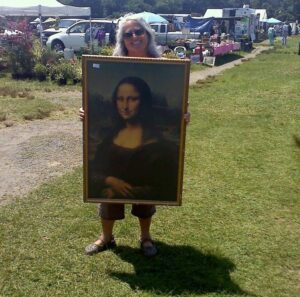
One of our classroom walls holds a collection of Mona Lisas that I have found at flea markets. My students and I go home at the end of every day, but the classroom Monas stay at school. That is why this blog is called “Mona Lisa Lives Here”.

Follow Mona Lisa Lives Here: Blog, Instagram, Facebook, Twitter

Mr. Calvert’s Art Room Happenings by Devon Calvert

A K-3 art blog highlighting a mix of old and new artists.

Follow Mr. Calvert’s Art Room Happenings: Blog, Facebook, Twitter

Mrs. Boudreaux’s Amazing Art Room by Shirley Boudreaux

Global Identity

Follow Mrs. Boudreaux’s Amazing Art Room: Blog

Mrs. T’s Art Room by Amy Traggianese

Visual art and arts integration with a techie twist!

Follow Mrs. T’s Art Room: Blog, Instagram, Twitter

Ms. Nasser’s Art Studio by Catie Nasser

This blog is highlights the importance of art and creativity for children. I hope you are inspired by the possibilities art can create!

Follow Ms. Nasser’s Art Studio: Blog, Twitter

Party in the Art Room by Amanda Koonlaba

Party in the Art Room is bringing the joy back to teaching and learning through STEAM and Arts Integration!

Follow Party in the Art Room: Blog, Facebook, Twitter, Pinterest

shine brite zamorano by Don Masse

An elementary art curriculum that focuses on contemporary art to engage students.

Follow shine brite zamorano: Blog, Facebook, Instagram

Tales From the Traveling Art Teacher! by Heidi O’Hanley

This blog was designed to share ideas, adaptations, lessons, and experiences with all art educators, especially those who travel from school to school, share classrooms, and teach from a cart.

Follow Tales From the Traveling Art Teacher!: Blog, Facebook, Instagram, Twitter, Pinterest

There’s a Dragon in my Art Room by Phyllis Levine Brown

On my blog, I post a mix of elementary/middle level student art projects and various thoughts and opinions on all sorts of art ed topics, and then toss a little personal artwork and photography in the mix!

Follow There’s a Dragon in my Art Room: Blog, Pinterest

Keep watching our art teachers blogs on the first Tuesday of each month to see more inspiration and tips for your art classroom! Want to join The Art Ed Blogger’s Network? Click here to reach out.

Filed Under: Art Teacher Tips


February 5, 2018 6 Comments

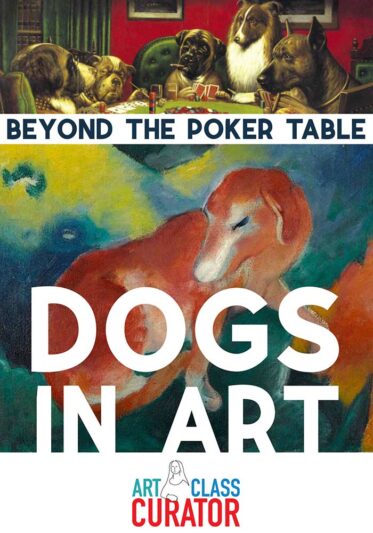
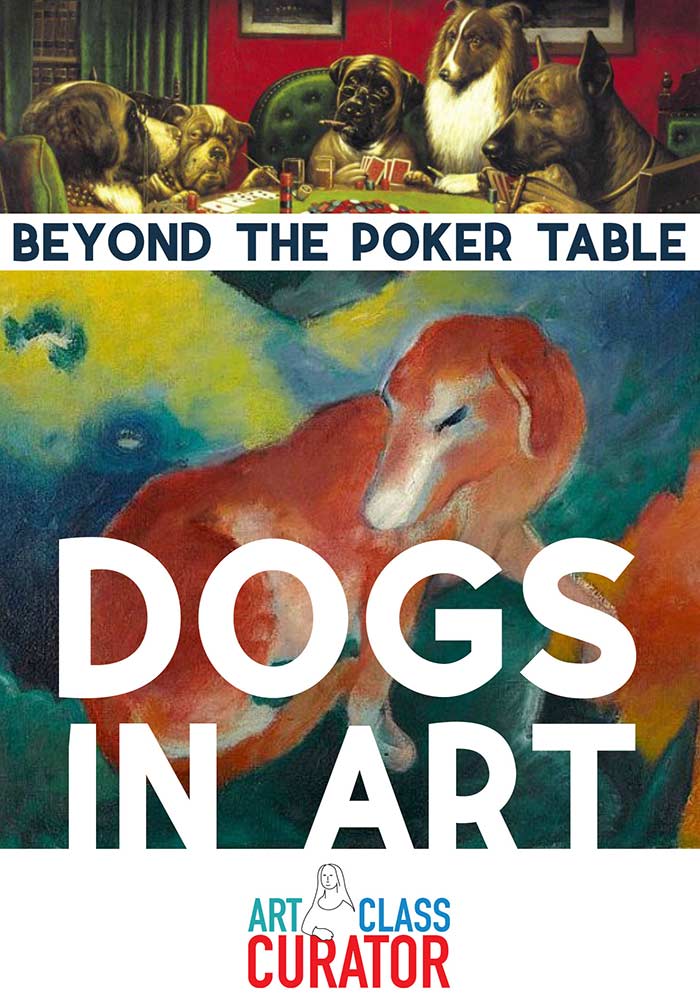
Beyond the Poker Table: 25 Dogs in Art

Beyond Dogs Playing Poker Dogs in Art-pin

Inside: There is more to dogs in art than just dogs playing poker! Check out 25 of these fetching examples of dogs in art.

Next week is Chinese New Year which starts the year of the dog! To celebrate the year of the dog and to honor the newest member to my family (meet my new buddy Vader Steve Ingram at the bottom of this post), I present to you 25 awesome dogs in art!

Beyond Dogs Playing Poker Dogs in Art-pin

Dogs Playing Poker

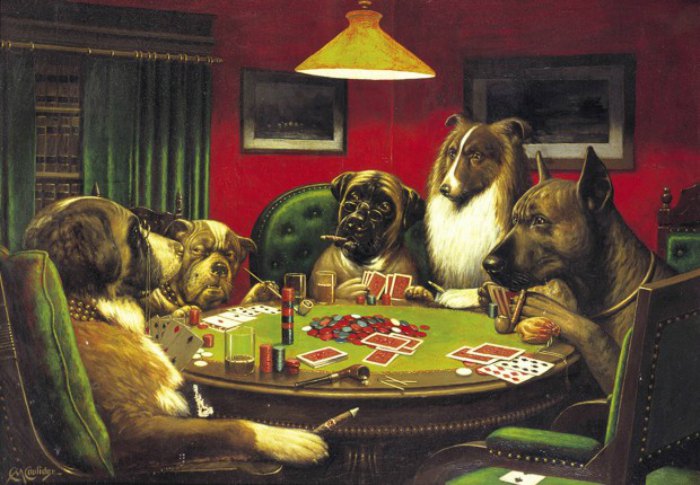
Growing up I had a print of Dogs Playing Poker in my room. I knew nothing about it, but I just thought it was awesome. For this post on dogs in art, I did a little research and learned more about what I originally thought was just one artwork. It turns out that Cassius Marcellus Coolidge painted 16 dog paintings with 9 of them being poker scenes. Others include dogs playing football, dogs having romantic dinners, and dogs in the courtroom. Check out 15 more things you should know about Dogs Playing Poker on Mental Floss.

These dogs in art would be a great conversation piece with your classes. Why are they not considered “fine art” or given a lot of critical acclaim in the art world? Why are the dogs playing poker seen as a joke in the artworks rather than as serious work?

Dogs in Art - Cassius Marcellus Coolidge, A Bold Bluff, 1903
Cassius Marcellus Coolidge, A Bold Bluff, 1903

Dogs in Art

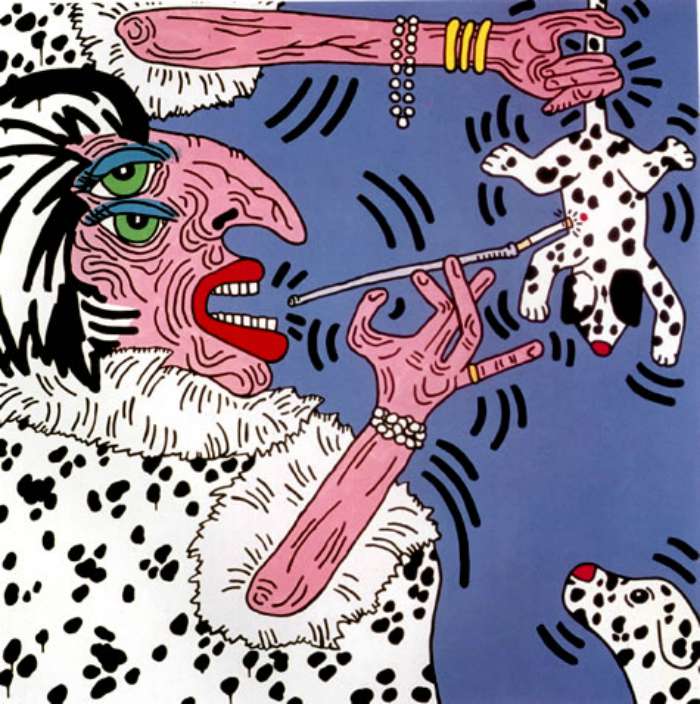
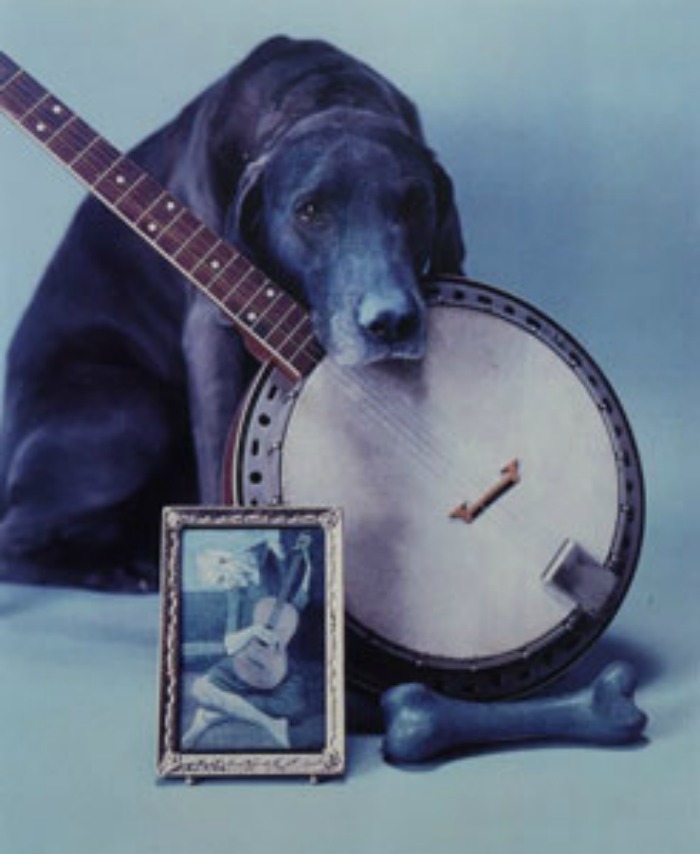
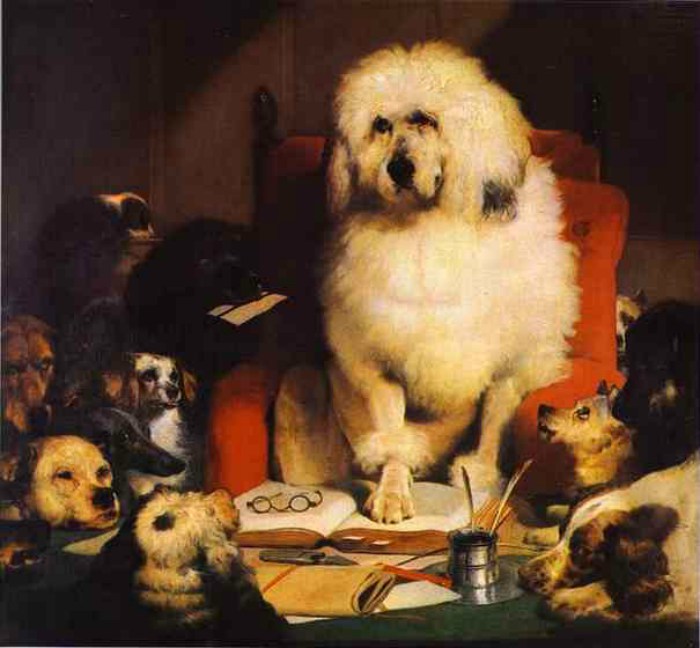
Enjoy this collection of dog art. I hope you find one you connect with!

Dogs in Art - Keith Haring, Cruella De Vil, 1984
Keith Haring, Cruella De Vil, 1984

Dogs in Art - William Wegman, Blue Period with Banjo, 1980
William Wegman, Blue Period with Banjo, 1980

Dogs in Art - Edwin Henry Landseer, Laying Down the Law, 1840
Edwin Henry Landseer, Laying Down the Law, 1840

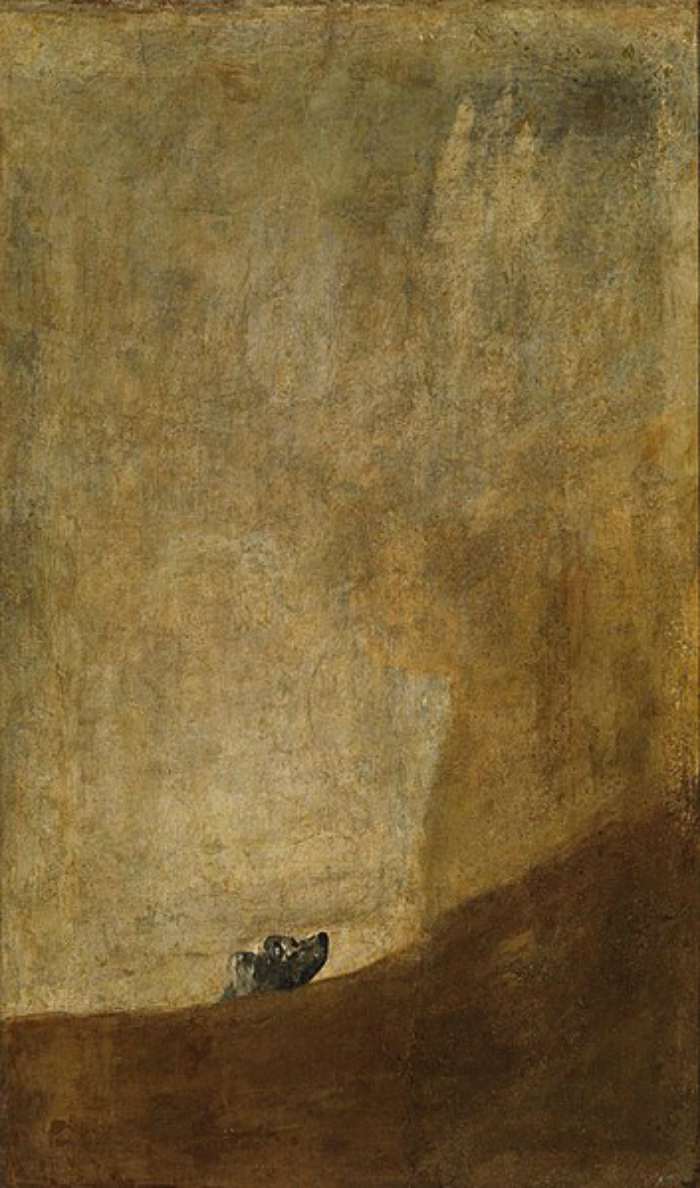
Dogs in Art - Francisco Goya, The Dog, circa 1819-1823
Francisco Goya, The Dog, circa 1819-1823

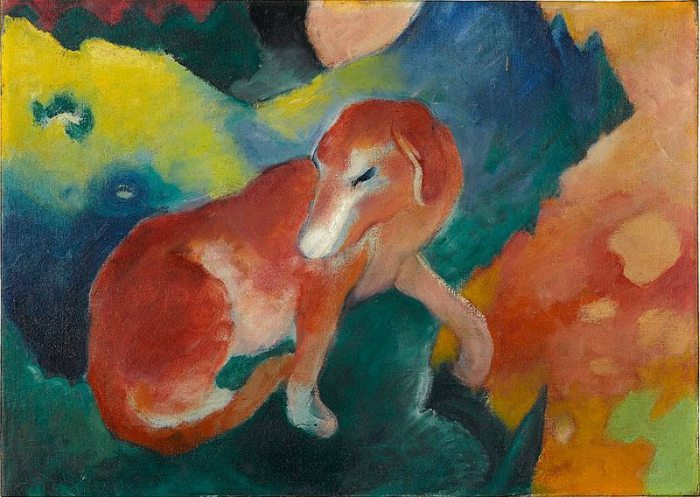
Dogs in Art - Franz Marc, Red Dog, 1911
Franz Marc, Red Dog, 1911

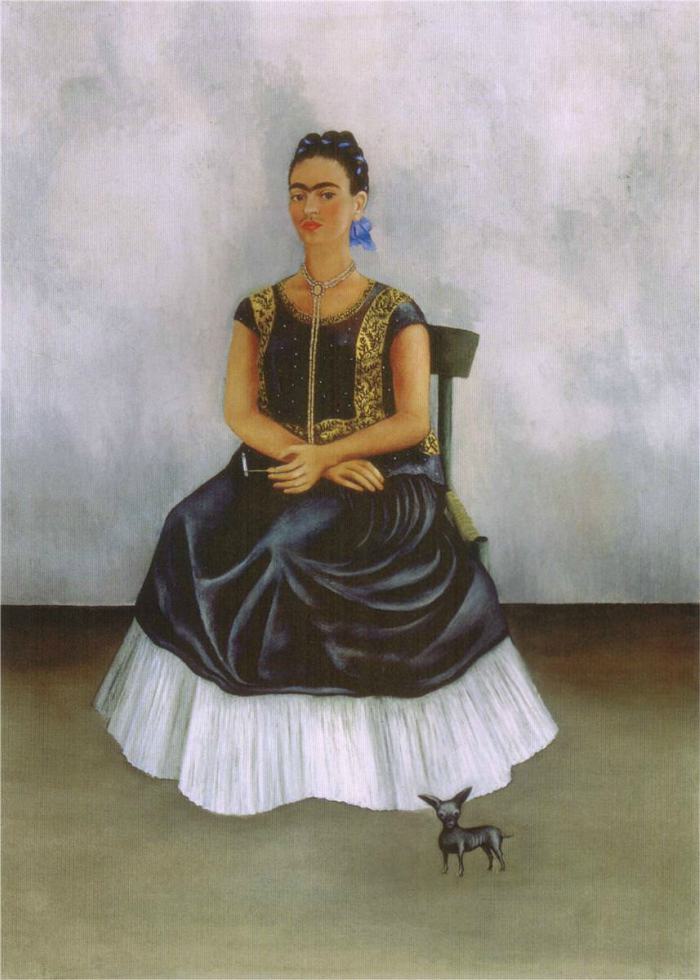
Dogs in Art - Frida Kahlo, Itzcuintli Dog with Me, 1938
Frida Kahlo, Itzcuintli Dog with Me, 1938

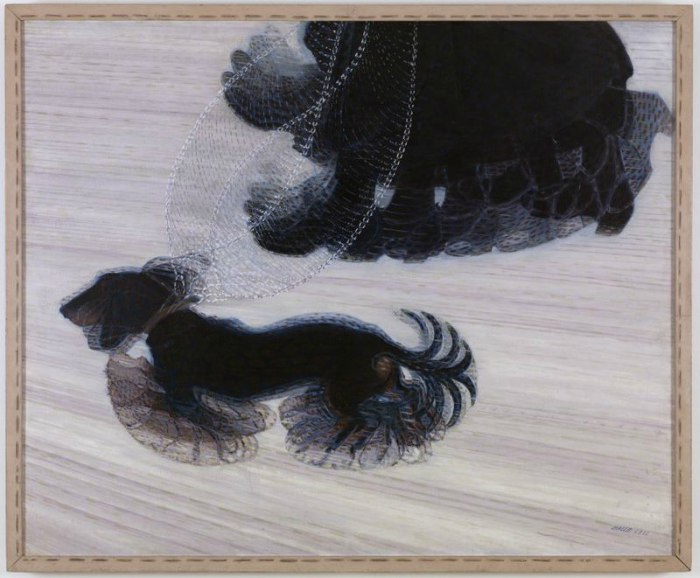
Dogs in Art - Giacomo Balla, Dynamism of a Dog in a Leash, 1912
Giacomo Balla, Dynamism of a Dog in a Leash, 1912

Dogs in Art - Jeff Koons Puppy, 1992
Jeff Koons, Puppy, 1992

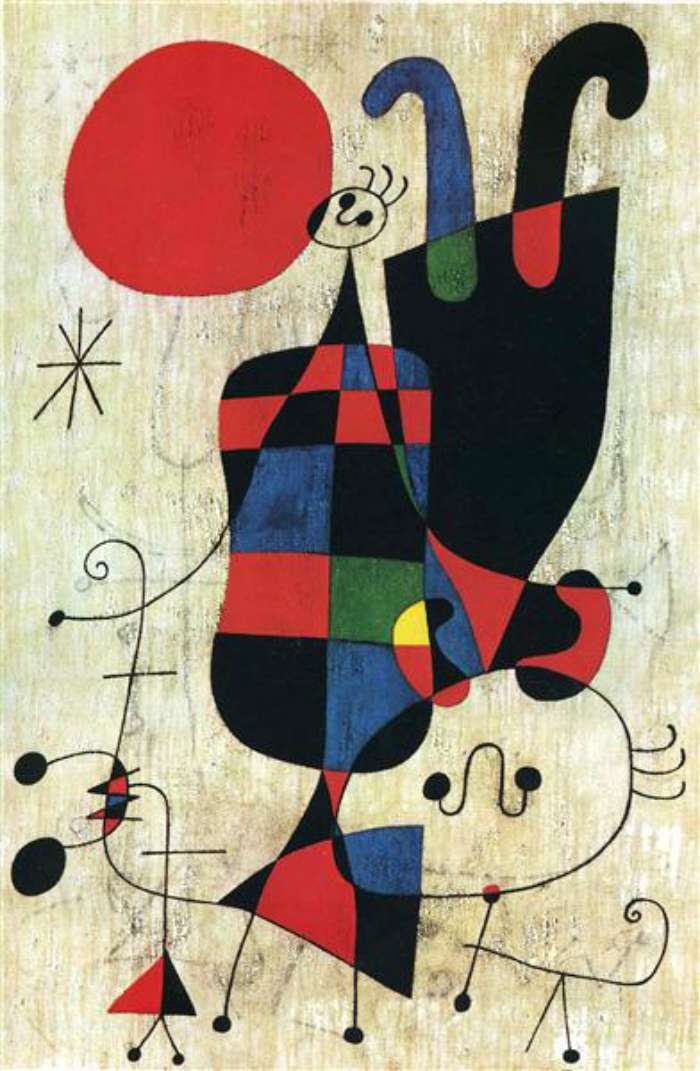
Dogs in Art - Joan Miro, Figures and Dog in Front of the Sun, 1949
Joan Miro, Figures and Dog in Front of the Sun, 1949

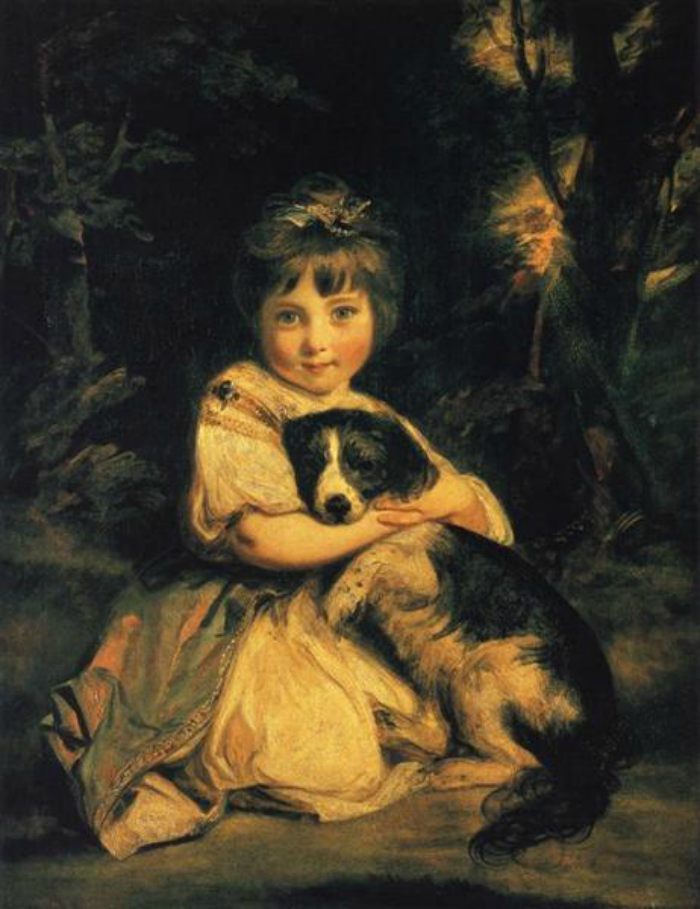
Dogs in Art - Joshua Reynolds, Miss Bowles, 1775
Joshua Reynolds, Miss Bowles, 1775

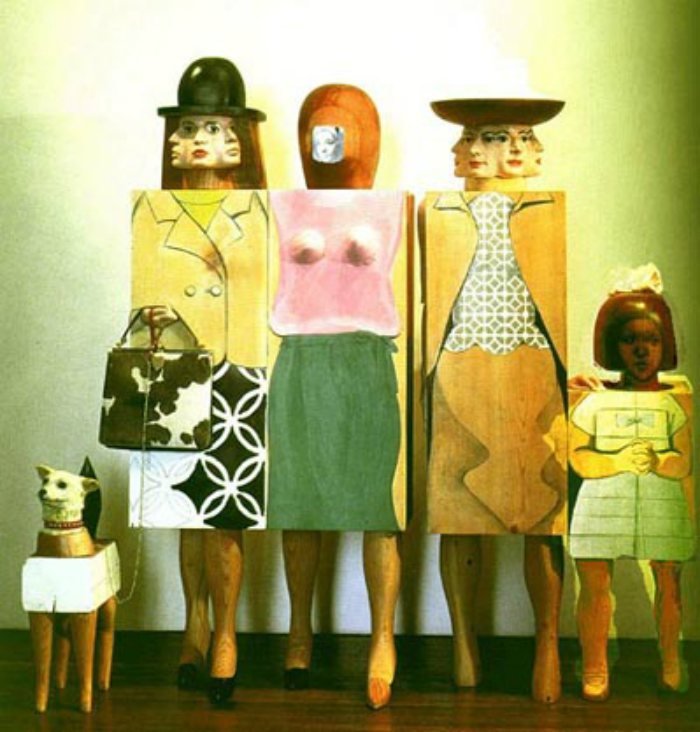
Dogs in Art - Marisol Escobar, Women and Dog, 1964
Marisol Escobar, Women and Dog, 1964

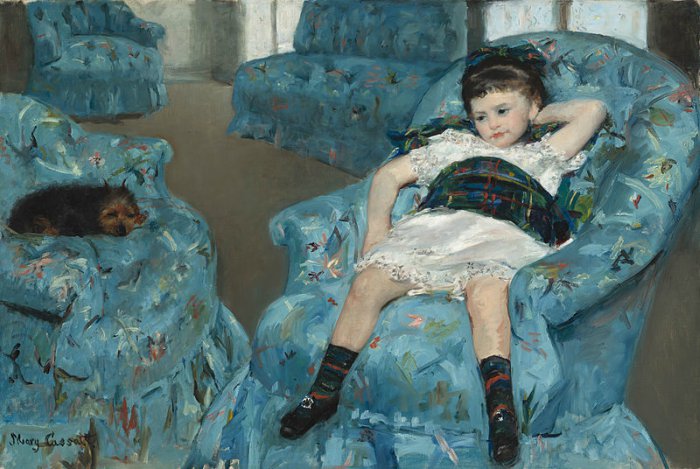
Dogs in Art - Mary Cassatt, Little Girl in a Blue Armchair, 1878
Mary Cassatt, Little Girl in a Blue Armchair, 1878

Dogs in Art - Michael Sowa, Their Masters Voice
Michael Sowa, Their Masters Voice

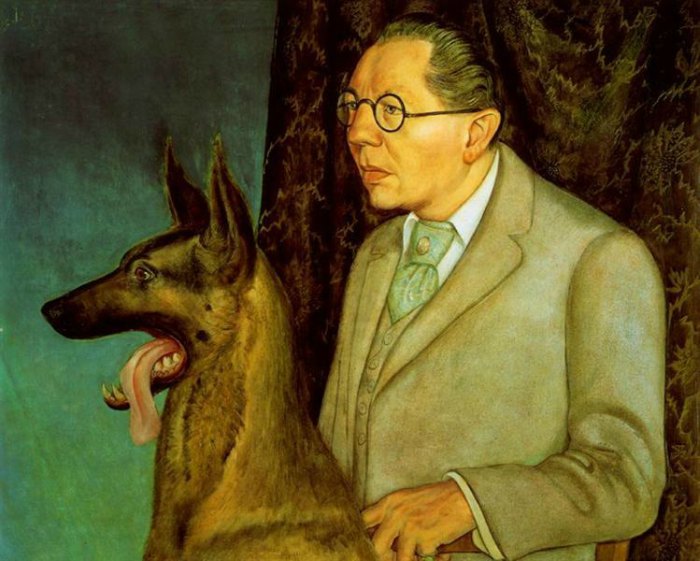
Dogs in Art - Otto Dix, Hugo Erfurth with Dog, 1926
Otto Dix, Hugo Erfurth with Dog, 1926

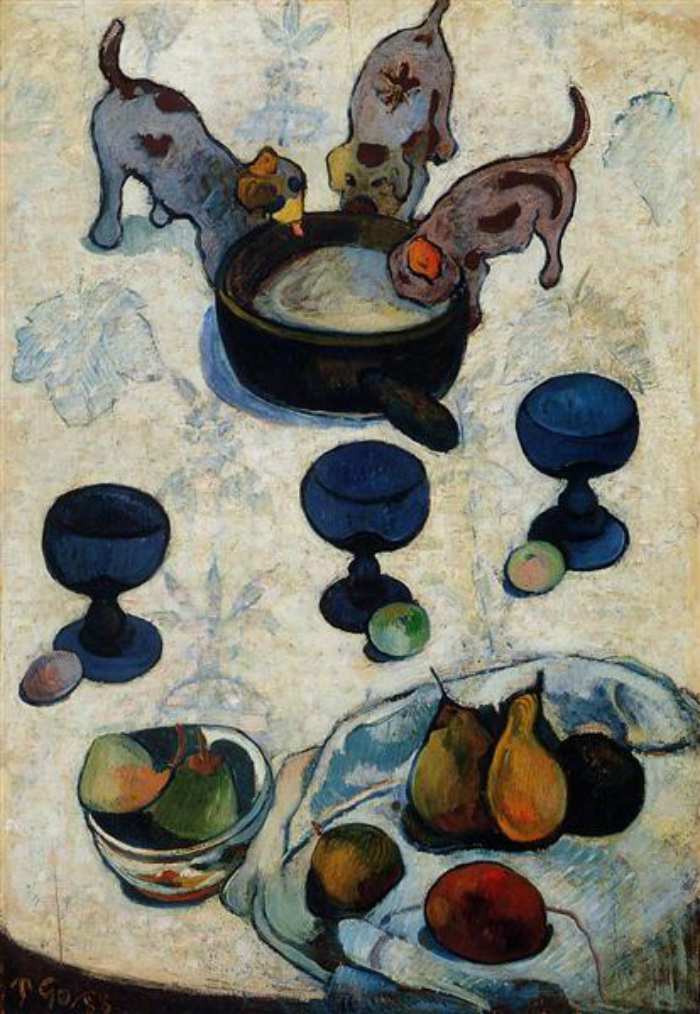
Dogs in Art - Paul Gauguin, Still Life with Three Puppies, 1888
Paul Gauguin, Still Life with Three Puppies, 1888

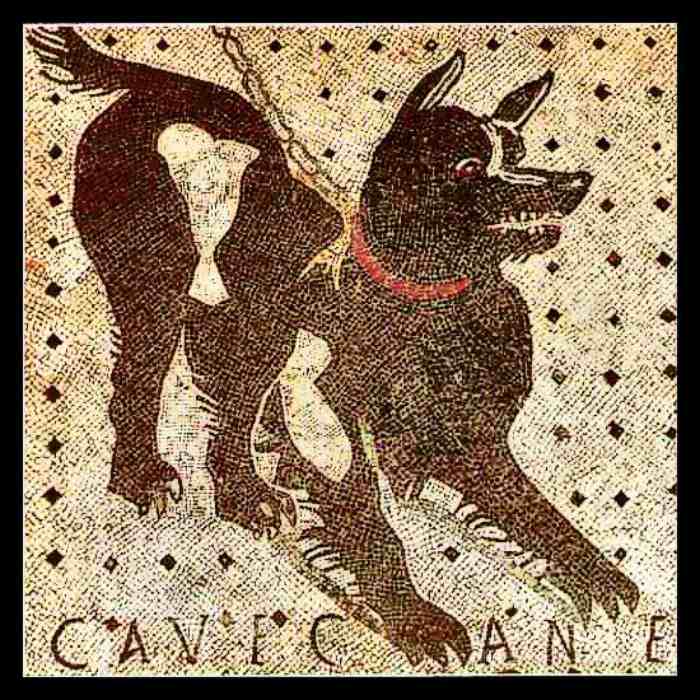
Dogs in Art - Pompeii Italy, Beware of the Dog
Pompeii Italy, Beware of the Dog

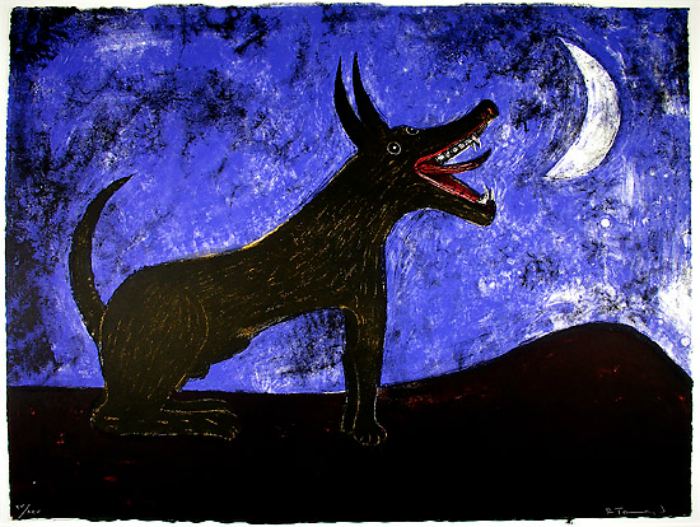
Dogs in Art - Rufino Tamayo, Moon Dog, 1973
Rufino Tamayo, Moon Dog, 1973

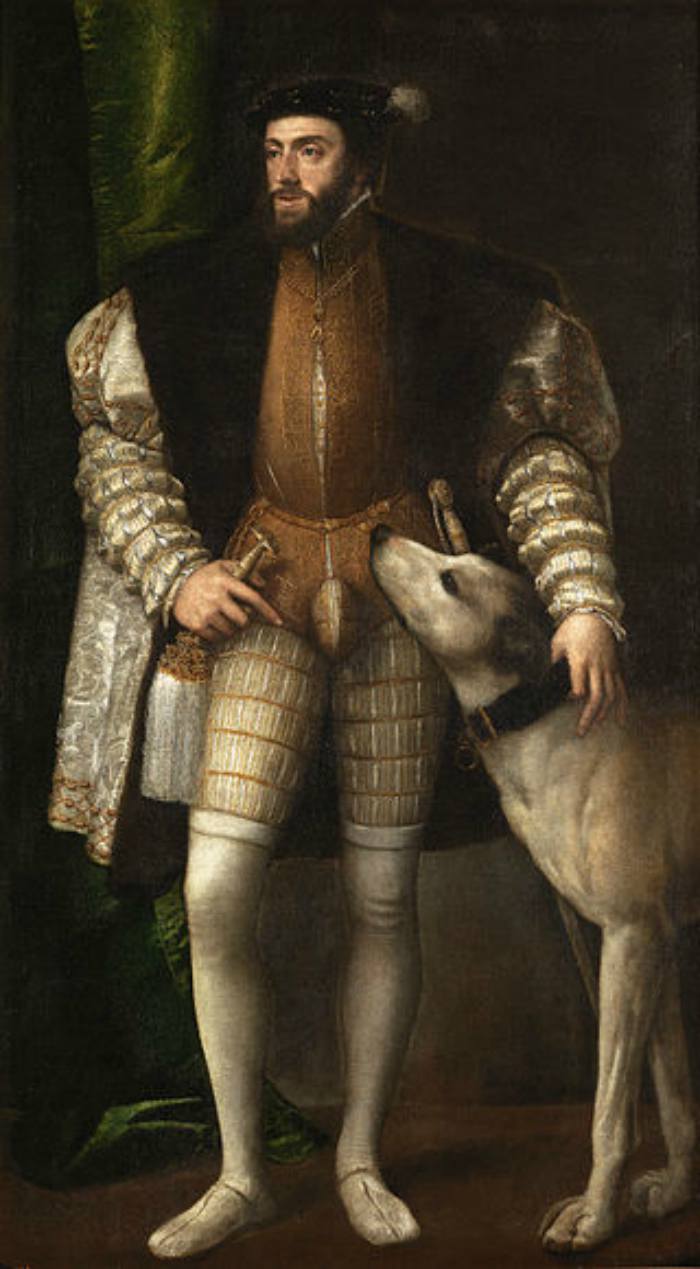
Dogs in Art - Titian, Portrait of Charles V with a Dog, 1532
Titian, Portrait of Charles V with a Dog, 1532

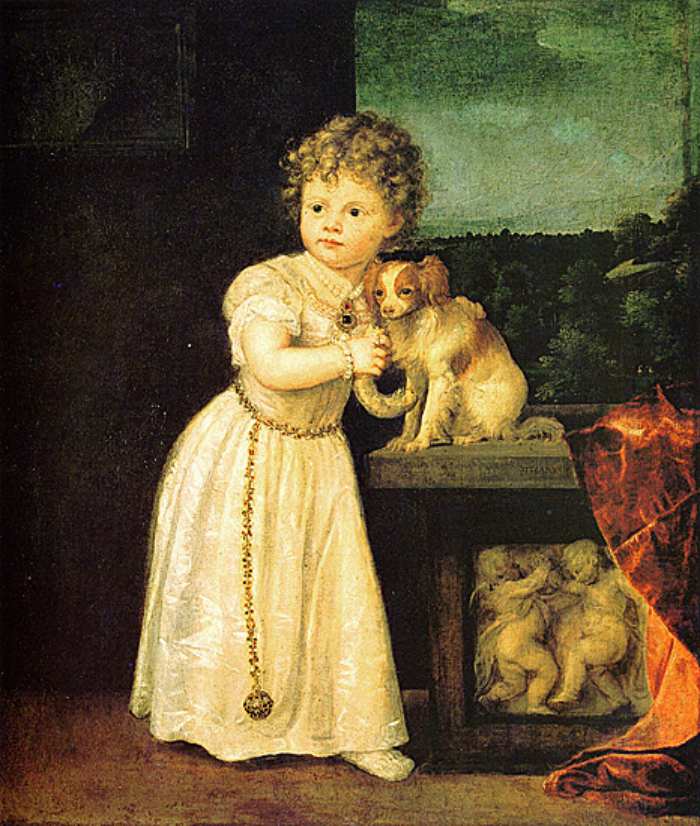
Dogs in Art - Titian, Portrait of Clarissa Strozzi, 1542
Titian, Portrait of Clarissa Strozzi, 1542

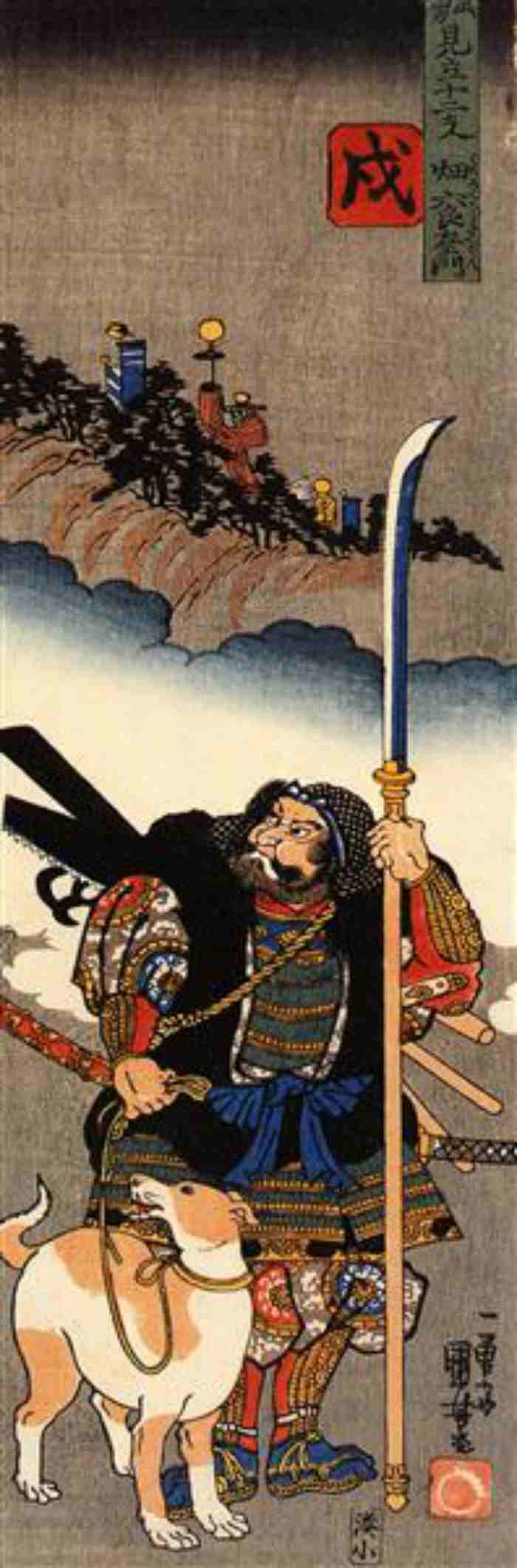
Dogs in Art - Utagawa Kuniyoshi, Hata Rokurozaemon with His Dog, 1797
Utagawa Kuniyoshi, Hata Rokurozaemon with His Dog, 1797

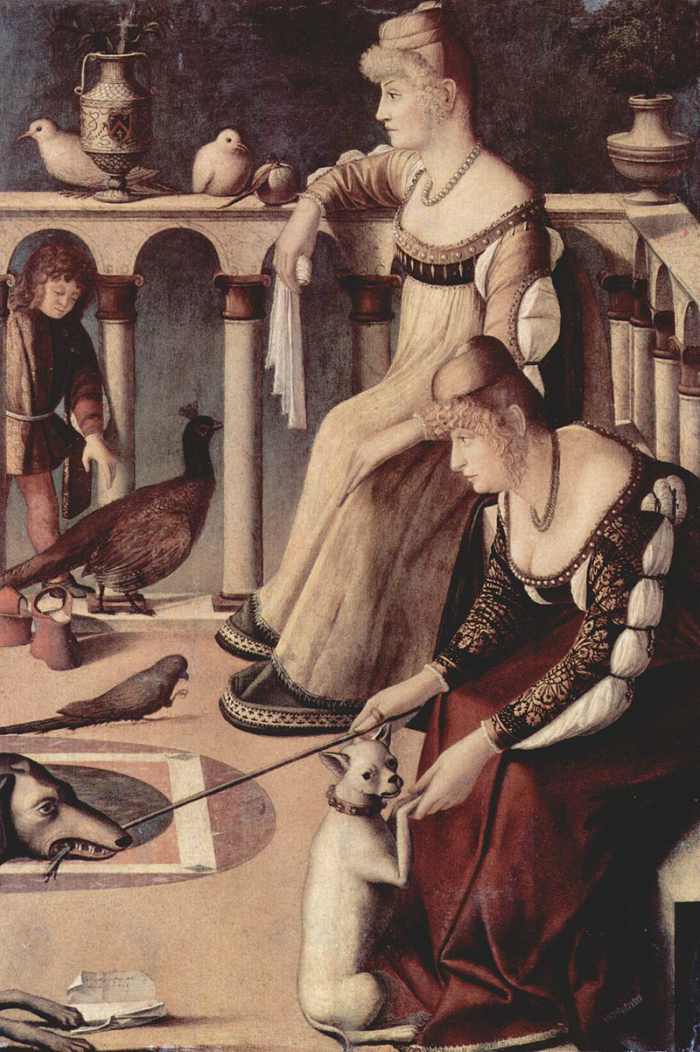
Dogs in Art - Vittore Carpaccio, Two Venetian Ladies, 1490
Vittore Carpaccio, Two Venetian Ladies, 1490

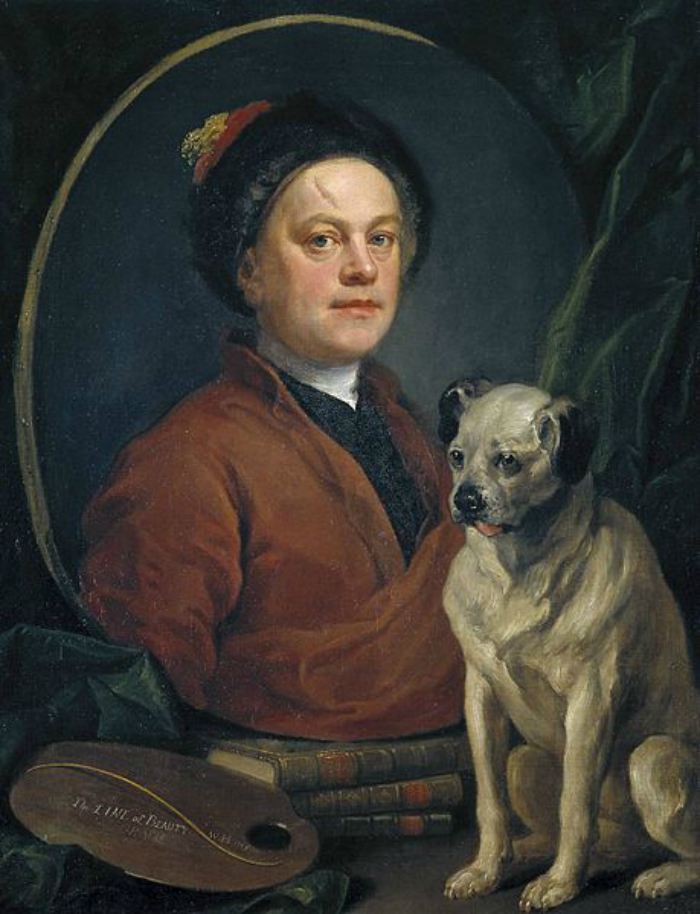
Dogs in Art - William Hogarth, Painter and His Pug, 1745
William Hogarth, Painter and His Pug, 1745

Which was your favorite dog in art? Let me know in the comments!

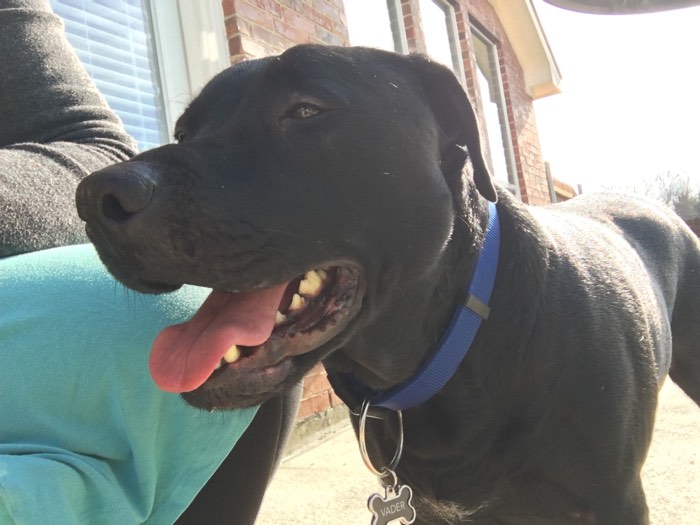
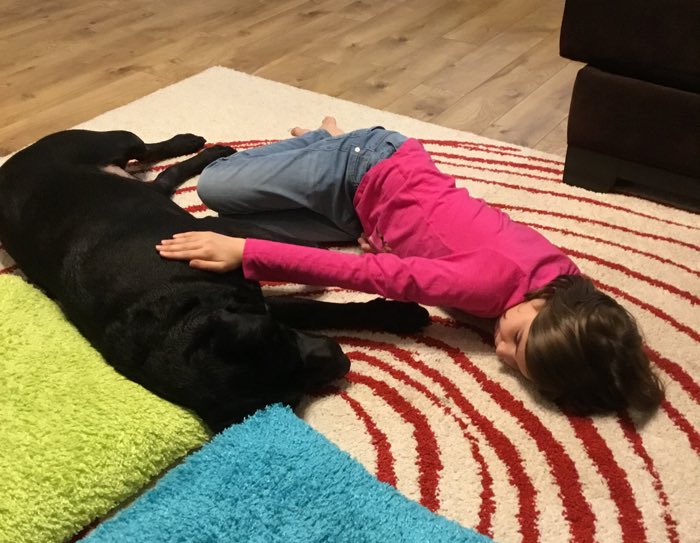
As promised, here is a picture of my new doggie, Vader! He just fell into our laps last month, and we just couldn’t be happier with him!


Filed Under: Art and Artists
Tagged With: Cassius Marcellus Coolidge, Edwin Henry Landseer, francisco goya, franz marc, frida kahlo, giacomo balla, Jeff Koons, joan miro, Joshua Reynolds, keith haring, Marisol Escobar, mary cassatt, michael sowa, Otto Dix, paul gauguin, rufino tamayo, titian, utagawa kuniyoshi, Vittore Carpaccio, William Hogarth, william wegman


  • Previous Page
  • Page 1
  • Interim pages omitted …
  • Page 14
  • Page 15
  • Page 16
  • Page 17
  • Page 18
  • Interim pages omitted …
  • Page 38
  • Next Page

Primary Sidebar

Hi! I’m Cindy Ingram, the creator of Art Class Curator and The Curated Connections Library

I’m on a mission to revolutionize education with the power of life-changing art connections. Art is not “extra”. Art is essential. We are empowering teachers to bridge the gap between art making and art connection, kindling a passion for art that will transform generations.

More About Me

Free Worksheets!

-Free Bundle of Art Appreciation Worksheets-

In this free bundle of art worksheets, you receive six ready-to-use art worksheets with looking activities designed to work with almost any work of art.

Download

Free Worksheets!

-Free Bundle of Art Appreciation Worksheets-

In this free bundle of art worksheets, you receive six ready-to-use art worksheets with looking activities designed to work with almost any work of art.

Enrollment in Curated Connections Library is currently open. Click here to join. Join our list to get more information and to get a free lesson from the vault! If you are purchasing for a school or school district, head over here for more information.
Check Out What’s New In The Shop

Experience Art: Engaging Art Criticism Discussions and Activities for Teachers and Students of All Ages
Call to Art: An Un-Conference for Art Educators
Curated Connections Library Membership
Perspectives High School Curriculum

More Products

Have You Listened to the Latest Podcast Episode?

Falling for Naudline Pierre’s Evocative Art: A Conversation with Madalyn (Part 2)

More Episodes

Testimonials

I like how this program, unlike other art class resource membership programs, feels authentic. It's like art matters more here, and not fancy flash-in-the-pan trendiness. The goal of Art Class Curator seemed to be helping kids develop a lifelong love and art appreciation versus "Hey, look. I painted this fish."
Erin A.
Your questions are helping me to delve into much deeper learning, and my students are getting better at discussion-and then, making connections in their own work. Art Class Curator is awesome!
Denise W.
Interestingly, my lower performing classes really get engaged in these [lessons] and come away with some profound thoughts!
Melissa G.
I had the most amazing 6th grade class today. They were jumping out of their seats with hands raised just to respond and give input. It was as if I was waving candy in front of them! They saw more and more and the ideas and interpretations unfolded. So cool!!! This is what makes teaching art so wonderful – thank you!!
Caroline G.
I just wanted to thank you for the invaluable resource you have through Art Class Curator. Not only do you have thought provoking activities and discussion prompts, but it saves me so much time in preparing things for myself! I feel like I’ve only scratched the surface with your site.
Maryjane F.

Get Art Inspiration To Your Inbox!

Enter your email address to get regular art inspiration to your inbox
plus a BUNDLE OF 6 FREE WORKSHEETS!
We hate SPAM and promise to keep your email address safe.
Download

Free Worksheets!

*Free Bundle of Art Appreciation Worksheets*

In this free bundle of art worksheets, you receive six ready-to-use art worksheets with looking activities designed to work with almost any work of art.

Copyright © 2026 Ignite Art, LLC DBA Art Class Curator •  All rights reserved  •  Privacy Policy  •  Terms of Service  •  Site Design by Emily White Designs