• Skip to main content
  • Skip to primary sidebar
  • About
    • About Art Class Curator
    • Contact
    • Speaking
    • Media & Press
    • Programs for Schools
  • Blog
  • Podcast
  • Shop
  • Join
  • Member Login

Art Class Curator

Hands-on and Minds-curious Art Learning

  • Art & Artists
  • Art Connection Activities
  • Art Teacher Tips
  • Elements & Principles
  • Downloads & Resources
Home
  • About
    • About Art Class Curator
    • Contact
    • Speaking
    • Media & Press
    • Programs for Schools
  • Blog
    • Art & Artists
    • Elements & Principles
    • Art Connection Activities
    • Art Teacher Tips
    • Downloads & Resources
  • Book
  • Podcast
  • Shop
  • Join
  • Member Login

All Posts from Art Curator for Kids

August 11, 2016 6 Comments

5-Minute Art History: Paleolithic Art

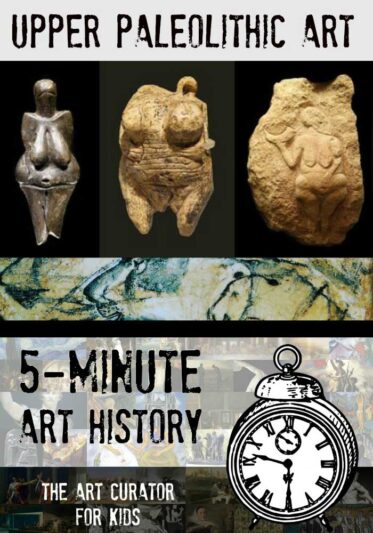
The Art Curator for Kids - 5-Minute Art History - Upper Paleolithic Art - Video and Printable!

I’m a big fan of Crash Course videos, and I have been dying for them to make an art history crash course forever! So, I decided to take matters into my own hands and make a new video series–5-Minute Art History. I start at the beginning with Upper Paleolithic Art.
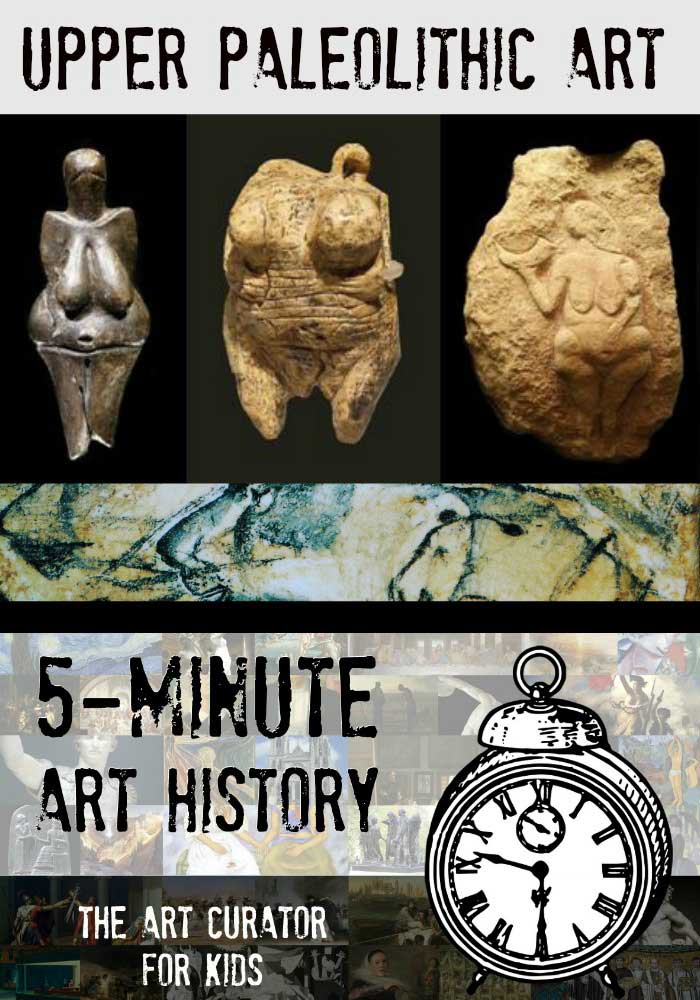
The Art Curator for Kids - 5-Minute Art History - Upper Paleolithic Art - Video and Printable!

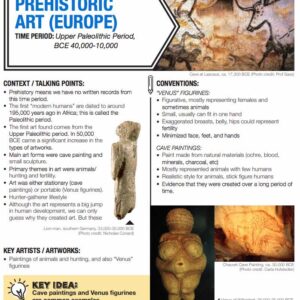
This series will have a 5 minute (or so) video summarizing the main points of the art movement along with a corresponding conventions printable handout that you can download here on The Art Class Curator!
Free PDF!

Paleolithic Art Conventions Printable

Get to know more about Paleolithic art in this informative PDF. Makes a great printable for your classroom or study sheet for your students!

Download

Free PDF!

Paleolithic Art Conventions Printable

Get to know more about Paleolithic art in this informative PDF. Makes a great printable for your classroom or study sheet for your students!

Paleolithic Art Conventions

Time:

Upper Paleolithic Period, 40,000-10,000 B.C.E.

Paleolithic Key Points:

  • Main art forms were cave painting and small sculpture.
  • Primary themes in art were animals/hunting and fertility.
  • Art was either stationary (cave paintings) or portable (Venus figurines).
  • Hunter-gatherer lifestyle
  • Prehistory means we have no written records from this period.
  • Although the art represents a big jump in human development, we can only guess why they created art.

Paleolithic Artistic Conventions:

“Venus” Figurines:

  • Figurative, mostly representing females and sometimes animals
  • Small, usually can fit in one hand
  • Exaggerated breasts, belly, and hips could represent fertility
  • Minimized face, feet, and hands

Cave Paintings:

  • Paint made from natural materials (ochre, blood, minerals, charcoal, etc)
  • Mostly represented animals with few humans
  • Realistic style for animals, stick figure humans
  • Evidence they were created over a long period of time

Important Artworks:

  • Venus of Willendorf
  • Caves of Lascaux

How to Study Art History Bundle

This bundle includes all of my favorite resources for art history—interactive activities, in-depth lessons, useful worksheets, trainings and more!

Buy Now

Image Credits:
Venus of Dolní Věstonice: Petr Novák, Wikipedia
Venus of Hohle Fels: Thilo Parg / Wikimedia Commons, License: CC BY-SA 3.0
Venus of Laussel: User 120, Wikipedia

This was originally posted on October 1, 2015.
Filed Under: Art and Artists, Downloads and Resources


June 26, 2016 Leave a Comment

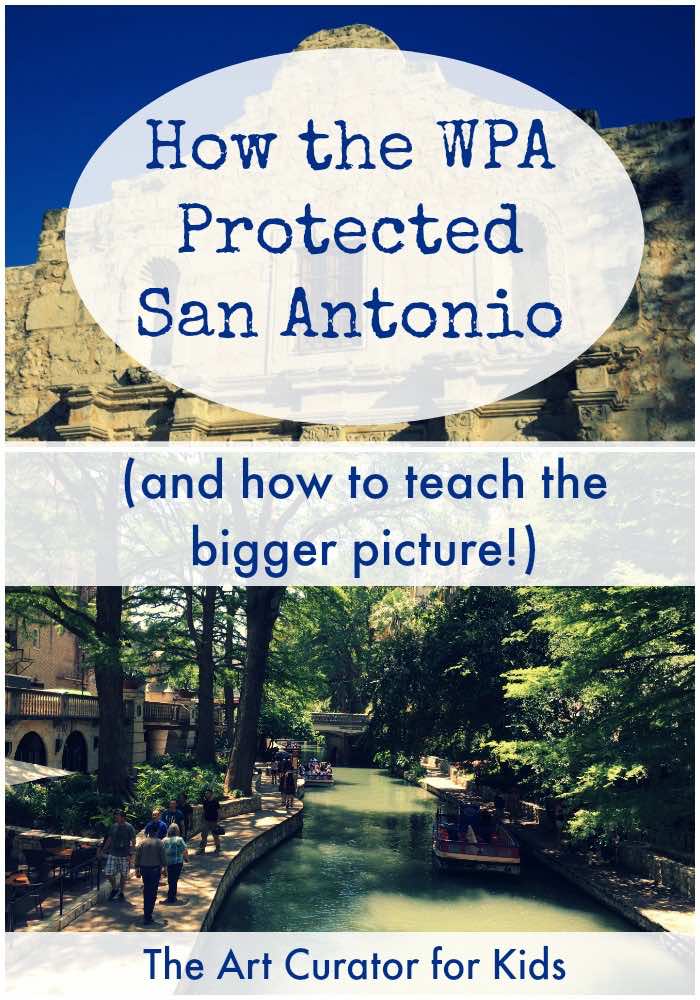
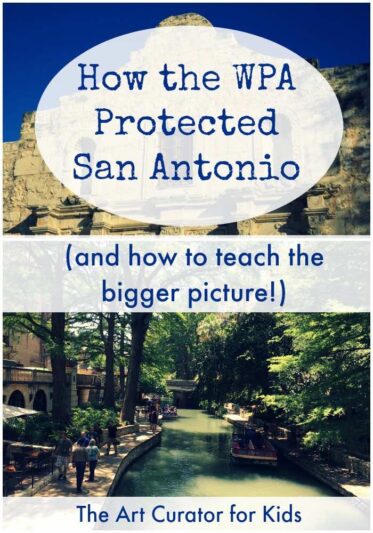
How the WPA Protected San Antonio (and how to teach the big picture!)

The Art Curator for Kids - San Antonio River Walk WPA

In the 1920s and 30s in the U.S., businesses went bankrupt, banks collapsed, factories closed their doors, and many people lost their jobs, their homes, and their life savings. With more than a quarter of people out of work, what effect do you think this had on the art and artists in America? Furthering this train of thought, what do you think is the responsibility of the government, in this situation, to support art and artists?
The Art Curator for Kids - San Antonio River Walk WPA

Without getting into a big big government or small government debate, because who needs that on an art history website, the story of how arts were supported in American in the Great Depression is one of my favorite bits of history.

san antonio river walk wpa
Dorothea Lange, Migrant Mother, 1936

These questions above are some I have asked my students many times to prepare them to study the work of American photographers, regionalist painters, and architecture from the early 20th century.

I get a lot of great discussion with the first question—what might be the impact of art and artists? Students inherently go to a humble, honest, survival-mode place with their ideas. Documenting family. Sharing hardship. Connecting communities. It’s empowering to know our students have that ingrained in them.

Read on for more information and for some project/lesson ideas and discussion questions you can use with your students!

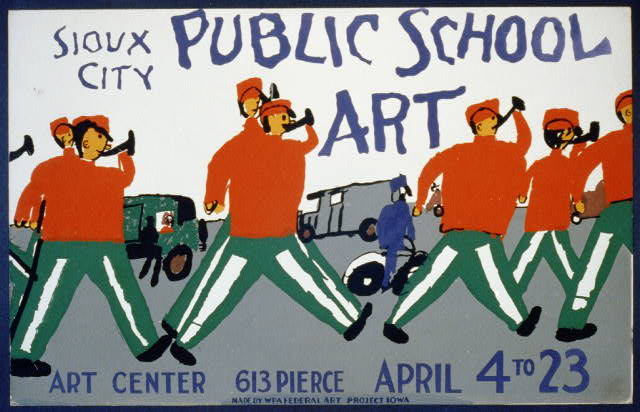
WPA Poster
WPA Poster

The New Deal

What the government did to support art, artists, workers, and communities during the time was really kind of exciting. Under Franklin D. Roosevelt’s New Deal, artists, painters, sculptors, photographers, architects, and more received government-funded programs to get them working again.

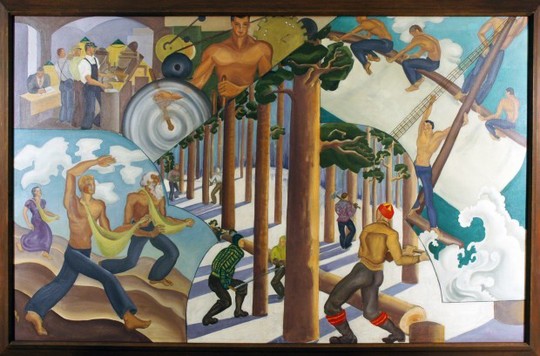
From the 1,300 murals created under a Treasury Department initiative to the photographs chronicling the dispossessed workers of rural America, the government found a way to help people get to work and beautify communities in the process.

Virginia Pitman, Four Phases of Labor, 1935-1942

San Antonio

I recently had the amazing opportunity to attend the first INSIGHT Blogger Retreat in San Antonio, TX sponsored by a group of amazing organizations and companies. This post is sponsored by INSIGHT Blogger Retreat and the sponsors listed at the end of this post. Thanks for the amazing experience!

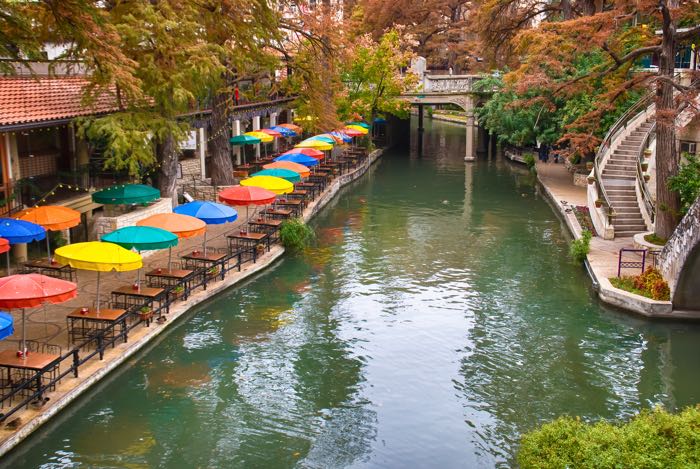
One excursion we went on was a riverboat tour along the San Antonio River Walk graciously provided to us by The San Antonio Visitors Bureau. You can get tickets for the riverboat tour with your San Antonio Smart Destinations Go City Card.

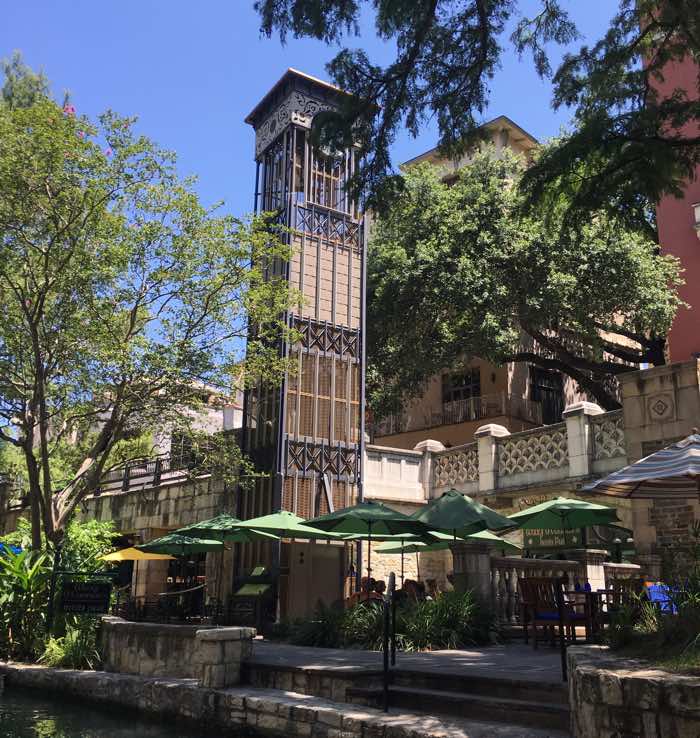
River Walk in San Antonio Texas, san antonio river walk wpa
River Walk in San Antonio Texas

When I was 7, I visited San Antonio for the first time to stay with my big sister while my parents were on their honeymoon. We visited the River Walk, and I remember thinking it was really cool. I thought everything was cool back then–including this giant Bart Simpson T-Shirt.

san antonio river walk wpa
Do you think I would have ever imagined that I would be writing about the Great Depression and its relationship to San Antonio River Walk 28 years later?

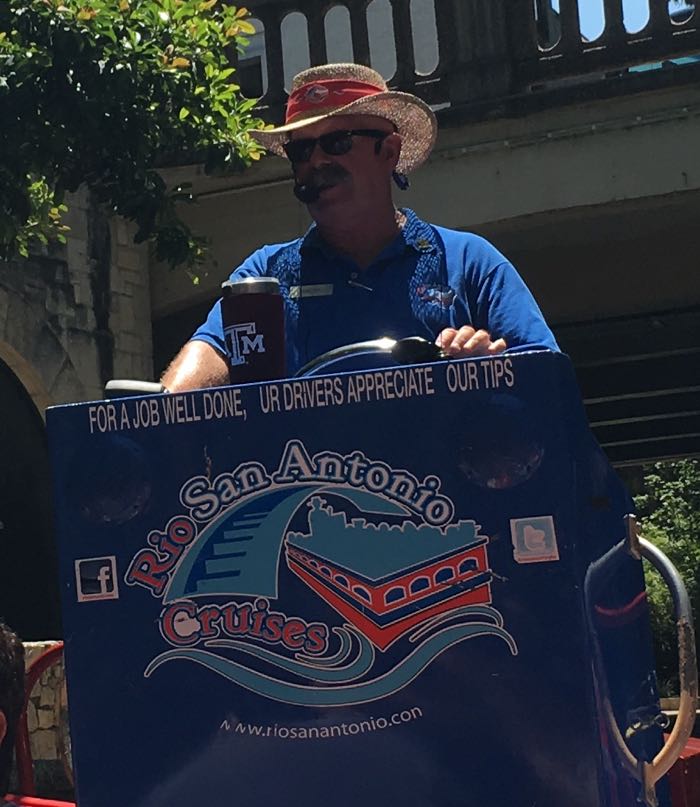
This time, I listened intently while our delightful tour guide (who was pretty much a doppelganger of my dad despite the drinking from the Texas A&M cup. My dad would NEVER drink from a Texas A&M cup. We bleed burnt orange!) told us about the fascinating history of the origins of the River Walk and architecture of the area.

san antonio river walk wpa
Our Dad-Doppleganger Tour Guide

The WPA and the San Antonio River Walk

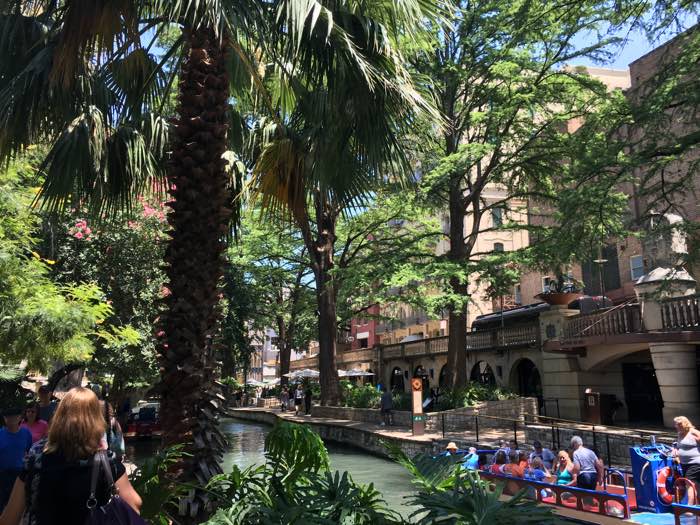
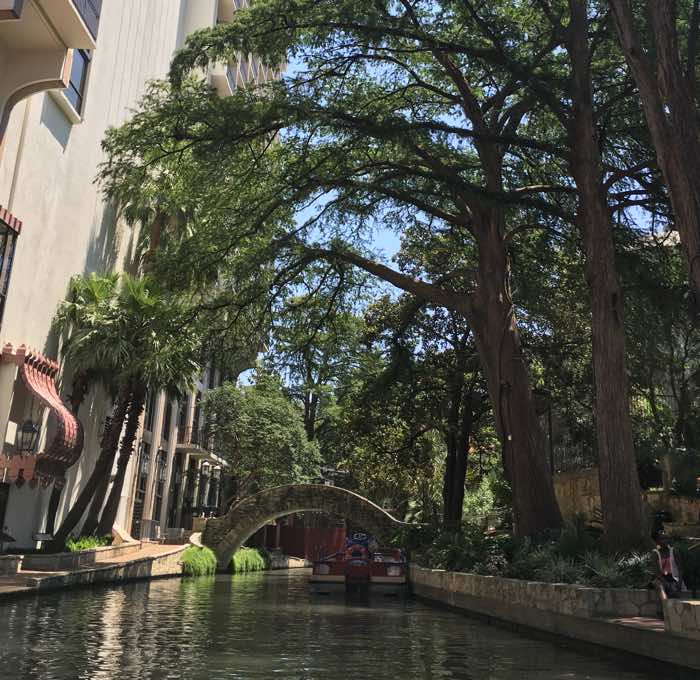
The Works Progress Administration (WPA) was one of the major programs of FDR’s New Deal, and one project funded by the WPA was the San Antonio River Walk. The River Walk is basically one long walkway alongside the San Antonio River. It runs under the streets of downtown and is lined with hotels, restaurants, stores, and bars. It’s gorgeous!

san antonio river walk wpa

After a devastating flood in 1921 that killed 50 people, government officials, city planners, and the conservation society debated on how to handle the regular flooding of the San Antonio river. They built a dam to bypass a bend in the river and to save lives as well as the historic buildings of downtown.

san antonio river walk wpa

Architect Robert Hugman was the mastermind behind the River Walk. The bend in the river was originally slated to be paved over, but Hugman and the San Antonio Conservation Society (the “Conservation Ladies” as our tour guide lovingly called them) fought to rejuvenate and protect the area. They advocated fiercely for their plan and fundraised for 10 years before the WPA supplied funding in 1938 for 20 bridges, 17,000 feet of walkways, and landscaping.

san antonio river walk wpa

Along the river, all of the historic buildings remain intact whether still with their original function or as my dad-doppleganger said “we don’t tear down buildings in San Antonio; we turn them into hotels.”

Speaking of hotels, we were hosted by the Hotel Valencia Riverwalk, and it was so beautiful! My large room had balcony overlooking a gorgeous courtyard.

san antonio river walk wpa
Hotel Valencia Riverwalk, San Antonio

The varied architecture and stories made for such a lovely experience. I wish I could keep writing to tell you all about the architecture, but this is getting long enough already (and I don’t know it all yet, I need to read more!)!

Now, how to explore this content with your students. How do you think 7-year-old me would like the following activities?

WPA Art Lesson and Project Ideas

  • Have students design a city beautification and community-building area for their own town.
  • Assign students a WPA/New Deal-funded artwork, building, or place to research and write/present about. See links below for ideas.
  • Have members of the local conservation society visit your class (or go on a field trip) to discuss their efforts.
  • Have students photograph historic areas in their town.

WPA Art Discussion Questions

  • With more than a quarter of people out of work in the Great Depression, what effect do you think this had on the art and artists in America? What do you think is the responsibility of the government, in this situation, to support art and artists?
  • Why is it important so preserve historic buildings?
  • How has your town been preserved?

Learn More 

Want to learn more about the WPA/New Deal art and architecture and San Antonio Architecture? Check out these articles

  • Are Artists “Workers”? Art and the New Deal by Elizabeth Broun, History Now: The Journal of the Gilder Lehman Institute
  • A New Deal for the Arts, Online Exhibit from the National Archives
  • New Deal Programs: Selected Library of Congress Resources
  • New Deal Art, U.S. General Services Administration

Dig deeper into the history of the WPA and of San Antonio with these books. Please note, this post includes Amazon affiliate links. As an Amazon Associate I earn from qualifying purchases.

  • American-Made: The Enduring Legacy of the WPA: When FDR Put the Nation to Work
  • San Antonio’s Historic Architecture (Images of America) by T. Irwin Sessions
  • Saving San Antonio: The Preservation of a Heritage by Lewis F. Fisher

Visit San Antonio

I highly recommend a trip to San Antonio. My trip was sponsored by these awesome organizations! Thanks so much for the awesome experience in your city!

San Antonio Sponsors

The San Antonio Visitors Bureau

The San Antonio Convention & Visitors Bureau is happy to welcome you to historic and cultural San Antonio. We hope you enjoy our diverse offerings from theme parks and museums to restaurants and cultural districts. There’s much to explore!

Smart Destinations Go City Card San Antonio

If you visit San Antonio, I recommend you use the Smart Destinations Go City Card. The  riverboat cruise was included, but also it includes admission to the art museums! I visited the McNay Art Museum, and it was AMAZING. The Coney Island exhibit is absolutely not to be missed.

Hotel Valencia Riverwalk

Settle into luxury at Hotel Valencia Riverwalk. Boasting 213 chic guest rooms, our stylish luxury San Antonio boutique hotel is irresistible to discerning travelers. Immerse yourself in a San Antonio downtown River Walk hotel that melds the elements of a sophisticated old world palazzo with eye-catching details of modern conceptual design.

San Antonio Restaurants

We ate so good at the retreat! The following restaurants provided our meals.

  • Nao Latin Gastro Bar: One of the most unique parts about the Nao Latin Gastro Bar experience is that it acts as a classroom for students at The Culinary Institute of America – San Antonio. Prior to graduating, students spend their final months working front and back-of-house during lunch service to get hands-on experience. The food was so good, and I especially LOVED the art! Check out the pictures I posted on Facebook of the art.
  • Fogo de Chão: Such an awesome cultural experience with INCREDIBLE food. This was a full Brazilian churrasco dining experience with a delicious market table and gauchos who cooked the meat bringing it right to the table. So so delicious.
  • Bakery Lorraine: They provided us breakfast as well as afternoon pastries. So so yummy! The lemon macarons were to die for. I love anything lemon.
  • Citrus Restaurant at Hotel Valencia: We had a delicious breakfast with awesome service at the hotel. The tea service was so cool. Here’s a video from one of the other bloggers of the tea service. So fun.

Filed Under: Art Connection Activities, Art Teacher Tips


June 15, 2016 1 Comment

The Olympic Art Competitions from 1912-1948 — Discussions and Activities

When I was in high school, there was a pivotal moment at the end of my freshman year of high school: do I continue with sports or do I follow my interest in the arts? Ultimately, I choose the arts because the competitiveness of high school basketball was a little too much for me to handle (plus, I was really quite terrible at sports).

The Art Curator for Kids - The Olympic Art Competitions Classroom Activities

Well, it turns out that the arts are a bit more competitive than I thought. Did you know that between 1912 and 1948, the Olympics held art competitions in architecture, music, painting, literature, and sculpture? I find this to be totally fascinating.

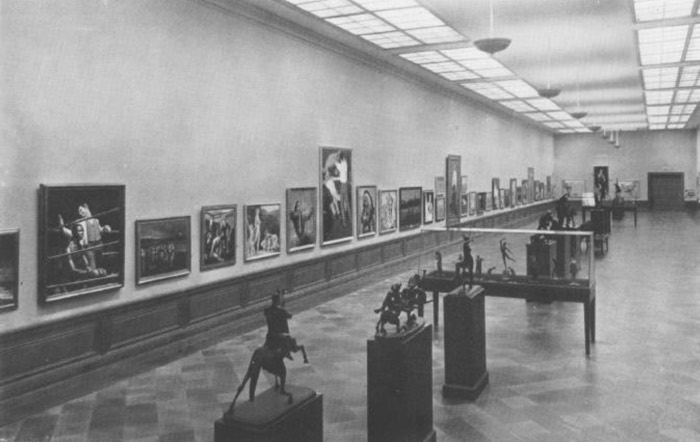
View of the 1932 Olympic Art Exhibit

However, the art couldn’t just be any work of art. According to the official rules, the art had to be related in some way to athletics and Olympic ideals. Not many people have heard of the Olympic medalists in art because professionals were not allowed to participate in any Olympic event at the time (which is no longer the case).

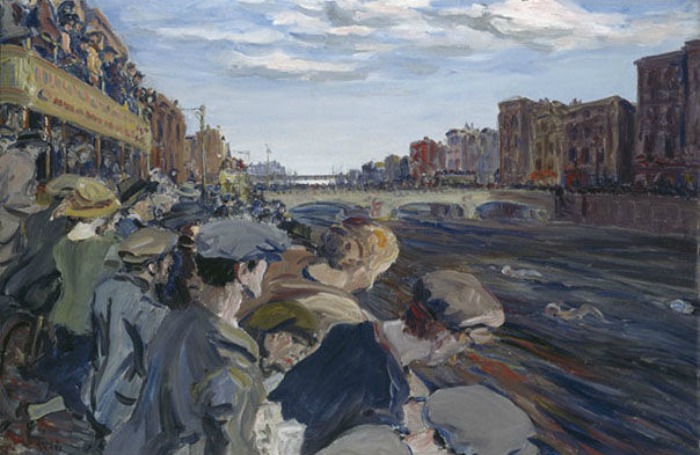
Jack Butler Yeats, The Liffey Swim, 1924, Silver Medal for Ireland
Jack Butler Yeats, The Liffey Swim, 1924, Silver Medalist for Ireland

From what I’ve read online, the Olympic art competitions were a bit of a mess. Corrupt judging, constantly changing rules, low participation, and more caused these competitions to not last long in history. There were even some cases where no medals were awarded or they awarded a silver and bronze but no gold! (BURN!)

Ruth Miller, Struggle, 1932, Silver Medalist for United States

As I read about these completion, I have a couple questions that keep plaguing me. Here are some thoughtful discussion ideas you can bring up with your students about the competitions.

Art and Olympics Discussion Questions, Activity, and Project Ideas

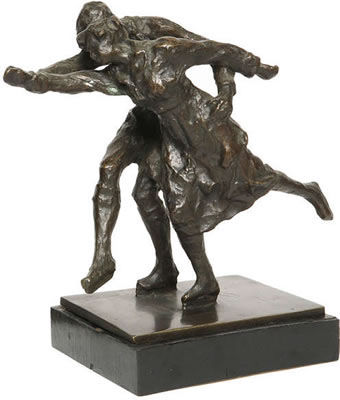
Simon Goossens, Les Patineurs (Skaters), 1920, Silver Medalists for Belgium
Simon Goossens, Les Patineurs (Skaters), 1920, Silver Medalist for Belgium

Reuniting Muscle and Mind

Pierre de Coubertin was the founder of the International Olympic Committee and considered the father of the modern Olympics. He said that the art competitions were supposed to help “reunite in the bonds of legitimate wedlock a long-divorced couple — Muscle and Mind.”

  • Why do you think the Olympic art competitions were started?
  • When in the past have muscle and mind been wedded?
  • Why would it be important to unite muscle and mind?

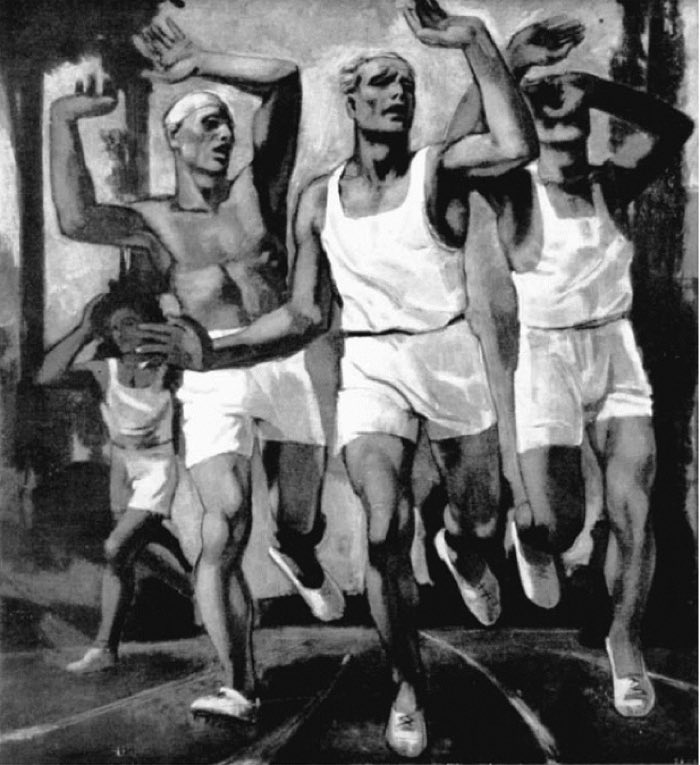
Rudolf Herman Eisenmenger, Runners at the Finish Line, 1936, Silver Medalist for Austria

Professionals vs. Amateurs

In the early 20th-century, Olympians were not allowed to be professionals. Some say this was why the art competitions ultimately failed.

  • Why do you think professionals were not allowed to compete?
  • What is the different between a professional artist and an amateur? Can we make that distinction so easily?
  • Now that professionals are allowed in the Olympic games, do you think an Olympic art contest would be more successful?
  • If professionals would have been allowed to compete, do you think they would have?
  • How do you think professional artists during this time felt about the Olympic art competitions?

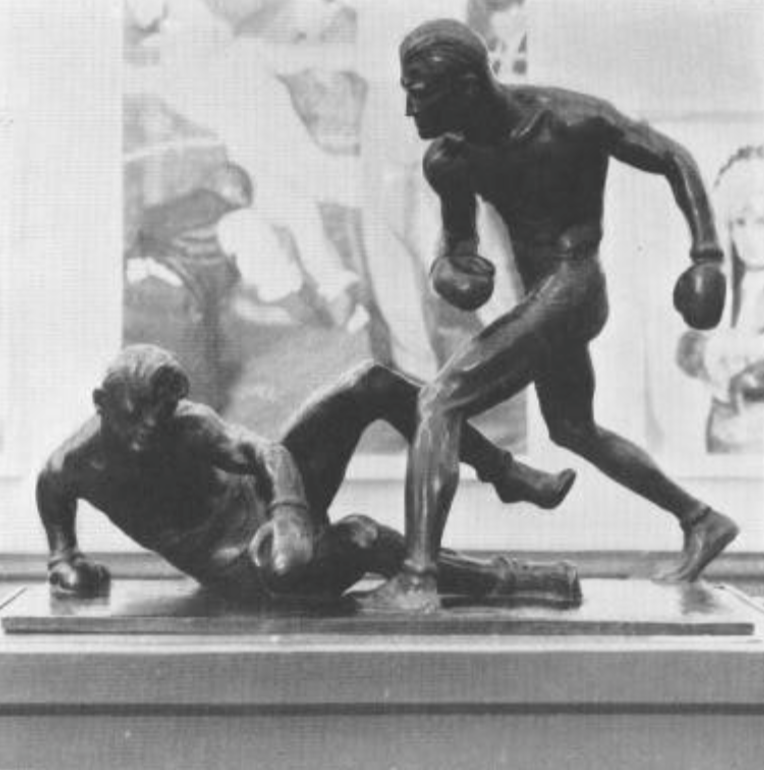
Mahonri Young, The Knockdown, 1932, Gold Medalist for United States

Olympic Art Competitions Today?

With the art world the way it is, I can’t image a situation where they would ever recreate these Olympic art competitions, but what if they did?

  • How do you think an Olympic art competition would go over today?
  • If you had to design an Olympic art competition, how would it go? What would be the rules and limitations placed on the artists?
  • Do you think an Olympic art competition would help unite the world or divide us? How would an Olympic art competition impact relationships, stereotypes, and politics among differing cultures?
  • How is art currently integrated into the games? Research.

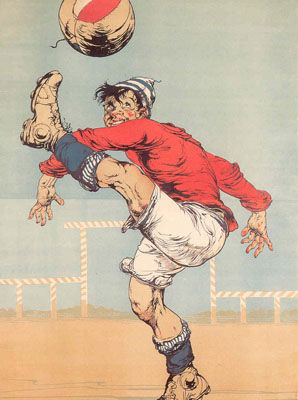
Alfred Ost, De Voetballer, 1920, Silver Medalist for Belgium

Become an Artist Olympian

If you want a fun art project idea, try this out. Imagine you are submitting a sports-themed artwork for the Olympic art competition of the past. What would you include? Make a painting or sculpture as your entry.

50+ Olympic Activities for Kids

olympics_for_kids_crafts

This post is a part of the Olympics series by an awesome group of kid bloggers. Check out the landing page for links to all of the posts. I’ll be back again next week to bring you a post about the art of the host country of Brazil. Enjoy!


Filed Under: Art Connection Activities


May 27, 2016 1 Comment

Kids Talk About Art – Henri Rousseau’s The Dream

The Art Curator for Kids - How to Talk About Art with Kids - Henri Rousseau The Dream

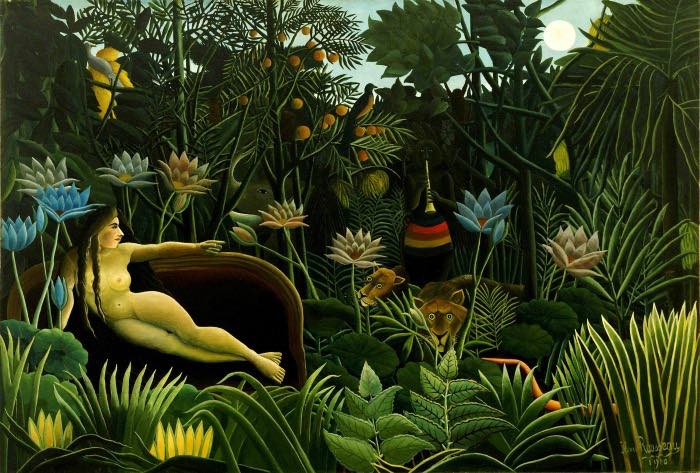
Henri Rousseau’s The Dream is a fun painting to discuss with children. See how I integrated this book into our curriculum and watch my kids and I discuss this painting together. Then, download the PowerPoint and list of printable discussion questions to use with your students!

The Art Curator for Kids - How to Talk About Art with Kids - Henri Rousseau The Dream

Moving Beyond the Page

As you may know, I homeschool my 4 and 6 year olds. For the last few months, we have been using the curriculum Moving Beyond the Page. I LOVE this curriculum so far with its focus on unit studies and quality children’s books, and it fits with the way I teach very nicely.

I have decided to pair an artwork with each week’s unit in the Moving Beyond the Page’s Age 4-5 Curriculum to add more art to my kids’ education.

Please note, this post includes Amazon affiliate links. As an Amazon Associate I earn from qualifying purchases.

This week I paired our unit on What do you do with a tail like this? by Steve Jenkins with Henri Rousseau’s The Dream. I decided to record our conversation to model to you how you might talk about art with your own kids! Enjoy this video, and then use the discussion questions and PowerPoint download with your own kiddos.


Henri Rousseau, The Dream, 1910

This painting is such a treat for kids. I know my kids are naturally drawn to artworks with animals and stories, so this one is a great artwork to discuss.

Henri Rousseau, The Dream, 1910

I know many of you will not be too agreeable with the nudity in the painting, but as I said in my most recent interview, the human body is not a dirty thing, and we can talk about it responsibly with our children. I think this is a great painting to show you how I would address the subject with my own kids in regards to this painting. Watch the video to see how I handle this subject with my 4 and 6 year olds.

I use Moving Beyond the Page with my kids in our homeschool and love it, and I am also a participant in the Moving Beyond the Page Affiliate Program, an affiliate advertising program designed to provide a means for sites to earn advertising fees by advertising and linking to www.movingbeyondthepage.com.

Filed Under: Art and Artists, Downloads and Resources
Tagged With: henri rousseau


May 23, 2016 Leave a Comment

Fushimi Inari Shinto Shrine Art Lesson

The Art Curator for Kids - Fushimi Inari Shrine Art Lesson

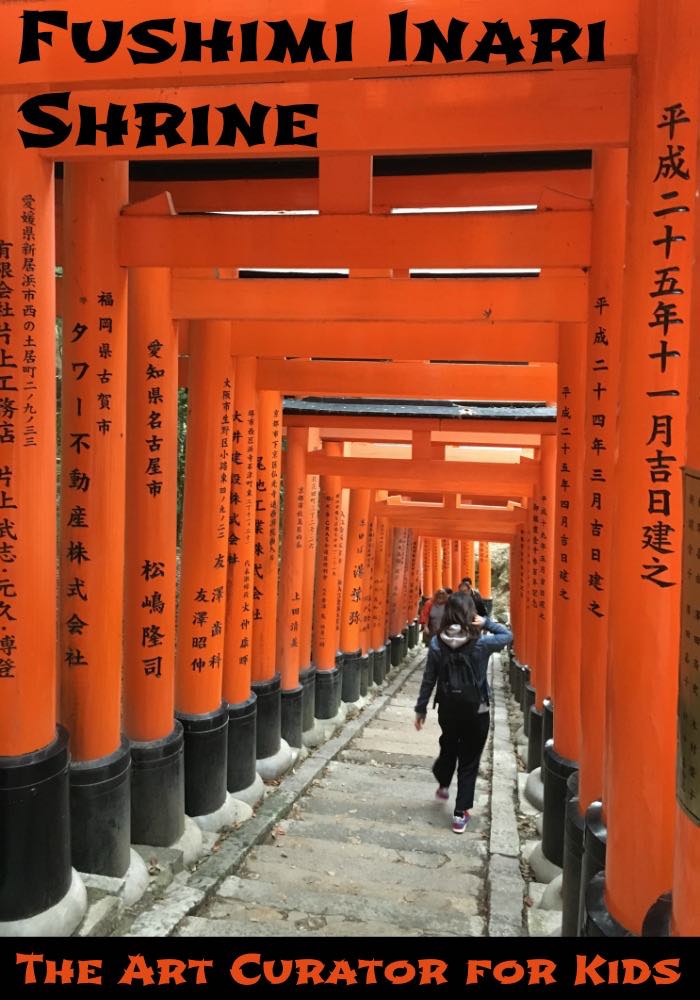
Imagine walking through 5,000 bright orange and black gates wooded hills with blooming cherry blossoms.

The Art Curator for Kids - Fushimi Inari Shrine Art Lesson

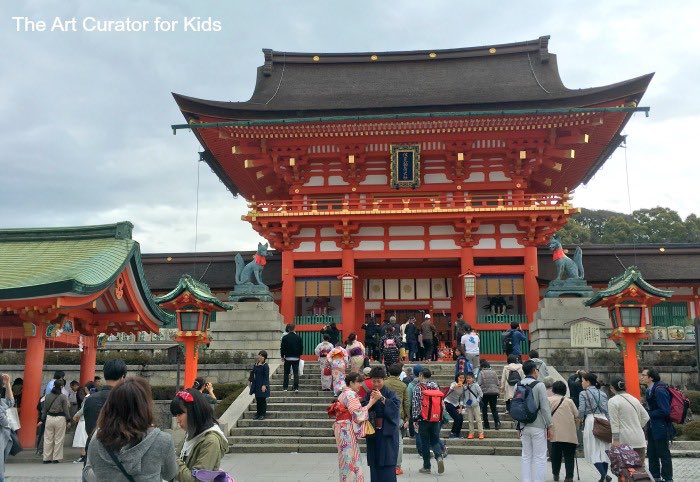
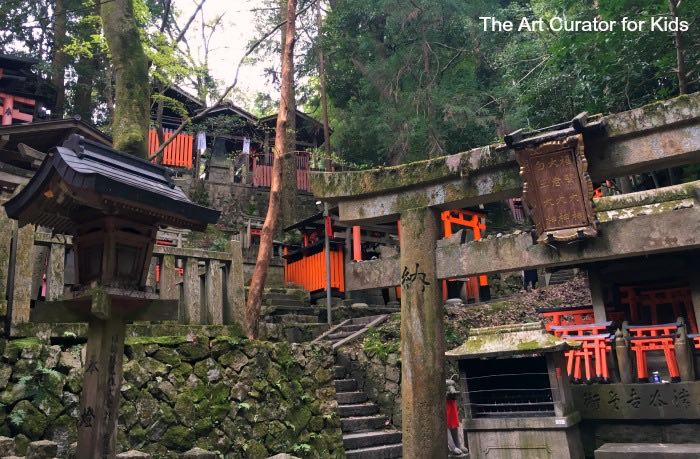
While exploring Japan on my Google Cardboard, I discovered the Fushimi Inari Shrine in Kyoto, Japan. I was drawn to this Shinto shrine because of the 5,000+ bright orange torri gates than fill more than 4km of trail space through the hills above the shrine. I was so excited to get the chance to visit this spectacular place on my recent trip to Japan.

Fushimi Inari Shrine, Kyoto Japan

Explore this shrine with your students and use the information below to teach about the cultural heritage of Japan. Then, check out the upcoming part two to this post–a cute fox art activity to connect the Japanese kitsune (fox) sculpture and wishes. Be sure to sign up to receive all posts by e-mail to be notified when the activity is posted!

Shinto Religion

Shinto is the original ethnic religion of Japan and still remains an important piece of the cultural heritage of the people of Japan. Shinto differs from other religions as it is more a way of life rather than a system of stories and myths to explain the world. There is no Shinto god or official founder of the religion, and Shinto adherents are free to follow explore their spirituality in any way they personally see fit. (Source: BBC Religions: Shinto)

Fushimi Inari Shrine Rituals

Shinto followers use rituals and shrines to communicate with special spirits called kami. While the kami are not gods, Shinto adherents do believe that the kami will benefit our lives if they are honored. When I visited several shrines on my trip to Japan, I enjoyed witnessing many Japanese people performing these rituals to honor the kami.

Shinto Shrines

Shrines are a key component of the Shinto religion, and thousands of shrines exist in Japan today from large shrines like the Fushimi Inari to small household shrines. Each has it’s own local character and personality.

Fushimi Inari Shrine - Torii Gates

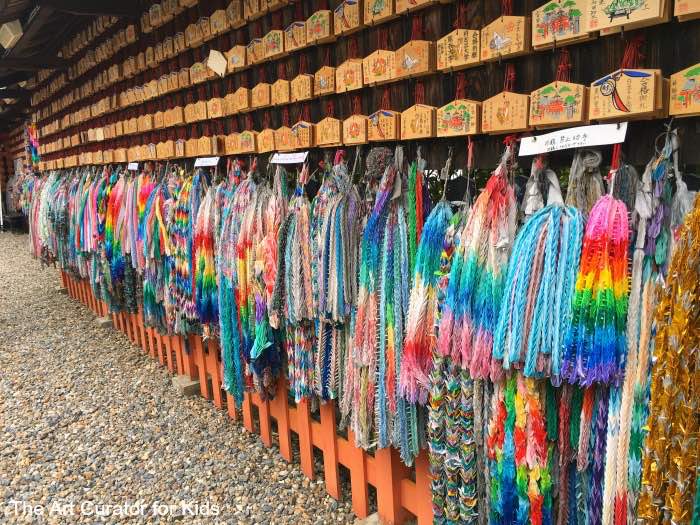
Most people visit their local shrine to pay their respects to the kami, but many people visit a Shinto shrine in the first few days of the year to start their year on a positive note. This is called hatsumōde. In hatsumōde, visitors make wishes for the new year and get a fortune/oracle called an omikuji. They bring the omikuji from the year before to burn to say goodbye to the prior year.

Fushimi Inari Small Shrines

In the first 3 days of 2010, Fushimi Inari Shrine alone had 2.7 million visitors! (Source: Wikipedia) And I thought it was crowded when I went!

Torii Gates

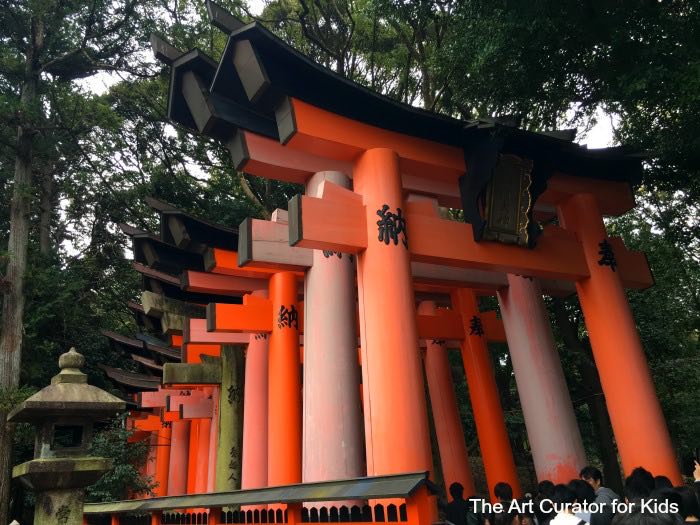
Torii gates mark the entrances of most Shinto shrines. The gates help prepare visitors to enter the sacred space. The gates are usually two column posts with two sweeping lintels across the top. While most shrines probably only have one torii gate, Fushimi Inari Shrine is unique with its thousands of gates.

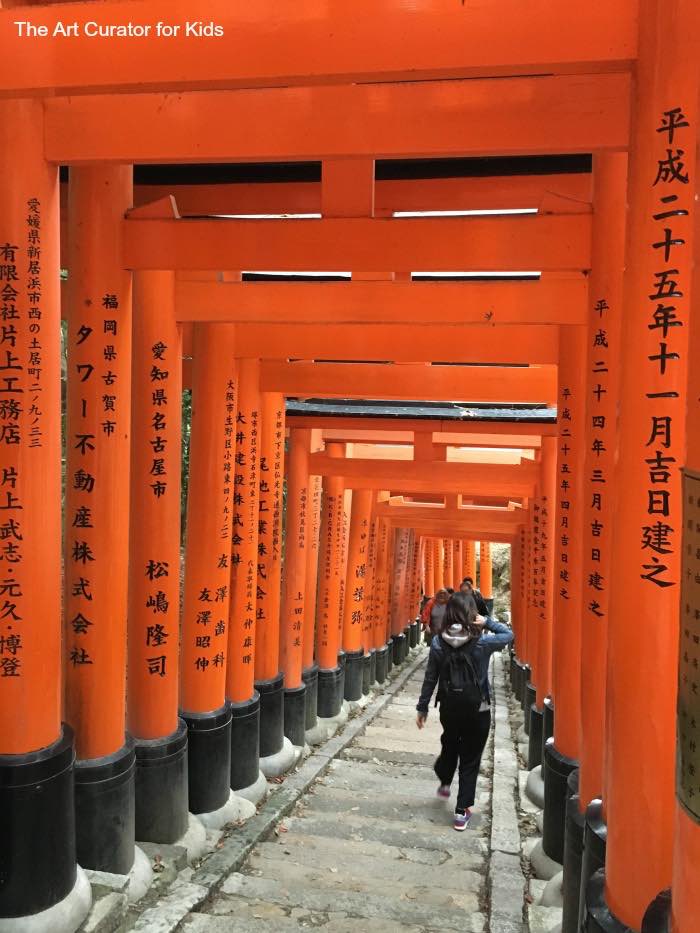
Fushimi Inari Shrine - Torii Gates Inside

Fushimi Inari is dedicated to Inari who is the kami of foxes, fertility, agriculture and industry, prosperity, and success. Each torii gate at this Shinto shrine was donated by a Japanese business to honor Inari and help fund the shrine.

I was amazed at the gorgeous gates with the black Japanese kanji and katana on them. The writing was on the back, and my sister and I wondered why. When we realized the text was basically names of businesses, the gates took on a new feel. We wondered how we would feel if the text was English names of law firms, restaurants, and other business. How do the Japanese people feel when they see the text on the gates?

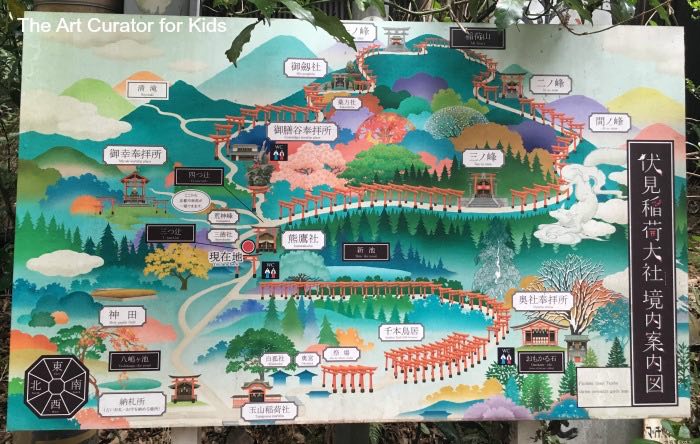
Fushini Inari - Map of Torii Gates

Going through all of the gates was a 2 hour+ walk, and we only scratched the surface due to my annoying cold! It was a breathtaking site!

Discussion Points

Use these discussion topics with your students to further explore this place.

  • Image walking through this row of gates. How would it make you feel? How would you compare these gates with other doorways and entrances in your life?
  • What do you think the impact of the Japanese writing is on the experience of different types of visitors?

Shinto Fox Art Activity

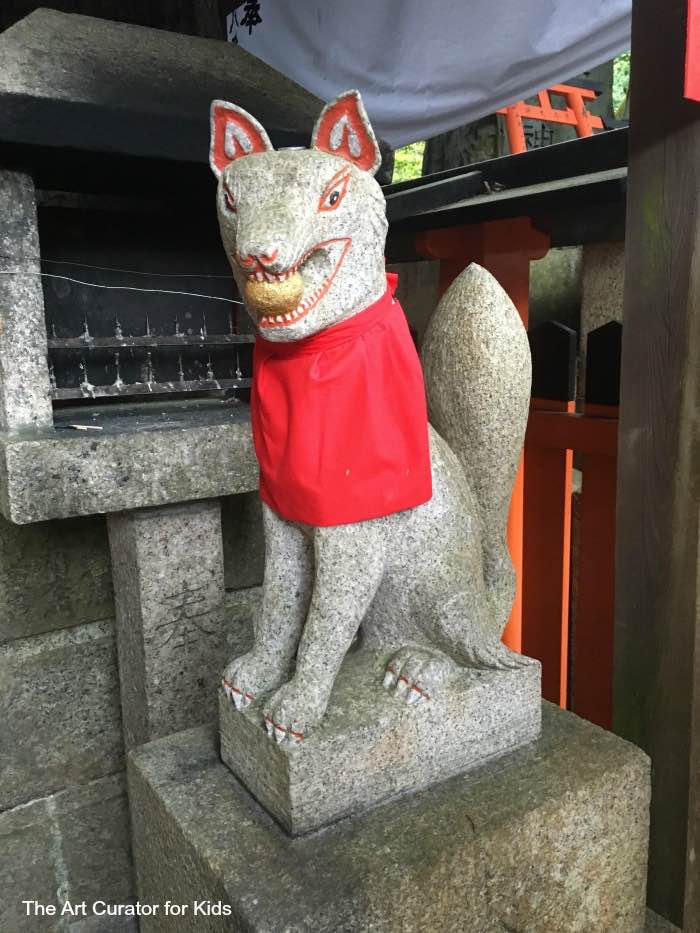
Fushimi Inari Shrine Fox Sculpture

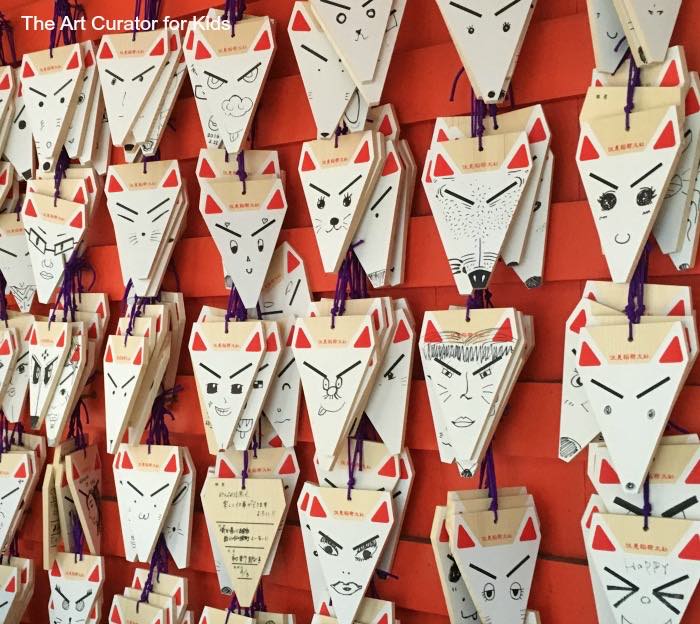
Stay tuned for part two of this post which goes into the fox imagery throughout the Fushimi Inari Shrine. Sign up for e-mails to be notified when it is posted!

Fushimi Inari Shrine Fox Faces

Filed Under: Art and Artists


May 19, 2016 Leave a Comment

Art Made Easy – How to Talk to Kids about Art

I was honored to be a guest on Patty Palmer from Deep Space Sparkle’s podcast last week! We talked about how to look at art with kids, the infamous nudity question, and more!

Art Made Easy - How to Talk to Kids about Art

It was such a joy to talk with her! I was a little starstruck. 🙂

Check out the podcast, and be sure to subscribe to get notified of all of the amazing art content she has on future episodes!

Filed Under: Art Teacher Tips


May 2, 2016

Otagi Nenbutsu-ji Temple: The Most Delightful Place on Earth

The Art Curator for Kids - Otagi Nenbutsu-ji Temple - Art Lesson with Discussion Questions

In my 2-3 days in Kyoto, Japan, I had half dozen moments where I said “this is the most beautiful thing I have ever seen.” I’m an art teacher. I’ve seen a lot of beautiful things, so that is really saying something! One of my favorite places from my whole trip was this little gem, the Otagi Nenbutsu-ji Temple in the Arashiayama district of Kyoto.

Check out this delightful temple, and use the discussion questions and activities below to explore the temple with your students.

The Art Curator for Kids - Otagi Nenbutsu-ji Temple - Art Lesson with Discussion Questions


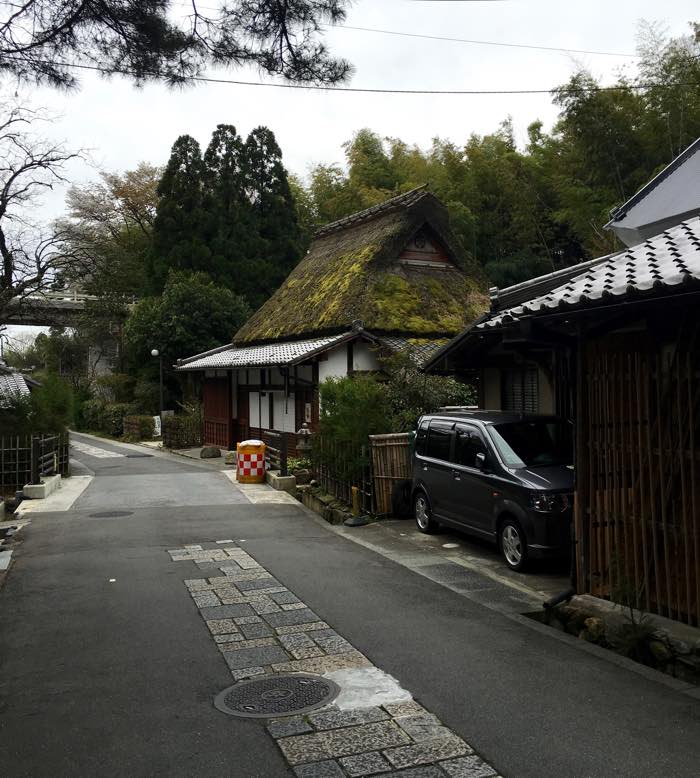
My sister mentioned there was a temple with many moss-covered sculptures of people, and I knew I had to see it! It was a little out of the way, but we ended up taking a gorgeous walk among traditional mossy thatched-roof houses to get there.

Arashiayama District, Walk to Otagi Nenbutsu-ji Temple

I was not disappointed by the extra travel to get there. Look at this total and utter arty deliciousness.

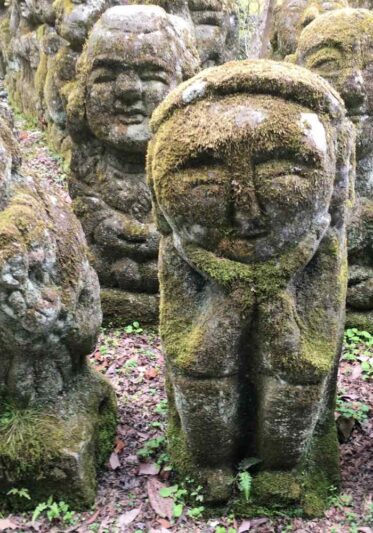
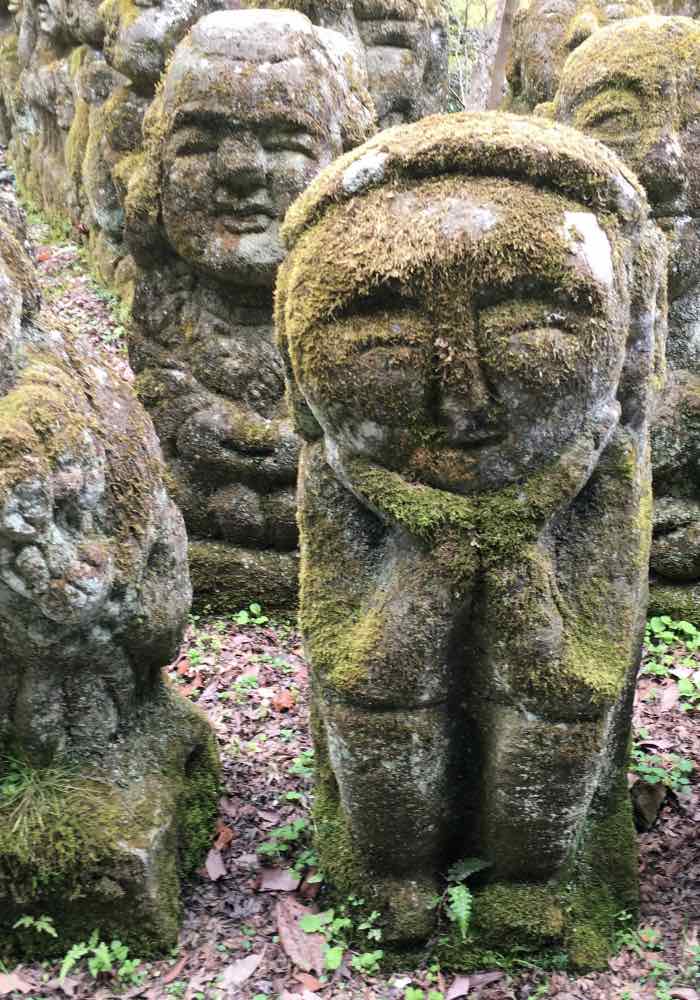
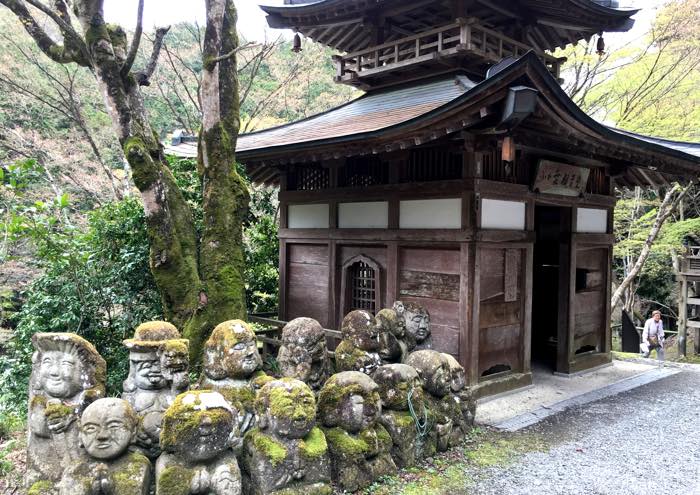
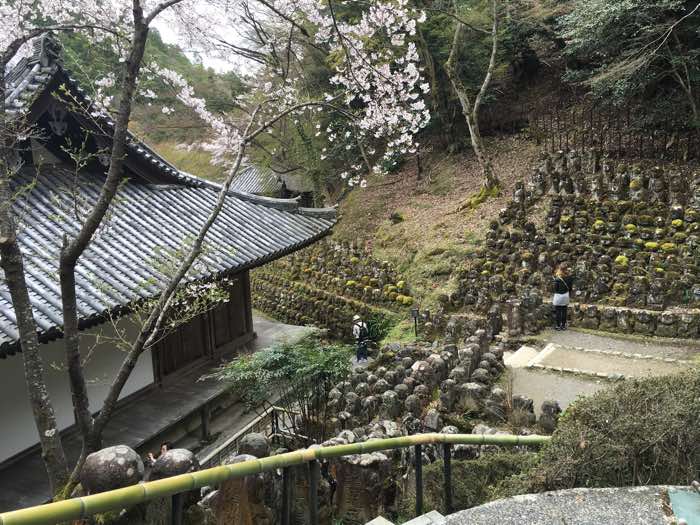
Otagi Nenbutsu-ji TempleI honestly couldn’t contain my happiness at this moment. The temple grounds include 1,200 of these adorable statues of Rakkan, which are disciples of Buddha.
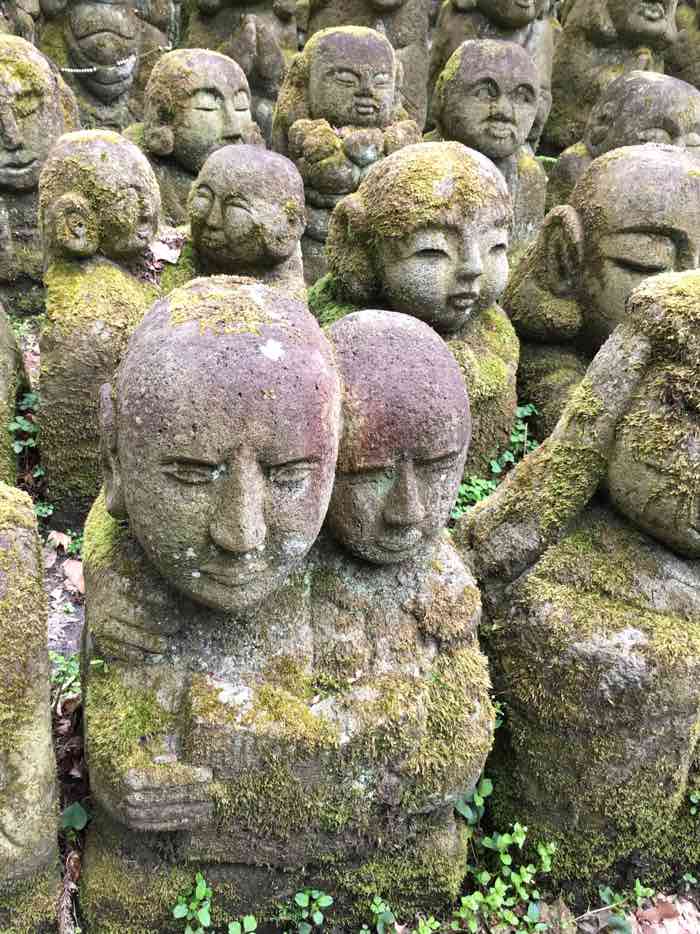
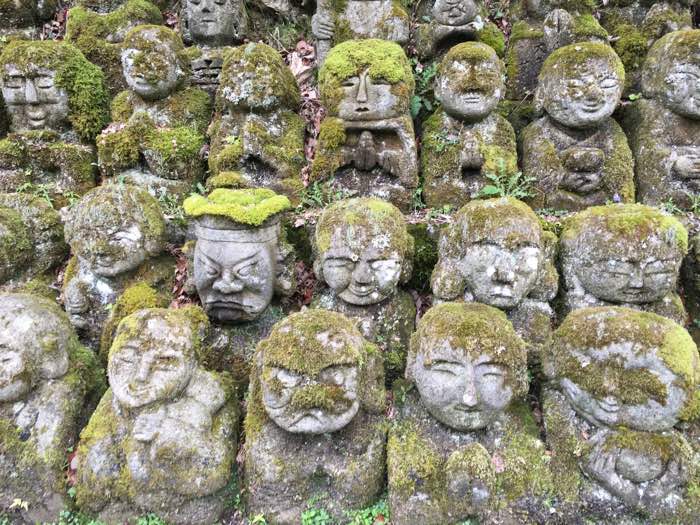
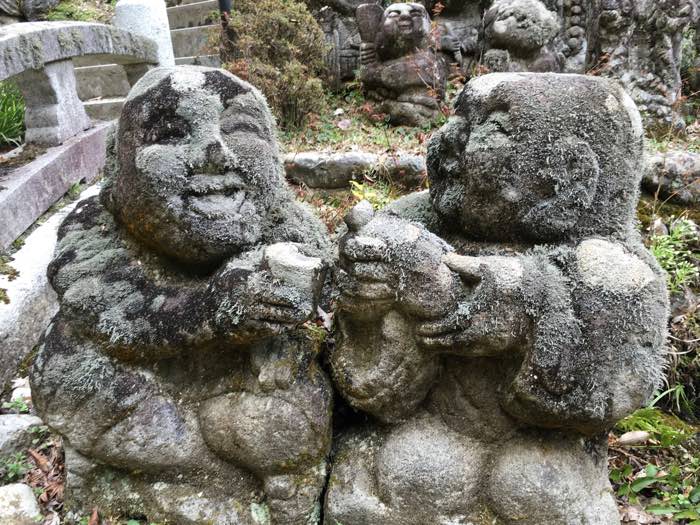
Rakkan Sculpture from Otagi Nenbutsu-ji Temple

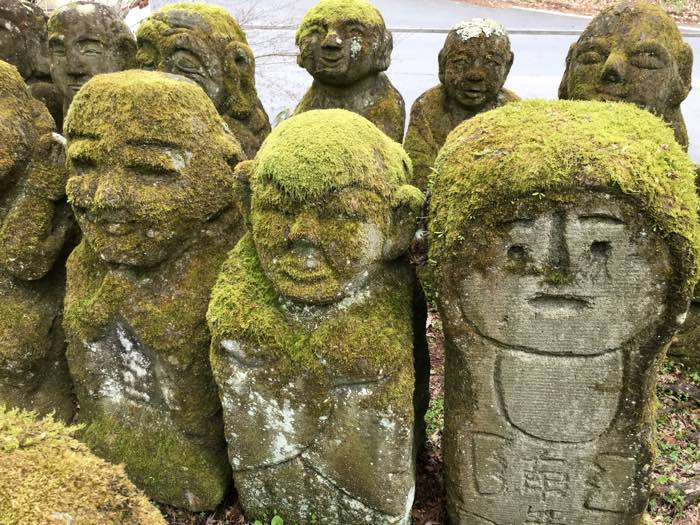
Each sculpture has its own personality and character, and each clearly was sculpted by a different person.

Rakkan Sculptures from Otagi Nenbutsu-ji Temple4

The style and emotions capture your heart and make you smile.

Rakkan Sculptures from Otagi Nenbutsu-ji Temple

When I was visiting all of these sites in Japan, there were not a lot of signs or information in English about each place, and I didn’t have a data plan on my phone, so my information-seeking art history nerd self was stifled by the lack of info. This place did have a small brochure which provided the basic information.

Otagi Nenbutsu-ji Temple2

This temple dates back to the 8th century, but has had a series of unfortunate disasters that have caused it to be rebuilt and/or moved several times. The last time it was destroyed was in 1950 by a typhoon. It took 30 years to restore the temple.

Rakkan Sculptures from Otagi Nenbutsu-ji Temple2

The sculptures were carved by worshippers and supporters of the temple in celebration of it’s restoration.

Art Discussion Questions

Have your students compare three of the sculptures and discuss them together.

  • Who do you think these sculpture represent?
  • What emotions do you notice?
  • What can you tell about the personality of the person?
  • Were these made by the same artist or different artists? How can you tell?

Otagi Nenbutsu-ji Buddhist Rakkan Sculpture Lesson Plan

Invite them to make their own sculpture of an expressive figure using the following lesson sequence.

  1. Ask students to first make a list of the things artists can do to express emotion. Give them different emotions to discuss. Have them mimic the facial expressions they might use as well as the lines and colors that could express those feelings. Try silly, angry, distraught, and thoughtful.
  2. Look at the Buddhist Rakkan sculptures and discuss using the questions above. After discussing, tell students to story of the Otagi Nenbutsu-ji Temple and how different worshippers, not professional artists, carved and donated the sculptures to the temple.
  3. Have students write a story about a sculpture of their choosing.
  4. Have students pick an emotion and make an expressive sculpture. For older students, you could try having them carve using foam or soap, but you’d generally have better results using clay. The emotions would be easier to reproduce, and the children would feel more successful with the project.

Filed Under: Art and Artists


April 27, 2016 Leave a Comment

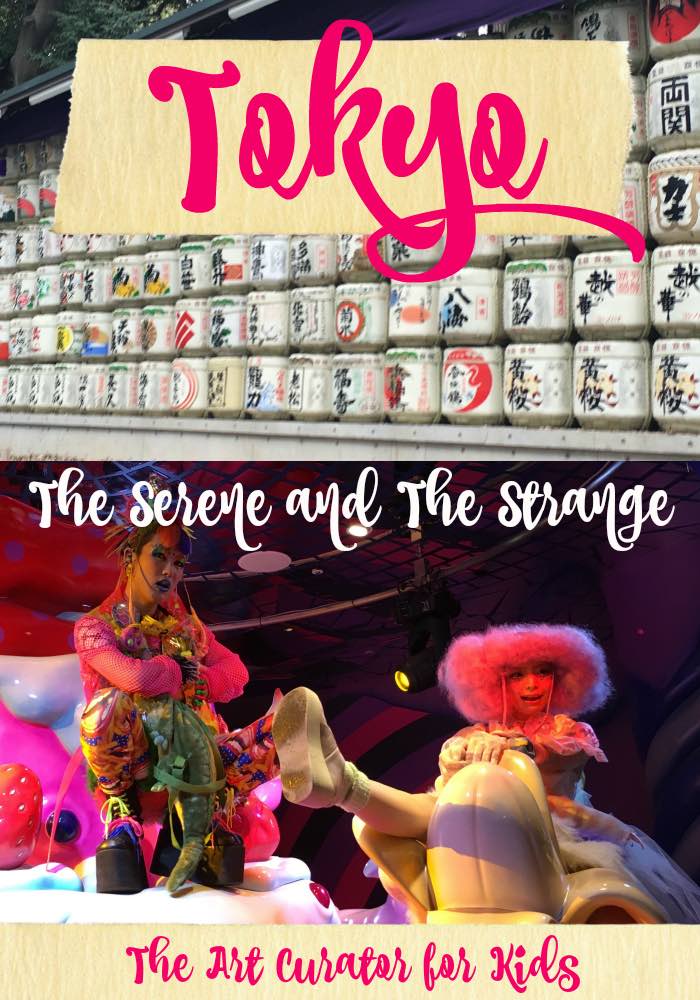
Tokyo: The Serene and The Strange

The Art Curator for Kids - Trip to Japan - Serene and Strange Tokyo

I’m back to chronicle my recent trip to Japan! I already shared with you the gorgeous cherry blossoms, a sky view of Tokyo, and a festive temple. On day 3, I experienced some truly eccentric, peculiar Japanese experiences that will be truly hard to explain, but I will try! I got such a neat taste of the varied culture of Japan all in one day.

The Art Curator for Kids - Trip to Japan - Serene and Strange Tokyo

When I woke up the next day, I had the beginnings of a cough and sore throat. I thought it was from the champagne-induced karaoke singing in the high-rise Tokyo apartment from the night before, but it progressed into full-blown sick by the next day. Argh! Of course. I wouldn’t let it stop my from fully experiencing Japan, so I powered through.

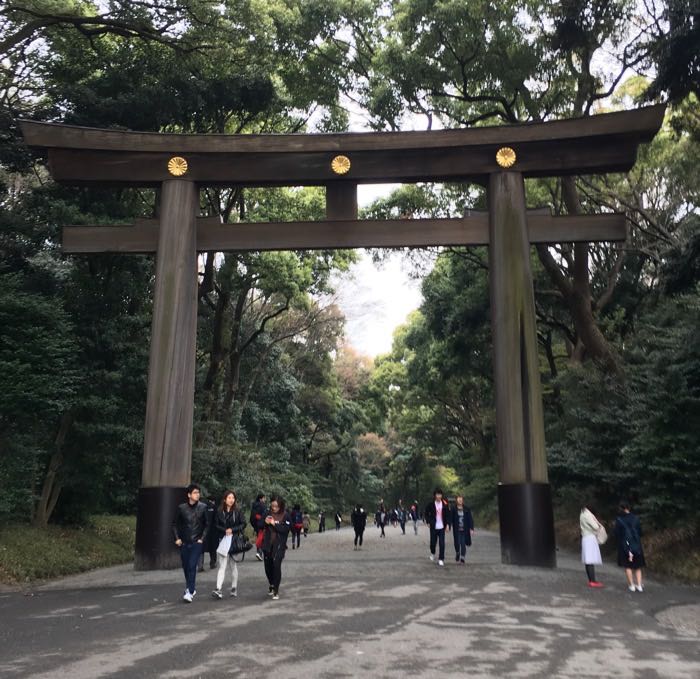
Meiji Shrine

Japan Meiji Shrine Torii Gate

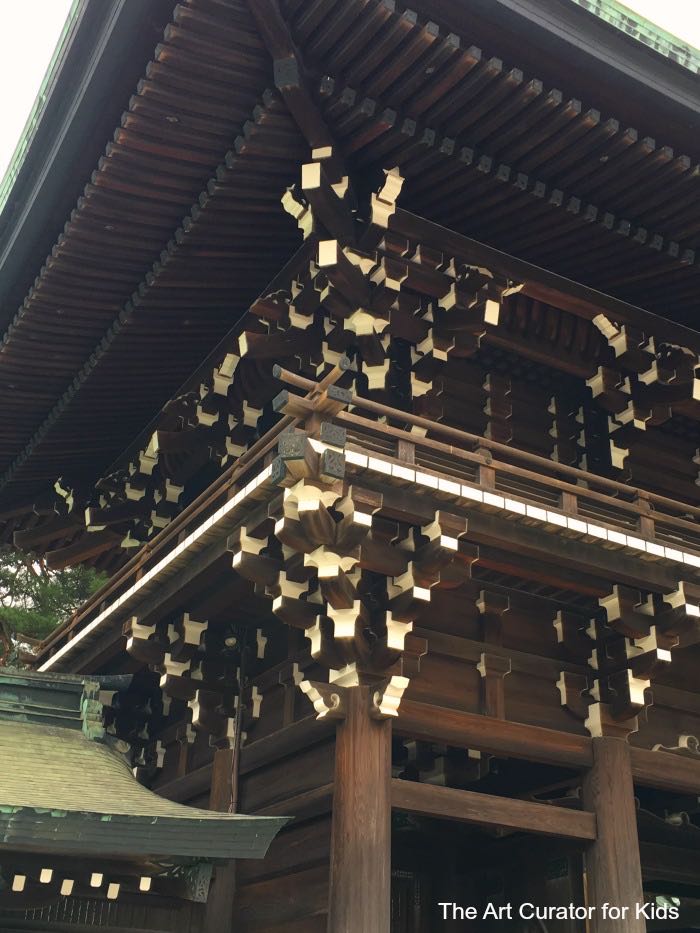
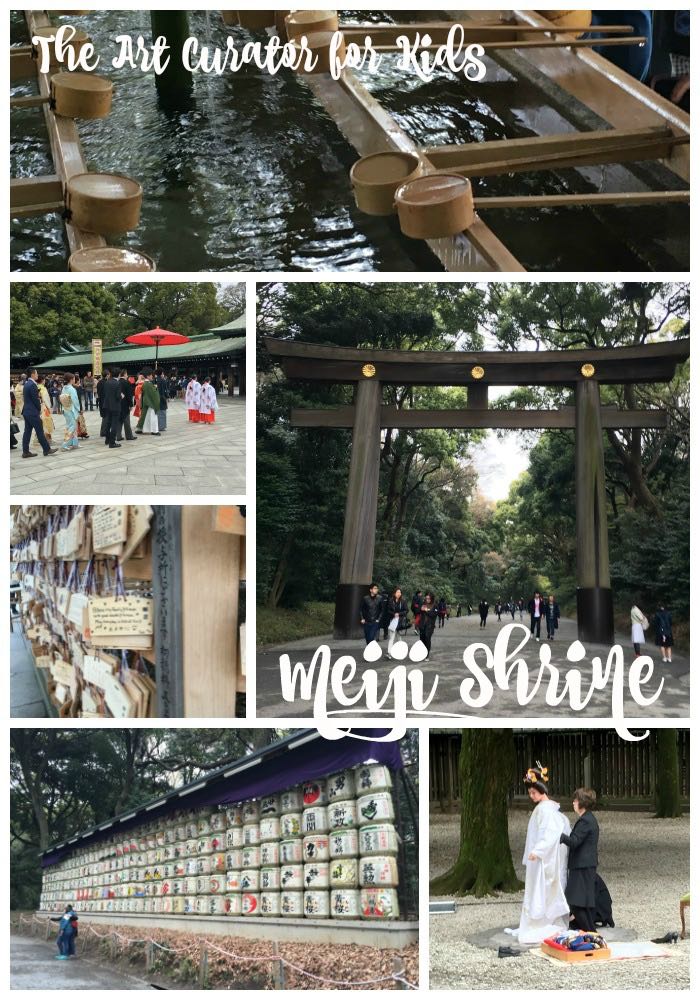
The Meiji Shrine, a Shinto shrine dedicated to Emperor Meiji and Empress Shōken of the late 19th century, was such a different experience than the Senso-ji Buddhist Temple we visited the day before. The Meiji Shrine was in a large park with big tall trees. The structures were huge and brown. It was quiet and serene and was a stark contrast to the festive, colorful Senso-ji.

Japan Meiji Shrine

One thing I noticed about all of the temples and shrines I visited on my trip was how they were full sensory experiences. In addition to viewing the stunning art and architecture, I also experienced the crunch of the rocks under my feet, the cherry blossoms blowing down onto my face, the sound of the water being poured by worshippers cleansing themselves before entering the temple, the smell of incense and candles being burned, the clang of the gongs, and the chanting of monks. It was really quite amazing to notice.

Japan Meiji Shrine Collage

We even got to witness a wedding at the Meiji Shrine. It was definitely my favorite part of our visit to the Meiji Shrine. The bride was stunning in her kimono. I felt super awkward photographing and spying on someone’s wedding, but I did it anyway. 🙂

Kawaii Monster Cafe

When my sister asked me what I wanted to do in Japan, one of the things I mentioned was that I wanted to see some weird Japanese stuff. The weirder the better. I couldn’t have been more delighted by the rest of the day, because it was weird. Awesomely strange.

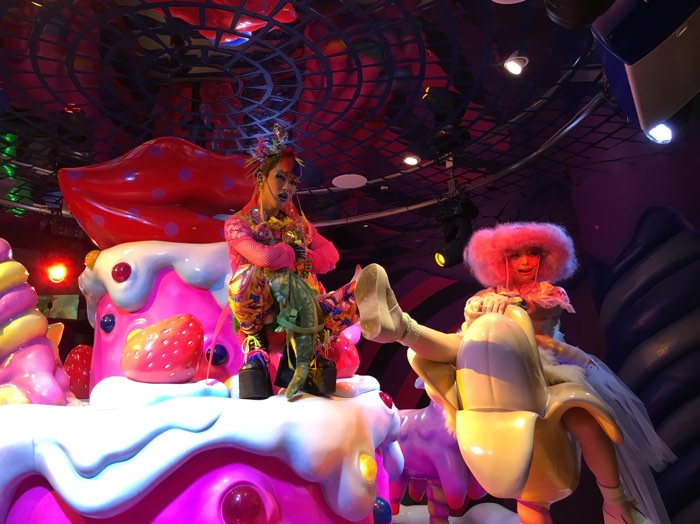
Japan Tokyo Kawaii Monster Cafe

It was lunchtime by the time we finished at the Meiji Shrine, so we headed for the newly opened Kawaii Monster Cafe. Kawaii is a big thing in Japan. It basically means “super cute.” Cute is EVERYWHERE in Japan. Each place we went to from the art museum to the train station had their own cartoon character.

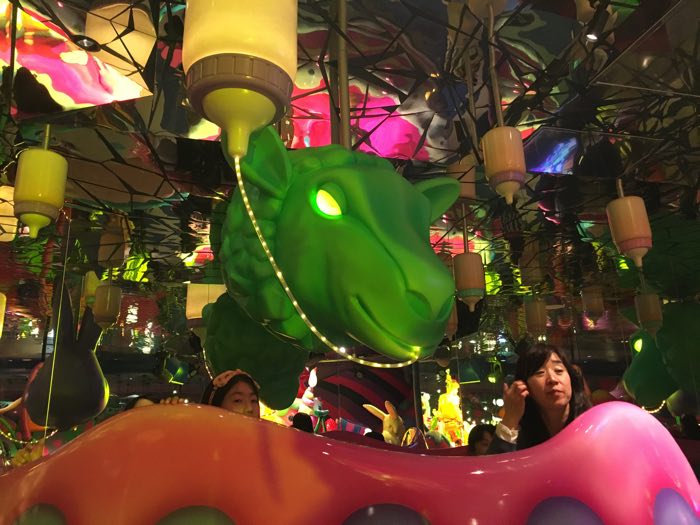
This place. It was amazing. I can’t even describe how amazing the decor was. So cool.

Japan Tokyo Kawaii Monster Cafe Decor

The food was mediocre (with some scary but tasty brightly colored sauces) and upset my stomach a bit, but it didn’t matter at all, because the actual experience was so cool.

Japan Tokyo Kawaii Monster Cafe

Midway through our meal, they gathered everyone in the restaurant around for a kawaii show on the “Sweets Go Round,” a huge spinning cake. A man and a women totally dressed up in Kawaii Harajuku style performed on the spinning cake while the “Monster Girls” waitresses clapped and danced around it.

Harajuku

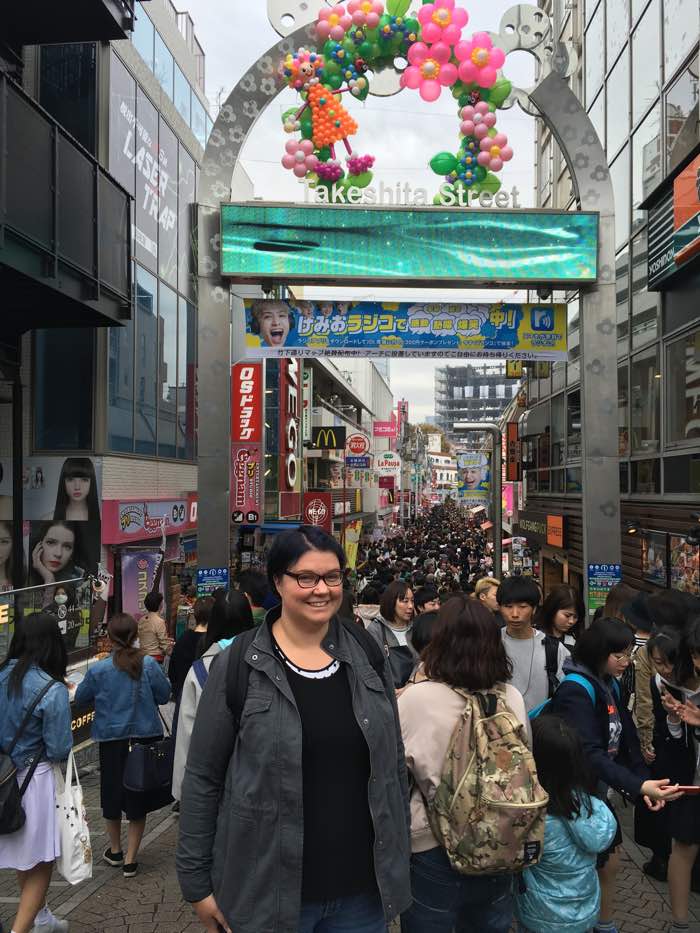
We’ve all heard of the Harajuku girl made famous by Gwen Stefani. The Kawaii Monster Cafe is located in the Harajuku neighborhood.

Japan Tokyo Takeshita Street Harajuku

We wandered down Takeshita Street and then visited La Foret Harajuku where the Harajuku girls buy all their kawaii clothes and accessories. It was fun to ponder what type of Harajuku girl we would be if the clothes were large enough to fit our American bodies.

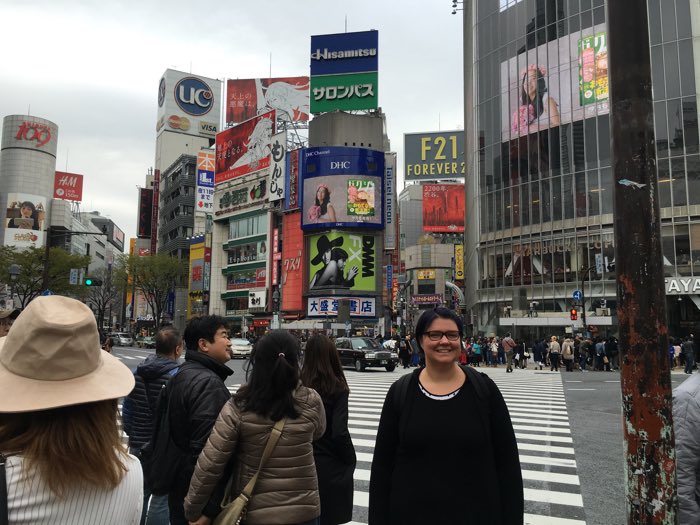
Shibuya Crossing

Shibuya Crossing is one of the world’s busiest intersections. It is called the Times Square of Tokyo, but I felt the vibe was very different from Times Square.

Japan Tokyo Shibuya Crossing

On a somewhat related note, I was really stunned at how orderly Tokyo was compared with New York City. People follow rules, wait for lights to change, don’t honk at each other, and wait in neat lines for buses and trains.

Robot Show

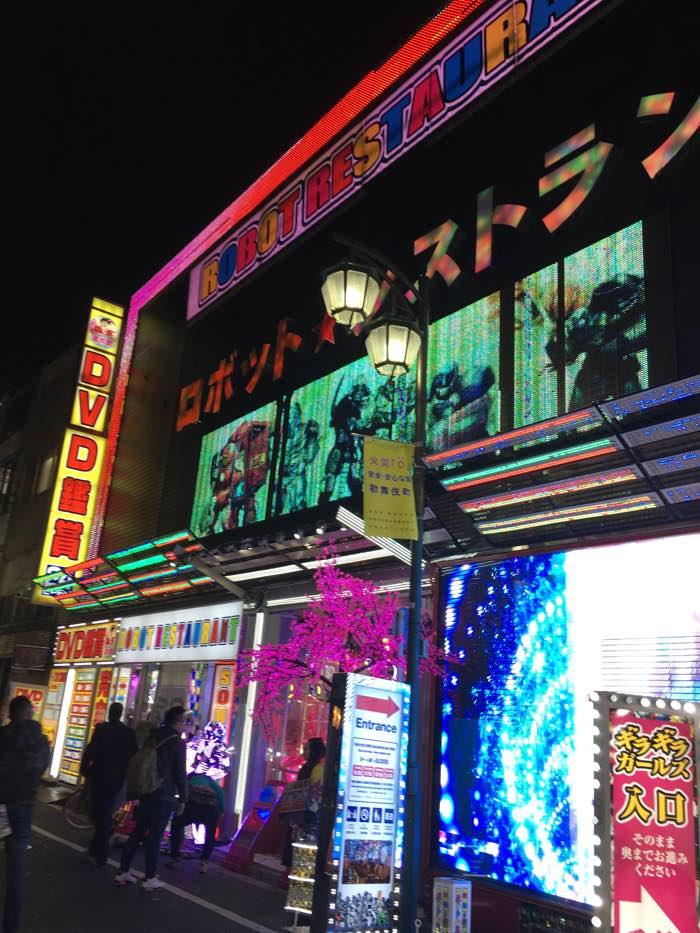
Japan Tokyo Robot Show Exterior

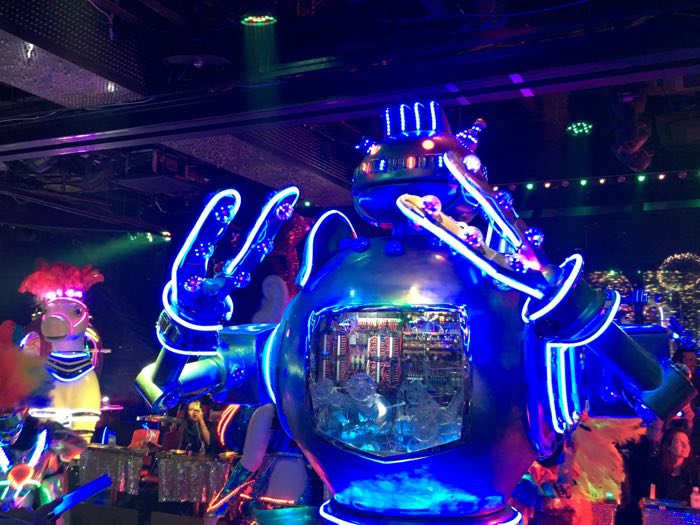
Just like with the Kawaii Monster Cafe, I honestly don’t think I could even describe this experience to do it justice. It was a show, with robots. And dancers. And singers. And crazy costumes. And lights. It was so insanely wacky, and exactly the type of thing I wanted to experience in Japan.

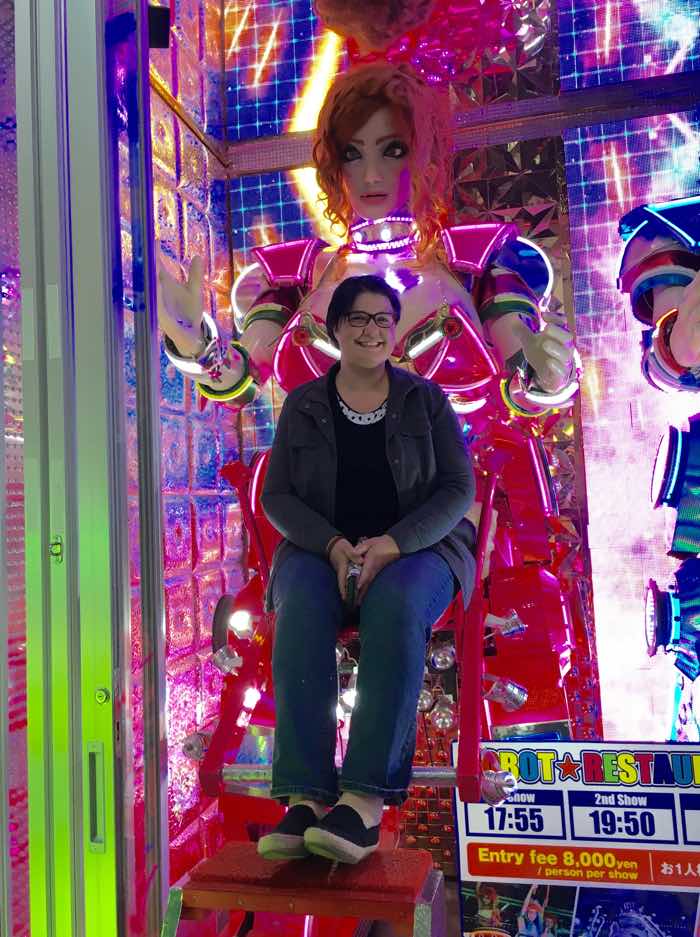
Japan Tokyo Robot Show Exterior with Lady Robot

We started outside where the outside of the show was a seizure-inducing array of lights and music. You could pose with the giant lady robots, and of course I did.

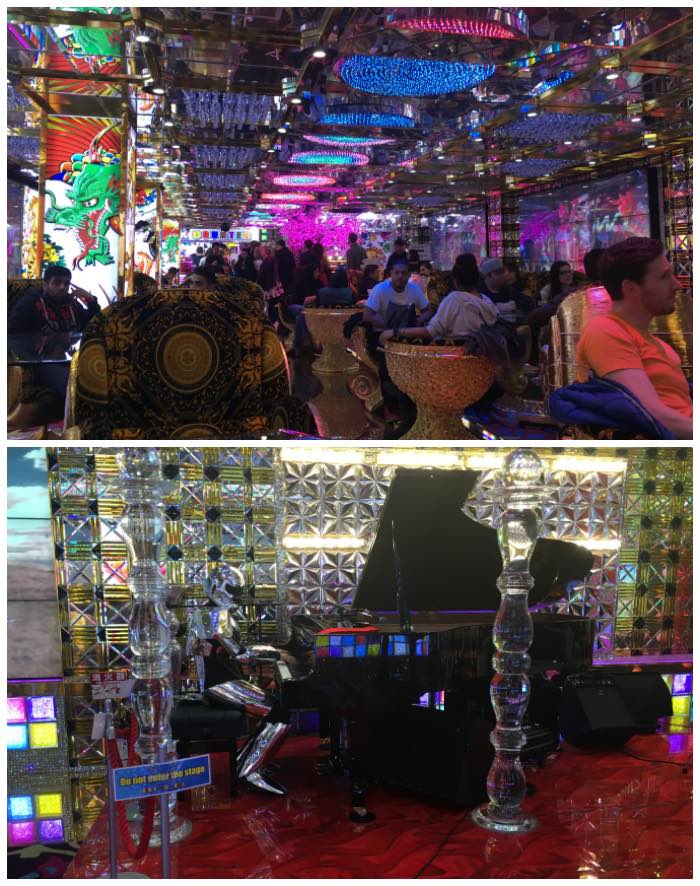
Japan Tokyo Robot Show Lounge

After you get your ticket, you visit the gaudy lounge/bar where a man in a robot costume played calming piano. Then, you head down several dizzying flights of stairs to the show.

And it only gets weirder.

Japan Tokyo Robot Show

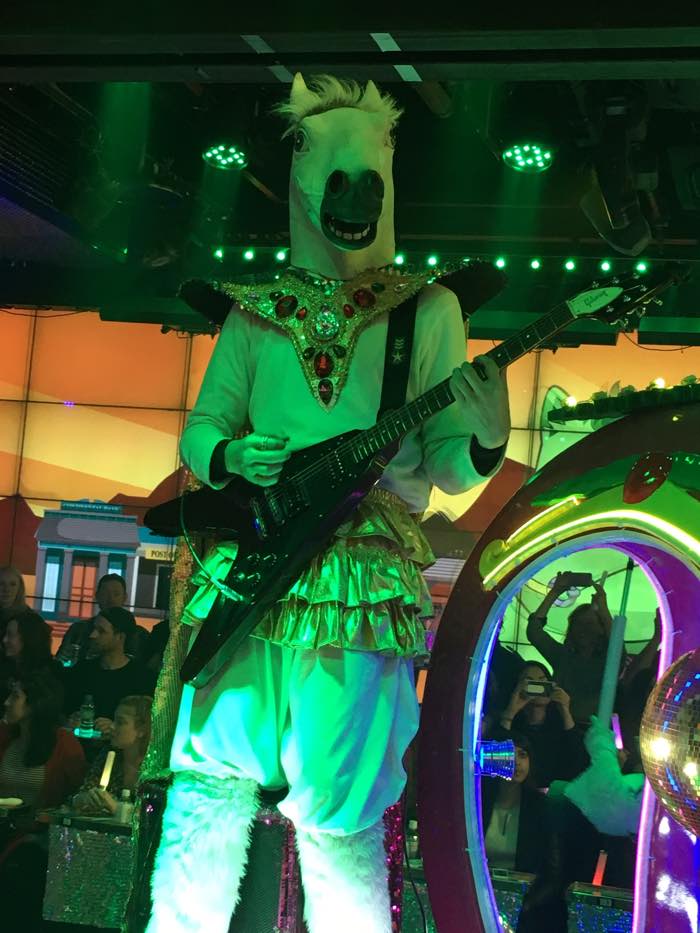
I really have too much to say that I can’t think of a way to sum this up. There was a battle between the animals of the peaceful forest and the robot aliens who wanted to wreck it.

Japan Tokyo Robot Show Shark

Sharks, eagles, fish, mermaids, snakes, fish, and more fought and eventually beat the mean robots.

Japan Tokyo Animator Dancer Robot Show

Animator dancers danced in the darks with lights and lasers.

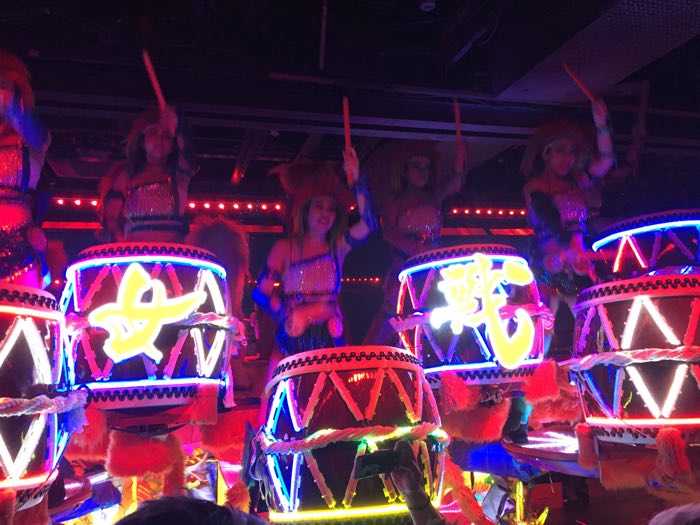
Japan Tokyo Robot Show Rainbow Drummers

Girls dressed as rainbow dash pounded on drums.

Tokyo Japan Robot Show Finale

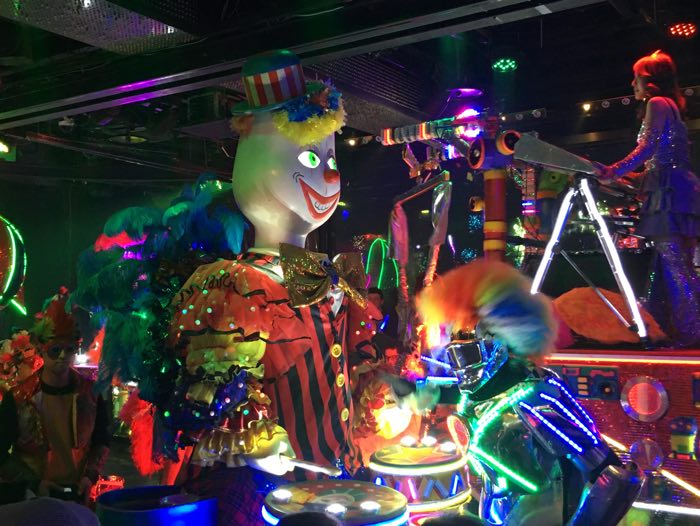
And then things went wild with robots of all types, lights, singers, and dancers in an amazingly dizzying finale that has to be seen to believed.

Japan Tokyo Robot Show Horse Guitarist

We planned to visit the Golden Gai bar district after the show, but my sicknesses was really bringing me down, so we went back home to get some rest before our trip to Kyoto in the morning.

Wow, having written all of that out, it’s crazy that that was all in one day! Stay tuned for more about my trip to Japan. It is so fun writing this all out to remember! 🙂

Filed Under: Travel


April 20, 2016 Leave a Comment

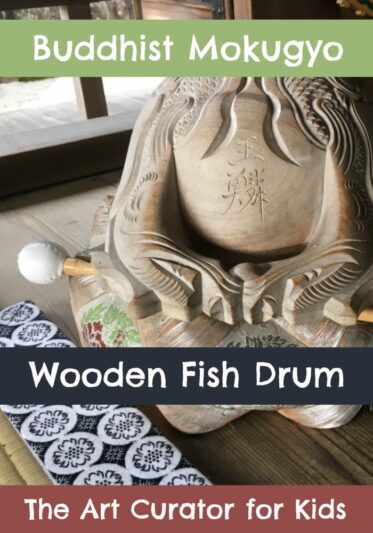
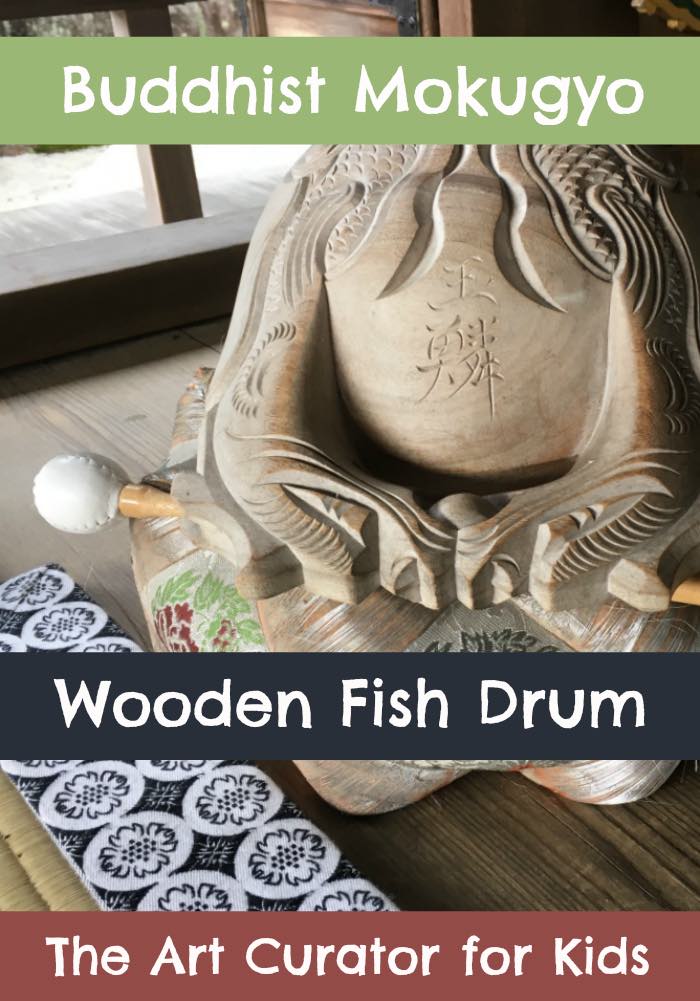
Buddhist Mokugyo Wooden Fish Drum

Muyu Mogukyu Buddhist Wooden Fish Drum - The Art Curator for Kids2

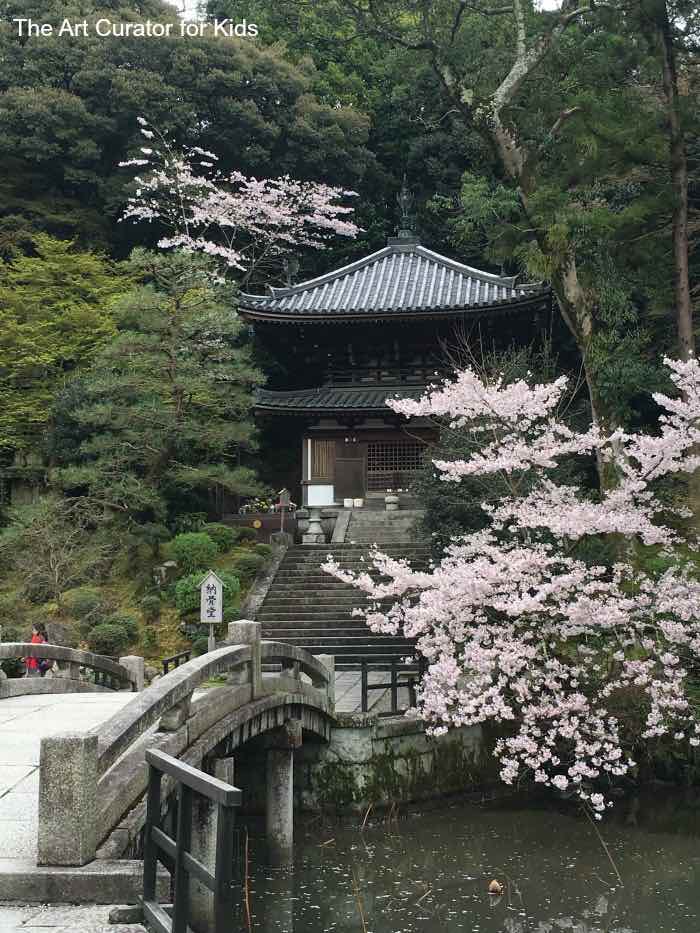
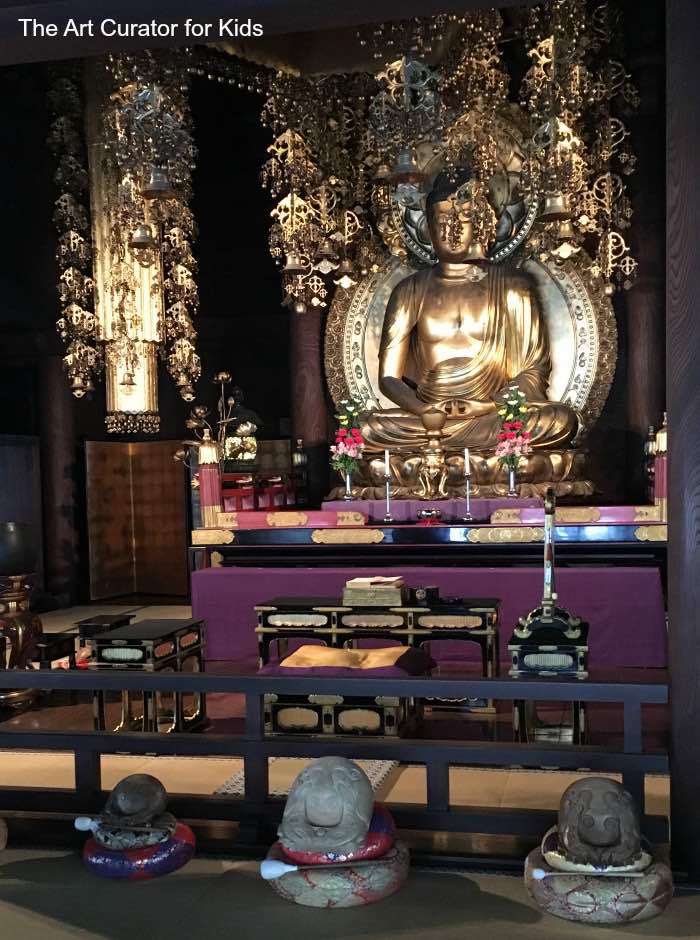
In my recent trip to Japan, we visited Kyoto, which was one of the most fascinating places I have ever visited. Kyoto has over 1600 temples and shrines! While visiting the impressive Chionin Temple in Kyoto, and I noticed some interesting little sculptures at the base of several of the shrine altars on the temple grounds.

Muyu Mogukyu Buddhist Wooden Fish Drum - The Art Curator for Kids2

Because all signage was in Japanese, and because I didn’t have data on my phone, I was just left to wonder what they were. I’m excited to research them now and share with you what I have learned. Show these cute sculptures to your children and complete the below learning activities to explore them further!

Chionin Temple in Kyoto
Part of the Chionin Temple in Kyoto

(I’ll be writing more about the temples I visited later. Be sure to sign up to receive posts by e-mail if you’d like to read more about my trip to Japan!)

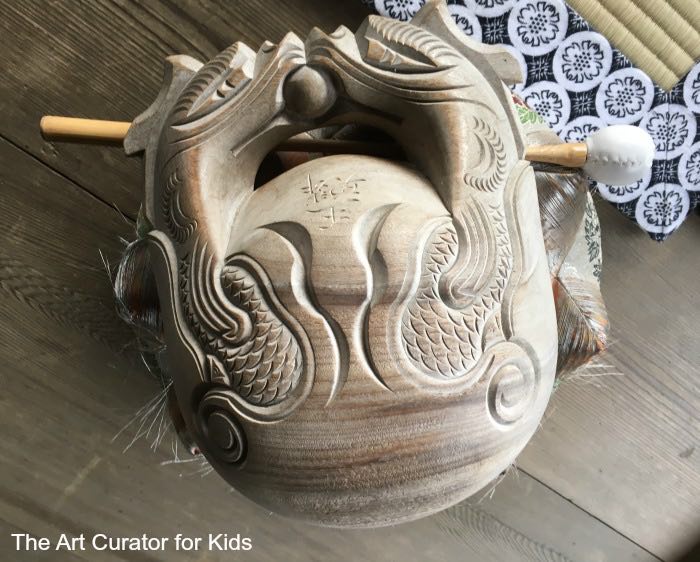
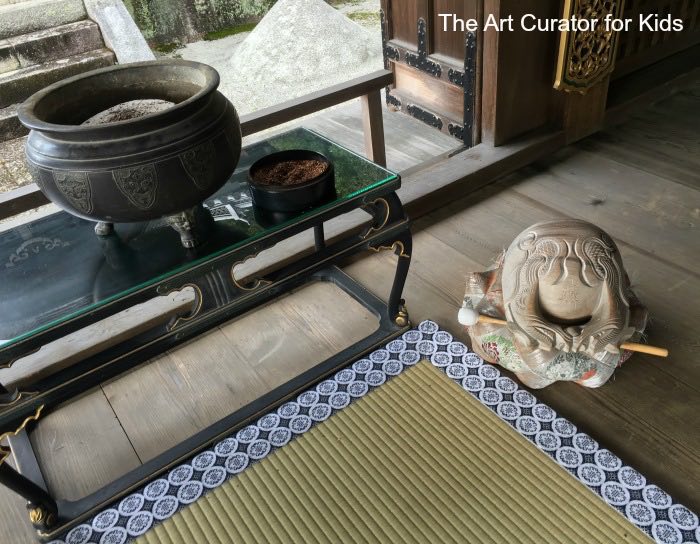
I first noticed them in the main shrine of Chionin. In front of the altar sat 4 different Mokugyo sitting atop a decorated pillow with a mallet of some sort. I thought maybe the sculptures were holders for gong mallets as I saw many gongs on the temple grounds.

Nanzen-ji Temple Shrine in Kyoto2
Chionin Temple Shrine with Wooden Fish Drums

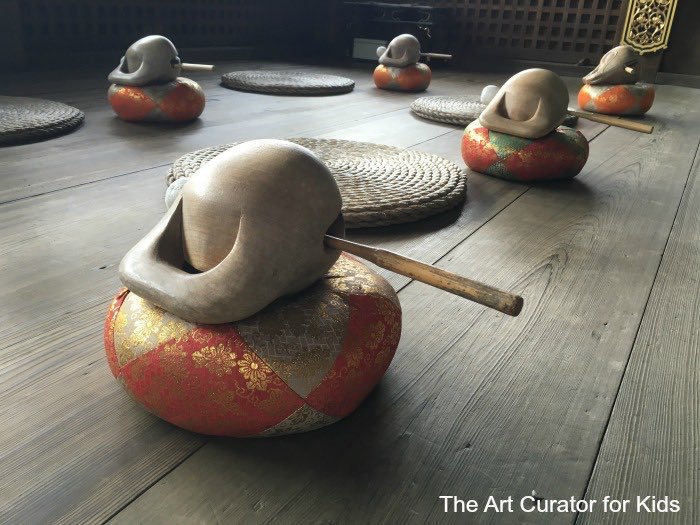
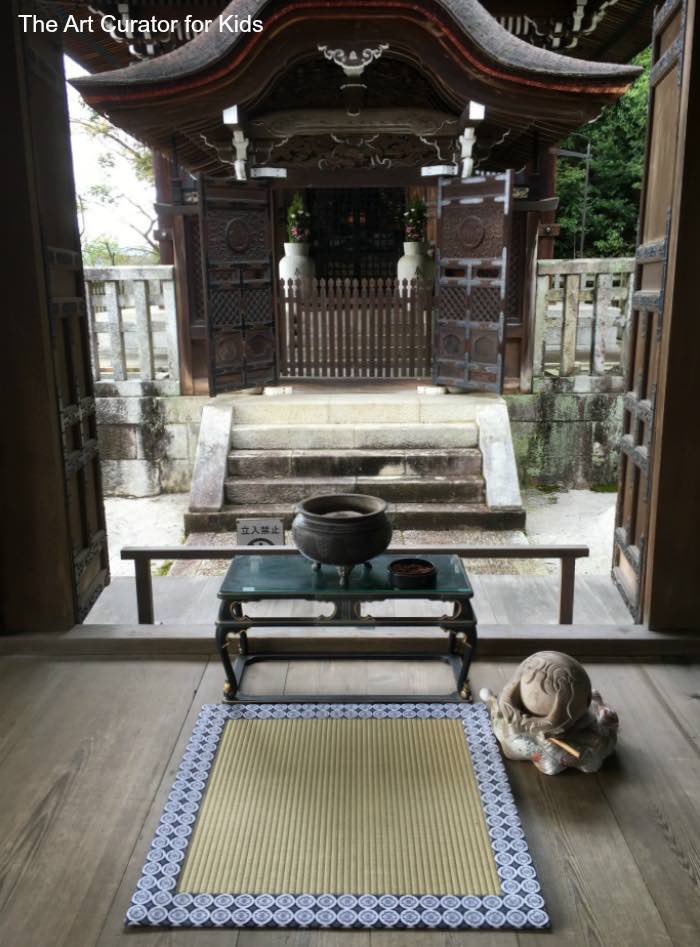
In a smaller shrine amidst a gorgeous cemetery held a small open room with many more of the sculptures without the imagery spread out with woven rope rugs. I was able to walk around them in this room, so I was able to see each has a handle and a notch to hold the mallets.

Muyu Mogukyu at Chionin Temple Shrine in Kyoto4

The Mokugyo in the room were more simple without the carved designs, while the ones under the altar depicts an animal or creature. To me, they looked almost like frogs, but they actually represent fish.

Muyu Mogukyu at Chionin Temple Shrine in Kyoto2

Get the Full Lesson!

This Lesson is in The Curated Connections Library!

Find the full lesson from this post along with hundreds of other art teaching resources and trainings in the Curated Connections Library. Click here for more information about how to join or enter your email below for a free SPARKworks lesson from the membership!

Join the List

Get the Full Lesson!

This Lesson is in The Curated Connections Library!

Find the full lesson from this post along with hundreds of other art teaching resources and trainings in the Curated Connections Library. Click here for more information about how to join or enter your email below for a free SPARKworks lesson from the membership!

Looking Questions

Before sharing the below information with your children, invite them to speculate on the function of these sculptures from the temple as I had to do on my visit. Ask the below questions of the students.

Muyu Mogukyu at Chionin Temple Shrine in Kyoto3
  • What do you notice? What do you see that makes you say that?
  • What are they made out of? What textures do you notice?
  • What images are represented on the sculptures? 
  • What do you notice about the surroundings?
  • For what purpose do you think these sculptures were used?
  • Why do you think they used representations of fish? What could fish symbolize?

Art Information

Never did it cross my mind that these sculptures were instruments! I assumed the stick was used for a drum or gong, but I didn’t notice that the sculpture itself was the drum. I feel a little dumb for not figuring that one out!

Muyu Mogukyu at Chionin Temple in Kyoto2

These sculptures are called Mokugyo, Muyu, or wooden fish. These are wooden instruments commonly seen in Japan, China, and Korea. The instrument is used for cadence and accompanies the chanting of the monk. The Buddhist monks chanted sutras which are ancient religious texts and teaching.
Check out the sound the Mokugyo makes in this video. Different size wooden fish make different tones.

The Mokugyo often show two fish coming together with a pearl on the handle connecting their two mouths. According to Wikipedia, the pearl represents unity, and the fish represent wakefulness.

Activity Ideas

After discussing the features and functions of the Mokugyo, use these ideas to further explore these fascinating artworks.

  • Use this artwork as a part of a world religions unit on Buddhism. This book is a very well-reviewed collection of Buddhist stories.
  • Practice reading sutras to the beat of drums or clapped hands.
  • Make your own drums or other musical instruments.
  • Study musical instruments from around the world. (See also: Indonesian Sesando)

Stay tuned for more posts about all of the amazing sites and artworks I experienced in Japan! 🙂

Filed Under: Art and Artists


April 14, 2016 2 Comments

My Trip to Japan: Travel and Tokyo

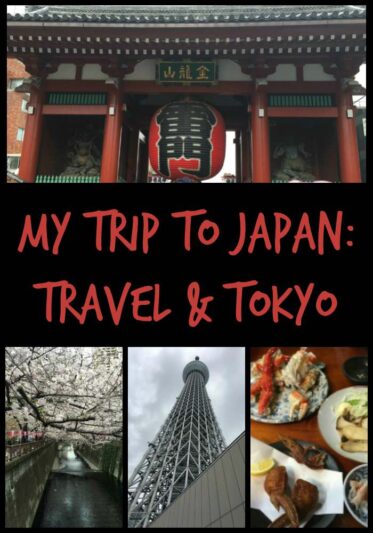
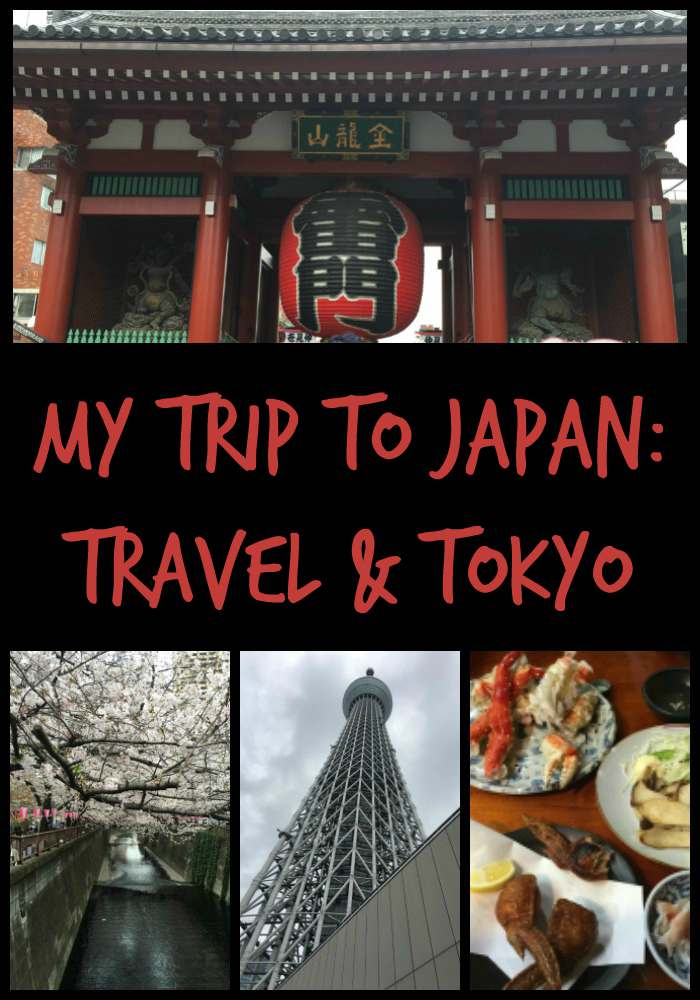
I am recently back from a once-in-a-lifetime trip to JAPAN! My sister is currently living the ex-pat life in Tokyo, and I just had to go visit before she comes back this summer. I have so so much to write about that I’m not even sure where to start. I think I’ll start with an overall summary of the trip, and then write many individual posts about the various places and artworks I experienced on my journey.

First up, I’ll cover my first few days from the long trek to get to Japan and the first stops in Tokyo.

The Art Curator for Kids - My Trip to Japan - Travel and Tokyo

This will be a great journal for me to look back at my trip!

Day 1: Travel

Exhausted but excited!

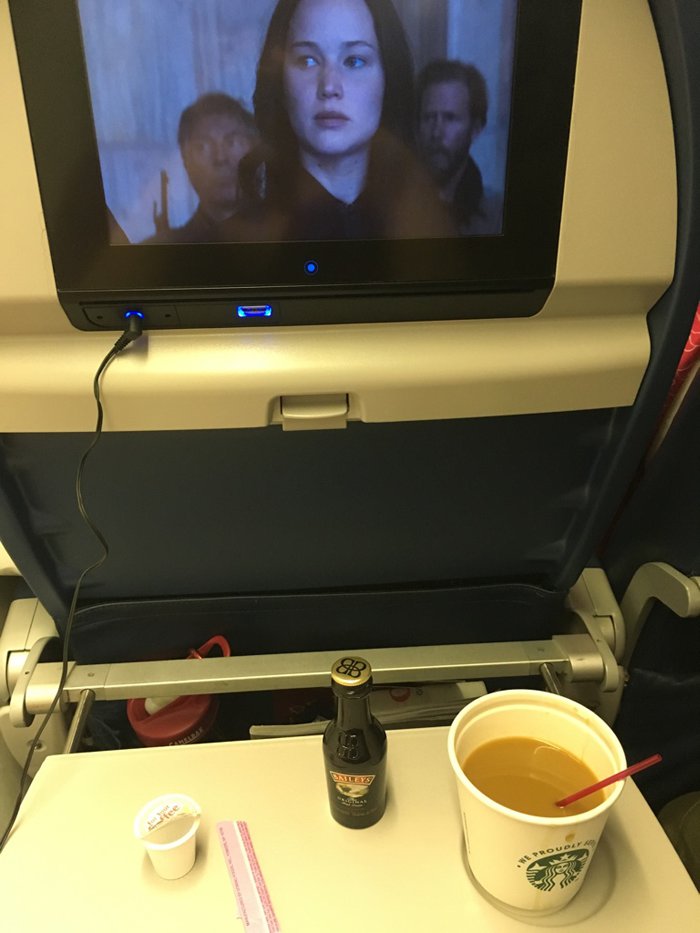
I left bright and early on Wednesday morning from DFW airport. I flew 3-4 hours to Detroit and from there, I took a 13 hour plane ride to Tokyo. I slept very little and watched lots of movies. I splurged for the Delta Comfort seat, so I had a little bit of extra leg room. Worth it.

jlaw tray table

When I got to Japan, I took a 1+ hour train ride to Tokyo station where my sister met me.

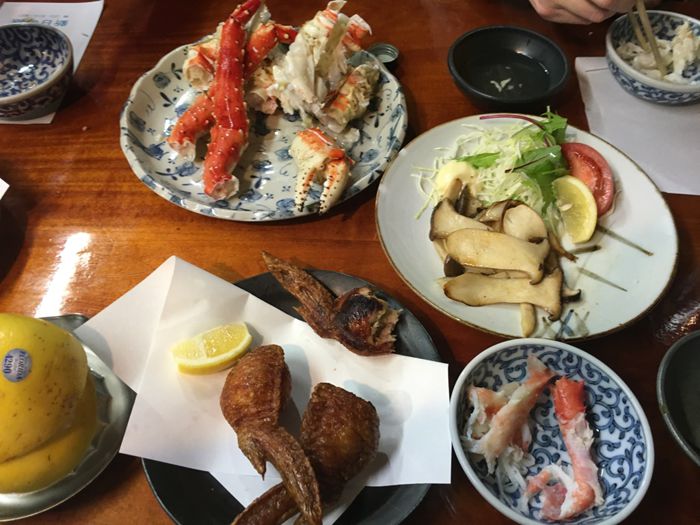
I arrived at my sister’s apartment around 6pm Thursday. I powered through the exhaustion and jet lag with a dinner at Andy’s in the Ginza neighborhood. I don’t like crab, but these crab legs were amazingly delicious. Also gyoza-stuffed chicken wings.

beautiful food

I don’t know how they got the gyoza in there, but it as so so good. My number one question about my trip so far has been about the food.

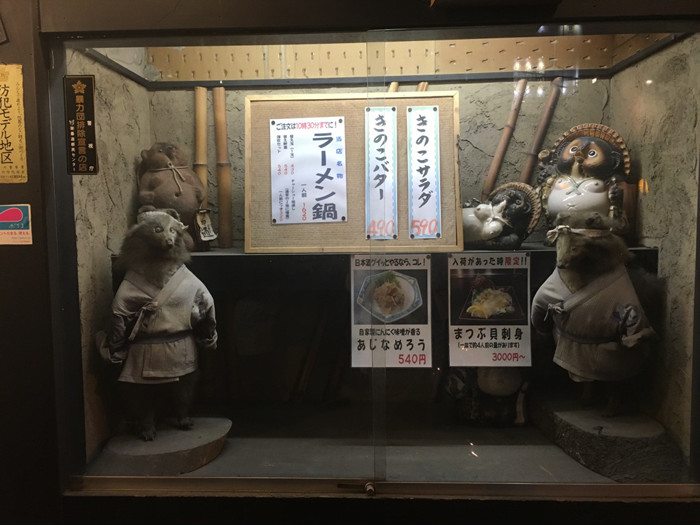
We also wondered around the neighborhood, had some wine at a wine bar, and enjoyed checking out all of the store and restaurant fronts. Each one was such a spectacle, and I loved them all.

What have they done to Splinter?

My sister said she wanted me to feel like I was in Japan on my first night, and boy did I!

Day 2: A Full Day in Tokyo

In the morning of the first day, we took it a bit slow and had brunch at a place near my sister’s house. Interestingly, my sister says it’s hard to find breakfast in Japan, because Japanese people don’t usually eat out in the morning. Fun fact.

Sensō-ji Temple

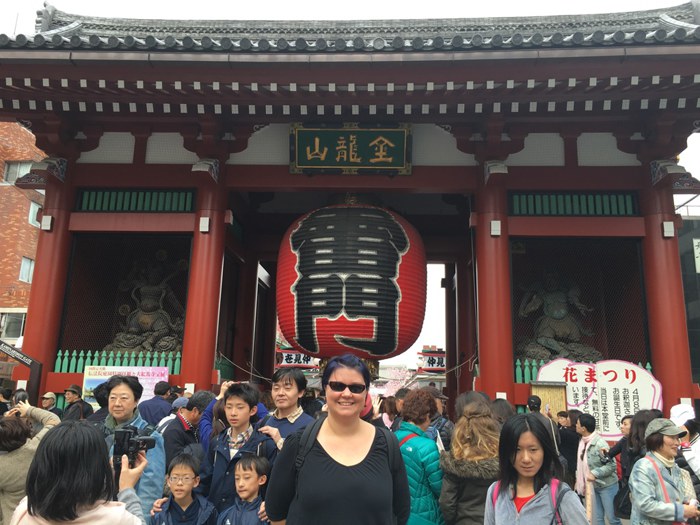
Me at Sensō-ji
Me at Sensō-ji

After breakfast, we headed to Sensō-ji which is Tokyo’s oldest Buddhist temple. Originally founded in 645 C.E., it was destroyed in World War II and was later rebuilt.

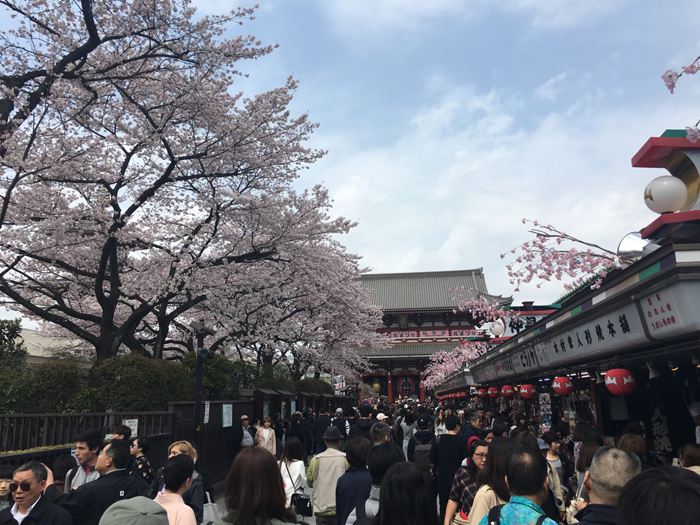
blossom temple crowd

It was packed with tourists, but it gave the area a very festive feel. There were lots of little shops and food vendors filling the streets around it.

Buddha warrior

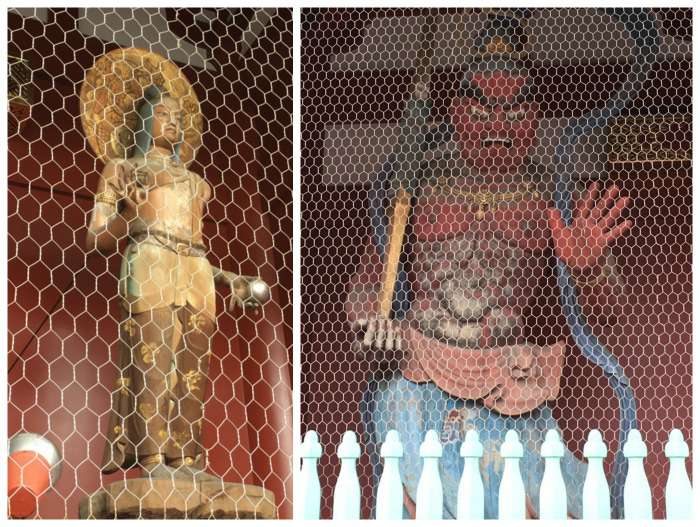
I loved the giant sculptures and lantern of the Kaminarimon, or “Thunder Gate.” The sculptures, representing both Shinto and Buddhist gods, varied from fierce to calm.

I visited many more temples and shrines on my trip, and I will be writing about them in more detail in the weeks to come!

And since I know you care about the food, I then ate some bacon-wrapped rice balls covered in a green onion slaw from a food vendor. I smelled like onions the rest of the day, but I didn’t care one bit.

Skytree Tokyo

From Sensō-ji, we hopped on the subway a couple of stops to the Skytree Tokyo.

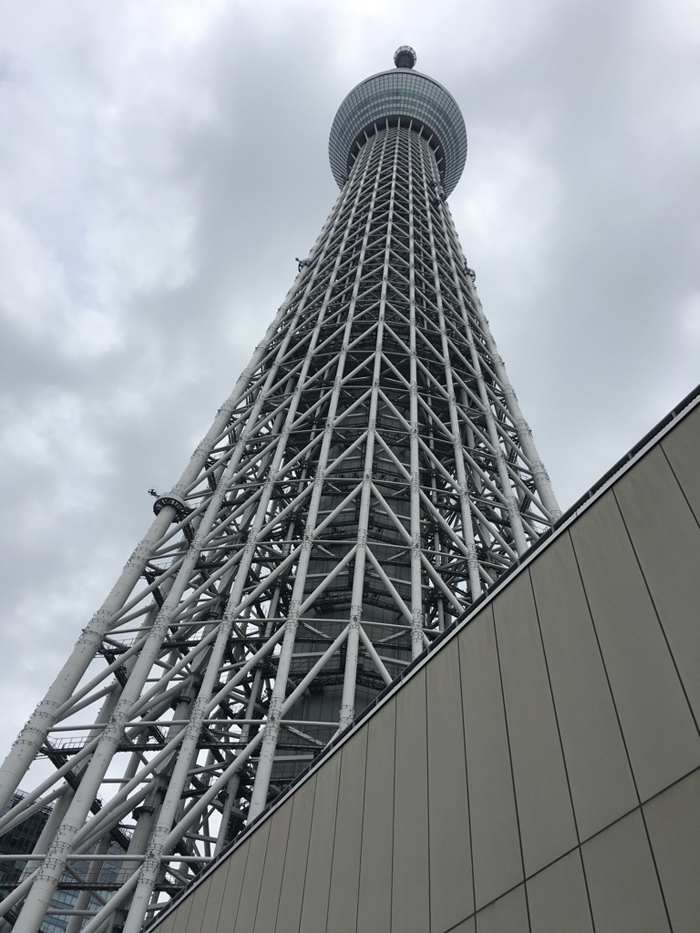
Tokyo Skytree
Tokyo Skytree

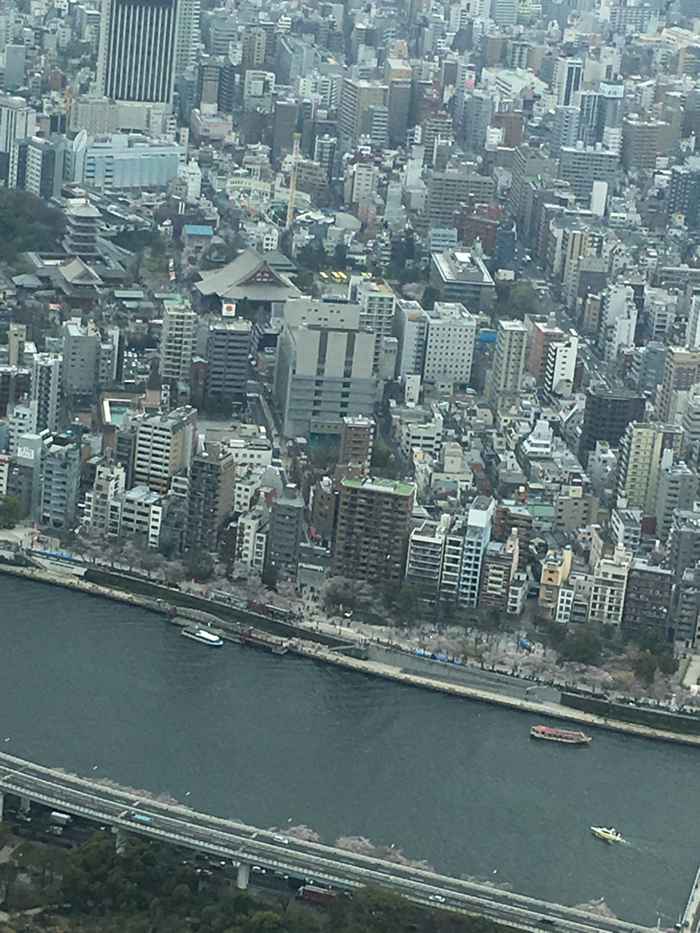
Skytree is the tallest structure in Japan, the second-tallest structure in the world, and the tallest tower in the world. After waiting in line for about 30 minutes, we took the elevator up 350 meters for a 360 degree view of Tokyo!

View from the Tokyo Skytree of Sensō-ji

It was beautiful and a perfect introduction to Tokyo!

Unfortunately, it was an overcast day, and Mount Fuji was hidden behind the fog and clouds. (But, you can see 36 Views of Mount Fuji by Hokusai in this post!)

Hanami

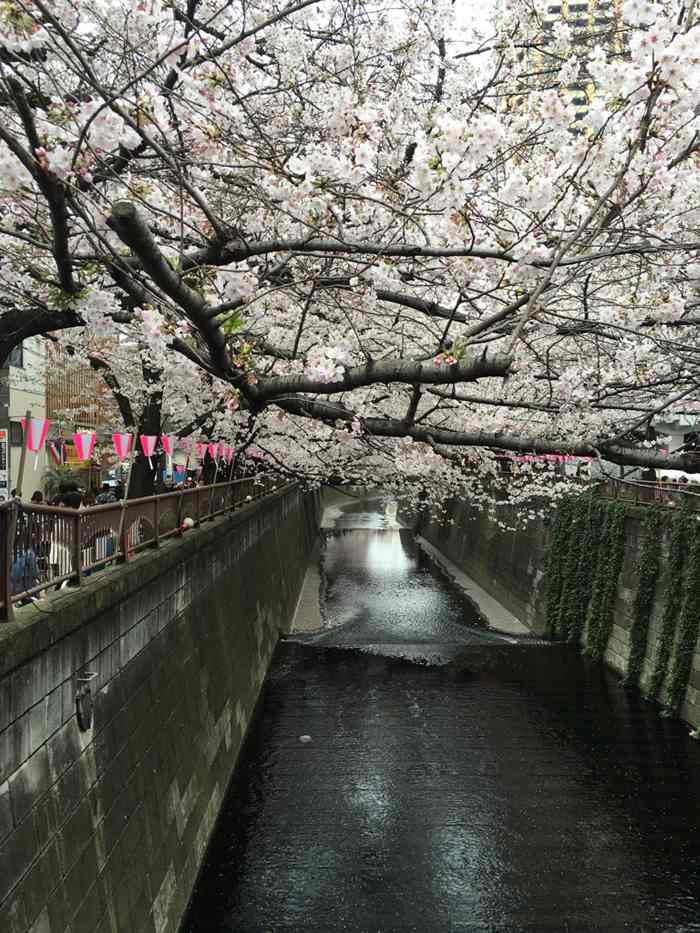
We met up with some of my sister’s friends to view the Cherry Blossoms along the Nakameguro River. I happened to go to Japan during the short 1-2 week time period where all of the Sakura (Cherry Blossoms) were in bloom. How lucky am I? Holy cow.

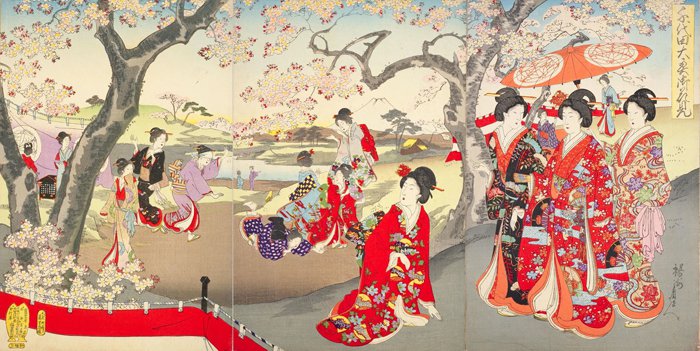
The Japanese traditional custom of viewing the Sakura blossoms is called Hanami, which basically means “Flower Viewing.” Hanami dates back as far as 700 C.E.

Toyohara Chikanobu, Hanami

We went to Aloha Table where we got to sit for 2 hours while they brought us champagne and a set menu of lots of different types of food.

blossoms

Pink and white lanterns lit up the Cherry Blossoms from below, and it was gorgeous!

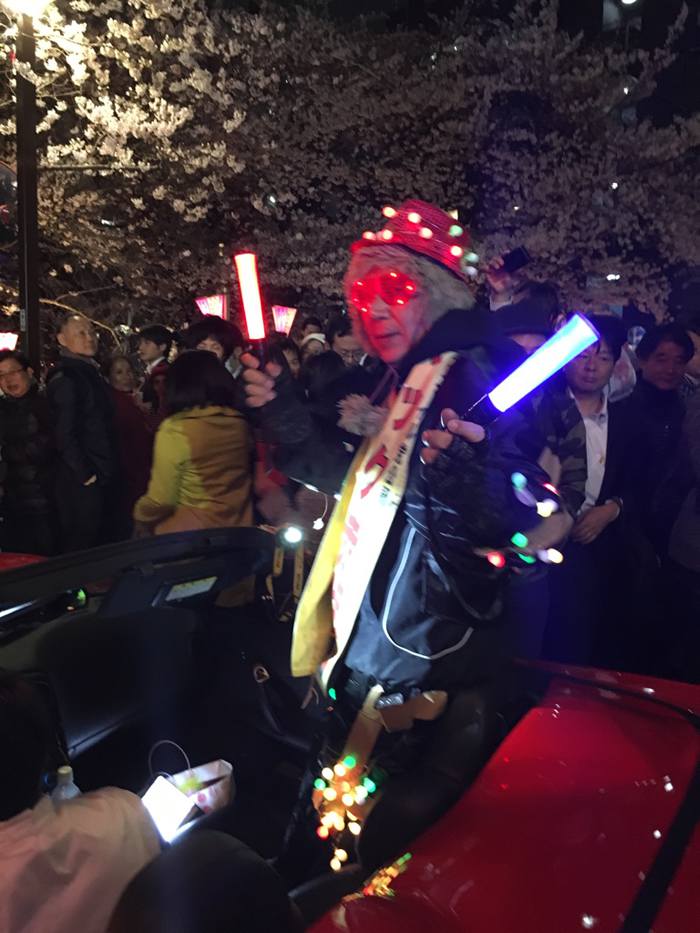
This guy drove up and down the street all night. I still don't know why.
This guy drove up and down the street all night. I still don’t know why.

We then walked up the river and stopped by a pink champagne table where we parked it and enjoyed the spirit of Hanami.

Before I totally crashed from the jet lag, we also visited my sister’s friend’s high rise apartment with amazing views of Tokyo! It didn’t feel like real life, and it still seems like a dream!

I was in Japan for 8 days, so I have much more to say. To be continued!

Filed Under: Travel


  • Previous Page
  • Page 1
  • Interim pages omitted …
  • Page 19
  • Page 20
  • Page 21
  • Page 22
  • Page 23
  • Interim pages omitted …
  • Page 38
  • Next Page

Primary Sidebar

Hi! I’m Cindy Ingram, the creator of Art Class Curator and The Curated Connections Library

I’m on a mission to revolutionize education with the power of life-changing art connections. Art is not “extra”. Art is essential. We are empowering teachers to bridge the gap between art making and art connection, kindling a passion for art that will transform generations.

More About Me

Free Worksheets!

-Free Bundle of Art Appreciation Worksheets-

In this free bundle of art worksheets, you receive six ready-to-use art worksheets with looking activities designed to work with almost any work of art.

Download

Free Worksheets!

-Free Bundle of Art Appreciation Worksheets-

In this free bundle of art worksheets, you receive six ready-to-use art worksheets with looking activities designed to work with almost any work of art.

Enrollment in Curated Connections Library is currently open. Click here to join. Join our list to get more information and to get a free lesson from the vault! If you are purchasing for a school or school district, head over here for more information.

Check Out What’s New In The Shop

Experience Art: Engaging Art Criticism Discussions and Activities for Teachers and Students of All Ages
Call to Art: An Un-Conference for Art Educators
Curated Connections Library Membership
Perspectives High School Curriculum

More Products

Have You Listened to the Latest Podcast Episode?

Falling for Naudline Pierre’s Evocative Art: A Conversation with Madalyn (Part 2)

More Episodes

Testimonials

I like how this program, unlike other art class resource membership programs, feels authentic. It's like art matters more here, and not fancy flash-in-the-pan trendiness. The goal of Art Class Curator seemed to be helping kids develop a lifelong love and art appreciation versus "Hey, look. I painted this fish."
Erin A.
Your questions are helping me to delve into much deeper learning, and my students are getting better at discussion-and then, making connections in their own work. Art Class Curator is awesome!
Denise W.
Interestingly, my lower performing classes really get engaged in these [lessons] and come away with some profound thoughts!
Melissa G.
I had the most amazing 6th grade class today. They were jumping out of their seats with hands raised just to respond and give input. It was as if I was waving candy in front of them! They saw more and more and the ideas and interpretations unfolded. So cool!!! This is what makes teaching art so wonderful – thank you!!
Caroline G.
I just wanted to thank you for the invaluable resource you have through Art Class Curator. Not only do you have thought provoking activities and discussion prompts, but it saves me so much time in preparing things for myself! I feel like I’ve only scratched the surface with your site.
Maryjane F.

Get Art Inspiration To Your Inbox!

Enter your email address to get regular art inspiration to your inbox
plus a BUNDLE OF 6 FREE WORKSHEETS!
We hate SPAM and promise to keep your email address safe.
Download

Free Worksheets!

*Free Bundle of Art Appreciation Worksheets*

In this free bundle of art worksheets, you receive six ready-to-use art worksheets with looking activities designed to work with almost any work of art.

Copyright © 2026 Ignite Art, LLC DBA Art Class Curator •  All rights reserved  •  Privacy Policy  •  Terms of Service  •  Site Design by Emily White Designs