• Skip to main content
  • Skip to primary sidebar
  • About
    • About Art Class Curator
    • Contact
    • Speaking
    • Media & Press
    • Programs for Schools
  • Blog
  • Podcast
  • Shop
  • Join
  • Member Login

Art Class Curator

Hands-on and Minds-curious Art Learning

  • Art & Artists
  • Art Connection Activities
  • Art Teacher Tips
  • Elements & Principles
  • Downloads & Resources
Home
  • About
    • About Art Class Curator
    • Contact
    • Speaking
    • Media & Press
    • Programs for Schools
  • Blog
    • Art & Artists
    • Elements & Principles
    • Art Connection Activities
    • Art Teacher Tips
    • Downloads & Resources
  • Book
  • Podcast
  • Shop
  • Join
  • Member Login

All Posts from Art Curator for Kids

April 11, 2016 4 Comments

Must-See Art Destinations for a Google Cardboard World Tour

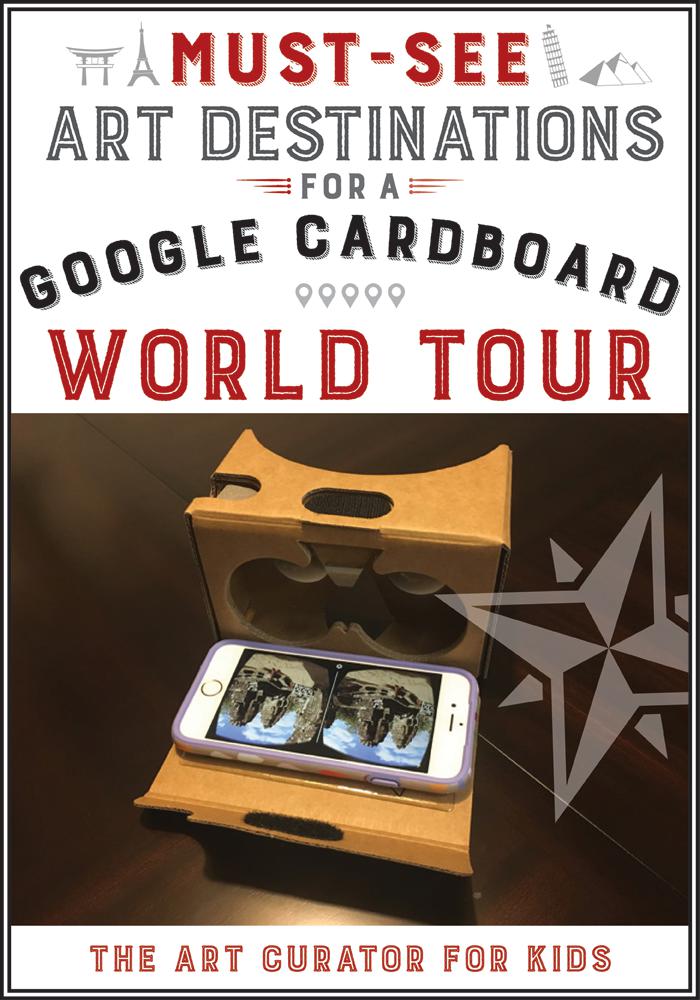
Oh. My. Gosh. Have you heard of Google Cardboard? My husband just got us one, and we are all hooked. For about $15, you can get a cardboard virtual reality headset that syncs up with your smart phone. From seeing dinosaur bones in the Natural History Museum to having whales jump out of the water in front of your eyes to walking the streets of Venice, you can do so much with this amazing little device.

Every member of my family wants their turn with it RIGHT NOW.
Must-See Art Destinations for a Google Cardboard Art World Tour

And it’s so easy! Put on Google Cardboard headset, then look up and spin around. You immediately feel as if you are standing in the place you’ve decided to visit. Depending on what you are doing, you can even push a button to walk forward and explore!

Please note, this post is not sponsored by Google Cardboard, but it includes Amazon affiliate links. As an Amazon Associate I earn from qualifying purchases.
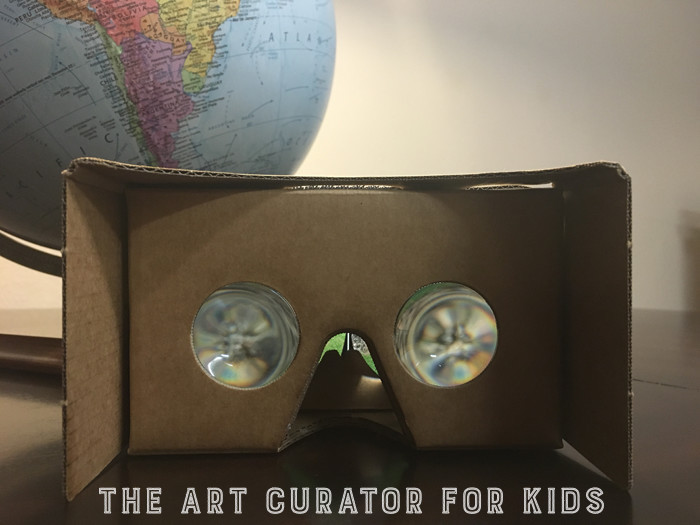
Google Cardboard Art Globe

So far, my favorite feature by far is the Google Streetview app, which incorporates all of the Google Streetview data along with user-submitted immersive photos of fascinating sites around the globe.

My eyes are a bit wibbly-wobbly after traveling the world with Google Cardboard, so I decided to pick out my favorite art destinations thus far.

Travel along! If you have a Google Cardboard or other Virtual Reality headset, make sure you have the Google Streetview app installed on your phone. Then, click the links below on your mobile, and they should open in the Google Streetview app. Click the little Google Cardboard icon in the corner to experience the art on your headset. The links will work if you don’t have the headset too. You can still explore the area on your phone or computer without the immersive experience of the Google Cardboard.

Amiens Cathedral, France

When I was first exploring the app, I about freaked out when I realized I could go see a Gothic cathedral. I’m obsessed with Gothic cathedrals, so I headed straight for Amiens – a structure so incredible that it was the sole focus of a semester-long course in college (YES! a whole class for one church!)

I was not disappointed. I can look at Amiens pictures all I want online, but to be able to look up and around and see the full scale of it as if I was standing under it. Amazing! Art history teachers will love this for their classrooms when they teach Gothic architecture in order to teach kids about the shear scale of these buildings!

Google Cardboard Art - Amiens Cathedral

Streetview/Google Cardboard Links:

  • Amiens Interior
  • Amiens Exterior

Curated Connections Library Subscribers: Download the Gothic Architecture lesson.
Get the Full Lesson!

This Lesson is in The Curated Connections Library!

Find the full lesson from this post along with hundreds of other art teaching resources and trainings in the Curated Connections Library. Click here for more information about how to join or enter your email below for a free SPARKworks lesson from the membership!

Join the List

Get the Full Lesson!

This Lesson is in The Curated Connections Library!

Find the full lesson from this post along with hundreds of other art teaching resources and trainings in the Curated Connections Library. Click here for more information about how to join or enter your email below for a free SPARKworks lesson from the membership!

Angkor Temples, Cambodia

Angkor was the capital of the Khmer Empire from the 9th through the 15th centuries. There are over a thousand temples in the area from small piles of rock to Angkor Wat, the largest religious monument in the world. Angkor Wat was originally built as a Hindu temple which was soon transitioned to a Buddhist temple at the end of the 12th century. The temples are covered in relief sculpture, columns and pilasters, stairs, post and lintel doorways, and distinctive stacked cone-shaped towers.

I explored a lot of the different temples, and they were all amazing! My favorite was this one because you could walk through doorways and around the structures to get a good look, but the one with the giant heads carved into the side of the rocks is incredible as well.

Click the images below for the Streetview/Google Cardboard links.

Google Cardboard Art - Cambodia-Banteay Samre Temple
Google Cardboard Art - Cambodia-Krong Siem Reap

Ancient Egypt

Do I need to say anything here? Probably not. These were my favorites that I found.

Click the images below for the Streetview/Google Cardboard links.

Mortuary Temple of Hatshepsut

Google Cardboard Art - Mortuary Temple of Hatshepsut

The Great Sphinx of Giza

Google Cardboard Art - Egypt-Great Sphinx of Giza

Karnak Temple Complex

Google Cardboard Art - Egypt-Karnak Temple Complex

Isis Temple

Google Cardboard Art - Aswan Isis Temple Inner Court

Curated Connections Library Subscribers: Download the Ancient Egypt art lesson.

Fushimi Inari Shrine, Japan

I just got back from Japan, and this was one of my favorites from the trip! It was really fun to prepare for my trip by visiting some of the locations we planned to visit on the Google Cardboard, and now I am enjoying reminiscing with virtual reality.

Fushimi Inari is a Shinto shrine with thousands of bright red-orange torii gates. Torii gates mark the entrances to the shrines and help prepare visitors and mark the separation of the worldly to the sacred. The shrine was founded in early 700 AD.

Click the image for the Streetview/Google Cardboard link.

Google Cardboard Art - Kyoto Japan-Fushimi Inari Taisha

More Japan posts are coming soon! I have TON to write about.

Machu Picchu

Machu Picchu is a 15th-century Inca estate in Peru. The complex built on a high ridge in the mountains includes temples, palaces, and homes. The Inca people left behind no written language, so there is a lot to discover about this place.

In Google Cardboard, you can walk along paths, go through doorways, and climb stairs. Of course, there is no substitute for being there, it’s pretty incredible to be able to experience such an important and secluded site from the comfort of home.

Click the image for the Streetview/Google Cardboard link.

Google Cardboard Art - Cusco Peru-Machu Picchu

Florence

You can’t study the Italian Renaissance without studying the city of Florence, Italy. Florence IS the Renaissance, and going there is like stepping into the 15th century.

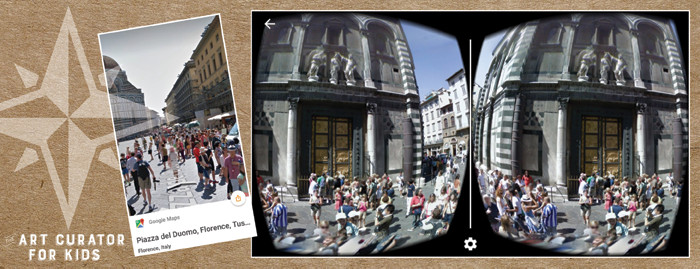
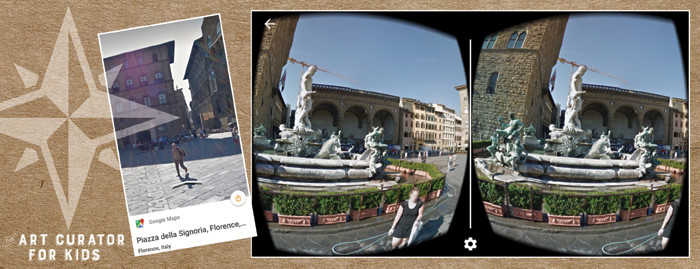
In Google Cardboard, you can wander around the Duomo, view the Gates of Paradise, experience the sculpture and the original site of Michelangelo’s David in the Piazza della Signoria, and walk across the Ponte Vecchio.

If only the Google Cardboard provided gelato and cappuccino…

Click the image for the Streetview/Google Cardboard links.

Google Cardboard Art - Florence Italy-Piazza del Duomo
Google Cardboard Art - Florence Italy-Piazza della Signoria

Dome of the Rock

Dome of the Rock is an important shrine located in Jerusalem. The site has religious significance in both Judaism and Islam and is considered the oldest examples of Islamic architecture.

Click the image for the Streetview/Google Cardboard links.
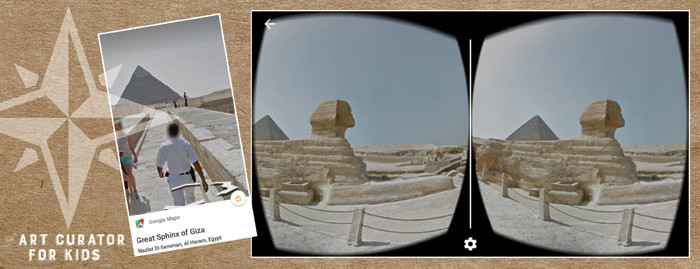
Google Cardboard Art - Jerusalem-Dome of the Rock

You can also walk around the Old City of Jerusalem with Google Cardboard as well.
Filed Under: Featured, Travel


March 28, 2016 6 Comments

How to Compare and Contrast Art to Teach Art History

Inside: Use these techniques artwork examples to compare and contrast art in your classroom. Art comparison help students see the art in a new way and make the conventions of an art movement more clear and understandable.

If I had to pick my favorite teaching method for art history, it probably would be compare and contrast art. When you place two artworks next to each other, new ways of understanding the art can open up!

Compare and Contrast art

There are multiple ways to compare and contrast art:

  • comparing works of art from the same art movement or period to look for commonalities and shared themes,
  • comparing two depictions of the same subject,
  • comparing works of art from one period with works from the period that came before,
  • and probably many more!

Using Compare and Contrast to Teach Art History

In this post, I focus on comparing works from one period with art from the period that comes before. I love this method because, in addition to reviewing prior knowledge, you teach students to discover the conventions of the art movement or period on their own.

It’s easy to tell students that the conventions of Baroque art are contrasted between light and dark, intimate compositions, use of contemporary everyday models, foreshortening, etc, but they won’t remember it unless they find those things for themselves. When you put a Baroque artwork next to a Renaissance artwork, those conventions become immediately clear.

Use the following artwork pairs to have students better understand and connect with the conventions and themes of the art periods.

Get the Full Lesson!

This Lesson is in The Curated Connections Library!

Find the full lesson from this post along with hundreds of other art teaching resources and trainings in the Curated Connections Library. Click here for more information about how to join or enter your email below for a free SPARKworks lesson from the membership!

Join the List

Get the Full Lesson!

This Lesson is in The Curated Connections Library!

Find the full lesson from this post along with hundreds of other art teaching resources and trainings in the Curated Connections Library. Click here for more information about how to join or enter your email below for a free SPARKworks lesson from the membership!

Compare and Contrast Art Examples: Renaissance/Baroque

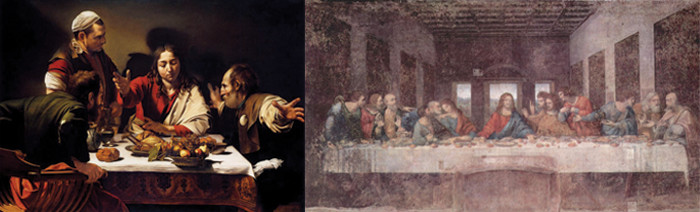
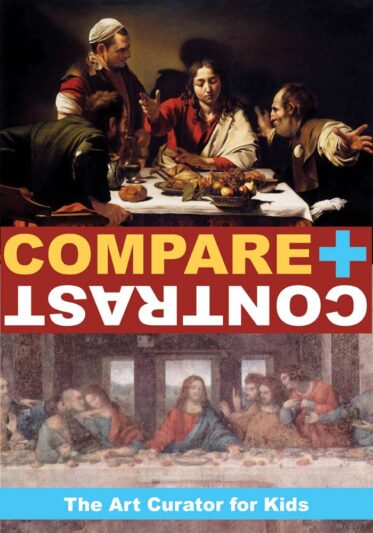
In my Italian Baroque lesson (which you can download as a member of The Curated Connections Library), I have 4 sets of images that I print and have students compare and contrast art in small groups. My favorite set is Leonardo da Vinci’s The Last Supper and Caravaggio’s Supper at Emmaus.

Side by side-The Last Supper and Supper at Emmaus, art comparisons
At left: Caravaggio, Supper at Emmaus, 1601; At right: Leonardo Da Vinci, The Last Supper, 1495

Lead a discussion on these artworks being sure to note the differences in the lighting, the people, the setting/background, the positions of the people, the lines, and the colors.

Compare and Contrast Art Examples: Ancient Rome/Byzantine

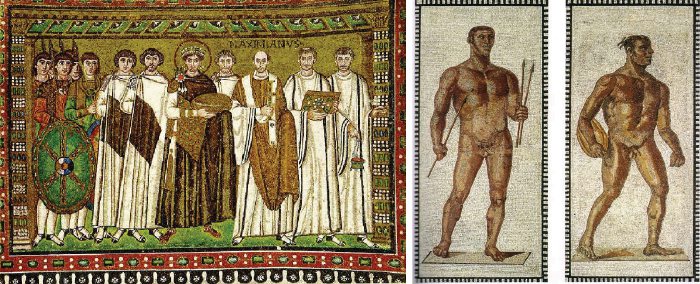
After Christianity became the official religion of the Roman Empire, art took a drastic turn from the focus on man to the focus on God. I love to compare this Roman mosaic with the mosaic of Justinian and his attendant.

Justinian and two athletes mosaics, how to compare and contrast art paintings
At left: Mosaic, Church of San Vitale in Ravenna, Italy, Justinian and his Retinue (noblemen, patrons, attendants), 6th Century C.E. At right: Floor mosaic from Baths of Caracalla , Vatican Museums, Rome, Two athletes, c.200-500 C.E.

The differences in subject matter are clear. The Roman artwork glorifies the strength and the body of a man while the Byzantine artwork no longer shows the men with realistic proportions in art. Students will note the differences in body proportions, the use of color and pattern, and the Byzantine complexity vs. the Roman simplicity.

Compare and Contrast Art Examples: Romanesque/Gothic

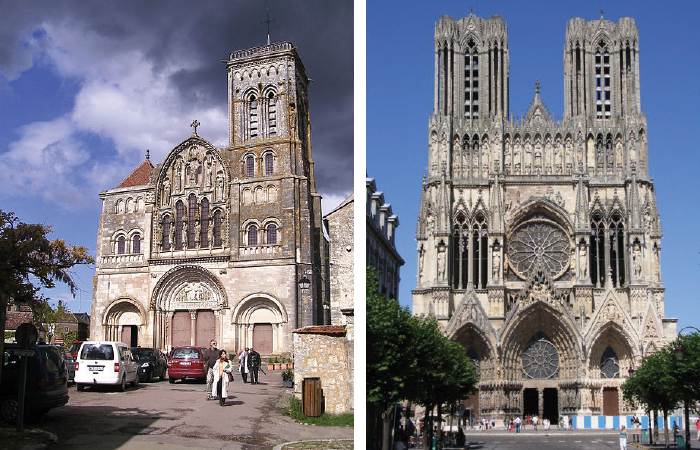
Romanesque is kind of a weird art period to teach. It is so varied and transitional. Putting a Romanesque building next to a Gothic really trains students to look closely at details and notice the glory and impressive engineering of a Gothic Cathedral!
Gothic architecture comparing artworks
At left: Abbey of la Madaleine, Vézelay, Photo Credit: Delta 51; At right: Cathedral at Reims, Photo Credit: bodoklecksel

Check out this past post on teaching Gothic architecture for more information about this side-by-side.
Resource Library Subscribers: Download the Gothic PowerPoint.

Compare and Contrast Art Examples: Neoclassical/Romantic

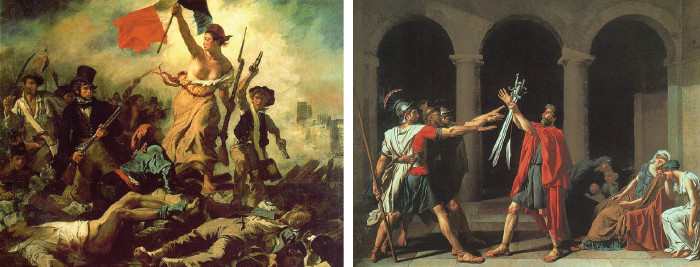
The honor and stoicism of Neoclassical art is a great contrast to the emotional turmoil of Romanticism. Compare David’s Oath of the Horatii with Delacroix’s Lady Liberty Leading the People.

compare and contrast art history
At left: Eugene Delacroix, Liberty Leading the People, 1830; At right: Jacques-Louis David, The Oath of the Horatii, 1784

Patriotism and nationalism are key themes in both of these art movements, but this manifested in their art in incredibly different ways. This art comparison works really well too with a poetry writing exercise. Have students write haikus about the paintings, and then compare the language used in each.

Compare and Contrast Art Examples: Impressionism/Post-Impressionism

I find Post-Impressionism a little harder to teach than other art movements. It’s mainly just a collection of artists in this strange transition period between Impressionism and Modern Art. It’s Impressionism but it’s not. It’s Fauvism but it’s not.

compare and contrast art
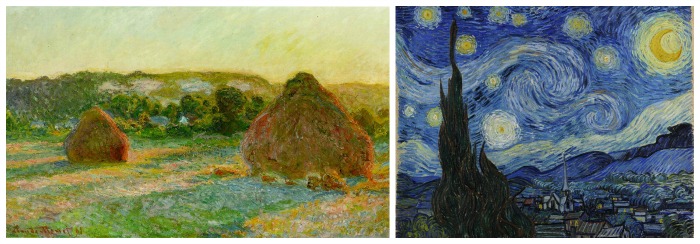
At left: Claude Monet, Wheatstacks (End of Summer), 1890-91; At right: Vincent van Gogh, The Starry Night, 1889

Putting a Van Gogh next to a Monet works as an art comparison because you can really notice the addition of emotion. I describe Post-Impressionism to my students as Impressionism+Emotion+Bolder, Unrealistic Colors.

Classroom Connection


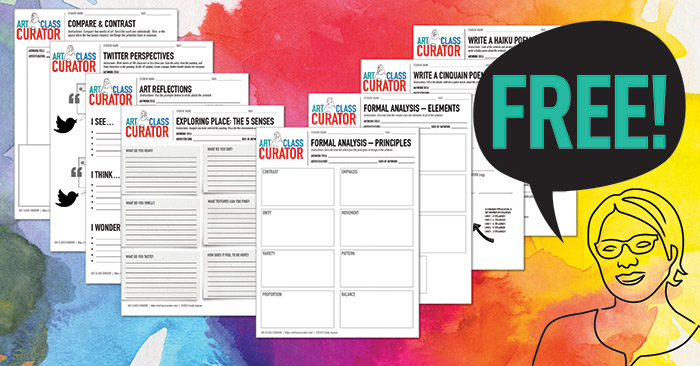
The compare and contrast art activity from the bundle of free art appreciation worksheets is a great way to get students thinking.

What other artworks do you like to compare and contrast with your students? Please share in the comments!

Filed Under: Art Connection Activities, Art Teacher Tips, Featured
Tagged With: best of art class curator, caravaggio, claude monet, eugene delacroix, jacques-louis david, leonardo da vinci, vincent van gogh


March 25, 2016 4 Comments

5 Women Artists of Color with Learning Activities

The Art Curator for Kids - 5 Women Artist of Color

Today, I am again joining the Women’s History Month series on Multicultural Kid Blogs with a guest post on MKB–5 Women Artists of Color.

In my post, I cover 5 incredible women artists of color: Augusta Savage, Jaune Quick-to-See Smith, Carmen Lomas Garza, Monir Shahroudy Farmanfarmaian, and Yayoi Kusama.

The Art Curator for Kids - 5 Women Artist of Color

Each entry has images of the artwork or a video of the artist talking about her work.

I also include activity suggestions and lesson ideas for each artist.

Head over to Multicultural Kid Blogs to learn more and see more from this series.

Women's History Month Series on Multicultural Kid Blogs

Filed Under: Art and Artists, Featured
Tagged With: augusta savage, carmen lomas garza, jaune quick-to-see smith, monir shahroudy farmanfarmaian, yayoi kusama


March 21, 2016 6 Comments

7 Surrealist Games to Unlock Creativity

Surrealist art is some of the most fun and accessible art for students. It is so meaty and weird and creative that kids naturally gravitate towards it. Not only do my students love Surrealism, but I love to teach it! Check out these fun Surrealist games to get your students into the minds of the Surrealist artists.

7 Surrealist Games

Please note, this post includes Amazon affiliate links. As an Amazon Associate I earn from qualifying purchases.

What is Surrealism?

lobster-telephone-1938
Salvador Dalí, Lobster Telephone, 1938
Dali lobster quote

Surrealism encompassed a literary, intellectual, and artistic movement that developed in the 1920s and continued through the 1960s. Surrealist artists proposed that art should free the individual from the “rational” to express personal desires and release the mind from the shackles of conventional thought.

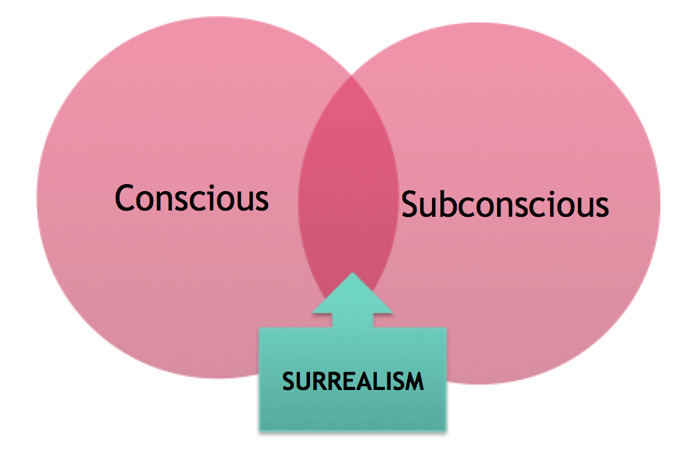
Surrealists were influenced by psychoanalyst Sigmund Freud’s theories of the struggle in the human mind between the conscious and the unconscious.

In this post, I also include some activities from the Dada art movement. Dada was a precursor to Surrealism, and many Dada artists became Surrealists.

conscious-unconscious in surrealism

7 Surrealist Games to Unlock Creativity

Surrealists often used art and word games to access the subconscious, their dreams, and their inner selves. Try these games out with your students. These are fun ways to understand Surrealism, but you could also use these games to spark ideas for student artworks.

Exquisite Corpse

Exquisite Corpse was a Surrealist game developed in the 1920s, in which sentences or drawings were created by a group of people – each person unaware of what previous players had written or drawn. The result is a collaborative, inspiring work of art.

To play, have each member of a group come up with a random word. One student comes up with an adjective, the next a noun, the next a verb, and so on. Then, have them put them all together to create crazy sentences. Take it a step further and have students design artworks about their new crazy sentences.

You can find a full Surrealism PowerPoint in The Curated Connections Library.

Get the Full Lesson!

This Lesson is in The Curated Connections Library!

Find the full lesson from this post along with hundreds of other art teaching resources and trainings in the Curated Connections Library. Click here for more information about how to join or enter your email below for a free SPARKworks lesson from the membership!

Join the List

Get the Full Lesson!

This Lesson is in The Curated Connections Library!

Find the full lesson from this post along with hundreds of other art teaching resources and trainings in the Curated Connections Library. Click here for more information about how to join or enter your email below for a free SPARKworks lesson from the membership!

Definitions / Questions & Answer

Similar to Exquisite Corpse, have one person write a word on a piece of paper and then fold the paper to disguise the original word. The next person then writes a definition.

An alternate version of this is for one person to write a question and the next person writes an answer.

Telephone

whisper

Did you know you were practicing a Surrealist technique when you played Telephone growing up? Sit in a circle in a group, and have one person whisper a phrase to the person next to them. Each person then whispers what they hear until it makes it around.


I’ve also played a related board game with my friends called Telestrations. It’s a drawing version of the old game, telephone. You draw a phrase from the card and then pass it. The person you pass it to guesses what you drew. Then, they pass it for the next person to draw. You continue until the original artists get their booklet back. In the end, you compare the guesses and drawings to see how close to the original phrase you got. We had a great time with this! Lots of laughs. This game is rated for ages 12 and up.

Automatic Drawing

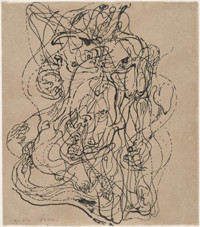
One strategy surrealists used was automatic drawing. On a blank piece of paper, have students draw continuously for several minutes without thinking about what they are going to draw. Let their hands flow freely over the paper without self-censorship.

Andre Masson-Automatic Drawing
André Mason, Automatic Drawing, 1924

Surrealist artists did this to let the subconscious take over. Hopefully, by freeing yourself from planning and censorship, your true psyche can be revealed.

You can also do automatic writing and automatic sculpture!

Reassemble Reality

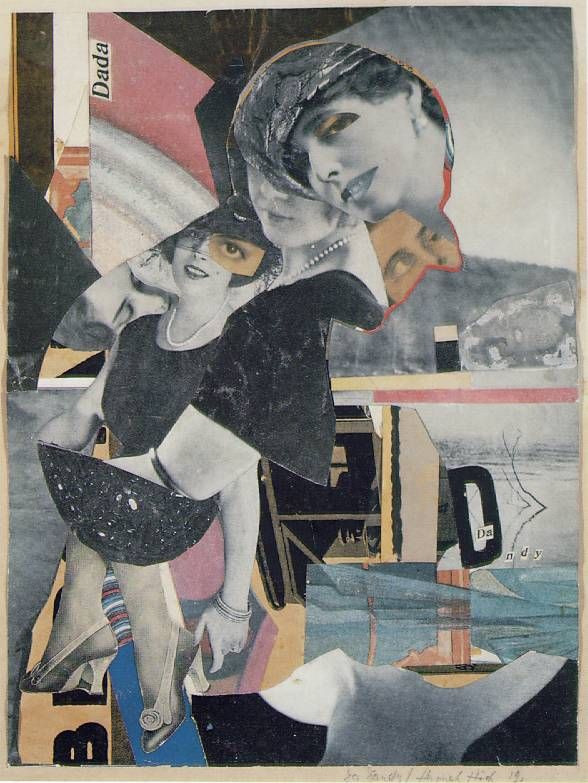
Dadaists and Surrealists loved to use collage techniques to unlock new meaning in the world. I love this artwork by Hannah Hoch which comments on gender in the media. Even in 1919, we were revolting against unrealistic standards of beauty.

Hoch-Da Dandy
Hannah Hoch, Da Dandy, 1919, Photomontage

Notice how Hoch uses both text and images in her artwork.

Another Surrealist activity you could do is to write a dadaist poem. These instructions straight from Tristan Tzara, one of the leaders of the dada movement:

Take a newspaper.

Take a pair of scissors.

Choose an article as long as you are planning to make your poem.

Cut out the article.

Then cut out each of the words that make up this article and put them in a bag.

Shake it gently.

Then take out the scraps one after the other in the order in which they left the bag.

Copy conscientiously.

The poem will be like you.

And here you are a writer, infinitely original and endowed with a sensibility that is charming though beyond the understanding of the vulgar.
– Tristan Tzara

Create New Myths, Superstitions, and Proverbs

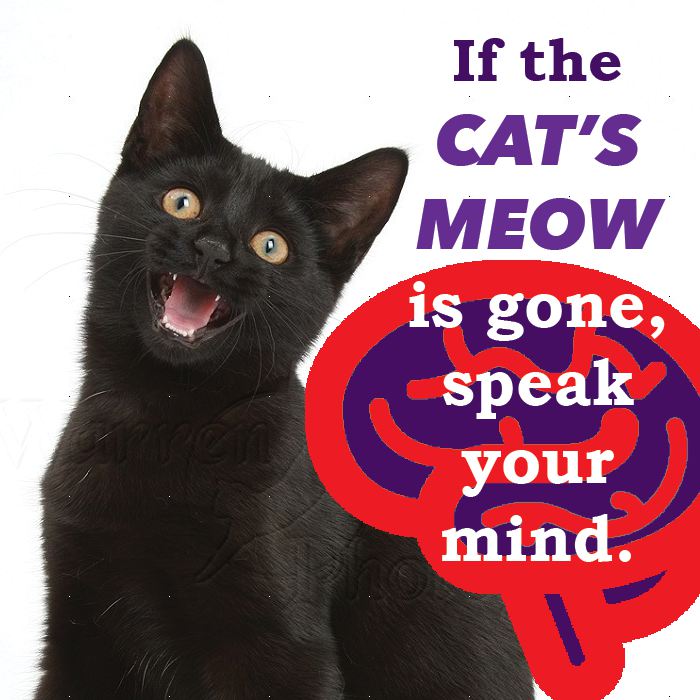
Surrealists enjoyed playing with reality and shattering expectations. For this activity, create a new myth, superstition, or proverb.

cat proverb

BONUS ACTIVITY: Turn your proverb into a meme!

What’s Wrong with this Picture?

“In a well-known game children are invited to examine a picture and find elements in it that are somehow “wrong”: A person standing in midair; a dog reading a book, etc. In our surrealist version of the game, first played on July 1988 at La Choza Restaurant on Paulina Street in Chicago, each player identifies the “wrong”, or anomalous elements in a ordinary, mass-circulation picture.” (Source: Arsenal: Surrealist Subversion, No. 4 by Franklin Rosemont)

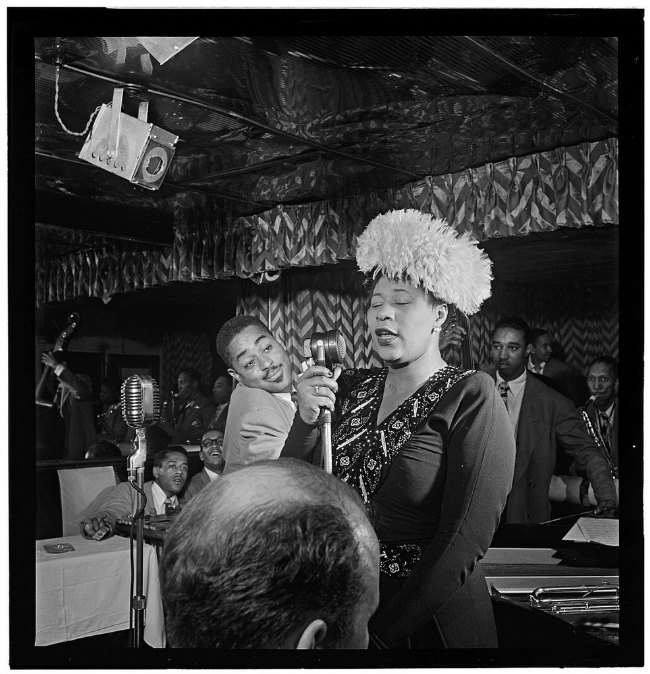
Try the game with this picture. Be inspired by Surrealist artists and go for the ridiculous.

William Gottlieb, Portrait of Ella Fitzgerald, Dizzy Gillespie, Ray Brown, Milt (Milton) Jackson, and Timmie Rosenkrantz, Downbeat, New York, N.Y., ca. Sept. 1947, Library of Congress

More Surrealist Games

A Book of Surrealist Games is a great collection of over 100 Surrealist games! I recently purchased it, and I’ve been having a fun time flipping through.

Surrealism (and Dada!) Lesson Downloads

I have a Surrealism lesson and a Dada lesson in The Curated Connections Library which includes some of these Surrealist games.

Filed Under: Art and Artists, Art Connection Activities, Featured
Tagged With: best of art class curator


March 8, 2016 Leave a Comment

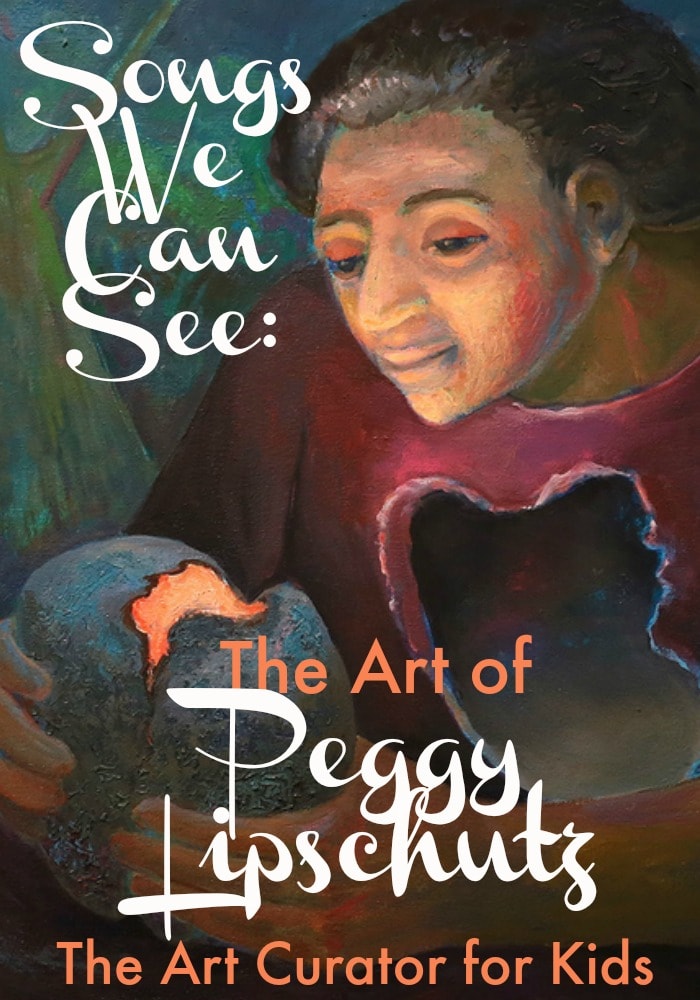
Songs We Can See: The Art of Peggy Lipschutz

The Art Curator for Kids - The Art of Peggy Lipschutz - Songs we Can See

“With paintings like that…you can say ‘I felt that.'” — Jerri Zbiral, Curator

The Art Curator for Kids - The Art of Peggy Lipschutz - Songs we Can See

Peggy Lipschutz is a 97-year-old artist from Evanston, IL. She says “I have two loves–art and politics. Politics being people. What happens to people.” Her bold and colorful artworks document important events, make statements about our society, or deal with people in their everyday environment. Through her art, she has painted about labor unions, the civil rights movement, and much more.

Check out some of her work below, and use the discussion questions and activities to explore these artworks with your students.

Wrested Heart

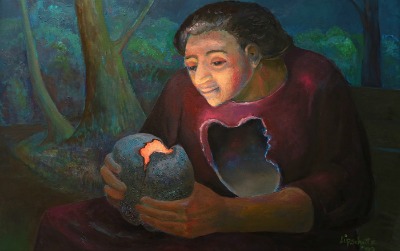
One painting I love of hers is Wrested Heart. In the painting, a woman has pulled her heart out of her chest to examine it. Instead of witnessing agony, as you would imagine the scene might feel, we look in on a very special moment. Her heart glows and lights up her face. Her heart is cracking open to reveal something precious inside.

Peggy Lipschutz, Wrested Heart

Curator of the Peggy Lipschutz exhibition, Jerri Zbiral, says of this painting, “We all have hearts, and we all every now and then need to take that heart, pull it out, and take a look at it. And I’m hoping with paintings like that…that you can say “I felt that.” Art is at its most powerful when we can connect to the emotion in it.

Show this artwork to your students and ask: What is this woman doing? Why is she doing it? How does this woman feel? What is inside her heart? What are some ways to look into your own heart?

Have students write a poem or a story about what is in their hearts.

Get the Full Lesson!

This Lesson is in The Curated Connections Library!

Find the full lesson from this post along with hundreds of other art teaching resources and trainings in the Curated Connections Library. Click here for more information about how to join or enter your email below for a free SPARKworks lesson from the membership!

Join the List

Get the Full Lesson!

This Lesson is in The Curated Connections Library!

Find the full lesson from this post along with hundreds of other art teaching resources and trainings in the Curated Connections Library. Click here for more information about how to join or enter your email below for a free SPARKworks lesson from the membership!

Inauguration

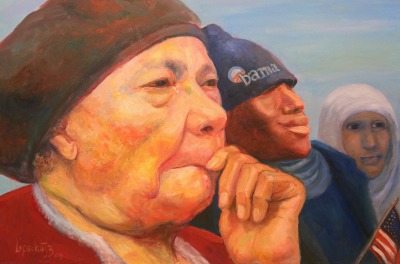
So much of her art made my breath catch in my chest, but the one that impacted me the most was this one documenting Obama’s inauguration.

Peggy Lipchutz, Inauguration
Peggy Lipschutz, Inauguration

In 2010, I worked at a south Dallas elementary school with 90+% black students. We had a teacher workday on inauguration day, and we all gathered in the library to watch on a small tv. This painting captured the feeling in that room so perfectly. Witnessing the inauguration of a black President of the United States in that environment was an incredibly powerful moment I will never forget.

Show this artwork to your students and ask: How do the people in this painting feel? Why did they feel that way?

Songs We Can See

Lipschutz is also a performance artist. In addition to talking on stage while drawing (“chalk talks”), she also does drawings with chalk alongside musicians. One example is her painting a landscape alongside Pete Seeger singing “This Land is Your Land.” See a video below.

Play a clip of music to your students and ask them to think of what they might draw for this song if they were doing a performance like Lipschutz. Discuss the students’ ideas as a class. Give the students a large sheet of paper and some chalk pastels, and play the song again. Have students create their drawings as the song plays.

See more artwork by this artist as well as an interview with her at this link.

Women’s History Month

This post is part of the Women in World History series for Multicultural Kid Blogs

Women's History Month Series on Multicultural Kid Blogs

Join us for our second annual Women’s History Month series, celebrating the contributions and accomplishments of women around the world. Don’t miss our series from last year, and find even more posts on our Women’s History board on Pinterest:

Follow Multicultural Kid Blogs’s board Women’s History on Pinterest.

Filed Under: Art and Artists
Tagged With: peggy lipschutz


February 22, 2016 6 Comments

Guatemalan Worry Dolls Lesson and Art Project

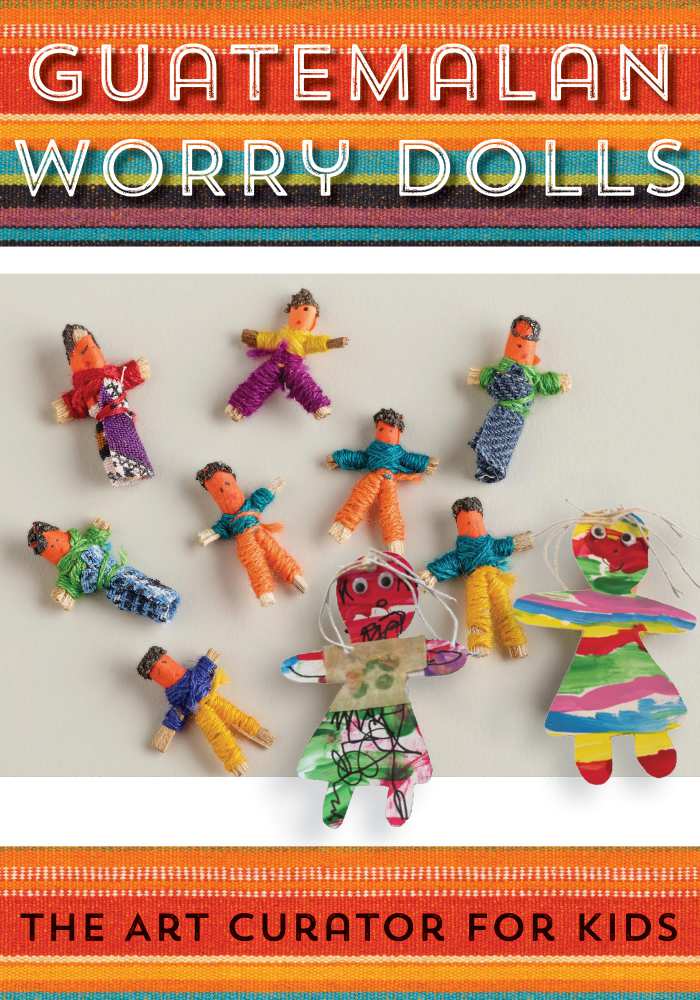
The Art Curator for Kids-Guatemalan Worry Dolls

Inside: Read this book about Guatemalan worry dolls with your kids and have them make their own Guatemalan worry dolls to help calm their anxiety and address their worries.

My 6-year-old won’t go into some rooms in our house alone, won’t ride in the car without car-sick bracelets, and forces me to watch television every night after she goes to bed so the sound drowns out any house noises. We’re dealing with anxiety over here, and it has been a struggle to find ways to talk with her about her fears in a way that doesn’t freak her out.

The Art Curator for Kids-Guatemalan Worry Dolls

Please note, this post includes Amazon affiliate links. As an Amazon Associate I earn from qualifying purchases.

Get the Full Lesson!

This Lesson is in The Curated Connections Library!

Find the full lesson from this post along with hundreds of other art teaching resources and trainings in the Curated Connections Library. Click here for more information about how to join or enter your email below for a free SPARKworks lesson from the membership!

Join the List

Get the Full Lesson!

This Lesson is in The Curated Connections Library!

Find the full lesson from this post along with hundreds of other art teaching resources and trainings in the Curated Connections Library. Click here for more information about how to join or enter your email below for a free SPARKworks lesson from the membership!

I recently went to the library and checked out just about every book on anxiety and came across a gem called Silly Billy by Anthony Brown. The story is about a boy who worries a lot at night until his grandmother introduces him to Guatemalan worry dolls which he can tell his worries to make his worries go away.

This book was perfect for my 6-year-old. We had an illuminating discussion about our worries after we read it, and she shared with me stories from the night that she had never told me (like when Grandma and Grandpa stayed the night, and she thought she saw Grandpa’s hat moving by itself at night!).

I highly recommend the book with one caveat. The title! It is not SILLY to worry. That annoys me. I want my daughter to feel okay about her worries and feel heard and not feel like she is silly for worrying! I downplayed the title a lot when I read it to my girls.

The book even has a nice snippet of information about the history and cultural use of Guatemalan worry dolls.

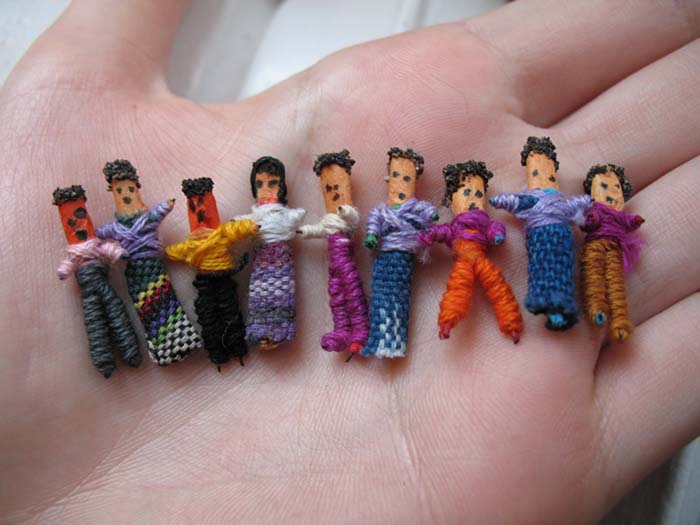
Guatemalan Worry Dolls

Guatemalan Worry Dolls
Guatemalan Worry Dolls, By Leena, CC BY 3.0

Worry dolls are also called trouble dolls and originate from Guatemala. You tell your worry to the doll and put it under your pillow. The worry doll takes the worry from you and helps you sleep more peacefully.
When I was younger, I had a set of Guatemalan worry dolls that I used to put under my pillow, and I loved them. They were so cute, and it gave me some comfort to tell my worries to them even though I never believed they actually would take away my worries.

You can buy worry dolls on Amazon for cheap! I’m planning on getting some for my daughter to see if she wants to use them at night to make her feel better.


Worry Dolls Lesson and Project

Book and Discussion

After we read and discussed the book, I shared with the girls pictures of real worry dolls and talked about how they were made. We also found Guatemala on the globe and discussed the history of worry dolls a little bit.

Patterns Lesson

The Art Curator for Kids-Guatemalan Worry Dolls-make a worry doll

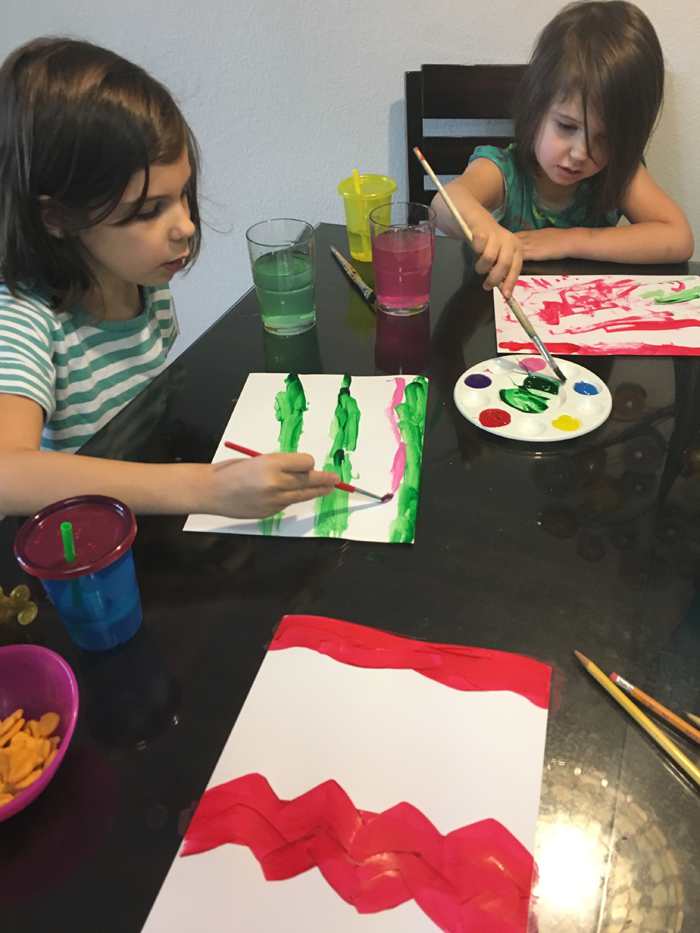
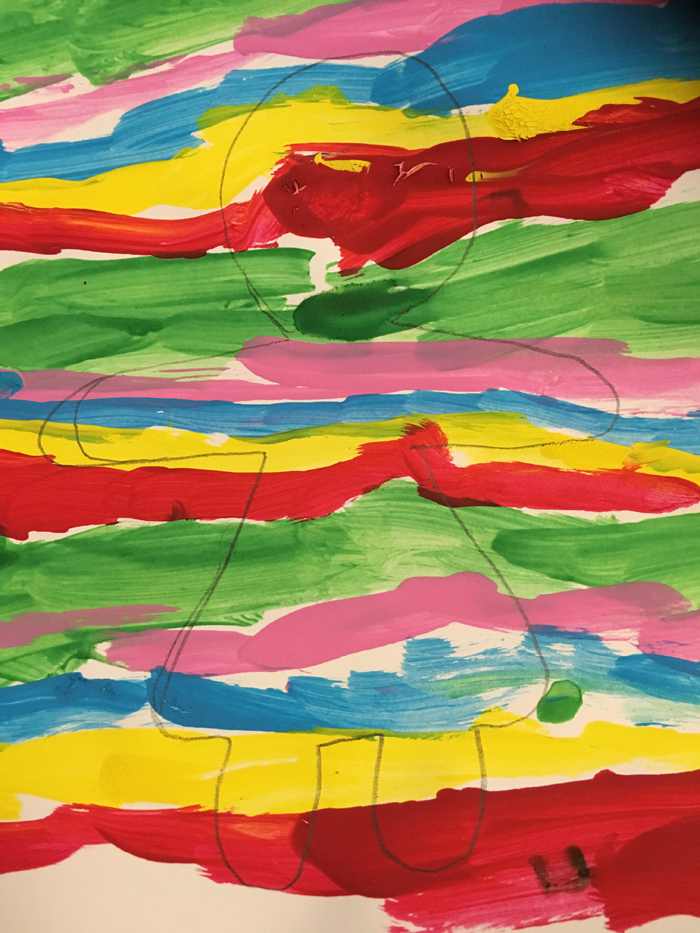
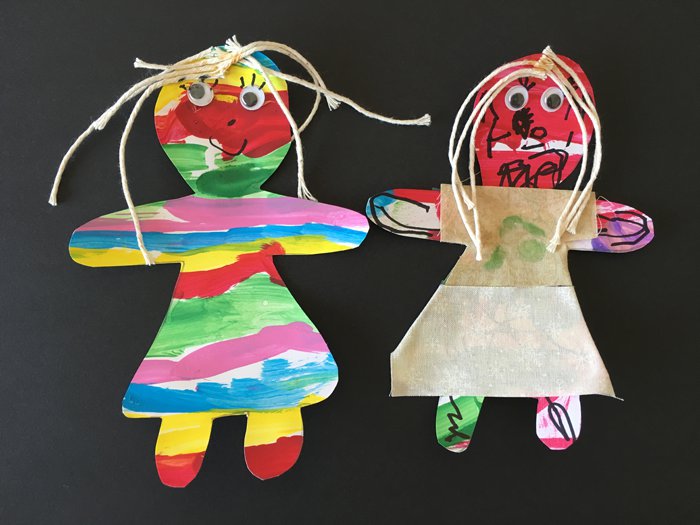
On the last page of the book, there are lots of pictures of Guatemalan worry dolls. I asked the girls to describe them. We talked about the bright colors, varied lines, and the patterns used on the Guatemalan worry dolls. Then, we each painted a pattern of our choosing on a piece of 8.5×11″ card stock.

Make a Worry Doll

The Art Curator for Kids-Guatemalan Worry Dolls-cut out doll

After we made the patterns, I drew a worry doll shape and cut it out. I would normally let my daughter do her own, but I took the easy way out this time. (I know, I know.)

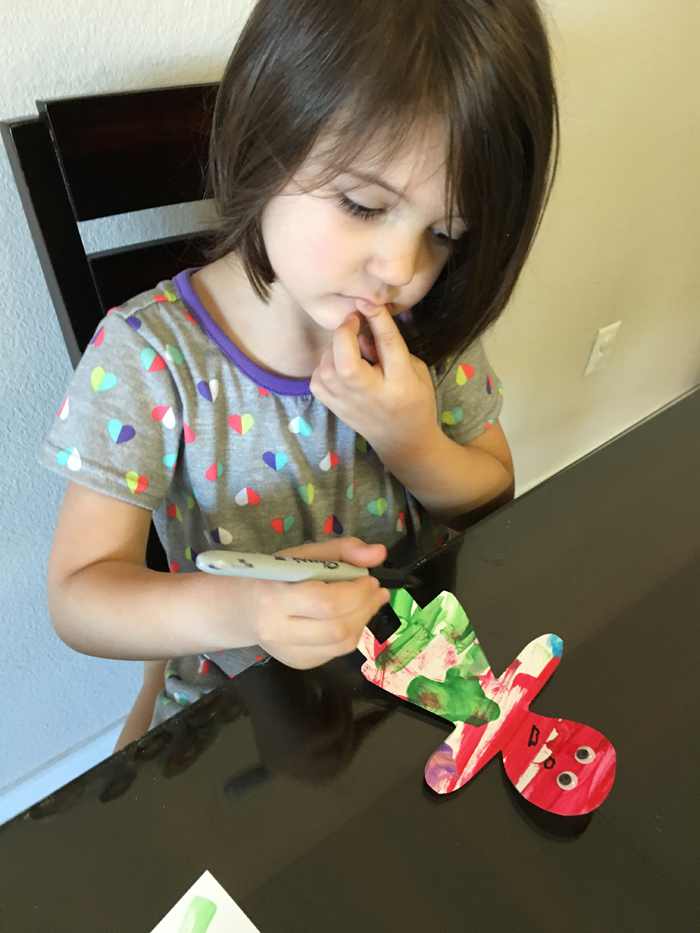
The girls then added googly eyes and used sharpies to draw on the face. My 3-year-old then drew letters all over hers, because she loves writing letters.

The Art Curator for Kids-Guatemalan Worry Dolls-draw face

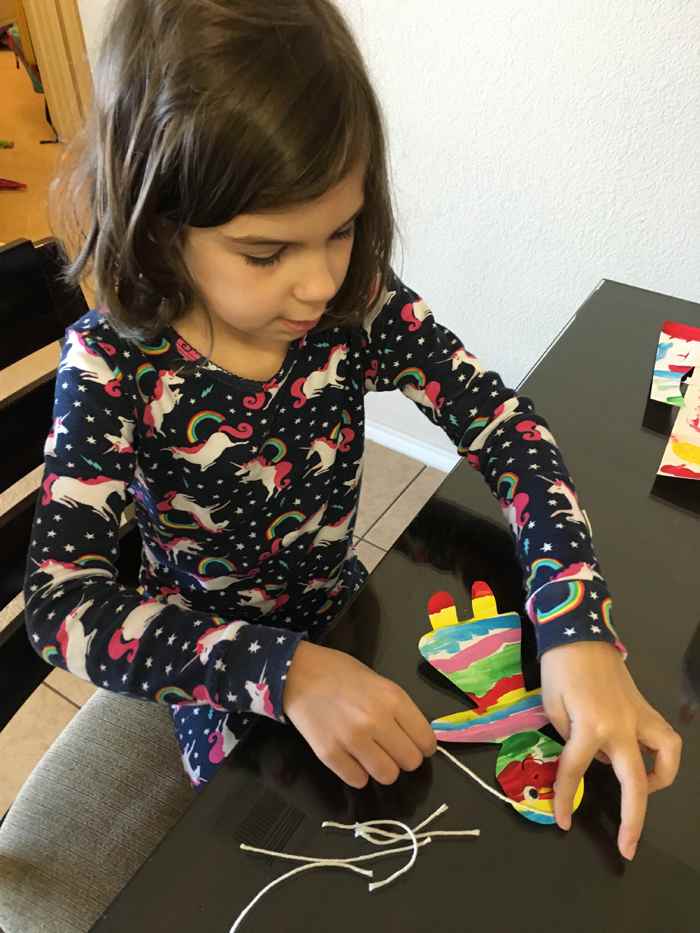
They each glued on strings with simple white glue for the hair. My 6-year-old could do this on her own, but my 3-year-old needed some help.

The Art Curator for Kids-Guatemalan Worry Dolls-string hair

After they were done, we picked some fabric from Nana’s stash of fabric scraps to make clothes! My 6-year-old didn’t want to cover up her pattern so she ended up choosing not to clothe it. My 3-year-old gave her a nice beige shirt and skirt.

The Art Curator for Kids-Guatemalan Worry Dolls-finished dolls

Overall, this was very a helpful lesson for my family. Since we made the dolls, we’ve used them to talk about emotions and worries, and this has opened up a deeper conversation with my anxious child about her fears.

Filed Under: Art and Artists


February 18, 2016 Leave a Comment

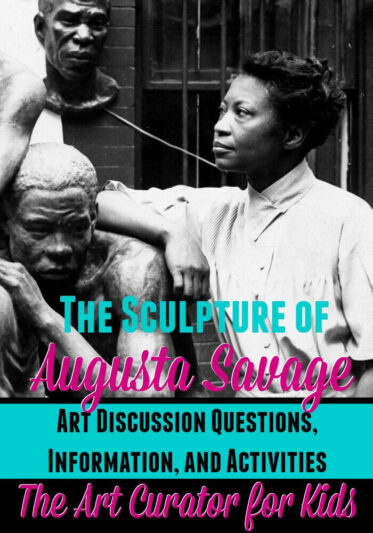
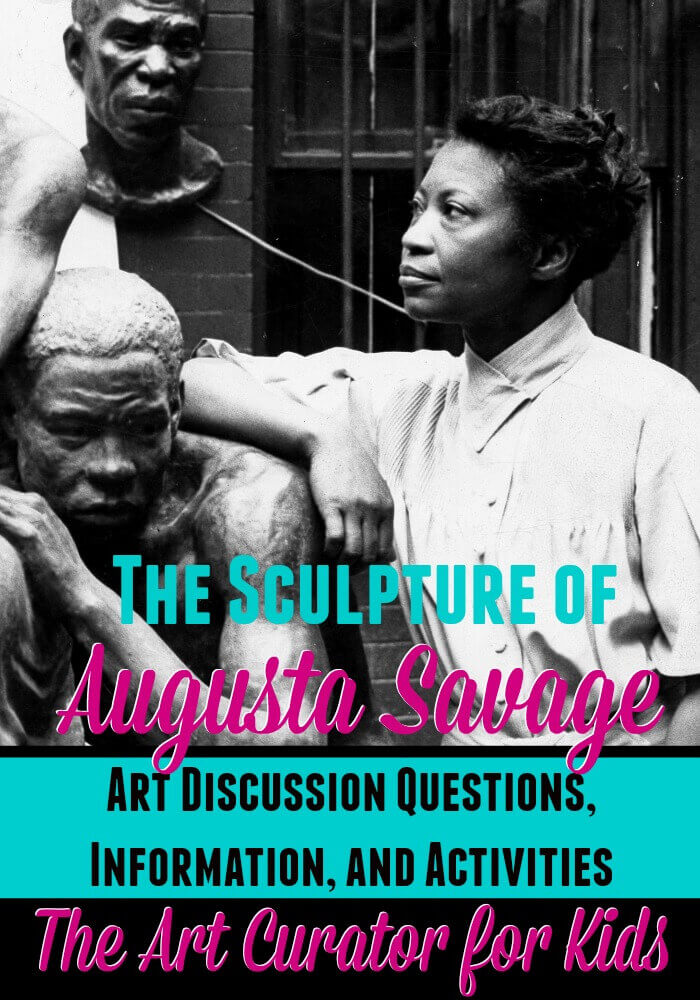
The Art of Augusta Savage

The Art Curator for Kids - The Art of Augusta Savage

When I think of sculptors who have the ability to capture pure emotion in the expressions and poses of their subjects, my mind goes to Auguste Rodin or Donatello’s Penitent Magdalene. I was recently introduced to the work of Augusta Savage, a black American artist the first half of the 20th century, who will now join Rodin when I think of emotional and expressive portrait sculptures. Marvel at her incredible work below and share it with your children and students with these activity ideas and discussion questions.

The Art Curator for Kids - The Art of Augusta Savage

This post contains affiliate links that help support the work I do for you on Art Class Curator. Thank you!

About Augusta Savage

The Art Curator for Kids - Augusta Savage with Sculpture

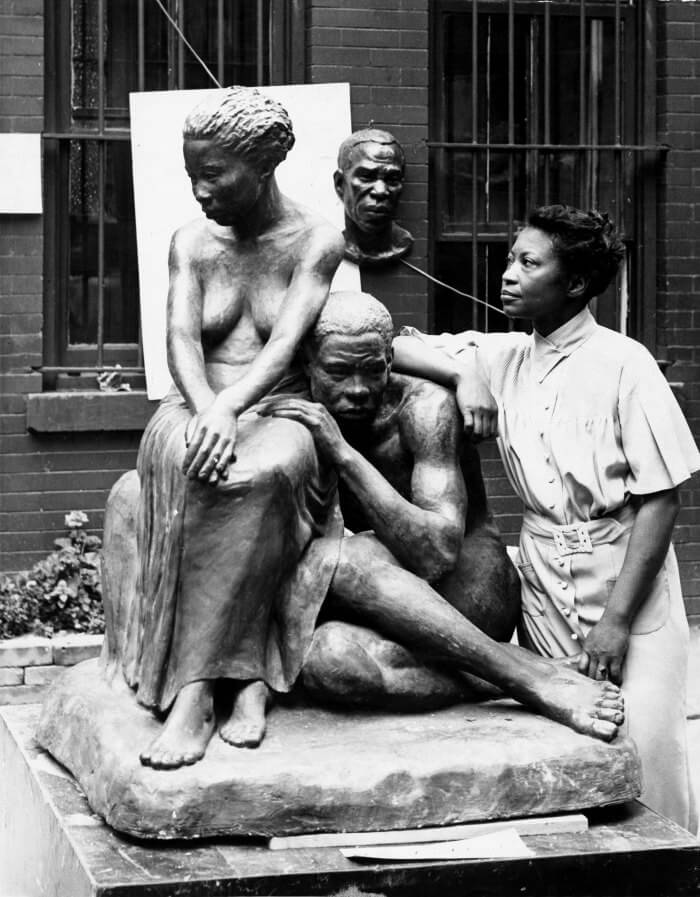
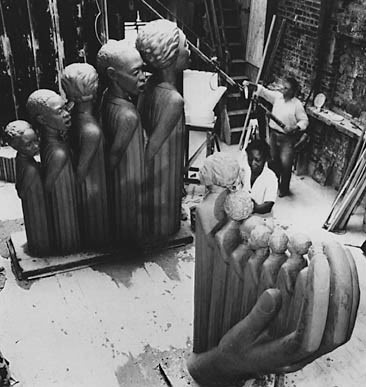
Considered a leading artist of the Harlem Renaissance, Augusta Savage (1892-1962) was an African-American sculptor, arts educator, and activist. She grew up in Florida and attended Cooper Union in New York City. After initially denied entry into a study abroad program because of her race, she eventually won fellowships to study in Paris and exhibit at the Grand Palais because of the vitality of her classical sculpture work.

Though commissioned by notables of the day including W.E.B. DuBois, she began teaching to support herself, starting her own art school, Savage Studio of Arts and Crafts, in New York City. She was a founding director of the Harlem Community Art Center through the WPA program, where she devotedly mentored many African-American artists, including Romare Bearden and Jacob Lawrence.

Remarkably, we can see Augusta Savage at work in a silent documentary made in 1936; titled “A Study of Negro Artists,” the intriguing film provides a striking glimpse into this era:

Augusta Savage’s Portrait Sculpture

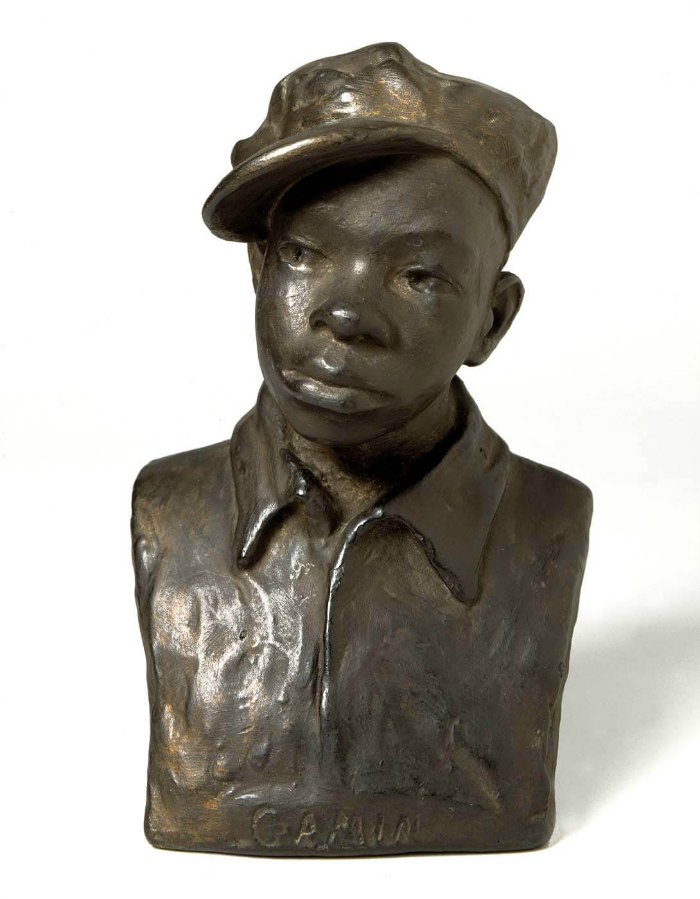
Augusta Savage, Gamin, 1929

Gamin, a portrait bust of a homeless boy or perhaps Augusta Savage’s nephew, was Augusta Savage’s first successful artwork. She won an award for the work which gave her a scholarship to travel to Europe. Gamin is French for “street urchin.”

Augusta Savage’s The Harp (Lift Every Voice and Sing)

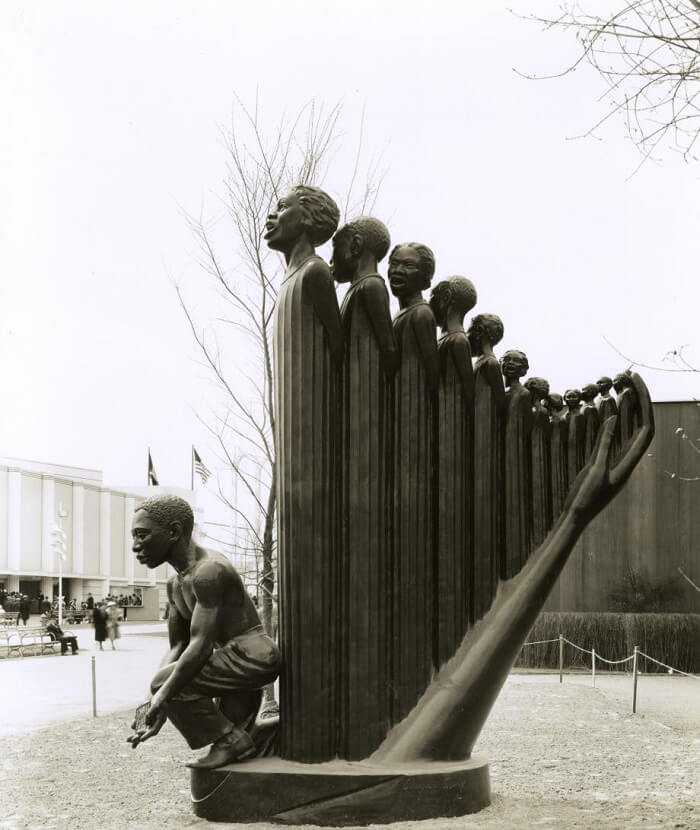
One of Augusta Savage’s most stunning artworks is The Harp which she created for the 1939 World’s Fair in New York. The sculpture was inspired by James Weldon Johnson’s 1900 poem-turned-song Lift Every Voice and Sing.

This song was first sung as a part of Abraham Lincoln’s birthday celebration in 1900 by a group of school children. The song is now often referred to as the Black American National Anthem.

Augusta Savage, The Harp, 1939

The Harp includes 12 singers who form the strings of the harp. The hand of God acts as the soundboard of the harp and holds up the singers while a kneeling man acts as the foot pedal.

The Art Curator for Kids - Augusta Savage Lift Every Voice and Sing

The sculpture was unfortunately destroyed at the end of the fair. Only photos and a small model remain.

Ways to Experience this Artwork

  1. Discuss this artwork with your students using the following questions as a guide. Don’t tell the students the title or give any information until they have discussed the artwork and thought about it for themselves.
    • What’s going on here?
    • What does this remind you of?
    • What symbolism can you find in this sculpture?
    • How does this sculpture make you feel? How do you think this artist felt about this sculpture?
  2. Have you students listen to, read, and interpret the lyrics of Lift Every Voice and Sing, and then ask them to find the lines of the poem that are represented in Savage’s sculpture.
  3. Read In Her Hands: The Story of Sculptor Augusta Savage. Discuss the choices Savage had to make to pursue her dreams. Have students write about their own life dreams and the choices they would need to make to make them a reality.

Get the Full Lesson!

This Lesson is in The Curated Connections Library!

Find the full lesson from this post along with hundreds of other art teaching resources and trainings in the Curated Connections Library. Click here for more information about how to join or enter your email below for a free SPARKworks lesson from the membership!

Join the List

Get the Full Lesson!

This Lesson is in The Curated Connections Library!

Find the full lesson from this post along with hundreds of other art teaching resources and trainings in the Curated Connections Library. Click here for more information about how to join or enter your email below for a free SPARKworks lesson from the membership!

Filed Under: Art and Artists
Tagged With: augusta savage


February 16, 2016 Leave a Comment

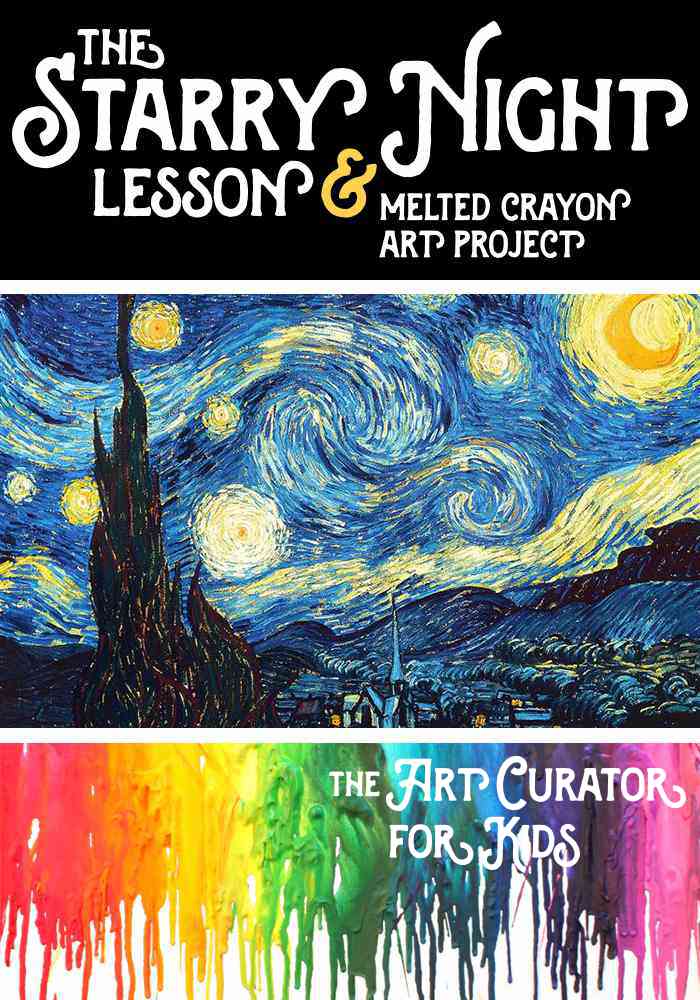
Starry Night Lesson and Melted Crayon Art Project

Van Gogh's The Starry Night - Lesson and Melted Crayon Art Project

You may have noticed that I don’t post a lot about “famous art” here on Art Class Curator. While I love many famous works, there is so much to study. And the internet has paintings like The Starry Night covered (including recent recognition of Van Gogh’s apparent grasp of movement and light – astonishingly scientifically ahead of his time!).

That being said, I have been DYING to try this melted crayon watercolor resist project from The Artful Parent. I thought mixing that project with some art discussion with my littles would be a perfect combination.

Van Gogh's The Starry Night - Lesson and Melted Crayon Art Project

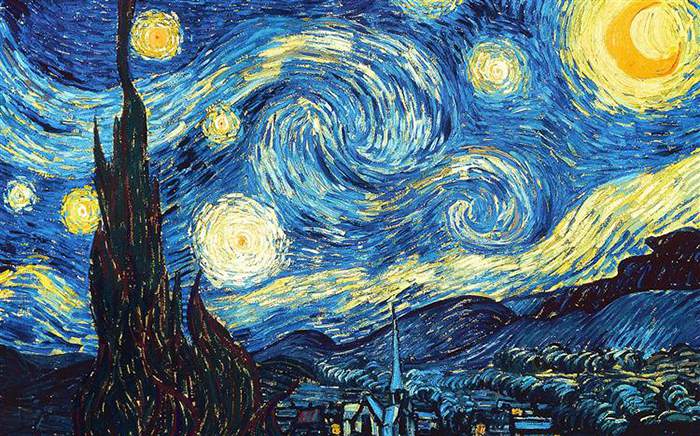
Everyone loves this painting and for good reason. The swirly bold lines just capture our hearts. In my history of teaching about this painting, some students find the painting makes them happy and others feel the pain in it. I love how this painting can make people react in different ways.

Vincent Van Gogh, The Starry Night, 1889

Preschool Starry Night Discussion

I showed the painting to my two girls, aged 3 and 6.

  1. What do you see? We started with just a simple, tell me what you see exercise. They noticed the swirly lines, the stars, the buildings, and they thought the Cyprus tree was a castle.
  2. I had them describe the lines in the painting, and we practiced drawing the swirls with our fingers in the air. We compared the different types of line in the picture
  3. I asked how this painting made them feel. I wasn’t expecting them to have an answer to it, and I was right.

Side note: With older students, The Starry Night is great for writing poems inspired by art!

Melted Crayon Watercolor Resist

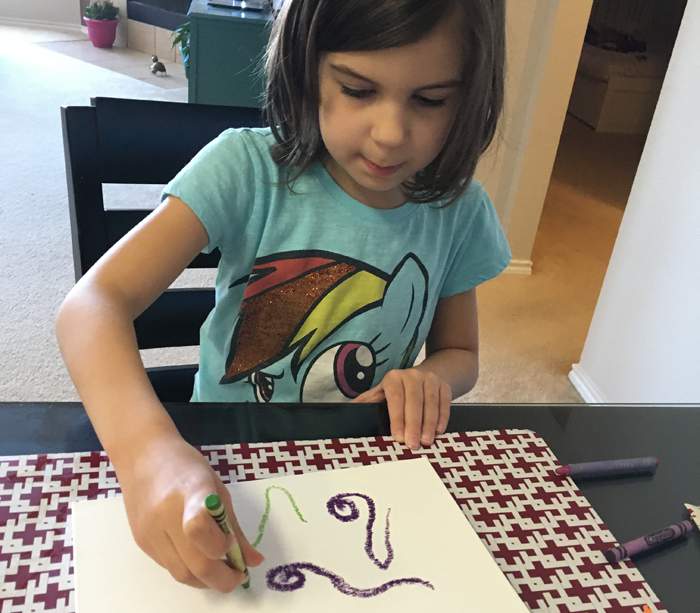
Crayon swirls

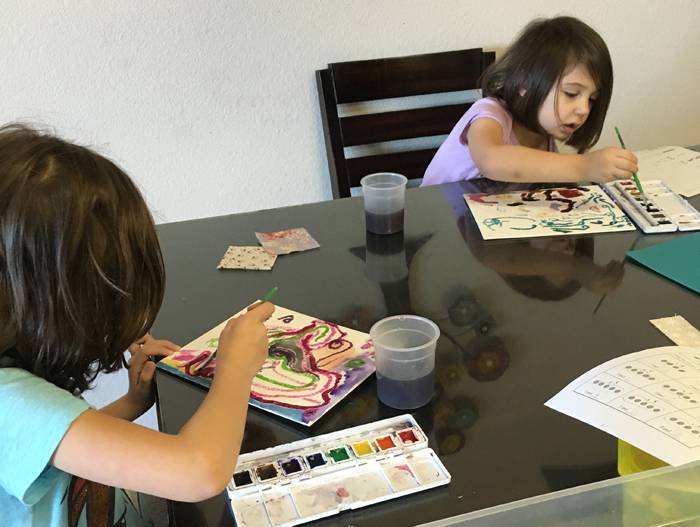
Head over to The Artful Parent to learn how to do this project. We followed her directions exactly with beautiful results! The only guidance I gave was to draw different types of lines, but I left it up to the girls to do what they wanted.

Starting watercolor overlay

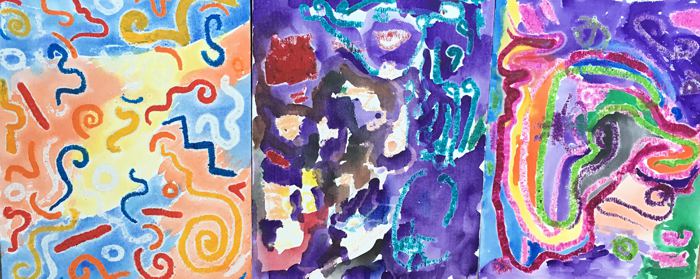
I really love how they turned out! Aren’t they lovely?

Finished art

Filed Under: Art and Artists, Art Teacher Tips
Tagged With: vincent van gogh


February 12, 2016 Leave a Comment

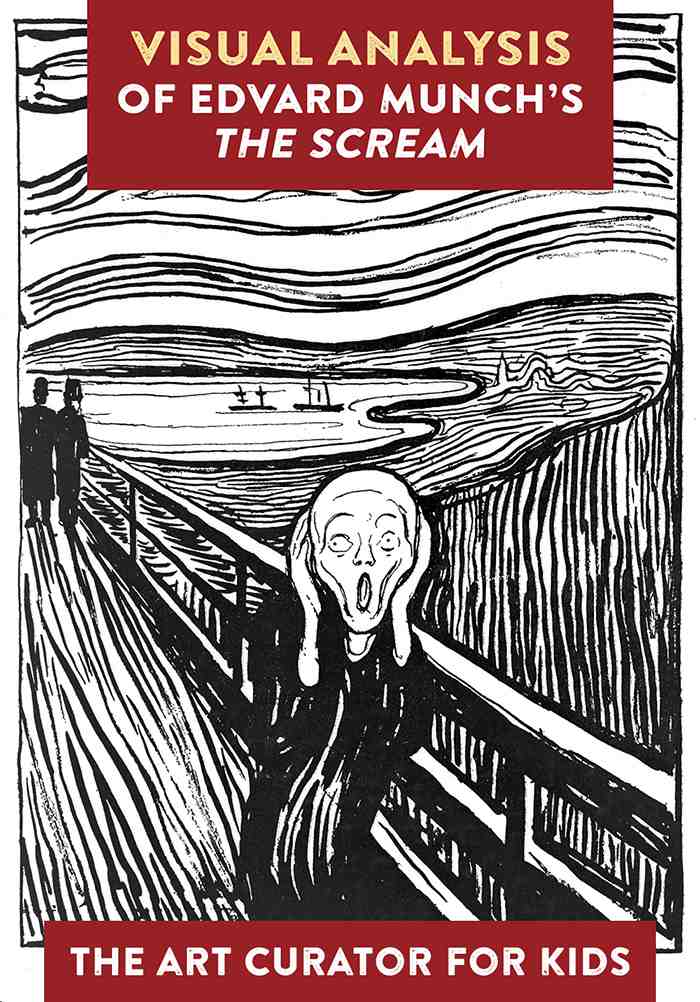
Visual Analysis Lesson for Edvard Munch’s The Scream

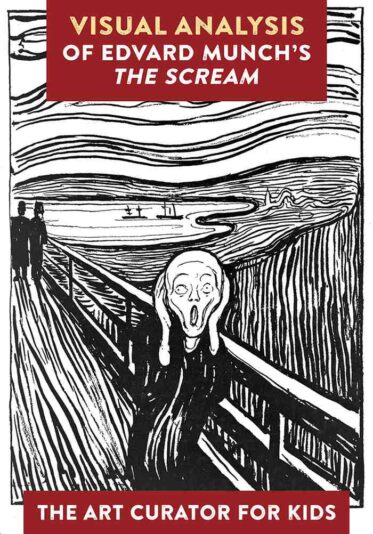
Edvard Munch Visual Analysis The Scream-to post

Inside: In this The Scream by Edvard Munch art lesson, your students will study the elements and principles of art to unpack how Edvard Munch created such a powerful and memorable work of art.

One of my favorite artists is Edvard Munch. His art is so powerful and emotional and raw. And it amazes me that he was doing art like this in the 1800s, way before the Expressionists of the 20th century.

The Art Curator for Kids - the scream by edvard munch art lesson

There’s a madness and a chaos to his work, and you can’t help but feel something when you see it.

Edvard Munch, Separation, 1896 the scream by edvard munch art lesson
Edvard Munch, Separation, 1896

He often includes blank-faced people who make you think about who they might be or you may put yourself into their position. These are both specific real people with emotion and empty shells for us to put ourselves into.

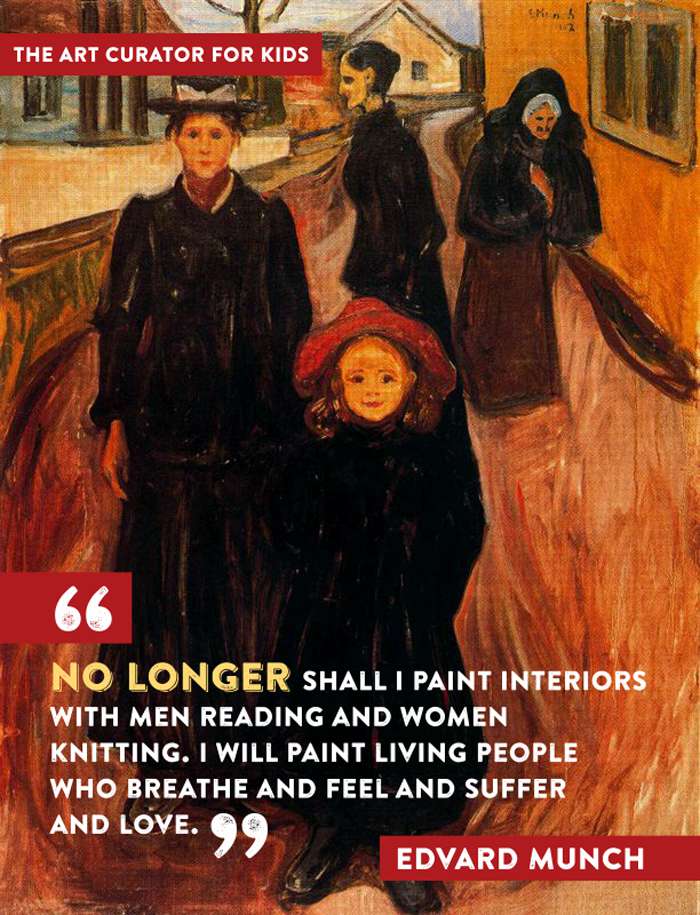
"No longer shall I paint interiors with men reading and women knitting. I will paint living people who breathe and feel and suffer and love." - Edvard Munch
Edvard Munch, Four Ages in Life, 1902

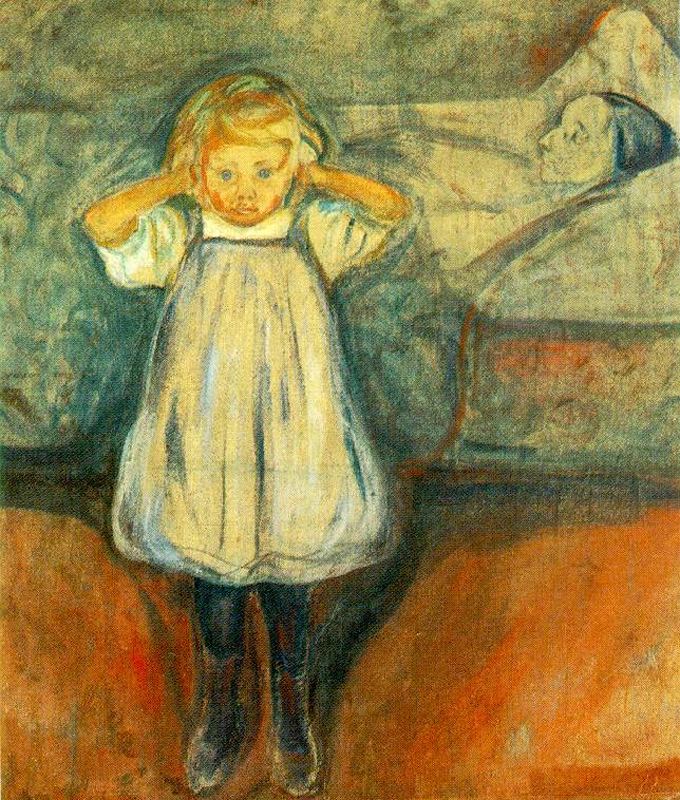
Munch’s upbringing included a great deal of tragedy and illness which influenced his work throughout his life. His mother and sister both passed away from tuberculosis. Mental illness also ran in his family.

Edvard Munch, The Dead Mother, c.1900 the scream by edvard munch art lesson
Edvard Munch, The Dead Mother, 1900

His father’s strict piety caused turmoil in his life. He once said of his father, “From him, I inherited the seeds of madness. The angels of fear, sorrow, and death stood by my side since the day I was born.”*

Starting in the 1890s, Edvard Munch created a series of paintings that illustrated basic human emotions on a visceral level. This series by Edvard Munch, Frieze of Life, includes The Scream and many of his best works. For more about Munch Frieze of Life, check out this blog post.

The Scream by Edvard Munch Art Lesson

His art is excellent for a visual analysis assignment. His use of the Elements and Principles of Art is masterful.

E Munch The Scream edvard munch the scream lesson
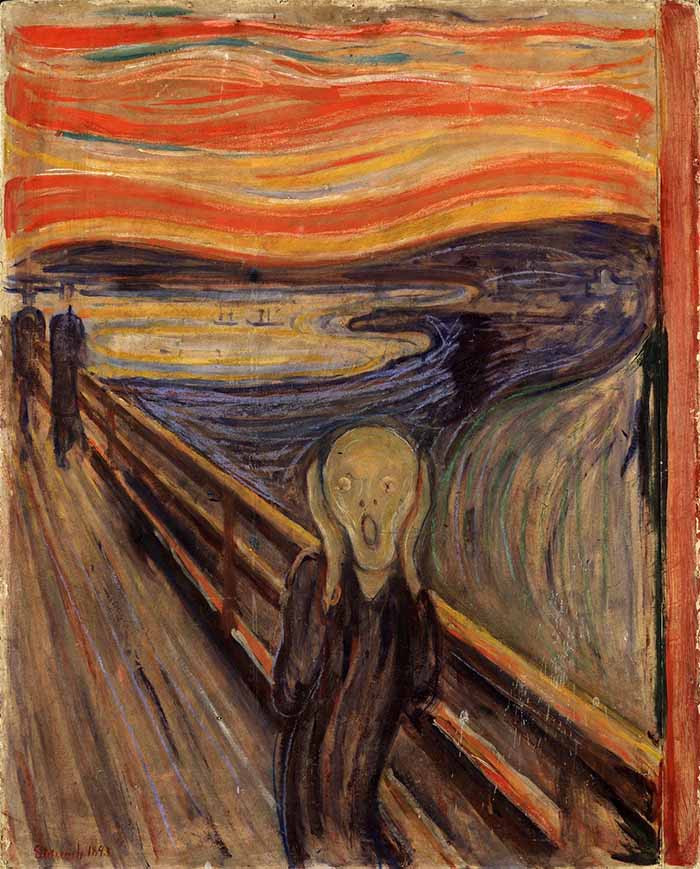
Edvard Munch, The Scream, 1893

His most famous painting is obviously, The Scream. It is a great artwork for students to analyze the Elements of Art. In fact, in my How to Look at Art Course, I have students analyze the line and color in the artwork as an introduction to studying the elements.

Here are the questions I have students answer about this painting before we discuss as a class.

  1. Describe the lines in this painting.
  2. How does the artist create contrast with the lines?
  3. Describe the colors in this painting.
  4. How does the artist create contrast with the colors?
  5. Describe how the artist depicts space.

Get the Full Lesson!

This Lesson is in The Curated Connections Library!

Find the full lesson from this post along with hundreds of other art teaching resources and trainings in the Curated Connections Library. Click here for more information about how to join or enter your email below for a free SPARKworks lesson from the membership!

Join the List

Get the Full Lesson!

This Lesson is in The Curated Connections Library!

Find the full lesson from this post along with hundreds of other art teaching resources and trainings in the Curated Connections Library. Click here for more information about how to join or enter your email below for a free SPARKworks lesson from the membership!

After students answer the questions in the course, they then watch a video of me going over the answers and discussing this art. Here’s the video.

Works Cited:
Prideaux, Sue (2005). Edvard Munch: Behind the Scream. New Haven: Yale University Press. Retrieved on Wikipedia.

Filed Under: Art and Artists, Art Connection Activities, Elements and Principles of Art
Tagged With: edvard munch


February 8, 2016 Leave a Comment

Art About Love: Oskar Kokoschka’s The Bride of the Wind

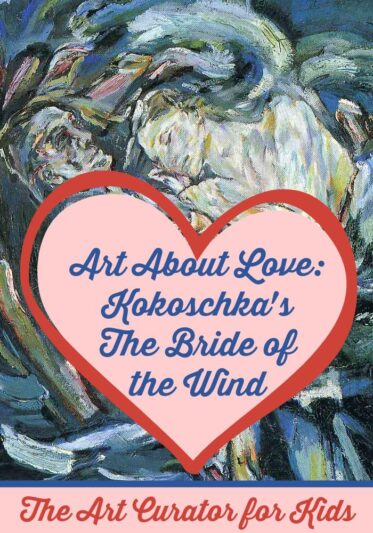
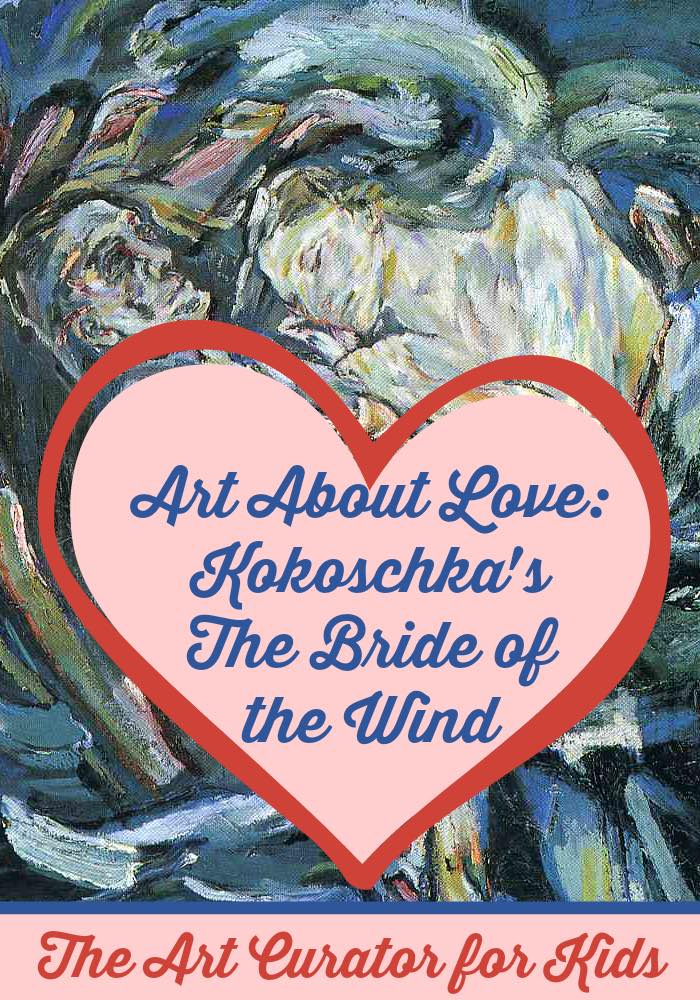
The Art Curator for Kids - Art About Love - Kokoschka

I was planning another Art About Love post for Valentine’s Day when I came across a painting I had never seen before that totally captivated me with its depth of emotion and painterly style. This artwork deserves its own post and some more thorough examination.

The Art Curator for Kids - Art About Love - Kokoschka

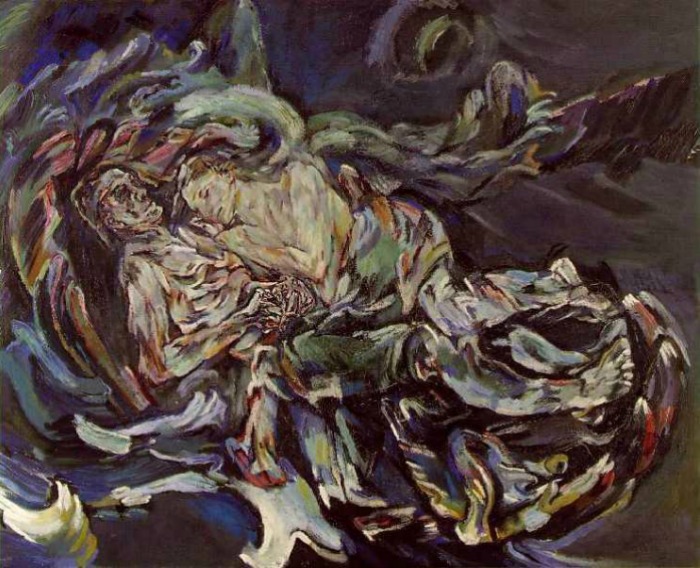
Take a closer look at The Bride of the Wind by Oskar Kokoscka, and think about it for yourself before reading on.

The Art Curator for Kids - Oskar Kokoschka - The Bride of the Wind - Art About Love
Oscar Kokoschka, The Bride of the Wind, 1914

Questions to Ask

Use these questions to guide your and your students into a deeper discussion of this artwork.

  • What is going on in this painting? What do you see that makes you say that?
  • Who are these two people? What is their relationship? How can you tell?
  • How does the man feel right now? How does the woman feel? Compare and contrast the two figures. 
  • What emotions do you feel or notice? What choices did the artist make to contribute to that emotion?
  • Describe the colors and lines in this painting. How do they contribute to the emotion?
  • Is this relationship permanent or temporary? How do you know?
  • How does the artwork fit its title? What does wind imply? 

Art Interpretation Poetry Activity

Because of the heightened emotion and dramatic use of the elements of art and principles of design, this painting is perfect for a poetry writing activity. In my art appreciation worksheets bundle, there are multiple printable poetry activities, but I think the “I am.. Character Poem” would work well for this artwork.

In this activity, you have multiple prompts like “I am…” “I wonder..” “I see…” “I hear…” “I say…” “I feel…” “I dream…” and students fill in responses based on the artwork,

Art Appreciation Worksheet Bundle

This art worksheets bundle from the Art Class Curator includes 25 ready-to-use art worksheets for use with individual works of art. The worksheets for art in this document are designed to work with lots of different types of artworks, so you can just pick an artwork, print a worksheet, and start the activity. Each has instructions at the top and plenty of space to do the activity.

Buy Now

Compare and Contrast Activity

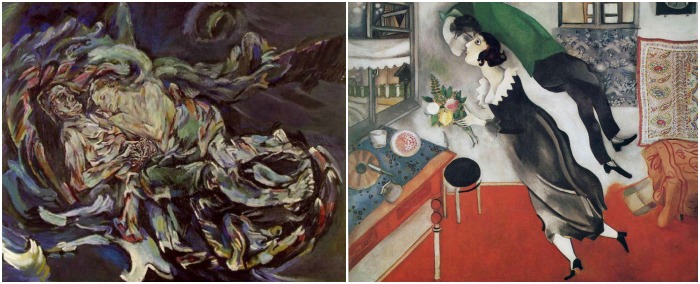
I first discovered this artwork when I was flipping through Varieties of Visual Experience by Edmund Burke Feldman (a book I highly recommend btw). The author compares the depiction of love in this artwork with Chagall’s Birthday. Both of them show love causing the couple to levitate and swirl but Chagall’s depiction is sweet and romantic while Kokoschka’s is torrid and complicated.

Kokoschka and Chagall - Compare and Contrast
(left) Oscar Kokoschka, The Bride of the Wind, 1914 (right) Marc Chagall, Birthday, 1915-23

Ask your students: How does Kokoschka’s depiction of love differ from Chagall’s?

Art Information

This painting highlights the man and his intense feelings towards the woman. You can see he loves her but knows the relationship won’t last. This painting is a self-portrait of the artist with Alma Mahler, the widow of composer Gustav Mahler. He loved her passionately and featured her in much of his art, but when they broke up, his art becomes more dramatic and unstable.

Get the Full Lesson!

This Lesson is in The Curated Connections Library!

Find the full lesson from this post along with hundreds of other art teaching resources and trainings in the Curated Connections Library. Click here for more information about how to join or enter your email below for a free SPARKworks lesson from the membership!

Join the List

Get the Full Lesson!

This Lesson is in The Curated Connections Library!

Find the full lesson from this post along with hundreds of other art teaching resources and trainings in the Curated Connections Library. Click here for more information about how to join or enter your email below for a free SPARKworks lesson from the membership!

Filed Under: Art and Artists
Tagged With: oskar kokoscka


  • Previous Page
  • Page 1
  • Interim pages omitted …
  • Page 20
  • Page 21
  • Page 22
  • Page 23
  • Page 24
  • Interim pages omitted …
  • Page 38
  • Next Page

Primary Sidebar

Hi! I’m Cindy Ingram, the creator of Art Class Curator and The Curated Connections Library

I’m on a mission to revolutionize education with the power of life-changing art connections. Art is not “extra”. Art is essential. We are empowering teachers to bridge the gap between art making and art connection, kindling a passion for art that will transform generations.

More About Me

Free Worksheets!

-Free Bundle of Art Appreciation Worksheets-

In this free bundle of art worksheets, you receive six ready-to-use art worksheets with looking activities designed to work with almost any work of art.

Download

Free Worksheets!

-Free Bundle of Art Appreciation Worksheets-

In this free bundle of art worksheets, you receive six ready-to-use art worksheets with looking activities designed to work with almost any work of art.

Enrollment in Curated Connections Library is currently open. Click here to join. Join our list to get more information and to get a free lesson from the vault! If you are purchasing for a school or school district, head over here for more information.

Check Out What’s New In The Shop

Experience Art: Engaging Art Criticism Discussions and Activities for Teachers and Students of All Ages
Call to Art: An Un-Conference for Art Educators
Curated Connections Library Membership
Perspectives High School Curriculum

More Products

Have You Listened to the Latest Podcast Episode?

Falling for Naudline Pierre’s Evocative Art: A Conversation with Madalyn (Part 2)

More Episodes

Testimonials

I like how this program, unlike other art class resource membership programs, feels authentic. It's like art matters more here, and not fancy flash-in-the-pan trendiness. The goal of Art Class Curator seemed to be helping kids develop a lifelong love and art appreciation versus "Hey, look. I painted this fish."
Erin A.
Your questions are helping me to delve into much deeper learning, and my students are getting better at discussion-and then, making connections in their own work. Art Class Curator is awesome!
Denise W.
Interestingly, my lower performing classes really get engaged in these [lessons] and come away with some profound thoughts!
Melissa G.
I had the most amazing 6th grade class today. They were jumping out of their seats with hands raised just to respond and give input. It was as if I was waving candy in front of them! They saw more and more and the ideas and interpretations unfolded. So cool!!! This is what makes teaching art so wonderful – thank you!!
Caroline G.
I just wanted to thank you for the invaluable resource you have through Art Class Curator. Not only do you have thought provoking activities and discussion prompts, but it saves me so much time in preparing things for myself! I feel like I’ve only scratched the surface with your site.
Maryjane F.

Get Art Inspiration To Your Inbox!

Enter your email address to get regular art inspiration to your inbox
plus a BUNDLE OF 6 FREE WORKSHEETS!
We hate SPAM and promise to keep your email address safe.
Download

Free Worksheets!

*Free Bundle of Art Appreciation Worksheets*

In this free bundle of art worksheets, you receive six ready-to-use art worksheets with looking activities designed to work with almost any work of art.

Copyright © 2026 Ignite Art, LLC DBA Art Class Curator •  All rights reserved  •  Privacy Policy  •  Terms of Service  •  Site Design by Emily White Designs