• Skip to main content
  • Skip to primary sidebar
  • About
    • About Art Class Curator
    • Contact
    • Speaking
    • Media & Press
    • Programs for Schools
  • Blog
  • Podcast
  • Shop
  • Join
  • Member Login

Art Class Curator

Hands-on and Minds-curious Art Learning

  • Art & Artists
  • Art Connection Activities
  • Art Teacher Tips
  • Elements & Principles
  • Downloads & Resources
Home
  • About
    • About Art Class Curator
    • Contact
    • Speaking
    • Media & Press
    • Programs for Schools
  • Blog
    • Art & Artists
    • Elements & Principles
    • Art Connection Activities
    • Art Teacher Tips
    • Downloads & Resources
  • Book
  • Podcast
  • Shop
  • Join
  • Member Login

All Posts from Art Curator for Kids

A Tale of Two Monets: Moving Beyond Art Appreciation to Something Bigger

In this episode, Cindy comes to the realization that exposing students to works of art is not for the end goal of “appreciation.” It is much, much bigger than that.

Where is the passion, the delight, the wonder, the heart-pounding experience with art? Where is the feeling in your heart, that drop in your gut, that makes you a CHANGED PERSON? Let’s keep talking about THAT.
Subscribe in Your Favorite Podcast Listening App

  • Shirin Neshat, Art in Exile, TED Talk
  • Brené Brown, Rising Strong as a Spiritual Practice (affiliate link)
  • Art Class Curator Podcast Ep. 32: 7 Ways to Spark Curiosity
  • Art Class Curator Podcast Ep. 33: Why Art Matters

Hello and welcome to the Art Class Curator Podcast. I am Cindy Ingram, your host and the founder of Art Class Curator and The Curated Connections Library. We’re here to talk about teaching art with purpose and inspiration from the daily delight to creativity, to the messy mishaps that come with being a teacher. Whether you’re driving home from school or cleaning up your classroom for the 15th time today, take a second, take a deep breath, relax those shoulders and let’s get started.

Hello everybody, this is Cindy Ingram and I am back for the Art Class Curator Podcast. Last week I gave you my rant, spiel, dissertation or whatever you call it, on why art matters and why we should be showing art to our students, what it gives them in their life and everything like that. And in that episode, I talked a little bit about why I don’t particularly love the word “art appreciation”, but that’s not really what it is. But that I don’t necessarily know what it is, what to call it, and then I started to think about it.

After I clicked stop and published it, I just kept thinking about it and realize that there’s a lot more that I wanted to say on this topic. And I got to thinking about, when people ask me what I do for work, I have a hard time telling them exactly what I do. You’re supposed to have this sort of elevator pitch, that on an elevator as it’s going up, you should be able to describe what you do to the person that you’re talking to in a concise way so that by the time you get to your stop, they’ve understood what you’re doing. I used to say that I help art teachers more creatively teach art history and art appreciation. Somewhere along the way I started to think, “No, that’s not exactly what it is.” Yes, I do do that. I do help art teachers more creatively teach art history and art appreciation; but to me, that’s not really what it’s about. It is about that personal art connection.

Now, what I have been saying is that I help teachers create powerful connections to art for both themselves and their students. I am happier with that as a description of what I do. Although to other people, they might not really know what that means. But to me, it makes more sense in my brain. There are places for art history and art appreciation, absolutely. But to me, they are cogs in a wheel towards a bigger goal. And that bigger goal is a personal, meaningful, deep connection with the work of art. And that has been my talking point really for the last year or so is thinking about those personal connections and what they mean to me and how we create them, and our students and what we can do to make it easier for our students to connect with works of art.

But I think before we can get to how to do it, we really have to understand what is a personal connection to art, why it’s important and move beyond that. To really illustrate what I’m saying here, I thought I would bring in an example of someone who has had a personal connection to a work of art. Now I’ve shared with you my personal connections to art before, and so I am going to bring it in Madalyn who is going to talk about an experience that she had.

One of my best friends, her name is Madalyn, she also works for Art Class Curator as the content manager. She does a lot of the behind-the-scenes work for Art Class Curator, and we’ve been friends since our kids were little. Several years ago, this was before she started working for Art Class Curator in, I think it was 2016, we took a trip together to Chicago and we went to go see Hamilton when it came out in Chicago. And on our trip, we also visited the Art Institute, and Madalyn had a really powerful experience with a work of art while we were there. I thought since she does work for Art Class Curator, I would let her tell you herself about the experience. I’m going to cut in audio of Madalyn talking about her experience at the Art Institute of Chicago.

Madalyn:
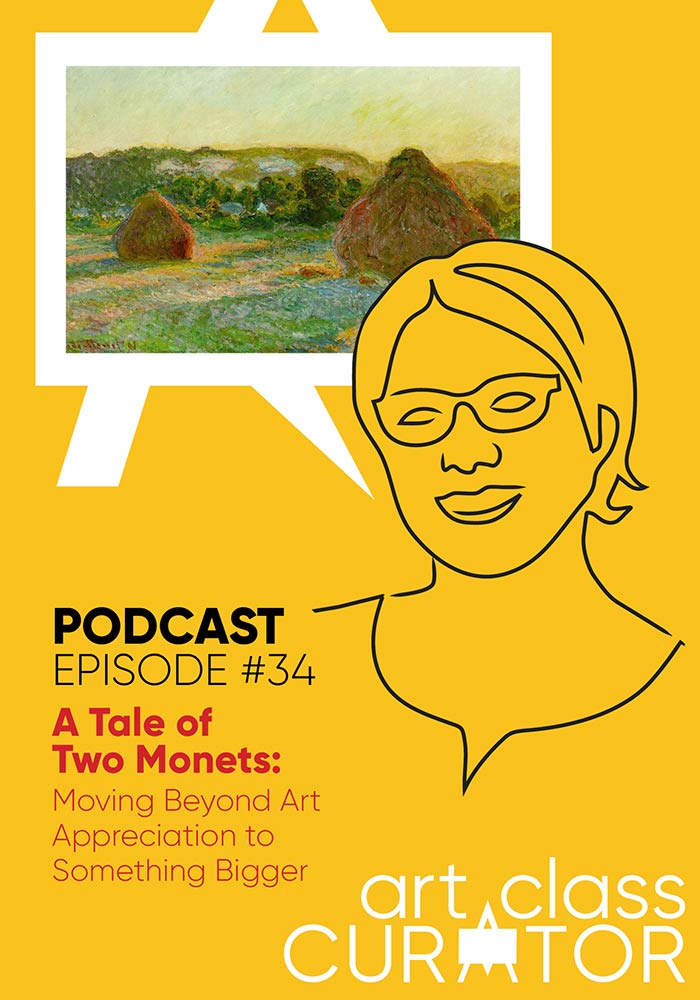
Hello, Art Class Curator Podcast listeners. I’m Madalyn. I’m a longtime friend of Cindy’s and the organizer of all things at Art Class Curator. Cindy asked me to record myself talking about my experience with Monet’s Haystacks. But before I do that, I wanted to tell you a little bit about my own art background, which is to say that I don’t really have one. I didn’t grow up in a family that went to museums. We didn’t do arts or even crafts all the time.

I don’t really have any memory of my art classes until I was in middle school and when I was there I had an amazing art teacher. Her name was Mrs. Hughes. In her class, we only did studio art, but it was the first time that I felt like I could actually make art and not be terrible at it. I’m not a naturally skilled drawer or anything like that, but I do remember drawing my own shoe for her class and it was the first time that I actually felt proud of something that I had made, and that was super exciting.

But I always enjoyed art and I loved visiting museums as an adult and going with my kids, but it really wasn’t until I knew Cindy that I started making art a priority in my life. And it was on a trip with Cindy and some other friends that I first encountered Monet’s Haystacks. Of course everybody knows about Monet, but my biggest memory of Monet before that trip was a poster that my stepsister had hanging in her bedroom. It was one of his Water Lily paintings and had the bridge above it. It had one of those really kind of garish, huge borders and it had his name underneath. And I remember looking at it as a kid and just thinking it was so boring and wondering why she would want that on her wall.

I hadn’t really thought about Monet other than that, but now I was in Chicago and we were inside the art museum from Ferris Bueller. I was kind of goofily excited about that fact, and there was so much incredible art to see. There were these contemporary photographs that were amazing and there were sculptures that were… Oh man, they were so great. There was so much to look at. There was Van Gogh and Degas. It was amazing.

As we went through the museum, we kind of stayed together as a group, but there were three of us and we made our way through the rooms more or less at the same pace. But then we got to the Impressionism exhibit and Cindy and the other friend that we were with moved through it pretty quickly. They weren’t super interested and there was still so much great stuff to see, but I fell behind. I totally lost the group and ended up getting a lot of messages on my phone like, “Where are you?” But I couldn’t leave the room. I couldn’t leave that room. I’m actually tearing up just thinking about it. It’s still visceral and it’s been a few years since that happened.

I was standing in front of these canvases that had stacks of wheat painted on them. I mean, it sounds really boring, but there were tears in my eyes as I stood there, and even now as I think about it. There was just so much beauty. Those flat, boring colors that I remembered were not in Monet’s work at all. There was texture and depth. And even though the subject was, I mean, arguably maybe kind of mundane, he brought so much majesty to it. There were other paintings of his there too. There were rivers and bridges, and I think I remember one with that house.

And I loved them all and I went around the room, but I kept going back to the section that had the haystacks and just standing there not able to pull myself away from looking at all the little bits of color and the strokes and the layers of paint. They were all depicting different seasons and different times of day, so the colors were different. You could tell there were some that were really early morning and then others had those deep, rich colors that can only be sunset. I couldn’t really think of then why I couldn’t pull myself away from them. I was just mesmerized and it was impossible to leave the room until I just absolutely had to.

But I’ve thought about it a lot since then and I think there are a lot of reasons why I was drawn to them. And for one, I love nature. I love taking walks and being outside, but I’m busy at work and I have two kids at home. They’re homeschooled, and there’s just always other stuff to do. Not to mention the fact that I live in Texas and most of the time it’s super hot, and so going outside and being in nature, it’s not my priority. But sitting here thinking about it, I think it should be.

Yeah. Because Cindy, she has this Reflect Connect worksheet and it’s where students think about an artwork and they kind of examine like the symbols and stuff in it, and then the last step is they have to think about what actions the artwork actually inspires them to take in their own life. And if I’m being honest, the action that I feel like I should take is to make sure I’m taking more nature walks because I miss that and I don’t do it enough. Yeah, I’m going to do that in the mornings, so I don’t turn to ash. I’m going to try. I’m going to let art inspire me to do that.

But anyway, the way that Monet captures the beauty of nature, it made me connect with those times when I have made the time for a walk, whether it’s going down my street or it’s going on a walk in the woods with my kids. Honestly just looking at those paintings, I felt like I could walk straight into them. I felt like I could step into them and like walk across the moors of Britain. I don’t even know where it was, but that’s how I imagined it. Like I was going to be a Jane Austen character walking across the moors and it would be just beautiful.

And since that trip, I’ve talked a few times about putting on my Impressionism-colored glasses, instead of a rose-colored glasses. We tend to use rose-colored glasses when we’re talking about being optimistic or overly being too optimistic, but I personally have a tendency to be more negative, at least in my own head. And I think it’s easy to get caught up in little frustrations of life and just not notice the beauty and not be joyful when we could be, but the beauty is everywhere. And I really truly believe that we can choose delight, and art is such a great way to connect to that.

I’ve always said that the sky, especially on a beautiful day when it’s just this clear, brilliant blue and there’s these huge puffy clouds in the sky, it looks like an oil painting and it’s the same way at sunset whenever there’s just that perfect explosion of color. But that’s real, that’s not an artwork. It’s just reality, and that’s the world we get to live in. Our sky actually looks like that. And looking at Monet and looking at the work of other Impressionists, really, it captures that feeling for me so perfectly of being connected to nature and being connected to the world and feeling my best, and really choosing and reveling in the delightful parts of existing.

That’s what my Impressionism-colored glasses are for. It’s just a way to put them on and remind myself that there is beauty in the world all the time. And we can look for it and we can concentrate on it and meditate on it and focus on it. I mean, that’s what Monet did. He painted so many haystacks and he was trying to capture the light because you couldn’t do it on just one canvas. It changed and it was beautiful in its own right every single time. Yeah, that was my experience, my tale of Monet, and I’m excited that I got to share it with you and I am going to hand it back over to Cindy now. Okay. Thank you. Bye.

Cindy:
I just want to thank Madalyn for coming on and sharing her art story. I just beamed ear to ear the whole time I was listening to it. Not only do I just really love hearing about people’s connections to art, almost as much as I enjoy having them myself. It’s really empowering and wonderful for me as an educator to know that… I’m not Madalyn’s teacher, but because of me, she had a powerful art experience and I think that’s amazing.

What’s I love about her story, there’s so much in there that I can pick apart. How she made that personal connection to nature. How it really wasn’t something she necessarily thought of then, but after some reflection on the personal connection, she realized she had that connection and made this sort of proclamation on what she’s going to do differently based on the artwork. Because I think awareness and self-awareness is all well and good and wonderful and those personal connections are powerful, but when we learn from them and take action based on them, that makes it just even more exciting.

But why I wanted her to share her experience is that… She has a really powerful, personal connection with Monet and that personal connection didn’t end at the Art Institute of Chicago in 2016, she’s continued that. She has seen Monet in a couple of other art museums. We went to the Monet exhibit when it came to the Kimball here in the DFW area and it was just as powerful for her. Maybe not just as, but it’s still powerful for her. Like her computer backdrop is the Haystacks. That is something that she now holds dear in her heart.

She has this emotional connection to Monet and I, on the other hand, don’t have an emotional connection to Monet. When I see Impressionist art, I can appreciate it for what it is, for what it did in the history of art, for the massive shift that it was from Realism into Modern Art, for its beauty, for its color, for its liveliness, for all of those things. I went to Monet’s Garden in Giverny on my first Art Class Curator summer trip and enjoyed it. I thought it was amazing, added a new respect to it, seeing how he composed his gardens, but that’s about where it is for me. I can go and I can enjoy it. I even went to the Monet exhibit that came to the Kimbell Art Museum in the fall and mainly because Madalyn wanted to go do it and I went with her. I appreciate it.

And I’m also not completely opposed to the idea that at some point in my future, I will have an emotional connection to Monet or personal connection to Monet. That something in my life could spark something that causes the art to move me in a way that it hasn’t yet. I mean, so I’m saying I have not had a personal connection to Monet, but that could just be not yet.

How can we have two profoundly different experiences, and three, think about everyone else who goes to see Monet and some people don’t even appreciate it for the contextual stuff that I had said. They just feel like, “What is this?” And then there’s someone on the other end too is crying and personally connecting to it and years later has it as the background of her computer. It made me think about a lot of different things, but mainly that appreciation is not the end goal. Yes, I want them to appreciate the artist’s choices, the history, how challenging the media is, all of that stuff. How it changed art, how it changed art history, all of that. But, that is not where art stops.

I did a little bit of a research here on what is our art appreciation because I say it and I’m never happy with it like I told you last time. I found a definition here. This is from the Artyfactory, artyfactory.com, I suppose. Actually, I don’t know. I think it is. And it says, “Art appreciation is the knowledge and understanding of the universal and timeless qualities I identify all great art. The more you appreciate and understand the art of different eras, movements, styles and techniques, the better you can develop, evaluate and improve your own artwork.”

Okay, yes, those are good goals, I think, understanding the universal and timeless qualities that identify all great art. One, the word great art, that’s a whole other conversation about art theories that we can talk about another time. I made this list of things that make up art appreciation or that can lead to art appreciation and that is better understanding; more exposure to the art itself in different types of art; increased knowledge because like we talked about in the Curiosity episode, they need to know more in order to be curious; more experience in front of quality time spent in front of artwork; more engaging interactions with the artwork.

All of those things do lead to our appreciation, but then what next? Is art appreciation the end goal? I was in a program at some point and I honestly cannot remember which program it was, but there were some questions about goals in it, like what are your goals? And then they made you keep answering the question, so what, at the end of everything. Say, all right, I want to make X amount of money, so what? You’re like, so that I can support my family, so what? Why do you want to support your family then? Then you just keep asking yourself, so what, so what, so what, so what, until you get to the very core reason why you want something.

And so I started to think about, okay, so what? Why? Why do I even do this? Why do we study art appreciation? So what, so what, so what? Now, I’m too lazy… Well, I’m not lazy. I just didn’t feel like doing it, to go through so what, so what, so what for this. But it got me thinking that really art appreciation is passive. It’s dispassionate. It’s only one really small part of the overall equation of what makes an engaging, powerful, personal, meaningful, emotional, passionate connection with a work of art. It’s only one small part of it.

Even the word appreciation itself, I looked up that definition and the Google definitions that it pulls up said, “Recognition and enjoyment of the good qualities of someone or something.” When you look at an artwork and have a powerful personal connection, and I think back at all the times I’ve had powerful personal connections, it’s not necessarily about recognizing and enjoying the good qualities of something. It’s about what I talked about last week of everything behind an artwork, the intent, the colors, the form, the media, the context, the subject matter, the themes, the symbolism, where it was made, why it was made, what it was used for.

There’s all of that about an artwork, and then there’s all of that about the person who’s looking at it. What they had for lunch that day. Did they have a fight with their mother the night before? What traumas have they had? What happy moments have they had? What makes up that person is going to interact with what makes up that artwork and create that powerful, positive experience. And it’s not about just appreciating the artwork, it’s about experience it on a deeper, more visceral, personal gut level.

In art appreciation, where is that passion? Where is that delight and that wonder? Where is that heart-pounding experience that you get when you’re in front of a powerful work of art that’s personally meaningful to you? Where is that feeling in your heart and that drop in your gut that makes you a changed person? That’s not in art appreciation.

What we’re doing in Art Class Curator is not art appreciation. We are helping kids appreciate art. We are helping teachers appreciate art. We are introducing, we are exposing, we’re helping you understand. We’re doing all of the things that lead to art appreciation, but we’re not doing it for the end goal of appreciation. We’re doing it for the end goal of making better people, of making people who are passionate and who are connected and who are emotional and who are thoughtful and mindful and all of those things. We are making people who are aesthetically aware, who are self-aware, who are emotionally aware, who are culturally aware, who are in turn going to make the world better.

There’s an artwork that says art makes better people… No, wait, what is the quote? Oh shoot, let me go back and look at it. I had it on something recently. “Art changes people and then people change the world.” To me, when you have personal, powerful connections to art, you’re changing the person at some sort of fundamental level, and that person now has the ability and the empowerment to go forth and change the world. We’re not just teaching the world to appreciate beautiful things. We are teaching the people of the world to take ownership all of it, you know what I mean? After this conversation, it made me think about a lot of things. I have a lot of questions that are unanswered in my head, but that is something I’m going to keep thinking about as I go. And so I’m just going to tell you these questions. I made a list of them.

This conversation raises the following things: We can’t assume that everyone will have a personal connection, so how do we teach them to have it? Can you teach someone to have a personal connection and how? What do we do to make that happen? Also, what are the characteristics of personal connection? How do you quantify that? Can you quantify it and should you even quantify it? What other ways into art that we might be overlooking in terms of personal connection? What environments do we need in order to create more personal connection? What environments in our classroom? How do we strive for personal connection while still doing academic things, teaching them stuff that you’re expected to do as an art teacher and still strive for personal connection? And then, where does emotional literacy fit in? Can students truly have personal connections to art without emotional literacy and without the knowledge of the art as well? We still have some education to do to get them to a personal connection level.

Brené Brown talks about, and I think I talked about it in the Curiosity episode, that humans only have… They did a survey and that most people could only identify three emotions: happy, sad, angry. But to be an emotionally literate person, you need to know 30 emotions. How can you have an emotional, personal connection to art when all you know is happy, sad and angry? And what is our role now as our teachers and educators to provide that for our students, to provide that emotional literacy? Where does that fit in? How do we get our kids to do that?

Those are all the things that are bubbling in my head about this. I’m going to stop saying that I help teachers with art appreciation because it is bigger. I’m going to start calling it art connection. And I hope you think about this too and think about ways to really empower your students to make those personal connections. We’re going to keep talking about it on the podcast. I have at least five more ideas of podcasts episodes based on this one alone. This will not be the last time you hear me talking about this. I can’t wait to hear what you think.

Again, tell me about your own personal connections to art. Send them in. We want to share them on the podcast. We want to really understand what a personal art connection is and that will help us create them in our students. Please send them our way to support@artclasscurator.com or cindy@artclasscurator.com. And so much power in hearing other people’s stories and in sharing your own story, so I’m going to start begging at some point. Please send me your art stories because the world needs them. We need to hear them and it’s personal to you, but it’s universal.

I was watching a talk by Shirin Neshat, who is an artist, who is originally from Iran, and we featured one of her works in the membership this month. In the talk I was watching, she shared that one of her goals is to create art that is both personal and political to her particular situation and the situation of women in Iran and her position has an exile from Iran, but also to create works of art that are universal and that are timeless.

And there is that quote by Carl Rogers in the book On Becoming a Person and it is, “What is most personal is most universal.” Share those experiences with us because we want to hear them, because they are also about us as people. And let’s keep talking about it because this is going to change the world, you guys, these conversations are. Thank you so much for listening. Have a wonderful day. See you later.

Thank you so much for listening to the Art Class Curator Podcast. Help more art teachers find us by reviewing the podcast and recommending it to a friend. Get more inspiration for teaching art with purpose by subscribing to our newsletter, Your Weekly Art Break. Recent topics include the importance of seeing art in-person, famous and should be famous women artists, and 21 days of art from around the world. Subscribe at artclasscurator.com/artbreak to receive six free art appreciation worksheets.

Today’s art quote is from Georgia O’Keeffe and she says, “I’ve been absolutely terrified every moment of my life and I’ve never let it keep me from doing a single thing I wanted to do.” Thanks so much for listening. Have a wonderful week.

Thanks for listening! Have an idea for an episode topic or think you may be a great guest for the show? Click here to send us an email telling us about it.

Subscribe and Review in iTunes

Have you subscribed to the podcast? I don’t want you to miss an episode and we have a lot of good topics and guests coming up! Click here to subscribe on iTunes!

If you are feeling extra kind, I would LOVE it if you left us a review on iTunes too! These reviews help others find the podcast and I truly love reading your feedback. You can click here to review and select “Write a Review” and let me know what you love best about the podcast!
View in iTunes

Filed Under: Podcast


December 8, 2019 6 Comments

What Makes Art Good? A Lesson and Explanation of Art Theories

Art Theories-What Makes Art Good 700x1000

Inside: An explanation of four popular art theories and how each of them defines what makes a work of art good.

Art Theories-What Makes Art Good 700x1000


What makes an artwork good?

When it adheres to design principles?
If it looks true to life?
Should it turn our worldview upside down?
Must it fill us with emotions?

The issue of what makes an artwork good has probably been debated since the first splotch of pigment touched a cave wall.  It is nearly impossible to define what art is, so when we start discussing what makes an artwork impressive or worthy or good, we wade into complicated waters. Ask a group of students whether an individual artwork is good or not and you’re likely to get conflicting answers. Ask them what makes an artwork good or not and you’ll get as many answers as students you question.

Many art theories have emerged to encompass the wide variety of ideas and opinions about what art is and what it should do. The search for one art theory to rule them all may be futile, but there are arguments to be made on all sides, and everyone has a favorite.

Art Theory: Formalism

What Makes Art Good? A Lesson and Explanation of Art Theories
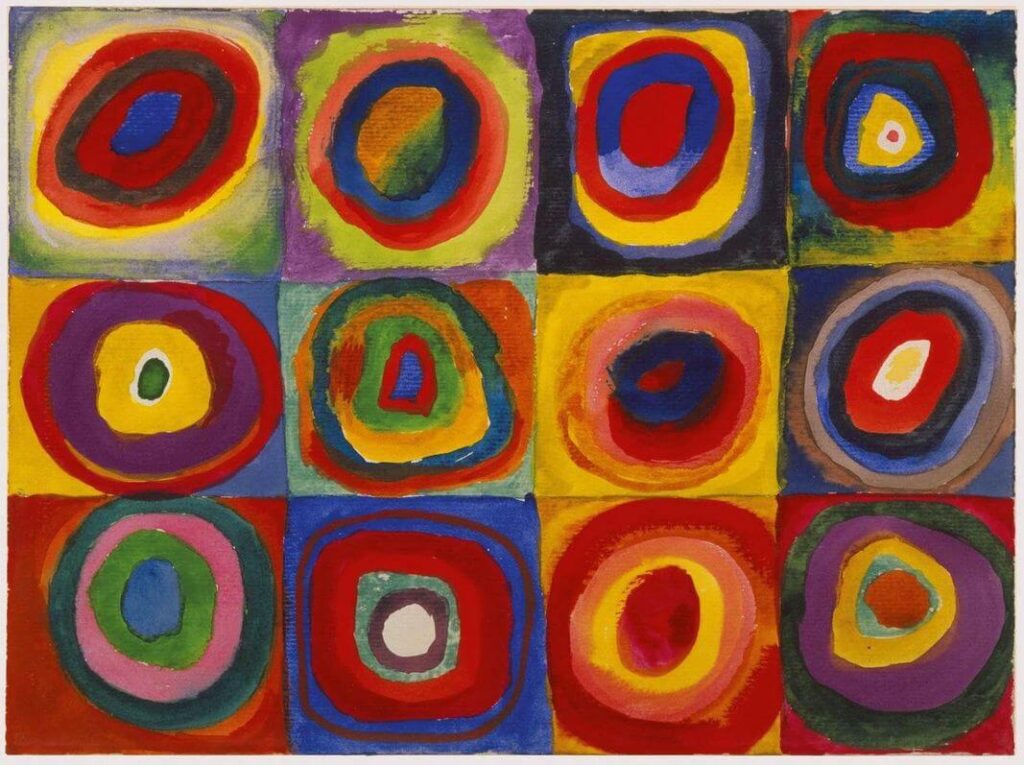
Wassily Kandinsky, Squares with Concentric Circles, 1913


Formalism dictates that art is good when it effectively uses the elements of art and principles of design. A formalist will concentrate solely on how an artwork looks–color, line, shape, and texture. The story being told and any historical or social context behind the artwork has no bearing on whether it is considered successful. The composition is all that matters. While artists have always used the elements and principles of art, formalism really came into being with modern art and the rise of abstract and expressionist works since those pieces put special emphasis on using line, shape, and color to create a pleasing composition.

Art Theory: Imitationalism / Mimetic

What Makes Art Good? A Lesson and Explanation of Art Theories
Johannes Vermeer, The Milkmaid, 1658


The imitationalism or mimetic theory of art claims that artwork is best when it imitates life. We’ve all experienced seeing an artwork from a distance and mistaking it for the real thing, rather than a replica. Those pieces are prized under imitationalism. The most realistic, the better.

In Vermeer’s The Milkmaid, we see the creamy milk pouring from the jug. It’s easy to imagine the splashing sound it makes hitting the bottom of the container. The texture of the baskets and the woman’s clothing look real enough to reach out and touch. The play of light and shadows match what comes through our own windows. We don’t have to make any mental leaps to imagine the scene unfolding right in front of us. Mimetic artworks are instantly recognizable because of their devotion to reality.

Art Theory: Instrumentalism

What Makes Art Good? A Lesson and Explanation of Art Theories
John Heartfield, Have no fear–He’s a Vegetarian, 1936


An instrumentalist is not concerned with composition, only context. Through the lens of instrumentalism, the best artworks are those that convey a message or shape how we see the world. Unlike other art theories, instrumentalism says that art is good when it functions as a tool to influence or change society.

The artwork above no doubt drew a visceral reaction the moment you saw it. Did your eyes flick to the title? Were you trying to figure out what the artist was trying to say? Now imagine that you saw this artwork before World War II. As Hitler rose to power, many saw him as a harmless politician, though some knew otherwise. In this piece, Heartfield was using his art as an instrument, sounding an alarm for anyone who thought Hitler was nothing to fear.

Art Theory: Emotionalism

What Makes Art Good? A Lesson and Explanation of Art Theories
Franz Marc, Fate of the Animals, 1913


The emotionalism theory places emphasis on the expressive qualities of an artwork. The communication between artwork and viewer is crucial. If the art is able to elicit a feeling from the audience, then the artist has created an excellent piece. Emotionalism is unique among art theories because it is not concerned with how an observer is attracted. Varying components of an artwork can captivate different viewers, but it only matters that the artist was able to evoke a mood or idea, regardless of composition, context, or narrative.

Read more about Fate of the Animals on Art Class Curator.

Art Theories Lesson

To teach about art theories in a quick art and aesthetics lesson, I start out with a warm-up discussion question, what makes art an artwork good? I like this question because it gets students thinking more about what goes into the creation of a work of art and that art is more than just making something look pretty.

Then, I divide the students into groups and each group gets one of the above artworks with the following writing prompts:

  • Make a list of questions you might ask yourself about this art.
  • What makes this artwork good?

After they’ve explored their assigned artwork, we discuss their ideas to the class and I tell them about each of the art theories.

Curated Connections Library Members: Access the PowerPoint and Worksheet for this activity at this link. 

What do you think makes an artwork good?

This post was originally published on June 7, 2018.

Get the Full Lesson!

This Lesson is in The Curated Connections Library!

Find the full lesson from this post along with hundreds of other art teaching resources and trainings in the Curated Connections Library. Click here for more information about how to join or enter your email below for a free SPARKworks lesson from the membership!

Join the List

Get the Full Lesson!

This Lesson is in The Curated Connections Library!

Find the full lesson from this post along with hundreds of other art teaching resources and trainings in the Curated Connections Library. Click here for more information about how to join or enter your email below for a free SPARKworks lesson from the membership!

Filed Under: Art Connection Activities
Tagged With: best of art class curator, franz marc, johannes vermeer, john heartfield, wassily kandinsky


Why Art Matters

Why Art Matters

In this episode of the Art Class Curator podcast, Cindy talks about why art matters and what makes art connection so very important for our students and for the world–from creating more connected and empathetic humans, to understanding and connecting with the past, to learning how to slow down and become comfortable with uncertainty.

Meaningful connection with works of art just creates better people. Period.

Why Art Matters

Subscribe in Your Favorite Podcast Listening App

  • My Speech I gave last week at ASKLIVE
  • Deep Space Sparkle Podcast Interview: How One Art Teacher Overcame Debilitating Challenges to Achieve Her Dream: AME 121
  • What do kids learn from looking at art?
  • Judith and Holofernes Paintings: A Compare and Contrast Art Lesson
  • Cultural Art Group Research Project
  • The Two Fridas – Art Discussion Lesson
  • The Ultimate Collections of Artworks to Show your Students
  • Art Class Curator Podcast Ep. 32: 7 Ways to Spark Curiosity
  • Art Class Curator Podcast Ep. 30: Perfection = Failure

Hello and welcome to the Art Class Curator Podcast. I am Cindy Ingram, your host and the founder of Art Class Curator and the Curated Connections Library. We’re here to talk about teaching art with purpose and inspiration, from the daily delights to creativity to the messy mishaps that come with being a teacher. Whether you’re driving home from school or cleaning up your classroom for the 15th time today, take a second, take a deep breath, relax those shoulders and let’s get started.

Hello everybody at Cindy Ingram and I am back for the Art Class Curator Podcast, and I’m going to start today’s episode with a little bit of story of something that happened to me last week, which inspired me to create this episode. Last week… Today is December 3rd. Actually, it was the week before last. I had to go to Austin for a business conference. And what was exciting about this particular business conference is that they asked me to speak on stage about the success of my business and how I started it and that sort of thing. And I was up for a prize, which I did not win, but I got to speak on stage to about 700+ people and told the story of how I started my business, why I started my business and all of that.

I had my speech all prepared. I don’t know that I’ve ever really told the full story on here, but I did tell the full story on the Art Made Easy Podcast with Patty Palmer. I will link to that episode in the show notes if you really want to hear the full story. But in a nutshell, it was about six years ago, I was 370 pounds. I was making $37,000 a year as an online art teacher. I had two small kids, and I was feeling a lot of debt and just feeling pretty stuck. And I always knew that, one, I was good at what I did at teaching, and two, I really wanted to do something great with my life. I wanted to travel, I wanted to do all this stuff, but I was really sort of grounded in terms of my weight, in terms of money, all sorts of things.

And I listened to a podcast episode on… The website used to be called Art of Simple. I don’t know what she calls it now. I know she’s changed it, but I listened to this podcast about a woman who traveled the world with her family. She took all of her kids. She was a blogger, so she worked from wherever she was at, making money from wherever she was at, and that’s how she supported her family on this year-round trip around the world.

And so I listened to that and I was just really blown away by the possibility of that and realized how completely stuck I was in my life. I couldn’t fit into even one airplane seat. If I wanted to travel, I couldn’t. I mean, I could, but it’s extra money, and not to mention the stamina, not to mention the job and the husband’s job and the little kids, all this stuff. I realized, I wanted nothing more than to do that, and then I couldn’t because there was so many things blocking me. And so that is really what inspired me to start Art Class Curator.

I started the website within a month or two of listening to that podcast. I just started writing about art. I originally was going to write for mainly homeschoolers. I figured homeschoolers need to learn more about art, but then I really quickly realized that teachers were the audience that I really want to serve the most because that’s the background that I have. And I started my business, I eventually got to leave the classroom. I lost a lot of weight. I lost almost 140 pounds, and really made a lot of my dreams come true, which is pretty awesome. Anyway, I encourage you to listen to the interview with Patty Palmer if you want to know even more detail about that.

I was about to go up on stage to tell this story about how I just decided one day to do it and I did it, and really it was about taking the action. But before I had to speak on stage, I had an interview with somebody on the team of the company who was throwing the conference, and she was interviewing me about my business and what I do and the story. What I really realized as she was asking the questions was that the art is the story. And I did have the art woven into my story about how I was impacting students and teachers, how it was much bigger than just a job for me, that it was about changing the world, and I had that in there and I had art on the slides.

But as soon as she started asking me questions, those were the questions that she started to really dive into is why I did the art, what is my personal connection to art, what impact has art had on my life that led me to where I’m at today? And I stepped back and I realized, I was like, yes, my story of how I started my business is inspiring. A lot of people don’t take the big moves that they want to take and just sort of keep doing the same old thing, wishing for something better. I decided that wasn’t good enough for me.” But in the end, it’s the art that has driven me since well before any of that. It’s since I was a kid, I was driven by the art, and I’ve always been driven by the art; and to me that was really powerful.

Then I changed my speech after I had that interview with her. It was the morning of the speech that I had that interview and then I realized I was like, “No, it’s about the art.” I needed to add more of the art story into it. I went back and added the art, more of the art. And I started to get, after I gave the speech, a lot of people in the audience kind of stopped me in the halls for the rest of the conference and told me that they really connected with the art story and how it’s really meaningful to them. I talked to someone else who told me that the mission of getting people to connect with art is really near and dear to her because she grew up in a family of artists, but she didn’t consider herself an artist. She just went away from it, but that there are other ways into the art.

It was really a great moment for me to step back and realize what we’re doing in our Art Class Curator is super special. That this is not a normal thing that a lot of people have in their lives. And I learned by giving that speech to a bunch of online business people… They were not educators. Most of them actually are educating in some form or fashion through their businesses, but that they found that to be meaningful and that that awoke in them something that they remembered that they loved or something that they wished they had a part of them or something like that.

And I realize like this message is bigger than than me. It’s bigger than you. It’s a worldwide goal of all ages to connect people with works of art. I started to think about what makes art so special? Why is it that I have spent my entire life finding ways to connect with it and helping others connect with it? What is it about it? I got to thinking, and this kind of been mulling in my head ever since this experience at the at the speech, that no matter what was happening in my life, I always had art with me. And every moment of my life there was some sort of either a creative outlet like writing or drawing, but also just experiencing art.

One of my very early memories of art is actually of seeing the Lion King at the movie theater. I’ve told this story before, you might’ve read it. I think we put it in an email at one point. But when I was a kid, I was obsessed with Disney movies. I grew up in Amarillo, Texas, which is in the Texas panhandle. To give you an idea, the closest big city to us was like a six hour drive away. We didn’t have art museums. We had culture, the traveling theater and different things, but really it’s pretty much like smack dab in the middle of nowhere.

I hadn’t seen real art before other than what was at my school or what we did in art class, so I never got to really experience connecting with works of art as a child. The next best thing to me was Disney movies. I used to want to be a Disney animator until I realized that it was just drawing the same thing over and over again in slightly different positions. And I was like, “Oh, that sounds terrible.” I was like, “That doesn’t capture what I love about these at all.” But Lion King really for me was the big one because I lived a block from a dollar movie. And in the summer it was at the dollar movie, I went to see it 12 times at the movie theater. And every single time, I would cry at Circle of Life. As soon as it opened up on this screen and the sun and then all the animals and the song and the music, everything in me just erupted and I was just in love, total love, with that movie.

And it wasn’t until years later when I started studying art history and learning about art and then even teaching about art that I realized that was an aesthetic experience, that was me emotionally connecting to art at that moment in my life, and that is magic. That experience, when you see something that someone else has made and you connect with it on such a deep level that it moves you to tears or your heart pounds or you’re shocked or something physical happens in your body when you see it, that is such a powerful, powerful, amazing, amazing thing.

I realized that I’ve always sort of had that connection or that ability to connect with art. And to me, connecting with art is a lot of things. It is about connecting to the person who made it; so looking at an artwork, feeling what the other person on the other end felt; seeing a bit of them; seeing parts of them that only can be seen on canvas that they probably don’t even know about themselves; seeing all of their pain and their, their joy and their culture and everything just connects you deeply with another person. I would say a lot of our lives, I’m sure that you guys maybe feel this too, but there is a lot of disconnect in our lives. And so at those moments of my life where I have felt like I couldn’t connect or that there was something personal that kept me from connecting, that I had art as a way to connect.

An example of this is, I have been been binge watching The Crown on Netflix. I think I’m still in season one, maybe in season two. But on the episode I watched the other day, and this really isn’t a spoiler, there was the scene where Winston Churchill was getting his portrait painted and he was looking at the art of the guy who painted his portrait. And then the guy who painted his portrait was looking at artwork from Winston Churchill because Winston Churchill was a painter as well. And there’s a scene where they’re both in their own studios, totally mesmerized by a work of art from the other person. And then it turns out, they were seeing pain and they were seeing the depth, and they were seeing like bits of the person in the painting. And then they had a conversation afterwards where they were talking about these paintings and what they saw in them, and it turns out both of them had had a child that died as a child and that they were both responding to that pain in the painting.

I don’t know if that was a fabricated story. It most likely was, but I really loved that that scene that you can see the depth of a person through the way they apply the paint to the canvas. To me art is all about connection, connection to self, connection to the person who made it connection to the past. Looking at something made a long time ago helps you understand what they were going through a long time ago, helps you understand the path of history and what people have gone through in different times in real ways. You can read about communism or something like that, or you can learn about the Holocaust and you can hear and understand the scope of it, how horrible it was, but then you can stand in front of an artwork created about that topic and understand it in a whole new physical, visceral way.

There is that artwork in Budapest that has the shoes, bronze cast shoes along the side of the river where they knelt Jewish people by the river and shot them and they fell into the water and they had to leave their shoes. That makes those stories from history real in a way that just hearing about it does not. It connects us to others, connects us to the past and it connects us to yourself.

I’ve had multiple experiences in my life where I have looked at a work of art at the right time, at the right moment in my life, and that work of art just zinged me and told me exactly what I needed to know in my life. It taught me things about myself maybe that I didn’t know, and I think that’s an amazing tool that we can teach our students to find a ways to personally connect with work of works of art.

That is one of our big goals really over the last year. We’ve renamed our membership to the Curated Connections Library and have added that connection piece to a lot of areas of our program because connecting with an artwork through some sort of personal connection is so, so valuable. And yes, we can learn the history of an artwork, we can learn about artists. But when we have a personal connection to it, when we see something in that artwork that reminds us of something in our lives and it helps us move through something that we’re going through, that’s where that magic is. And that’s why to me, I don’t teach art history or even art appreciation. I hate saying art appreciation even though it’s like the only word to describe that I know of. But to me, it’s about our connection and it’s getting students to connect.

Art also introduces you to other worldviews and exposes you to the world outside of yourself. I was on the way the other day to… I went to go see a musical Dear Evan Hansen, which was amazing. But I was with a friend and we were driving in the car on the way to the show and talking about which musicals our kids have seen or heard, and which ones we’re willing to share with them and which ones are not quite ready for. But we were just having this general conversation and Dear Evan Hansen has some sensitive topics that my kids are not quite old enough for, but it’s perfect for a high school age student. And then we talked about Rent and when you could show your kids Rent.

And I’ve already introduced my kids to Hamilton because it’s just bad words, that’s fine. But the other stuff, there’s a lot more to to discuss with a child. And we started talking about how important it is though to expose our kids to stuff like this and to show them art from other countries, art from other types of people that they don’t sort of see in their normal everyday life; so they see that the world is not just there small existence in their suburb or whatever, that there’s a much bigger scope too what is involved in our world.

One of the examples that my friend had given was that she has been showing her daughter, they’ve been watching together Queer Eye For the Straight Guy on Netflix because she doesn’t have any gay people in her family. There’s not a lot in this community we live in that she wanted to make sure her daughter knew that there are other ways of living that are just as good and the same as our way of living in that.

It’s really important to, to teach our kids that and expose them to as many different things as we can so that they are sort of educated citizens of the world, that they are knowledgeable and empathetic and respectful and all of those things. And art can be a way to have those conversations, when those conversations are so hard that we can use art as a tool to help us connect.

One of my favorite memories as a teacher was when I was teaching community college. That was my first teaching job outside of teaching in the art museum. And what I would have my students do every semester was… Because I was trying to fit in way too much stuff in a college art appreciation class, but I wanted to make sure that non-Western cultures who were represented in my classroom, so I would have a unit where students would be in groups. They would be assigned a culture from around the world and they got to choose the time period within the culture. Actually, they got to choose the culture too. I just made sure that everyone was covered and they had to work as a group to research about their art. They had to present it. They had to lead us in an activity or discussion about the artwork and stuff like that.

I always loved that, one, because doing those group presentations was pretty easy for me. I got to sit back and watch, but they really had an experience of learning about something new and talking about it. And for some of these students, it was a very new thing for them. I taught community college, I think it was like 2007 until 2011, I think, about, and so it was right at the time of the Iraq war when I was in the community college classroom. We had a student in one of my classes who is Muslim and his group did an Islamic art presentation.

And I remember it was a Saturday class. It was a three-hour long class and so we had a break in the middle and they were right before the break. And they did the presentation, and then I always say, “Oh, does anybody have any questions for the group?” And kids in the classroom started asking the student questions about his religion and about his culture, and about what he believes and what he doesn’t believe, and what he thinks of everything that’s going on, and the stigma that Muslims face in this world. I’m getting chills just thinking about it because it was just a moment of community and understanding and education. And there was a student in there who at the end of that class was changed because he had that conversation, and art gives us that opportunity to let those conversations happen.

And I talked about that a few episodes ago and the Perfection Equals Failure episode. But that, yes, those conversations can be really hard and you get so worried about messing things up, but they can change lives. Really important. Understanding other worldviews, feeling heard and represented, learning how to connect emotionally with other people and with yourself, all of that happens when we connect with a work of art. All of that is about that connection, but there are so many other ways that art is valuable in our students’ lives.

Another one is focus. I’ve done a few reader surveys over the years with Art Class Curator and one of the common themes that come up is, students don’t want to look away from their phones for five seconds because they can’t be an engaged. All they want to do is be on their phones. They have really short attention spans and this and that. And when you put an artwork in front of a group of students and you spend 30 minutes to an hour talking about one artwork, that teaches the students that, “Hey, you guys need to slow down. Focus, slow down.” It doesn’t have to be boom, boom, boom. Going from one thing to another that you can facilitate a lesson where you could slow down and really explore the content.

And I always say when teaching art appreciation, art history that it’s about the quality of the learning experience rather than the quantity. You could have a lesson where you go through and teach all of Renaissance art and you show them artwork after artwork, after artwork, after artwork, after artwork. Click, click, click through all the slides, 60 slides in a lesson to where you’re only saying a slide every minute. Or you can choose five representative artworks from the Renaissance and really dive into those. Really spend time looking at them and analyzing them and having the students find those key points rather than you telling them. Sitting and focusing, it’s going to give our students way more then if we were to just hit them with fact after fact, after fact, after fact, activity after activity, after activity.

Another thing that art gives us is a comfortableness. That’s not a word, comfortableness. Is a comfortability? Actually, I have no idea what word I’m looking for. Is a comfort? Maybe just comfort. A comfort in dealing with uncertainty. We are not used to being uncertain. We have phones in our pockets that have the answer to every question, every question you want to ask, it’s in there; and that is amazing.

I talked about in that last episode, the Curiosity episode, that that’s amazing because the more we know, the more we can be curious about and so that sort of is a never ending, feeding cycle of wonder. We can just keep being curious. However, think about a time when you really wanted to know the answer to something. You’re in a conversation with someone, something comes up, neither of you can remember the answer, but you don’t want to be rude and get out your phone because you’re having a lovely conversation. But then both of you are sitting there dying inside because you have to know the answer to this random thing that doesn’t matter.

That uncertainty is really anxiety producing because we like to know the answer. We’d like to close the loop. But art, there is no right answer. When you’re teaching about a work of art, once it leaves the artist’s hands, it has thousands of different meanings. It can mean one thing to one person and mean something completely different to someone else. To the artist, it means something else; to the art historian, definitely something else. And even different days, one day I could look at a painting and have a certain reaction to it. I could come back the next year, have a totally different reaction because things have happened in my life that have made me a different person.

When an artwork and a person meet, you’ve got the entire history of the person. You’ve got their personality, their emotions, their traumas, their stories, their family, their everything that’s happened in their life. When the artwork is in front of the person, you’ve got the context, you’ve got the symbolism, you’ve got the colors and the form, you’ve got the context… I already said context, but you have all of the things that make up that artwork. And when those two things meet, there is no one way to do it because that combination will never ever be the same. Even if I go to look at one artwork today and then go back tomorrow, chances are it will be a completely different experience.

We have to learn to be okay with that. Okay that if our students ask us what does this mean in an artwork that we say, “I don’t know, what do you think?” And not rush to find the answer because there is no “the answer”. And the students, giving them that opportunity to not know the answer, but to be able to come up with their own answers, that doesn’t happen. That does not happen, so we can provide that for our students and it’s so amazingly powerful.

Dealing with the uncertainty, focus, critical-thinking skills, we could pose questions in front of artworks that get the kids to think about things in their lives, in history, in anything in a completely different way. It can have them chat. You can ask a question that would just completely challenge all assumptions they have about the world, all assumptions they have about what art is, what an artist is or isn’t. There’s so much that can happen in front of a work of art. Coming up with stories and symbols and meanings, and that all comes from within the student. That doesn’t come from you. That doesn’t come from the book. It doesn’t come from anything other than that interaction between the artwork and the student.

My token example for critical thinking in front of an artwork is, I love to have students compare Artemisia Gentileschi’s painting of Judith Slaying Holofernes with Caravaggio’s. We go through the whole conversation. This one has more diagonal lines. This one has more straight lines. This one’s more bloody. This one’s not that. The women are different, their positions are different, their expressions are different, all the differences. What they have in common as well. But then at the end you say, “Hey, okay, which one of these was painted by a man and which one of these was painted by a woman?” And so they look at it, they pick their answer. You have them raised their hand and vote. It’s 50/50 split most of the time, where half a right and half are wrong. Then you ask them for their reasoning.

In Caravaggio’s, the woman is really sort of dainty. I’ll put a link in the description show notes about this artwork so that you can… I have a blog post about this activity that you can check out. It has a PowerPoint with the artworks on it as well that you can download. But she’s kind of dainty and she’s kind of pushed back. I’m doing the motions as if you can see me. And so they’ll say, “Well, a woman is more dainty and more hesitant, so I think a woman would have painted that.” And then someone else is like, “No, the woman is way more powerful in the Gentileschi painting. She’s really buff and she’s really in it and she’s passionate, so it’s definitely a woman.”

The reasons are split every time. And then the students can really kind of see what their biases are about gender and what that means, and a really kind of eye opening and fun exercise. And also that one works really well for your observations. If you ever want a really good observation lesson, that one is a great one if you teach high school, especially. Elementary might be a little bit bloody so just watch out for that.

We’ve talked about the personal connection, the connection to past. We’ve talked about focus. We’ve talked about dealing with uncertainty and critical thinking. Another thing that it helps with students is to understand the images. Think about the existence of your student and how many images they see on a day to day basis. It’s staggering, ads on the games on their phones, Instagram and social media advertising, TV and stuff too. But just everywhere they look, picture after picture, after picture, and they take so many pictures too.

And looking at art and interpreting it, seeing what artists do to create meaning and message and manipulate your emotions. Those are things that you can help your student understand is that images are used to manipulate your emotions and advertisements and all of that. And so more time in front of works of art means more visual literacy, more understanding of the role images play, and how images impact you and how they impact you in a negative way and in a positive way, get you to do things you wouldn’t normally do, stuff like that.

Okay, I’ve got three more things about why art matters. This is a long list I have in front of me here, and that is art experiences, looking at interpreting, engaging with art is going to have crossovers into other subjects and into their future. Not just, “I don’t care about the math grades,” however, I mean I do, I guess. I don’t know. Looking at art and talking about it is going to help you with communication, with collaboration, with connection and empathy. And all of these things are going to make people better people, make your students better people.

They’re going to leave school having a better understanding of what it means to be good person. How to talk to people, how to communicate, how to look for details, those are all skills they’re going to use day to day in their jobs, more than anything that they’re going to learn in other classes. I mean, I’m not saying the art is the best subject, but art is the best subject. We help create better people, more productive people, more educated people, more empathetic people, more curious people, more wondrous people. We do that by showing them art.

If you have any hesitation at all on should you do this, how should you do this, I would just say, do it. Get artworks, put them in front of your students, talk about them. We have a lot of resources that are at artclasscreator.com to help you do that. Visit the show notes at artclasscurator.com/33 and I will link to some of the things I talked about today, but also some of my favorite activities to start with. If this is something you’re kind of new at, I have some of my favorites that I would say The Two Fridas is one I always like to start with, but we have a lot of lessons on the site that are ready to go.

I think I got all my points on why art matters, although I do think I skipped curiosity and wonder. Yes, I did. I could edit this back in, but I’m not going to. I’m just going to talk about it now that art makes us more curious, makes us more delighted at the world, more connected to the world and more. joyful about the human experience.

Go back out there, keep making those better people through your lessons, and I would like to hear about it. Please send me an email or leave a comment on this post or on Instagram and let me know what art does for you. And if you’ve listened to past episodes of this podcast, I had guests and I would ask them what artwork changed their life and they shared their stories. I really want more people like you listening right now to share your art story so that we can add those onto these podcast episodes where it’s just me. Because I think hearing other people’s connections to art is just as moving as having one yourself sometimes just hearing about that. Please, you can send me a voice message, just record it on your voice memos app on your phone and send it to Cindy at artclasscurator.com and you might end up on podcast. Thank you very much for listening. I will be back next week with another topic. Thanks so much. Bye.

Thank you so much for listening to the Art Class Curator Podcast. Help more art teachers find us by reviewing the podcast and recommending it to a friend. Get more inspiration for teaching art with purpose by subscribing to our newsletter, your Weekly Art Break. Recent topics include the importance of seeing art in-person, famous and should be famous women artists, and 21 days of art from around the world. Subscribe at artclasscurator.com/artbreak to receive six free art appreciation worksheets.

This week’s art quote is from Zelda Fitzgerald and she says, “Nobody has ever measured, not even poets, how much the heart can hold.” Thanks so much for listening. Have a wonderful week.

Thanks for listening! Have an idea for an episode topic or think you may be a great guest for the show? Click here to send us an email telling us about it.

Subscribe and Review in iTunes

Have you subscribed to the podcast? I don’t want you to miss an episode and we have a lot of good topics and guests coming up! Click here to subscribe on iTunes!

If you are feeling extra kind, I would LOVE it if you left us a review on iTunes too! These reviews help others find the podcast and I truly love reading your feedback. You can click here to review and select “Write a Review” and let me know what you love best about the podcast!
View in iTunes

Filed Under: Podcast


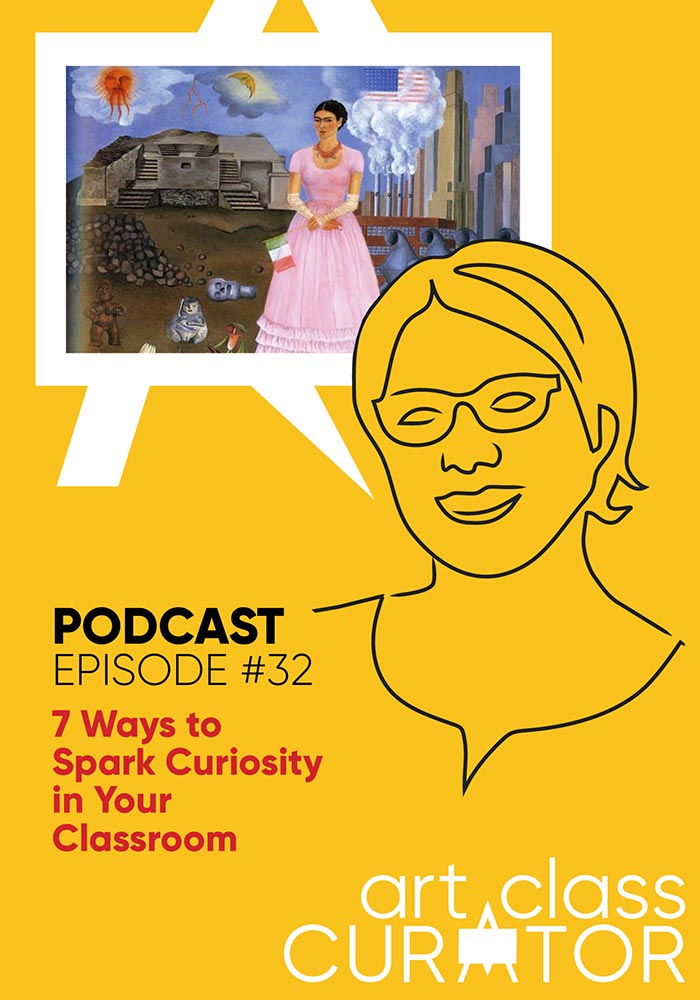
7 Ways to Spark Curiosity in your Classroom

In this episode, Cindy discusses how to engage students’ natural born curiosity as well as how to spark curiosity through modeling, exciting artworks, and more.

Subscribe in Your Favorite Podcast Listening App

  • Brené Brown, Rising Strong as a Spiritual Practice (affiliate link)

Hello and welcome to the Art Class Curator Podcast. I am Cindy Ingram, your host, and the founder of Art Class Curator and The Curated Connections Library. We’re here to talk about teaching art with purpose and inspiration, from the daily delights of creativity to the messy mishaps that come with being a teacher. Whether you’re driving home from school or cleaning up your classroom for the 15th time today, take a second, take a deep breath, relax those shoulders and let’s get started.

Hello everybody, this is Cindy Ingram, and welcome back to the Art Class Curator podcast. I have recently rebooted the podcast and we have gotten some awesome feedback about the new format, and especially that first episode of Perfection Equals Failure.

So I’m glad that hit a note, or hit a chord with some of you. That really helped get you out of your head a little bit and stop putting so much pressure on yourself. So today, I had to practice what I preach, because my microphone stopped working. And so I was like, “Well, I have this other headset. It’s not as good. It picks up my breathing. It’s going to pick up background noise.” It was like, “Oh.”

And so instead of not doing it because I didn’t have my good mic working, I am just going to record it on this device, and listen to my own advice there. So what I wanted to talk about today is something that came to my mind when I was listening to a book on … I caught myself saying, my husband always makes fun of me for calling them books on tape, because they’re not called books on tape anymore. They’re audio books.

But I’m a child of the eighties and nineties. They’re books on tape. So anyway, I was listening to an audio book, Brené Brown’s … What was it called? Rising Strong as a Spiritual Practice. So I actually haven’t read Rising Strong yet, but I was reading Rising Strong as a Spiritual Practice, and it was basically not really a book. It was a recording of a speech she did in Denver, and it was three or four hours.

So it was a longer thing, but it was really quite good. Anything she does is good, of course. But one of the things that she was talking about was curiosity, and she was specifically talking about curiosity around emotions, and how there are 30 different emotions that humans have, but that most people, they did some studies, that most people are only aware of three of their emotions.

But really, to be an emotionally literate person, you need actually 30. And what she said in relationship to this was that, I don’t know the exact quote, because I already returned the book back to the library, but it was you can’t be curious without knowledge, without information, without knowing enough.

So it’s like we can’t be curious about our emotions if the only emotions we know of are sad, happy and mad. That we need to be knowledgeable in the full scope of what emotions are available before we are allowed to really be curious about it. And that got me thinking, sort of, about our students and about education.

And then just right after that happened, I was talking with my husband, and one of the things that we really enjoy doing is marveling about things. Sort of one of the things I enjoy most in life is just looking at something and trying to figure out how it works. Like watching the Olympics. I marvel about the project management, how they make that whole event happen, how the TV stuff happens, how the scheduling works, how they get everybody there, and where do they stay?

And I was like, stuff like that. And even science. I’ll just be looking at my hand and be like, “God, that’s amazing. My hand doesn’t have any muscles in it. So it’s like, how is my hand able to do this?” And then I think about, well, it’s really my brain telling my hand to do. So anyway, I marvel about all sorts of things.

When I travel, I marvel. I just, I’m always marveling. So anyway, my husband likes to marvel as well, and he was saying the other day, he was like, “You know, it’s really amazing that we breathe in oxygen, something so reactive, and that we just breathe it in.” And I was like, I had no idea what he was talking about. And I was like, “I don’t, I can’t Marvel about that.” I was like, “I really don’t know enough about oxygen to be able to marvel about that.”

And then all of a sudden, it reminded me of what Brené Brown said. It’s like you have to have some sort of base foundational knowledge to be able to be curious. So I couldn’t get curious enough about how oxygen, that’s still, I still don’t know. He didn’t understand that, how I didn’t know. But I wasn’t curious about it because I just had no frame of reference for what oxygen is.

My husband’s a science nerd, loves physics and space and stuff like that. So it made complete sense to him. But to me, I was just like, “I don’t get it.” But that’s what I realize, is that marveling is amazing, but I wouldn’t be able to do it if I didn’t have knowledge about whatever I’m marveling about. Like my hand, the fact that it has no muscles in it, and that your hand is completely run by the muscles in your forearm, and then your muscles is run by your brain.

If I didn’t know that information, I wouldn’t be able to marvel at it. So I think that it really made me think about teaching, and it made me think about providing things, and teaching vocabulary, like the elements of principles and like the basics of art history, that if we don’t teach our students that, then they’re not going to be curious about the art that they’re seeing.

If we don’t teach them how to be curious, and then teaching the information they need in order to be curious, that they’re not going to become curious. So to me, curiosity and wonder about the world is just one of the greatest things there is. I live my life enjoying being curious about everything.

And so, another thing that kind of fits with this, though, is that one of the greatest problems, I feel, that we have as a culture with this new technology of cell phones in our hands and the smartphones, is that we have all the answers. We have so many answers. I can get an answer for anything that I want, and it’s amazing, because I can be curious about something, immediately look it up, and find the answer.

But that, in turn, has made us really uncomfortable with uncertainty, uncomfortable with not knowing the answer. So I think that it’s sort of this weird balance that we have to strike. But now that I know, and that Brené Brown has brought up this, you need information to be curious, it makes me not as worried about that. Because I can be curious about something. I can Google it, and I can get an answer. But then that is only going to feed my curiosity.

It’s not going to kill my curiosity. It’s going to open me up for more things to be curious about. So if I look up, if I were to look up something about how bodies use oxygen, I would have that basis of information. So then I would know, so then I could be curious about more, and then it would lead to more and more questions.

So it made me feel a little bit better about our culture’s sort of inability to deal with uncertainty. I do feel like, though, it is … Curiosity is an uncertain place. So yeah, I think you’re uncertain, it leads to some certainty, but then that leads to even more uncertainty. So I was trying to find the quote, the Brené Brown quote from that book I read, or listened to, and I didn’t find the quote that she was talking about, but I did find this other one from the book Rising Strong.

And it says, “Choosing to be curious is choosing to be vulnerable, because it requires us to surrender to uncertainty,” which I think is really cool. And I think that I love that. So it got me thinking, too, about how else we can foster curiosity in our students and in our classrooms. And it’s interesting, it made me think, too, about that phrase, curiosity killed the cat. In some ways, we, as a culture, I think, learn to stuff down curiosity.

You’re asking too many questions, this and that, and that it’s actually a really amazing thing to be curious, because that’s where problems are solved. That’s where things like smartphones were invented, because someone had the inkling be curious about something. Like, what if we could do this, or that?

So I made a list of some things that I thought of, of ways to foster … Not creativity, curiosity in our students. And the number one thing, not the number one thing, I think they’re all equal, or I didn’t rank them in any way, but the first thing I thought of is this lesson from Brené Brown, which is to teach them things.

So teach them the vocabulary to use when looking at art. Teach them how artists create meaning. Teach them a little bit about art history that makes them want to know more. And I think also giving them the vocabulary will allow them to more deeply understand and then have the ability to be curious about the art.

Related to teaching them things, I also think we only want to give a little bit of information at a time, so we can spark their interest. So, for an example, if you’re looking at Frida Kahlo’s Two Fridas, and the student notice, or just looking at really any Frida painting, but the student might notice that she looks like she’s in pain.

And you say, “Well, you know, actually, Frida was in an accident when she was younger.” And then you can ask, “Well, how do you think that shows in her art?” So that student’s learning that little bit about her being in an accident makes them curious to know more, or makes them curious about how she might’ve felt, makes them look for that in the artwork, and then connects to it in a more deeper way.

So giving little tidbits of information, but not all of the information, will allow students to sort of try to fill in the gaps. Our brains don’t like uncertainty. They don’t like missing pieces. So we’re always going to be trying to fill in the gaps with things. That reminds me of something. I was having a conversation with someone yesterday.

We were talking about my experiences at this coworking space that I recently went to. And at the coworking space, there was a woman who was making sales calls. And it was making me a little bit anxious. I thought it was because I was listening to sales calls, and I find sales calls to be super uncomfortable. And the idea of receiving sales calls or giving sales calls like that does not sound fun to me.

So I think that was part of it. But then I was talking about that with someone at a meeting I was at last week, and they said that they’ve actually done research that says that people listening to one half of someone’s phone conversation is actually really stressful, because you’re not hearing the other side of the conversation.

And so your brain has to work really hard to try to figure out the other half of the conversation. Because we don’t like that sort of open loop like that. Our brain is constantly trying to fill it in. And even think about blinking. Our brain can handle the complete visual, taking off your visual input for just a second all the time, because of that blinking, and that if you were to read a sentence and leave out a word in the sentence, or something like that, our brains would be able to fill that in.

Because our brains are just coded that way. We’re putting the world together. We are piecing it together in all sorts of different ways. So we’re looking for the answers. So I think giving them little puzzles to solve, little bits of information, will allow that brain activity to work.

I think another way to spark curiosity is twofold in that it’s related to you. So it’s modeling curiosity, and then also, your attitude towards the learning activity. So if you come in, and I say this all the time in my lessons on how to teach art, how to lead art discussions, stuff like that, that your attitude coming in and towards the topic makes a big difference in the learning of the student.

So if you come in excited about the topic, you come in modeling curiosity yourself, the student is going to be more interested in what you’re teaching about. One example of this is I went to the University of Texas at Austin for college. I got my bachelor’s in art history. So I have two art history professors. Well, I had many, but there are two that I’m thinking of.

One of them made me extremely excited about the topic that he was teaching. Professor [Waldmann 00:13:51] at UT Austin is still there. I haven’t seen him since I was in college, so it was probably, I don’t know, gosh, that’ll be 20 years since I’ve seen him, but he was so enthusiastic about his topic. He would get up on the table and wave his arms around, and he was just so passionate about what he was teaching.

And it was Italian Renaissance, was his specialty. And so I got really excited about the Italian Renaissance. I found it to be fascinating because of his teaching style. He could make it really exciting. Now, there was another teacher who was teaching about ancient Rome, and the class, I actually dropped the class, I think within a week or two, before the drop deadline, or whatever, because there was not that excitement there.

He was walking through, showing us videos of him walking through Pompeii, which honestly, at the time, this was pre-YouTube. I don’t know when YouTube started, but it was early YouTube, at least. We didn’t have the internet like we have it now. So seeing videos of it, I think, looking back, probably was kind of cool, but it was just him talking on the video, and there was not the excitement. It was just disconnected for me.

And so immediately, I was like, “I don’t want to have to deal with this this whole semester. I’m going to take something more exciting.” So our attitude coming into a lesson plays a big role in whether our students find it as interesting as we do. When you’re teaching something that you find boring, it is very likely that the students are also going to find it boring.

So when you’re coming up with your lessons, one, you want to pick things that are interesting, but also, you want to find what it is that there is to be curious about in that topic, and then interject that into your lesson. So modeling curiosity is really important. We aren’t born knowing everything, but we are born curious. That’s how we learn, if you think about it.

As a baby, they’re looking at the world and they’re trying to figure out what the heck is going on. And they’re using that curiosity to learn, and they’re using that curiosity to their advantage.

And then you want to create novelty. So you have, when it comes to teaching art appreciation and connecting your students with art, you have the best topic. You have unlimited number of artworks. We could talk about a new artwork every day, the rest of our lives, and never run out of content. I need to do this. I’d be interested in doing the stats on that. Every minute, probably at least every hour the rest of my life, I would never run out of content.

So you have the world of art at your fingertips. So it’s really important to pick artworks that are really going to grab the students, because that novelty, that interest, that intrigue is going to make them more curious. So I teach about in the art appreciation masterclass, which is in the Curated Connections Library, I teach about the four C’s of picking an artwork.

You want something that’s captivating, that instantly makes them curious. So they immediately are like, “What’s going on here? This is interesting.” There’s this different, their brain just starts to go. You want something, then, that is complex, and that is … What’s the third one? Communicative, to tell stories.

But that captivating one, and then also, the fourth C is connected. That there is a way in to some sort of personal connection. So that is also going to stimulate curiosity, as well, when it’s something that they can relate to. And then also, you want to be delighted when your students are curious.

So if your students ask a really interesting question, or they make an observation that sparks curiosity in you, or in the rest of the class, delight in that. Notice that. Acknowledge that. I wouldn’t say reward that, but they’re getting that reward through your delight and through just the general vibe that it creates in the class. That is a reward for the student.

So make sure that you tell the students that, when they’ve really sparked your curiosity. Not only in art discussions, but also in their art making, and the other stuff that you’re doing in your classroom, that if you’re noticing that a particular student is extra curious, reward that. Acknowledge that.

And then we also want to teach students to ask questions. So we can put artworks up on the screen, and we can ask our open-ended questions, and we can have them make their observations. But I think another way in to exploring art is to teach students to ask their own questions. Because later on in their lives, when they’re confronted with a work of art, they’re going to know the types of things to look for.

So they’re going to have the knowledge base of what to look for, and then they can ask ourselves questions like, what was this artist thinking? Why did this artist do that? And then asking those questions is going to help them be more curious about the world. So in a nutshell, curiosity and wonder are amazing ways to be human in this world.

They’re amazing ways to get meaning from the world, to explore the world, and to add sort of an excitement and an energy into the world. And by showing students works of art, you’re helping fuel that curiosity that gets kind of beaten out of them in some of the way our education system is run. Because curiosity did not kill the cat. Curiosity kept the cat alive more than it killed the cat.

Curiosity is one of the best things about humanity. And even, I would say that there probably has been signs of curiosity in animals too. But anyway, that’s a whole other research, and now I’m curious about that. Want to do a little research, because I have enough information about what my dog’s ears do when he hears a noise that shows me that he is curious, but that gives me enough information to do some more research.

So that is my podcast episode today. Think about ways that you can make your students more curious, and that you, yourself, can become more curious. Let us know in the comments of this post at artclasscurator.com/32. What are some of your favorite ways to explore curiosity in your classroom? Thank you so much for listening. Have a great day.

Thank you so much for listening to the Art Class Curator Podcast. Help more art teachers find us by reviewing the podcast and recommending it to a friend. Get more inspiration for teaching art with purpose by subscribing to our newsletter, Your Weekly Art Break.

Recent topics include the importance of seeing art in person, famous and should be famous women artists, and 21 days of art from around the world. Subscribe at artclasscurator.com/artbreak to receive six free art appreciation worksheets.

Today’s art quote is from Socrates, and he says, “The only thing I know is that I know nothing.” Thanks so much for listening. Have a wonderful week.

Thanks for listening! Have an idea for an episode topic or think you may be a great guest for the show? Click here to send us an email telling us about it.

Subscribe and Review in iTunes

Have you subscribed to the podcast? I don’t want you to miss an episode and we have a lot of good topics and guests coming up! Click here to subscribe on iTunes!

If you are feeling extra kind, I would LOVE it if you left us a review on iTunes too! These reviews help others find the podcast and I truly love reading your feedback. You can click here to review and select “Write a Review” and let me know what you love best about the podcast!
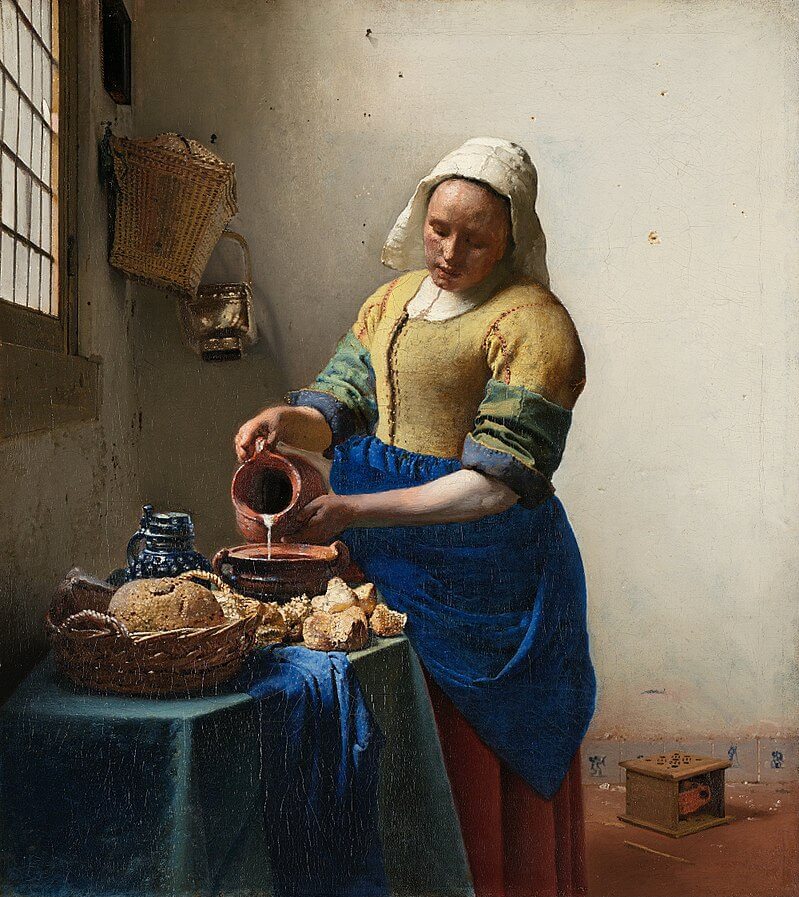
View in iTunes

Filed Under: Podcast


November 19, 2019 Leave a Comment

The 1 Thing You Need to Avoid Teacher Burnout

teacher burnout

Inside: Teacher burnout comes for us all, but knowing this one simple thing can change everything.

teacher burnout

Have you ever seen this chart about the first year of teaching? Maybe in a professional development workshop or at a conference…

(Source: Moir Model)

Studies have shown that 35% of teachers leave the profession during the first year. By the end of the fifth year, 50% of teachers have left the field.

There is no doubt that teaching is one of the most challenging professions in the world, and being an art teacher comes with its own unique challenges—hundreds of students instead of a few classes worth, less curricular and financial support, being one of the only creative outlets for students, and more.

When we’re in survival mode less than two months into a new career, is it any wonder so few teachers make it past five years?

We deserve better. We deserve to thrive. That’s why I’m sharing the thing that will save you from teacher burnout.

teacher overwhelm
Artwork: Gustave Courbet, Self-Portrait as the Desperate Man, 1845

Digging Deep to Avoid Teacher Burnout

When was the last time you really thought about why you chose to become an art teacher?

In my time as an art educator, I’ve come to realize just how important it is to stay in touch with your teaching why.

At first, defining your teaching why may seem like a simple thing, but it’s a big deal. When we get real about why we do what we do and why it matters, our whole perspective shifts. When we prioritize what matters to us, we become better teachers for our students and our lives are more balanced too.

Knowing your teaching why gives meaning and purpose to each day, and it makes the million and one decisions that come your way a lot easier to make. That’s how you stop teacher burnout in its tracks. Think about it.

What are the things that stress you out?

Is it not having enough classroom supplies? ✂️
Or the kid who makes a crappy joke when there’s nudity in an artwork? 😖
Is it being asked to paint 15 posters every time there’s a school event? 🎨
Maybe it’s the admin who thinks your class isn’t important? 😩
Or that committee you’re on that you never wanted to join? ✋

teacher overwhlem

Your Teaching Why

Knowing your teaching why can improve a lot of the stress from school. Because when you know your intentions and priorities and respect them, the actions you need to take to make your teaching life better will be clear and actionable. So…

Why do you teach art?

An answer may occur to you immediately, but I encourage you to really go deep and think about why you do what you do and the impact you want to have on your community.

Whether you need to advocate for more resources for your classroom, find a new way to address the class clown, say no (and mean it) when you’re asked to make all the posters, let go of others’ misguided beliefs, or drop the commitments that don’t fit your why, you’ll find the freedom and teaching joy you deserve when you align your identity as an educator with your day-to-day actions.

You cannot do all the things, but you can do all the things that matter.

Your teaching why is powerful because it gives you clarity about what matters to you. But it’s useless if you ignore it or don’t set boundaries based on it. Be true to yourself and your values. That’s how you avoid teacher burnout. That’s how you serve your students.

Once you have your teaching why, write it down. Make it the background on your computer or phone or put it up somewhere in your classroom. Put your why where it can energize you.

Here’s mine:

teacher identity

Anything in conflict with my why is removed from my teaching life. No pointless committees. No staying quiet when it’s time to speak up. No busy work without purpose. This may seem harsh or even impossible, but this is the line in the sand that enables me to be the best art educator I can be. My students and my community deserve my best, and so do I.

Find your teaching why and do the things that matter.

Filed Under: Art Teacher Tips


Classroom Management as an Act of Self-Care

classroom management

Whether you’re a new teacher, an old pro, or you’ve just run into a particularly difficult set of students, it’s vital to have a solid classroom management strategy in place. Cindy talks about the importance of experimenting, finding support, protecting your energy in the classroom, firm routines and procedures, and making sure you and your students are engaged.

classroom management

Subscribe in Your Favorite Podcast Listening App

  • Smart Classroom Management with Michael Linsin
  • Smart Classroom Management website
  • The Happy Teacher Habits: 11 Habits of the Happiest, Most Effective Teachers on Earth
  • Mindset and Management with Anna Nichols
  • Managing the Art Classroom website
  • The First Days of School
  • Love and Logic
  • Behavior Rubric from Incredible Art Department

Hello and welcome to the Art Class Curator Podcast. I’m Cindy Ingram, your host and the founder of Art Class Curator and the Curated Connections Library. We are here to talk about teaching art with purpose and inspiration from the daily delight of creativity to the messy mishaps that come with being a teacher. Whether you are driving home from school or cleaning your classroom for the fifteenth time today, take a second, take a deep breath, relax those shoulders and let’s get started.

Hello and welcome back to the Art Class Curator Podcast. This is Cindy Ingram, and I hope you are enjoying our brand new format for the podcast, which is basically me clicking record and talking. Today I want to share with you a little story. It’s about when I was a student way back in, I don’t know, 1994. When I was in middle school, it’s the first time I took art. I’ve always loved art but it didn’t really have it as an elementary student back then. I was in a class, and I’m not gonna name the teacher, I don’t know if she’s still a teacher or not, but that teacher in 6th grade and in 7th grade, I had the same teacher, had really zero control over her classroom.

I’m a rule follower. I have always been a rule follower. I was teacher’s pet. I was always doing what am I supposed to do. That’s how I always was as a student. I loved art. I loved being a star student, and I’m in this class that is complete chaos. I’m a rule follower, but I also have always been very sensitive to the quality of teaching and the teacher. I think all students probably are. I’m in a situation where I love art, I want to make art, I want to do my work, I want to work hard, but probably at least a fourth of the class was a bunch of really rowdy boys. The teacher had zero control of the classroom, and so instead of figuring out a way to give consequences to that group of boys, it was full classroom punishment. We all had to spend days and days copying from the art dictionary in the back of our textbooks. For as an elementary student who didn’t have art coming into this classroom, where I loved art but I didn’t get to do it, I was being punished. We’re in a group. It’s just chaos. It really was. Fast forward to the next year, 7th grade, still the same situation—complete chaos, teacher has no control over the classroom.

Then I go into the 8th grade. All of the exact same kids were in the 8th grade class. It was not this sort of brand new things where all of a sudden it’s just the advance kids in 8th grade. No. It’s the same kids because those kids were really good at art. They just were not well-behaved. In that class, everything was fine. The teacher knew how to keep control of the classroom. She knew how to have multiple differentiation on projects so that the kids who are more advanced and who really wanted to work hard got a little bit of an extra challenge. We learned about some artists, not a lot, it was still very studio focused, but it was a completely different experience. Same group of kids, same school, completely different experience.

The same thing happened at my last teaching job. I went into a situation. It’s a very, very small school, and I taught everybody in 6th to 9th grade. I would come into a class, and they would be amazing. They would be so good. We would have a good time. They would be learning. They would interactive. Then I will hear from a different teacher on campus about how those same students, how horrible they were, how horribly behaved they were. I don’t think any student is horrible because they behave bad. How can it be that the same students can be so different, and it really does rely so much on the teaching, the teaching of the classroom management more so than the classroom management.

I get a lot of questions about classroom management in my inbox. It’s not necessary my specialty I felt like that was something I was good at most of the time. When I first started, I was decidedly not good at it, but I figured out what works for me through trial and error, but I really wanted to kind of step back and give you a little bit of encouragement to keep trying and keep experimenting, and also some places that you can go to get help if there is some struggle in your life, because there’s nothing that will kill your day worse than having a few really hard classes. It’s hard to get over that. It’s hard to take that energy and remove it from yourself, so I have some self-care tips too that are kind of related, but we are going to talk about the classroom thing now. I’m going to do a different episode on self-care.

I think the biggest thing I want to encourage you to remember is that this is completely normal, that every class is different and every teacher is different. If you are to reach out and ask me what do, I can give you some tips, but if I’m not actually in your classroom and knowing the exact specifics on what’s going on with your students, it’s really hard to give you good help, but there are people that do help with classroom management. I want to point you to Michael Linsin. He did a podcast, episode number four. I love Michael’s approach. His website is smartclassroommanagement.com. His approach comes from a place of really keeping the teacher happy, and he’s written several books about classroom management, some specifically for special teachers. He also has a book called ‘The Happy Teacher Habits: 11 Habits of the Happiest, Most Effective Teachers on Earth’.

To me, your happiness as an art teacher, your overall energy during the day, is something to be protected at all costs. If you don’t protect your own energy, it is very, very easy to be completely sucked away by this job. It’s really a hard job to be around all of that energy—all of those students all day long, all of those emotions—and not let it affect you. So if you have a good classroom management system in place, if you have a good way to protect your energy and keep the joy in your classroom, that is of utmost importance. And as a teacher, not only for longevity, just to keep you sane through all this time, but also to keep you happy—and if you’re happy, if you’re enjoying your job, if you have joy in your job day to day, that is going to impact your students. They are gonna get what they need. Michael Linsin does do coaching for teachers. I think that is a really good option. I’m just gonna click on his website here and say see what that price point is. I’m just curious. OK. $215. That is $215 very well spent, I would say, to get your life back.

Another person I would recommend for classroom management advice is Anna Nichols. She was on the podcast, episode number 29. She runs the blog Managing the Art Classroom, which is a really great resource for all sorts of procedures, classroom management, and stuff, as well as teaching materials too. But she really excels at classroom management. She also does coaching for art teachers and because she is an art teacher, she’s worked with a variety of different ages of students. She’s really good at helping you come up with classroom management plan, and then has some good procedures on her website. I know I used a lot of materials from her website when I was going into the classroom. She also very much supports Michael Linsin as well. So those are two resources. If you really want to dive deep on one on one help. I really recommend you check out those two podcast episodes as well as those two blogs—Managing the Art Classroom and smartclassroommanagement.com.

So, it’s really one of those things that teachers…. Teaching can be very, very isolating, especially the art teacher. You’re often the only one in the school who has the role that you have, and reaching out and getting support is just about the best thing you can do. I’ve learned that in my life, running my business. I would be nothing if I didn’t have the support of the people from my support system in my life. Figure out who those support systems are for you personally—teachers at your school or at your district or online that you can buddy up with, that you can talk to about those sort of things. We live in a global community. Now that you can find that support system that you want.

I do have a few tips when people do come to me and say, “I’m having this crazy class, what do I do?” I have a couple tips that I normally give. I’m going to go ahead and give those, and you can see what you make of it. I always like to say that a good lesson—passionate, joyful art teaching with a really engaging lesson, with really interesting artworks that you choosing to study…. You have the best content to teach of all the content. We’ve got amazing things to teach as art teachers. If you if you choose really awesome artworks, really engaging lessons, when you are passionate about it, you can create a little bit more buy in from the students. Another thing too is kindness above all, like above all, because a lot of times when you have a bad class it can be hard to stay in control and kind to the students when you’re so frustrated. A student that knows that you care about them, a student that knows that you see them as a person and not as this rowdy class, is going to be more likely to want to be good for you. So forming those relationships one-on-one with your students is really important. Let them know that you see them. Smile at them when you see them in the hallway, joke around with them if that’s your personality. Have a good time with them, but also you still want to remain firm with your rules and your procedures, so they know that you’re kind and caring but that you’re also there to teach. You’re there to run the room, so it’s really important to strike that balance. It’s a really hard balance to strike and that balance has to be different a little bit with every single class because each class is so different.

I always start the year being much more strict in terms of where they sit, what music I play, how we get our supplies. Then I will give privileges based on how I’m seeing them do that, so start the year with really strong procedures in place. The classic for this is Harry Wong’s ‘The First Days of School’. Remember what you’re getting onto them for. If there’s a particularly rough class, make sure these are things that can be fixed with procedures. If they are constantly getting up out of seats, figure out why are they doing that. Maybe they need more pencils on the table. Maybe it’s just something easy to fix, something we can teach them. Like, “OK, we only have this many people get up at a time because of blah, blah, blah.” It’s all about creating procedures that work for you and your classroom.

It’s so different for each person. I am more of a sort of controlling teacher in my environment. I talked about that before on the podcast. I’m very highly sensitive, so a lot of movement and a lot of sound is really hard for me. I don’t often go to places where there’s people running around chaotically or there’s a lot of noise because it really does impact my anxiety levels. This stuff is really personal to you. I want you to feel the freedom to create this environment that works for your personality. So if you have a more controlling personality or you are sensitive to the movement and sound, you get to choose how much you allow in your classroom. I’m kind of all over the place here, but those routines and procedures are super important. Creating rules, routines, and procedures, getting support and being kind and creating great lessons—those are my tips.

My next tip is do not go into a place of power struggles. The minute that you get into a power struggle, that is a hard thing to get out of. That’s a really hard thing to get out of. Say you have a student who you give a rule and then you tell them “please sit down” or whatever and immediately they come back at you with “no”, “she’s up”, or “I was doing this or that”, and then you banter back and forth and it becomes this annoying battle of wills. Realize that in that situation, you are the teacher. You have the ultimate say, so do not engage in those power struggles at all costs, because that really does… One, it teaches the students what pushes your buttons, and then it’s just not great for your relationship. One way to get out of a power struggle with a student is to just not engage. I used to do a little bit of reading on Love and Logic, and I don’t really fully know the whole program, so I can’t say I support it or don’t support it, but what I do like about Love and Logic is that when those power struggles are being attempted from the student, Love and Logic is a really good way to shut it down. So it’s like your student comes back at you and says something back and then you just say, “I’m sorry, please take a seat.” And then they come back at you and say something else, this and that, and just, “Oh, I’m so sorry. Please take a seat.” You just keep repeating yourself and eventually they go and sit down, so I think it’s really important to not engage in that, look for places to alleviate that. Sometimes giving the students a choice. Instead of just telling them one thing to do, they get to choose this or that, that’s going to then take the burden off you telling them to do something, and it allows them a little bit of choice. It can be really simple choices, but that can make the students feel like they are a little bit more in control over their situation, which could diffuse that situation a little bit more, so do not engage in power struggles.

My last tip really is just to experiment. You tried the procedures and rules, it’s still not working, you’re trying all the things. You want to experiment, but you also want to try to remain consistent for your student. So one day you’re deciding OK, we’re just going to go all in with freedom, you get to do whatever you want, and you can try that and see how it goes and then that didn’t work on one day. So the next day you’re doing something totally different and the next day you’re doing something different, that’s going to cause you some trouble because they are just not going to know what to expect. You want to remain consistent. You want to remain consistent in your mood and you don’t want to get angry. You want to still try new things.

One of the things I use to try that I got work really well…. I think I actually found is on Anna Nichols’ blog somewhere and if I find it I will put a link to it, but she did something called the behavior quiz….. Maybe I found that on Incredible Art Department. I cannot remember. I’m going to Google it and see if it pulls up. So essentially, you have a situation where half a class is not going well and then half the class is doing fine, and then in those situations it’s really hard to figure out who is the instigator, who is really having bad behavior, and who is  just stuck in this situation just like you. That’s where the behavior quiz comes in. Oh, I found it on Incredible Art Department. On that behavior quiz, there are like 20 statements, like: I raise my hand to speak in a group. I listen politely to others. I gather what I need to get busy. Then rarely, or never, sometimes, most the time, and always. I have to tell you that one worked really, really well for me. I keep thinking of this one class, 7B. It worked really well for 7B because I had a lot of good students in the class but there were a bunch of people who were acting up, so it was really hard to see who was instigating it. I had them take this self-assessment. Then I can look at it and I can see, like, do they know they’re doing this. This also reinforces your routines and expectations, so I didn’t use the one on Incredible Art Department, I changed it to fit my procedures. It was a really good way to stop and for the students to assess their own behavior in a really safe, non-threatening way, because they could say yes, I always goes straight to my desk and get ready. They could say that and then they could see which areas that they don’t, so I really like that. I recommend you to try that out if you’re having any issues, but those are really are my main tips of classroom management.

Again, I’m not an expert in classroom management. When I first started, it was not cute. I did not do well with that. It was really, really hard for me. That first year was pretty rough, and then I got better. Depending on which groups, it got better quickly or it got better slowly, but I do know your struggle and it is hard. It’s rough.

I’m just going to summarize my main tips here. One, that every class is different and to experiment and try new things, figure out what works for those students because what works for one student is not going to work for another student, so really look at your situation. My second tip is to get support, find someone who can help you whether it be getting a coach like Anna Nichols or Michael Linsin or whether it is just someone in your district that you know. We’re taught in this world to do things on our own and to be independent, but you know what that’s not the way to live. We need support. We need people to lean on and even if it’s just someone to vent to, that’s really important. My other tip is to protect your energy at all costs. Don’t engage in power struggles don’t engage in arguments. Don’t take anything that the students are doing personally, whatever they’re doing. Don’t take it personally because it’s not about you. Again, I will talk about that again in a self-care episode. Then, of course, routines and procedures. Read Harry Wang’s ‘The First Days of School’. Lastly, remember to just have fun, create engaging and exciting lessons, show artwork that is exciting and do fun things. And above all else, have a really positive attitude going in, even when it’s hard. Knowing that it’s fixable, that you can do it, you’ll make it through the day, everything will be fine. Then, I think that was all the things. Yes, that was all of my tips, so there we go. Good luck. I hope it’s going well.

How do you manage your classroom? I want to hear about it! Leave a comment under this episode on artclasscurator.com. What are some of your favorite tips? Let’s start the conversation there. Thank you so much. Have a wonderful day, and I will look forward to hearing from you about your classroom management tips. Bye!

Thank you so much for listening to the Art Class Curator Podcast. Help more art teachers find us by reviewing the podcast and recommending it to a friend. Get more inspiration for teaching art with purpose by subscribing to our newsletter, Your Weekly Art Break. Recent topics include the importance of seeing art in person, famous and should be famous women artists, and 21 days of art from around the world. Subscribe that artclasscurator.com/artbreak to receive 6 free art appreciation worksheets. Today’s art quote is from Maya Angelo. She says, “You can’t use up creativity. The more you use, the more you have.” Thanks so much for listening. Have a wonderful week.

Thanks for listening! Have an idea for an episode topic or think you may be a great guest for the show? Click here to send us an email telling us about it.

Subscribe and Review in iTunes

Have you subscribed to the podcast? I don’t want you to miss an episode and we have a lot of good topics and guests coming up! Click here to subscribe on iTunes!

If you are feeling extra kind, I would LOVE it if you left us a review on iTunes too! These reviews help others find the podcast and I truly love reading your feedback. You can click here to review and select “Write a Review” and let me know what you love best about the podcast!
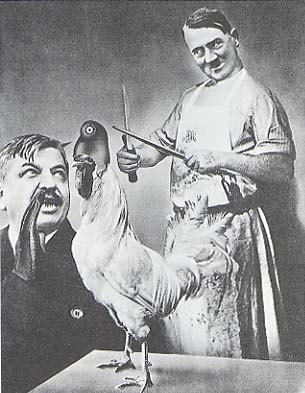
View in iTunes

Filed Under: Podcast


Perfection = Failure

Inside: Perfectionism is stopping you from being the best art teacher you can be. Our students need to see us try (and fail) and learn. Don’t let perfectionism stop you from having the hard conversations.

I have exciting news. The podcast is BACK!

It’s been about a year since the last episode, and to be honest, I’ve really missed making it, but I needed to think of a format that felt more authentic to the way I work. So I decided to ditch the perfectionism, and just click record.

Listen to this episode to consider how perfectionism stopping you from being the best art teacher you can be. In this episode, I share my thoughts on how to get over having to do everything little thing right and why perfection=failure.

Subscribe in Your Favorite Podcast Listening App

Thanks for listening! Have an idea for an episode topic or think you may be a great guest for the show? Click here to send us an email telling us about it.

Hello and welcome to the Art Class Curator Podcast. I’m Cindy Ingram, your host and the founder of Art Class Curator and the Curated Connections Library. We are here to talk about teaching art with purpose and inspiration from the daily delight of creativity to messy mishaps that come from being a teacher. Whether you are driving home from school or cleaning your classroom for the fifteenth time today, take a second, take a deep breath, relax those shoulders and let’s get started.

Hello everybody! It is Cindy Ingram, and I am back for the Art Class Curator Podcast. So it has been, gosh, almost a year since my last episode, and I want to tell you a little bit about why I stopped and also talk about something that’s sort of been bothering me for a while. One of the reasons I stopped with the podcast was not because I was not really fully enjoying it. I absolutely love filming every single one or recording every single one of those episodes. The conversations were so much fun. I enjoyed meeting the people who I met and reconnecting with people who I had met previously, but it came to a point where I think my perfectionism was starting to overtake me a little bit with the whole idea of creating the podcast. Finding the guest, having a conversation, making the show notes, making the images, making sure it was edited. All of those things became a little bit of a burden, and it was kinda taking the joy out of it, and so I stepped back for a little bit decided to regroup and figure out exactly what I wanted from the podcast, and how I can move forward in a way that’s really sort of authentic to me and how I work, because I really have learned that I missed it and I loved it, but that it became a little bit hard to keep up with on a schedule that I have been doing.

So, one of the things I guess I constantly battled in my life is this tendency towards perfectionism. And about a year ago I someone told me that 70% perfection is success and 100% perfection is failure and that hit me hard because I realize that I am constantly striving for 100% perfect, and then if  I don’t get 100% perfect that it is hard on me. I am constantly trying to be the very best at everything that I’m doing and I have learned that’s not really a great way to live. I’m working really hard on taking that perfectionism away. I’m trying to figure out where it comes from, why I have it, and what I can do to minimize it from my life, and release that fear. This is fear based. You know, if i am perfect then you can’t fault me for anything. You’ll still love me in all these things, you know? But I’m not going to go deep into the psychology of it.

That is something that is constantly there. I think as my business has grown, as Art Class Curator has grown, we have more people on the team, everything is more polished, everything has been more perfect than it was when it was just me behind my computer at nights and weekends while I was working full time, and it is becoming more of a polished thing, but in that process, I feel like it’s lost a little bit of it’s grittiness. So I’m bringing the podcast back and I’m bringing the podcast back in a really sort of gritty way, so what I am going to do is I am just going to hit record, and I’m going to talk about whatever topic it is that I want to talk about. I still will do conversations as well recorded, but I am going to take the pressure, perfectionism, off of me and talk about the things that I care about, the things that I know you also care about, and just have a conversation and talk about all the things that are meaningful in our lives as art teachers.

One of the things that has been hitting me lately, and it really is been something I’ve noticed throughout my years of bringing this business…. Art Class Curator began about five and a half years ago at the date that I’m recording this. Working online is a very interesting thing to do because we live in this society where you can’t do anything right. You think about a new mom. There’s this mom list like 30 things that moms can and can’t do. It says, if you breastfeed, your child will get too attached to you. If you don’t breastfeed, your child’s going to die. You’re a bad mom if you co-sleep. You’re a bad mom if you don’t co-sleep. You’re a bad mom if you let your kids play on the floor. You’re a bad mom if you don’t let them on the floor. You cannot win with anything that you do, and I feel like working on the internet or even existing on the internet as a person that this is what is happening. With our field as teachers, you go into the Facebook groups of all the art teachers, and someone is saying, “Oh ,I can’t believe that these people do projects like this cookie-cutter.” And everybody’s like, “Oh yeah, so good.” That’s terrible. And then half of the people are like, “No, there’s a place for this.” And half of the people are just like really upset you put a picture of their art with a big X on it or something. There is no room for everybody finding their own way and everyone doing the best job that they can. I feel that this really comes into play, especially for me, when I talk about other cultures.

It is a core value of my business and my teaching and my existence to make sure I’m being inclusive about cultures—that I’m open minded about new art and ideas, that I am not just showing my students the dead white guy, that I’m really expanding my own view of what art is and expanding everybody else’s. We embrace everything, but with that conversation comes with a lot of really sticky situations, because I am not a black woman, so if I am then going to talk about an artwork from a black artist, I’m immediately not in that culture. So I’m immediately removed from it and then anything that I say could then be attacked because I didn’t say it correctly. For example, in graduate school I learned that American Indian is the preferred term for Native American people. See, I can’t even say American Indian, Native people, but then you get online and you’re like, OK no one else was taught that so everyone else is saying Native American. Then I’ll say American Indian and then immediately there’s 10 people who will say, “Whoa, I can’t believe she said that.” Well, that’s what I was taught. I was taught American Indian is the correct way to go.

When I want to talk about the artwork of Aboriginal people in Australia, someone always contacts me contact to say, “Make sure you consult the elders to make sure you’re saying it all right.” I’ve also learned Hispanic is not the preferred term, but what do you do when you want to celebrate Hispanic Heritage Month and that’s what is Heritage Month. That’s what it’s called. That’s what the nation is calling it. The United States has called it that. It’s like, “OK, I want to celebrate Hispanic Heritage Month. It is a thing in the United States, but I know that Hispanic is not the correct term.” I don’t think think you shouldn’t consolidate our current history in one month, but you know, sometimes it’s really what we have to work with, so what are we supposed to do in this situation? If we walked around feeling like every move that we make is going to be criticized; If we say one wrong term, it will then cause us to shut down and spend our lives walking on eggshells, tiptoeing through these minefields of PC. I get we want to be politically correct. I get that there is a journey, here of what our culture used to be, what it is now, what it will be like that. But I think that we could be less scared to get something wrong, because then we’re gonna not talk about it. We live in this sort of extraordinary time when the world is sort of opening up to this greater multicultural global awareness. We live in this time where all of the stuff is happening. There are big shifts happening in all sorts of ways, but we swing from like not talking about something because we’re scared to upset someone and then we end up with an ignorant generation. Then on the other hand, you got people jumping on other people for getting details wrong. That won’t open anyone up to learning.

Making mistakes is part of learning and we have to learn from our mistakes. If I say something incorrect, of course, yes, you can tell me about it and I will accept it. I will learn from it, but I am not going to not talk about it for that fear that I’m going to say something wrong because being safe is not how you learn. We learn when we’re uncomfortable. We learn when we try new things. We learn when you stand up for what we think, even if we might get it wrong. We are doing our very best and that teaches our students to have the grace and the courage to make mistakes, to grow and to learn alongside them. I think there could be people who say that you don’t want to pat someone on the back for trying, but I do get that trying is better than not trying, and that there is a continuum here. In the end, we need to lean into those uncomfortable conversations.

We could always play it safe, but that is not what artists do, and that’s not what we should do. We could only show artists that play it safe, just in case. That would mean robbing our students of the joy and life-giving excitement of Keith Haring, because we’re scared that our students may Google him and discover he addressed hard topics in his art, and that there are parts of his life that are not elementary ready. Or we could skip Frida Kahlo because she has some really painful subjects in her art, but then the students would miss out on the depth and personal reflection that come from an artist who really steps into her pain and her discomfort. She shares that all on the canvas. We could skip artists like Fernando Botero in Colombia who has these amazing, joyful, wonderful paintings, but then you’re like, “Oh gosh, the student might make a fat joke. Or they might find his Abu Ghraib works that are like really heart-wrenching and terrible to see the torture that he depict. We can’t just stay with playing it safe. We can’t just stick with Da Vinci, and now I even, I learned just this week the Da Vinci cut up real life people and then took them to study their organs while they are living. I’m not sure how much of that is true, so I’m just going to say that in case it’s wrong. Could be totally not a good source, but there is no way to play it safe, so might as well do things that are bold. Introduce students to big ideas and teach them that it’s okay to not get it right all of the time. You are going to get a wrong it’s so at some point. You’re gonna put your foot in your mouth, and you’re gonna feel like an idiot for a few minutes. Someone will criticize you and tell you you shouldn’t be saying or doing what you are doing, but that is the risk we take when having a conversation we need to have.

I spent a lifetime, a lifetime, of tiptoeing around trying to be perfect. I was saying trying to never get it wrong, and I’m realizing there really is no way to not get it wrong, and if you’re doing something useful, if you’re doing something valuable, if you’re doing something with purpose, you’re going to get something wrong. So I say lean into those hard conversations with your students. You might have a parent that comes back at you. But you know at the end of the day that you’ve done that thing that was the right thing, the thing that’s gonna make a difference in this world. If we white-washed everything then what’s the point? What’s the point in doing any of it?

It’s a very fine line. You can teach about specific American Indian tribes or you can make a stereotypical feather headdress. There’s a wide range of things to do here and we want to constantly be striving for the right thing, the thing that’s the best. But we are going to get it wrong because your lesson on the Mound Builders, someone might come see it and say, “Oh, you’re being stereotypical of the Mound Builders.” But we understand you can’t cover an entire culture in one lesson. That’s impossible. It’s in the whole history of people. That doesn’t mean we shouldn’t cover them at all. Just because I can’t cover all of the history of the Mound Builders doesn’t mean that I should just throw it away. It means I’m going to do the best I can with what the time I have, and I’m going to teach them, open my students minds up as best as I can, so we are all doing the best we can.

I remember when I was a kid we learned about Christopher Columbus like he was hero that discovered America. He didn’t discover America. My teacher got it wrong, but you know what, I survived. I made it through school. Now I know Christopher Columbus was not a hero. Now my 10-year old daughter is learning US history this year, fifth grade, and she learned that Christopher Columbus was a bad guy. We learn from our mistakes, but we don’t learn until we’ve made them. We don’t learn until we’ve stepped on the ledge and we jumped off into the unknown, doing the best we can. I know because I know that Christopher was a bad guy. Because I know that and learning that misinformation, I have a better understanding of what really happened. I have a better understanding about history was made and how history changes. History isn’t set in stone. History is constantly evolving. We don’t always have to get everything right. We don’t always have to know the answer. We just have to still try. We have to share the cultures that are not our own. Inevitably, we are going to get something wrong when you just distill an entire culture into a few lessons. You’re going to get something wrong, but we have to try. We have to try and if that means that there is someone around who’s like getting on us for trying and how didn’t do good enough, that’s OK. We chose to do the hard thing. We chose to confront this. That means we have to accept any criticism and judgement we get too. But we have to be vulnerable with our not knowing and forgiving ourselves when we don’t know. We have to lean in to that unsteady feeling instead of hiding from it. That unsteady feeling, that’s where the learning is going to happen. When you feel truly uncomfortable in your life, when you know you’re doing something amazing and doing something big and doing something great, it doesn’t feel good. It doesn’t feel like, “Yeah, I got this.” It feels like, “Oh crap. I’m gonna feel miserable. This terrifying, but I’m gonna do it anyway.” And that is how we grow.

On that same note, we have to be forgiving to other people who are also trying and who are being vulnerable. We have to understand that everybody doesn’t have the same opinion that we have, and then we have to be kind about it and not call people out when they’re just doing the best they can. Yes, we can help teach them and educate them, but we have to do that with kindness because we are trying to teach our students. We want them to be kind. We want them to be open minded. We want them to be embracing of different types of people, so it’s really important not to jump quickly to judgment, understanding that we are all doing the best that we can. Remember that. Remember that when you want to criticize another person or another teacher for their choices. Remember that when you get something wrong and you feel bad about it. You were doing the best you can too. So be kind to your own self when you get something wrong. It’s not the end of the world, and if you got something wrong that means you’re doing something right to get there. You’re doing the best you can. We see you for all doing the best you can just to call for kindness and compassion and really like lean into doing the things we know that are right even if it opens you up to a little bit of criticism here and there. In the end, it’s better. It’s better to go for it.

So, there you go. That is my new episode of the Art Class Curator Podcast, which I have not done in about a year, and I’m so excited to be back and just talking about the things that I’m passionate about, things that I care about. They won’t probably all be as preachy as this, but this is something that really is always at the back of my mind. This is something I’ve been wanting to write a blog post about, but of course, I just haven’t because, you know, you want to be perfect and you want to say it right because this a sticky situation, a sticky topic, but that’s it, that’s what we’re going to do. So, I look forward to seeing you again in the Art Class Curator Podcast. Thank you so very much for listening, and please let me know what you think. Share this on social media, let us know, and also we would love to have any reviews of the podcast. That really does support getting this information in the ears of everyone who needs to hear it, not just information but conversations and connection and insight. So, with that said, I am going to click stop. I’m going to publish this thing, and it’s not gonna be perfect. Thank you so much. Bye!

Thank you so much for listening to the Art Class Curator Podcast. Help more art teachers find us by reviewing the podcast and recommending it to a friend. Get more inspiration for teaching art with purpose by subscribing to our newsletter, Your Weekly Art Break. Recent topics include the importance of seeing art in person, famous and should be famous women artists, and 21 days of art from around the world. Subscribe at artclasscurator.com/artbreak to receive 6 free art appreciation worksheets. This week’s art quote is from Vincent van Gogh. He says, “I have nature and art and poetry, and if that is not enough, what is enough.” Thanks so much for listening. Have a wonderful week.

Subscribe and Review in iTunes

Have you subscribed to the podcast? I don’t want you to miss an episode and we have a lot of good topics and guests coming up! Click here to subscribe on iTunes!

If you are feeling extra kind, I would LOVE it if you left us a review on iTunes too! These reviews help others find the podcast and I truly love reading your feedback. You can click here to review and select “Write a Review” and let me know what you love best about the podcast!
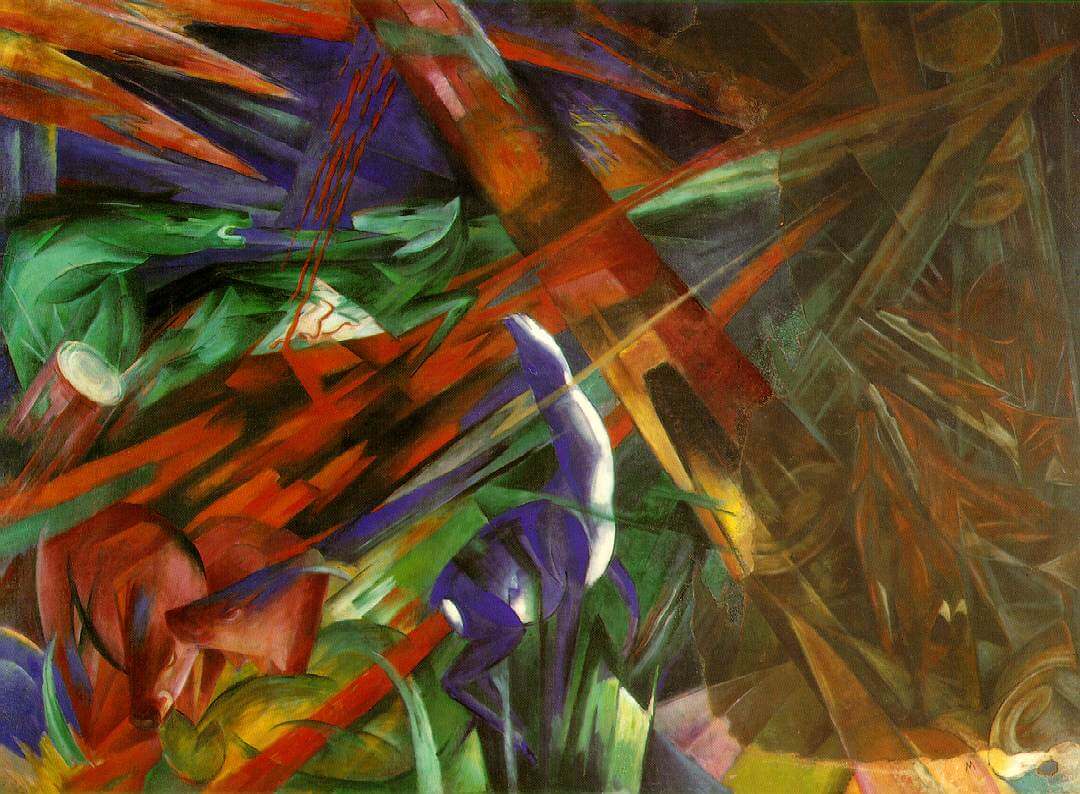
View in iTunes

Filed Under: Podcast


October 29, 2019 Leave a Comment

The Secret Recipe of Choosing an Artwork for Art Lessons

choosing an artwork art teacher

Inside: Choosing an artwork for art lessons can seem impossible. Whether for art appreciation, art history, or classroom art discussion, the possibilities are endless. This 4 ingredient secret recipe will ensure your art lessons are engaging every time.

choosing an artwork art teacher

Choosing an Artwork for Art Lessons

When picking an artwork to share with students, it’s easy to get bogged down in choices. Should the artwork be tied to a project? Should it be a famous masterpiece or something new from a contemporary artist?

The stakes feel high. You want the lesson to go well, for the students to have a lot to say and truly connect with the work of art. But they all have different tastes, interests, and attention spans. How do you capture 25 third graders or a bunch of screen-loving teens?

Easy. All the need are the 4 Cs of artwork selection: Captivating, Communicative, Complex, and Connected. 

Captivating

For captivating art for students, you want an artwork that will elicit an immediate emotional response in your students. If they immediately go, “Ooh!”, or “Woah!”, or “What’s that? What’s going on here?”, the classroom art discussion will flow easily. So, if you get excited and curious when you’re looking at an artwork, chances are it’s a great pick to show your students.

Communicative

The second C is communicative. Does the artwork tell a story or send a message? If so, you’re on the right track. Narrative artworks are great for classroom art discussions because they offer an easy entry point of entry to talk about what is happening in the piece. All of the potential stories the students come up with make for a fun back and forth!

Complex

Next, you want to make sure the artwork is complex. Captivating and communicative are important, but the discussion will die pretty quickly if everyone comes up with the same interpretation. If a work of art brings a variety of emotions, stories, and topics to mind, it’s going to be a better choice to show your students.

Connected

Lastly, you want the artwork to be connected. Is it relevant to the student? Can they find a personal connection to it? Art means more when it represents us or when we can find ways to practice self-reflection and connect to cultures. Last year, Jennifer, a member of our Curated Connections Library, used one of our artwork lessons featuring art from a Lebanese artist. One of her students wrote a note at the top of the assignment that said, “Woo Arab Representation!” Choosing artworks that matter to our students is so, so important. 

Artwork Selection for Art Teachers

Not all artworks will have the four Cs, but when you’re starting out, aim for art that includes all of them to build confidence in both you and your students.

Try it yourself! Consider these two works by Franz Marc through the lens of the four Cs. Which one would you choose to show your students?

artwork selection art lesson

Blue Horses is colorful and has several interesting uses of line. While it may captivate students for a bit, but there’s not a complex story being shared, and many students may struggle to find connection with a painting of horses.

The Fate of the Animals is an excellent choice for art classrooms. The movement and colors are deep and emotional. The narrative interpretations are expansive and can lead students in several directions. I’ve personally had classroom conversations about topics like nature, animal rights, climate change, and more based on this artwork. Wherever this artwork leads your students, there are plenty of relevant connections to be made.

If you’re looking for more artworks for art lessons that are captivating, communicative, complex, and connected, check out The Ultimate Collection of Artworks to Show Students.

Free Poster

What Do Kids Learn from Looking at Art Poster

Our students learn so much from looking at art. Use this poster in your classroom to remind them of all the skills they’re growing!

Download

Free Poster

What Do Kids Learn from Looking at Art Poster

Our students learn so much from looking at art. Use this poster in your classroom to remind them of all the skills they’re growing!

Filed Under: Art Teacher Tips


September 24, 2019 3 Comments

I am… Dorothea Lange: Exploring Empathy Art Lesson

empathy art

Inside: Explore empathy art with this photography analysis activity. Students study the photography of Dorothea Lange, consider the thoughts and feelings, and write an empathy art poem from the perspective of the people in the photographs.

My 8th-grade boys don’t open doors for me. The girls do. The 6th, 7th, and 9th-grade boys do, but not those stinkin’ 8th-grade boys. It’s a weird phenomenon that I’m sure is explained by science somewhere, but when I’m walking through campus with my rolling cart filled to the brim (because I am an art-on-the-cart teacher for now), my hands full, my backpack on, and the wind blowing the door so it’s hard to pull open, the boys just go on through without stopping to consider who is behind or even in front of them.

What these boys need is some empathy! Looking at art can help with that.

empathy art

Last semester in a photography unit for my 8th-graders, I brought out the “I am” character poem activity from my pack of printable worksheets to study the work of Dorothea Lange, the mastermind behind the Migrant Mother and other powerful photographs from the WPA and the Great Depression.

empathy art
Dorothea Lange, Migrant Mother, 1936

As an art teacher, it is important for me to give my students experience connecting with works of art–which includes connecting with the characters and people in the artworks. Dorothea Lange was a photographer hired by the Resettlement Administration and the Farm Security Administration to document the lives of migrant workers, displaced families, and families in Japanese internment camps. Because her photographs were government-funded, they were offered for free to newspapers across the country, and her images were seen nationwide.

She had a masterful way of capturing emotion in her subjects, so her photographs are an excellent way for students to practice empathy while also connecting with the art, the past, and the people in the photograph.

Free Worksheet!
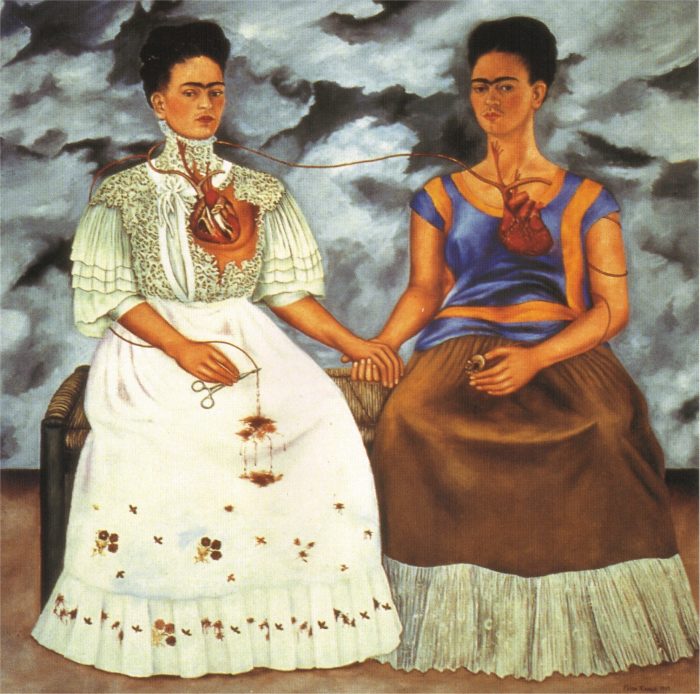
I am… Character Poem

Explore empathy in art with these free worksheets. Students write empathy art poems from the perspective of the people in Dorothea Lange’s photographs.

Download

Free Worksheet!
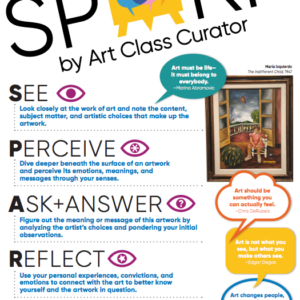
I am… Character Poem

Explore empathy in art with these free worksheets. Students write empathy art poems from the perspective of the people in Dorothea Lange’s photographs.

Dorothea Lange, Unemployed Lumber Man, 1939

Empathy Art Poem

In the “I am” character poem activity, I invited students to think as if they were one of the characters in the artwork and answer a series of prompts such as:

  • “I am…”
  • “I see…”
  • “I hear…”
  • “I feel…”
  • “I wonder…”
  • “I want…”
  • “I say…”
  • “I dream…”

empathy in art

Using clues given to us by the artists, students can come up with profound meanings for the artworks (or they can put “I want Taco Bell” which happened of course from one of the groups of boys. I’m not going to lie.).

empathy in art


I did this activity with students working in partners. After they created their poems, they read them to the class while we all looked at the art. After each poem, I led a short discussion inviting thoughts from the class about each photo.

empathy in art


Once we finished with all of the group presentations, I asked what all of the images had in common and what we can learn about the photographer based on all of these images. This launched us into a lesson on Dorothea Lange, art during the Great Depression, and debate whether or not the camera has the ability to capture the essence of a person. For example, what can’t a camera show about a person?

Artwork of the Week Lesson: Dorothea Lange, Migrant Mother

This is a complete lesson with discussion questions, talking points, activities, and project ideas for Dorothea Lange’s Migrant Mother.

Buy Now
 

This blog was originally posted on January 8, 2017.

Mentioned on the Art Class Curator Podcast…

Subscribe in Your Favorite Podcast Listening App


Filed Under: Art and Artists, Art Connection Activities, Downloads and Resources
Tagged With: best of art class curator, dorothea lange


September 10, 2019 2 Comments

5 Tips for Meaningful Classroom Art Discussion

Inside: Five tips for how to lead a classroom art discussion that will get your students thinking about and enjoying works of art.

Meaningful Classroom Art Discussion

Looking at art is an inspirational and emotional experience. Talking about art is a launching pad for creativity, collaboration, and cognition. A meaningful classroom art discussion helps students develop empathy, flex thinking and observation skills, connect with history, and savor the human spirit.

But the idea of leading such a discussion fills many art teachers with dread.

Where do I start?
What if my students don’t say anything?
What if they ask a question I don’t know the answer to?

Fear not! Students want to look at artwork and they have a lot to say about it. Your classroom can become a place where vital, interesting discussions about art happen regularly with these five tips.

1. Choose a Compelling Artwork

The goal here is not to pick an artwork that all of your students will love. That’s an impossible task! The goal is to choose an artwork that will spark questions and is open to interpretation.

5 Tips for Meaningful Classroom Art Discussion
Frida Kahlo, The Two Fridas, 1939


I love showing The Two Fridas to students. There’s so much going on that their minds race at first sight.

Why are there two?
Are they sisters? Twins?
Why are they holding hands?
What’s going on with the hearts?

No two discussions about The Two Fridas will be alike and that makes it a perfect artwork to share with your students.

When choosing art to discuss, look for pieces that catch your eye and make you wonder what’s going on. If you’re curious, your students will be too.

Free Worksheets!

SPARK Art Criticism Framework

SPARK is a complete art criticism and discussion framework that ignites deeper student art connections and more engaging classroom art discussions. Download these free SPARK posters plus a worksheet to use in your classroom!

Download

Free Worksheets!

SPARK Art Criticism Framework

SPARK is a complete art criticism and discussion framework that ignites deeper student art connections and more engaging classroom art discussions. Download these free SPARK posters plus a worksheet to use in your classroom!

2. Let Them Think

Some students will be bursting with thoughts. Others need space to let their ideas build. Give them all time to gather their thoughts by having a silent observation period at the beginning of class. Students can write down what they notice, answer a question you pose, or sketch the artwork. These bellringers allow them to focus and brainstorm before they’re influenced by their classmates.

5 Tips for Meaningful Classroom Art Discussion

A vital part of getting students to engage is giving them the freedom and support to have their own ideas without fear of being wrong or ridiculed. Create a classroom culture that celebrates differences of opinion and doesn’t hold any one interpretation up over another (even the opinion of you, the artist, the museum, or an art historian).

To encourage open conversation, consider not sharing the title or other information about the artwork. If you do, wait until the discussion has taken off and with the reminder that there are no “right” answers.

3. Engage

You want to give your students the freedom to be open, but you can’t stay silent and facilitate a meaningful classroom art discussion. So, what do you do?

Ask & Repeat

When a student tells you one of their observations, repeat it back to them and ask questions to make sure you understand what they’re saying. Don’t be afraid to dive deep and ask multiple questions. When students are heard and understood, they’re more likely to speak up again.

If you get a question about interpretation instead of an observation, direct it back to the student. For example, if they ask why the two Fridas are holding hands, ask them what they think.

You don’t have to praise every comment to encourage your students. No one likes to receive forced or false praise. The simple act of listening and repeating to show you’ve understood is more than enough.

Move

When I’m teaching, I constantly move around the room. When a student is speaking, I stand near them so they know that I’m listening. I want every student, including the introverts and the ones at the back of the room, to know that they are a part of the discussion and expected to share their thoughts.

5 Tips for Meaningful Classroom Art Discussion

This strategy works great for behavior and to keep everyone on track. If they know you could walk by them at any moment, they are more likely to stay involved.

4. Get Comfortable with Quiet

Silence doesn’t mean the discussion is over. Allow those moments for students to ruminate and observe more. These stretches are a great opportunity for more reserved students to gather the courage to speak up.

If you start to feel uncomfortable, take a breath. Choose a student who hasn’t said much, then make and maintain eye contact. Embrace the awkward. Even if it takes a minute, someone will get the ball rolling again.

If you have a particular class that struggles with open discussion, carry a clipboard and take note of when someone makes a comment or goes off-task. You don’t have to announce it. Just make eye contact and write an ‘x’ or a check. They’ll notice and begin participating on their own. Another option is to call on students directly through something like drawing names out of a bucket. These are handy tools but rarely necessary.

5. Have Fun

If you have stage fright, rest easy. This isn’t a lecture. You don’t have to do all the work or know all the facts. If you don’t know an answer, ponder with the students and share the joy of discovery and creativity.

Enjoying art and the desire to share that joy is why you became an art teacher. This is the dream! A teacher’s enthusiasm is especially beneficial to a classroom art discussion. Your passion will spread to your class. Celebrate the process of discovering an artwork together and delight in your students as they show their creative, thoughtful, humorous selves.


Art Teacher Blogs


This post was originally a part of The Art Ed Blogger’s Network: Monthly Tips and Inspiration from Art Teacher Blogs.

Participating Art Teacher Blogs:

  • Art Class Curator
  • Art Ed Guru
  • Art is Basic
  • Art Room Blog
  • Art Teacher Tales
  • Art with Mr. E
  • Arte a Scuola
  • Brava Art Press
  • Artful Artsy Amy
  • Capitol of Creativity
  • Create Art with ME
  • MiniMatisse
  • Mona Lisa Lives Here
  • Mr. Calvert’s Art Room Happenings
  • Mrs. Boudreaux’s Amazing Art Room
  • Mrs. T’s Art Room
  • Ms. Nasser’s Art Studio
  • Party in the Art Room
  • shine brite zamorano
  • Tales from the Traveling Art Teacher
  • There’s a Dragon in my Art Room
  • 2 Art Rooms

This blog was originally posted on May 8, 2018.

Mentioned on the Art Class Curator Podcast…

Subscribe in Your Favorite Podcast Listening App

Filed Under: Art Ed Blogger's Network, Art Teacher Tips
Tagged With: best of art class curator, frida kahlo


  • Previous Page
  • Page 1
  • Interim pages omitted …
  • Page 7
  • Page 8
  • Page 9
  • Page 10
  • Page 11
  • Interim pages omitted …
  • Page 38
  • Next Page

Primary Sidebar

Hi! I’m Cindy Ingram, the creator of Art Class Curator and The Curated Connections Library

I’m on a mission to revolutionize education with the power of life-changing art connections. Art is not “extra”. Art is essential. We are empowering teachers to bridge the gap between art making and art connection, kindling a passion for art that will transform generations.

More About Me

Free Worksheets!

-Free Bundle of Art Appreciation Worksheets-

In this free bundle of art worksheets, you receive six ready-to-use art worksheets with looking activities designed to work with almost any work of art.

Download

Free Worksheets!

-Free Bundle of Art Appreciation Worksheets-

In this free bundle of art worksheets, you receive six ready-to-use art worksheets with looking activities designed to work with almost any work of art.

Enrollment in Curated Connections Library is currently open. Click here to join. Join our list to get more information and to get a free lesson from the vault! If you are purchasing for a school or school district, head over here for more information.

Check Out What’s New In The Shop

Experience Art: Engaging Art Criticism Discussions and Activities for Teachers and Students of All Ages
Call to Art: An Un-Conference for Art Educators
Curated Connections Library Membership
Perspectives High School Curriculum

More Products

Have You Listened to the Latest Podcast Episode?

Falling for Naudline Pierre’s Evocative Art: A Conversation with Madalyn (Part 2)

More Episodes

Testimonials

I like how this program, unlike other art class resource membership programs, feels authentic. It's like art matters more here, and not fancy flash-in-the-pan trendiness. The goal of Art Class Curator seemed to be helping kids develop a lifelong love and art appreciation versus "Hey, look. I painted this fish."
Erin A.
Your questions are helping me to delve into much deeper learning, and my students are getting better at discussion-and then, making connections in their own work. Art Class Curator is awesome!
Denise W.
Interestingly, my lower performing classes really get engaged in these [lessons] and come away with some profound thoughts!
Melissa G.
I had the most amazing 6th grade class today. They were jumping out of their seats with hands raised just to respond and give input. It was as if I was waving candy in front of them! They saw more and more and the ideas and interpretations unfolded. So cool!!! This is what makes teaching art so wonderful – thank you!!
Caroline G.
I just wanted to thank you for the invaluable resource you have through Art Class Curator. Not only do you have thought provoking activities and discussion prompts, but it saves me so much time in preparing things for myself! I feel like I’ve only scratched the surface with your site.
Maryjane F.

Get Art Inspiration To Your Inbox!

Enter your email address to get regular art inspiration to your inbox
plus a BUNDLE OF 6 FREE WORKSHEETS!
We hate SPAM and promise to keep your email address safe.
Download

Free Worksheets!

*Free Bundle of Art Appreciation Worksheets*

In this free bundle of art worksheets, you receive six ready-to-use art worksheets with looking activities designed to work with almost any work of art.

Copyright © 2026 Ignite Art, LLC DBA Art Class Curator •  All rights reserved  •  Privacy Policy  •  Terms of Service  •  Site Design by Emily White Designs