• Skip to main content
  • Skip to primary sidebar
  • About
    • About Art Class Curator
    • Contact
    • Speaking
    • Media & Press
    • Programs for Schools
  • Blog
  • Podcast
  • Shop
  • Join
  • Member Login

Art Class Curator

Hands-on and Minds-curious Art Learning

  • Art & Artists
  • Art Connection Activities
  • Art Teacher Tips
  • Elements & Principles
  • Downloads & Resources
Home
  • About
    • About Art Class Curator
    • Contact
    • Speaking
    • Media & Press
    • Programs for Schools
  • Blog
    • Art & Artists
    • Elements & Principles
    • Art Connection Activities
    • Art Teacher Tips
    • Downloads & Resources
  • Book
  • Podcast
  • Shop
  • Join
  • Member Login

All Posts from Art Curator for Kids

Teaching from Your Values

What are your top ten values? What about your top three? Are your values as a teacher the same as the values in other parts of your life? Living in your values and teaching from your values is essential to living a balanced, healthy, happy life.

In this episode, I talk about my values and how my life changed when I started being true to them and give you the tools you need to discover your true values.
teaching from your values

Subscribe in Your Favorite Podcast Listening App

  • Dare to Lead by Brené Brown*
  • Values List from Brené Brown
  • Atomic Habits*
  • Full Frontal Living Podcast with Lisa Carpenter
  • The Jim Fortin Podcast

*affiliate link

Hello and welcome to the Art Class Curator podcast. I am Cindy Ingram, your host and the founder of Art Class Curator and the Curated Connections library. We’re here to talk about teaching art with purpose and inspiration from the daily delight to creativity, to the messy mishaps that come with being a teacher, whether you’re driving home from school or cleaning up your classroom for the 15th time today. Take a second, take a deep breath, relax those shoulders and let’s get started.

Hello everybody. It’s Cindy Ingram, back for another episode of the Art Class Curator podcast. Now last week on the podcast we had Joan Marie and she to me is such an amazing example of living from your values and working from your values and I love that she talked about that, kind of near the end of that podcast episode where she spent her whole life sort of floundering, trying to figure out exactly where she stood. And it wasn’t until she realized what her values are and started doing her art and doing her teaching from the place of those values that she really began to get into that flow. And after recording that episode, I knew immediately that I wanted to do a whole episode on this, this idea of teaching from your values. And because for me personally, it has been pretty transformational to start thinking about my life through the lens of what are my values.

And what are values? So values are basically the things you believe, they are your fundamental beliefs and they guide your decision making. So through the lens of your values, you’ve made all sorts of decisions in your life. Whether or not you’re actively aware that those values were helping you with those decisions. They’re the sort of top priorities in your life. They’re the non-negotiables. They’re the things that when you’re in integrity with your values, you’re in a state of peace. You’re in a state of flow and ease. I’ve been in several programs over the last few years and many of them have done this in many different ways, how helping you discover what your values are. So I’m going to go over a few of the activities that I’ve seen that can help you figure out your values if you don’t sort of know off the top of your head what they are.

One of them is, Brené Brown has a list of values on the web and there’s also a list of values from James Clear who wrote the book Atomic Habits which I highly recommend. You can look at a list of values, and then you can narrow it down to your top three to five and just look through the list, highlight all the ones that you think could be contenders and then chances are you’re going to end up with a pretty extensive list, I know mine was over 10 and then narrow it down. So looking at the list and then taking off values that… kind of ranking them. Is creativity higher than responsibility or is consistency higher than experience? There are lots of different values and so interesting that when people I know have done this, it’s such a fun experience to see a person through their values because I’m looking at everyone through my values and then when I see someone else have a completely different set of values that really helps me connect with them in a better way, which I have some examples of that I will share a little bit later.

Another exercise that you can try and I love this one. Lisa Carpenter shared this one with me. You can listen to her podcast. It’s called the Full Frontal Living podcast. Really awesome, awesome woman, Lisa is, but what she does is she has you think about a dinner party that you are going to hold and you want to think about what are the top three or five people that you would automatically want to invite to your dinner party. It can be people you know, it could be famous people, it could be people from history, whoever it is, but people you would really want to spend time with. And then you think of three to five people that you would not want at your dinner party. You are dis-inviting them to your dinner party. And then you go through and think about, well what makes those people who they are?

Why do you want them to come to your party versus why do you not want them to come to your party? So for example, one of my top values, and I’ll share more about mine later, but one of my top values is authenticity. And so people who are not invited to my party are inauthentic people, people who have this sort of facade, who don’t want to connect deeper, who have this sort of mask on like that. I had someone on my list who is like that. So it made me sort of aware of what my values are. And the people on my invite list are, I noticed authentic people that are just just unapologetically themselves. You can think about your values through that way. And it’s not that you don’t like the people that you disinvite, but it helps you think about what is it about them that rubs up against what your values are.

Another values exercise that I heard about through Jim Fortin was, he basically has you come down to 10 and then he gives you scenarios like, okay, I’m going to give you the cure to world peace, but you have to give up one of your values to do it. Which one would you choose? So he gives a bunch of scenarios for that and then it helps you really narrow down. You’re like, Oh, shoot. What am I willing to part with? And it’s hard, super hard, but there’s lots of different scenarios that he gives out. But to start, you can just go, and this is what Brené Brown has you do, is you look at the list and just pick the top three. So narrow down your list. Mine is, the one I’m going to share with you, is really a top four. I have a hard time of narrowing it down. I have a top three but I just, I hate leaving up the fourth one.

And so once you have your three you think about well does this really define who you are? Do these things really put you into a state of flow, into a state of ease. Questions that Brené Brown has in her book, Dare to Lead is does this define me? Is this who I am when I’m at my best? And is this a filter that I use to make decisions? And so if you feel good about the answer to those questions with your values, you’re probably in the right spot. And you can use knowing these values to increase your job satisfaction, to put you into a state of flow. If you realize your main value is consistency and you have this more loosey goosey approach in your classroom where there isn’t a lot of consistency, you can see how that would cause a lot of stress in your day to day.

So you can think, okay, well how can I use my value of consistency to improve my day? So maybe you’re going to work on adding more consistency into your job. This will put you, being responsible to your values will increase your wellbeing. It will increase your job satisfaction, your sense of peace and ease, your integrity to yourself. And it will also add more light and joy into your life. Like for example, one of my values is experience and so I was just thinking recently that, and enjoy is one of my top ones too, it’s not one of the top four. I have a whole long list that I wish I could have all of them be my top ones. But I realized that I wasn’t incorporating enough experience into my day to day life. I love to travel and I travel almost every month, for work things or for fun too.

But mostly for work. And I live for those because it’s experience, it’s going to a new place, it’s doing new things, it’s meeting new people. And I realized I wasn’t doing enough of that in my day to day life. So I have made a commitment to go to the art museum every two weeks. And I have made a commitment to seeing more theater and taking my kids out on adventures as well. It’s a way to check in. Like every month you’re like, am I living to my values? Is there any, if there is an element of yourself that is sort of unsettled feeling, not just in your teaching life but in your personal life, that you can think about your values and check in with them every month. To give you some examples of this, I will share what my values are and give you some examples of where I was out of integrity with those values and how knowing them allows me to really understand situations that I have been put in.

My top four values are connection, wellbeing, authenticity and experience. I recently had an experience a couple of weeks ago where I did some travel and I met with a group of amazing people. It was highly connected, very authentic, my values were very much firmly in this space. However, one of my values is wellbeing and what I didn’t do in this situation is build in enough time to focus on my wellbeing. One of my highest sort of tier values, that’s part of wellbeing is comfort. I have really like particular a neurotic sensory needs. I have to have like soft clothes and I have to have space alone because I’m kind of highly introverted and I get overwhelmed if I’m around too much activity for too long and too many conversations.

I need to make sure I remove myself every now and then to sort of ground myself and recenter and get back into my body and my brain so that I’m not so overwhelmed. And that is something I did not do enough of during that week. I left the week feeling highly, highly drained, really emotional, really just beat down. And it reminded me a lot of what it felt like as a teacher at the end of a really hard week or even a hard day where I would just be so totally drained because I didn’t build in the values of my wellbeing, of making sure that I am my best self at any given moment because I let circumstances sort of whisk me away. So I learned, okay, that when I’m in a situation like this, I need to make sure I have my own room. I need to make sure that I build in breaks, that I go away from everybody else and get comfortable for a while.

And that was true of teaching and it actually true of my whole life up until maybe, I don’t know, a few months ago, honestly, I didn’t make wellbeing a priority. And when I did the values exercise, wellbeing wasn’t on it last year. But I realized that you can make something of value if it’s not necessarily a value that you really think of all that often. But I realized that I am a better person if I have wellbeing as first and foremost in my mind. In a work day, making sure that, one of the things that I had a problem with is during my planning period, kids would show up because they loved me. They wanted to spend more time with me, but I couldn’t be my best self if I didn’t have that break. I had to, sometimes I would turn off the lights in my classroom and kind of hide because I didn’t want to show them I didn’t care.

Because again, connection and authenticity are some of my top values. I want to connect with my students, but also my wellbeing had to come first if I was to give in that way. I think I’m starting to ramble on that one. But it’s an exercise in giving yourself what you need in your life. Another thing is, my top value being connection. So I talked about in the first episodes when I kind of came back from a year break from the podcast, that things in my business started to feel a little bit too trying to get perfect and trying to get whitewashed in a way. Just, don’t ruffle any feathers, don’t do this and that. And then I started to feel that didn’t feel very authentic to me and authentic is one of my top values and connection is one of my top values. And if I am not putting my full self out there, then I’m not going to be satisfied in my work.

The same thing with authenticity. When I realized that I don’t like small talk, when I first meet a person, I’m always like, can we get straight to talking about our feelings? Like I am much more comfortable talking about my feelings, talking about deep things then talking about the weather or I’ve been selling girl scout cookies with my daughters and the cookie booths drive me crazy because it’s the constant same small talk that everybody has. Like, Oh I’m trying not to eat cookies. Oh, I bought so many cookies, it’s like the same conversations over and over again that we’ve been having.

But I, for a long time in my life felt like there was something wrong with me because I couldn’t handle that sort of stuff and I would avoid it at all costs. Having a small talk with people, because I realized authenticity and connection are really important to me and that stays too surface level. So my challenge to you is to think about what your values are. For example, Joan’s values were creativity. And so when her teacher told her that she wasn’t creative, it really hurt her in a deep way because it was something really important to her and that she found her creativity through teaching. I want you to think about what are those things that are your values, how are you using them in your life? How are you using them in your teaching life and are you in integrity with your values?

Are you being responsible to those values? The question I’m going to leave you with too is, that where in your life are you living your values and where in your life are you living outside of your values and that once you have figured that out, it is a great pathway to greater peace and ease in your life. And I would love to hear your values. So if you could respond to this email that you got the podcast in or the social media post where you saw the podcast episode, on Instagram or Facebook or you can share on the show notes, blog comments at artclasscurator.com/43. And I want to hear about it because I find this to be so fascinating to see how a person’s values impact who they are. And I also would encourage you to have your family members, your husband or wife, your friends, your coworkers, do a values exercise with them and compare your values.

Because I made my husband do this, I think it was in, September or October, and he did his, and it made me really better understand who he was. His values were family, stability, trust and things that are important to me like experience and adventure were not anywhere near the top of his values. So it made sense that I’m the one that wants to go travel and go do things, but he wants to feel more stable. It was a really great connection point for us to talk about who we are as people and how we can support each other in our values. It’s been a really great thing. I think now that I’m talking about it, I think I want to do this for my kids too. I think that’ll be really good.

That’s all for today. Thank you so much for listening. Next week on the podcast we have an awesome guest named Dan Hill and he does facial coding to study emotions and he wrote a book where he analyzed people’s facial reactions and eye tracking with famous works of art and our conversation was so cool. I could geek out about that all day, so I can’t wait to share that with you. We will have that on the podcast next week. All right. Thank you so much for listening. Have a wonderful day.

Thank you so much for listening to the Art Class Curator podcast. Help more art teachers find us by reviewing the podcast and recommending it to a friend. Get more inspiration for teaching art with purpose by subscribing to our newsletter, your weekly Art Break. Recent topics include the importance of seeing art in-person, famous and should be famous women artists and 21 days of art from around the world. Subscribe at artclasscurator.com/art break to receive six free art appreciation worksheets. This week’s art quote is from a Émile Zola. He says, “If you ask me what I came to do in this world, I, an artist will answer you. I am here to live out loud.” Thanks so much for listening. Have a wonderful week.

Thanks for listening! Have an idea for an episode topic or think you may be a great guest for the show? Click here to send us an email telling us about it.

Subscribe and Review in iTunes

Have you subscribed to the podcast? I don’t want you to miss an episode and we have a lot of good topics and guests coming up! Click here to subscribe on iTunes!

If you are feeling extra kind, I would LOVE it if you left us a review on iTunes too! These reviews help others find the podcast and I truly love reading your feedback. You can click here to review and select “Write a Review” and let me know what you love best about the podcast!
View in iTunes

Filed Under: Podcast


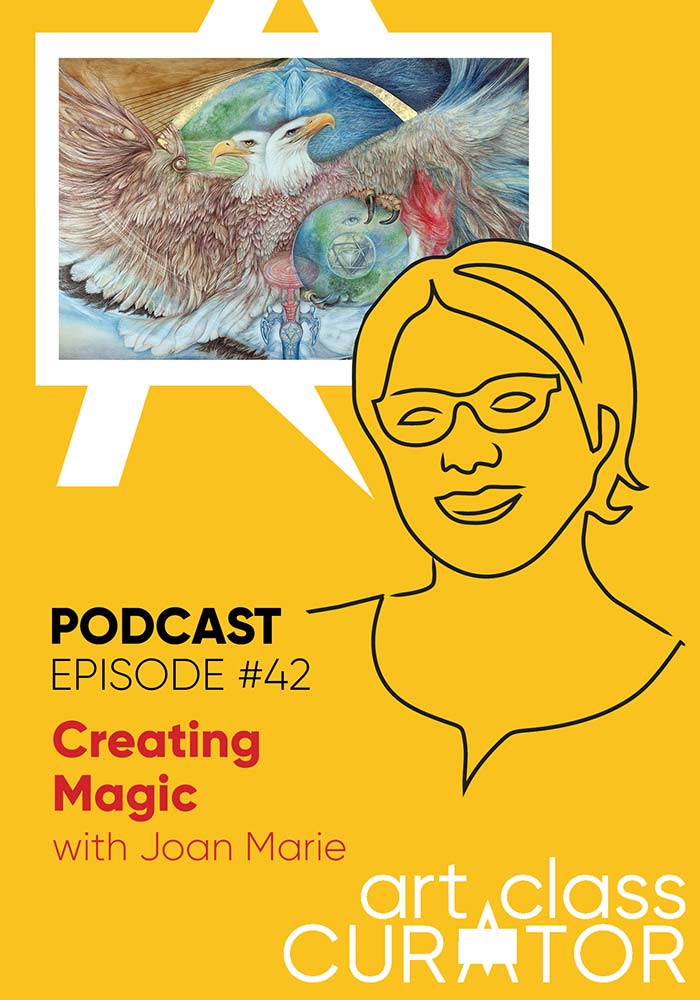
Creating Magic with Joan Marie

In this episode, I’m joined by Joan Marie. Joan is a former art teacher who now creates personal power portraits for her clients. We discuss Joan’s educational obstacles, her creative process for each personal power portrait, and the importance of living and teaching from your values and strengths.

Subscribe in Your Favorite Podcast Listening App

  • Joan’s Website
  • Joan on YouTube, Facebook, Facebook Fan Page, Instagram, and LinkedIn

Cindy:
Hello and welcome to the Art Class Curator Podcast. I am Cindy Ingram, your host, and the founder of Art Class Curator and the Curated Connections Library. We’re here to talk about teaching art with purpose and inspiration from the daily delights of creativity to the messy mishaps that come with being a teacher. Whether you’re driving home from school or cleaning up your classroom for the 15th time today, take a second, take a deep breath, relax those shoulders and let’s get started.

Cindy:
I am so excited to welcome my friend Joan Marie to the podcast. Joan is a former art teacher and an artist who creates personal power portraits for her clients now. I love her story of the energy of looking at art and how that changed her life. So I’m so excited to share this story with you.

Cindy:
Welcome Joan. I am so excited to welcome Joan Marie to the Art Class Curator Podcast. Welcome Joan. So I have to be in full disclosure to our listeners. We made it halfway through our interview and I realized I hadn’t clicked record. So we’re starting over. So hopefully, we will remember all the beautiful, golden things that Joan said already. But to introduce Joan to you, she is a fantastic artist and a former art teacher. We were in a business mastermind together last year and she has a really wonderful story about how an artwork impacted her career and her journey. So Joan, why don’t you give us a quick overview of the type of art that you make and then you can go right into your art story.

Joan:
Okay. First of all, Cindy. Oh, if only I’d had you when I was an art teacher. Oh my gosh! I bless you for the work you do.

Cindy:
Thank you.

Joan:
Okay. So what I’m doing right now is called Personal Power Portraits. I do portraits that express what inspires you. If it’s through your power animal or spirit animal or totem or through symbols or your face. And so it’s things that inspire you to help you remember who you really are, your power, your beauty what you love because I’ve muted these reminders my whole life. So the beginning of my career began when I was 19. My first year of college, I didn’t have a clue what I was going to do. So the year after I, freshman year, I went to a college course in Italy, art history and I got to see Michelangelo’s Sistine ceiling. Oh my gosh.

Joan:
For me it was like an outer body experience. I just swooned. I took in that energy. I couldn’t stand straight. I was kind of busy with the power and I just stared and stared and protect we took the walk slowly, slowly. And I just, I could hardly walk. I mean I was so moved and then a week later, I got to see the Uffizi Gallery and I saw Leonardo da Vinci. It’s adoration. I think Madge, I’d sat in front of it for almost two hours. Luckily I was there by myself and I just sat there. I knew something about these artists, but not that much. It was the energy. I just stared and stared and I just took it in and I said, “If art is this powerful, I just have to be a part of it and I have to add art to the world that would add positive energy to the world.”

Joan:
So that was my goal. There I have my purpose now I know what it could do. So I went to college, changed colleges, started as a freshman again. Now I’m my sophomore year and I had this powerful art professor in this powerful university and he said, “Joan, you don’t have what it takes. You shouldn’t be an artist. You need to be a home economics major.”

Cindy:
What?

Joan:
That’s what said. He really said that. He said that. He said “You’re not creative. He said, “There are 50,000 starving artists in New York City alone and you don’t want to be one of them.” And I still have tears in my eyes. I came back after I went to him, I said, “Is creativity something that you can learn or you just have to be born with it?” And he said, “You have to be born with it.”

Joan:
Oh my gosh. Well they say that when people insult you that you only take it in if you kind of believe it. And I did already believe that. I was already insecure from my childhood, whatever. And so I took it in. So here I have these two powerful things going on. I’ve got this Michelangelo and da Vinci. You’re an artist. You need to do this. Speaking is powerful. I mean, I was hyper and I wasn’t hyper before my Michaelangelo, I became hyper and anybody-

Cindy:
Really?

Joan:
Yes. Anybody who knew me before. I mean I was happy. Kind of a, sort of a lucky person, but after I knew what my goal was. I said, “Oh my gosh, my art is like average.” I was a little above average in high school, but it wasn’t like one of the top, you’re going to be in arts. You’re so good.

Cindy:
Yeah.

Joan:
I didn’t think I was good enough, though wanting to be good. I said, “Okay, now that I’m driven, I am going to, I was so driven to work, work, work, work, work. It’s my skills.” So to hear this teachers insulting my skill or my creativity and my skills and because he wouldn’t hardly look at what I’m doing in my live drawing class. But then I worked so hard because I said, “You have no idea.” I said this to myself. I said to that professor, “You have no idea how bodily I want to be an artist. I mean Michelangelo tells me he knows that’s what I’m supposed to be doing. I believe him. You know? And there were two professors who insulted me, I won’t go into the other story.

Joan:
Anyway, so I had this, so I wanted to be an art teacher immediately from college and I decided to teach creatively, so that I could develop my creativity. So I watched the students be creative and I developed creativity. So after 10 years of teaching at that time, students said, “Well, you taught us to be creative. Now it’s time for you to go out and be creative.” I was like “That’s so cool! Thank you!”

Joan:
So I’m kind of involved in Art Licensing and I did a line of art, for Licensing, and it really took off. And like, “Oh my gosh. I’ve made as an artist. I’ve made as an artist.” And I started selling like the cups and mugs and t-shirts. Suddenly I was doing kitty cats in unicorns and suddenly kitty cats and unicorns stop selling and, oh wait, I forgot a big… Anyway, so I went back to teaching and life… Well, so let me… So the kitty cats and unicorns stop selling and I said, “So, well what do I have to do, to make to sell? Like what, what are the…?” And they said, “Well what’s popular is petunias.” And I said, “Petunias? Are you kidding me?” Okay, I could draw a petunia but my heart’s really not in it. It’s really not going to take off. Wait a minute, did I quit teachings to draw kitty cats and unicorns anyway?

Joan:
So I went back to teaching, to where I was free to do what I want to do, but I missed a part. So before that I went back to teaching, the powerful shift that I missed was going to Sedona.

Cindy:
Oh right, yes.

Joan:
By Art Licensing. I moved to Sedona and that’s a whole ‘nother story. Graduate school was so tense for me. I was going to, I got into graduate school at that point because of my ability to draw the human figure, which is what the past professor had insulted me. I worked so hard, I got so good at it, but my art wasn’t speaking. It’s like no matter how much I drew the human figure and the hands, I studied at Michelangelo. If I can draw a figure I can do anything. Right? Like Michelangelo. So drew the figure and I got so good to draw the figure well, but I said it’s not speaking to me like Michelangelo speaks to me. It’s missing something. So, and the tension that was happening on the campus. Should I tell that story? The tension on campus.

Cindy:
No, I like that story too. It adds to it.

Joan:
Well, I’m in graduate school. The tension. They were about to kick me out of school, graduate school. I was on probation because I had given birth to my baby, my daughter and I was drawing her all the time cause that was my passion, my world. And I’m a nursing her and she’s my whole world. And they said, “Stop drawing your baby. What you were doing before her was good, but now it’s like…” And they said, “If you have to draw a baby, draw her with no face or draw her like a rock.” And with no emotion. And I was like, “What?” But that’s what was going on in New York City, in the galleries like really intense dark time in big paintings with no emotion, dark and showing a lot of tension in the world.

Joan:
And it’s like “Can you try to create New York artists?” And I was just way too packed with lovey dovey with, I guess, with my beautiful baby drawings. And they were not traditional baby drawings. They were amazing. I mean, I can say that now, but they gave me a hard time so I won’t… Oh my bad. I got to tell you. So I got through probation. All the teachers come through and decide you can hang all your work. So I did this series of a bunch of art with no emotion copying Ang and Michelangelo and copying photos. Picture people with no emotion, collage of mess through these huge panels of this, figuring I bet they’ll love this stuff. And then the whole wall of Madonna and mother children reproductions of all the famous artists of art histories. Xerox copies of all these famous of mother and daughter or mother and child and they walked through and they go, “We love your new art.”

Joan:
And I was like…. And then they look at my wall of Xeroxes and they’re like, “Okay. We see what you’re saying. Right.”

Cindy:
I love that you did that.

Joan:
I know.

Cindy:
That’s so subversive. That’s good.

Joan:
But then they’re in the meeting deciding if I’m going to be taken off probation or not. And I hear, they tell me this story, not them, but some people that were there. Screamed. Two professors. The Dean of the school and another professor screamed to keep me in. The other two, screamed to kick me out. There were four professors, two and two. Fighting.

Cindy:
Wow.

Joan:
I mean, it was a screaming match. I thought, Oh my gosh, like so much intensity. Like she’s really talented, keep her in. She’s really, but whatever they insulted and I was like, I can’t stand this tension. And my daughter’s like this little precious two year old. So I left, I moved to Sedona and, but that’s another story how I just ended up. I didn’t know Sedona was a spiritual vortex. I didn’t know it was a vortex of vanity. I didn’t know that. I just was drawn and ended up there. It was like magic with magical stories. I told that story.

Joan:
And that’s where my art started speaking. Because the spiritual energy I was getting, it just, well it just shifted. I did a lot of classes, spiritual classes to open up and to free up and to relax, because the tension on campus and the tension I was putting on myself because I didn’t think I was good enough. All those years of teaching, all those ways of working, I wasn’t good enough. I wasn’t good enough. So that tension but… So in Sedona, I finally just relaxed because I was told you have to. In order to progress in life, you have to love who you are right now or you won’t progress. I was like “Love who I am now?” I was like, “I am an average artist in my opinion.” Even though I was better than average, but I still was so down on myself. So in Sedona I’m finally relaxed enough that the spiritual energy could come through and all that stuff is speaking.

Cindy:
I love that. You know it’s funny because I think I don’t, I have mixed feelings. Okay. I think what your professors did was obviously like pretty shitty and wrong but hopefully no kids. Sorry. But I think about myself now looking at when you’ve… Just yesterday someone emailed, because cause they see the word curator in Art Class Curators so they think I know all about being a curator but they asked, “Well, my daughter wants to be a curator, what does she do?” And I’m like “Well, she’s going into a really highly competitive field that doesn’t make a lot of money but she has to get a graduate degree for this and that.” And so it’s like that’s me like turning people off of their dreams when I think… So I have mixed, because I catch myself doing that. It’s like they want to save you from the pain of it, but it’s also when you know what you want to do and you have a passion for it and nothing’s going to deter you. And that’s what your story is. You have these people telling you no, but you never stopped pursuing it through your whole life. Searching that feeling, which I think is magic and I think we need to give people more opportunities to feel that feeling.

Joan:
Well, I think if that professor would have said, “In my opinion, and this is my experience, I’m just trying to save you, but just know what you’re kind of… Get ready to face impossible big challenges because this is what I’m observing.” But for him to say this isn’t-

Cindy:
That is a much better approach.

Joan:
It’s still, it’s up to us to interpret what people say for our own benefit. It’s not his fault, that he did it the way he did it. It’s not, anyway

Cindy:
I would like to think that professors these days are not maybe quite so abrasive.

Joan:
Yeah, it was pretty big at the time. I was in 70. The early ’70s. So pretty young. Not macho.

Cindy:
Tell you to get a home economics degree. Good Lord.

Joan:
I know. That was classic chauvinist, wasn’t it?

Cindy:
Wow. Okay, so how does your art, once you got to Sedona, relaxed and felt that feeling again, that you felt Michelangelo, how did your art change?

Joan:
All right, so then I went into Art Licensing and that’s when I did the kitty cats and unicorns. And then the public stopped buying them. And then my big thing is when things fail, they are your guide. Your light’s being guided to something else. So suddenly I went, “Wait a minute, I didn’t quit teaching to become a kitty cat, unicorn artist.” Even though I loved drawing them and I had a lot of passion for them. It wasn’t everything I was supposed to be.

Joan:
So I went back to teaching because I have a heart for teaching. I mean it’s my, I really love it, but also because I had time to do, I could be an artist every night. Every night and weekends and all summer. I mean, I just did art constantly and I then I had art to bring in to students to show them on a regular basis what I’m working on and share my passion for what I’m doing. And it was really a good thing that they’d saw me as a working artist because I really felt like a full time artist and full time teacher, which also didn’t help my confidence cause I felt like I couldn’t focus on one. That’s where, “Oh if you had only been Cindy, if I had had what she had. It would’ve made my confidence so much better. Right?”

Cindy:
I know a lot of teachers that that started out wanting to be artists lose a lot of that when they start teaching because teaching is such an exhausting thing and it’s such a creative thing too that your creative energy is sucked out of you too. So that by the time you’re at the end of the day it’s hard to make your own art. How did you find, how did you do that? Be able to work all night and-

Joan:
I say “Thank you Michelangelo.” He was just always with me.

Cindy:
Yeah.

Joan:
I mean, all I can say I have a lot of energy in the night. I’m hyper, I mean extreme hyper. I wasn’t always hyper but it happened after Michelangelo. That hyperness although even I was told hyperness, the hyper that I was, really hyper, was when you’re really not happy with who you are, if you’re always anxious to be someone else. The rushing, rushing, rushing, trying to be someone else and you’re never happy in the moment. So I tried to calm that down a little bit, but I’m still, my energy level has always been high. Because I mean I was with six art teachers at my school. Is that heaven or what?

Cindy:
That’s amazing.

Joan:
Five other art teachers, they never did art. Like almost never. Maybe some over the summer. And so I know I heard that all the time, but I just wasn’t one of those. I just had the energy and the drive. I just, I was so, it was in me. It’s just, it’s that thing in you that just has to come out. I couldn’t be happy unless I was doing it, unless I’m doing art.

Cindy:
Yeah. So do you find that when you’re making art, do you feel, does that sort of hyperness and that energy, does it calm down? Like regulate?

Joan:
Yeah, totally at peace. Totally at peace. I did tons of detail and people go, “How do you have the patience for all that detail?” I just go, “I just love every minute of it.” Just the totally the opposite, right? But then, so now I’m back teaching and I did a whole series of women, powerful women, spirits of women, like every spiritual lesson I learned, I did a drawing, I did maybe a drawing about it and so I was showing my power all the lessons I was learning. And then I started writing my book and my book was, and I was spending so much time doing that, I couldn’t do art. So it was like “I have to be some kind of art.” So I just went down and the city and started throwing some paint around, I went, “Whoa, that’s really cool.” So, I mean, it was supposed to be this kind of the therapy thing and so for three years I did nothing but abstract art.

Joan:
And that is when my energy, I stood on ladders, and I covered everything with plastic and threw paint and just went crazy big canvases and I got all this stuff in Valerie’s and it was this really exciting… And that took physical energy. But my other work is very tedious and yet when I sketch it initially I have to have that physical energy, to sketch the feeling, so that’s why I exercise and stay in shape myself because I hadn’t had that physical energy to put into my work. You know, even when I’m doing, just to start it and end it to make sure it maintains that vitality and that feeling.

Cindy:
Yeah. I never thought about that. You know, keeping yourself fit so that she could put that into your art. That’s-

Joan:
Well I always, it was something I believed in. I thought.

Cindy:
Yeah. Makes sense.

Joan:
It made sense to me. I don’t know. It just made sense. So it was something I did, but, and because I need to run and fast walking but this need to get that out. But anyway, so I tried to be abstract things. At the galleries, when I did a big show, like in Miami of all my abstracts, I found that I was saying, “I can do people too. Like really realistic and captures spiritual feeling.” I was like kind of making excuse or just telling them this other side of me. And so I really couldn’t promote or feel really confident or market with all my heart. Because I felt a part of me was missing. So then I started combining my animals and abstract, right, and my people with that sort of thing, kind of combine the two.

Joan:
This is…. I don’t know if you can see that.

Cindy:
Okay.

Joan:
But you got to combine the abstract with real and then I retired from teaching. I was 65 and I got to retire with a pension. I was very excited that my school pays for pensions and that was so anyway, so now I’m a full time artist. I’m like, “Hmm, so what can I focus on?” Because I always had this time to do the business of art while I’m teaching. And you can, it takes 50% of your time to do business and 50% to do art. So I had very little time to do business of arts and now I could focus on the business of art with my art. So what do I focus on? What style of art am I going to land on? And as I was selling shows and doing shows, I found that my unicorns, it was selling really well. So I said, “Oh my gosh, I’m a fantasy artist.”

Joan:
So I went to Comic Con in LA and I did this big show, with dragons and unicorns and like all the things. I said, “I’m a fantasy artist, that’s who I am.” So I started promoting putting a website and I do all of that. And then I ended up joining the program that you and I were in and I did a double headed eagle for Jim Forton and that just changed my whole life. There’s Michelangelo. That is where the power is. There is the spiritual. That particular picture was five feet wide and three and a half feet tall and it was just powerful, spiritual and creative. But it expressed all those things that Michelangelo had been speaking to me. Positive confidence. And so now I finally found my voice through all those stages. I think I covered all my stages.

Cindy:
Wow. Well for those of you listening, I am going to put a pick a picture of that artwork in the show notes and I have had the privilege of seeing it in person and it is just absolutely exquisite. And I love how you can see all of these past phases. You can see your fantasy. You can see the whimsy. You can see like the magic all in this just absolutely stunningly powerful animal power port… What do you call them again? Power?

Joan:
Personal power. Like personal power.

Cindy:
Personal.

Joan:
Personal power portraits.

Cindy:
Personal power portrait. And so it, yeah, it’s just beautiful. It has gold and it has a double-headed eagle. Is there a jaguar in there too?

Joan:
No…

Cindy:
No. I’m thinking of the one you did for Adam. Does Adam’s have a jaguar?

Joan:
Yes.

Cindy:
Okay. Okay. So it’s just beautiful. So throughout your whole life you started with Michelangelo and that feeling and then spent, like tirelessly, spent your whole career in search of that feeling. So now what are you going to do now that you’ve found it? What are you doing now?

Joan:
Well, I’m marketing and promoting the personal power portraits and I’m doing a series of power animals looking to the light. I call it the Power Animals Looking to the Light. Actually, here’s one. See how it’s like, it’s really big. I don’t know if I can show it.

Cindy:
Oh yeah, I’ve seen that one on Facebook.

Joan:
Yeah.

Cindy:
So for those of you listening, it is a, is that a hawk or an eagle?

Joan:
That’s a hawk.

Cindy:
A hawk with a lion. And they’re both looking up to the corner with a sun ray with gold, actual gold coming down into their eyes.

Joan:
So it’s looking to the light and it represents, so every animal represents characteristics. So yeah, I’m pushing that and promoting that. And giving, I’m planning speeches that give the spiritual essence to your life. I mean, the lessons that we need to just understand that feeling is what it’s all about. When I was putting myself down as a teacher, I realized when I retired and I stood on stage and they clapped for the teachers, each teacher individually or whoever’s retired, we stand on stage individually and they say whoever’s retiring. And I stood up in the auditorium, I got the hugest applause. And I was really shocked.

Joan:
I mean it was, I was deliriously happy and I couldn’t believe it because as an art teacher you don’t teach the whole school or 2000 kids. Like we don’t teach the, we teach a little, that’s it. And I thought what, how when I’m putting myself down all the time because I didn’t have you to help me. I didn’t have the right PowerPoint or the right thing. The next step. What I did do, why people responded the way I taught was focused on feelings. It’s feelings, like I love them, each one. Each student I had them look at artwork and say, “What are your feelings? What are you feeling?” And I’ve taught art history a little bit and it’s summer and one teacher’s student came back and said, “Ms. Murray is the best teacher ever.” And I was, my gosh, I had so much more planning I should have done, how can you say that? But I let them always express themself and instead of emphasizing the date and the name of the art, it was emphasizing, you turn speak, what do you think about that? You know. Feelings, feelings, feelings.

Joan:
And then, the other thing about teaching was I helped students learn to love themselves. So when you see a work of art that you, don’t feel bad when you’re in a museum and you want to pass by 90% of it. Don’t feel bad about that. There’s only a small percentage that’s going to speak to you. But stop a minute and go, “Why is that speaking to me? Is it the story it’s telling?” Or you know all these things.

Cindy:
No, I love it.

Joan:
What’s the energy? And cause that’s who you are and that’s what matters. And it’s your values. That’s when I realize that’s why this art is working for me because my top values are spirituality and creativity. So as a teacher I was able to be creative and I was able to be spiritual in the fact that I learned to love all students no matter what frame of mind they’re in. I don’t want to learn or I’m in a bad I’ve got beat this morning or whatever. They’re giving bad energy in the classroom, I would give them love in my, like turn them around. So that’s spiritual, all that spiritual wisdom I was able to exercise with each student and helping them learn to love themselves. So all that, it’s that practice. So I was able to, and I realized my two strongest values. As long as I’m able to fully live my spiritual beliefs and express my creativity, then I’m fully expressed. Right? So my art had to do that. My fantasy art wasn’t quite the spiritual thing and it wasn’t powerful. It was too fantasy, you know? And…

Cindy:
I love it. It’s so good.

Joan:
Even though fantasy is a huge part of me and the kitty cats are a huge part of me, and when I do a commission work for somebody who if their power animal is not an eagle and the power of a lion, if it’s a kitty cat or a butterfly, I can go there with them and that beautiful soft, relaxed, loving state of mind as well. It doesn’t have to be all about power. We’re not all in that place. So now I have all those voices within me because we all have all these voices and I’ve had practice in so many that it’s-

Cindy:
I love this because I’m big on trying to figure out like what your top values are because I think you can be happy doing anything as long as it’s in line with your own self. And so you coming to your students and helping them figure out what their values are and how to express that and how to find that through art. That’s the lasting impact that you’re going to make. It’s not having a good PowerPoint. It’s your energy and your love and your connection. So I am not at all surprised that you got that standing ovation mainly because you have the most warm energy of almost anyone I’ve ever met. If you ever meet Joan in person. But I love that. And I often talk about when I talk about how to teach from works of art, that so much of it is not in what you say or what’s in the art. It’s all about how you approach it, your attitude, your energy, your passion, your spirit. That is a huge, huge part of it. So it’s a really good point.

Cindy:
So, okay. I think we’ve covered all of the main things and I think it’s just your determination to really find that artistic voice is really such awesome. Awesome story. So is there anything else that you wanted to bring up that we missed that what you might’ve said the first time we recorded?

Joan:
Stop pushing. I was always so hyper. Pushing is pushing away and the Western mentality is push, push, push, push, push and feeling busy, busy, busy makes you feel like you’re accomplishing something and you’re swinging like you’re, as if grab the circle. I mean you don’t know where. And I did that for so many years. Like just I’m so busy, I’m so busy, I’m so busy, I’m so busy and it wasn’t. And Sedona slowed me down and woke me up and then it was still a bad habit to do that to myself. So it’s that slow down and just follow your feelings. Stop every moment. My word this year is focus. Because if you, and focused on several levels. Focused on making sure that your focused with what you’re doing, not multitasking. And so, because when you’re not focused on what you’re doing, but thinking about the past or the future, what you should be doing or what you did that might have been wrong or what you wish you wouldn’t have done or something and your mind and then you’re not present. And then you’re not enjoying the now and you’re not growing and you’re not contributing anything when you’re not present.

Joan:
And being aware of your feelings in the moment. Because if you’re not feeling good in the moment, what are you doing it for? And if it’s something you’ve got to do, like take out the trash or all these things you have to do, do a dance in your head. While you’re taking, physically do a dance as you’re taking the trash out, come come up with some way to make those things that we have to do. It’s all about attitude. Just keep your energy. It doesn’t have to be high up, but just keep it to where it’s just feeling peaceful and a good thing of wellbeing. You know? That’s just so huge. That’s all there is. And we get so sad when I see young people dying, and all these things, it’s like we’ve only gotten now. Just live life now in every way that you can be true to yourself. What else? Why else are you doing it? What else is there? Wake up and be present in the moment. So I guess that’s my final thing.

Cindy:
That’s good. That’s a really good, especially in teaching when it can feel impossible to focus and can get really overwhelming with all the energy, like managing your own personal energy and keeping your own spirit is important.

Joan:
Yeah, because it was teaching, if you spend half your time thinking, you’re with your students and you’re thinking, “Oh my gosh. I didn’t do that. I didn’t do that. Or where’s my notes? Or where’s this?” If you just stop and go, wait a minute, I can just help this student right here right now with this. And wow, it’s incredible. The impact, the eye contact you make, you make a point of making eye contact and caring even if it’s just 30 seconds with a student. Because I know I had 30 students in a classroom, you didn’t have a lot of time, but you just get the 30 seconds of contact of true connection is deep. Stays with them. They feel seen, they feel good about themselves. And it’s just, I mean you feel good about yourself and it’s just all, and then you’re not mad that you didn’t do that PowerPoint. It’s amazing how that all there is.

Cindy:
That’s wonderful. I think that’s a beautiful place to end and thank you so very much for sharing your story with us today. And for those of you listening, you can visit the show notes to see Joan’s art and link to your website and your social media channels. So I can, thank you so very much Joan.

Joan:
Thank you, Cindy. You’re awesome. I love what you’re doing.

Cindy:
Thank you.

Cindy:
Thanks again to Joan Marie for joining us in the Art Class Curator Podcast today. Like I have said, we want to hear your art story. Send us a voice recording of your art story or send us a voicemail at (202) 996-7972. You can check out more of Joan Marie’s art at artclasscurator.com/42. Thank you so much for listening. I’ll see you next time.

Cindy:
Thank you so much for listening to the Art Class Curator Podcast. Help more art teachers find us by reviewing the podcast and recommending it to a friend. Get more inspiration for teaching art with purpose by subscribing to our newsletter, Your Weekly Art Break. Recent topics include the importance of seeing art in person, famous and should be famous women artists, and 21 days of art from around the world. Subscribe at artclasscurator.com/artbreak to receive six free art appreciation worksheets.

Cindy:
This week’s art quote is from Pablo Picasso. He says “Every child is an artist. The problem is how to remain an artist once he grows up.”

Cindy:
Thanks so much for listening. Have a wonderful week.

Thanks for listening! Have an idea for an episode topic or think you may be a great guest for the show? Click here to send us an email telling us about it.

Subscribe and Review in iTunes

Have you subscribed to the podcast? I don’t want you to miss an episode and we have a lot of good topics and guests coming up! Click here to subscribe on iTunes!

If you are feeling extra kind, I would LOVE it if you left us a review on iTunes too! These reviews help others find the podcast and I truly love reading your feedback. You can click here to review and select “Write a Review” and let me know what you love best about the podcast!

View in iTunes

Filed Under: Podcast


The Art of Comprehension with Trevor Bryan

art of comprehension trevor bryan

In this episode, I’m talking to Trevor Bryan, K5 art teacher and author of The Art of Comprehension. We discuss how art is more than self-expression, the value of art in education, what it means to be creative, how interpreting art is possible at all ages, Bryan’s access lenses, how to use mood to help students personally connect with art.

art of comprehension trevor bryan

Subscribe in Your Favorite Podcast Listening App

  • The Art of Comprehension by Trevor Bryan (affiliate link)
  • The Access Lenses Chart
  • The Creative Brain on Netflix
  • Abstract: The Art of Design on Netflix
  • Sunday Sketches by Christoph Niemann / Abstract Sunday on Instagram
  • Lake George from Trevor’s art story
  • Trevor’s Twitter, Instagram, Facebook, YouTube, Website, Blog

Here is the 5th grade student’s response to Lake George that was mentioned in the episode:

Cindy Ingram:

Hello and welcome to the Art Class Curator podcast. I am Cindy Ingram, your host and the founder of Art Class Curator and the Curated Connections Library. We’re here to talk about teaching art with purpose and inspiration, from the daily delights of creativity to the messy mishaps that come with being a teacher. Whether you’re driving home from school or cleaning up your classroom for the 15th time today, take a second, take deep breath, relax those shoulders, and let’s get started.

Today on the podcast, I am welcoming Trevor Bryan, and he has written the book The Art of Comprehension. All of the links to his book as well as resources that we talk about on today’s episode will be on our show notes at artclasscurator.com/41. And I really enjoyed this interview with Trevor. We have a lot in common in terms of our mission of art connection in this world, so I hope you enjoy this interview, and let’s welcome Trevor.

I am so excited to welcome Trevor Bryan to the Art Class Curator podcast. Welcome, Trevor.

Trevor Bryan:

Thank you.

Cindy Ingram:

So I am excited to talk to you today because we have very similar interests when it comes to how you teach art, and you have written a book called The Art of Comprehension, which we’re going to talk about today. But before we get started, can you tell us a little bit more about you and your background and experiences, as well as how The Art of Comprehension came to be?

Trevor Bryan:

Sure. So I entered teaching about a little bit over 20 years ago and I actually at the time thought I was going to be a classroom teacher. And my goal kind of going into the classroom was that I was going to be delivering the arts into the general education classroom. And so I actually did all of my student teaching to become a regular ed teacher and I quickly realized that there’s no way I was going to be able to bring the arts into the classroom. There was just too much stuff for a classroom teacher to do. And I also realized I just missed the art space. I missed the art room. And so I went back to become an art teacher and once I … I still had the goal of trying to bring the academics into, or bring art into the academics.

Trevor Bryan:

And so that was kind of my mission going into education and I quickly realized once I became an art teacher and I was trying to bring art into the academics that I didn’t have a good way of talking about art, and that became a real barrier for me, especially with novice viewers, with my students and with other colleagues. And so my next mission really became trying to figure out a good way of talking about art with people who don’t really have an arts background. And so eventually those two worlds collided around 10 years ago when I started really doing the work around The Art of Comprehension where I was able to bring the arts into the academic arena. But I was also really able to figure out how to talk about art with what I think of as novice viewers.

Cindy Ingram:

Yeah, I love that, because that’s one of the things that I come across as well is when I tell people what I do, they don’t really understand because to them, art class is one way. Art class is, you’re making these things and you hang them up and that’s it. So I have to come up with other ways to describe it, so that’s interesting.

Trevor Bryan:

Yeah, so that was really the start. And so around 2011-ish is really when I really … I was doing some stuff around 2006 around this work, but it really started to gain some traction where I felt like I was onto something around 2012, right around there. And so for a few years, we just kind of, I was able to work with some ELA teachers and we just kind of tried stuff out and slowly started to figure out an approach that made a lot of sense for them academically, from a traditional academic standpoint, and also as making sense in terms of having rich, meaningful conversations around artworks.

Cindy Ingram:

Mm-hmm (affirmative), that’s awesome. So you’re teaching in the classroom now as an art teacher?

Trevor Bryan:

Yeah, I’m a K-5 teacher, art teacher.

Cindy Ingram:

Okay. And so you work pretty closely with the classroom teachers on your campus?

Trevor Bryan:

I used to. The teachers that I developed the program with have left the building, and so anytime … So I’m a little bit outside of the regular curriculum. It’s a different approach. There’s some people enjoy having me in their classroom and like when you’re trying to get any idea off the ground. There’s other people that don’t understand what you’re doing or perhaps don’t want to take the time to think about it or are overwhelmed with what they feel like they have to do. And so I work closely with some teachers. The teachers that I developed this with, I was in their classrooms constantly and it was a really, really wonderful, creative experience. They’re out of the buildings now. They’re in different districts or just in different buildings, and I miss that terribly.

Cindy Ingram:

Well, yeah. Well, being an art teacher can be so isolating, so it’s nice that you had that opportunity to work with some other teachers.

Trevor Bryan:

Yep, yeah.

Cindy Ingram:

So before we dig into your methodology, we definitely want to hear a lot more about that, but let’s talk about the bigger picture, and why do you think looking at art with students is so important, and why is discussing art so important?

Trevor Bryan:

Yeah, so I really believe that the arts basically exist in a lot of ways to help us understand our human experience. And so I think all the arts do that. I think whether we’re reading stories which are works of art, whether we’re watching a play, whether we’re watching a movie, a TV show, looking at what would be thought of as fine art, the arts are really there to hep us comprehend our human existence, right? They help us to think about what it’s like to be human, they help us to think about past experiences we’ve had or past experiences that other people have had, and it helps us to kind of think about what’s possible for our futures, what we can do, what types of things we can do.

Trevor Bryan:

And so I think engaging with the arts, regardless of the art form, is a really valuable part of developing who you are and who you could become and where you’ve been and where other people have been and getting a greater understanding of, right, the general human experience, what we’ve been doing on this earth for thousands of years. And I think art is a direct pathway into that.

Cindy Ingram:

Yeah, that’s exactly what I think too, that it’s like, I believe in the human spirit, what connects us, and you can’t have anything … I mean, you can’t connect any better way than experiencing what someone else has made. It’s a-

Trevor Bryan:

Yeah, yeah, and the arts, I mean, the arts generally foster joy and connection, even when and especially when times or topics are difficult. People turns to the arts. We turn to song, we turn to ceremony, we turn to symbolism, giving flowers, right, dressing in black. These are all human expressions, and the way that we communicate, the way that we express our humanness is going to be through an art form. And visual arts is obviously one of the ways that we can communicate.

Cindy Ingram:

Mm-hmm (affirmative), I love that. So you’ve said that art should be thought of as academic. What does that mean to you and why do you think that is a distinction that should be made?

Trevor Bryan:

Yeah, so I think traditionally, the arts have sort of been thought of outside the academic realm, and I think … So number one, I think, right, we put reading and writing in the academic realm, and a good writer is an artist, and books are works of art, and writing is an art form. And so, right there, there’s not a lot of reason to separate the two. I think reading and writing should be thought of as part of arts education. The other thing though is that when we ask why do we learn to read? What’s it for? It’s not so that we can pass a test. It’s not so we can just read a half hour before we go to bed. It’s not to increase your reading level. It’s really to talk about what we were just kind of saying. It’s to understand our human experience, right?

Trevor Bryan:

The arts and learning to read helps us to create a better life for ourself. It helps us to grow our understanding of others, of ourselves, of what’s possible. And so when we think of it that way, I think the arts play into that, right? The arts help us to understand what it means to be human, they help us to grow, they help us to think, they help us to communicate. If someone is starting a business, they have to communicate effectively and the way that they’re going to communicate effectively is through some of the art forms. Most likely it’s going to be a combination of art forms. But, right, we can … So we tend not to think about art as communication. A lot of times, I think it’s thought of as self-expression, and those aren’t necessarily … I don’t think that’s that accurate. I think for some artists that is, but I think a lot of it, it’s communication. And if we think about it in terms of comprehension and communication, then there’s no reason to say that’s not an academic pursuit.

Trevor Bryan:

The other thing, the other example that I always give is this idea that in English class, you can read a play and get tested on a play and that is seen as an academic endeavor, but if the drama club, it takes three months to do a close read of that play to figure out who the characters are and the symbolism in the play and how they’re going to create the sets and how they’re going to play the parts and present the play, that’s somehow non-academic. That just doesn’t make any sense to me.

Cindy Ingram:

I have never thought about that in terms of why they read books, and that’s considered an academic, but then … No, I have never ever thought of it that way. That’s fascinating.

Trevor Bryan:

Yeah, and I mean, I was just talking to somebody who, they were kind of putting down … They didn’t want their smarter kids to be pulled out for an art enrichment. And, but if your kid, if the same kid went to a museum, the teacher wouldn’t say, “Oh, that’s such a waste of time,” right? There’s a weird thing that people do. I don’t know, it’s in their heads, how they perceive things that drawing in school is non-academic, not that important, extracurricular, whatever you want, but going to a museum or going to a Broadway play is seen as enriching, right? And-

Cindy Ingram:

Yeah, wow, that’s-

Trevor Bryan:

There’s a weird … I don’t know where it comes from, but it’s so odd, right?

Cindy Ingram:

It is weird, because right now, in my kids’ life, my daughter is in 5th grade, and she is in an intermediate school for the first time. And next year, she is going to get to choose her electives. And so all the moms this year have been like, well, this kid wants to take this, and this kid wants to take that. But all the ones where the kids want to take art, the parents are not happy about it. And they’re talking to me, knowing what my job is. It’s what I do for a living. I’m like, why? I really need to know, why? And it’s, oh, well band teaches them discipline, and choir teaches them this and that. But I was like, does art not do those things too? They just see it as a blow-off-

Trevor Bryan:

Yeah, it’s a strange thing, right? And if you just put it in terms of communication, I mean, I think for a lot of people, right, most people aren’t going to grow up to be singers, and most people aren’t going to grow up to be actors. But having a good understanding of how those art forms are used to communicate effectively is really valuable information. If you’re trying to put a business plan together and you need a spokesperson and you need a logo and you need the interior design of whatever you’re proposing, having an understanding of how these things work in order to communicate is really helpful for you to kind of get the vision that you want, the story that you’re going to tell, to get it to be put into place for other people to understand it.

Trevor Bryan:

And if you don’t have an understanding, you’re going to be relying on other people to tell that story. And I think there’s a lot of room then for that story to be told incorrectly or not as effectively. And so just having that general knowledge and really being able to think about it, not necessarily be able to do it per se, but to be able to think about it I think is very valuable.

Cindy Ingram:

Mm-hmm (affirmative). Yeah, and I like what you said too about how art is viewed as self-expression but that you don’t really think that that’s true in most cases. I think you’re exactly right about that. I like thinking about it in terms of communication. And I’m wondering if the self-expression thing is sort of an elitist thing that came out of-

Trevor Bryan:

I think so. I mean, I think the artists that … So I know a decent amount of working artists, professional artists, and they’re not, they’re trying out ideas. They’re not necessarily waking up and saying, “Oh, I feel depressed this morning. I’d better make a picture of my depression,” right? It’s not … It’s kind of a caricature of what an artist does. I think they try to make things that are interesting, they try to explore different ideas. Some of them might be more tangible ideas, right? Sunlight hitting a beach or whatever it is, or the peacefulness of when sunlight hits a beach, that might be, right? And other artists are going to work more abstractly where they’re just kind of playing around with these things.

Trevor Bryan:

But I think it’s just a lot of work. I think creativity is just creative work, or what we think of as creativity, is really a byproduct of just doing lots of work and putting stuff out there and kind of seeing what resonates, both with you as an artist, but also with your audience. So I think the self expression is a little bit overstated. Not that it can’t be that, but I think when you’re writing a novel and it takes you a year to write it, there’s a lot of editing and revision and you have to get the thing to work. It’s not all about just every day, I’m going to just sit down at my keyboard and express myself.

Cindy Ingram:

You’re going to feel into these words today.

Trevor Bryan:

Yeah, right? It doesn’t really work that way. It’s just kind of, you’re exploring this idea and hopefully it resonates with other people and hopefully you are engaged with it enough to hold your interest, because in order to be a professional creator, you really have to be dedicated to making stuff.

Cindy Ingram:

Mm-hmm (affirmative). And that too reminds me, I just watched … Have you ever seen that documentary on Netflix about creativity?

Trevor Bryan:

Abstract? Is it the Netflix series Abstract?

Cindy Ingram:

No, I think it’s just called Creativity. But it was a guy who was writing a … No, he was a scientist studying creativity, and he was talking about how what creativity is is being exposed to a lot of different ideas from a lot of different places and putting them together in new ways. So as you were talking, I started to think about that.

Trevor Bryan:

Yeah, Steve Jobs has a quote that I, when I present, “Creativity is just connecting things,” right? And so it’s just taking two things that generally don’t go together and putting them together to create something new. I don’t think it has to be totally new in order to be creative, but just two different things that are put together. One of the best artists when I present that I show is the artist Christoph Niemann who was in the Abstract, the Netflix series Abstract, and he’s an illustrator. I think he has the most New York … not New York Times, The New Yorker covers. He’s had the most The New Yorker covers, but he has a great little Instagram account called Abstract Sunday where he just takes ordinary objects and turn them into something.

Trevor Bryan:

And it can take him hours to figure these things out, but he’ll turn an avocado into a baseball mitt or a sock into a Tyrannosaurus Rex. And it’s just taking this one thing and connecting it to something else to create an image, and it’s a really good example of what creativity is and how it works. It takes him a long time. It doesn’t … They’re very simple, but it can take him a long time to come up with a connection that’s interesting.

Cindy Ingram:

Yeah, I love that. I’m going to look that up. I wrote it down. You said Christoph Niemann?

Trevor Bryan:

Christoph Niemann, yep. The Netflix, the Abstract … the first season is a, that episode … And he also does some great talks, but he’s a great person to listen to, because he’s someone who is a very successful creator, but he’s also very good at talking about what creativity is and how he thinks about it.

Cindy Ingram:

Cool. Well, I’ll put that link too in the show notes, so if anybody-

Trevor Bryan:

Yeah, awesome.

Cindy Ingram:

I think this will be artclasscurator.com/41, episode 41. Okay, so now that we’ve kind of covered the basics on why you think this is important, or why we both think this is important, let’s dive into your methodology, into The Art of Comprehension. Can you give us a brief overview of what that is?

Trevor Bryan:

Yeah, so, I mean, so as we’ve kind of said, The Art of Comprehension is really an approach to get people talking and thinking about artworks, whether they’re visual pieces or stories or plays. And that’s really all that it is, although it’s sort of … My book came out through a publishing company that normally does ELA work, English language arts work, and it’s kind of billed as a way of teaching comprehension, which largely is associated with reading comprehension. It’s really, we use comprehension skills constantly to make sense of everything around us. Your listeners, you right now are using comprehension skills to comprehend what I’m saying.

Trevor Bryan:

And so although it’s kind of geared towards the ELA community a little bit, it’s really a way of getting people to talk about art, and again, books are works of art. So when we’re talking about books, when we’re talking about … When we’re reading great writers, we’re reading the works of artists. And so the approach in The Art of Comprehension can be applied to a book, it can be applied to a video, it can be applied to an artwork, it can be applied to a play, a TV show, anything that’s an art form, especially if it has any kind of narrative in it, it’s going to be very easily applied.

Cindy Ingram:

Mm-hmm (affirmative), okay. So most of our listeners probably are art teachers, and so can you give us a little more comprehensive definition of what comprehension is? I think we’re all kind of bright enough to get a good idea, but from an English language arts teacher standpoint, what is comprehension?

Trevor Bryan:

So there’s basically, there’s comprehension strategies, which is what most people think in the ELA community, and I’m an art teacher, so I’m … but I did write a book, so I’m talking-

Cindy Ingram:

Straddling two-

Trevor Bryan:

Talking out of turn, I’m sort of not talking out of turn, right? But there’s comprehension strategies, and when I was developing The Art of Comprehension, I was really looking at the comprehension strategies that are used to teach kids to read well as a way of getting into art works with the theory that they’re both works of art, and so, and we use comprehension skills all the time so that we could generate better conversations around artworks for somebody who doesn’t have the art history background that’s often needed in order to talk about art work the way it’s been done traditionally, or for the last 100 years or so, 200 years, whatever it is. And so comprehension is finding key details, is one comprehension skill. Synthesizing information, which we just talked about, taking the key details and assigning meaning to them, thinking about symbols, making connections, which is a really, for me, that became a really important one. Again, it ties back to this idea of creativity so that when we actually are getting people to make connections to artwork in books, we’re actually teaching them to be more creative.

Trevor Bryan:

And so that’s kind of how I think about comprehension a little bit is the comprehension skills that they use in ELA, but making meaning of something, and I really believe in that idea of making connections, because I think when viewers or readers make a connection, especially what I call a strong link connection, that’s where it becomes personally relevant to them. And so when I have people looking at artwork, I want that artwork, whether they like the artwork or not, I want them to be able to make a connection because I think then that artwork has a chance of being personally relevant to them.

Cindy Ingram:

Yeah, that’s actually my number one goal in my job, and I just did a podcast episode about it a few weeks ago where I decided to stop using the term art appreciation and started to call it art connection instead, because I think appreciation is just the tip of the iceberg when it comes to what is actually possible.

Trevor Bryan:

Right, and so the ability to get people to make a connection is really what I’m after. And that’s kind of the whole thing, and it sounds kind of simple, and it sounds very non-academic, but if you want people to kind of take ownership of a work of art, if you want it to impact their life in some way, then they have to make a connection to it. And if they don’t, if you don’t set them up to make a connection, a lot of people aren’t going to make connections, especially if the artwork is not immediately something that resonates with them.

Cindy Ingram:

Mm-hmm (affirmative). So what would you say is … How do you set them up to make a connection?

Trevor Bryan:

So in the book, there’s six steps, and they sort of happened organically over the years when I was leading these conversations in classrooms. I was, to kind of lead them to that point, I realized that I was asking a lot of the same questions, not necessarily exactly the same way every time, but there was certain things that we did to kind of lead them. And so the way that I basically do that is trying to get them to hone in on the mood, or to hone in on the mood, right? The way that we connect as human beings is through moods. So you can tell if someone walks in the room whether they’re sad, excited, or angry. When someone you love is sad, you feel sad. When someone you love is excited, you feel excited, right? The way that we connect as human beings is through how we feel. It’s the emotional connection. It’s the reaction to what’s happening around us. When our community goes through a tragic event, we all go through the tragic event, and that’s how we connect.

Trevor Bryan:

And so really getting kids to focus on the moods both in stories from an ELA perspective and the moods of the artwork and thinking about how those moods are crafted is really the first step of getting them to understand or get them to connect to that. And so once we identify a mood and we can look at how the mood was crafted, which helps them then turn around and craft their own artwork and think about their own work that they’re doing, we also get into symbolism and theme very quickly. And so ways of connecting to artworks are through the mood, through the symbolism, through the theme, and we can then connect those to our own lives, to instances in our own lives where we might’ve felt the same way, we have a symbol of our own that represents frustration or sadness or hope or support, or that theme resonates with our life somehow.

Trevor Bryan:

And so once you set people up into that position, then it’s very easy to make a connection. And then the artwork becomes representative of something other than the brushstrokes or just, his use of color was different than someone else’s use of color. But we can assign more meaning to that artwork. And it doesn’t always mean that they’re going to love it, but at least they’re going to be able to say … They will be able to make a connection to it, and then they, once they make a connection, they can decide if they like the way that the artist represented this theme or created this mood, or perhaps they enjoy a different representation of that mood. Because there’s only so many moods we experience as humans.

Trevor Bryan:

And so, just like songs, right? There’s a joke, it’s like, there’s falling in love songs and there’s breakup songs, right? Art’s kind of the same way. There’s hopeful paintings and kind of sad paintings and maybe some paintings have moods in between. But it’s really getting them to recognize the moods is a really easy way in to talking about any form of art, and that’s what artwork is about, I think.

Cindy Ingram:

Yeah, agreed. So I was … My podcast listeners are probably really tired of me using this example, because it just blew my mind. Last month, I was listening to Brene Brown, and she was talking about emotional literacy, because her whole new path is getting this into schools and teaching people the right emotions. And she said in her research that most people on average know only three emotions, sad, mad, and happy. But that to be an emotionally literate person, you have to know 30 different emotions. I’m wondering, have you seen that play out at all in your lessons about mood, and have you seen the emotional literacy, the vocabulary surrounding mood get more advanced in your students as they’ve done this more?

Trevor Bryan:

Yeah, so, I mean, generally … so the way that I … I use a lot of picture books, because I teach elementary school. But even when I work with adults or when I work with high school kids, I use picture books because they’re just very accessible. And so we, by using things that are kind of made for the age group that I’m working with, by using things that are accessible, I set them up for success. And in the beginning, we basically just kind of separate things as happy or sad, right? And there’s a lot of very simple pictures, and we can differentiate them based on happy or sad.

Trevor Bryan:

But then, right, as we go along this and they become more confident and they can identify that it’s a negative image, right, sad can become lonely, right, or bored, or upset. And so we can expand that vocabulary and we can expand that thinking, and then we can talk about, okay, what word do you think is the exact word for this, especially if you’re putting it into a context of a narrative where you have a little bit more information about why the character is feeling the way that they’re feeling. And so yeah, we definitely see a broader conversation around the emotions, and that’s why this also works pretty well for the SEL, social emotional learning, the SEL learning, because you’re having conversations. And then when you ask them to make a connection, when have you felt this way? When have you seen someone else that way, right? So a way of developing empathy. That’s where you’re using that artwork as a jumping off point to talk about our own lives.

Cindy Ingram:

Yeah, I think that’s so very important. I’m just thinking about my own evolution as a person. I wish I would have had this social learning stuff when I was a child. I was a very good student, but otherwise, I was a bit of a mess, so.

Trevor Bryan:

We all kind of are.

Cindy Ingram:

Yeah, that’s true. That is very true. So I think that’s really awesome. So what are some … Do you have any tools or can you point to some specific resources or tools from your book or from somewhere else that you can point teachers to if they want to get engrossed in this?

Trevor Bryan:

Yeah, so the main tool of The Art of Comprehension is called the access lenses, and it was illustrated by Peter H. Reynolds, who most of your listeners probably know. I do a lot … In the book, I use The Dot and Ish as examples, and Peter’s been super supportive of the work. He actually, I was lucky enough for him to do my cover for me. He stuck Ramon from Ish on the cover, which I was thrilled about. But he illustrated the access lenses, and what the access lenses are are basically the way that humans show emotion. And so, you’re going to see that when someone acts. You’re going to see them do these things. You’re going to see them in illustrations, you’re going to see them in paintings, you’re going to see them when they’re dancing, you’re going to see these access lenses show up when you read a book. If someone looks sad, the way that that’s presented or written about is going to basically be the same way.

Trevor Bryan:

And so the access lenses is really the heart of AoC. There’s a … You can get the access lenses for free through the Stenhouse web site, which is my publisher. So if you did a search of Trevor Bryan The Art of Comprehension under resources, there’s a way to print out the access lenses for free.

Cindy Ingram:

We’ll put that in the show notes too.

Trevor Bryan:

Yeah, that’s really the … And you can put an image in the show notes too. But that’s really the heart of AoC, and what it is, it’s a way for kids to identify key details, and then those key details are going to synthesize into the mood that’s their text evidence, which they need for testing, but it’s also the information that you’re synthesizing into meaning.

Cindy Ingram:

Can you share with us two or three of examples of the access lenses?

Trevor Bryan:

Yeah, so the top three on that are the easiest. It’s facial expressions, body language, and action or color. And it’s, even in writing, you’re going to see the color lens. So one of the things when I was kind of researching my book, I would just sort of read the beginning of books and then they would start off all rainy, from the beginning of chapters, and then in the end, they would be all sunny, right? And if you go to a Broadway play, during the sad scenes it’s rainy and you’ll hear thunder in the background. And then the big number, the lights are on, the birds are chirping, right? It happens all the time. So color is used constantly in storytelling. Even the villains are in dark colors and the superheroes are in bright colors. It’s a very simple way, but it happens all the time because we only have so many ways of showing emotion, right? And that’s how we tell stories.

Trevor Bryan:

And so body language and action, whether a character is flopping on the bed or sitting in the corner or standing still or running to the front door or sprinting to the front door. So their facial expression, eyebrows when you look at illustrations are a great place to look to figure out emotions of characters, and you can track their eyebrow across most picture books when the mood changes. And so there’s sounds and silence. Even in the book Ish is a great example, where Peter uses the sound, the access lens a lot where when Leon makes fun of Ramon. Ramon couldn’t even answer, right? That silence, that shows how Ramon’s feeling. And then when he bursts into Marisol’s room, right, he was about to yell but fell silent. That, again, shows his reaction to that event. That’s the emotion, right, that shows his mood, that he was surprised. And so there are just little things that kids can look for.

Trevor Bryan:

And kids, it’s great, because preschool kids can look for these things, kindergarten kids. And then it not only helps them to pull out key details from pictures and from books that they’re reading, but these are the types of things that they need to put into their pictures and their stories when they’re crafting, or even if they’re making a little film, right? Thinking about how they’re going to act this part, how they’re going to show it. These are the types of things that actors do, that writers do, and that illustrators and painters do.

Cindy Ingram:

I love that. While you were talking, I had this intense need to go watch Hamilton again with your access lenses handout, because I kept thinking of examples. I’m a Hamilton junkie, but.

Trevor Bryan:

Yeah, awesome. Yeah, I can’t wait for the-

Cindy Ingram:

Have you seen it?

Trevor Bryan:

No, I haven’t seen the musical. But that’s also … So Hamilton’s such a good example. Just to go back a little bit of, right, the idea of, so when Lin-Manuel wrote that, right, he was obsessed with rap. And when he was a kid and obsessed with rap, rap wasn’t even considered music, right? So I’m sure there was tons of people that were saying, “That is a waste of time. Why are you wasting your time with that nonsense,” right? And then when it became music, it was low brow music, right? And now it’s on Broadway, right? He used hip hop and rap to, right, write a historical musical based on, right, our history. And who would make the argument that that was non-academic work, that he-

Cindy Ingram:

Exactly. Well, I am of the mind that Hamilton is the greatest work of art ever made.

Trevor Bryan:

It very well could be, right?

Cindy Ingram:

If you think about it. You absolutely should go see it. You live in New Jersey. You have no excuse not to. But there’s a scene when Aaron Burr at the end, he gets madder and madder as you go, as the musical goes on, and then he has this number near the end where he gets so, so mad. And you’ve got the facial expressions, but then there’s this swirling red around him. I mean, it’s got the color, everything you were saying, and the silence. It’s all in there.

Trevor Bryan:

Yeah, it’s all there, and you’re going to see these things over and over again. And you can understand them as a five year-old or however old you are. All stories kind of work the same way. And then the other thing that when I work with ELA teachers is mood structures. Every story’s going to have a change of mood. And so tracking that is really what the story is about. The story is about an event happens and the character responds to it, and why are they responding to that that way? That’s what the story is. It’s not the event, it’s how the character respond, and the way that they’re going to respond is going to be somehow emotionally. They’re either going to be angry about it, sad about it, scared about it, nervous, right, worried, excited, whatever it is. That’s the story.

Trevor Bryan:

And so when we look at art and we look at these very simple pictures and get kids to identify that, they’re practicing, right, their comprehension skills in order to make meaning, and the more accustomed they get to using these lenses and applying them to different forms of text, not only are they going to be better at comprehending stories, they’re going to be better at crafting stories.

Cindy Ingram:

Mm-hmm (affirmative), yeah, better at everything. I mean, just the whole our world today being so visually focused-

Trevor Bryan:

Absolutely, yeah.

Cindy Ingram:

So they absolutely need these skills in the world.

Trevor Bryan:

Yeah, and one of the things that’s nice about The Art of Comprehension is that it can be applied so widely to different mediums. And so there’s no reason why when kids are watching TV shows, even, right, the really dumb ones that kids like to watch, right, that aren’t certainly fine art or beautifully crafted, they’re generally solidly told stories, because if they weren’t good stories, no one would watch them at all. So they’re crafted in stories, but kids should be using comprehension skills all the time, because there’s a story there and they have to make meaning of it. And the more they can identify how this was crafted, again, not only is that going to help the comprehension, right, but it’s also going to help them to craft their own stories and share their voices.

Cindy Ingram:

Love it. So before I ask you my next question, I do need to nerd out. That is so cool that Peter Reynolds did your book.

Trevor Bryan:

Yeah, it’s awesome.

Cindy Ingram:

How did that happen? Did you just ask him I guess?

Trevor Bryan:

Sort of. We met on Twitter, so for everyone who kind of hems and haws about going on social media, I sent he and his brother a tweet, I don’t know, around 2014 or whatever, and they both got back to me right away. And so we just always sort of had this little connection that he appreciated the work that I was doing. I’m not really sure how it happened. And then we kind of went back and forth and we were sort of … He appreciated the work around visual texts that I was doing and trying to bring it to the academic arena, and we kind of talked about trying to collaborate somehow. We had no idea what that would look like, and it never worked out. And so I think, my book got postponed thankfully, and Peter had written The Art of Comprehension in his very distinct handwriting at one point. And so I asked him if I could maybe put it in my book somehow, and he said, “Yeah, sure.” And then he said, “What else does your cover need?”

[crosstalk 00:38:49]

Trevor Bryan:

And so I was texting the people I was developing this with and I was like, “I think Peter just offered to do the cover,” but I was so afraid that I misinterpreted the sentence, because he’s super busy, especially the last few years. He’s been unbelievably busy. I mean, I think he had four books last year or something, three or four books. He has a couple others coming out. But yeah, it was a thrill. I mean, it was really a thrill to just kind of have the opportunity to collaborate with him on some level. And then I asked him if he would do the access lenses, because that was the other really important visual, and he said he would do that too. And so that was super fun, super grateful, super surreal all at the same time. Because I hadn’t even met him at at that point in person. We had met at the NAEA convention up in, was it in Boston the … Where was it?

Cindy Ingram:

Yeah, this last one was in Boston.

Trevor Bryan:

Was it Boston? Yeah, so I met him for the first time up in Boston after he did all the work for me, so.

Cindy Ingram:

Oh, that’s cool.

Trevor Bryan:

But yeah, he’s been great. He’s a great guy. Obviously his books are wonderful. I’ve been using The Dot for years. I still, when I work with groups and kids, I still get people saying different things about how they’re thinking about those images. But yeah, so he’s been great to me, so I really appreciate his support, and it’s been super fun.

Cindy Ingram:

Yeah, that is super cool.

Trevor Bryan:

Yeah.

Cindy Ingram:

Well, and I love about what you just said too, I love how you can teach the same artwork hundreds of times with classrooms of students and you always hear something you never heard before, and-

Trevor Bryan:

Yeah, I’ve literally talked about the book The Dot, I mean, probably almost 200 times, going through the same images with the same groups, and I almost every time, not every time, but almost every time, I would say more often than not, someone says something that I just, “Oh, that’s a really interesting way to think about it,” or, “That’s a great word to use.” And it always happens. And I mean, I think it’s great, and I think it’s … I think there’s something really valuable to revisiting, especially for me, revisiting these works that do mean so much to me and are so interesting.

Cindy Ingram:

I think that’s a testament, too, to a lot of teachers who are kind of new to talking about it with their students, are afraid that they’re going to get crickets, that the students aren’t going to have anything to say or they’re going to be bored. I have never found hat to be true.

Trevor Bryan:

No. I think the other thing by revisiting artworks, I think for your kids who are a little bit less confident, by giving them another experience with it, they already kind of know some of the thinking. And so you’re slowly trying to get them to feel a little bit more comfortable and a little bit more confident. So by having that repeated experience, it gives them something to maybe hang on to or maybe they can even raise their hands and share, because they sort of know what to expect around this work of art, and I think that’s a really important aspect of revisiting artworks.

Cindy Ingram:

Yeah, definitely. And then it just becomes a part of who they are and it becomes-

Trevor Bryan:

Absolutely, yep.

Cindy Ingram:

It’s like a friend they carry with them.

Trevor Bryan:

Yeah, and I mean, the other thing for the work that I do, the other thing is that when they really can take ownership of a very simple image, and that’s one of the reasons why I started using Peter’s work so much, when they can own that simple image, then they can apply that to more complex images. So the more confident they are, the more grounded that image is, and his images you can use almost all the access lenses. So they become much more confident using the lenses, they have a very clear mental model of what that looks like, of that that sounds like, of how they can apply these different lenses to a handful of pictures that they can recall very easily. And so then that makes it much easier for them to apply to more complicated works or just new works.

Cindy Ingram:

Mm-hmm (affirmative), awesome. So I know you said you’ve used a lot of picture books for this process. What are your favorite artworks to use outside of picture books?

Trevor Bryan:

So the artworks that I use the most, but I do use picture books most of the time, and I think they’re in a lot of elementary school art rooms, they’re totally underutilized, because they really are fantastic artists. And they’re making artworks for kids on their level, so they’re very accessible to the kids. But I do some work with the Princeton University Art Museum, so a lot of the artworks that I use are from that collection, their permanent collection. And I’m fortunate enough to be able to take my 5th graders to that museum every year. And so they have wonderful shows. It’s a great museum. It’s a very small museum, but I use a lot of their collection. Winslow Homer, they have some Monets, they have some early American paintings that I use a lot. There’s a great Kensett painting that I use all the time. And then, but we used Ad Reinhardt, we used lots of different sculptures, whatever … You can really apply it to almost any artwork, because every artwork, whether intended or not, is going to be able to be assigned a mood.

Cindy Ingram:

Yeah. Well, and that’s … I went to your NEA session in Boston. I was sitting on the floor. I was going to talk to you afterwards, but there was a lot of people who also wanted to talk to you afterwards, and so I was like, oh okay, I’ll just, I’ll leave. So I went to your session, and that’s one of the things I went away with was noticing that the artwork that you chose wouldn’t have been ones that I would have naturally chosen for mood, but that you were still able to find the mood in them.

Trevor Bryan:

Yeah, I think … So when I think about choosing artwork, it’s interesting that you say that you wouldn’t have found them for mood, because I usually try and pick very accessible things. So that’s one of the things that I, when I look at artworks, I want them to have a clear mood. And maybe it’s just a clear mood that I have and then I can kind of lead people, I can guide people there through the process. But I really do try and pick, especially when I’m introducing this and working with new people, I try and pick artworks that are highly accessible so that there will be a high level of success. Or things that maybe the mood’s not as clear, but once we identify mood, it’s something that everyone’s going to be able to relate to. So again, to try and get them to have a really rich, strong personal connection to it.

Cindy Ingram:

Yeah, because we all, we did find the mood. You had us talk to our neighbor, and yeah, we did find the mood, but it wasn’t ones that I immediately know exactly what it was. But I think that was what made it interesting is we got to really think about it and talk about it.

Trevor Bryan:

Yeah, so at the art museum when I do stuff there, we sometimes, we pair really odd artworks together, but we pair them through moods. So a lot of times, they’re either the same mood or they’re kind of opposite moods. But a lot of times, they’re ones that you wouldn’t necessarily immediately pair together. And it’s really wonderful. The kids do a wonderful job, and then we have them compare those to characters in books or to the moments in their own lives or places. We get them to make connections that way. And that’s, I mean, it’s really fun to try and find artworks that maybe, like the Ad Reinhardt paintings, which are all black, right? Getting kids to think about that both in terms of a negative mood, which they automatically gravitate to because it’s black, so it’s depressing, sad.

Trevor Bryan:

But then also thinking about, when is that darkness a good thing, or when do we feel comfortable in the darkness? And so we’ve talked about kids laying in bed before you go to sleep or playing hide and go seek, or just being outside in the summer at night where it’s dark and you hear just these noises. And so the kids were really starting to think about that in terms of going into your inner world, right, and that quietness that we, when we can find that quietness inside ourselves. So it was a really interesting conversation around an Ad Reinhardt painting for a 10 year-old kid to have, an 11 year-old kid.

Cindy Ingram:

That’s really awesome. I love that.

Trevor Bryan:

Yeah.

Cindy Ingram:

Excellent. Okay, so I think it’s about time to wrap up. But before we do, one, how can teachers connect with you online?

Trevor Bryan:

Sure. Through Twitter, trevorabryan is my handle. Through the Stenhouse website. If you do Trevor Bryan The Art of Comprehension Stenhouse. 4 O’Clock Faculty is the blog that I write with my good friend Rich Czyz, who wrote The Four O’Clock Faculty. Some of you might know that book. That came out through the Dave Burgess Company. And I’m on Facebook. There’s an Art of Comprehension Facebook page. I’m on Facebook. There’s a YouTube channel that has some videos of me talking about implementing The Art of Comprehension and applying it to different pictures and some different texts. I think that’s Trevor Bryan, I think is my YouTube channel. I think those are basically-

Cindy Ingram:

Yeah, let’s get-

Trevor Bryan:

I’m on Instagram, trevorabryan.

Cindy Ingram:

You’re all over the place. Okay, we’ll have a link to those on the show notes.

Trevor Bryan:

Sure.

Cindy Ingram:

In addition, so the last question that I ask all of my guests is, which artwork changed your life?

Trevor Bryan:

So the artwork that I would have to say, I don’t know if it changed my life in the traditional sense of, right, me walking around the corner and seeing it and then I was so floored that I fell in love with art. But there’s a painting at the Princeton Museum of Art, the Princeton University Art Museum I guess, it’s a John Kensett painting. It’s called Lake George, and it’s a painting that has lived with me for about 20 years. And when I was painting, I used to paint plein air a lot, and it was a painting that I loved when I was kind of trying to paint plein air paintings all the time. And then, that painting became really paramount for me when I was doing The Art of Comprehension.

Trevor Bryan:

And so I had an opportunity to present at Princeton using this, and when I went to go meet with the person who is interested in me coming, she wanted to talk to me a little bit about what I was doing. And so we talked about that painting as a symbol of hope, but also as a symbol of struggle, and I think that conversation around that painting is, she kind of locked into it and got it. And then that painting was also the first painting where a 10 year-old kid wrote a response to, and I was like, that is the way that I want kids talking about art, and that’s the experience I want to give kids. That’s the joy that I want to share around the artworks. And so that painting has stuck with me. There’s also that painting … So that boy in 5th grade wrote the response, and I can share that with you so you can post it on the show notes if you want.

Cindy Ingram:

Yeah, I would love that.

Trevor Bryan:

One of the goals around The Art of Comprehension was that I believe that people carried around poems and scripture and songs with them and that they would in times of need or struggle, they would recall these. And I’m getting a little choked up here.

Cindy Ingram:

It’s my favorite when people get choked up talking about this kind of stuff.

Trevor Bryan:

Yeah, right? So I wanted people to carry around paintings with them, and I didn’t think that a lot of people who were not art students carried around paintings with them. And so that painting, I had a friend whose mother-in-law got sick. And he was not an art student. He was one of the guys that I worked with a lot, and when he was asked how he felt in front of a painting, he would just say, “I feel stupid. I don’t know what I’m looking at,” right? That was his response. And when he found out that his mother-in-law got sick, he left me a voicemail and just said, “Trev, I went right to the Kensett painting. I was trying to find the hope.” So that painting is probably the painting that’s sort of been with me the longest. It’s a nice old friend to have around, and it’s just, it’s been, it’s probably for me, it’s that symbol that I can share the joy that the arts have brought to my life with people who maybe haven’t had a way into the arts before, so I’m going to say Lake George from Princeton University.

Cindy Ingram:

I think that definitely qualifies as a painting that’s changed your life.

Trevor Bryan:

Yeah, alright, good. Maybe even in the traditional sense now, so.

Cindy Ingram:

Yeah, yeah. There is no traditional sense when it comes to that question. Every time I’ve asked that question, it’s been a completely different-

Trevor Bryan:

I am sure. I would love to listen to all those responses.

Cindy Ingram:

Yeah, it’s my favorite thing. So that was a beautiful answer, and it really is just a testament to this work is so important and that we should do it and, yes. So thank you so much for sharing about your experience today and your expertise and your heart, and-

Trevor Bryan:

Yeah, thank you for giving me the opportunity. I always love the opportunity to share what I do and try and get art in front of people in a meaningful way. So that’s the mission, so I appreciate that you are supporting the mission in your own way and by having people share their voices. I think it’s wonderful. So thank you.

Cindy Ingram:

Yeah, awesome. Alright, well, thank you so much.

Trevor Bryan:

Okay, awesome.

Cindy Ingram:

Thank you so much to Trevor Bryan for the amazing interview in today’s episode. And I was super moved by Trevor’s art story, and it is not the first time that someone has teared up when talking about the artwork that changed their life. I want to encourage you to share your artwork that changed your life with us. You can send us a voice memo or a voicemail. The voice memo you can send to support@artclasscurator.com. Or, you can send a voicemail to 202-996-7972. You can leave the voicemail. Make sure you say your name, where you’re from, tell us your art story, and you might hear yourself on a future episode of the Art Class Curator podcast. These stories change lives. These stories impact people in ways that you don’t even know. So please consider telling us which artwork changed your life. Alright, I will see you next time on the Art Class Curator podcast. Bye.

Cindy Ingram:

Thank you so much for listening to the Art Class Curator podcast. Help more art teachers find us by reviewing the podcast and recommending it to a friend. Get more inspiration for teaching art with purpose by subscribing to our newsletter, Your Weekly Art Break. Recent topics include the importance of seeing art in person, famous and should be famous women artists, and 21 days of art from around the world. Subscribe at artclasscurator.com/artbreak to receive six free art appreciation worksheets.

Cindy Ingram:

Today’s art quote is from Salvador Dalí, and he says, “A true artist is not one who is inspired, but one who inspires others.” Thanks so much for listening. Have a wonderful week.

Thanks for listening! Have an idea for an episode topic or think you may be a great guest for the show? Click here to send us an email telling us about it.

Subscribe and Review in iTunes

Have you subscribed to the podcast? I don’t want you to miss an episode and we have a lot of good topics and guests coming up! Click here to subscribe on iTunes!

If you are feeling extra kind, I would LOVE it if you left us a review on iTunes too! These reviews help others find the podcast and I truly love reading your feedback. You can click here to review and select “Write a Review” and let me know what you love best about the podcast!
View in iTunes

Filed Under: Podcast


Supporting English Language Learners in the Art Classroom

1 out of every 10 students in the United States is an English Language Learner. ELL students face unique and often overwhelming challenges, but the art classroom is the perfect place for them to thrive. Art is a universal language and can become a vital educational, communicative, and creative outlet for ELL students.

Subscribe in Your Favorite Podcast Listening App

  • Art as a Tool for Teachers of English Language Learners
  • English Language Learners in Public Schools Stats
  • Guggenheim Museum: Learning Through Art
  • Drawing Description Game
  • Free Worksheets
  • Art Appreciation Worksheet Bundle

Hello and welcome to The Art Class Curator Podcast. I am Cindy Ingram, your host and the Founder of Art Class Curator and The Curated Connections Library. We’re here to talk about teaching art with purpose and inspiration from the daily delight of creativity to the messy mishaps that come with being a teacher, whether you’re driving home from school or cleaning up your classroom for the 15th time today. Take a second, take a deep breath, relax those shoulders and let’s get started.

Hello, everybody. It’s Cindy Ingram from Art Class Curator and I am back for the Art Class Curator Podcast. Today we are going to talk about how our art connection lessons, our lessons where we are looking at and discussing and interpreting art with our students, how those lessons help our English language learning students. And this is a really important thing here in the United States especially. The average number of English language learners in the US in 2016 was 9.6%, and that is up from 8% I think in … I actually don’t remember, was it 2000 or 2012? I don’t remember. But the past number was, I didn’t write that down. But nine States in the US are over 10%, that’s 14% average in urban areas. And then in States like California and Texas, we’re at 17% and higher.

So really that’s one out of every 10 of your students could be an English language learner. And then, the younger they are, the higher those percentages are too. And that’s not just Spanish. 76% is Spanish and the rest is a slew of other languages. So, the ability to communicate with your students and for those students to be able to meaningfully communicate, read, write, listen, speak. I guess, did I already say speak? I don’t remember if I said speak, but all of those things are really important for our students. And it’s not just so that they can be better at their core content areas so that they can pass tests, but so they can live productive lives here in the United States and wherever they want to go in the future.

And there’s been research studies on this, the Guggenheim Learning Through Art study says that looking at art and talking about art improved literacy skills in our students in over six different categories of literacy and critical thinking. And that these discussions and these activities that we have in our classrooms with our students, it’s going to lead to more empathetic, communicative people as you know. So, I have come up with a list of ways that these lessons can help your English language learning students. And then, in a future episode, I have an interview with one of the teachers from my team who teaches mostly English language learners. So we’re going to talk about some strategies that she uses in her classroom and the day-to-day of teaching our ELL students. But we’re going to do an overall sort of overview of it today.

Before we get started with that, I have to tell you that my view of these kids in our care that are learning English, I have the greatest respect for them and their families because I find learning languages to be one of the hardest things ever. When I was in college, I took Italian, which was not the wisest of decisions, but I had to take five semesters of a foreign language as an art history major. Because if you want to do grad school in art history, you have to know, you do two languages. Well, no one told me when I started that you had to do French or German. So I just did Italian. So anyway, I had a terrible experience learning Italian. Because I had a large amount of social anxiety, lots of years of therapy and practice of social skills have taken that away. But at the time it was extremely, extremely challenging to me not only to speak up in class, but to also speak up in class in a language that wasn’t my own language.

There were some days that I would be walking to class and then I would turn, I would be walking up the steps of the building and I would turn around and go home because I was so terrified that I would have to speak in another language in front of other people. Logical or not, but anxiety doesn’t work that way. So now anytime I’m trying to … I still feel that same way. I know a little bit of Spanish from high school or a little bit of Italian, I still have a really hard time actually trying to speak it, because it just feels so very vulnerable.

So, when working with these students who they have to live in that existence of communicating in another language, I just have the most … I can’t even fathom what that must be like. But they’re so brave for doing it and I highly commend them. So anyway … I was a straight A student my whole life and I made pretty much my whole life until college. And then that was my first F, was in Italian. And straight up from anxiety, but there we go.

And then, I had to retake that class that I got the F in and I took an Italian literature class instead, because that felt easier to me, because there was a text we were looking at, we were reading, we were talking about the text, there was less speaking. But it gave me a different way in. And so I can only imagine if I would’ve had an Italian art class where we looked at art and talked about in Italian, I think I would’ve felt a little more comfortable. So I think art can be, in our discussions, can be an amazing way to help someone learn another language.

So, really, when you think about it, to me, looking at works of art created by people from across the world is a deeply human and emotional experience. So, we can use art to connect with that human spirit. And I’ve talked about that in other podcast episodes before, but we can connect with that human spirit, connect with emotions and connect with other cultures. And so, our students, who are coming from other countries or speaking other languages, they can relate to emotion and feeling and culture. And it’s a place for them to really embrace their culture and cultures of other people. So, one example of this is when you show artwork from the culture of the students in your classroom, and so we always say, choose artworks that are relevant to your students that they’re going to connect with. I’ve talked before about the four C’s of art selection and one of those is connected. That the more personal relation you can find to an artwork, the better the experience is going to be for the student.

And that if you show, say you have a student who speaks Vietnamese or is from Vietnam and you show an artwork from Vietnam, they’re going to experience a pride of their own culture, a pride from their home country. And they’re going to feel a little bit more seen and heard than they might have if you’re only showing art from your particular culture or from the culture of the country that you live in. I have an example of this. When I was teaching, it was a seventh grade class and the majority of my students were English language learners. Most of them were Latino and from many different countries. But I had several students who had Mexican roots and I had shown, I was showing an artwork from Mexico and there was a Mexican flag in it and it was hilarious.

I don’t know, at least 50% of the class cheered, straight up yelled and hooted and hollered. And it was so funny that they then … it became a joke the rest of the year and then they just kept doing it all year long. It got really old after a while. But that surge of pride, that surge of connection was really important to them and they felt like that was a connection point. And then when you show art from the culture of the students, they can use their prior knowledge to help them communicate in a better … in this different language, that they have something to say.

The other thing that I found with teaching English language learners is that when talking about art, it feels more low stakes, because there … and I’ve encouraged this time and time again that there is no right or wrong answer when you’re looking at art. So when a student has something to say about an artwork and they’re already struggling in the language. If they’re also worried that they’re going to say the wrong answer, that adds a whole different layer of stress to the student. So when we lead these art discussions, it’s an exploration in communication. It’s practicing social interaction, it’s practicing interaction with the teacher. It’s practicing listening and responding and looking and responding, that it feels easier because it’s not … there’s no sort of grade tied to it at the end or there’s not as much opportunity to get it wrong.

It also helps when a student participates in a class discussion, I always say, when I teach about how to talk about art with kids, that your job as the teacher is to facilitate the discussion. And I often recommend you paraphrasing whatever the student says. One, so that they feel heard. So they are acknowledged in what they said. And also so that you can make sure that you understood what they said. So if they say something and then you paraphrase it back and then you’ve got it wrong, then they can then clarify. But that process of listening to one student and then the teacher paraphrasing it, that’s going to help your English language learner student. Even if they don’t say anything at all, they’re listening to that interaction. They’re hearing how the words relate to each other, they’re hearing the different ways of saying things and then they’re being able to make those connections. So just listening to the conversation of the class, even if they’re not actively involved in it, can be a learning experience.

The act of translating what you’re thinking in your head to actual words from one language to another, our discussions will help you practice that and help give you a confidence in your communication, because you might be able to, an English language learner might be able to understand better than they’ll be able to speak because of the varying levels of communication. Because the pronunciation of the words is hard and putting yourself up on display is hard. So all of this gives our students a really great practice in that communication.

And when we do this in a more informal way, in a more low stakes environment, it also creates a really positive learning experience in education, when coming to a school doing schoolwork in a language that’s not your own, it can be super frustrating. But through art we can make those learning experiences fun and connected and special and that they can then have that positive emotional response to school and to communication with teachers and to communication with other students. So we’re creating environments of joy that will lead to sort of a safe space where the student does feel a little bit more comfortable in exploring that translation of thought to language and exploring vocabulary and exploring being brave.

And our classrooms, and our art discussions, we’re allowing them to practice thinking skills beyond the academics. So we’re practicing storytelling and interpretation and symbolism and emotions. And those are things that maybe are not as prevalent in their other subjects, but they’re getting a chance to explore those topics as well. And then, of course, art is just visual. It allows the students to connect language and pictures instead of just relying on that language and that communication alone. We’re adding in the pictures to add in an easier way to connect to language.

So what I want to do now is, okay, so you probably knew all of that, right? You know why art is good for this. But what are some ways that you can foster this connection to your English language learners in your curriculum? So I’m going to go through a couple of my favorite activities that are really good for this and the first one is what I call the drawing description game, and I will link to it in the show notes at artclasscurator.com/40, it is one of my favorite activities to do with students.

It’s a great activity to do when you need something last minute. It’s a great activity to do at the beginning of a unit. You can really use it anytime. The day before a holiday is always a really good one. I’ve done it on the first day of school before as well. But basically what you do is you put students into pairs and one student can see the front of the room, wherever the screen is of the artwork, and the other student has their back to the front of the room or to wherever the screen is. And the student who can see the artwork on the screen describes it to the person, to their partner, and then the partner has to draw the artwork based on their description. And students love, adults love this. All students love this. It’s such a great. Even my kids, we do it here at home too and they just think it’s such a great fun.

But how it’s good for English language learners is, I have one particular situation where I had two students who were working together and it was an artwork that I just randomly pulled from the internet and it had these tea kettles and they were like tree trunks that morphed into tea kettles that were like the leaves of the tree kind of. And the student didn’t know. The person who was doing the drawing didn’t know what a tea kettle was. And so they had to communicate about what that was without having, not knowing what the word tea kettle meant. And so it challenged both of them to think about other ways of communicating what a tea kettle is. So they could have talked about the function of it. The pot that you use, you put the tea in, you pour into your glass or they could actually just talk about the shapes and the lines. But they had to work that out between them.

And they even raised their hand and she was like, “I don’t know what to do. She doesn’t know what a tea kettle is.” And I was like, “Well this is what you’re going to have to figure out. You’re going to have to work on that communication. You’re going to work on your description skills, you’re going to have to work on how you communicate with another person.” And to me, it was such a powerful thing to watch because they were both learning from that experience, you know? Kids love that activity and it really challenges them to think, not just in English skills and vocabulary but how you describe something and also spatial awareness and size and composition and all those things. They have to really pick it apart to figure out how you describe it. So I love that activity. I have a blog post about it on the site that you can also get a PowerPoint with some artworks that I like to use with that activity. I will link that in the show notes.

Also, on our website, we have some free art appreciation worksheets and there are poetry templates and one of them is sentence prompts that say, “I see, I feel, I hear, I wonder.” And we call it the character poem. And that one is a really good one to look at art too, because it allows the students, they have somewhere to start, they don’t have to … you don’t just say, “Hey, okay, write a poem about this.” But they have some prompts, they can really look at it and think about it.

And it is a much safer thing with those prompts. I wouldn’t give a haiku poem assignment to a group of English language learners when it’s already hard enough to come up with the words, let alone try to come up with the syllables. But we have a cinquain poem that has really a very simple structure, the character poem and different poetry templates in that bundle of worksheets that you could use. A lot of times I would say too. So when leading your discussion, you want to do the paraphrasing, you want to do the connecting between the different ideas, making sure you’re really understanding what the student says. But also giving the student time to think about it in advance and have a chance to write some notes down at the beginning.

So if you have a group of students who it’s more challenging for them, give them time before you start the discussion to take some notes and write some of their own ideas first. And then you can even do some think-pair-shares too so that they have a chance to communicate it verbally first with someone else before they have to do it to the whole class. That’s going to create a safer environment. And I found that the other students are so kind and forgiving of any struggle that other students are having. And they’re very supportive of each other when you lead this discussion correctly, or not correctly, but when you lead in an empathetic way and a supportive way that the students are really interested in helping each other. And are very patient with each other in these situations.

So, those are some of my favorite activities to use with my English language learning students. I think building in as much time for discussion, for writing, especially reflecting on their art projects at the end. Any chance that you can have them write a sentence or two down about what they’ve learned at the end of class so that they’re constantly in their practice of translating that thought into writing, into words so that you can help develop those skills. Because that’s not only going to help them in their other subjects, but it’s going to help them in their life from here on out.

So those are just a couple of my thoughts on teaching our English language learning students. And I have an interview coming up in a few weeks with someone from my team who teaches mostly English language learning students, where we’re going to dive into this even more deeply. And she has some amazing stories to share about her kiddos that I can’t wait to share with you.

All right. That is it for today. But before I go, I want to make a plea again, I’ve made this plea before. I used to end every podcast episode, when I did more interviews, with the question which art work changed your life? And to me, these answers are so super powerful and emotional and inspiring and I feel that the world can be made a little bit better by hearing about other people’s powerful aesthetic experiences with artworks. So you heard Madalyn’s a few weeks ago on The Tale of Two Monets episode, and I want to really encourage you to consider sending in your art story to us. Now, there is a couple ways that you can do this. One way is to send us a recording or a voicemail.

So you can just record a voice memo with your phone and email it to us. But you also can send us a voicemail. So I am going to give you the phone number that you can call and leave the voicemail and then we will add your story to our episode. Now that phone number, and I will also put it in the show notes at artclasscurator.com/40. The phone number is 202-996-7972 and just leave your name and where you’re from and any information like maybe what grade you teach or something like that. And then leave your art story.

We would absolutely love to hear it. I have an interview scheduled next week with Trevor Bryan who wrote the book The Art of Comprehension, and his art story is a powerful one and I can’t wait for you to hear that next week as well. But really consider sharing those personal powerful art stories. They just bring us all joy and bring us all light and life. So thank you so much for considering doing that again, the number 202-996-7972. All right, thank you so very much for listening. Thank you in advance for sharing your art story because I know you’re going to do that, right. And I will see you again next week for an interview with Trevor Bryan. Bye.

Thank you so much for listening to The Art Class Curator Podcast. Help more art teachers find us by reviewing the podcast and recommending it to a friend. Get more inspiration for teaching art with purpose by subscribing to our newsletter, Your Weekly Art Break. Recent topics include the importance of seeing art in person, famous and should be famous women artists, and 21 days of art from around the world. Subscribe at artclasscurator.com/artbreak to receive six free art appreciation worksheets. This week’s art quote is from Thomas Merton. He says, “Art enables us to find ourselves and lose ourselves at the same time.” Thanks so much for listening. Have a wonderful week.

Thanks for listening! Have an idea for an episode topic or think you may be a great guest for the show? Click here to send us an email telling us about it.

Subscribe and Review in iTunes

Have you subscribed to the podcast? I don’t want you to miss an episode and we have a lot of good topics and guests coming up! Click here to subscribe on iTunes!

If you are feeling extra kind, I would LOVE it if you left us a review on iTunes too! These reviews help others find the podcast and I truly love reading your feedback. You can click here to review and select “Write a Review” and let me know what you love best about the podcast!
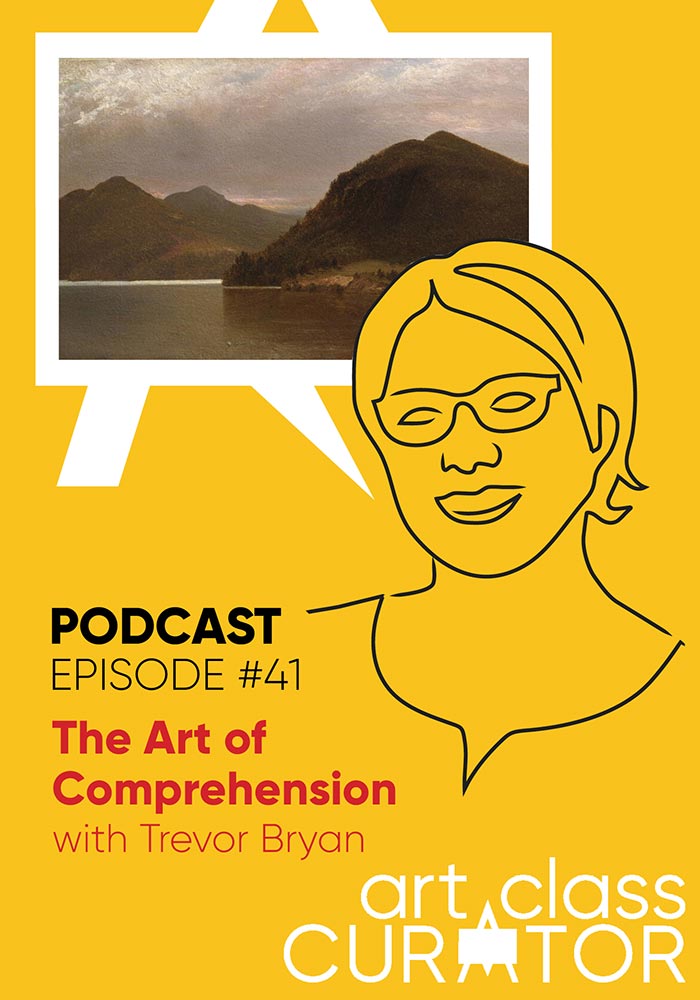
View in iTunes

Filed Under: Podcast


Why is DBAE a Bad Word

While many art teachers still use Disciplined-Based Art Education (also known as DBAE) in their classrooms, it’s picked up a bad reputation. A lot of art education pedagogy discussions pit Teaching for Artistic Behavior (also known as TAB) against Disciplined-Based Art Education. The opinions are strong on both sides, but does it have to be either/or? Let’s talk about it.

Subscribe in Your Favorite Podcast Listening App

  • 19: Highly Sensitive Teachers with Amber Jordan and Monica Wright
  • A Theoretical Renegade: Musings on Art Education and Education Theories and Jargon

Hello and welcome to the Art Class Curator Podcast. I am Cindy Ingram, your host and the founder of Art Class Curator and The Curated Connections Library. We’re here to talk about teaching art with purpose and inspiration from the daily delight to creativity to the messy mishaps that come with being a teacher. Whether you’re driving home from school or cleaning up your classroom for the 15th time today, take a second, take a deep breath, relax those shoulders and let’s get started.

Hello everybody. This is Cindy Ingram from Art Class Curator, and today what I want to talk about is DBAE and TAB. I started the idea with DBAE, which is Disciplined-Based Art Education. So that was really the foundation on how I was taught to teach art, that if you’re unfamiliar with the term, Disciplined-Based Art Education, it’s not necessarily taught as much anymore. They then eventually started to call it comprehensive art education, and then now, now it’s almost like a bad word. When you see it mentioned in Facebook groups, it’s like a derogatory term, which I think is really interesting, and I’ve always really wondered why.

So what Disciplined-Based Art Education is, and that is a total mouthful, is teaching art that’s not just studio but that you teach art history, art criticism, aesthetics and studio. So you’re not just doing sort of foundational studio class, that you’re including the other aspects of teaching art, which of course I have always resonated with. As you know, with Art Class Curator, we are dedicated to creating art connections and we do that through looking at works of art. So aesthetics, art criticism and art history are really firmly embedded into the type of teaching that I do.

When I would start to see people rail against DBAE, I didn’t really truly understand it because, for all intents and purposes, that is how I teach. So I started to do a little bit of research, and one, when I was recording that episode, I did a few back that was called, A Tale of Two Monet’s, about ditching the phrase “art appreciation” and how I don’t necessarily say that what we do at Art Class Curator is art appreciation or art history, that those are just the best words that we have to describe it. When I was recording that and planning that recording, that was the first time I ever really understood that DBAE isn’t exactly right either. So I started to understand a little bit about where people were coming from.

So what I did is I went into the art teachers Facebook group on Facebook, obviously, just the plain art teachers one, the one that has thousands and thousands of people in it. I just searched for DBAE, and apparently I am not the only one that was confused about why DBAE was so terrible because we have other people who are saying, “I don’t understand why DBAE is not a thing anymore. Why do we not like it? I don’t understand.” And then a lot of TAB people came in and be like, “Well, DBAE is not TAB.” And then other people are like, “Why can’t we do TAB and DBAE?” So it’s really kind of interesting to me.

TAB is Teaching for Artistic Behavior, which is an entire other teaching method focused on helping students become artists and think how artists think. But what I ultimately came across after reading all of these comments on Facebook and everything is that you know what? Who cares what it is that you’re calling your teaching. You can do a TAB classroom that is also DBAE. You can do a choice-based classroom that includes DBAE components. You don’t have to throw the baby out with the bathwater. You don’t have to throw all art appreciation out because you want artists to be, you want your young artists to become think like artists.

You don’t have to call your teaching anything. You can take a little bit from what I’m saying, a little bit from what someone else is saying. You can even do some cookie cutter projects for Christmas, and you’re totally fine. I did. Sometimes you just got to throw out a cookie cutter project every now and then because the kids like that, and if it’s not the all of your curriculum, you can still do some of that. So I’m making a case here for less rigid definitions of what we’re doing and more following your own intuition as a teacher because every art teacher is a completely different person. Every teacher is a completely different person. So there is no one-size-fits-all solution to your classroom.

For example, my classroom will look very different than a lot of other people’s classroom because I have really intense sensory processing issues. I’ve talked about that in that episode we did with Monica Wright and Amber Jordan. I forgot what we called it, but I’ll link to it in the show notes. I have very strong aversions to a lot of sound and a lot of movement in my classroom, and I find it to be really chaotic if I don’t have some sort of element of control or structure. If I create a really noisy, chaotic environment, I will be so drained at the end of the day that I can’t be a good teacher because I can’t… Controlling my energy is, I would say one of the most important roles in my life. I mean I know that sounds weird. But you controlling your energy and managing energy management of yourself is… is of utmost importance because you’re not going to be a good and effective teacher if you’re not listening to your own sensitivities and your own… I mean, my borderline neurotic behavior of how I have to have things.

But if you’re not like that, if you’re more loosey-goosey… Which I’ve never, I don’t think I’ve ever said that loosey-goosey out loud before. But if you are at a different personality, maybe you’re more extroverted, maybe you love all the chaos, you’re going to have a completely different classroom than I have. So we can both have elements of TAB. We can both have elements of choice-based. We can both have elements of DBAE. But ultimately it’s about structuring our own classroom in a way that fits us, our personalities and also our students.

Figuring out what works best for your students, what works best for you, that’s where you should start, that there are amazing resources online for any type of art that you want to teach, and you can pick and choose. You don’t have to be a TAB teacher, a DBAE teacher. So this is actually going in a completely different direction than I was planning. I was going to talk about how DBAE is, the elements of DBAE that I guess are good. I guess I could still do that.

In my research on art teachers Facebook group just to see what people were saying about DBAE, I found a link to Phyllis Brown’s blog post. Phyllis was on the podcast last year. She’s amazing, amazing woman, an amazing teacher, and amazingly dedicated to the field of art education. And she wrote a blog post and I love her blog post because she just lays it all out there. She just says what she’s thinking and I think it’s amazing. She wrote a blog post on May 6th of 2016, which I’ll link in the show notes, and it’s called, A Theoretical Renegade: Musings on Art Education and Education Theories and Jargon. And that’s this is basically what she was saying is, she says she’s been asked if she was a TAB teacher or DBAE teacher, and then her answer is, “Why do I have to be one or the other? Can’t I just be a little bit of both or neither?”

That’s you’ll be you. You do the things that are inspiring to you. If you are passionate that students should not see works of art because you think it will disrupt their artistic process, I mean, who am I to tell you not to do that? I don’t agree with you. Foundationally, I don’t agree with you, but that doesn’t mean that what you’re doing is any less valid than what I’m doing. So do whatever you think is right. So if you think adding choice-based is good, then do it. If you don’t, then don’t do it.

I am going to talk about what I like to do and why I think DBAE does miss the mark in some levels. So I think what classic DBAE does is your unit has the art criticism component, the art history component, the aesthetics component. You’re doing the discussion. You’re doing the research. You’re learning about the art, and then the studio project is then related to the art unit or art history or whatever that you’re studying. So maybe you’re doing, you’re studying a certain culture. You study their art and then you make a version of the type of things that they make.

Where I think that fails, and I think that’s a lot of the opinion of the TAB people, is that it is you want the art projects to be more substantial. You want them to have more choice, more personal reflection, personal expression, experimentation with media, that students need the opportunity to experiment and play and create and be original without given this sort of directed project to do. That’s why a lot of the projects that we do in our artwork lessons in the Curated Connection Library are just like prompts about the theme. So rather than making an artwork in the style of, we’re saying, okay, well, this artwork is about community. Let’s have you make an artwork about your idea of community. Maybe you write a poem about your community and then something like that, so that it’s more thematic, more about ideas, and then the student then can place their own, their own meaning on the theme and their own interpretation of that theme.

I hear a lot on those Facebook groups that they don’t want to show examples to students because they don’t want to direct where that student will go, which I do think it’s true. When I am doing a studio project, I often never did examples because I didn’t want students to just copy what I was doing. But also… I think that there’s flaws in that logic when it comes to showing them works of art from other artists.

Jennifer Easterling was on the podcast last week and we talked about how she uses the lessons from Art Class Curator in her classroom, especially with an artwork of the week that she does with her students. It struck home to me when I was talking to her that when we are showing works of art from all around the world, from different voices, diversity in voices, diversity in cultures and times and genders and all of that, diversity of ideas, we are showing our students what’s possible. We’re not closing them down and not limiting their expression. We’re opening up their expression. So when they see that artwork that Jennifer was talking about last week, the Shirin Neshat where they wrote the I am character poem over the picture of their face, they might have never considered the possibility that that could be an art form, that that could be something that they do to express themselves. That when they saw Sandy Sköglund’s Revenge of the Goldfish and the blue room with all the goldfish hanging, that might’ve sparked an idea in them that they would not have ever thought about because they didn’t know what was possible.

So, I think if you’re listening to this, you probably have views that are similar to my own, if you’re following this podcast. But opening up the eyes of our students to the possibilities in the world, that’s amazing. And it can be used to create better artists because when we show students things made by other people, it can only connect them with other people and bring them life and bring them ideas.

When I go to an art museum, I come away with idea after idea after idea, and usually, of course, my ideas are about teaching and how I would teach those artworks. But there’s always something I learned about me. There’s always something I learn about the world. There’s always something I learn about my community. There’s always something I come away with and I never know what that’s going to be, and so you don’t know what that’s going to be for your students. You can’t control what they’re going to take away. So maybe you will have a student that just outright copies it, but you’re going to have another student whose mind was blown and that it’s going to change the trajectory of whatever they end up doing. You never know what that’s going to be. So I think limiting what we show our students is problematic in that way.

I understand where everyone’s coming from along this scale of DBAE on one side and Teaching for Artistic Behavior on the other side, but there can be a middle and only you can determine where that middle is. Only you can determine what you’re going to do in your classroom. I mean, I guess you’ve got, sometimes you have curriculum in place that you have to do certain things certain ways. But a lot of us in our teaching roles don’t have that someone looking over our shoulder telling us what to do. We have a lot more freedom than our cohorts in other subjects, which I think is really exciting for us as teachers. I mean that’s a whole other conversation, should there be curriculum and should there not be curriculum? But that’s another podcast idea.

All right. Well, I think that was all I wanted to say about that. I was just really thinking about why is DBAE a bad word to many people, why is it not, and where I stand on the issue. So, in summary, do what you think is right and it doesn’t have to be one or the other. It can be your version and that is perfect. If you have someone who is criticizing your version of whatever you’re doing, like who cares because you are you. It’s your classroom. I mean, I guess if it’s your admin, I don’t know, then you can take their thoughts seriously. Don’t be pulled into all that drama on Facebook and just embrace what you’re doing and that if you’re following your gut and you’re following your heart, then you’re doing the right thing. So little encouragement for you there.

Thank you for listening and I will see you next time. Bye.

Thank you so much for listening to the Art Class Curator Podcast. Help more art teachers find us by reviewing the podcast and recommending it to a friend. Get more inspiration for teaching art with purpose by subscribing to our newsletter, Your Weekly Art Break. Recent topics include the importance of seeing art in-person, famous and should be famous women artists, and 21 days of art from around the world. Subscribe at artclasscurator.com/artbreak to receive six free art appreciation worksheets.

This week’s art quote is from Émile Zola. He says, “If you asked me what I came to do in this world, I, an artist, will answer you, I am here to live out loud.” Thanks so much for listening. Have a wonderful week.

Thanks for listening! Have an idea for an episode topic or think you may be a great guest for the show? Click here to send us an email telling us about it.

Subscribe and Review in iTunes

Have you subscribed to the podcast? I don’t want you to miss an episode and we have a lot of good topics and guests coming up! Click here to subscribe on iTunes!

If you are feeling extra kind, I would LOVE it if you left us a review on iTunes too! These reviews help others find the podcast and I truly love reading your feedback. You can click here to review and select “Write a Review” and let me know what you love best about the podcast!

View in iTunes

Filed Under: Podcast


Creating Meaning and Connection with Jenn Easterling

Say hello to Jenn Easterling, a long-time member of The Curated Connections Library! She was one of our first members and now works for us creating lessons for the membership. Learn how she uses Art Class Curator resources in her classroom and how it has impacted her teaching and her life. For more information about The Curated Connections Library, visit artclasscurator.com/join

Watch the Interview on Facebook

Subscribe in Your Favorite Podcast Listening App

  • The Curated Connections Library
  • Puzzles About Art: The Chimpanzee Painter
  • ‘I am’ Dorothea Lange: Exploring Empathy Art Lesson
  • For Members of The Curated Connections Library
    • Shirin Neshat, Rebellious Silence
    • Sandy Skoglund, Revenge of the Goldfish
    • Rodin, The Thinker
    • Aesthetics Lessons

Cindy: Hello, and welcome to the Art Class Curator Podcast. I am Cindy Ingram, your host and the founder of Art Class Curator and the Curated Connections Library. We’re here to talk about teaching art with purpose and inspiration, from the daily delights of creativity to the messy mishaps that come with being a teacher. Whether you’re driving home from school or cleaning up your classroom for the 15th time today, take a second, take a deep breath, relax those shoulders, and let’s get started.

Cindy: Hello, everybody. It is Cindy Ingram from Art Class Curator. I am here with Jennifer Easterling. We are going to do an interview about her experience with the Curated Connections Library. This is going to be both a video on Facebook, live right now, so if you’re here, go ahead and say hello. We are also going to be scheduling this, posting this as a podcast episode, so if you are listening to this, and you want to watch the live video, you can pop on over to Facebook and see our smiling faces, but we got it a both ways. Thank you, Jennifer, for joining us today.

Jenn: Yeah, of course.

Cindy: Jennifer works with our Class Curator. I actually don’t know if you have an official title, but she writes a lot of our lesson plans. We don’t do titles very well. She writes a lot of the curriculum for the membership, the Curated Connections Library, which is now open right now until January 7th. I thought I would bring Jennifer on to talk about how she uses these materials in her classroom, because she is a live active teacher. First, why don’t you tell us a little bit about you, what you teach, and what grades you teach, stuff like that?

Jenn: Sure. I teach seventh through 12th grade in Texas at a small independent school. This is my 11th year teaching. During that time I’ve taught all the way K through 12 and throw a little bit of undergrad stuff in there, too, a few years ago. Yeah, I’ve taught a little bit of everything. I currently teach just kind of foundation courses and then upper level. I have digital art classes and I have AP, as well.

Cindy: Awesome. I’m always amazed when I hear about your classroom, and how many grade levels you have, and all the things that you manage to do.

Jenn: If it wasn’t a small independent school, I don’t think I could do it all.

Cindy: Yeah. You have been a longtime member of the membership. We looked it up before, but now I don’t remember, I think it was 2015 or 2016.

Jenn: I think it was ’16, because it was right after my youngest daughter was born, right as I was coming to this school.

Cindy: Oh, yes. I always track things around when babies were born.

Jenn: Yes. It makes a difference.

Cindy: Hi, Jerry. We have Jerry. If you’re listening to podcast, if you hear me say, “Hi,” to random people, I probably am not going to edit that out. Jerry’s here.

Cindy: Let’s think back to when you joined Art Class Curator, the membership back in 2016, what problem were you looking to solve when you discovered it?

Jenn: Right. Well, like I said, I was moving over to this new school. It was going to be the first time that I had seventh through 12th grade students, all that, just that big broad range. I’d been teaching just high school for several years. Also, I had a three-year-old at the time and then a few-months-old child, whatever time it was, because I just remember it was the summer. She was born in May. Then that summer right before I started, I kind of went into a little bit of panic mode of like, “Okay, how am I going to do this with these two babies, and a new school, and all this huge range of classes, which means range of prompts? What am I going to do, and how am I going to do it all?”

Jenn: I just sat down, and I remember just searching the Web for different things. I had actually bought some other something… I don’t even remember what it was now… but I ended up returning it and getting the Art Class Curator stuff and membership. I started with, I think it was the, it’s whenever you did the art history, it was a course of some sort.

Cindy: Oh, yeah. Mmhmm.

Jenn: Yeah. It started with prehistory and went through Rome or Greece, something like that. Anyway-

Cindy: Yeah, Art Around the World.

Jenn: Yeah, yeah, yeah. I loved that, and that’s kind of what sent me back to get the full membership. I mean, I think the very first lesson that I bought was the aesthetics lesson, and just kind of how to get started with talking about art and getting kids to look at it. That very first year, whenever I brought the lesson in, I remember how amazed I was that the kids really just latched onto the prompts and the questions. They were answering it. I felt confident in what I was teaching, and it didn’t take me tons of time trying to figure it all out. It was there. It was spelled out for me and explained it to me. I was able to take that and take it to my classroom.

Jenn: I still remember standing there. I had all the kids come up, because I had an image, I think it was the Death of Socrates, or Zeus Slaying Holofernes, or both of them. I remember having it projected up on the big screen. I invited all the kids to come up and really, really look at it. I was a little bit afraid of that silence, but I embraced it. I leaned into it, and I learned very quickly how powerful that silence is, just to let me be silent and let the kids speak. I thought, “Okay, this works. This is cool. This is great.” Then that sent me out looking for more things.

Cindy: Awesome. I’m going to post a link in the Chat of the Facebook post, and I also put it in the show notes for the podcast, of the aesthetics lesson, so you can check it out. I am terrible at trying to find links while talking at the same time, so just one second.

Cindy: What that lesson is, just in case you’re curious, is you give the student, actually, it has multiple… I think there’s like three or four different lessons in here, but the main, star one is these puzzles about art. It gives you these scenarios, and then you have to ask your students, is this art or is this not art, based on the scenario. It’s a chimpanzee painter. There’s a-

Jenn: There’s the pile of bricks. There’s the guy sitting in the chair in Times Square. There’s driftwood.

Cindy: Yeah, I see. You’ve looked at it more recently than I have. I’ve taught that one so many hundreds of times, but it’s a really, really fun lesson. I’m going to put the link in here. I am not… Oh, this is it. Sorry. I’m going to put the chimpanzee puzzles one in there. Then if you want the full membership, you can buy it individually, but it’s also in the membership, which is now open. There we go.

Cindy: What I really loved of what you said is that you realized that it was about getting the students to talk. It’s not about what are you going to say, but it’s about leaning into that, getting them to do the talking. I think a lot of what we do in our lessons is to try to facilitate that, because it’s not about the teacher saying all the information and the students receiving it. It’s about the students coming up with that stuff themselves through crafted discussion questions, and activities, things like that. Very cool.

Cindy: Why do you feel it’s important to incorporate more art appreciation into your classroom rather than just studio art?

Jenn: Well, I think it is a great way to broaden students’ minds. I’ve had to have this conversation with kids, because we’ll be looking at a work of art, and they’re like, “Why are we looking at this? We just need to be drawing,” or, “this isn’t art,” or that sort of thing. We have to have the conversation of it gives you more ideas. Art comes in all different forms. It’s not just sitting down in a studio and making things. It gives them a look to see, just an insight about how people are doing things all over the world, and what they’re doing, and how they’re making their voice heard in their artistic expression. I think there’s just a lot with it.

Jenn: The more I dig into things and the more I research about different things, I am fascinated to see how people are creating things all over the world, and from however many thousands of years ago to today, people have this need to create. What they create is fascinating. Everybody does something a little bit different. It’s a nice glimpse into somebody else’s viewpoint, into their soul, or whatever they’re saying. I just think that’s really, really cool, for that brief moment of time, whenever you’re looking at somebody else’s art, that you feel connected to them in some way or another. That can’t always be replicated with just studio.

Jenn: As I was saying before, before I moved over to the school and really started incorporating the Art Class Curator things, it was mainly just studio-based. We might have some artworks thrown in there. I always felt this need to incorporate stuff from around the world. I have this great timeline around my room, and it allowed for that. I would add lots of different things, but we never really talked about them. I mean, at least I was trying to get there. I just didn’t know what to do with it. I guess I’ve always felt this need to incorporate stuff in there, but I think the membership has really given me a reason, and a how to, and that, why. Then I can go, and I can defend it, and I can talk about it either with parents, or with students, or admin, or whatever, like, “This is why I think it’s important. It’s not just I’m putting random weird images in front of their faces. There’s a reason for it.”

Cindy: Yeah. I love that, because a lot of art teachers are not, this is not really talked about at all in-depth in teacher training programs.

Jenn: Not at all.

Cindy: I mean, my certification came with my Master’s. There was an aesthetics and criticism class. My focus was in Art Museum. There was a lot of this sort of stuff, but a regular teacher does not get taught how to do any of this. Even the art history is so limited. You take the two survey classes, but that leaves out-

Jenn: Right. Western art, and that’s it.

Cindy: Yeah. That’s one of the things that we’ve really been working on, is having a really diverse collection of artworks in the membership, because it’s not just, like I talked to on the podcast last week, the dead white guys, it’s people from around the world doing amazing things. I love the way you mentioned that.

Cindy: Hi, Veronica. I want to say, “Hi,” to you. She says she is preparing to teach art appreciation for the first time at the post-secondary level. Congratulations. That is exciting. My very first teaching job was doing just that. It was an art appreciation at a community college. Most of the lessons that I used in that community college class are all in the membership. You have a more logistical question about the membership, which I can ask answer at the end. We’re going to kind of stick to talking about the lessons and the impact on the students, and then I can help you with any logistical-type questions at the end. Welcome to the membership, also.

Cindy: Okay. Socratic seminar. We don’t call it that, but there are a lot, everything in the membership. Okay. Sorry. For those of you listening, I want to make sure that the people listening to podcasts aren’t totally lost. She asks, “Where would I find prompt questions for a Socratic seminar along with lesson suggestions?” Every lesson we have is built with questioning, whether it’s they write it first, and then you talk about it, whether you talk about it first, and then you do an activity. Discussion is the foundation. It is built in. We also have in the membership lessons on how to lead discussions. If you’re not comfortable doing that, we have a whole framework of discussion,, and that is in the membership as well. You can go in and learn how to do it really effectively.

Cindy: We just don’t call it Socratic seminar, because I’ve never really learned what exactly Socratic seminar is. I know it has related questions, but it’s not one of those things that I ever really was taught or thought about. But yes, discussion is a very, very strong component of anything we do, for sure.

Cindy: One of the things that you mentioned, Jenn, is that your class before was very studio-focused, and then now it’s more integrative of art history, and art appreciation, and stuff. Can you tell us a specific story of a lesson or two that went particularly well with your students, that you felt, especially, I love a lot of your stories that reach? You talk about students who are maybe not as engaged in the studio component, becoming really engaged with these other types of activities. Can you give us a few examples of lessons that went well?

Jenn: I’m trying to think. How I’ve been incorporating it more lately, because we have such a weird schedule, and I’ve got a lot of kids missing a lot, so we don’t have tons of time to focus on this and we still need to do a lot of the studio things, is I really focus on the Artwork of the Week. There are times that we’ll have a discussion with it and really talk about it. There are other times that I’ll just kind of share it with them, or maybe I’ll put out, here’s the art of the week. These are your options, and I let them choose how or what they would like to do with it, whether it’s drawing, or writing, or answering questions. I kind of let them choose what they feel most comfortable with.

Jenn: I’ve tried to do… I also moved classrooms. With that, I have this great hallway where I’ve tried to really utilize it. I’ve done a lot with Art of the Week out there in that hallway. We’ll do small activities, and then just go hang them up out in the hallway. We’ll have a poster in the hallway, and then the kids’ responses all around it. I think we did Rodin’s The Thinker. I had them draw or write what he was thinking about. We just stuck it all around the wall. They were hilarious. It was great fun to see where these kids were taking it. Some of them took it really serious, and others, it was just really fun.

Jenn: We also did Sandy Skoglund, the Revenge of the Goldfish. After we talked about it, I had the kids each make a goldfish. We hung them all out in the hallway, so we created our own Revenge of the Goldfish down this hallway. It’s actually a lot of fun to watch, because the doors will open up, and those fish will just swing everywhere. We also have these little pre-K kids that walk through there, and they’re like, “Oh, this is so cool.” It’s fun to see their reactions. It’s silly, but I think they’ll remember it, remember that time that the crazy art teacher made us make these goldfish and fill our hallway with all these goldfish.

Jenn: I thought it was a really neat lesson on Shirin Neshat with her Rebellious Silence. After we talked about it, and I showed him some of the videos of what she was doing, and how she was doing it, and several works in the series, the Women of Allah series, I had them print out their own picture in black and white. They had to write the I Am poem about themselves. We’d done it before. We’d looked at other artwork and they’d written the I Am about that specific artwork, so they knew the format. They knew what to do. I said, “This time I want you to write it about you. You can take it really deep. You can can keep it kind of superficial.”

Jenn: It was really great to see how deep some of these kids think. They got all into cutting up their portraits, because we showed them the entire series of Women of Allah series. It’s her face, her portrait, but she crops it in different ways. She’ll have the firearm in them, which is all symbolic, which we didn’t do anything with firearms. It’s showing how the images were cropped in different ways to make it more dynamic. I had several kids really get into that, and cropping their faces down in different ways, and then writing on it. I let them write in whatever language they wanted. We have a lot of international kids, so cool to see all the different languages.

Jenn: It’s not about me reading it, it’s just about you writing about who you are. I am, I am what? I even had, one of my kids, he wrote it, and it was real superficial or whatever, He didn’t want to do it. I was like, “But this is part of it, whether you think this is art or not.” He’s one that struggles with it. He says, “This isn’t art. This isn’t art.” It’s fun, but we’re going to keep looking at it, because I’m here to help open your mind. Then I saw him later, whenever he finally turned it in. He’d gone back, and scratched out everything that he had written, and rewrote it. It was very, very deep. I ended up sending it to his mom, which was kind of cool. She said, “Oh, this helps kind of with him and things that he’s going through and all that.” It gave this great little insight to the kids, and what they were going through, and what they were feeling, and kind of where they’re at. There are different ways that I’ve incorporated it.

Cindy: Yeah. I love, oh, I came up with so many things to say, like we were talking about. Well, I don’t know what I’m going to say when she’s done, but I’m going to keep listening. I also, in the comments, for those of you watching, and these will also be in the show notes for those who are listening to podcasts, the artworks that she talks about, I’ve typed those into the comments just in case you wanted to refer back. If you are a member, just type those into the search, and you’ll find the lesson that she’s talking about. Then I also put the link to the I Am character poem. It was for a different artwork blog post, but it’s also a free resource on there. You can click on any of those.

Cindy: Okay. Veronica has a good point here, too. She says, “Basically, guessing you are moving towards a broader range of visual art and culture issues.” Yes. I mean, I would say that, but I think that, yeah, we’re not focusing on just traditional Western art. We do art from around the world, a variety of types of media, but it all does fall under the category of art, if that makes sense, of visual art. It’s just we’re not focusing on just the Western traditional dead white guy.

Cindy: Well, I’m completely lost with whatever I was saying. I think we just kind of have to start fresh. Everybody was super inspired by Jenn’s lessons. Oh, your student with the shirt in a shot, I love that every artwork that you put in front of your students, not every student is going to respond to it. That’s why we really promote a wide variety, because he might not have at all connected with the Revenge of the Goldfish, but then he really deeply connected with this other one. It’s going to be another student who deeply connected with Revenge of the Goldfish, but not the other one. I think it’s giving them a wide variety.

Cindy: I love the Artwork of the Week format, because that makes it really, really easy, because we have a tendency to overthink like, “Okay, every artwork we do has to fit with whatever unit we’re doing. How is it going to fit in the sequence?” Then when you start doing that, and you start overthinking, then you just end up cutting it.

Jenn: Yeah. It becomes too much work and just too much.

Cindy: Yeah. If you just pick one every week, it doesn’t have to be related to what you’re doing. I mean, just art for art’s sake moment in your classroom. It becomes a really awesome highlight for your students. It’s like, “Well, what are we going to look at this week?” That’s exciting. In the membership we have, it’s called the Artwork of the Week Bundle. Every month we release four new artworks for that. All of those are in a filterable thing by time period, by gender, by part of the world, so that you can kind of pick and choose what you want to do, but we also give you four every month that you can just take and use, ready to go. Excellent.

Cindy: Now can you talk about your journey on learning to lead a powerful art discussion with your students? When you said you started, it was kind of hard to navigate. Can you talk about how you learned to do that, and how it goes for you now?

Jenn: Well, I think, as someone said, it really was helpful to have questions laid out in the beginning, because whenever I just wasn’t really sure exactly what I was doing or how I was going to do it, the lesson had that kind of step-by-step of these are prompts, these are questions, that you can talk about. I’d carry around my piece of paper, and I’d look at those questions, especially when it got too silent or just kind of didn’t know what to do with it then. Now we just kind of roll with it. I start off with the main two questions of what’s going on here and what do you see that makes you say that. From there, I let the kids take it. I always love how they’ll come up with stuff that I hadn’t even thought of, or hadn’t seen before, or make some kind of connection that had never crossed my mind. We just follow that, and we go for it, and see where it takes us.

Jenn: I’ll look at the questions ahead of time so maybe I kind of have some ideas in my mind if something hasn’t been touched that I think is a really important point or something really cool, then I’ll make sure that I bring that point up or something. Then, like I said, we just kind of roll with it. We’ll discuss, I’ll pull it up on the big screen. I give them little printouts that they stick in their sketchbook. They’ll either write, or draw, or something with it. A lot of times it’s just in their sketchbooks, so not everybody sees it, but every once in a while we’ll do it on a separate sheet of paper and go put it out in the hallway to just get it out there, so that, yes, we are doing more than just some projects and stuff.

Cindy: Yeah, I love how you do that with the sketchbooks. If you all didn’t understand that, they have their sketchbooks. She actually prints out little copies of the artworks that they’re talking about, and they glue them into their sketchbooks. At the end of the year, that’s so cool that they have that memory, that it’s not… They’re going to have it anyway, but a physical representation of that, and they can continually flip through that.

Jenn: Right. I always make them glue it down, and then they have to write the name of the artwork, who did it, and when it was created. Now I’m starting to emphasize more on the part of the world of where it was created. If nothing else, just remember that you’ve seen it, and then you can look up that reference to go back and look at it. I’ve been doing a lot with my AP kids. I’m like, “Okay, I’m giving you artworks to see what other people are doing, that are kind of out there, that are different. These are all references for you to go back and use, especially with the process, how it’s changed.” They want this process journal. I’m like, “Well, I’m giving you these different resources to think about through your process. Reference them, use them, figure out what else you can do. What idea might it spark to send you in a different direction?

Cindy: That’s cool.

Jenn: That’s how we’ve been using it.

Cindy: Do you do the same artwork per week for all of your classes?

Jenn: Yeah. I just have, this is the Art of the Week this week. I have it sitting up on my desk. They know Monday morning, they just start grabbing them. Sometimes if on weeks that maybe we don’t have a big discussion, they just get it at some point, and they know that it’s due by the end of the week. I’ll have my poster, because I’ll print out a bigger poster, kind of 11 by 17, of the artwork in color, and the name of the artwork, who did it, year, location, stuff like that. They at least have that reference. Last year it was great, because I printed everything in color. They had these great colorful little pictures all through their book. We don’t get to do that this year. I did it a little bit.

Jenn: Then once we’re done with it for the week, I take it, and I put it out in the hallway. I’m getting this entire gallery going in that awesome hallway of just different things. I’ve had people make comments of, “Oh, I’ve seen that. Oh, I remember that,” stuff like that. People who have no idea what’s going on. We have a lot of tours that go through our school, so it’s great to put all that stuff up to, “Hey, look at what we’re doing.” It’s good for the school, too. Parents come in or anybody else to see that there are more things going on than sitting and drawing all day.

Cindy: Yeah. It’s so cool. What an impact. You think about the teachers that are walking by, the admins. Everybody is being impacted by the art, because I would think they would have to just stop and look, just to see, “Oh, what did they do? What did they do this week?” They probably make it a point to come check it out at some point, because then those teachers are making art connections.

Jenn: I’ve printed out posters for other teachers. The same thing, just a second copy, and they go put it in their classroom, because it applies to Spanish, or World History, or whatever else they’re talking about.

Cindy: Yeah. Another thing that Jenn does, which I think is really cool, is she features all of the writing, and the poems, and the different things in her art shows and stuff, too. Can you tell us a little bit about that?

Jenn: Yeah. It kind of came about last year. I had a teacher wanting, or I guess it was parent who is putting together or helping with an art show, and she wanted to do some kind of rolling PowerPoint presentation to go on the background while the band, or orchestra, or whoever was playing, something like that. I was like, “Well, I don’t really have tons of this, but, hey, what if we use this stuff out of our sketchbooks?” All year long where we’d been printing their picture, or putting the picture down, and then adding all these questions, and different writings and poems and stuff. She just went through, and photographed a whole bunch, and put them up there. People were reading all the kids’ writings and thoughts as the concert was happening. I thought, “Oh, this is kind of a cool idea.”

Jenn: I have them pick out one or two of their best, favorites, whatever they liked, or they could come up with something new. They had to print it out and add it with their stuff for them, because we have two Fine Arts nights, one in December and one in April. They pick something, and then they format it really nice, and print it out, and hang it with their artwork. They have to talk about it. They have to defend their stuff, everything that they’ve been doing at the Fine Arts night. They have to record themselves, so part of it is talking about what did they do, and what did they learn, and what did they see. It’s just a fun different way to say, “Yeah, we do more than just put some crafts together as some people would think. Yes, we do write. Yes, we do think, and there’s a lot more to it,” which I think is great. The English teachers love it. They’re like, “Oh, look, you’re writing poetry.” I’m like, “Yep, we do it, too.” It’s much more cross-curricular than you realize.

Cindy: Yeah. I love it. I think I want to ask you two questions. I’m trying to decide which one is safer. Your membership in the Curated Connections Library benefits your students and even your community, we just kind of talked about that, and then yourself. How would you say that the membership has benefited your students?

Jenn: I think it’s just given them a new way of looking at things to help them kind of open their mind a little bit about what is considered art and just allow them to be curious and to question things. Even with the puzzles, is this art? Well, it’s great to have those debates and discussions, but I think it just gets them looking at things more, and just in different ways than they did before, and being exposed to more than the dead white guys, in different cultures around the world, and how they do things, and maybe what inspired something else. Yeah, I think it helps complete their education to where you’re educating more of the entire child, the whole child, versus just one specific thing.

Jenn: Now, we’re reaching into cross-curricular stuff. If that’s a huge thing at your school, it’s already laid out for you. It’s an easy way to incorporate writing. I know I hear a lot of schools are really incorporating writing into every single subject. This is an easy way to do it, that shows that higher-level thinking, that you may not get in just a strict studio course. You’re going to get the higher-order thinking whenever you’re thinking about art and doing certain things. This just gives it another level. It just makes it a little bit deeper and a whole new way of looking at things where maybe they didn’t have that before.

Cindy: Awesome. That was the benefits to the community and the students. How has your membership benefited you personally as a teacher?

Jenn: It’s given me a lot more of my time back. I remember those nights before. On Sunday night, all of a sudden I’m like, “Oh, I guess I really have to think about what I’m going to do Monday morning.” Nine o’clock at night when I need to be going to bed, I would sit up, and I would start researching, start thinking. I’m like, “Oh, okay,” kind of throw something together. But now going in, especially focusing on the Artwork of the Week, I know what’s going to happen Monday morning, and the kids know what’s going to happen Monday morning. Even if I can’t wrap my hand around the rest of the week or something, I’ve got Monday morning planned, and we can kind of go from there. I think it’s taken a lot of the pressure off.

Jenn: Especially with the Art of the Week, it’s nice that you could take it as far as you want. You can leave it with just looking at the artwork, and doing a quick something or another, or you can take it all the way through, and do a really cool project, and turn it into something much larger that would take more than just a few minutes or a day or two. It’s nice that it’s got that flexibility.

Jenn: With the wealth of resources, if I have some kind of idea, I find myself going to the website and just typing something in to see what I can find. Most of the time, there is something there, and somehow I’m able to connect it, to use it, learn it, incorporate it. Or even if I want to learn more about something, maybe there was a question that came up during the day from a student or something, I’m like, “Hmm, let’s go check it out, and see what else I can find, and learn more about it myself.” It’s been really nice. I’m not having to stay up at school figuring out lesson plans. I know what’s happening. I’m there for other reasons, but not for lesson planning.

Cindy: All the other things.

Jenn: Yeah, all the other things. It gives me time to focus on those other things, and get them done, where I’m not having to take it home. That’s been huge.

Cindy: I love the strategy of having all of the students from the whole day do the same artwork all on Monday. That is, I mean, you’re not just saving yourself one planning period, or one lesson, that’s however many classes you teach that day. That’s one less lesson you have to plan that week. Think about the cumulative effect of that.

Jenn: It’s huge. It’s nice that it builds on the different classes throughout the day. You’ll be like, “Oh, well, this class brought up this. Have you thought about this,” or, “with this class when you,” so it’s great to see that building with the students.

Cindy: I had never thought about this before, but it creates a common vocabulary among all of your students on your campus that everybody who’s in… Do all of your kids take art?

Jenn: No. They’re able to take other things, band and other stuff.

Cindy: You have that sixth grader or seventh grader look at the same artwork that a ninth grader did. They can always have that sort of connection, which I think is really cool. Love that.

Cindy: Okay. Let me think if there’s any follow-up questions I have about that. I don’t think so. What do you think is, for someone who’s considering joining, but they’re on the fence, what would you say to them?

Jenn: I would say it’s definitely worth it. It has really changed how I teach. Like I said, it gave me a whole lot of time back. I think it helped make the lessons that I do teach from day-to-day, or week, or whenever, I think it makes them more powerful where the kids are able to connect with things, and then take that, and use that, in their own life, in their own work. Like I said, with the one kid who scratched the poem out after we’re looking at the Shirin Neshat work, and writing on his own face, it gave this deep meaning with all these things that he’d been going through that I had not a clue. As soon as I read them, “Oh, this explains so much about this kid and some of the things that he’s going through.” I think for him, whether he considered it art or not, he was able to get that deeper meaning with it. Where before I started using these kinds of things, it wasn’t there. We’d make cool pieces, but I feel like there’s just a bigger connection.

Jenn: It makes me more aware of the world around me. It makes me excited to go see different artworks in different shows, exhibits, whatever. Purposefully, we’ll go to galleries now, where I didn’t before. I’m like, “Oh, I know what this is. I understand what they’re doing.” For me, I definitely think it helped with my teaching. I just have a greater understanding of what I was teaching, and a greater appreciation of different things that are happening around the world, and artists response to that.

Jenn: Yeah, it’s had a lot of impact on me, more than just my teaching. I think it’s important now to take my daughters to museums and stuff and see where they’re getting. I’m starting them young on that sort of thing. I don’t know that that would’ve happened if I hadn’t have gotten connected with all this. It’s very personal to me. I really appreciate all the things that are happening and how much it has just helped me, not only in my teaching, just been in my personal journey. I can think about artworks and connect with artworks that I’d never thought about before. Yeah. It’s been really great. It’s been a huge factor.

Cindy: That’s amazing, as I wipe my tears away. Oh, god, that’s beautiful, because I think, it’s a lot more than just saving time. It’s this infusion of meaning that is just added to your life. It’s not just-

Jenn: To understand the why. Why do I get up and teach this every day? Yeah, I know art’s important. Yeah. Okay, but why? Why do I feel so strongly and passionate about it? You’ve helped me get my why.

Cindy: Oh, god. Okay. I did. That was last week. That was the last podcast episode, was figuring out your why, because that does it. It makes your whole life, your whole job easier if you know why you’re doing what you’re doing. You wake up every morning seeing the world through that lens. Yeah, I totally lost my voice because that was really wonderful. A wonderful, actually, way to end, as well.

Cindy: If you want to add that joy to your life, if you want to find meaning, and connect your students to art, and connect yourself with art, we are excited to welcome you into the Curated Connections Library. Membership is open until January 7th. It closes at midnight Pacific, 11:59 Pacific, on January 7th. We only open a couple of times a year, because we like to spend our time writing these lessons and making these connections. The link to join, if you are interested in joining, is artclasscurator.com/join. We would love to have you. If you have still any questions about the membership, you can send us an email at supportartclasscurator.com. Also, there’s a chat box in the bottom of that, artclasscurator.com/join that will send us a message, too. We’re here to answer any questions that you have. Thank you so much for listening to this interview. Thank you so much to Jenn for sharing her experience. I think that’s it. All right. Thank you so very much.

Jenn: Bye.

Cindy: Bye.

Cindy: Thank you so much for listening to the Art Class Curator Podcast. Help more art teachers find us by reviewing the podcast and recommending it to a friend. Get more inspiration for teaching art with purpose by subscribing to our newsletter, Your Weekly Art Break. Recent topics include the importance of seeing art in person, famous and should-be-famous women artists, and 21 days of art from around the world. Subscribe at artclasscurator.com/artbreak to receive six free art appreciation worksheets. This week’s art quote is from Chuck Klosterman. He says, “Art and love are the same thing. It’s a process of seeing yourself and things that are not you.” Thanks so much for listening. Have a wonderful week.

Thanks for listening! Have an idea for an episode topic or think you may be a great guest for the show? Click here to send us an email telling us about it.


Subscribe and Review in iTunes

Have you subscribed to the podcast? I don’t want you to miss an episode and we have a lot of good topics and guests coming up! Click here to subscribe on iTunes!

If you are feeling extra kind, I would LOVE it if you left us a review on iTunes too! These reviews help others find the podcast and I truly love reading your feedback. You can click here to review and select “Write a Review” and let me know what you love best about the podcast!
View in iTunes

Filed Under: Podcast


Connecting with Joy and Purpose in the New Year

Teacher burnout is so real it hurts, but there are ways to care for yourself and organize your life to avoid running on empty. In this episode, Cindy explores how teaching is impacted by purpose and joy. She shares her experiences from two vastly different schools, discusses how to prioritize your teaching responsibilities, and how you can avoid burnout.

Subscribe in Your Favorite Podcast Listening App

  • The Curated Connections Library

Hello and welcome to the Art Class Curator Podcast. I am Cindy Ingram, your host and the founder of Art Class Curator and the Curated Connections Library. We’re here to talk about teaching art with purpose and inspiration from the daily delight of creativity, to the messy mishaps that come with being a teacher. Whether you’re driving home from school or cleaning up your classroom for the 15th time today, take a second. Take a deep breath. Relax those shoulders, and let’s get started.

Hello everybody, it’s Cindy Ingram. Happy new year. I know I am publishing this just a few days before the new year of 2020 and, it’s a time of year to do a lot of reflection and looking back. And I know personally, 2019 was a year of tremendous, tremendous personal growth for me. So, it is something I am sitting back and thinking about, or reflecting on the last year, letting go of the old me and into the new. And I don’t ever set any new year’s resolutions, but I am spending some time trying to integrate all of the learnings from the last year. And thinking about how I’m going to embrace those moving forward into the new year. And one of the things I spent a good amount of time thinking about in this last year, and in the the membership, the Curated Connections Library by Art Class Curator, we have a course in there called Creating Curated Connections. And it is all about sort of the foundational system that you need to be able to lead and create the life that you want.

And so if you want to have a Curated Connections Classroom, one that’s full of conversation and discussion and excitement and joy and energy, that it’s not about just finding the right lesson, it’s about going deeper than that. And so in the Creating Curated Connections course, we talk about that there’s this iceberg that is all below a really positive learning environment for your students. So you have this classroom that’s full of energy and excitement and joy, curiosity, diversity, acceptance, kids who are really connecting to art, and conversations that are hard but invigorating. To get there, that is more than just downloading a lesson. That or creating a lesson, that there’s a foundational thing.

So one of the very first levels of this foundation that we discuss in this course in the membership, is this idea of what’s your purpose? Why are you doing what you’re doing? And we know that teaching is one of the hardest things ever that you can do and that it is one of the most stressful jobs that you can have. I’m not citing any statistics on that, it’s just I’ve lived it. I know. It’s really, really stressful. But studies have shown that 35% of teachers leave the profession during the first year. And then by the end of the fifth year that 50% of teachers have left the field. Now those statistics come from the Wisconsin Education Association Council, and it’s not surprising at all. That that sounds kind of right. It’s a really, really hard job.

We have a lot of unique challenges. Hundreds of students instead of a few classes worth. We don’t have a lot of curriculum support, financial support. We don’t have a lot of social support. Often the art teacher’s the only one in the school. And the fact that we are the only really creative outlet for a lot of the students, and so a lot of the students come to us with emotions, big emotions. Especially if you’re a middle school teacher, you know that it’s all emotions all day. And, it’s survival mode. You start out the year sort of fresh and excited, and then you hit in October and, you just get completely drained. And then, it goes up and down.

There’s this chart from the Wisconsin Education Association Council that has that. It’s like, your mood is great at the beginning of the year. It drops when you start hitting the stress of October. You hit November, December, January, and it’s just rough. It’s the lowest part of the graph. And then you start to rejuvenate yourself into January, February. It has April and may pretty high up. I honestly would probably disagree with that. It gets pretty rough at the end of the year too. But, it’s rough. And I had been thinking a lot about, well how do we thrive in this situation where it’s so rough? Because, we deserve better than that. We deserve to live lives that are not stressful. That we can thrive in. That we’re not crying on the way to school.

I had a job, my very first teaching job, I cried on the way to school. I cried on the way back. It was miserable. And I was thinking, well, what would make it better? So, I’m thinking of two of my teaching jobs. One of them was miserable. Like I said, I cried. I didn’t have any anyone to talk to. I was in an isolated, in a portable, with only one other teacher was in a portable. Kids are being taken to me in and out all day long, it was elementary, but I didn’t have any sort of social outlet with adults. And all the adults there were not very friendly to me. And so I did not make a lot of personal connections to them. Mainly probably was, I was new and terrified. And also, there was no time for that at that school. And it was just that everybody at that school, there was a profound lack of joy. And joy is one of my core values. And so having a, a situation where joy is gone, was very, very hard. I only lasted two years there before I had to leave.

And contrast that with my last teaching job, which was a charter school teaching sixth, seventh, eighth and ninth grade. And it was the weirdest place ever. It was a charter school, like I said, they were all portables outside of a church. They followed a classical curriculum and I kind of went away from that and did more diverse things, as you know I’m prone to do. But, everybody there, all the teaching staff were very new teachers. A lot of them were very fresh. But everybody there had this profound love of learning. A profound love of teaching, and a profound love of the content they were teaching.

And even though the school was ridiculous [laughs]… no, it was these portables with not a lot of resources, everybody there was so joyful. And it was so fun to work there. Even when my mom, I was talking to her at the end of the school year and I was quitting to work on Art Class Curator, and she was like, “I’ve never seen anyone so happy as I’ve seen you at this school.” And that’s what it was like. It was rough, don’t get me wrong. Like there were days that were absolutely horrible. There were days where I was hitting a breaking point. When someone would ask me to paint a sign and I would just break into tears because I was running a business and teaching at the same time. But, it was joyful and it was wonderful.

And I’ve thought about, what is it that made that place so different then the other school? It was just night and day different. Even the kids, they didn’t have any different behavior. They were still pretty rough kids. Both of them were in really low-income areas. But, the kids loved it there too. Everybody, even if they didn’t love it, they loved to hate it and loved their teachers. So it was really interesting. But I think what makes that place so different, and what makes us teachers so joyful, and that made the environment so joyful, is that everybody was very firmly connected with why they’re there. They were there to make a difference on kids’ lives. They were there to impart this knowledge on them. And they were there to really connect the students to a love of learning. Because it was a classical school and most of the teachers there were classically educated. So they were very deeply connected with that.

And, I really feel it’s very important to stay in touch with why you do it. And that’s even true for running my business, with Art Class Curator. There are times when I get totally burnt out. It happened last January. Well it’s happened a couple times just in 2019. Like I said, I did a lot of growing in 2019. But after we opened the membership in January, or it was February last year, I just fell into a really deep funk. I just, I couldn’t work. I was totally burned out. It was feeling really heavy and hard. And it wasn’t until I kind of pulled myself out and I went to NAEA, and I’m kind of tearing up when I talk about it because it really was profound. And I did some presentations there.

I did three presentations in NAEA in, where was that at? It wasn’t Seattle, was it? Well that was the year before. Boston. It was Boston. So anyway, I did, that’s neither here nor there, so I did presentations there and I also usually do a sort of cocktail hour/happy hour thing for Art Class Curator readers. And I got to be with my people. I got to be with other teachers. I got to connect with everybody again. I got to have these conversations in-person. I got to teach live in-person, because I do desperately miss teaching live, in-person sometimes. I don’t miss any of the burnout of being a teacher or the the work or the all of that, but I miss the teaching part of it.

And so, it was me reconnecting with my why. Reconnecting with the people that I help. Hearing stories about lessons that they’ve done and different things like that. And I was able to sort of pull my way out of that funk by reconnecting with the reason why I do it. So I think, that might seem like a really simple thing. It might seem like, oh, of course I know why I’m doing it. But are you truly, really connected with why you’re doing it? So when we get real about why what we do matters, your whole perspective can shift. So if you prioritize what matters to you, you become a better teacher for your students. And your life is more, is more balanced.

And if you think about it, you’ve got, your day. You rush out of the house because you cannot be late as a teacher. You might have little kids at home, you have to get them to school, you have to get them fed and dressed. Have to get yourself fed, showered, dressed, fed, all of those. I said fed many times, I think I’m hungry. But, you have to do all that in the morning. You get there, and you usually get swept right away. Because if you’re like me, you show up the minute you need to be there and then you’re just swept right away into responsibility. You don’t stop. You don’t stop to pee. You don’t stop to eat. You just go-go-go all day long.

And then, you’ve got all these kids in your face and all of their emotions. And you’ve got administrators, and you’ve got other teachers, and you’ve got people complaining about their jobs. You’ve got all of that you’re dealing with every day. I don’t mean to make you have a panic attack here just talking about it. But when you’re firmly rooted in why you’re doing what you’re doing, that stuff becomes just a little bit easier. When your classroom is just a total mess. And when you are bogged down with grading, or your administrator is making you do something ridiculous. And you have another meeting to go to, you could stop and think why am I even doing this? And get connected to that greater cause. And that will hopefully help you rejuvenate a little bit.

And what I want you to think about doing, is to document your why … and make a poster. Okay? I’m going to give you an art project here. It can be as simple as taking an artwork. What I did is, is I took an artwork that I like, it’s colorful, I use it a lot in my website, and I typed in my teacher why over the top in white and I have it. It’s, distill your message, your why, down into one line. Put it over an image. You can make a nice artwork out of it. And then hang it up. And when you’re feeling down, and when you’re feeling overwhelmed, look at it. Make it a background on your phone. Put it up on your screen, on your computer at school, so that you can remind yourself of why you’re doing what you’re doing. And it will also help you filter all of those things.

Like when someone asks you to make a poster for the Valentine’s Day dance. Or they ask your kids to make one. You can look at your teacher why and say, “Is making a poster for this Valentine’s dance in alignment with my teacher why? Why I’m here? Or is that going to take away from my why? Add more stress? And add more burden? And not actually advance my students and make those art connections that they want to make? So you can use that as a reason. And you can point to your teacher why when that person asks you, “You know what, that does not fit with my curriculum. It does not fit with why I’m here on this planet. Why I’m here in this job. I am here to make a difference through art and I am going to have to say no to that.”

It gives you clarity about what matters to you. But honestly it’s useless if you ignore it or you don’t set boundaries around that. So, be true to yourself. Be true to your values. And that’s how you’re going to avoid teacher burnout. And that’s how you can serve your students at a higher level, because it just gives you a different perspective through which to look at your job and what you’re doing.

So, I encourage you to do that as you’re starting this new this new year. And hopefully it gives you a little bit of a rejuvenation for the coming year. And if you’re interested in diving deeper into this type of content, we do have in the membership, the Curated Connections Library, we do have a course called Creating Curated Connections. And we go through this framework of this foundation to get there, before you ever have the lesson in your hand. And it includes your teacher identity, your purpose, your limiting beliefs, your values, your capabilities, your behaviors. All of this to help us get to a point where our classrooms are joyful, creative, connected places. What we call a curated connection.

So, join us in the membership. We are opening the doors in just a few days. On January the 2nd, the doors are open for the membership and they will be open from January 2nd to January 7th. So we would love to welcome you in. You can go to artclasscurator.com/join to check it out. If you’re already a member, just go into your courses area and you will find that course to check it out.

All right. Well thank you guys so very much for listening. Happy new year. I wish this year for you is full of joy. And hopefully by creating your teacher why poster, you can add a little bit more joy into your day-to-day life. All right. Thanks so much. Bye.

Thank you so much for listening to the Art Class Curator Podcast. Help more art teachers find us by reviewing the podcast and recommending it to a friend. Get more inspiration for teaching art with purpose by subscribing to our newsletter, Your Weekly Art Break. Recent topics include the importance of seeing art in-person, famous and should-be-famous women artists, and 21 days of art from around the world. Subscribe at artclasscurator.com/artbreak to receive six free art appreciation worksheets.

This week’s art quote is from Thomas Merton . He says, “Art enables us to find ourselves and lose ourselves at the same time.” Thanks so much for listening. Have a wonderful week.

Thanks for listening! Have an idea for an episode topic or think you may be a great guest for the show? Click here to send us an email telling us about it.


Subscribe and Review in iTunes

Have you subscribed to the podcast? I don’t want you to miss an episode and we have a lot of good topics and guests coming up! Click here to subscribe on iTunes!

If you are feeling extra kind, I would LOVE it if you left us a review on iTunes too! These reviews help others find the podcast and I truly love reading your feedback. You can click here to review and select “Write a Review” and let me know what you love best about the podcast!
View in iTunes

Filed Under: Podcast


About Those Dead White Guys: Why the Same Old Artists Aren’t Enough

Let’s talk about why dead white guys are not enough in our art classrooms and why I’m not having a panic attack even saying those words!

Subscribe in Your Favorite Podcast Listening App

  • Leonardo da Vinci ‘Salvator Mundi’ Auction
  • Nanette by Hannah Gadsby
  • NAEA Position Statement on Diversity in Visual Art Education
  • Elements and Principles Printable Poster Pack
  • Podcast Episode #24: Art History Nerds with Tim Bogatz
  • The Curated Connections Library – Join the Wait List

Hello, and welcome to the Art Class Curator Podcast. I am Cindy Ingram, your host, and the founder of Art Class Curator and the Curated Connections Library. We’re here to talk about teaching art with purpose and inspiration from the daily delight to creativity to the messy mishaps that come with being a teacher. Whether you’re driving home from school or cleaning up your classroom for the 15th time today, take a second, take a deep breath, relax those shoulders and let’s get started.

Hello everybody and welcome back to the Art Class Curator Podcast. This is … Excuse me. Got too excited. This is Cindy Ingram, and today we’re going to talk about the Dead White Guys. So, I’m going to start off this episode to tell you a little bit of a story about my history with this website, Art Class Curator. A few years ago, this was … I can actually pull up the exact date. It was November of 2017, and it was during the auction where that da Vinci painting sold for $450 million. The night that the auction was running, I believe … I want to say it was probably a Wednesday night because I send my emails on Thursdays.

The email for Thursday was already loaded in the system and it was ready to go. But I’m watching this news happen, unfold, live, watching this auction streamed through Facebook. I was like, “Oh crap, this is a big art news. I’m going to change tomorrow’s email to talk about this because this is an important event, record-breaking event.” So the problem there was, that I’m watching this auction, and I went in the middle of the da Vinci one, and then I think I started to watch the ones after it. It was painter after painter of white guys. Okay?

Hearing this amounts of money and seeing no diversity represented in the auction, there might have been, the ones that I watched there wasn’t, like the ones immediately after. I remember there was … I want to say there was an Andy Warhol and maybe like Cy Twombly. I don’t remember exactly, but I just remember my stomach was churning at that amount of money. I was torn because I was thinking, gosh, this is art, I love art, it’s valuable. But what else could that 450 million do in the world? Also, where is all of the other art that is just as good? I was feeling sick. It really actually made me feel sick to my stomach.

So I went into my email, and I changed my email and this is what I wrote. So after talking about the artwork, showing the artwork, I’m sharing a quote from the auction about the artwork. I then put … I kept watching the auction after until I started to feel a little nauseated by it all. It’s a little hard to hear the word million so many times in a row while also hearing white men’s names over and over too. I can’t figure out my opinion on any of it, but it was pretty fascinating. Then I linked to the recording.

So I did that, I threw that line in there and I then got some replies to the email. We get replies to email all the time, we love getting replies, but there was not nice replies in there, and it caused me a great deal of anxiety to get, you write something about what you care about, and you put your heart and soul in the some thing. So, in the early years of running my website, I was especially sensitive to negative emails, negative comments, things like that. I honestly don’t get a great deal of negative comments and feedback there. It’s pretty rare. But I know a lot of bloggers, especially on kid activities area, they get a lot of negative comments.

So it caused me a great deal of anxiety. I felt like, God, I shouldn’t have done that. My husband at the time was working with me, he was the one who had originally scheduled the email and I didn’t tell him that I went in and I changed the history through all the emails for grammar and stuff like that. He was like, “Oh, you should run things by me before you do stuff like that.” To the point where … gosh, I don’t know, it was like four or five replies. It really wasn’t that many. I don’t know how many it was sent to. Lets see how many people. I don’t know, that would require more clicking, but it was several thousand people, and only five negative replies. But of course you get five and you’re like, “Oh, end of the world.”

So I couldn’t read any more replies about the email. I couldn’t even read that email. I felt guilty and ashamed and I shouldn’t have done that, even though it’s something I believe in, even though I’ve come around to believe like, “Hey, you know what? I got to share my thoughts on things that I can’t just try to sugarcoat everything.” Not to mention if they are sending me negative emails like that, I don’t really need them on my email list. That’s not my person. So great amount of anxiety around that.

Then to counter that, I have a post on the blog that is 52 artworks, children should know. Now, full disclosure, I wrote that post when I was first starting and I was trying to come up with ways to get more people on the site, try to get more traffic. I knew, I post that in January that it would get a lot of traffic because parents and things … that’s an easy list. I can just go and find this list of art, and I went through and I picked all these artworks and then I looked at it and I was like, “Oh shoot, there is not, I almost said the F word in there and there is not a lot of diversity here.

Hemmed and hawed and I was like, “Okay well, I’m just going to post it because I already did it.” Of course, I realized it after. Now, I don’t like to share that post because it also causes me some anxiety because I know it’s not right. I know that, that post needs to be redone. I know that I need to add more diversity, and so anytime anyone makes a comment to that effect, I say you’re exactly right, you’re exactly right. So, it’s the same type of thing, people giving me comments, and they’re both related to my core values, and I can take that information and use it in different ways.

The emails about the Dead White Guys, I was then feeling nauseated by the white men’s names or whatever. Now, I feel no guilt about that, because I realized that I spent several years trying to please too many people. I didn’t want to ruffle too many feathers because that anxiety reaction is related to fear more than anything. Not necessarily guilt or shame, but it’s fear, fear that my whole business is going to crash, that I need to keep more control over what I say because I don’t want to piss anybody off, and I don’t want to make my whole business collapse. So I had to keep really tight control over what I said, and so it would be too cautious and too careful.

So, I can take that fear and learn from it, and now I’ve learned, no, it’s exact opposite, I need to lean in to these things rather than shy away from them because … like in Hamilton they say, “If you stand for nothing then what will you fall for?” I have to stand for something, and I stand for more diversity in art education. Now, the other response, the anxiety response that I get from the comments about the 52 artworks post, is guilty, because I know better. I knew better then and I know better now, and I justified it better then but now I can’t justify that. So I took it off of our social sharing platform, people still go to it because it is a Google bold topic, but I can learn from that.

It’s guilt that actually works for me. You know there’s a difference between shame and guilt. Shame means I am bad, and guilt means I did something bad. So I can use that guilt and then I can change and I can make a change in my life and I should absolutely redo that post, I’m going to add that to my list. So, I do this because, when that quote like, “Know better, do better.” I don’t know who said it or where that came from, but I know better. So I need to do better. So now I know I have to talk about the things that I care about. Like that first episode when the podcast relaunched about perfectionism that … If I walk around afraid of offending people, then how am I going to change the world with what I’m doing here?

So I used to, and also I used to be very Western focused in my teaching, not when I taught elementary or actually any of my public school teaching, I did more cultural around the world, different artists. But when I was teaching community college, that was my first teaching gig. I taught community college for four years, between 2006 and 2007, 2010. I would do a survey or I would do a lot of aesthetics and art criticism at the beginning. Then I would do elements of principles a little bit, just to give them a visual vocabulary. Then I would do like a survey of our history and excuse me, I’m losing my voice a little bit.

Then, the only really and then … but I then I was like, “No, I’m not covering the full scope of art here, I need to do more.” So to fit in non Western cultures, I did the cultural art assignment, which I told you about last time. You know that full lesson with the Ethnocentrism and the cultural art presentations, that’s what I would do to fit in the work from other cultures. If I were to go back and re-teach art appreciation at the community college level. I loved doing that by the way. I don’t, envision that I’m going to do it like any more. But I would not do it that way anymore. I would take a completely different approach because Western art history chronologically is leaving out so much, and I know better now.

But one at the time teaching then, I wasn’t brave enough to do it, and I didn’t know enough to do it. So, I have an art history degree, I know a lot of art history, but I don’t know a lot of art history beyond the Western culture. I did take a couple of non Western classes. We were required to take one and I took three. It was Latin American contemporary, which is basically not really non Western art. I mean, it’s contemporary art. It’s not non Western or Western contemporary art, it’s just contemporary art, it’s global.

So I took that, I took Russian contemporary art. I didn’t take like a regular contemporary art class, I just took these random classes, and then I took an Islamic Art of the Book. So it was like Illuminated manuscripts, which was awesome. But that’s all I had besides what was in my like survey of art history, which of course was Western & Central. So anyway, I didn’t know. I was like, “Well I don’t have time, I’m working full time, I’m teaching on the side, two, three classes per semester in addition to working full time. I just didn’t have time to do it.” Now I know a lot more. But if I were to go back, I would help to change things.

So, even from when I started my website, which was in 2014, a lot has changed. I have realized that it is … like I talked about last week, it’s not about art appreciation anymore, and to me it’s not even about art history anymore, that I’m not … it’s not about our history, it’s about connection, It’s about all of these things I’ve been talking about over the last few weeks. So if we want to create connection, if we want to create better people that we’ve been talking about, we need to expand the types of art that they see.

That’s hard because you don’t know. I mean, I’m not saying you don’t know, but so many teachers get out of school and they were taught that away, they took their two art history classes, survey one, survey two that goes through all of Western art history, and that’s all they’ve got to work with in the scope of their knowledge. So it’s very, very tricky. But if you think about like why did those artwork artists get to be the old masters? Why are they so great? It really is, that men tell the story, white men tell the story, and then we changed the story as we go.

One prime example of this, is the Primitivism exhibit, from I think it was 1989, it was at the MoMA and they did an exhibit that was called Primitivism and it put modern art next to African sculpture and African masks. So, there was like Paul Klee, there was like a square, I’m picturing one in my head, I’m not exactly sure this exists, if that was Paul Klee at all. There was one that looked almost identical to it, but it was an African sculpture, and they put them side by side, and called it Primitivism.

You’re taking this art out of context. You’re calling it primitive, you’re othering it, and you’re defining it in the scope of your own, of your own culture, and that was 1984, so I was loading up something I’ve written about it in the past, see if there was anything extra I wanted to say about it. So it took the context and why these artworks are made, that made it irrelevant. It was just using as tools to influence modern artists. So, white men created the story, they’ve created art history, and I was watching recently, and I highly recommend this, not safe for children, not safe for your school, but it is the stand-up Nanette by Hannah Gadsby and it’s a comedy show on Netflix, but it is so much more than just a comedy show.

What she talks about … she has an art history degree. So I’m going to quote something from her that fits with here and it says, “You know, art history is highbrow, I don’t belong in that world, I’m not from that world, I’m not from money or even that much chat if I’m honest. But high art that elevates and civilizes people, galleries and the ballet, the theater, all these things you go there, you get better.”

So, it made me stop, I paused it when I heard that, and I was like, “Okay, well, that’s what I’ve been saying, it makes better people.” But the way she’s describing this elitist art history is not the way I’ve been describing it. So I had to think about that. Like I do say it makes better people, but I’m not saying it makes better people because they are better than you in their culture, they appreciate the fine things and all of that. They just are better people empathetically and connective and vulnerable and all of that sort of thing. So it’s a different thing.

So, art history is elitist and the history of art, and she’s seeing the history of women through art. Hannah Gadsby also talks about that, is that she says there’s only two places for women in the history of art and that is a virgin or a whore. She talks about how women in paintings like don’t know how to put their clothes full on. Then there’s another thing, sorry I’m going to quote lots of things, but this last one. It says, “Art history taught me, historically, women didn’t have time for the think thoughts.” She talks about how she has thoughts all the time, but art history, women didn’t have time to do the think thoughts.

So, all of that said, we need more variety in the art that we are offering our children, our students, I’m not completely against showing the old masters but they are should be a very small part of a curriculum. If you think about the scope of how much art there is in the world, I tried to find that number. I was like, “Is there a number for how much art has been created in this world?” It’d be an impossible to quantify, thinking about how much art is made every day. I found a spreadsheet from some random blog posts from … or like it was a news story and they did some research. The 21 museums from that spreadsheet in their collections, there was 3,585,193 artworks. So three and a half million artworks just in those 21 museums in their collection.

In the world. I don’t even know how many museums there are in the world, but that typically in the big museums, only 5% of the collection is on view, everything else is in storage. So, that’s pretty crazy. Then you think about the timeframe that art has being made for like 40,000 years. So why are we going to choose be like top 10 guys when we have so much art to choose from? A lot of students, oh, not students, a lot of teachers fear that their students are going to be bored with art history, that they don’t necessarily see it as very interesting that they can’t connect with it.

One of the main things I say to that is you pick better art. If they’re getting super bored by it, pick something more exciting because there are at least 3.5 million artworks in this world. Not to be overwhelming. But there are … I don’t know how many countries there are in this planet, how many time periods there were on this planet, that there is a lot of amazing art out there, and that’s one of our goals as Art Class Curators, to find those really cool artworks and bring them to the surface. And it means that it’s really hard to find women artists.

You know when I was creating the elements and principles posters that we have on the site, I’ll put a link in the show notes if you don’t have those yet. I wanted to do a balance of at least half women, half men, and holy cow, it was hard to find examples of women artists for the elements and principles, because every elements principles article I’d find, it was like men, men, men, men, men, men, woman. So I realized it’s a hard task but we are trying to make it easier for you at Art Class Curator, that’s for sure. So incorporating more diverse art is super important.

I found a couple of great resources on this, that I’m going to talk through some of the points. One of those is an AEA position statement on diversity, which is really good. Then I found an article from nameorg.org called what is the potential of multiculturalism in art. So there’s a few things I want to talk about from that article as well, it’s super wrong but there’s a couple of things that they say that I really appreciated. So I know I’ve been talking about women and men particularly in this episode so far, but I also want to make sure that we are noting the white part, the diversity of cultures and colors of people that are represented, the diversity of types of people, genders. I already said genders, but of LGBTQ, special needs, things like that.

So, that is an area we are striving to include more as well because even though we do strive for great diversity, there is always room for improvement. So, the NAEA position statement on diversity has a great line and then they give you some really great reasons. So, this is a quote I want to cite here is that, “The mosaic of our global humanity is enriched and expanded by the inclusion of all peoples and cultures and the art forms they create.” So you can imagine one first reason why you should do this is, it is the right thing to do. Duh. We know this, it is the right thing to do, but the reasons why it’s the right things to do is, the NAEA position statement describes it as creating democracy and engaged citizenship.

If our education is showing them this one story of this one group of people, where are they going to find their way in? Where are they going to feel like they have a voice? Where are they going to feel like they have power to disrupt the power structures in the world? That power to make a change in this world. If you’re always feeling marginalized, how are you going to find a way to see yourself in the history? So another thing is that, NAEA says this, the art class should be a safe space for discourse and freedom of expression. That’s really important to me to having these hard conversations, being brave about having these hard conversations.

I have not always been as brave as I am trying to be in my current life, especially in terms of projects that have any sort of political bent or social justice related projects, I support them wholeheartedly, and when I see our teachers that do projects related to social justice, I’m so proud of them because it is always something that I was not necessarily brave enough to do. Partly because I live in Texas, it’s very conservative, and so that was one of my deterrents. But there was always this fear that if I did do a project like that, that I would be viewed as trying to indoctrinate my students into a liberal mindset. And that’s not what it’s about.

We can remove liberal versus conservative from these conversations and still have really positive, enriching, meaningful conversations about these topics, that it doesn’t have to be this polarizing thing that we’ve got going on in our country, that there are so many gray areas. So creating that safe space for conversation, I think is super, super important. I mean, just to give you an example, when Trump was elected, I was told by my administration that morning on a text message, not to talk about it at all the whole day, and I was pissed. I was mad, because I worked at a school that was, I don’t know the percentages, but it was probably 80% Latino students.

So it was like, a president that was just elected, who basically is telling you, all of you, all of you kids that are in my care every day, that they are second class citizens. That they’re dirty and that they don’t … like he’s said these words, and I had to go there and pretend nothing happened and pretend that there wasn’t this fear ingrained in every one of those students who thought their parents were going to be taken away? I’m tearing up, not just thinking about it. I got that text message and I was like, “Hell no, I am talking about this.” I cried all day, I cried in front of a group of eighth graders because they wanted to talk about it, and I had to talk about it with them.

Because if a whole slew of teachers were told not to talk about it, no, no, not going to do it. So anyway, that’s the environment, and we were told, no, don’t talk about it. I’m talking about it. So anyway, okay. Then another thing is really we want to create situations where students are seen and heard that they’re being represented, but also on the other side of that, students that are maybe in the white majority, they need to have conversations across those lines, because they need to see that there’s some other opinions, there’s some other opinions, there’s some other ways of viewing the world and creating awareness that there are other viewpoints, understanding of those other viewpoints in a nonjudgmental way.

Then accepting them and maybe it’s not something that you believe in, but that you can accept that other people might believe the same thing. So giving students more diversity in their art selection is going to help them with that. Another thing from the NAEA one said, what does it say? My handwriting’s quite terrible. I should actually just pull up the NAEA position statement. It says, “Explore, respond, respect and react, and that it helps students question power structures and learn to stand up for themselves, dismantle narratives.” So excellent.

An example of the dismantling narratives. I had mentioned, the Nanette from Netflix, from Hannah Gatsby, and she dismantled a few narratives about artists in there, I loved it. There’s so much art history in there. But the narrative that she dismantled was van Gogh, and she said that one time someone came up to her, after one of her shows and said, in the show, she had mentioned she took antidepressants. They came to her afterwards and said, he said, “You shouldn’t take medication because you are an artist. It is important that you feel. If Vincent van Gogh had taken medication, we wouldn’t have the sunflowers.”

Oh man, she ripped this apart in the video. I want you to watch it. It was so good. She goes on to say, “One, he’s self-medicated a lot, drank a lot.” But actually he had painted a portrait of a psychiatrist who’s holding a flower and it’s called a foxglove, which is one of the types of medication that van Gogh took for his epilepsy. Then, the derivative of foxglove, if you overdose a bit, you can experience the color yellow a little too intensely. So she was like, “It is exactly because van Gogh was medicated, that we have the sunflowers.”

Then she goes on to talk about that this idea of the tortured artist and how we’ve created this narrative of van Gogh as this genius, this mad genius. Then if he wasn’t mad, he couldn’t have made these paintings and this and that. She says … I’m going to take out the F word in here, but she says, “The whole idea of this romanticizing of mental illness is ridiculous. It’s not a ticket to genius, it’s a ticket to nowhere.” I mean, I have a whole podcast idea in my head about that, but these narratives are narratives of written stories. They are taken from stories and people’s lives, but they are changed.

People remember what they want to remember. They’ll write down what makes a good story, what makes it good antidote. But is that an anecdote? I think I said antidote. But is that really true? So again, we have to pick apart that sort of thing. The other article that I mentioned above or earlier is an article from nameorg.org called: What is the potential of multiculturalism in art? Let me see who wrote this. Well, they give all references, but they don’t actually say who wrote the article. I’ll link to it in the show notes so you can check it out. It’s pretty long because I’ve only taken out, I’m only mentioning a few things here.

It talks about the importance of, yes we should include more diversity, but we need to do so in a way that doesn’t stereotype, and it says, “With art making, it can be easy to fall into the trap of celebrating differences while simultaneously perpetuating racism and misinforming learners about those outside of the dominant group.” So it talks about things like making dream catchers or feather headdresses or totem poles out of paper towel holders and things like that. We have to go deeper than creating these things, take it out of context, and they say that multiculturalism in the art classroom should critique power and the dominant narratives.

Another really good point. I think that’s the only main point I wanted to talk about, it talks about … and this is something that … okay. Let me figure out how to say this. This is something I think I might not be as good at, because to me I’m thinking, well they’re exposed to art. We want to have as much exposure as possible. So hanging up art just to the passively see it as they’re walking by. But we have to think about what messages we’re sending through that passive art. So if we’re putting up a Renaissance painting, of course we wouldn’t actually do this in a classroom of a Renaissance painting of a woman because most of them are nude, and we wouldn’t just hang those up willy nilly like that.

But what are the messages if that’s hanging up, what are the messages we’re sending to our female students or male students? So it says, “It is imperative that art educators not passively interact with visual imagery because the consequences, the passive acceptance of messages that the images disseminate.” So we know that images have great, great power and we know that those messages are easily deciphered by students. We see that every day when we lead in our discussion with them, they can see it and they can feel it and they know it because they are not just because there are people of today where they’re bombarded with images, but just they’re people in general. People can decipher the emotion in images without even really thinking about it.

So we need to think about, if there is an artwork with a message of racism or of anything that is something that we don’t include passively. So, I thought that was a really interesting, interesting point. So, there we go. I think I might’ve said everything I need to say. I’m flipping through my notes, I wrote down all notes, but they’re in absolutely no order. That’s just checking here. Oh, one more thing and I’m going to bring up Nanette again. She went on a great rant about Picasso, and this is something I have been particularly grappling with throughout the last five years, since I created this website and decided very early on that we were going to be diverse and this and that.

But one of my most profound art stories, actually two of my most profound art stories were in front of Picasso paintings, and I’ve always had a deep connection to his paintings. They just speak to me and even if you go back to my conversation with Tim Bogatz from Art Ed Radio, this was episode number 24, we talked about his beef with the Pablo Picasso and it’s been a struggle because I know that Picasso was a bad man, he was as Nanette … Or not Nanette. As Hannah Gadsby from Nanette called him. He is indeed suffering from mental illness and his mental illness is misogyny.

She talked about how he cheated on his wife with an underage girl, there was a quote that he said, “After I’ve painted a picture of a woman, I should burn her because she no longer exists anymore.” And he basically painted her away. It’s hard because he’d made such a big difference on the art world. I’m not going to be able describe this very well because it is something I’m super grappling with still because I do love his paintings despite his bad character. But go back and watch Nanette, oh gosh, her name is not Nanette. Go back and watch Hannah Gatsby talk about it, because it’s in her show and it’s about 48 minutes in. I wrote the number 48 at the top. I think that’s what I was trying to say.

So, go back and watch it and tell me what you think because I’m really curious to know what you think and how we deal with that sort of thing. Like, can you separate the art from the artist? That’s an entire other conversation which I’ve written a blog post about years ago and my opinions probably changed since then. So now that we know, we have 3.5 million plus infinity artworks in this world, that we have the world at our fingertips, on the internet, that we have all of this, this art coming to the forefront more and more from women artists, from artists of color, from artists around the world, that now is a time to really lean into learning about those for ourselves and showing those to our students for ourselves.

I realize it’s extra work because you don’t have to do a lot of extra research when you stick up a van Gogh painting. But it’s worth it in the end to make this mass movement, this is something we’re going to do in our classrooms. Of course, we are here for you at Art Class Curator, we are writing about artworks that are not in the mainstream. I’m going to put some links in the post, the show notes, artclasscurator.com/36, that’s what this episode is, and put some artworks that you might start with.

Then if you are a member of the Curated Connections Library, we have over 100 art lessons from artwork from around the world and it’s filterable by gender, by part of the world, by everything — has a lesson, has discussion questions, PowerPoints, worksheets, activities, engaging activities, extension activities. So we’ve done a lot of that work for you because it is a value of us to make sure that we are including a diverse range of our work. So if you are a member, hop on over and to members of artclasscurator.com, if you are not a member, we will be opening the doors to the membership at the beginning of January.

So, if you are not on the email list, make sure you are, you can get on the waitlist at artclasscurator.com/join, that will take you to a form to fill out. That will put you on the waitlist so that you will make sure that you get the information of when we open up the doors to the membership because that will have a lot of this work done for you. All right, well thank you guys so very much for listening. Thank you for your dedication to this course and look forward to seeing you in your inbox next week, not your inbox, your podcast player library. I don’t know, all right. Thank you, have a good day. Bye.

Thank you so much for listening to the Art Class Curator Podcast. Help more art teachers find us by reviewing the podcast and recommending it to a friend. Get more inspiration for teaching art with purpose by subscribing to our newsletter, Your Weekly Art Break. Recent topics include the importance of seeing art in person, famous and should be famous women artists and 21 days of art from around the world. Subscribe at artclasscurator.com/artbreak to receive six free art appreciation worksheets.

Today’s art quote is from Rick Riordan, he says, “You might as well ask an artist to explain his art or ask a poet to explain his poem. It defeats the purpose. The meaning is only clear on the search.” Thanks so much for listening, have a wonderful week.

Thanks for listening! Have an idea for an episode topic or think you may be a great guest for the show? Click here to send us an email telling us about it.

Subscribe and Review in iTunes

Have you subscribed to the podcast? I don’t want you to miss an episode and we have a lot of good topics and guests coming up! Click here to subscribe on iTunes!

If you are feeling extra kind, I would LOVE it if you left us a review on iTunes too! These reviews help others find the podcast and I truly love reading your feedback. You can click here to review and select “Write a Review” and let me know what you love best about the podcast!
View in iTunes

Filed Under: Podcast


December 19, 2019 10 Comments

Decoding Style: How to Teach Students to Read an Artwork

How can you tell a Rembrandt from a Vermeer? They both are from the same location and same time period, but they each have their own way of painting, and they are each categorized in art history as Northern Baroque, Rembrandt’s thick application of paint and raw emotion is easily distinguishable from Vermeer’s crisp genre paintings.

Left: Rembrant, Saint Matthew and the Angel, 1661. Right: Vermeer, The Astronomer, 1668

Putting some of their works side by side, they have many similarities but also many key differences. I love putting artworks side by side and asking students to find the differences. Teaching students how to recognize the parts of an artwork that make it unique and the choices the artist had made helps them connect with the art and trains them to see the world around them in different ways.

In my opinion, one of the most important strategies when learning from works of art is to focus on the style of the art. Style is an artist’s way of making art. It’s how we tell one artist or one art movement from another. It’s the way they apply the paint, the compositional choices they make, the colors they use, etc.

I always begin an art history course with a discussion on style, because it is something we come to again and again and again throughout the semester.

I have a free lesson that goes along with this post.

The way I teach style is through practice. I did this activity with my 7th graders last semester during a lesson on Post-Impression, and they ate it up! They loved it!

Here’s what I do. First, I put up 4 artworks on the screen – 3 are done by the same artist and one is done by a different artist. I pick artworks that are very similar with noticeable but not overt differences. For the first time, I ask students to write in their notes which one is not by the same artist, which one doesn’t fit. Then, they have to describe the why. What makes the fourth one different? This starts to train their eye to notice detail in art.

After they have the chance to reflect individual, we take a class vote–who thought it was A, or B, etc. Sometimes, one is a clear win, but other times there is some discussion. Whether they get it right or wrong, they are still spending time with art in valuable ways.

My first set I usually use is a group of pre-Raphaelite paintings. Three are done by Dante Gabriel Rossetti and the fourth is by John Millais. In this discussion, students notice the backgrounds, the textiles, the way they’re dressed, the facial features of the women, the patterns, the way the compositions are cropped, and the emotions.

The next set is a little harder than the first–three Rodin sculptures and one sculpture from Matisse. The most obvious different is the shine of the bronze, but students must dig deeper to find the answer. The Rodin ones are more realistic with detailed body features, muscles, skin, etc. The Rodins are more emotional and more raw. The Matisse is blank, more abstract, and looks more like a sculpture than the living, breathing Rodins. (You can tell I love Rodin, can’t you?)

After a few rounds of picking the different artwork, I switch things up. This time, I show 3-4 artworks by one artist and ask the students to study them carefully. They right down the stylistic characteristics they notice about the artist. For this step, I usually choose Rembrandt, because he has such a distinctive style.

We look at textures from Rembrandt, how he applied the paint thickly, his use of golds, red, and browns, the simple dark backgrounds, the raw emotion. After a few minutes of study, I switch the slide and show one Rembrandt that they haven’t seen alongside three other Northern Baroque period artists. I ask, which one is Rembrandt?

Each of the other artworks on the slide are from the same time period as Rembrandt so they have commonalities like the dark backgrounds, lit figures, similar color palette, genre scenes, etc.  Only one has the rich painterliness of Rembrandt. That is his style.

For a free copy of my lesson for this activity, click the button below.

Free PowerPoint!

How to Teach Style – Free PowerPoint Lesson

Teach students to “read” an artwork and understand the basics of style with this interactive lesson.

Download

Free PowerPoint!

How to Teach Style – Free PowerPoint Lesson

Teach students to “read” an artwork and understand the basics of style with this interactive lesson.

This post was originally published on January 2, 2017.

Filed Under: Art Connection Activities
Tagged With: auguste rodin, best of art class curator, dante gabriel rossetti, henri matisse, johannes vermeer, john millais, rembrandt


An Art Lesson on Cultural Sensitivity

Art is the perfect subject to battle xenophobia.

The fact that we even call it ‘Non-Western’ art points to how ingrained Western bias is in art education. An entire planet’s worth of cultures and artistic traditions are defined by what they aren’t instead of by what they are.

The only way to change the paradigm is to do the hard thing, the right thing: Introduce our students to artworks by artists from across the world, even if we never learned about them, and have classroom discussions about how art historians have traditionally labelled and discriminated against art from other cultures.

When I teach Non-Western art, I always start the unit with a lesson on cultural sensitivity and ethnocentrism. Students may call something “weird” or laugh at a work by someone from a different culture. When our students (and we do it too sometimes; I don’t think anyone is really immune from this) make judgements about the artworks of other cultures using their own Western perspective, they are deepening the divide between cultures and people.

It’s vital that we address the subject with our students and there are ways to do so across grade levels. When we teach art in a thoughtful, inclusive way, our students learn to recognize and combat bias in themselves and others.

In this episode, I share the lesson that I go through to introduce my students to the concept of cultural sensitivity, ethnocentrism, and xenophobia using art.

Subscribe in Your Favorite Podcast Listening App

Art Discussed in the Show

Alfred Eisenstaedt, V-J Day in Times Square, 1945

The Art Curator for Kids - Ethnocentrism and Xenophobia Lesson Plan - Apollo Belvedere and Baule mask

The Art Curator for Kids - Kinesthetic Art History - Indian, Shiva as Lord of Dance (Nataraja), ca. 11th century
Indian, Shiva as Lord of Dance (Nataraja), ca. 11th century, Met Museum


  • Book, An Introduction to Visual Culture by Nicholas Mirzoeff (affiliate link)
  • Blog Post: Cultural Sensitivity, Xenophobia, and Ethnocentrism in Art Education
  • Cultural Art Presentation Assignment (Store, Members)
  • Harvard Project Zero, Circle of Viewpoints
  • Members-Only Resource: Curated Curriculum Guide – Cultural Sensitivity (Not a member? Join the wait list!)

Hello and welcome to the Art Class Curator Podcast. I am Cindy Ingram, your host and the founder of Art Class Curator and The Curated Connections Library. We’re here to talk about teaching art with purpose and inspiration from the daily delight of creativity to the messy mishaps that come with being a teacher, whether you’re driving home from school or cleaning up your classroom for the 15th time today. Take a second, take a deep breath, relax those shoulders and let’s get started.

Hello everybody and welcome to the Art Class Curator Podcast and today we are going to talk about ethnocentrism and the study of Non-Western art. Non-Western art is a tricky thing. Why do we call it Non-Western art to begin with? The fact that we even call it Non-Western art points to how ingrained Western bias is in art education, when an entire planet’s worth of cultures and artistic traditions are defined by what they aren’t instead of by what they are.

We’re going to talk about how to have this conversation with students, how to address how this sort of us versus them thing happens when we look at art from other cultures and how to combat that through a lesson and some discussion points. I really think the only way to change that paradigm is to do the hard thing, the right thing, which is to introduce our students to artworks by artists from across the world. Even if we have never learned about them and have classroom discussions about how art historians have traditionally labeled and discriminated against art from other cultures.

When I teach Non-Western art, I always start the unit with a lesson on cultural sensitivity and ethnocentrism. Students might call something weird or laugh at a work by someone from another culture. When our students do that, they make judgments about other cultures using their own Western perspective. That deepens the divide between cultures and people. It’s really important that we have these conversations, that we address this because we don’t want to just live in this bubble of this white Western world.

We need to explore beyond that. Using art we can be thoughtful and inclusive and our students can learn to recognize and combat that bias in themselves and in others. I have always been trained to say Non-Western art, that’s what they say in the AP art history exam, when I was in college studying art history with my art history degree. We had to take cultures or we had to take classes about Non-Western cultures?

It’s just this sort of thing that is always said. I’m realizing that I don’t want to call it that. I’ve been calling it art from other cultures or even art from Non-Western cultures or cultural art or just saying Chinese art or art from Mexico. You will find when I’m talking that I will say Non-Western art because of habit. If I do say that, no it is with an asterisk that it is something that I am working to get rid of in my language.

If I happen to say Non-Western art as I’m talking, that’s why. But when it comes to looking at a particular work of art, we can look at it from a lot of different lenses and viewpoints. We can look at it purely as what it looks like and what’s in it and then we can interpret it without knowing contextual information.

We can also interpret it from a wide variety of different types of viewpoints. I want you to think about, the famous artwork from Alfred Eisenstaedt, which is ‘VJ Day in Times Square’. This is the famous kiss from… The soldiers came home after World War II and they were flooding the streets. Everyone was celebrating and this sailor walked around kissing all of the women.

Seeing this artwork before, I will put a picture of it in the show notes of this blog post. No, not this blog post, this podcast episode artclasscurator.com/35. What I want you to think about is from which perspectives might you view this artwork? How might your perspective change depending on the view of the viewer? Does that make sense? It can be the perspective of the man.

So the man who has come up to kiss this woman, it’s going to be a completely different perspective from the woman who is being kissed in this artwork. Another viewpoint would be the casual observer. These guys, girls walking down the street what their view of the situation might be. Another viewpoint of course is the artist or the photographer. What are they going through? What are they thinking about when they are creating this work of art?

What is the meaning or emotion or message that they are bringing to the work of art? The story of this artwork is interesting. That was the day that all the soldiers were coming back home from the war and he saw this man just going from woman to woman kissing every single woman that he came across. It was no matter the age or anything.

He started following this photographer around and then he saw the man grab this woman who is dressed in all white. That’s what made it such an iconic picture. The photographer says that, “Had the man been wearing white, that the picture wouldn’t have had the same magic.” It just happened to be the right place, the right time, the right colors, the right composition, and created this iconic image that most of us here in the United States we know. Because back then the view was celebratory. The war is over. These men are home.

This photograph started to be viewed as romantic. It became one of these things hung on people’s walls because they love the romance of it. Until you start really looking at it and seeing what’s happened. Let’s think about this artwork from the perspective of the woman. Our view of this artwork today, in the year 2019 is problematic in the Me Too movement.

If you have an opportunity, if you’re not listening to this in the car, hop on over to artclasscurator.com/35 to take a closer look at this picture and really analyze the artwork and especially the position of the woman. The woman is in a really awkward position. Her whole body is twisted and tense. Her legs are off balance, her knees are turned inward, one foot is out, her arm is hanging in a fist and tensed up.

Her other hand is trapped between herself and the sailor and then she’s thrown back in this completely tense and awkward position. She was really swept off her feet and not in the good way, in a very uncomfortable way, in a very scary way. That’s the viewpoint today is we look at this like she didn’t know this man. He Was a complete stranger. He just came up to her, grabbed her, has her in a headlock, and then just kissed her.

She was not a consenting adult in this situation. Back then, people didn’t necessarily think about that. As time has passed, as women are starting to become more vocal and more… Our culture has evolved that now we’re like, “Well that’s not okay.” This photograph is not really okay. It’s interesting though, any artwork that we look at, there’s so much about one artwork that it could blow you away.

Every little bit of information from the context to who the photographer was, who these people are, what was going on that day. It’s all this mishmash of things that all culminate into one snapshot of an event. To give you a little bit more context for this artwork. Here’s a quote from Greta Zimmer Friedman who was identified as the woman in the artwork. She was only very recently identified. They thought it was someone else for quite a long time. She says, “It wasn’t my choice to be kissed. The guy just came over and grabbed me. He was very strong. I wasn’t kissing him. He was kissing me. I did not see him approaching, before I knew it, I was in this tight grip.”

You can think about how terrifying that would be to be in that situation. Then you could just talk about it from the perspective of the man and they could have a whole different conversation because he’s been away, he’s been fighting for his country, he was wrapped up in the moment. Then it’s just like this whole different thing that has happened.

One way we can address viewpoints like this is to use Harvard Project Zero’s Visible Thinking. One of them is called the Circle of Viewpoints. Basically you give them these prompts. Most of Harvard Project Zero is they give you these prompts or the questions that you can answer and the prompts for this is: I am thinking of the topic from the point of view of whoever it is and then you say I think describe from your viewpoint and you act as if you are the person. Then it says, “A question that I have from this viewpoint is…” Is a really good exercise to really pick apart a character in an artwork and to really think about it from their perspective.

I know you might be driving or something right now, so I will put a link to Harvard Project Zero Circle of Viewpoints in the show notes at artclasscurator.com/35. You want to make sure that at any situation like this, that the students are being respectful. I would… Any instances of stereotyping or judgmentalness… Judgmentalness? Probably just judgment of another culture that we have to nip that in the bud and really have those conversations because we need to make sure we’re calling out when something doesn’t feel right to us.

I think that’s our role in that environment is to make sure that we are making sure the students are successful. One of the projects that I always did as a… When I taught community college and that was it did a cultural art presentation assignment. The files for that assignment, the rubric, the art selection, all of that is available in the Curated Connections library if you’re a member. It is also available in the Art Class Curator store. I will put a link to that in the show notes as well, artclasscurator.com/35.

Basically every group in the class would get a assigned culture. Well, they would get to choose their culture. Then I would make sure that there were no duplicates, but they would pick their time period or their part of the world and then they would pick a time period of during that… In that part of the world. They would study their art. They would do a presentation and they would have to pass out a handout about the culture to the class as well as lead an activity.

Every time I started that assignment, I made sure that I had a lesson at the beginning. Of one, what’s a good presentation, what your presentation should include, what are good presentation techniques. How we don’t just stare down at our notes and how we try to engage the class and that sort of thing. But also to make sure that they understand that it’s actually real people they’re talking about and that they are different than our culture. But that does not mean they’re any better or any worse than us.

We have to… It’s always good to have that conversation before so that you know what’s coming. My conversation that I have with students is this one. We talk about the perspective of us versus them. That… I do that through this poem from Kipling from 1926 called ‘We and They’:

“All good people agree, And all good people say, All nice people like Us, are We And everyone else is They; But if you cross over the sea, Instead of over the way, You may end by (think of it!) looking on We As only a sort of They.”

To us we are we, but to them they are we, and then so we view them as different but they’re viewing us as different too. We just have to be respectful of that. I show this poem and then we talk about it. Then I might have them talk about examples of where this shows up in their life and where they see it in their own lives.

That could be a reflection. That could be something they journal on or write about or something that you can discuss. I would probably have them write about it first. Write about where in their lives they’ve seen that us versus them show up and then have them talk about it. But that’s a personal thing too. I would say they don’t have to share what they wrote, but I think having them write about it, is a really good idea.

But not all the time are they… Because they might… What might happen when they’re writing about it is that they realize that there’s some aspect of how they are, how their family is. That is maybe not the right approach and they wouldn’t necessarily want to voice that to the whole group. But still having them self reflect on that is a good idea.

Then we talk about it through the lens of looking at art. I like to show these two artworks, ‘Apollo Belvedere’, which is an ancient Greek sculpture. If you don’t know the name of it, you’ve probably seen it before. Then a ‘Baule Portrait Mask’, which is an African culture in the Ivory Coast and historically from Ghana.

I know it’s weird to be talking about works of art in a audio podcast format. I will put the pictures of these into the show notes at artclasscurator.com/35. I have also written a blog post about this lesson that I’m about to share and that will also be linked in the show notes. You can get all of the pictures. You can get the main parts of this lesson on the blog. Don’t worry about missing out and having to go back and listen to this. We’ve got it all covered for you on the blog.

When I was in graduate school, this was back in 2005, 2006, I took a class on visual culture and we read a… One of our textbooks was ‘An Introduction to Visual Culture’ by Nicholas Mirzoeff. I don’t know if I’m saying his name right. Pronunciation is not one of my strong suits, as you’ll probably start to realize as you listen to this. But I loved this book at the time and I haven’t read it since then, so I have no idea if it’s still… If I would still love it.

But this lesson I’m about to share with you was a conversation in the book. That’s where I got the idea. It really was very fascinating about the history of how we see other cultures through time. That was in there as well. But this particular conversation about ethnocentrism came from this book. In Mirzoeff’s book, he talked about a book that Kenneth Clark had written called ‘Civilization’, which I think now is also a DVD series or a TV series.

Anyway, in his book, Kenneth Clark says the following. It says, “I don’t think there’s any doubt that the Apollo embodies a higher state of civilization than the mask. They both represent spirits, messengers from another world. That is to say from a world of our own imagining. To the Negro imagination, it is a world of fear and darkness ready to inflict horrible punishment for the smallest infringement or a taboo. To the Greek imagination is the world of light and confidence in which the gods are like ourselves, only more beautiful and descend to earth in order to teach men reason and the laws of harmony.”

When I show that quote, I don’t tell them any contextual information about this book, but we talk about what is problematic about that quote. What do you see that’s wrong here? They might say he’s making assumptions about something that he doesn’t know. He is seeing this mask and seeing it as something different and something ugly and something dark in something fearful. He’s seeing ‘Apollo Belvedere’ is this light, bright white, beautiful thing. He’s seeing this contrast. Sort of good versus evil.

But then you go to a quote from a Carver from this culture and they say, “The God is a dance of rejoicing for me. When I see the mask, my heart is filled with joy. The mask makes us happy when we see it.” He saw this mask and immediately thought different, other, ugly, fearful, dark. Whereas the people in the culture who made the mask see the mask as joyful and as happy and as a source of light.

I read somewhere, and it might’ve been the visual culture book that Kenneth Clark actually didn’t know anything about the mask that he was talking about. What Kenneth Clark did is he was at somebody’s house who collected African masks and saw one on the wall and that’s all he knew about it. It was just on the wall and he just started writing this whole thing. Saying that it’s like inflicting horrible punishment and taboo and all of that stuff. When he just clearly made that up from his past stereotypes of the culture versus just seeing the artwork on the wall of some guy’s house.

I like that comparison. It’s like something that you find to be joyful versus someone’s seeing it from afar. That happens in our culture all the time too. That would be a really good connection point for students as well to talk about, well what is happening in your life that other people from the outside are looking at and judging when they don’t understand what it is?

That’s another personal connection moment that you can make. All of this said, with the intention of helping them understand that we cannot make assumptions. We can do our very best to know, get the information that we want, but in the end a lot of it is assumption and that we need to really think before we make any sort of assumption about another person because we don’t know them and their situation. But that should not keep us from studying their art and it should not keep us from exploring these ideas.

We just need to do it in sort of a way that is respectful. Now another place for this gets a little tricky is that what I talk about how to interpret art, how to discuss art with students. I often say, you don’t need any outside information. That all the information is there in the artwork for you to get, and then you can personally connect to it. You can make your own interpretations.

Once that artwork leaves an artist’s hands, it becomes yours and not theirs. It pins everybody’s. I realized that this is contradictory, but I think the main distinction here is it is not. When we’re interpreting a work of art, we’re interpreting it for ourselves. We’re making meaning for ourselves.

We can say, “Oh to me, the mask maybe does look dark.” But we can’t say that means that people who made this must be dark. The people who made this must be evil or something like that. We can’t say that, but we can say how it makes us feel and that is valid, but we can’t make judgments upon the people who made it without that information. When I look at a Picasso painting or any painting, and I see something personally significant to me, I can’t assume that Picasso was also feeling that and thinking the exact same thing that I was feeling.

That’s where the line is between interpretation and research and talking about people, art versus talking about the people who made the art. It’s different. Then I have a couple other examples of this. One of them was Mark Twain. Mark Twain, he was a big traveler. He traveled the world and he wrote books about travel.

I have a quote here from Holland Cotter from the New York times in 1994 and he says, “When Mark Twain visited India at the end of the 19th century, he was appalled by much of what he saw. The Holy City of Banaras he noted was spilled with multi-armed Hindu idols, crude, misshapen and ugly.” He wrote, “They flocked through one’s dreams at night, a wild mob of nightmares.”

That was his experience of seeing these images and these images were different to him. Maybe they were scary to him. They were so different in fact that he just was a little shocked by them. But then you think about it from the perspective of the people who made these artworks. That’s not what they are at all. If you think about Shiva Nataraja. That famous Hindu sculpture, there’s many versions of that throughout the world. Shiva was the God of creation of the world and destruction of the world too but it was a cycle of creation and life and dance and that it was not this sort of dark thing.

Also, to think about comparing Indian art to art of Ancient Greece, both cultures viewed the way they depicted bodies as the ideal body. Ancient Greek, it was chiseled, beautiful, young, perfect men. Whereas in ancient… Not ancient, but in Hindu art, it was more curvy and more flowing and fluid bodies. But to them that was also their ideal.

Ideal could mean a lot of different things depending on who is talking. We have Mark Twain saying crude, misshapen, and ugly. Here’s another quote from the New York times article from 1994 that says, “The dancing Shiva is by contrast, a dynamic, joyous, cyclical image. A poised uplifted foot enhance form a circle echoing the Nimbus of frames surrounding the figure. The image represents a culture which has no concept of tragedy in the familiar Greek sense. Rather it views both humans and gods as participants in a cosmic game that periodically grinds to a catastrophic halt only to begin again.”

It’s not the nightmarish punishing creatures that Mark Twain was seeing. It’s something totally different. While we want to make sure that we educate our students that the different religions and different ways of life, that doesn’t mean we are more evolved or anything like that.

There’s also this view of telling them the idea of xenophobia and ethnocentricity. Ethnocentricity is you are judging another group of people by your own culture’s norms. We look at a culture, I mean this is an extreme example, but we look at a culture that has cannibalism. In our culture, that’s not a good thing eating other people.

In general, not recommended here, but in another culture it might mean something totally different. It might mean it’s a religious purpose and different things. It’s like, whereas you can’t necessarily judge it because that is the way their culture is. It’s really tricky. But then there’s a whole layer of human rights, human rights violations and where does that fit in and politics. It’s very sticky subject. We can’t say we know all the answers, but it’s just an attempt trying to really understand other perspectives.

I always talk about… One of the best things about looking at art and studying art is that there is no right or wrong answer. We have to learn to exist in that uncertainty. It’s super hard because for everything I say, something in the back of my head is saying, “Well, what about this perspective?” There is no one right perspective and so it’s really challenging. But I think that’s what makes it so fun and interesting and meaty and so great to sink your teeth into.

Even if it means that you’re risking doing something wrong or saying something wrong. This is cool stuff that we get to really pick apart and unpack and talk about. That is what I want to impose on you to really think about as you’re studying other cultures that we need to think about this and how to educate our students on this. That while it’s not necessarily art that we’re teaching in this way, but art makes better people and people change the world.

If we have these conversations with our students, we’re making better people and they are going to impact the world in powerful ways. The more I work on this, the more I realized I really have to lean into this conversation because if we just tip toe around each other all the time, that’s not going to benefit anybody. We have to be the ones to be brave. I think my word of the year, next year I’ve already gotten it. Well, it’s one of my words of the year.

One of my words of the year next year is brave because I really want to make sure that I’m not saving my own personal self and fear of judgment and not saying what needs to be said. I think that’s a good motto for teachers when going into these sort of conversations is just to be brave.

Okay. Well thank you so very much for listening to the Art Class Curator podcast. I would love to hear about your thoughts on this episode. Some ways that you talk about this with your students and remember to checkout the show notes at artclasscurator.com/35 where you can find links to a lot of the resources I talked about today, the images for the artworks I mentioned, stuff like that. All right, well I will see you guys next week. Thank you so much for listening. Bye.

Thank you so much for listening to the Art Class Curator Podcast. Help more art teachers find us by reviewing the podcast and recommending it to a friend. Get more inspiration for teaching art with purpose by subscribing to our newsletter, Your Weekly Art Break. Recent topics include the importance of seeing art in person, famous and should be famous women artists, and 21 days of art from around the world.

Subscribe at artclasscurator.com/artbreak to receive six free art appreciation worksheets. This week’s art quote is from Edgar Degas. He says, “Art is not what you see, but what you make others see.” Thanks so much for listening. Have a wonderful week.

Thanks for listening! Have an idea for an episode topic or think you may be a great guest for the show? Click here to send us an email telling us about it.


Subscribe and Review in iTunes

Have you subscribed to the podcast? I don’t want you to miss an episode and we have a lot of good topics and guests coming up! Click here to subscribe on iTunes!

If you are feeling extra kind, I would LOVE it if you left us a review on iTunes too! These reviews help others find the podcast and I truly love reading your feedback. You can click here to review and select “Write a Review” and let me know what you love best about the podcast!
View in iTunes

Filed Under: Podcast


  • Previous Page
  • Page 1
  • Interim pages omitted …
  • Page 6
  • Page 7
  • Page 8
  • Page 9
  • Page 10
  • Interim pages omitted …
  • Page 38
  • Next Page

Primary Sidebar

Hi! I’m Cindy Ingram, the creator of Art Class Curator and The Curated Connections Library

I’m on a mission to revolutionize education with the power of life-changing art connections. Art is not “extra”. Art is essential. We are empowering teachers to bridge the gap between art making and art connection, kindling a passion for art that will transform generations.

More About Me

Free Worksheets!

-Free Bundle of Art Appreciation Worksheets-

In this free bundle of art worksheets, you receive six ready-to-use art worksheets with looking activities designed to work with almost any work of art.

Download

Free Worksheets!

-Free Bundle of Art Appreciation Worksheets-

In this free bundle of art worksheets, you receive six ready-to-use art worksheets with looking activities designed to work with almost any work of art.

Enrollment in Curated Connections Library is currently open. Click here to join. Join our list to get more information and to get a free lesson from the vault! If you are purchasing for a school or school district, head over here for more information.

Check Out What’s New In The Shop

Experience Art: Engaging Art Criticism Discussions and Activities for Teachers and Students of All Ages
Call to Art: An Un-Conference for Art Educators
Curated Connections Library Membership
Perspectives High School Curriculum

More Products

Have You Listened to the Latest Podcast Episode?

Falling for Naudline Pierre’s Evocative Art: A Conversation with Madalyn (Part 2)

More Episodes

Testimonials

I like how this program, unlike other art class resource membership programs, feels authentic. It's like art matters more here, and not fancy flash-in-the-pan trendiness. The goal of Art Class Curator seemed to be helping kids develop a lifelong love and art appreciation versus "Hey, look. I painted this fish."
Erin A.
Your questions are helping me to delve into much deeper learning, and my students are getting better at discussion-and then, making connections in their own work. Art Class Curator is awesome!
Denise W.
Interestingly, my lower performing classes really get engaged in these [lessons] and come away with some profound thoughts!
Melissa G.
I had the most amazing 6th grade class today. They were jumping out of their seats with hands raised just to respond and give input. It was as if I was waving candy in front of them! They saw more and more and the ideas and interpretations unfolded. So cool!!! This is what makes teaching art so wonderful – thank you!!
Caroline G.
I just wanted to thank you for the invaluable resource you have through Art Class Curator. Not only do you have thought provoking activities and discussion prompts, but it saves me so much time in preparing things for myself! I feel like I’ve only scratched the surface with your site.
Maryjane F.

Get Art Inspiration To Your Inbox!

Enter your email address to get regular art inspiration to your inbox
plus a BUNDLE OF 6 FREE WORKSHEETS!
We hate SPAM and promise to keep your email address safe.
Download

Free Worksheets!

*Free Bundle of Art Appreciation Worksheets*

In this free bundle of art worksheets, you receive six ready-to-use art worksheets with looking activities designed to work with almost any work of art.

Copyright © 2026 Ignite Art, LLC DBA Art Class Curator •  All rights reserved  •  Privacy Policy  •  Terms of Service  •  Site Design by Emily White Designs