• Skip to main content
  • Skip to primary sidebar
  • About
    • About Art Class Curator
    • Contact
    • Speaking
    • Media & Press
    • Programs for Schools
  • Blog
  • Podcast
  • Shop
  • Join
  • Member Login

Art Class Curator

Hands-on and Minds-curious Art Learning

  • Art & Artists
  • Art Connection Activities
  • Art Teacher Tips
  • Elements & Principles
  • Downloads & Resources
Home
  • About
    • About Art Class Curator
    • Contact
    • Speaking
    • Media & Press
    • Programs for Schools
  • Blog
    • Art & Artists
    • Elements & Principles
    • Art Connection Activities
    • Art Teacher Tips
    • Downloads & Resources
  • Book
  • Podcast
  • Shop
  • Join
  • Member Login

All Posts from Art Curator for Kids

May 4, 2021 2 Comments

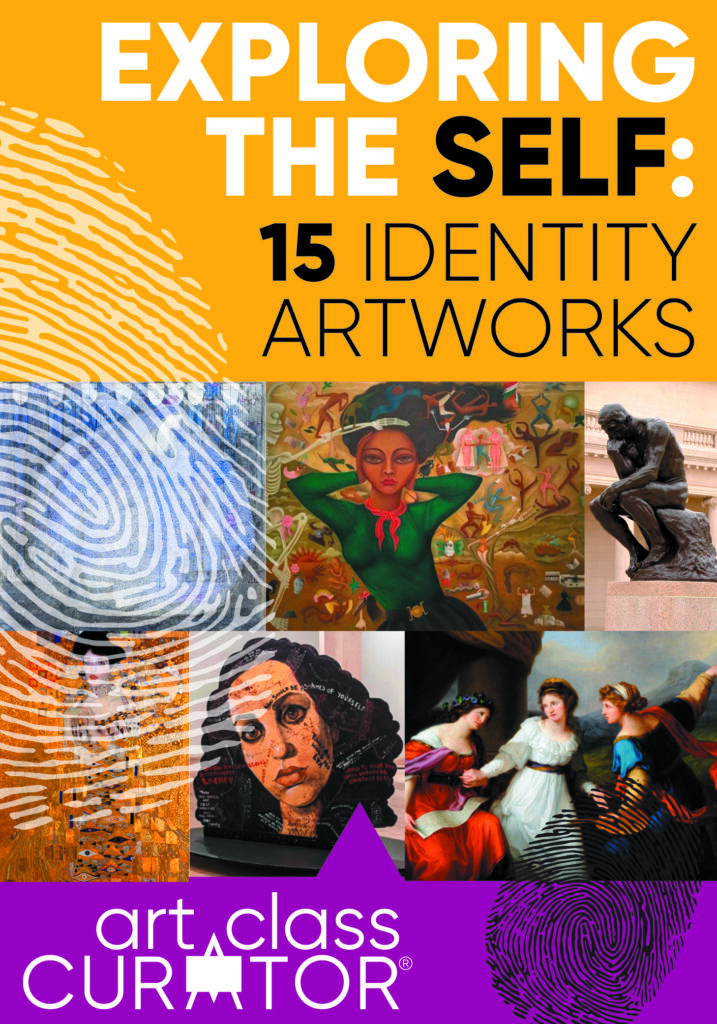
Exploring the Self: 15 Identity Artworks

Inside: A collection of identity artworks to help students explore and understand their own identity and relate to others around them.
Have you ever wondered, ‘Who am I?”

Have you ever thought about how who you’re around and where you are affects the person who become? Consider how you’ve changed over time and what sparked those shifts in your identity. The answers are not always as straightforward as we might imagine.

Artists have long explored themselves and others through identity artworks. Portraiture and personal expression have been an integral part of art since the first handprints were left on cave walls.
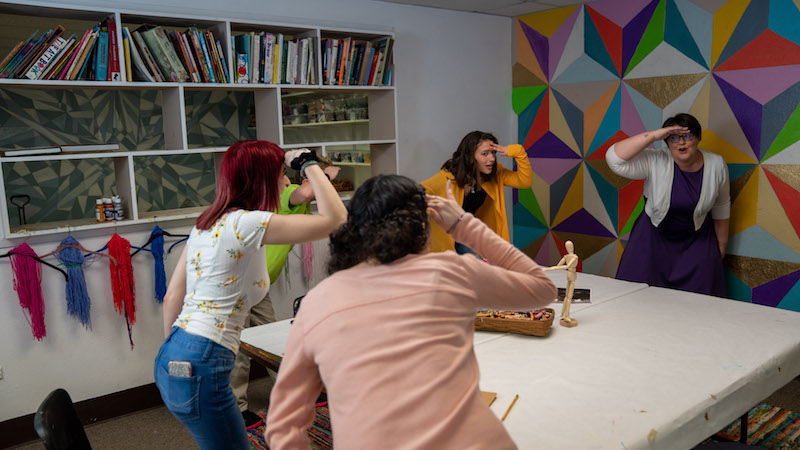
Art class is the perfect place for students to explore their own identity and connect with others who may or may not share their traits.

You can find lessons for all 15 of these artworks included in this post in the Curated Connections Library, complete with presentations, discussion questions, worksheets, and more.
Get the Full Lesson!

This Lesson is in The Curated Connections Library!

Find the full lesson from this post along with hundreds of other art teaching resources and trainings in the Curated Connections Library. Click here for more information about how to join or enter your email below for a free SPARKworks lesson from the membership!

Join the List

Get the Full Lesson!

This Lesson is in The Curated Connections Library!

Find the full lesson from this post along with hundreds of other art teaching resources and trainings in the Curated Connections Library. Click here for more information about how to join or enter your email below for a free SPARKworks lesson from the membership!

Identity Artworks
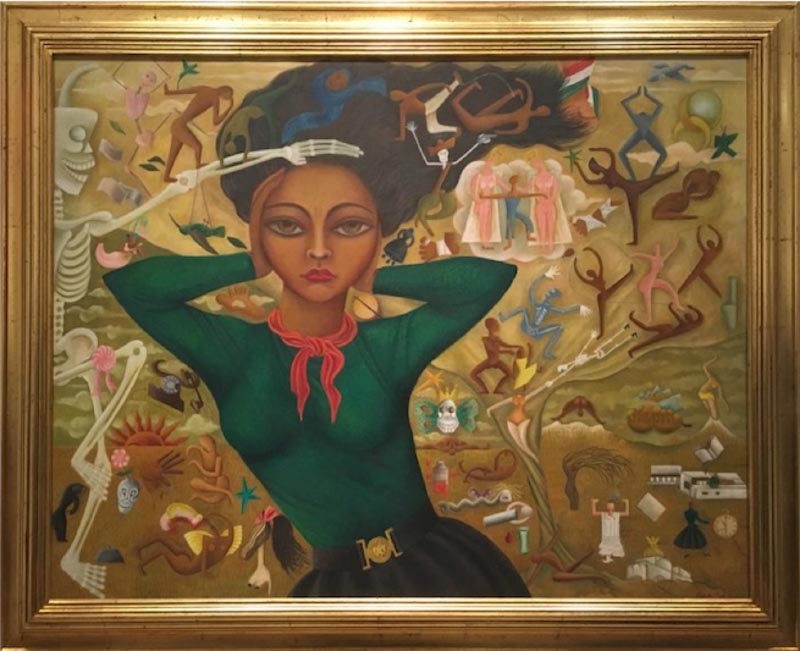
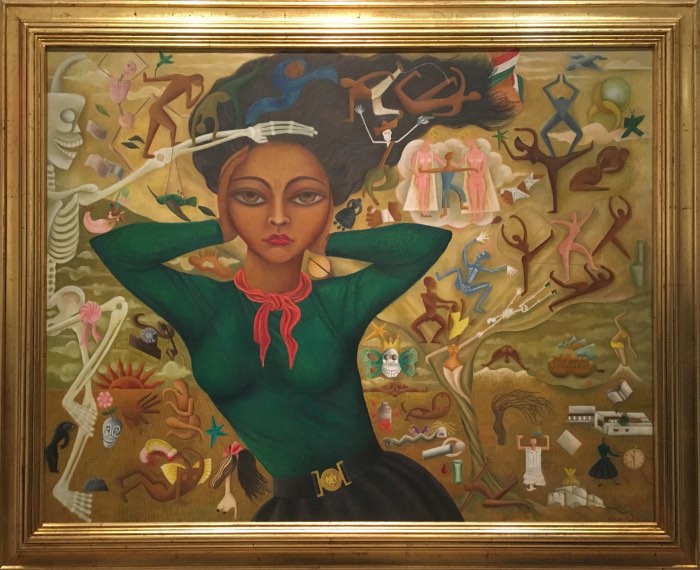
Rosa Rolanda, Autorretrato (Self-Portrait)

Rolanda worked frequently with Frida Kahlo and Diego Rivera while living in Mexico. Early in her career, she experimented with photography and it is thought she may have been influenced by Man Ray. Many of her paintings consist of brightly colored folklore scenes featuring festivals, children, and portraits of her friends.

Lesson: Rosa Rolanda Jigsaw Art Learning Activity: Each Piece Tells a Story

With her marriage crumbling, Rolanda painted this self portrait of her in turmoil. Her hands clasped her ears as if refusing to hear reality. The clock in the lower right symbolizes the passing of her youth. The tossing figures represent Mexico City dance company where Covarrubias was the director, and where he met a dancer 30 years his junior — the affair tore their marriage apart.

-Soodie Beasley
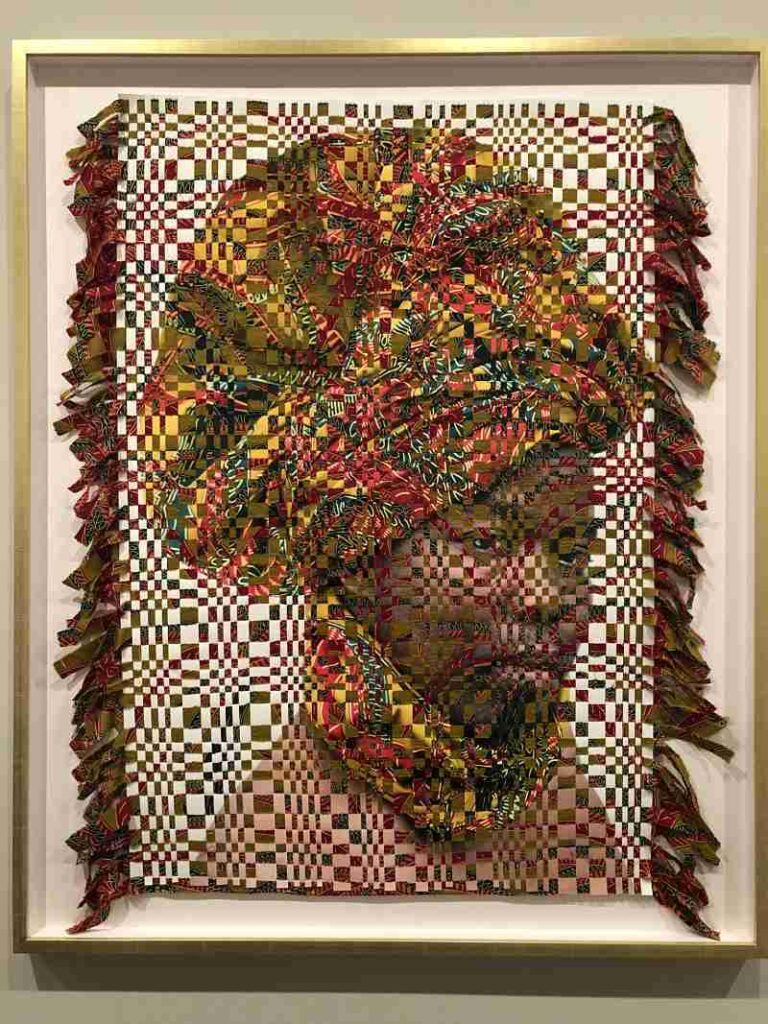
Kyle Meyer, Unidentified 48 from the series Interwoven

Meyer uses his photography background to address the question: “How can a digital image serve any human connection when it is entirely produced – and ubiquitously reproduced – by mechanical means (camera, computer, printer)?”

He also seeks to explore his own identity as a gay man within the LGBTQ communities. He draws upon his experiences growing up in conservative rural Ohio and living in Swaziland where homosexuality is illegal.

For my series Interwoven, I explore the challenges of homosexuality in a hyper-masculine culture within Swaziland. Given that homosexuality is illegal in this small African country, gay men constantly have to hide their sexuality and suppress their true identity. After befriending several gay men in Swaziland, who confided in me their personal stories of struggle, I asked them to choose a piece of fabric typically worn by women with which I made unique wraps on each of their heads. It would be taboo for men to wear these head-wraps in public, as that would indicate homosexual tendencies. This was one simple way for them to express their individuality that they regularly have to hide.

-Kyle Meyer
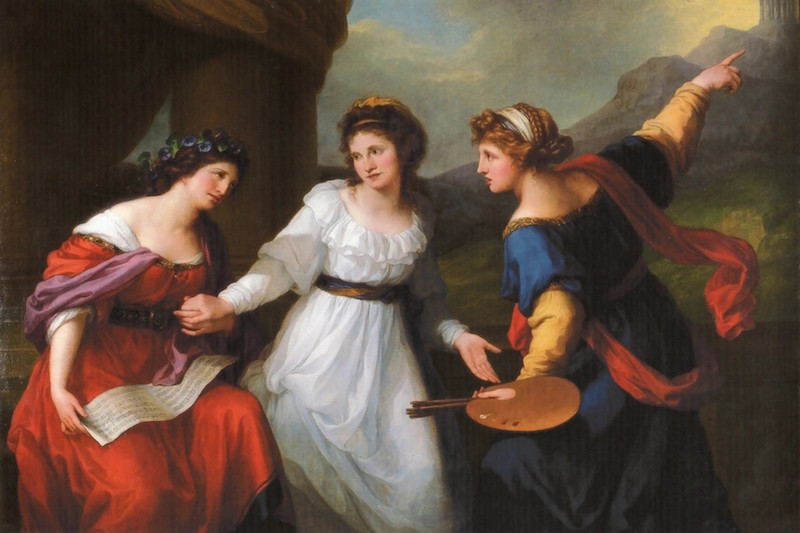
Angelica Kauffmann, Self Portrait of the Artist Hesitating between the Arts of Music and Painting

Kauffmann was a child prodigy, skilled at both painting and music. She struggled to choose which art to pursue, as shown in this self portrait.

It presents the artist as a kind of female Hercules, choosing not between Virtue and Vice, but between her profession as a painter, which was traditionally a male dominated field (the figure of Painting points to a far away temple, symbolizing the difficulty of her journey), and a career devoted to the easier, more traditionally feminine, Art of Music. In recent years, this self portrait has become an icon of the feminist interpretation of art history.

-Arthur, Digital Museum
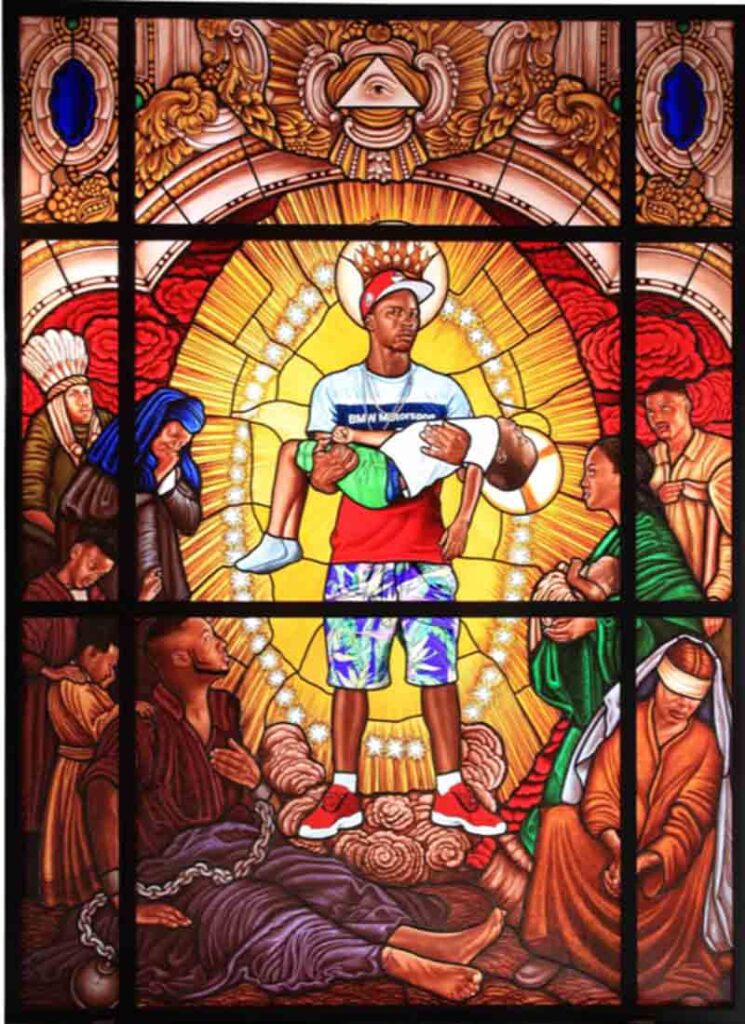
Kehinde Wiley, Mary, Comforter of the Afflicted I

Wiley is known for his portraits of black people in grand poses with bold, patterned backgrounds—including the official portrait of President Barak Obama. He references art history in many of his paintings, substituting contemporary black figures in place of the people in the original work. This piece was inspired by an artwork featuring the Biblical figure Mary.

Lesson: Portraits for a New Century: Kehinde Wiley Art Lesson

My work is not about paint. It’s about paint at the service of something else. It is not about gooey, chest-beating, macho ’50s abstraction that allows paint to sit up on the surface as subject matter about paint.

-Kehinde Wiley
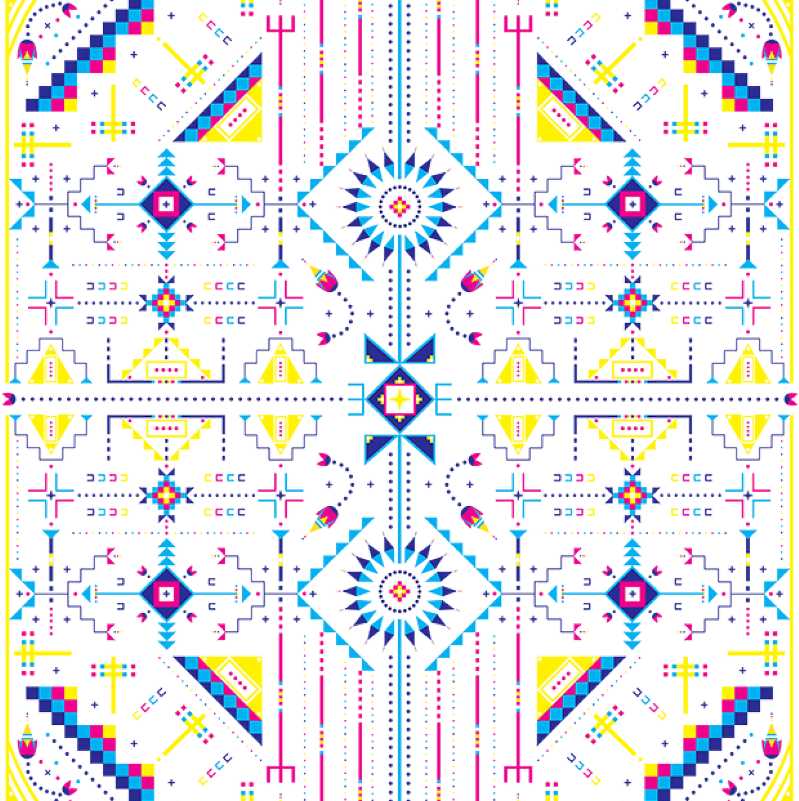
Sadie Red Wing, Lakȟóta + Dakȟóta Visual Essay

Visual Essay was created because the artists wants to preserve and communicate the Lakȟóta visual language and share her cultural perspective. Each element represents a different aspect of the
artist’s life, journey, and cultural heritage by using Lakȟóta symbols.

If you cannot be comfortable in your own skin, it reflects in your work, studies, and communication.

-Sadie Red Wing
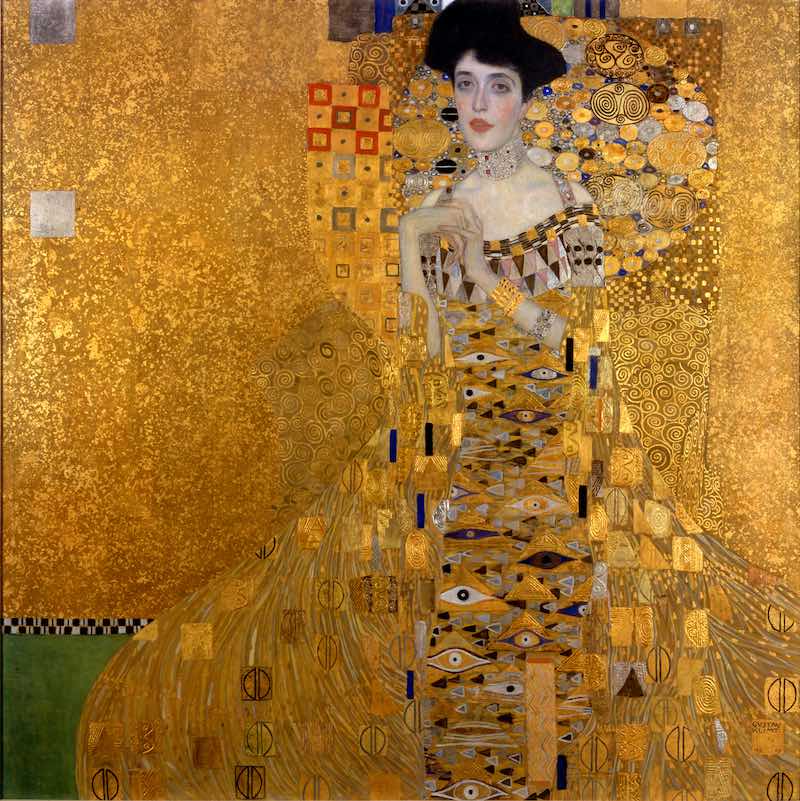
Gustav Klimt, Adele Bloch-Bauer I

One of Klimt’s most famous paintings, this work is often called Woman in Gold. Her true identity was obscured because she came from a prominent Jewish family during the rise of Nazism and World War II. This artwork is a great way to talk about identity with your students by exploring the difference between how we see ourselves versus how others see us.

Ignore the gold. That’s Klimt. Look at my face. Does it resemble me?

-Antje Traue as Adele Bloch-Bauer in the 2015 film Woman in Gold
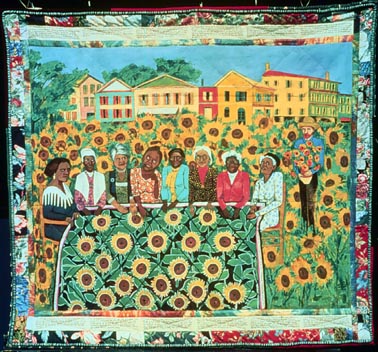
The Sunflower Quilting Bee at Arles by Faith Ringgold

Faith Ringgold, The Sunflower Quilting Bee at Arles

These women included in this artwork are influential leaders and important figures in American history including (from upper left) Madam Walker, Sojourner Truth, Ida Wells, Fannie Lou Hammer, Harriet Tubman, Rosa Parks, Mary McLeod Bethune, and Ella Baker. The ninth woman is a fictional character invented by Ringgold named Willa Marie Simone. Vincent van Gogh stands behind them.

Lesson: Faith Ringgold’s Celebration of African American Women

I had something I was trying to say and sometimes the message is an easy transmission and sometimes it’s a difficult one, but I love the power of saying it so I’m gonna do it whether it’s hard or easy.

-Faith Ringgold
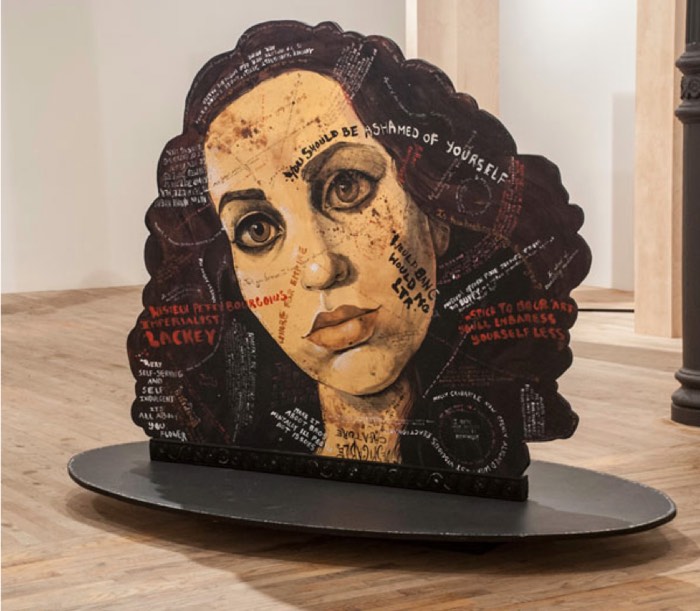
Molly Crabapple, Portraits of myself and Lola Montes with things said about us by our contemporaries

This artwork is a powerful, transfixing two-sided sculpture that confronts the dark side of social media—focusing on the pervasive culture of bullying and how hurtful words hurled through a screen can erode confidence and self-esteem.

Lesson: Things Said About Us: Art-Inspired Self Esteem Activity for Kids

If there’s a theme in my work, it’s that I like to focus on smart people who are facing oppression and who are fighting back against it.

-Molly Crabapple
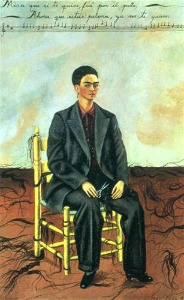
Frida Kahlo, Self Portrait with Cropped Hair, 1940

Frida Kahlo, Self-Portrait with Cropped Hair

Frida Kahlo painted this after she divorced Diego Rivera. The lyrics from the Mexican song translate as, “Look, if I loved you it was because of your hair. Now that you are without hair, I don’t love you anymore.” Changing your appearance when you’re going through changes in your life is a typical part of reshaping identity and one students will relate to.

I paint self-portraits because I am so often alone, because I am the person I know best.

-Frida Kahlo
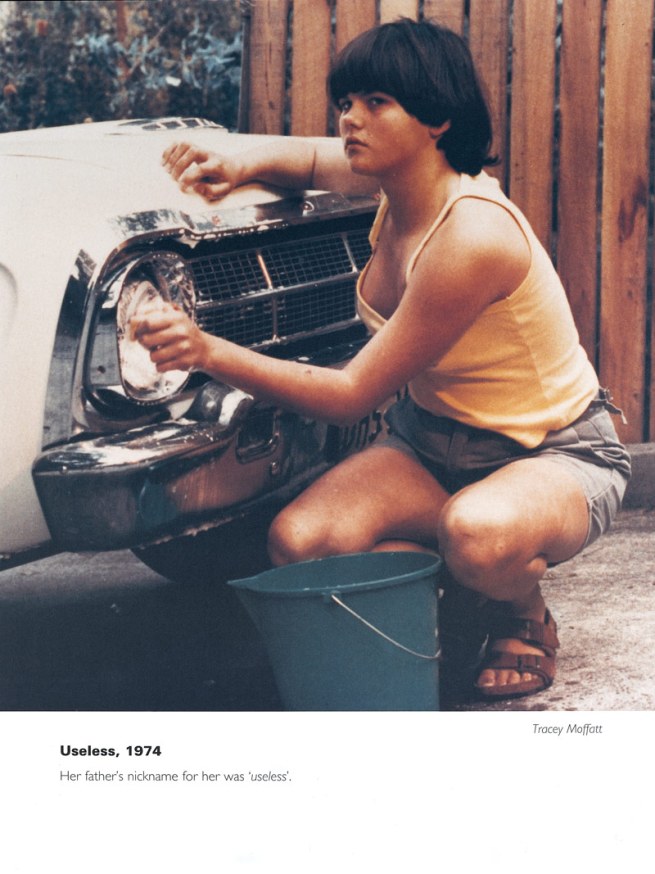
Tracey Moffatt artwork

Tracey Moffatt, Useless

Each photograph from Moffatt’s photo series Scarred for Life documents small, but not insignificant, bad things that happen to us in our lives—small digs at our worth in the world that slowly bring us down and subconsciously teach us about society, how it works, and how we fit in (or don’t).

Lesson: Scarred for Life: Using Art to Analyze the Small Moments that Define Us

My work is full of emotion and drama, you can get to that drama by using a narrative, and my narratives are usually very simple, but I twist it. There is a storyline, but there isn’t a traditional beginning, middle, and end.

-Tracey Moffatt
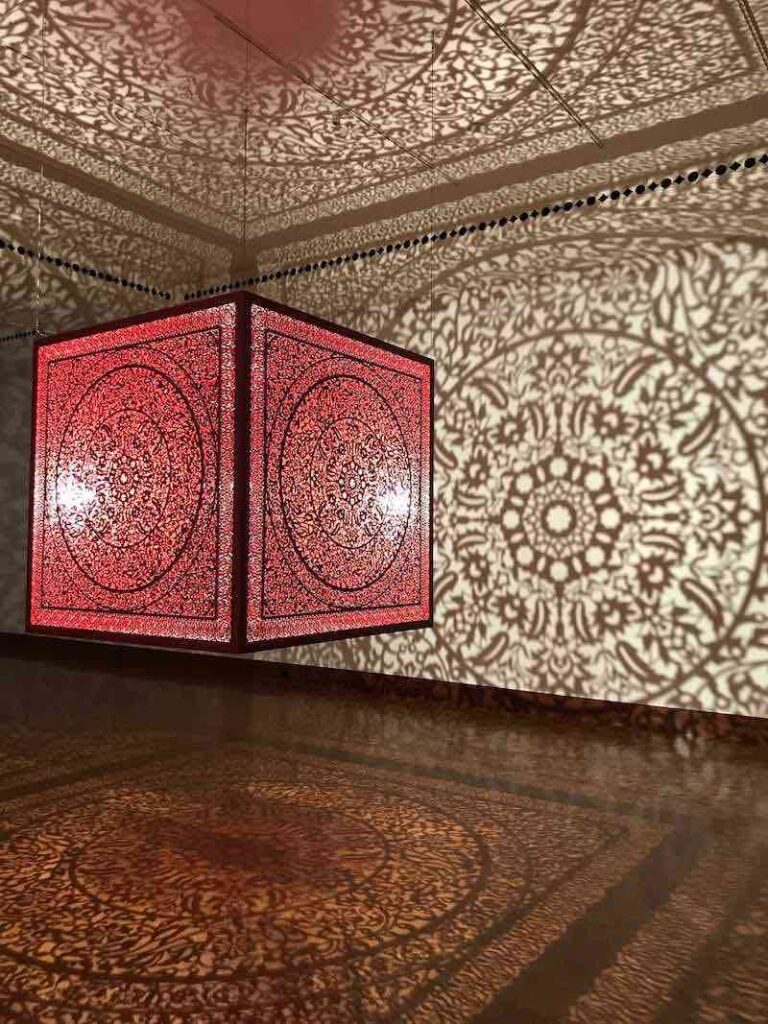
Anila Quayyum Agha, All the Flowers Are for Me

This immersive artwork draw inspiration from the Agha’s home of Pakistan. The geometric patterns
are characteristic of Islamic Art. She was inspired by opposing forces such as light and shadow, life and death, and chose red because brides in Pakistan often wear red. Many of Agha’s artworks are meant to create welcoming places where no one feels like an outsider.

This artwork offers us an opportunity to explore our place in the world—where we feel welcomed and comfortable and where we don’t. It also gives students the chance to consider the spaces that are and are not welcoming to all and how those places and interactions shape our identity.

Artists have the ability to bring historical perspectives to the current time. I’m interested in that thought process of taking responsibility and seeing how we can move to the future and make a better environment for people.

-Anila Quayyum Agha
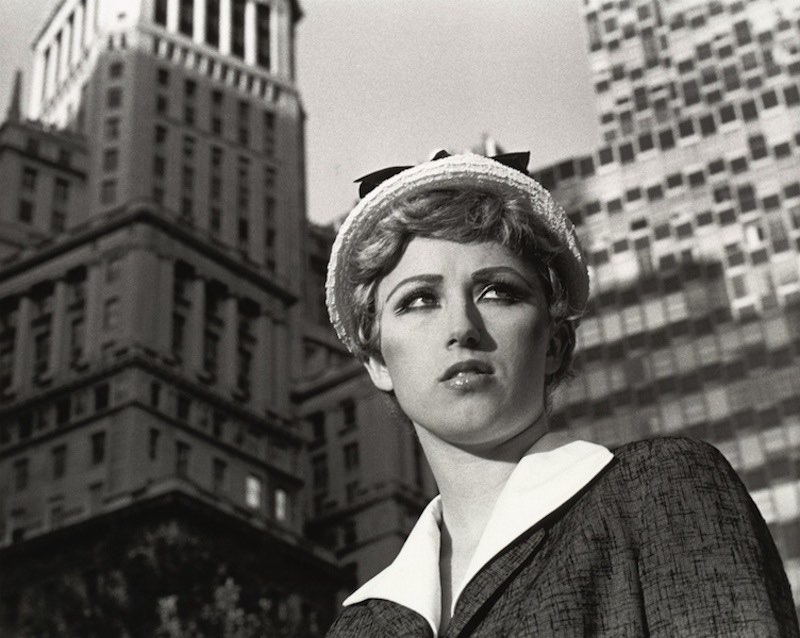
Cindy Sherman, Untitled Film Still #21

When first looking at this image, you might think it is merely a candid photo of a young woman on a
city street, but that is not the case. Sherman set it up to look as though she, herself, is a female
character from a black and white movie of the 1950s-60s. For this series, the artist played with identity—dressing as different characters by putting on wigs, clothing, and make up, then placing herself in carefully framed scenes meant to evoke film stills.

If I knew what the picture was going to be like, I wouldn’t make it.

-Cindy Sherman
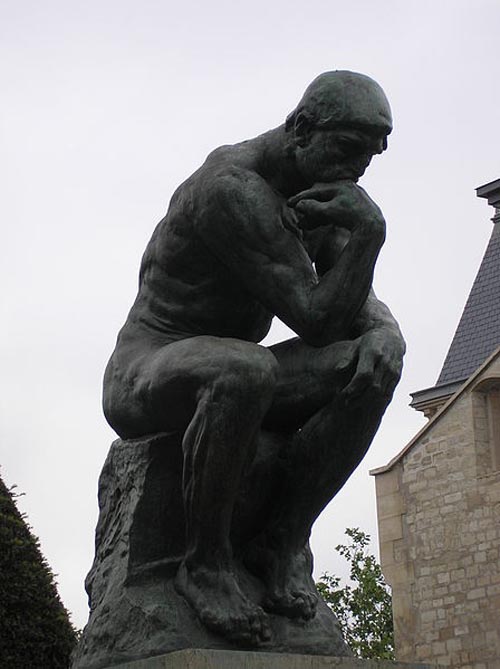
Auguste Rodin, The Thinker, Rodin Museum, Paris, Photo Credit: deror avi

Auguste Rodin, The Thinker

Rodin was a master of manipulating light and shadow. Even though The Thinker is just sitting, he wanted it to seem as though it moved. He manipulated the face with extra clay to make it seem as though the facial expression changes as you move around the sculpture—inviting us to ponder our own lives and identities.

I invent nothing, I rediscover.

-Auguste Rodin
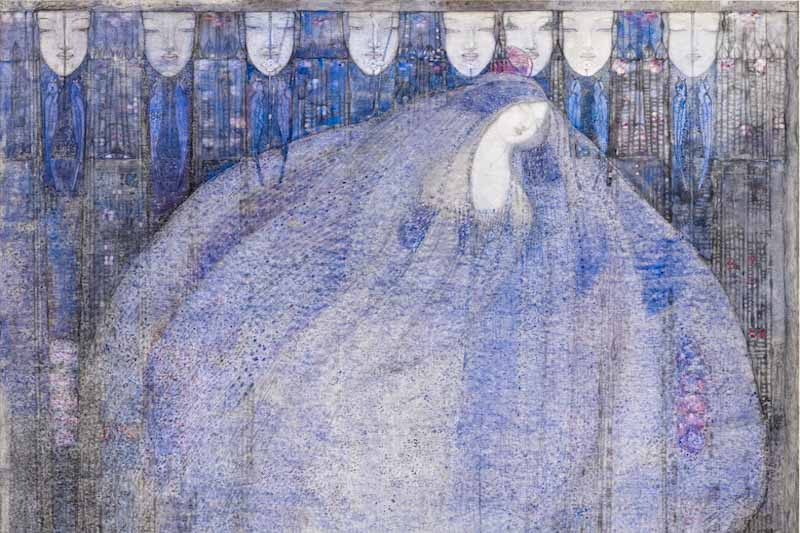
Margaret Macdonald Mackintosh, The Mysterious Garden

Perhaps as a part of a dream, eight heads or masks float above a seemingly sleeping figure. It is thought that this work was inspired by the play The Blue Bird by Maurice Maeterlinck.

Margaret has genius, I have only talent

-Mackintosh’s husband, Charles Rennie Mackintosh
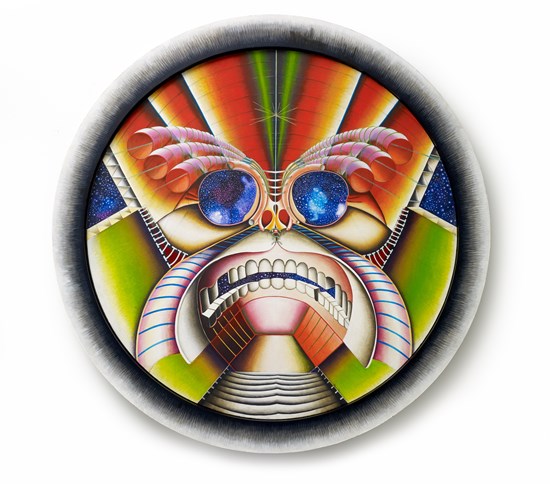
Marcos Raya, The Anguish of Being and the Nothingness of the Universe

This artwork depicts an inside-out view of Raya’s head and explores the social impact of
technology on humanity, as well as his personal battle with alcoholism. Raya painted several versions of this painting, each has different views through the eyes.

Creating is a revolutionary act.

-Marcos Raya

Filed Under: Art, Art and Artists


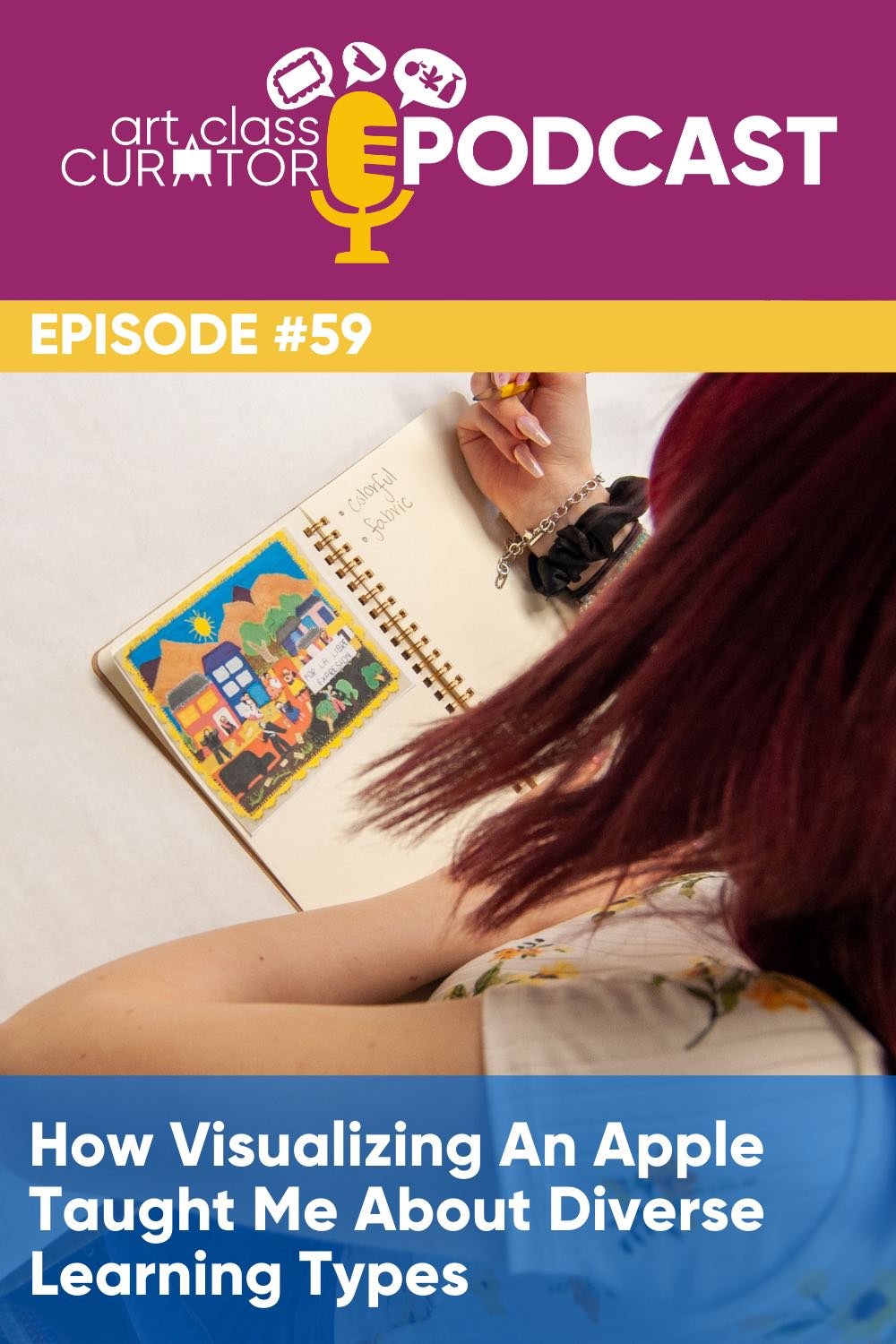
How Visualizing An Apple Taught Me About Diverse Learning Types

How Visualizing An Apple Taught Me About Diverse Learning Types

Thanks to a Facebook group and a friend, conversations around visualizing the apple have grabbed my attention lately. My brain works differently than others, though. I don’t really see things in my head. But when I saw the responses to the apple conversation, I felt really validated and had some profound realizations. In this episode, I talk about those realizations, what this means for art teachers, and how we can better serve diverse learning types among our students.
Subscribe in Your Favorite Podcast Listening App

5:46​ – The judgment I’ve made about myself for my entire life

7:58 – Limited diverse learning types and how I “visualize” things

11:29 – The impact of learning differences on the way you teach

14:36 – Strategies to address differences and accommodate diverse learners

22:53 – The disservice done to us while learning art history in college

  • Middle School Art Teachers Facebook group post
  • Art Class Curator Curriculum
  • Curated Connections Library
  • Art Appreciation Printable Worksheet Bundle


Hello and welcome to The Art Class Curator Podcast. I am Cindy Ingram your host and the founder of Art Class Curator and the Curated Connections Library. We’re here to talk about teaching art with purpose and inspiration from the daily delight to creativity to the messy mishaps that come with being a teacher. Whether you’re driving home from school or cleaning up your classroom for the 15th time today take a second, take a deep breath, relax those shoulders and let’s get started.

Hello, everybody. This is Cindy Ingram from Art Class Curator, and I am happy to be with you today because something on the internet is blowing my mind as usual. There’s always something that’s blowing my mind on the internet but the current thing that I have gotten myself all enraptured in is this conversation about visualizing the apple. I don’t know if you’ve seen this it was in the Elementary Art Teachers Facebook group I think and I also heard about it from another friend too and basically what it is is it has five apples and it has them varying from being a full realistic apple down to nothing. Actually, there’s four apples because the number five is blank. The post says to close your eyes and imagine an apple, what do you see? And then it gives th ose apples. What I want you to do now is to imagine an apple in your head. Of course, if you’re driving don’t close your eyes but what was fascinating to me when I saw this is I always kind of knew that what happens in my brain is different than what happens in other people’s brains obviously.

My husband and I had this grand conversation one time because he can remember movie quotes and pull any storyline, any movie quote from anything he’s ever seen and he can remember it and it just blows my mind. And so I asked him one time he had responded with some sort of Star Wars quote and I was like, “What happened in your head when you did that? How did that happen? How did you get that information? Because I can’t do that. I can’t pull movie quotes out of nowhere only if I’ve seen the movie tons of times. Can that really happen?” And so he explained it to me and he said, “I see the character saying it but then…” It was a Jar Jar Binks quote and he was like… And then when he got to this Misa Misa part which Jar Jar Binks talks like that, he actually saw the letters Misa Misa in his brain and I was blown away by that because I don’t see much in my brain. I don’t visualize things. And so when this apple post started going around it became really clear that I don’t think the apple post is correct because every answer I’ve seen people are either saying they’re one or there are five.

People are not saying there are twos, threes and fours. They either see an apple or they don’t see an apple. And I’m sure there’s a very big variations in this but not a lot of people are saying they see like the washed out version of the apple which is what it has on the picture. And I just felt really suddenly validated for the first time in my life that I had some really profound realization so I’m going to tell you about those and then kind of talk about what this means for art teachers. Split in the comments of this Facebook post, I said earlier it was Elementary Art Teachers group. I went and double checked the section at the Middle School Art Teachers group but half of the people were saying, “Yeah I can see an apple. You can’t say the apple?”

And then the other people were like, “No, I don’t see things in my head do you see things in your head?” And on both sides people are like, “How is this possible that I can see the apple so clearly and you don’t see anything.” And then the other way around. And so like when I try to envision the apple I can get it visualized for just a second but it won’t stay. I can’t visualize anything for a second but if I envision biting into the apple or holding the apple and feeling the cold of the apple like that I can keep in my head, I can feel the apple, I can experience the apple in my brain but I can’t see the apple in my brain and then… I went on a Facebook… No. I went on a Google wormhole about this. You should see my Google searches I couldn’t figure out exactly how to search for this but I was like, “I need more information.”

And then in that post I realized there’s something called… I think it’s called aphantasia and I hope I’m saying that right but there’re people who just can’t visualize. And I don’t think I’m that I don’t think… I can visualize experience especially, I can visualize feelings not visualize but I can… I don’t know what the right word is, imagine. But when it comes to seeing things it’s just not… I can’t just keep it in my head very much but when I read I can visualize the surroundings. I don’t think I fully have this disorder or whatever.

Anyway I was on the page for this disorder it was a Reddit thread and it said… One person said and if she can see vivid in her brain like full scenes and someone was like, “I can see the Gala apple and a forest and they can see all the lush surroundings.” And all this stuff. But then this person was like, “But if I try to visualize movements…” The example in the Reddit thread was the feeling of jumping downstairs or jumping off of a curb or something and experiencing or imagining what that would feel like. This person couldn’t do that at all she was like she said she tried and tried and tried and could not imagine that. She couldn’t imagine what her muscles felt like or what her body felt like you did that. And so these are profound differences in how we experience the world and the thing that blew me away so much and that validated me so much is that I’ve realized my entire life, I’m about to turn 40 in about a month, I’ve had this sort of self judgment that I couldn’t draw from memory that I couldn’t draw from imagination.

I would see people in my art classes just be able to… They are like, “Draw an alligator.” And they’re just draw an alligator and I’m like, “How did you do that? I can’t do that.” And so I always thought I’m not that good of an artist I just can’t do it but if you put a picture of an alligator in front of me I can draw that thing perfectly. I can draw it really well if I’m looking at something but I just can’t pull it from my imagination and so I always thought I was broken. And then I realized, no it’s because they see things in their head so they are looking at a picture. They’re seeing it. They can see the details. I can’t get that in my head. I can’t visualize that and if I do visualize it’s very brief it’s not specific.

And so for the first time in my 40 years I understand why I can’t draw from imagination. It’s no fault of my own it’s no lack of talent or anything it’s just that my brain works differently. And then the other teachers those that could visualize it can’t imagine someone not visualizing it so you think of that being my teacher we have a profound difference in how we view the world and that’s going to impact the way you teach me. If you’re assuming all this time that I should be able to see things in my head and I can’t we’re going to have a disconnect and the other way round. If I’m teaching someone who can see things in their head we’re going to have a disconnect. I think this is such a powerful reminder that we need to make sure that we are aware of how we’re communicating with our students and how we might be having the sort of unconscious or hidden ways that we see the world that are hindering our teaching.

Because I think back and I’m like, “I should’ve known this. How did I make it this long without knowing this?” And we hear a lot about the different types of learners. The auditory learners, the kinesthetic learners, the visual learners. I think that I saw a list on the internet the other day on my rabbit hole that there were many, many more those aren’t just the three but they’re the ones we mention the most. But I think that even that is limited because I was kind of… You’re going to hear me use myself as a case study here because I was so fascinated by it but I’m the only one that can… I can’t speak for anyone else.

I was thinking about this and I like… I was in a different room in my house, in my bedroom and I was like I want to envision my office and I wanted to see what happened in my brain so I was kind of… I was envisioning it at the same time I would write down my thoughts because I wanted to really fully understand how I visualize something. And so I was thinking about my office the first thing I did is I thought about the color of the walls they’re blue and it’s kind of a blue gray and so I kind of saw the color for just a second and then I kind of felt the space. I felt where the desk was, where the chair was in the corner. I have a digital piano it’s against the wall I kind of had a general feel for the space and where everything was and then I could visualize… I could imagine what it was, what it looked like if I put all my focus on it.

I was like, “What does my webcam look like?” And I was like I can kind of see it has a little flap but I couldn’t… Now that I’m actually looking at my webcam I’m like, “Oh! No. I did not visualize.” It was very fuzzy. It was a general sort of composite of what it might look like but when I would feel… I would think what is surface on my desk look like? I didn’t see it but I could feel it. I was like I imagined running my hand over it and then when I was at my whiteboard I imagined the sound of the markers when I put them in the tray and when I accidentally bumped into the tray that the markers are in all the time and I could hear the sound in my head. And then I have this extension to my desk and I could… I’m a mess. There’s a pile of papers on it and I could envision like them falling off and I can envision running into my desk in the corner against my thigh so it was like everything I remembered about my office was kinesthetic.

It was feeling. It was interacting with the office it wasn’t the sort of static image of the office it was the feeling of the office so it was really interesting. And so I guess that would maybe make me a kinesthetic learner but I don’t know that that is necessarily true either I think it’s a mix but it’s really fascinating that we go through this process and that everybody imagines things so differently. I even think about if I try to remember if I took my vitamins or not the way I remember is I remember how they felt in my hand. I remember the movement of my hand to my mouth. I remember the sound of the bottle going back into the… They’re in one of those little pill carriers. I remember the sound of them kind of rattling. Did I experience those sensory inputs recently? That’s how I remember but I know someone else might remember things very differently and so that’s going to impact our teaching.

And this made me think about other learning differences too not just learning differences just fundamental brain neurodivergent differences. Isn’t why they call it neuro diverse or neurodivergent thinking? But there are other drastic differences that don’t make us… they’re not diagnosable I think it’s just differences in sensory inputs and things but all of these things play a huge role in how we learn and how we experience the classroom. Our difference is in introversion versus extroversion or if you’re right in the middle. It’s fascinating to me…

I’ve been working with Kris Bakke at NASCO and we were having a conversation in a webinar recently about working in groups and I always was like I hated working in groups because I’m really independent. I’m also very introverted. I like to do things my own way. And so putting me in a group I struggle but then I really advocate for group work and my classroom we did group assignments all the time because I do see the value in that forcing the kids to interact. But then her on the other end is she thrived on group work, she was a really social creature and she wanted to learn from the other people in her group. She wanted to really interact and she learned through that and so if I’m the teacher and me coming from my sort of introverted state and I plan all my curriculum as if people are like me we’re going to be leaving out. I would be leaving out so many different other people.

There’s also differences in internal versus external motivation. There’s internal versus external processing. There’s your sensitivity level to sound and light and things like that. There’s things like colorblindness. There’s all these different things that we’re all dealing with in our brain and it’s just amazing to me that no one in this world… I will never be able to fully understand what another person sees and hears and experiences. They could be looking at the world completely differently than I am and I have no idea and we all think it’s… We all think everyone else is thinking like us. And there’s so many other differences in our learners too that impact our learners like how much sleep they had the night before, how much they had for lunch. If they got to eat breakfast, if they had protein at breakfast. All of these things are going to impact what happens in your classroom and so we’re coming into… And this isn’t just for kids with IEPs, it’s not just for your kids who have special needs this is for every learner that… Just having that awareness I think is so very powerful.

I think that just knowing that some people can’t visualize the apple or can visualize the apple depending on where you stand is enough awareness to actually make changes in your classroom. I think a lot of people from that Facebook thread and I’ll link to that in the show notes that thread if you’re in the Middle School Art Teacher’s group you can go see everyone’s comments but I think a lot of people in that threat are now going to be profoundly changed and in how they think about teaching. And I keep saying the word profound and I don’t think it is going to be profound change but it will be slight change and over time I think that’s going to be important.

But with all of that said thinking about all these diverse brains out there in the world, I thought we could talk through some different strategies. What are we going to do about this? Now that we have that awareness that’s the first step but being aware is not everything we can actually take action and do something differently. I made a list of things that you can do to address these sort of differences in your classroom and how you can adjust your teaching to make sure you’re acco mmodating all of your different types of learners. My first thing on my list here is to develop with your students and I’ve heard this as research your students. And I think if you really understand their intentions and their motivations, how they view the world that will play a big part in how you teach them.

I know a lot of teachers at the beginning of the year we’ll do surveys where they ask students what they’re interested in. They get a baseline for who they are as people and that will allow the teacher to become more connected with them. I think that you could even ask them in that survey, “Close your eyes and visualize an apple. What do you see?” And that could be really powerful information for your teaching. You can also do this through sideline conversations and one-on-one meetings with your students. I know a lot of teachers try to… Once a quarter or once a semester have a one-on-one session with your students where you look through their portfolio or you talk about… Get to know them better. My daughter’s teacher did this and she called it cookie time.

And so the kid that had the meeting they would eat a cookie together and they’d have a little conversation. It was her English teacher so they would have a conversation about books but that could be a really beautiful way to get to know your students. I know if you’re an elementary teacher you’re not going to be able to do that. When I was teaching elementary I had 750 students but if you’re teaching middle or high school you have a little bit less number of students or fewer number of students than you’re going to have but an easier time with that. You have to do so much as a teacher already. You’re talking to parents, you’re having meetings, you’re going to… Reading IEPs and you were doing classroom management and your cleaning and your cleaning and you’re cleaning and you’re cleaning.

You’re not even doing some more cleaning preparing your supplies for the next day that it’s hard to imagine adding one more thing. That’s where I would say just reach out for support as best as you can if you invest in curriculum for yourself so that frees up the lesson planning component. We have new curriculum available at Art Class Curator. If you go to artclasscurator.com/nasco and we also have our membership the Curated Connections Library artclasscurator.com/join. You can get more information on getting some resources for your classroom and then that will not only allow you to have the different engaging types of activities to meet your different learners it’s going to free up some time so you’re allowed… You can spend some time developing those relationships. Another thing that is great about a curriculum like with our class curator is that you’re having these powerful art conversations about works of art and that is such a powerful way to get to know your students because you’re seeing what they’re interested in and you’re seeing what comments they have about the artwork, you’re seeing what connections that they’re making. And that is going to give you a lot more data to work with with your students and really understand who they are as people.

My second thing on my list here is to don’t assume that everyone thinks like you. We can get really stuck in our ways. I know for me as an example… Of course I’m an example for all of this since I only know me, I tend to take the hard way sometimes or the long way to do something. The inconvenient way because if I don’t know another way I’ll just do something that will take 20 steps and my husband looks at me and he’s like, “You know there’s a lot of easier ways to do that. You could just stop for a minute think about it and you could do that in two steps.” But I’m just like, “No, I’ll just do it my way.” Just because I don’t want to slow it down enough.

I think it’s knowing and opening yourself up to other ways of doing things and this means giving multiple types of instructions. One student is going to benefit really well from a demo. They want to see it happen. They want to know exactly what it looks like and feels like to do something. But another student is maybe going to be better if they see it written out and they have a step-by-step thing that they can follow. So there are more regimented sort of analytical thinker maybe they need to step-by-step. Someone else might need a couple of bullet points you just tell them what to do and then they go into it because they’re more independent.

Providing instructions in a variety of format so that all students can be included I think is really important. There’s those memes that go around that are like… You spent 20 minutes explaining the instructions and then the next question from your student is, “What do I do?” Infuriating. So infuriating. I’ve seen that lots of times but I think that probably most of the time that happens that’s on the student. They weren’t paying attention. But I think there probably are legitimate times where the student… If it was presented in a way where the student didn’t make that connection then it wasn’t the right instructions for their brain. I think thinking through instead of just then repeating these instructions that you just gave think about another way to describe those instructions.

One example for me is I can’t be read to. The minute you start reading to me my brain just completely shuts down. I stop listening, I get really confused. If you were to read instructions to me I’m out. I’m not going to be able to follow that. I could potentially if I can read along with you but even then that’s going to be a struggle. And another thing about this is to provide… Make sure you’re providing the right types of references and examples for your students. Understand that if you are one of those people who can visualize the apple, if you tell a student to draw an alligator… It’s funny I use the example alligator all the time because there was… It wasn’t even me it was someone I was talking to one time who said that when she went to an interview to be an art teacher the principal asked her to draw an alligator to test her drawing ability because the alligator was the school’s logo and this was when I was just starting to apply for my first teaching jobs and I was mortified.

I was like, ‘If they asked me that in an interview there’s no way I’m going to get that job. I can’t do that.” I could draw an alligator probably better than the average person just because I have drawing abilities but it would be a struggle and it wouldn’t be what that principal was expecting. I was horrified. I always use alligator’s example it stuck with me for all this time. That was many, many years ago. But for those students who can’t visualize things in their head, if you give them a bunch of examples orally and then you tell them to do it, if they don’t have any sort of visual reference they’re going to really struggle with knowing what you’re wanting from them and knowing what they’re supposed to do and I think that’s the importants of examples.

I know providing examples is kind of controversial in the online space. You talk about whether or not you do provide sort of the examples for the projects and a lot of teachers will be like, “No, you shouldn’t do that it’s going to sway them.” Even some teachers won’t show students works of art because they don’t want to sway the students. Those teachers are probably not the ones listening right now. I don’t think they would be in Art Class Curator l istener and reader if they weren’t passionate about showing their students’ work through art but they’re out there and I think that is an example of a teacher who is using their own brain as a guide. And for those students who can’t visualize they’re really going to struggle if they don’t have something to look at just like, “I’m doing something like that. I just need to see what in general this might look like so that I know how to move forward.”

I think it’s also really important to teach the content in multiple different ways. Just like giving the instructions, I think so many of us we’ve done so much to service learning art history the way art history is taught in college I’ve talked about this before but most of us had art history classes where we were sitting in a dark room the lecture… There was two art works up on the slides usually and the teacher just lectured about it and that worked for your students who are wired that way but that’s going to leave a lot of students really wanting more. A lot of students are going to find that to be boring. A lot of students need to be interacting with the material.

I teach art history without lecture. There is some explaining and talking of course and discussion but I’ll have students get into groups and analyze works of art. I’ll have them sort things into different categories or I’ll have them write poems about it and then we look at how the poem addresses the overall art movement. For example I always did that when I taught Rococo they would do a poem about the Fragonard’s “The Swing” and the poems were like sweetly, swinging, happy, joyous, light, frivolous… Those sorts of words and then I’m like, “You know what? That poem actually fits the overall vibe of what Rococo is.” That’s what it was. It was frivolous, it was light, it was eerie.

And so it’s a way in to talk about the art movement. And so thinking about how do we address all these different learners? How do we give our shy students a chance to really think through things and express themselves? How do we give our extroverted students a chance and our social students a chance to really get to converse and discuss these things? How do we get our kinesthetic learners moving around and learning through doing? Really, very important and I think art history especially for art teachers this is where we are a little bit stunted because we were not taught art history in a fun way ever.

I challenge you to think about lots of ways to teach the things that you’re teaching in your classroom and I think that’s even true for art making as well. There are multiple things that you could try with teaching drawing. Making sure you show demos of people drawing that you show examples that you try out different techniques for teaching drawing that are going to reach all of your students. Another thing that you can do to help your diverse learners is to give them lots of choices or not lots of choices but to give them choices. For an example, say you want your students to do research on an art history movement or maybe a non-Western culture and they have to research the culture, learn about it but the way they present their learning that can be a choice. You can have them either do… They can have them do a presentation where they teach about their art movement to the class or you have them write a research paper. Some students that would be a perfect way to show their learning is through a research paper.

Another student maybe they make a poster and share visually about their art movement or their culture that they’re studying. Maybe they record a audio, a podcast episode about their art movement or make a video. There’s a lot of different ways to show what you’ve learned and giving the students the choice to do that will then allow them to really shine in the way that they learn.

And the last thing I have here for helping your diverse learners is to ask for feedback on the lesson. Make sure that you aren’t sort of teaching in this silo without ever fully understanding how your students are receiving the information. And so this can come in a lot of different ways. It can come for a check for understandings. In the middle of a lesson you have students write a quick feedback on what they understand, what they still have questions on. You could… And just asking those sort of targeted questions. I’ve found in my teaching though if I say, “Does anybody have any questions?” Or “Are you guys understanding this?” And no one’s ever going to say, “No, I’m not understanding it.” They don’t feel comfortable doing that a lot of them don’t so finding ways to get that feedback so it could be an exit tickets. I was reading on some website and I don’t remember which one it was but it said they asked the student for the muddiest point. Like, What’s clear about the lesson? And what still is muddy for you? What’s still unclear? And I think that that’s really helpful.

In our worksheet bundle that we sell on Art Class Curator. If you go to artclasscurator.com/worksheets there’s this pack of worksheets. In that bundle, there’s one called Roses and Thorns so that is a strategy to use and you could use it without the worksheet too but roses are the things that they’re kind of clear to them they understand and thorns are the parts that they’re still confused about. You can also use that as rose and thrones is like an art critique. Roses are the things you like about your art and the thorns are things that you would change. I learned that from some educators I went to a conference and it was the Art School Network conference a few years ago and they were like, “What are your roses and thorns from the conference?” And I thought that was really awesome. A way to debrief what was going on in the conference so we took it and used it in a worksheet when we got back or when I got back.

I am super curious to find out this apple thing blew your mind as much as it did for me because it was just totally fascinating and I love having this conversation with other people and really comparing our experiences of the world. I want to hear about it. Go over to artclasscurator.com that’s the show notes link. And I want to hear in the comments section of that episode how you see that apple and what insights you got from that conversation because I’m fascinated to hear about it. Head on over to our artclasscurator.com to do that. You can also comment on any of our social media posts about this podcast episode and we can keep the conversation going. Thank you so much for listening today and I will be back with you again next week for a brand new episode that will be a new episode type about having art conversations one-on-one with another person. I can’t wait to share with you my conversation next week. Have a wonderful rest of your day. Thanks so much for listening.

If your art appreciation classes were anything like mine they happened in dark rooms with endless slides and boring lectures, art in the dark but art appreciation doesn’t have to turn into nap time for your students. Start connecting your students to art with powerful class discussions. It can be intimidating to start talking about art with students so teachers always want to know what they should say. The real question is what you should ask. You can get 82 questions to ask about almost any work of art for free on the Art Class Curator blog. The free download includes the list of questions plus cards that you can cut out and laminate to use again and again. These versatile questions can be used in everything from bell ringers to group activities to critiques. Just go to artclasscurator.com/questions to get your free copy today. Today’s art quote comes from Thomas Berry and he says, “The greater the diversity the greater the perfection.” Thank you so much for listening to the Art Class Curator podcast. If you like what you hear please subscribe and give us an honest rating on iTunes to help other teachers find us and hear these amazing art conversations and art teacher insights. Be sure to tune in next week for more art inspiration and curated conversations.

Free Resource!

82 Questions About Art

82 questions you can use to start and extend conversations about works of art with your classroom. Free download includes a list plus individual question cards perfect for laminating!

Download

Free Resource!

82 Questions About Art

82 questions you can use to start and extend conversations about works of art with your classroom. Free download includes a list plus individual question cards perfect for laminating!

Subscribe and Review in iTunes

Have you subscribed to the podcast? I don’t want you to miss an episode and we have a lot of good topics and guests coming up! Click here to subscribe on iTunes!

If you are feeling extra kind, I would LOVE it if you left us a review on iTunes too! These reviews help others find the podcast and I truly love reading your feedback. You can click here to review and select “Write a Review” and let me know what you love best about the podcast!

View in iTunes

Filed Under: Podcast


Looking At Art As A Spiritual Practice

Looking At Art As A Spiritual Practice

If you’ve been following us for a while, what we do here at Art Class Curator is much deeper than art appreciation or history. Appreciating art is great, but it gives off the vibe of being better than you and puts up a divide between the art and those who can enjoy it. In the last year, we’ve been emphasizing art connection instead of appreciation.

Connecting with art has taught me something about myself that I didn’t know, helped me get through something, or given me clarity or a safe space. So in this episode, I’m gonna talk about ways to use art to have moments of clarity and connection where things suddenly make sense.

Subscribe in Your Favorite Podcast Listening App

3:26​ – My realization that art isn’t about the details but the feelings

9:29 – What I mean by spirituality and spiritual practices

14:56 – The aesthetic experience incorporating both mind and body

23:05 – How we can use art as a spiritual practice

30:11 – What to do if you can’t make it to an art museum

32:12 – A couple of caveats

  • Beyond the Surface: Free Email Series
  • Harry Potter and the Sacred Text podcast
  • Reflect Connect Worksheet  (Curated Connections Library members)
  • “A Tale of Two Monets” podcast episode
  • WikiArt
  • Pablo Picasso, Girl before a Mirror, 1932
  • Nandipha Mntambo, Minotaurus, 2015 
  • Henry Koerner, My Parents II, 1946


Hello, and welcome to the Art Class Curator Podcast. I am Cindy Ingram, your host and the founder of Art Class Curator and the Curated Connections Library. We’re here to talk about teaching art with purpose and inspiration from the daily delight to creativity, to the messy mishaps that come with being a teacher. Whether you’re driving home from school or cleaning up your classroom for the 15th time today, take a second, take a deep breath, relax those shoulders and let’s get started.

Hello, everybody, this is Cindy Ingram from Art Class Curator, and I am so excited to be here with you for another episode of the Art Class Curator Podcast. I know it’s been a little bit of time since I had a regular recorded episode for you, but I’m happy to say that I now have a podcast production company and I have signed a contract for an entire year. So you will have a whole year of podcast episodes ahead of you. I am super excited to get back in the swing of this. I really enjoy this. So I hope you do too. What we’re going to talk about today is looking at art as a spiritual practice. You know at Art Class Curator, if you’ve been following us for a while, we talk about how, what we do at Art Class Curator is much deeper than art appreciation or even art history. So we have started in the last year, calling it art connection instead because appreciating art is great. It’s important to appreciate art, but to me, the term appreciate rubs me the wrong way a little bit. It’s almost like elitist.

It gives me this vibe of this is something that is better than you are, and that it’s really important that you appreciate it and how good it is and how… You know that sort of thing? But to me, I have never looked at art as something separate than me. I’ve never looked at art and thought I wasn’t good enough to appreciate it. I wasn’t good enough to have an experience with it. I think that there are a lot of people in this world that think that there’s something broken in them, that they can’t enjoy looking at art. They think about going to a museum and they think, “Ooh, that’s not a place for me. I’m not going to fit in there. I’m going to have to dress differently. I’m going to have to act differently. I’m going to have to be quiet. I’m not going to understand the art.” So it puts this divide between the people who could really enjoy the art and the art itself.

We call it art connection because we really want everyone to find a place for them. I created our Class Curator because I have this really deep personal connection to art. I’ve had many experiences throughout my life where art has taught me something about myself that I didn’t know. It helps me through something that I needed help to get through, or it gave me clarity. It gave me a safe space. It did all of this for me personally. That is so very important to me. I always tell this story and I’ll tell it again just in case you haven’t heard it in a while. I think I only told it in the very, very, very first episode. But when I was in, I don’t know, a couple of years out of college, one or two years out of college.

I was a museum educator. I was doing a fellowship in museum work. And then I did, when I was a gallery teacher at a museum in Fort Worth. At the time I was applying to get my PhD in art history, because if you work in museums you’re like, if you want to get a good job, you have to have a master’s degree. So I thought, well, obviously I need to get my master’s degree in art history. I was applying to a couple different schools. I had already sent up some of my applications. I was doing the GRE, all that stuff. Then I went to an art museum and it was January 1st. It was New Year’s day on 2014. No, not. I always say 2014, it’s 2004. At the time, they had been renovating the MoMA in New York city. They sent all of the big famous artworks from MoMA to Houston. I lived in Fort Worth at the time.

We drove down just to visit that exhibit, drove there in the morning, drove back at night. It’s about a four hour drive. Anyway, that’s neither here nor there. But I’m going through the exhibit, and it was probably, I think it was the second room or the third room that I passed Starry Night and some of the van Gogh, and I turned the corner to Picasso’s Girl Before a Mirror. I saw it from across the room and it punched me in the stomach. I stood in front of that painting for at least an hour. My husband did the entire rest of the exhibit and came all the way back around and I was still in front of it. I could not leave it. I cried. It was this experience of being almost out of body, but also being really firmly rooted in myself and an understanding of myself in a way that I wasn’t necessarily that familiar with at this point in my life.

I was really young and had had powerful experiences, especially with art before, but this one was so different. I just felt really connected to myself in a way that I don’t think I had ever really truly felt. It was a little bit scary, it was exciting, it was all the things. One of the things that happened as a result of that is that I decided that I needed… I was scared that the magic would leave art if I studied it too carefully. So you think about getting your PhD, you have to pick a favorite, you have to pick a direction, you have to pick a movement, an artist or something that you’re going to really dive into and study. That’s going to be your specialty. If you want to then go teach college, you’re going to be the one that teaches the modern art class or whatever. I realized at that moment that art for me is not about the details. It’s not about the art history. I think the art history is fun and fascinating and really interesting. But to me, it’s about how it makes me feel.

I realized at that moment at that museum 15 years ago, that I wanted everyone else to feel this too. I wanted the magic of art, for everyone to have that as part of their lives. Because it just, it felt so important. And 15 years later, it still feels important. I want this for everybody and I want this for our students. I want them to know it’s there for them. I scrapped all of my applications to get my PhD and decided to do my master’s in Art Education instead with focus museum education, then I eventually ended up in the classroom and the rest was history. But it was that moment where I realized that art had this hold on me in a way that I just couldn’t really describe. I tried, I came home and I wrote an essay about it. I still have it today. I tell this story, one, because it’s an important origin story for me, but also it’s something I think about a lot, is those powerful experiences and what they’ve added to my life.

For this episode, we’re going to talk about ways to use art to have those sorts of moments of clarity, those moments of connection, those moments where suddenly things make sense. I don’t know if you’ve ever had one of those moments where I’ll be watching like… It happens when I watch the Cosmos show, the Neil deGrasse Tyson Cosmos, and even the old one too, the Carl Sagan one, where all of a sudden the universe just makes sense. This wave comes over me and I’m just like, Oh, I get it. And then it goes away. I don’t know what that’s called. I feel like it should have some name. I bet there’s some German name for it, or Japanese name. There’s always some really good words to describe those sorts of feelings, but those transcendental moments.

I think a lot about how we can teach our students to have those moments. And I do think that we can’t fully teach our kids to have those moments if we don’t work on them for ourselves. I think that’s true for, you’ll hear me talk about it in the episode next week, about social emotional learning, that it’s important, that if you want to increase the social emotional skills and learning of your students, that you work on your own social emotional skills first. I think that that will rub off on your students, that passion, that energy, that love that you bring to your work will rub off on your students when you work through that.

It got me thinking about how to me, looking at art is a spiritual practice. It is something that I use to better understand myself. I think that is something really exciting to me to talk about. So what is a spiritual practice? When I’m talking about spirituality and I’m talking about spiritual practices or spiritual experiences, I’m not talking about religion. However, you can have religious spiritual experiences. This spirituality can be both religious and both spiritual at the same time, or it can be spiritual without religion. It can be religion without spiritual too. This is in no way, an attempt to replace religion or to talk about religion at all. So just a little caveat there. But Bernie Brown has a really great definition of spirituality. You guys know how much of a Bernie Brown fan I am, but she says in The Gift of Imperfection, she says, “Spirituality is recognizing and celebrating that we are all inextricably connected to each other by a power greater than all of us.”

Practicing spirituality brings a sense of perspective, meaning and purpose to our lives. And really, to be human is to be spiritual. We are all connected in so many different ways. We are connected through the art that we make. We are connected through science. We are connected through common beliefs. We are connected to each other through a lot of different ways. But ultimately to me, what spirituality is, is a deeper understanding of that connection and also a deeper understanding of yourself. It is turning inward. I saw a quote that says, and I don’t remember where I found it, but it was, “Spirituality is an encounter with one’s own inner dimension.” So it is going within to understand the world in a new way and understand your place in the world in a new way.

That is exactly what art does for us too. Everything that I say today, I’m really talking about looking at art because that’s what I’m so passionate about. But there I would say making art is a spiritual practice as well. Spirituality is usually described as going along a path, a path towards some goal. And that goal often is wholeness as a person. A spiritual practice is something that helps you along that path or along that journey. It is actions or activities that are done for the purpose of inducing spiritual experiences and cultivating spiritual development, which I quoted just now from Wikipedia. Examples of spiritual practices are if you’re Catholic, you go to confession or you do your daily Bible reading or devotional and other spiritual practices, like the stations of the cross. If you are Hindu, there’s yoga, there’s meditation, there’s mantras. If you are Muslim, your spiritual practices could be fasting, your pilgrimage, your Hodge to Mecca, your five daily prayers per day.

Even things like a Japanese tea ceremony. In a Japanese tea ceremony, every movement and step is done in a way to where you’re in very, very mindful of everything that you’re doing. So it becomes a really holy experience for you in that effort of mindfulness. So if it’s not connected to religion, there are things like gratitude journaling, or maybe you have a tarot card deck, or even just an Oracle card deck where you pull cards and you take inspiration from that. And for your day-to-day life, making art, writing poetry, all of these things that help connect you to yourself and connect you to your purpose in the world, connects you to everyone else, your community, humanity, et cetera. I’ve talked about this before, but there’s a podcast I listened to called the Harry Potter and the Sacred Text. And what they do is they read Harry Potter and analyze it, the themes, and they connect to it personally, they figure out what message it has for them. Then they do some spiritual practices to analyze that text further.

One of the hosts of that podcast did her PhD and even has a new book about her spiritual reading of Jane Eyre. Now, I’m not talking about us all running out and having these really amazing transcendental enlightenment experiences through looking at a work of art. But it’s been written a lot about with the phrasing of an aesthetic experience. What philosophers have called the sublime, which is like a moment of sheer awe. It’s that moment that overtakes you and you just are so enraptured with the beauty, often the sublime was written about in the romantic time period, as I’m looking at a volcano or it was the glory of nature and the beauty of nature, and then through art capturing that beauty. But it’s this sort of moment of clarity, this moment of awe, this moment of taking you out of your every day and realizing you’re a part of something greater, while also being just 100% you and in your body and in your mind and your consciousness.

I was doing some research recently on experiences. I was reading some articles, and one of them I read was in an Italian journal, the. I did take Italian in college. And I think it means the Magazine of Neo Scholastic Philosophy. I don’t know exactly what Neo Scholastic means, but anyway, he has neither here nor there. But the person who wrote this article, his last name is Dio docto. He talks about the aesthetic experience, being both a mind and a body experience. That it is both outside of you and inside of you, that it is both personal and global, that it’s both specific and universal, that it is both through your senses and through your intellect, that it is both your sensibility and your reason. All of these things are intertwined together.

And he says, “It brings together both past and future.” Well, it’s a really beautiful passage and I want to read it to you. So I’m going to read you a little bit, it might be a little bit long, so I apologize, but it’s really, I just feel like it’s really profound. So he says, “As human beings, we are first of all, forms of time. But in our normal dealings with the world, we are mostly jagged forms of time. Partly looking at the past with nostalgia for what has been lost, and partly looking at the future with the anxiety of uncertain destiny. The aesthetic experience, as it reformulates, organizes and assembles physical and cyclical materials from the ghosts floating in the ocean of memories, to the marvelous stones, sounds and colors of nature. It brings together past and future and the project oriented and collectively sharable unity of a meaningful present.”

So it’s this moment where things are coming together. He also just talks about in terms of a knowledge related joy where mind and body are intertwined. I don’t know if you’ve ever had one of those experiences. It doesn’t have to be about art. It could be something that you experienced in church. It could be something you experienced in a meditation. It could be something you experienced when traveling. I know I’ve had moments like that. One of them in particular, sitting on the canals of Amsterdam and just watching the boats go by it. It was like the sunset. It was just a moment of just intense experience. That’s what it is, is intense experience that not only am I feeling it, am I connected with the world, but I am fully present and aware and understanding my life in a whole new way.

Another one of these experiences that I’ve had was when I was in Vienna and I went to the Leopold Museum and there was an exhibit of early modern art of Vienna. It was early 1900s. The exhibit had Death and Life by Gustav Klimt, which is that one that has all of the family generations all folded together, laying together, those beautiful patterns, but with this skeleton of death off to the side, really amazingly beautiful painting to see in person. But that whole exhibit, you’re watching… So if you think about the time period of art history, you’re watching things get more and more abstract. The exhibit was chronological. So we’re starting out in the early 1900s walking through.

So much of the artwork was portraits. So I’m watching the faces and I’m seeing through the eyes of all these people represented. And then the more faces I see, I just start to get this overwhelming intense emotion about all of the faces. And by the time I get to the end of the exhibit, I am so overcome because they just kept getting more abstract. They eyes kept getting less detailed and more hollow and more dark and more creepy. As I’m going, by the time I got to the end, I was just really overwhelmed. Even early in the exhibit, had started taking close-up pictures of all of the faces. I was just called to do that. And I just kept doing it, and I ended up making a video of all of the faces. I’ll stick that video that I made in the show notes, because I made it quickly on my phone from the bus, but it was really powerful for me.

So there’s been big moments like that. Like that one, the Girl Before a Mirror, Picasso’s story. There’s been ones that took me, it just knocked me over. But then there’s been little episodes too, where I needed something from art and it was there to give it to me. Last year, right before COVID hit, I went to a retreat where I felt really emotionally vulnerable. I was really exhausted. I hadn’t been sleeping well because of this environment. And then I take off on the last day and go to the Art Museum. The minute I walked into that museum, I knew I was in the right place. I was in this really raw place. The Art Museum just gave me such a comfort. It’s always been a place where I just feel like it’s a warm hug. But I see the sculpture and it was by Nandipha Mntambo, who is an artist from South Africa. The sculpture was called Minotaurus. It’s the sculpture of this half god, half woman character. It’s a bronze and it’s a mostly human body, but it is bigger than life size. She was taller than me.

She is a Minotaur, so she’s part bull part human. Mostly human body, but then she has horns and ears of a bull, and then her back and hips have fur. It’s the rest of it and it’s nude. So not something I would necessarily show my students, but I really was captured by this artwork. At the time, I was feeling pretty, I don’t know why I was feeling small, but I was feeling like not good enough. You know that feeling, feeling not good enough. In this sculpture, she’s hunched down. Her shoulders are down and she’s looking down at the floor. She’s not really standing up straight. She just looks like ashamed or that you could just feel this sadness to her.

She’s beautiful, and I was looking at her and I was like, Oh, she’s gorgeous. Stand up straight, own your power, own your magic, I was telling her that in my head. And then I was like, well, I’m not doing that either? I’m allowing myself to feel small in this moment. I took a little bit of solace and connection with the sculpture. It helped me through these emotions that I was feeling at that time. You can use art to work through the feelings that you’re having. I have other stories about, when I saw Hamilton and there was a school shooting that had just happened and it was right by where I saw it. It was within an hour of where I saw Hamilton. There had been a school shooting the week before.

I’ve done a podcast episode about this before, but there was the gun violence, obviously, in Hamilton. It gave me a place to really feel the feelings that I was feeling. It gave me a safe space to let those go and to let them happen and to not stuff them down. We can use art to process things that are going on in the world, that we can use it to process things that are happening to us in our current lives. We can use them to find ourselves. The question then next is how do we do that? How do we use art as a spiritual experience at a spiritual practice? How do we look at art and create these moments for ourselves? I think that my number one tip for that would just be to allow it to happen.

One of the things that I love to do is to go visit art museums. I know right now is not the easiest to get away to do that with COVID. It’s not quite as enjoyable when it’s in masks. You’re worried about other people and crowds and things like that. When the world does open up a little bit more and we’re able to do this more, visiting an art museum and once you’re there, I think I would say, allow yourself to just experience it. Don’t go in with any expectation of I’m going to have a spiritual experience today. I always going in, I’m like, I don’t think there’s going to be anything that hits me today. Sometimes it doesn’t, and then sometimes it just knocks me over and I’m not expecting it. But just to be open to whatever the art has to communicate to you.

Then also, don’t pressure yourself with audio guides, brochures, label text. We know through experiencing art with our students, that when we make it about what the student has to say, you’re going to have a much more powerful experience. I’ve talked about that over and over again. Allowing that to happen for you too, that you don’t need to read what anyone else has to say about the artwork. You don’t need to hear the audio guide. If you want to learn about it, that’s great, do it. But if you’re going in as hoping to have a personal connection, those things might turn that off. When you’re focused on learning, you’re not thinking about how you’re personally connecting to it. So what I do when I go to a museum is I will walk into the room, whatever exhibit and I look around. And then I just go to whichever one feels like it needs to be looked at. Whatever one catches my eye, maybe it’s a really beautiful blue.

Some of those renaissance paintings have this blue color that you’re just like, I have to go look at that blue. Or it could be something just catches your eye and you really want to dive in. Start there, don’t pressure yourself to see everything. Don’t pressure yourself to spend all this time looking at silver platters that you’re not interested in silver platters, go look at things that are exciting to you. Explore them, spend some quality time looking at it and use all of those things that you teach your students. Like visual analysis and formal analysis. Look at the colors, look at the lines, look at the shapes, think about the interpretations that you notice, what story is being told, what symbols are present, really take a full inventory of the painting, spend time diving in. One of the things I love to do is look at a thick brush stroke of paint and just stare at it for a really long time. Look at how the color is and the texture, and just get lost in it a little bit.

It’s a really interesting thing, is to be present with something that isn’t changing. We’re used to things happening so quickly. TikTok, you watch a minute video. I don’t know if you watch TikTok, but I have been watching too much TikTok lately. Not too much, just the right amount. We’re not used to just sitting and being, or standing and being. It’s a great opportunity to just be mindful, be aware of your environment, to be aware of your place in it, and really study the work of art. Another thing that you can do is to do something, we have a worksheet on the blog called Reflect Connect. In it, it’s a step-by-step practice of looking at the artwork, analyzing it. Then the next step is you do the story first, you figure out what’s going on. The next step is you look for sort of hidden or deeper meanings in it. And then you look for symbols and other things hidden beneath the surface.

Your third step is then you make it about you. Then you think about, well, what about yourself? Have you learned from looking at this artwork? What does this remind you of in your own life? Find that personal connection where you fit in it, and then your last step is, what are you going to do differently in your life now that you’ve made this, you have this awareness? I learned this process from that Harry Potter and the Sacred Text Podcast. They do something called Lectio Divina, where they analyze a quote from the book using those four steps. That we’ve found that that works beautifully, not only with adults, it works great with adults. But it also works really well with students. It teaches them to be more aware of themselves, teaches them to think about themselves and their place in the world in new ways. You can use those steps for yourself as well with a work of art. Another beautiful thing that happens with works of art is the conversations that you can have about it.

But we have these things in our world already where we explore something created movies, books, et cetera, with the people we love and we analyze them, but we can take that even deeper. We can have these conversations with our peers, other art teachers, we have them with our friends, our family. They’re really fascinating because you can learn a lot about yourself through those conversations. If you remember back, if you’ve been listening to the podcast for a while, we had an episode called the tale of two Monets, where my friend Madeline had a really powerful experience with Monet. She was really emotional mood, had one of these experimental experiences with Monet’s art. And then when I see Monet’s art, I’m just not that excited about it. But how we can have such a vast different experiences, but that is really great conversation that we’ve had.

That’s something we’re going to do a little bit more of moving forward on the podcast, is having more art conversations with each other and really learning how we can do this for ourselves so that when we bring it to our students, it feels deeper and more connected and more confident about these conversations. If you can’t make it to an art museum though, there’s lots of ways you can still do this. You can think about what is your current mood or what is your current feeling? And then you could find a work of art that fits how you’re feeling. You can do that through looking through textbooks of art, you can go to the Art Class Curator or other websites to explore different works of art and just pick one. Sometimes what I really like to do is go to Wikiart.org, and you click on artwork, there’s artwork of the day, but you can just keep refreshing the homepage until you find an artwork that you want to look at and you want to explore deeper.

Then you can open it up and explore it, think about it, write a poem about it, do all those things that we do with our students, but do that for yourself. You find whatever works best for you, whether it is just sitting and staring, whether it’s printing the artwork and hanging it in your house. If you come across one that is really personally meaningful to you, printing it out, putting it on your fridge, reminding you, you could use them to write captions, mantras, haiku poems, things like that to connect with their feelings. I did this recently, just letting my ridiculousness fly here on the podcast, but I was watching my actress teacher from Netflix, which is really good by the way, I really loved it. But I was at the time, I was really sick. I had a sinus infection. I was feeling down and I wrote a haiku about how I was the octopus. It was silly and it was funny, but it did help me process the things that I was feeling in my life right then. It wasn’t work of art.

These are things that we can do, little things that can add more meaning and value into our lives. I challenge you to think about how you can look at art in your day to day lives and how you can make that meaningful to you. And then there’s a couple of caveats here, is remember that this is a process, that you’re not always going to have a deep revolutionary experience with a work of art. You’re not always going to have some ‘aha’ moment that is huge and life changing. But you can have little moments of clarity that then will add up to something bigger and greater. Even if it doesn’t add up to something bigger and greater, you’ve still had a moment of joy of connecting with something that someone made from whether it was made now, or whether it was made in thousands of years ago, or whether it was made where you live or across the world, that you have connected with the person that has made that.

Also remember that your interpretation in these experiences is the most important interpretation to you. If you’re looking at a work of art and, well, let me give you an example. I went to a museum a few years ago. I don’t remember when it was, but I went to Minneapolis and I was at the Minneapolis Institute of Art and there was an artwork there. It was My Parents II by Henry Koerner. It’s a beautiful painting of… Well, actually, any paintings that I talk about and artworks that I talk about in the podcast episode, we’ll make sure we include links to them in the show notes or the actual pictures in the show notes. You can head over to artclasscurator.com/58 to see the pictures of the artworks that I’ve mentioned. Don’t do that while you’re driving, please.

The painting is of two grandparents, it’s his daughters parents, but there are two elderly people. There is a path in the woods, it’s very yellow. And then there’s two paths with the man walking down the left path and the woman sitting on a tree stump on the right path and then they’re separated. When I saw this, I instantly of course, thought of my grandparents. I had a really beautiful connection with my grandfather and I miss him. I think about him a lot still and it’s been, I don’t know, he died when I was… It’s been like 20 years since he passed. I felt connected to him for a minute and I could see there was something about this painting that brought him closer to me.

Another connection I had to this painting was, it reminded me of the Rubber Frost poem, the two roads diverge in a yellowwood and I took the one less traveled and that has made all the difference. I used to have that poem memorized when I was younger. I really felt connected to it for some reason. So that was another interpretation I had because this painting was all yellow. There was two roads that split off. I had that connection as well. I went on to the Art Class Curator newsletter and shared this painting and my feelings about it, my interpretation of it. I also shared what the interpretation, the real interpretation. I put real in quotation marks because I always say, your interpretation is just as important as anyone else’s. Well, this particular painting, his parents died in the Holocaust.

These were his parents that he lost in the Holocaust. Even the artist’s last name, Koerner is not his original last name. He had to make it sound less Jewish. His name was Heinrich Koerner and it was spelled differently. So after that email I sent to the newsletter, I got a reply back and someone was like, “Well, how dare you share your own interpretation?” My own interpretation, I guess, would take away from the horrors of him losing his parents in the Holocaust. I can see their point of course. However, when you look at a work of art and when that artwork leaves the artist’s hands, it becomes the viewers. Your interpretation of it is just as important and just as meaningful as the artists. If you are interpreting this artwork, whatever artwork you’re having this connection with, and it is completely not what the artist intended for that artwork to be about, it doesn’t matter. It doesn’t matter. You don’t even know need to read the label if you don’t want to. Just go ahead and have your own interpretation. And that’s something really important that we teach our students too, is your interpretation is truth.

Don’t worry about the facts. Don’t worry about the history. Don’t worry about the artist’s life. Just worry about what this artwork means to you. You can’t control that because everything in your life is going to change how you address that artwork. Every experience you’ve had leading up to that artwork, every conversation you’ve ever had, every life event, every trauma you’ve experienced, everything that you are comes into that experience with the work of art. It is going to change depending on you. You could look at one artwork, a year later come back and look at it again and have a totally different experience because something happened to you in that year.

I know I’m for sure going to have a lot of different types of experiences with art now that I’ve experienced the trauma of the pandemic, that it changed who I am. So it’s going to change how I respond to art as well. Don’t let the facts get in your way. Don’t let any guilt of not getting it right get in your way. Also, you don’t have to make this a serious thing. You think spiritual practice, that sounds so serious. That sounds heavy. It sounds like you just need to be a certain way, but really it’s about you. Don’t force it and just have a good time with it. I saw a great quote by Anne Lamott, who’s an author. She said, “Laughter is carbonated holiness.” I thought that was really awesome, but have fun with it.

When I was writing my silly haiku poem about me as the octopus, it was funny. It made me laugh and it was actually important for me to laugh at that moment because I was not feeling. I was not in a great place emotionally. It allowed me to have a little bit of levity to my situation that I had found myself in, emotional situation. I was not in any situation. It was all created in my mind, but you can have fun with it. You cannot force it. You can laugh at yourself. You can be delighted by what you discover and delighted by what you don’t discover and just enjoy the experience.

I hope this encouraged you to look at art in a different way and experience art in a different way. I want to hear about it. So if you have a powerful art experience, please let us know. One thing that you can do is tell us your story via email at support@artclasscurator.com. Or you can leave us a voicemail and tell your story in the voicemail and we might add it to the end of one of the episodes. We would love to hear your powerful art stories. We always ask the question, what artwork changed your life? We want to hear it about it. You can leave a voicemail at the number (202) 996-7972. All right, thank you so much for listening today. I am so excited to be back with you in the Art Class Curator Podcast, and I will see you again next week. Bye.

What’s keeping you from showing more artwork to your students? Do you get stopped trying to choose a work of art or do you fear your students will ask a question that you don’t know the answer to? Have you tried to start a classroom art discussion, but didn’t know what to say or how to get your students talking? Are you worried you’re going to spend a ton of time researching and planning a lesson that none of your students are interested in? That’s why we created Beyond the Surface, a free professional development email series, all about how to teach works of art through memorable activities and thoughtful classroom discussions.

With Beyond the Surface, you’ll discover how to choose artworks your students will connect with, and learn exactly what to say and do to spark engagement and create a lasting impact. Plus you’ll get everything you need to curate these powerful learning experiences without spending all of your time planning. Sign up to receive this free professional development email course at artclasscurator.com/surface. Thank you so much for listening to the Art Class Curator podcast. If you like what you hear, please subscribe and give us an honest rating on iTunes to help other teachers find us and hear these amazing art conversations and art teacher insights. Be sure to tune in next week for more art inspiration and curated conversations.

Subscribe and Review in iTunes

Have you subscribed to the podcast? I don’t want you to miss an episode and we have a lot of good topics and guests coming up! Click here to subscribe on iTunes!

If you are feeling extra kind, I would LOVE it if you left us a review on iTunes too! These reviews help others find the podcast and I truly love reading your feedback. You can click here to review and select “Write a Review” and let me know what you love best about the podcast!

View in iTunes

Filed Under: Podcast


Beyond the Surface: Free Art PD Podcasts

Inside: A collection of podcast episodes that pair with Beyond the Surface, a free PD email course for art teachers.

When students connect with artworks, the art becomes a part of them—shaping who they are in life. But how do you get students to connect when there’s not enough time, you don’t know enough about the artwork, and your students have nothing to say?

Beyond the Surface is a FREE email series starting March 22, 2021 all about how to overcome these challenges and get students to connect with works of art in a way they’ll remember and admins will love.

Sign up for this free PD course for art teachers below.

Free PD Email Series!

Beyond the Surface

Teach Students How to Dive Deeper into an Artwork to Make Connections and Meaning

Sign up and receive this FREE professional development series about how to engage students when teaching works of art by using memorable activities and leading thoughtful discussions.

Get Inspired

Free PD Email Series!

Beyond the Surface

Teach Students How to Dive Deeper into an Artwork to Make Connections and Meaning

Sign up and receive this FREE professional development series about how to engage students when teaching works of art by using memorable activities and leading thoughtful discussions.

Episode 51: About Beyond the Surface: Free Professional Development Course for Art Educators

Learn about this free PD course for art educators in this introductory episode.


Episode 52: Day 1—Flipping the Script

In this episode, Cindy invites you to explore your intentions for this course.


Episode 53: Day 2—From Crickets to Connection

In this episode, Cindy talks about strategies for leading impactful art discussions with students.


Episode 54: Day 3—Curating the Conversation

Learn how to get your students all-in on classroom art discussions.


Episode 55: Day 4—Artworks They’ll Relate To

Discover the secret to choosing artworks your students will relate to.


Episode 56: Day 5—Enthralling Experiences in Art Interpretation

Discover new, creative ways to connect your students with works of art in this episode.


Episode 57: Day 6—There Just Is Not TIME! Making the Time for Experiences That Students AND Admins Will Remember

Learn how to bring together all you’ve learned through this course and implement it in your classroom!


Subscribe in Your Favorite Podcast Listening App

Filed Under: Art Teacher Tips, Podcast
Tagged With: art pd, pd, professional development


March 15, 2021 Leave a Comment

Social Emotional Skills in the Art Classroom

Inside: Learn what social emotional skills are and how to teach social emotional learning in art education.

social emotional skills in the art classroom

Social and emotional learning (SEL) is the process through which students learn and use knowledge, skills, and attitudes to develop a healthy identity, manage their emotions, and achieve goals. It’s also a part of how they empathize with others, create and nurture healthy relationships, and make thoughtful decisions.

When school districts make social emotional skills a cornerstone of their curriculum, students are more likely to attend school, receive better grades, and are less likely to have behavioral problems—resulting in healthier students, more caring communities, more academic success, and positive behavior.

Defining Social Emotional Skills

What are the social emotional skills? Social Emotional Learning or SEL is an umbrella term which covers several core skills that are often known by other names:

  • Soft Skills (which can make them sound weak or less important)
  • 21st Century Skills (which implies that these are new but they’re as old as humanity itself)
  • College and Career Readiness (while vital for academic and employment success, SEL skills go beyond work and school)
  • and many others

There are 5 main components of Social Emotional Learning in the classroom:

  • Self-Awareness
  • Social Awareness
  • Responsible Decision Making
  • Self-Management
  • Relationship Skills

In this post, we’ll be looking at each social emotional skill individually, as well as how to support social emotional learning in art education. You can also learn more about Social Emotional Learning from the Collaborative for Academic, Social, and Emotional Learning.

social emotional skills

Self-Awareness in SEL

Self-awareness encompasses the ability to understand your own emotions, thoughts, and values, as well as how those things influence you and your behavior. Healthy self-awareness enables you to recognize your own strengths and limitations, leading to confidence, purpose, and a growth mindset.

Connecting with artworks is a powerful way for students to explore their personal and social identities, integrating individual and cultural aspects of their personality. Artworks often explore themes of identity, prejudices and biases, social and cultural values, as well as meaning and purpose.

Many students are hindered by a lack of confidence, which can be exacerbated by poor grades or conduct problems. Art education offers unique opportunities for students to explore intelligences that aren’t always obvious in the traditional classroom.

Watch this video from PBS for more information on Self-Awareness as a part of Social Emotional Learning.

Self-Awareness Skills in Art Education

Identifying Emotions

Activities where students identify emotions present in artworks helps them practice recognizing emotions in the expressions of others and in their own bodies.

SEL Art Activities for Identifying Emotions

Ask students to pose like figures in an artwork to experience the emotions the characters feel using artworks like the Nkisi N’Kondi Power Figures or Separation by Edvard Munch.

Free Download!

Feelings Wheel

Help students develop emotional literacy with this free feelings wheel. Use this download with a work of art to help students develop the vocabulary to match emotions with what they see and feel.

Get Download

Free Download!

Feelings Wheel

Help students develop emotional literacy with this free feelings wheel. Use this download with a work of art to help students develop the vocabulary to match emotions with what they see and feel.

The “I Feel” Word Wheel is a great tool to naturally expand students’ emotional vocabulary and understanding.

Learn more on the Art Class Curator Podcast…
how we experience art podcast

Subscribe in Your Favorite Podcast Listening App

Accurate Self-Perception

When students are exposed to diverse artworks that reflect both themselves and others, they discover more about who they are and their place in the world.

SEL Art Activities for Self-Perception

Things Said About Us explores the effects of bullying and can be a powerful connection for helping students explore self-confidence and recognize the impact of contemporary culture on their self-perception.

Rosa Rolanda, Self-Portrait, 1952

Rosa Rolanda’s Self-Portrait includes many symbols that represent different facets of her life and personality, offering a perfect opportunity for students to explore the various parts of their life through art.

Self-Confidence and Recognizing Strengths

A vital social emotional skill is a student’s ability to recognize their strengths. Seeing their strengths helps boost confidence and can become a roadmap to help students know what they want to learn and explore.

SEL Art Activities for Self-Confidence and Recognizing Strengths
5 Tips for Meaningful Classroom Art Discussion

The act of making art can increase confidence as students learn new skills and create artworks they are proud of. Classroom art discussions are powerful because they give students a chance to use their voice, discover a point of view, and learn how to explain their thought process.

These 5 Artworks to Promote Introspection will get your students thinking about what they’re good at and what they want to accomplish, especially Picasso’s Girl Before a Mirror and Candy Chang’s Before I Die.

An essential part of any art project assignment is the reflection students complete after they create their artwork. They take time to focus on what went well, what they would change, and what they could do better with the knowledge they gained through the experience. This opportunity to reflect encourages a growth mindset by showing students their deepening and expanding strengths.

social emotional skills in art class

Social Awareness in SEL

Social awareness has to do with a student’s ability to understand and empathize with others. This looks like listening to viewpoints and experiences of people from backgrounds, cultures, and contexts different than their own. A socially aware person feels compassion for others and seeks to understand the varying histories and social expectations they encounter.

Looking at and connecting with artworks from across time and cultures allows students to consider others’ perspectives, recognize the strengths of other societies, show empathy and compassion for the hardships of others, understand differing social expectations, root out injustices, and understand the power of social and organizational norms to change and shape behavior.

Watch this video from PBS for more information on Social Awareness as a part of Social Emotional Learning.

Social Awareness Skills in Art Education

Gaining Perspective

Art gives students a powerful opportunity to gain perspective, especially in a classroom setting. Each student brings their own experiences, biases, and thoughts to their interpretation of an artwork. Doing this work with their classmates during a class discussion or group activity challenges their assumptions and expands their worldview.

SEL Art Activities for Gaining Perspective
social emotional learning art activities

Character Analysis: Twitter Perspectives is an art appreciation activity that invites students to compose tweets from the viewpoint of the characters in an artwork. Students love the opportunity to use internet vernacular, so deeper learning happens while they’re having fun.

Kollwitz & Cassatt: Two Views of Motherhood in Art is a compare and contrast art activity. Students explore two views of motherhood through the art of Käthe Kollwitz and Mary Cassatt. This activity gives them a new perspective on the caregivers in their life.

Showing Empathy

Looking at art from from different cultures and points in histories allows students to put themselves in the shoes of the artist and the people depicted in the artwork. The more they imagine themselves in different situations, the more their capacity for empathy grows.

Learn more about how looking at art develops empathy.

SEL Art Activities for Showing Empathy

The “I am” Character Poem is a fantastic prompt that invites students to imagine the inner lives of people in artworks. This poetry activity pairs exceptionally well with Dorothea Lange’s photographs, as seen in the Exploring Empathy Art Lesson.

Artwork of the Week Lesson: Dorothea Lange, Migrant Mother

This is a complete lesson with discussion questions, talking points, activities, and project ideas for Dorothea Lange’s Migrant Mother.

Buy Now

I See, I Think, I Wonder…. These three prompts help students connect with artworks on a deeper level by asking them to go beyond their first impressions and truly consider what is in front of them.

Appreciating and Respecting Diversity

Art historians have traditionally focused on artworks made by white men. Teaching art with this limited focus robs students of the chance to learn about themselves and the experiences of others through art. Students of all genders, races, and backgrounds deserve to see art from artists they can relate to. Expanding art lessons beyond the traditional masterpieces opens students up to the greater possibilities of art and can greatly inspire their own works.

SEL Art Activities for Appreciating and Respecting Diversity
women artists

Famous and Should Be Famous Women Artists is a showcase of women artists, complete with art projects, book suggestions, and more.

artworks by black artists

Teaching the Past, Creating the Future is a collection of posts and resources with artworks by black artists, civil rights art, African art, art projects, book suggestions, and more. While this is a great resource for Black History Month, it is important to integrate diverse perspectives in the art curriculum throughout the year.

Responsible Decision Making in SEL

Responsible decision-making is the ability to make caring, constructive choices in a variety of social and personal situations. Students demonstrate responsible decision-making when they consider ethics and safety, and evaluate the pros and cons of their actions, including any long-term benefits or consequences for them, their community, and the world.

Art lessons that include social-emotional learning help students develop their curiosity and open-mindedness, enabling them to analyze information and identify both problems and solutions. The social emotional skills students learn in art class gives them experience using critical thinking skills and looking at things from different perspectives, which aids their decision making process.

Watch this video from PBS for more information on Responsible Decision Making as a part of Social Emotional Learning.

Responsible Decision Making Skills in Art Education

Analyzing, Evaluating, Reflecting

One way students develop effective problem-solving and critical thinking skills in art class is through looking at artworks. Interpreting art allows students to use their brains in complex ways. When looking at art, students evaluate, analyze, compare, criticize, and construct meaning from what they see.

This helps them outside of the classroom when they need to identify the benefits and consequences associated with the choices they face. This deep interpretation work paired with historical information and the viewpoints of their classmates also prepares them for evaluating the impact of their decisions across personal, ethical, civic, and safety considerations.

SEL Art Activities for Analyzing, Evaluating, Reflecting

SPARK is our 5 step art criticism framework that creates inspired art connections and conversations by focusing on personal connection. The five steps are: See, Perceive, Ask + Answer, Reflect, and Know.

choosing an artwork

Choosing the right artworks is critical for bringing powerful social emotional learning into the art classroom. The secret to choosing an artwork is simple, just follow the 4 Cs. What are they? Read Choosing an Artwork for Art Lessons to find out.

Ethical Responsibility

Students today are more aware of the world around them than any prior generation. They have knowledge at their fingertips and access to voices from around the world. But knowing about the world and knowing your own impact are not the same thing.

Art class is one place where students can slow down and consider different perspectives in a creative, thoughtful way. Choosing artworks that reflect our students’ experiences and open them up to paths they’ve never walked is key to helping them recognize their ethical responsibility.

SEL Art Activities for Ethical Responsibility
Yinka Shonibare, The Swing (after Fragonard), 2001

Yinka Shonibare’s The Swing (after Fragonard) is an excellent artwork for discussing how our global, interconnected world affects culture and identity.

The story of Judith and Holofernes has been memorialized in paint by many artists over time. Given the gender issues inherent in the story, it’s a great opportunity to compare and contrast different depictions and give students insight into their own biases.

Self-Management in SEL

Self-management is how well a student manages their emotions, thoughts, and behaviors in different situations, as well as how they set and achieve goals. Healthy self-management looks like the ability to delay gratification, manage stress, feel motivation, as well as meet personal and community goals.

There are many opportunities to set and accomplish goals in the art classroom. From improving individual skills to completing group projects, students regularly work on self-management. Making and looking at art can be a vital part of any stress management strategy. The unique culture of art classes lends itself to students learning and developing creative planning and organizational skills.

Watch this video from PBS for more information on Self-Management as a part of Social Emotional Learning.

Self-Management Skills in Art Education

One of the best ways we can practice self-management in the classroom is to show our students what it looks like. Modeling behavior and keeping a growth mindset is a powerful way to help your students learn positive social emotional skills. Making sure your classroom culture and rules reflects SEL is important too.

SEL Art Teacher Resources for Self-Management

Teacher burnout comes for us all, but knowing this one simple thing can change everything. Read The 1 Thing You Need to Avoid Teacher Burnout to learn how to leave burnout behind and start thriving.

classroom management in the art room, shows title. and students in art classroom

Learn how to avoid classroom management problems by creating a culture of trust and respect with your students.

Relationship Skills in SEL

Relationship skills include the abilities to build and maintain healthy, supportive relationships. A big part of relationship skills is navigating the dynamics of various relationships in diverse settings. Healthy relationship skills are seen when students can clearly communicate, actively listen, cooperate during collaborations, and negotiate conflicts.

Art educators can help students develop relationship skills through positive interactions, effective communication, classroom discussions, giving opportunities for problem-solving and teamwork, and teaching lessons that include important social issues.

Watch this video from PBS for more information on Relationship Skills as a part of Social Emotional Learning.

Relationship Skills in Art Education

Art is about relationships—the relationship the artist has with themselves and the world. When we look it art, we bring all of our experiences and relationships to our interpretation of the art. The relationship skill connections in art education are neverending.

SEL Art Activities for Relationship Skills
Ed Johnetta Miller, Journey to Our Hearts Home, 2017

Collaborative art projects, especially those centered around community, give students a change to build rapport with their peers—navigating conflict, communicating with others, and engaging socially to meet a goal.

Edvard Munch’s The Scream is one of the most captivating and powerful artworks ever made, but it’s part of a larger series called the Frieze of Life that explores the human experience and captures foundational human emotions and relationships.

Social Emotional Skills in Art Education

Social emotional skills are built or broken in every area of a child’s life—in their community, with their family and friends, at school, and within the each class. We must consider every relationship to ensure healthy social-emotional learning—classroom culture, how we instruct, district practices and policies, how we partner with families, and how we interact with the community.

Let us know how you incorporate social emotional skills in your art classroom in the comments!

Filed Under: Art, Art Teacher Tips
Tagged With: life learning, life skills, sel, skills, social emotional learning, social emotional skills


February 19, 2021 9 Comments

Beyond the Surface: Free E-Mail Course

Inside: Introducing a free email course for art teachers that will help you beat the most common challenges to teaching art appreciation.

Teaching art appreciation and showing works of art in the classroom is a challenge for most art teachers.

Not enough time.

You’ve got projects to grade, meetings to attend, artworks to hang and take down and pass out to students. And that’s all before lunch. When do you find the time to fit in appreciation when your students spend so much time creating and you spend so much time cleaning up?

Not enough knowledge.

What if students ask about something you don’t know the answer to–the artist’s life, the historical context, or how the artwork was made?

Not enough student interest.

What’s worse—the complaining or the blank stares? How do you make students enjoy looking at art when all they do is say they’re bored or that art just isn’t their “thing”?

Not enough support from admins.

Even art teachers are being forced to teach to the test. How can we convince admins that looking at art isn’t just valuable, it’s essential?

Overcoming the barriers that keep us from showing our students works of art is vital to giving them a complete art education. That’s why we’re offering a FREE email course, Beyond the Surface: Teach Students How to Dive Deeper into an Artwork to Make Connections and Meaning starting March 22nd.

Teaching Art Appreciation with Beyond the Surface

Lesson 1
Flipping the Script: Overcoming the Challenges that Keep You From Showing Art

Lesson 2
From Crickets to Connections: What to Say to Get Them to Go Beyond What They See

Lesson 3
Curating the Conversation: Helping your Students Get “All-In” on the Art Discussion

Lesson 4
Artworks They’ll Relate To: Finding the Right Art for YOUR Students

Lesson 5
Enthralling Experiences in Art Interpretation: Get Students Engaged and KEEP Them Engaged

BONUS – Lesson 6
There Just Is Not TIME! Making the Time for Experiences That Students AND Admins Will Remember

Students in Front of Tamayo's El Hombre

Free Professional Development Email Course

Starting on March 22, 2021, Beyond the Surface will help you beat the most common challenges to teaching art appreciation.

As art teachers, we can model and teach the empathy, confidence, and higher level thinking skills that will change lives and transform  generations by kindling a love for art  – one artwork at a time.

Bridge the gap between art making and art engagement.
Become the curator in your classroom.

Join me and learn how to make the time to get students meaningfully engaged with artworks they will relate to and connect with in a way admins will love.

Free PD Email Series!

Beyond the Surface

Teach Students How to Dive Deeper into an Artwork to Make Connections and Meaning

Sign up and receive this FREE professional development series about how to engage students when teaching works of art by using memorable activities and leading thoughtful discussions.

Get Inspired

Free PD Email Series!

Beyond the Surface

Teach Students How to Dive Deeper into an Artwork to Make Connections and Meaning

Sign up and receive this FREE professional development series about how to engage students when teaching works of art by using memorable activities and leading thoughtful discussions.

Subscribe in Your Favorite Podcast Listening App

Filed Under: Art, Art Connection Activities, Art Teacher Tips


February 9, 2021 Leave a Comment

Community Art Project Inspired by Artist Ed Johnetta Miller

Inside: A community art project and lesson inspired by Ed Johnetta Miller, a renowned fiber artist, and her work with quilting at Yale New Haven’s Children’s Hospital.

What is a community? What makes a community strong?

We’ve been asking these questions for generations. Whether or not they realize it, our students think about it too. Who do they trust? Who can they count on? Who makes up their community? How has their community changed over time?

Community Art Project

Journey to our Hearts Home, a community art project guided by Ed Johnetta Miller, invites us to ask ourselves about our community—what unites us, what makes us different, our shared experiences, and how art can bring us together.

This artwork was created by over 400 hospitalized children, along with their families, caregivers, and the staff from the oncology unit of Yale New Haven’s Children’s Hospital under the guidance of renowned fiber artist Ed Johnetta Miller. Each person who participated was encouraged to bring pieces of cloth that held special meaning, such as beloved t-shirts or childhood blankets. They then cut up the cloth and created unique quilt squares that were all assembled together to create a one-of-a-kind quilt.

Ed Johnetta Miller, Journey to Our Hearts Home, 2017

Community Art Project Lesson Plan

Whether you’re planning on a mural, quilt, or another community art project, introducing your students to Journey to Our Hearts Home is a great way to get them thinking about personal connections and commonalities. You can start with a classroom art discussion.

  • What is going on here?
  • What do you see that makes you say that?
  • What materials do you think this work is made with?
  • How do you think it was created?
  • Compare and contrast the different areas. What significance do you think each area holds?
  • Focus on the words. Why do you think they were included?
  • How do color and pattern play into this artwork?
  • How is the artwork unified?
  • How is this artwork connected to community?

After the discussion, you can share more about the children and families who created the quilt fiber art under the guidance of Ed Johnetta Miller. Students can use the poetry or reflection worksheets in the Art Appreciation Worksheet Bundle to explore the artwork individually.

Get the Full Lesson!

This Lesson is in The Curated Connections Library!

Find the full lesson from this post along with hundreds of other art teaching resources and trainings in the Curated Connections Library. Click here for more information about how to join or enter your email below for a free SPARKworks lesson from the membership!

Join the List

Get the Full Lesson!

This Lesson is in The Curated Connections Library!

Find the full lesson from this post along with hundreds of other art teaching resources and trainings in the Curated Connections Library. Click here for more information about how to join or enter your email below for a free SPARKworks lesson from the membership!

Community art projects are a great way to bring together a class, school, or even the entire town! You can take inspiration from Ed Johnetta Miller and Yale New Haven Children’s Hospital, creating an improvisational quilt made from fabric (or paper) and glue using old t-shirts, blankets, et cetera. Remind students to keep the elements and principles of art in mind as they create their design.

What community art projects have your classes completed?

Filed Under: Art, Art and Artists
Tagged With: art project, community, community art project, quilt, quilting


January 26, 2021 6 Comments

Art Brain Breaks for the Classroom

Brain Breaks for the classroom are a great way to start class, help your students calm down, or simply infuse creativity into your day. Use these 15 brain breaks for the classroom with your students today! This post includes a free download of art brain breaks to use in your class.

Brain Breaks are a creative way to refocus, unload emotions, engage different parts of the brain, and shift energy. All that’s needed is some paper or a sketchbook, plus a writing tool, and whatever art supplies you have in your classroom or lying around your house.

You can use brain breaks for the classroom to get your students’ creative juices flowing, help them wind down at the end of class, as an activity for early finishers, or as their very own art project.

Brain Breaks for the Classroom

Circles of Mind Brain Break

  • Fill your page with circles of any size
  • Add color to the page (watercolor, colored pencil, marker)
  • Write down whatever is on your mind. Don’t think about spelling, punctuation, grammar, or structure – just write. The goal is to keep your writing tool moving the entire time. It could be even the same word over and over! Try to get all your thoughts on the paper.

Find a Stranger in a Photo Brain Break

  • After locating a photo of someone you don’t know, name them
  • Write their story

Where I’m From Brain Break

  • Write poem about where you come from
  • Include details about your personal history/your past

Write a Letter to Yourself Brain Break

  • Write to yourself looking back from 10 years in the future
  • What would you want to tell yourself?
  • Stamp to make background
  • Cover with watercolor
  • Write a journal entry on top of the previous layers
  • Cut letters from a magazine to spell out 1 word
  • Color shapes with oil pastels
  • Turn the page upside-down to write your journal entry
  • Add a border to tie everything together

17 Things I’m Not Allowed To Do Anymore Brain Break

  • Make your list of 17 things you’re not allowed to do
    • Variation: Change the number of items or the the subject of the list
  • Arrange the items creatively as you write them
  • This activity inspired by Jenny Offill and Nancy Carpenter (affiliate link)

Alter Image Brain Break

  • Find an interesting photo or magazine pic
  • Tape it down to cover entire page
  • Cover portions of the image with gesso or acrylic paint
  • Journal on the gesso or painted portion

Notes to Self Brain Break

  • Write notes to self on the page
  • Incorporate various random objects in creative ways (paper clips, washi tape, snack wrappers, sticky notes, stickers, etc.)

Scratch Into Paint Brain Break

  • Paint thickly on page, scratch images or words into the paint
    • Variation: Paint one thin layer of paint and let it dry, then add a thick layer of paint in another color, and scratch into the thick layer

Texture Brain Break

  • Cut pages/images of texture out of magazines
  • Cover the entire page
  • While playing music, close your eyes and use a Sharpie to mark on the page according to how the music makes you feel
  • On the same page, use the same Sharpie (or use a different color) to write the first 3 words that pop into your mind.

Mind Map Brain Break

  • Write down various things that are on your mind, in medium to large size
  • Connect the words in some fashion
  • In another color and/or medium, journal over, around, and in between the existing words

Random Picture Brain Break

  • Choose 1 picture from a magazine, book, newspaper, or personal photo
  • Arrange it on the page in such a way that it looks as if it is coming off the page
  • Add oil pastel
  • Add paint
  • Incorporate masking tape
  • Write a RANDOM word
  • Draw a random tiny picture somewhere

Word Emphasis Brain Break

  • Cut a portion of scrapbook paper to cover page.
  • Choose 1 word, write on page
  • Using a ballpoint pen or Sharpie, journal around the word
  • Paint a pattern over the whole page with watercolor
  • Add some sort of border

Covering Fear Brain Break

  • Write something that you fear or that irritates you
  • Cover it with paint, colored pencil, crayon, or words
  • Write how that thing makes you feel (use various words and phrases to describe the feelings)
  • Connect the words with lines, shapes, drawings, etc.

Varied Pictures Brain Break

  • Lay various objects on the table
  • Loosely sketch the entire scene
  • Draw lightly, making a loose sketch
  • Next, draw over with darker strokes this time
  • Add color
  • Draw tiny pictures of scenes on other tables
  • Incorporate tape
  • Write something that frustrates you

Share your Art Brain Breaks for the Classroom with us on Instagram. 📸

Free Download!

15 Art Brain Breaks

Get a PDF with 15 creative art brain breaks to use in your classroom. Help students focus, reset, and create.

Get Download

Free Download!

15 Art Brain Breaks

Get a PDF with 15 creative art brain breaks to use in your classroom. Help students focus, reset, and create.

Filed Under: Art, Art Teacher Tips, Downloads and Resources


October 27, 2020 2 Comments

“I Feel” Word Wheel: Learning Emotional Literacy in Art Education

emotional literacy word wheel

Inside: Get a free “I Feel” Word Wheel for teaching emotional literacy in your classroom. Plus, get ideas for how to use the emotion word wheel with your students and as a part of art interpretation.

emotional literacy word wheel

Social-emotional learning is more than just a buzzword in education circles—emotional literacy is an essential piece of the puzzle that is missing from most curricula. When our students leave school, they’ll need more than just memorized dates and vocabulary words. They’ll need to understand the world and the people around them.

Art is a gateway into the inner world of our emotions and thoughts, but without the language to understand and share those emotions and thoughts with others, we can feel like we’re all alone—this is especially true for teenagers and children who are learning about their place in the world for the first time.

As teachers, we can give students the tools they need to understand their own humanity and the humanity of their fellow human beings. Emotional literacy starts with finding the right words.

Classroom Connections: Emotional Literacy

Here are some ways to use the “I Feel” Emotion Word Wheel in your classroom:

  • Allow students to use the wheel to describe their own emotions. This is especially useful for younger students who are diving into emotions beyond happy, sad, and mad.
    • Remind students that feelings are often complex, and it is ok if they feel more multiple emotions at the same time.
  • Ask students to describe how the characters in an artwork feel. Students can use the wheel to interpret artworks and hone in on the specific emotions a character may be feeling in the artwork.
    • Explore how the artwork interpretation changes depending on the character’s perceived emotions, especially if students disagree about the emotions.
    • Dig into the ways body language and nonverbal communication help us understand how others feel.
  • Ask students to describe how they feel when looking at an artwork. Use the wheel with students when looking at an artwork for the first time.
    • Ask students to say or write how they feel when looking at an artwork for the first time. After interpreting the artwork through a class discussion, ask the students if they would use a different word to describe their feelings about the artwork.

Free Download Emotion Word Wheel

Free Download!

Feelings Wheel

Help students develop emotional literacy with this free feelings wheel. Use this download with a work of art to help students develop the vocabulary to match emotions with what they see and feel.

Get Download

Free Download!

Feelings Wheel

Help students develop emotional literacy with this free feelings wheel. Use this download with a work of art to help students develop the vocabulary to match emotions with what they see and feel.

Filed Under: Art Teacher Tips, Downloads and Resources


October 13, 2020 6 Comments

Call to Art 2: Free Online Un-Conference for Art Educators

Join this free, online art teacher conference with presentations from art educators to energize you and engage your students, all from the comfort of home!

Last spring, over 8,000 art educators tuned in to watch 50 incredible presentations over 5 days for the first ever Call to Art Un-Conference.

We talked about artworks, STEAM, TAB, equality and inclusivity, working with clay, teaching online, classroom management, and so much more. The art education community came together to support one another during a time of great uncertainty.

For many of us, this school year is still filled with uncertainty and our calendars are blank instead of filled with opportunities for conferences, connections, and professional development.

The call to art is louder than ever. Our students need us, and we need each other. That’s why I’m thrilled to announce the second Call to Art Un-Conference! Just like last time, real art educators are joining us to share their knowledge, passion, and expertise with the art education community.

Free Online Conference for Art Educators

Call to Art: An Un-Conference for Art Educators
November 9-13
Free to Attend during Conference
When you register, you have the option to grab an on-demand pass for extended access + PD certificates for each session.

Register Now

Filed Under: Art Teacher Tips, Featured


  • Previous Page
  • Page 1
  • Interim pages omitted …
  • Page 4
  • Page 5
  • Page 6
  • Page 7
  • Page 8
  • Interim pages omitted …
  • Page 38
  • Next Page

Primary Sidebar

Hi! I’m Cindy Ingram, the creator of Art Class Curator and The Curated Connections Library

I’m on a mission to revolutionize education with the power of life-changing art connections. Art is not “extra”. Art is essential. We are empowering teachers to bridge the gap between art making and art connection, kindling a passion for art that will transform generations.

More About Me

Free Worksheets!

-Free Bundle of Art Appreciation Worksheets-

In this free bundle of art worksheets, you receive six ready-to-use art worksheets with looking activities designed to work with almost any work of art.

Download

Free Worksheets!

-Free Bundle of Art Appreciation Worksheets-

In this free bundle of art worksheets, you receive six ready-to-use art worksheets with looking activities designed to work with almost any work of art.

Enrollment in Curated Connections Library is currently open. Click here to join. Join our list to get more information and to get a free lesson from the vault! If you are purchasing for a school or school district, head over here for more information.

Check Out What’s New In The Shop

Experience Art: Engaging Art Criticism Discussions and Activities for Teachers and Students of All Ages
Call to Art: An Un-Conference for Art Educators
Curated Connections Library Membership
Perspectives High School Curriculum

More Products

Have You Listened to the Latest Podcast Episode?

Falling for Naudline Pierre’s Evocative Art: A Conversation with Madalyn (Part 2)

More Episodes

Testimonials

I like how this program, unlike other art class resource membership programs, feels authentic. It's like art matters more here, and not fancy flash-in-the-pan trendiness. The goal of Art Class Curator seemed to be helping kids develop a lifelong love and art appreciation versus "Hey, look. I painted this fish."
Erin A.
Your questions are helping me to delve into much deeper learning, and my students are getting better at discussion-and then, making connections in their own work. Art Class Curator is awesome!
Denise W.
Interestingly, my lower performing classes really get engaged in these [lessons] and come away with some profound thoughts!
Melissa G.
I had the most amazing 6th grade class today. They were jumping out of their seats with hands raised just to respond and give input. It was as if I was waving candy in front of them! They saw more and more and the ideas and interpretations unfolded. So cool!!! This is what makes teaching art so wonderful – thank you!!
Caroline G.
I just wanted to thank you for the invaluable resource you have through Art Class Curator. Not only do you have thought provoking activities and discussion prompts, but it saves me so much time in preparing things for myself! I feel like I’ve only scratched the surface with your site.
Maryjane F.

Get Art Inspiration To Your Inbox!

Enter your email address to get regular art inspiration to your inbox
plus a BUNDLE OF 6 FREE WORKSHEETS!
We hate SPAM and promise to keep your email address safe.
Download

Free Worksheets!

*Free Bundle of Art Appreciation Worksheets*

In this free bundle of art worksheets, you receive six ready-to-use art worksheets with looking activities designed to work with almost any work of art.

Copyright © 2026 Ignite Art, LLC DBA Art Class Curator •  All rights reserved  •  Privacy Policy  •  Terms of Service  •  Site Design by Emily White Designs